A picture-story retelling, after Jules Verne (1870)
A sea adventure with a few dangerous moments: a shark attack, a giant squid that drags off a sailor, a sea burial and a warship sunk in battle. These are shown through distance, murky water, silhouettes and the faces of the people watching, never in gory detail.
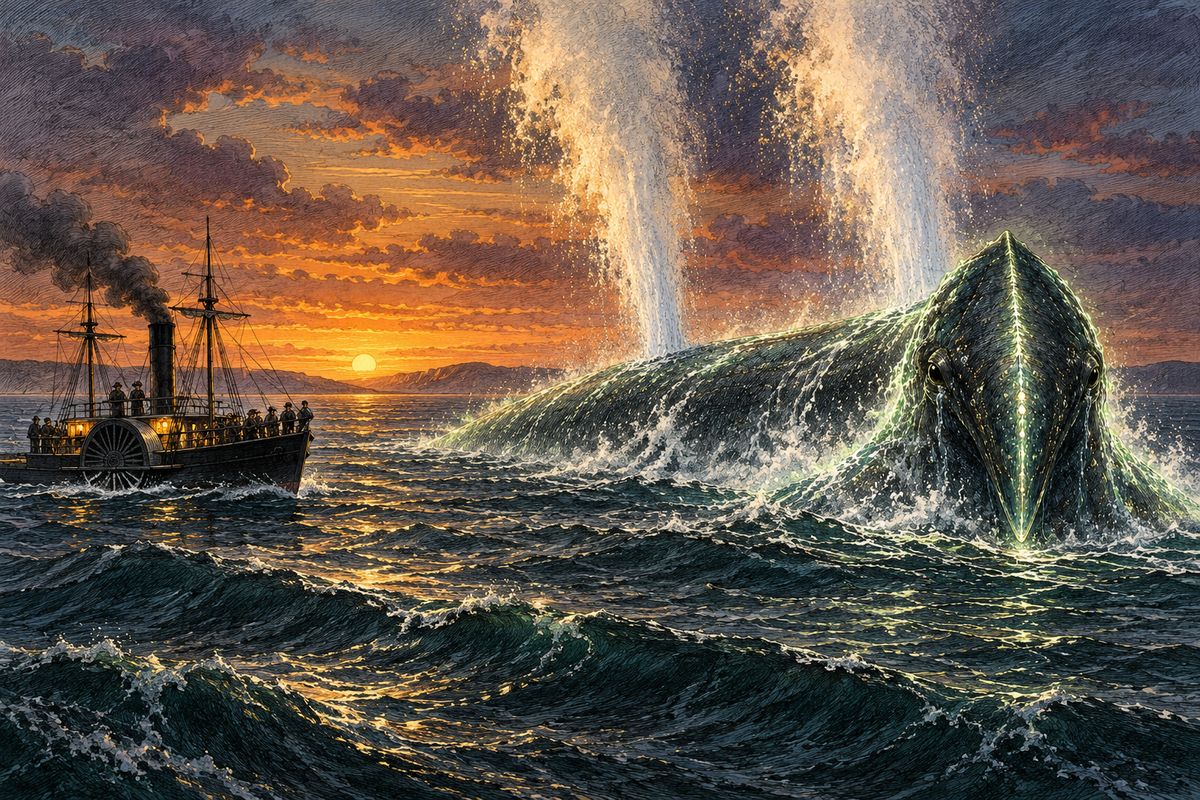
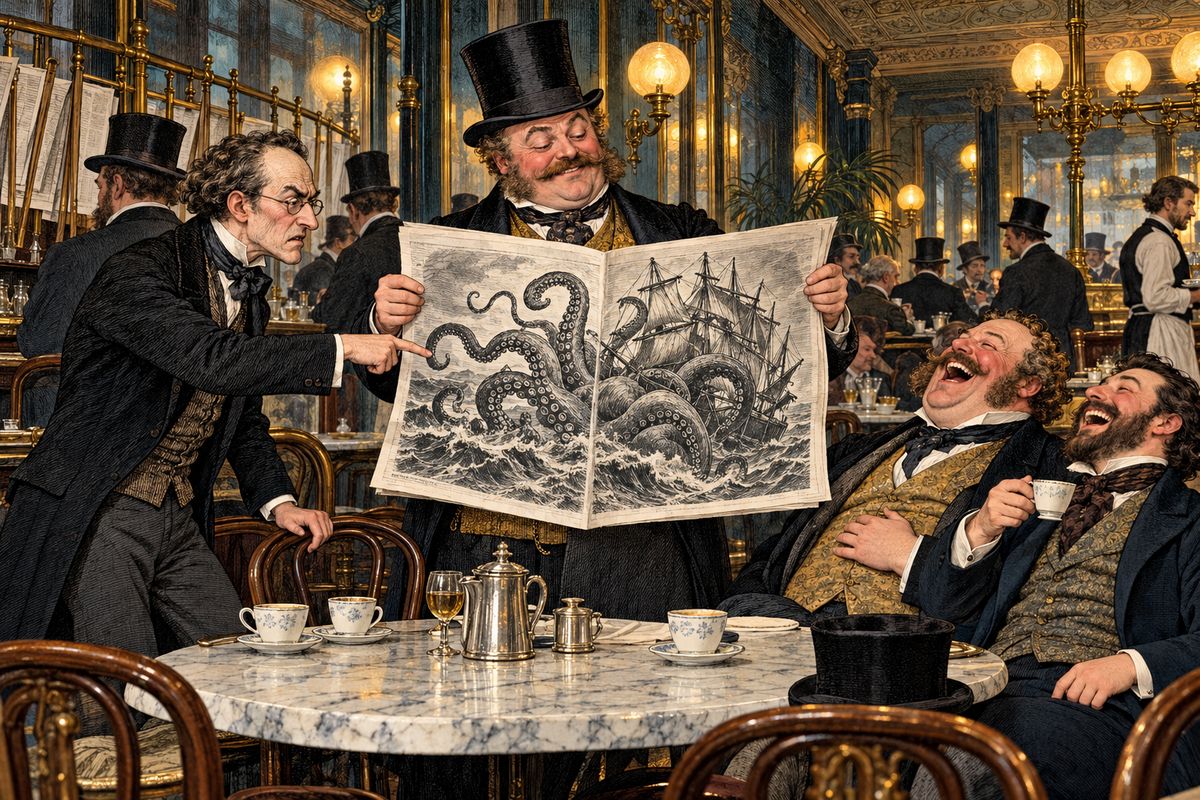
1In 1866, ships all over the world reported meeting 'an enormous thing': long, spindle-shaped, sometimes glowing, and faster than any whale. Off Australia, Captain Baker of the Governor Higginson took it for an unknown sandbank, until two columns of water shot up from it, hissing, a hundred and fifty feet into the air.2The monster became the fashion. People sang of it in the cafés, laughed at it on the stage, and the papers printed cartoons of krakens and Moby Dicks. Learned journals and comic ones spilled seas of ink arguing whether it could exist at all, until a joke seemed to kill it off.3Then, in April 1867, something struck the Cunard liner Scotia at sea. 'We are sinking!' cried the carpenter's watch, but she limped into Liverpool. In dry dock the engineers stared at a neat triangular hole punched through her inch-thick iron plates, as if by a giant spike that had then pulled itself out.4Professor Aronnax, a French naturalist, was in New York sorting his specimens. By then a floating island, a wreck and a secret submarine had all been ruled out, so the New York Herald asked his opinion. He wrote that the culprit must be a gigantic narwhal, a sea-unicorn armed with a tusk as hard as steel.5The United States answered first. At Brooklyn the fast frigate Abraham Lincoln was armed and loaded with coal for the hunt, under Commander Farragut. Three hours before she sailed, a letter reached Aronnax from the Secretary of Marine: Commander Farragut had a cabin at his disposal, if he would join the expedition.6A letter from the Secretary of the Navy invited Aronnax to join the frigate Abraham Lincoln in hunting the monster, and, tired as he was, he accepted at once. "We leave in two hours," he told Conseil. "As you please, sir," replied his servant, and packed the trunks without a word of surprise.7Within the hour they were aboard, welcomed by Commander Farragut, as the frigate cast off from Brooklyn. Half a million people cheered and waved handkerchiefs along the East River, the forts saluted with their heaviest guns, and the Abraham Lincoln steamed out towards the dark Atlantic.8Farragut promised two thousand dollars to whoever first sighted the monster, and the rigging was crowded with eager eyes. Only Ned Land, the Canadian prince of harpooners, doubted. "No whale could scratch a steamer's iron plates," he said, and even Aronnax's sums about crushing deep-sea pressure only half convinced him.9For three months the frigate chased every whale across the North Pacific, until the weary crew was close to mutiny and Farragut asked for just three days more. On the last evening, as darkness fell, Ned Land's voice rang out: "Look out there! The thing itself—on our weather beam!"10Out of the dark, Ned Land had spotted a vast oval of light blazing under the sea. The thing circled the frigate, darted at her, stopped twenty feet from her hull and vanished, only to glow again on the other side. All night Commander Farragut would not attack: "Wait for daylight, and the scene will change."11At dawn the monster appeared again, and the Abraham Lincoln went after it with every ounce of steam. All day it kept just out of reach, sometimes circling the straining frigate as if mocking her. At last an old grey-bearded gunner fired the bow gun and hit it, but the shot only skidded off its rounded back.12That night the glowing beast lay still, as if asleep, and the frigate crept up silently. Clinging to the chains beneath the bowsprit, Ned Land rose, and with all his strength he hurled his harpoon. Instead of sinking into flesh it gave a loud ringing clang, as if it had struck something hard.13At once the light went out. Two huge spouts of water crashed over the deck, sweeping men off their feet from bow to stern. Then came a terrible shock, and before Professor Aronnax could catch hold of anything, he was flung over the rail into the black sea.14The frigate steamed away into the dark, its rudder and screw smashed. Aronnax was sinking when a strong hand pulled him up: his faithful Conseil had jumped in after him. Hour after hour they took turns towing each other through the glowing water, until a faint voice answered Conseil's cries for help.15Aronnax woke on something hard to find Ned Land beside him. "That beast is made of sheet iron," said Ned. They were lying on the riveted back of a submarine boat! They held on through the night, and at dawn, as it began to sink, Ned kicked the plates. A hatch opened, and eight masked men silently pulled them inside.16Seized from the steel back of the 'monster', we were bundled down an iron ladder and shut into utter darkness. For half an hour we groped along bolted iron walls while Ned Land swore at the pirates. Then, all at once, a blazing white light burst from a globe in the ceiling. "At last one can see," cried Ned, his knife in hand.17Bolts grated and two men entered. The taller, plainly the commander, was pale, with black hair and piercing eyes that seemed to read the very depths of the sea. We told our story in French, then English, then German and Latin. He listened with close attention, never said a word, and at last withdrew.18A silent steward brought us new clothes and laid the table. The fish was excellent and the dinner service elegant, and every spoon, knife and plate was engraved with a letter N under the motto 'MOBILIS IN MOBILI', "moving in a moving element". N was surely the initial of the strange master of these depths. We ate, then slept.19I woke gasping in stale air until a rush of salt breeze poured through the vent: the boat had surfaced to breathe, like a whale. Then came hours of hunger. When the steward finally opened the door, Ned hurled him down and gripped his throat. Suddenly a voice spoke in French: "Be quiet, Master Land; and you, Professor, will you listen to me?"20The commander spoke four languages perfectly; he had stayed silent only to study us. He had broken with society for ever, he said. We were his prisoners of war, free to roam his vessel but never to return to the world. "I am nothing to you but Captain Nemo," he said, "and you are nothing to me but the passengers of the Nautilus."21Nemo led me through his library of twelve thousand books into a vast saloon that was really a museum: masterpieces by Raphael and Leonardo, an organ heaped with music, and glass cases of rare corals, shells and pearls bigger than pigeons' eggs. "These are my last souvenirs of that world which is dead to me," he said. Then he fell silent, lost in thought.22Captain Nemo showed the Professor the force that ran his ship: electricity, made with sodium drawn from sea-water. It lit, warmed and drove the Nautilus. In the vast engine room at the stern, great batteries fed giant magnets that turned a screw nineteen feet across. "I owe all to the ocean," said Nemo.23In the saloon Nemo unrolled a plan of his cigar-shaped boat. It had a double steel hull, a steersman in a glass cabin on top, and behind him a powerful electric lamp that lit the sea for half a mile. Aronnax laughed: so that was the glowing 'narwhal'. Nemo said only that he had built her in secret and was immensely rich.24Just before noon the Nautilus rose to the surface off the coast of Japan. On the narrow platform, with the glass steersman's cabin and the lantern cage at either end, Nemo raised his sextant and waited, as still as marble, until the sun touched the horizon. "Twelve o'clock, sir," he said. Their long voyage had begun.25Later Ned Land and Conseil joined the Professor in the saloon. "We are sailing blindly in this iron prison!" grumbled Ned. At once every light went out. Something slid along the hull, and then two great crystal windows opened on both sides, showing the sea lit up for a mile around by the electric glow.26For two whole hours an army of fish swam alongside the Nautilus, drawn to the light: banded mullet, blue Japanese mackerel, gold-finned spares and long sea serpents. Forgetting his temper, Ned called out each one's name like an old fisherman, and Conseil calmly sorted each into its class, while Aronnax watched in delight.27For eight days Captain Nemo stayed out of sight, and every morning his second officer spoke the same odd words on the platform: "Nautron respoc lorni virch." Then a note invited Aronnax to a hunt in the forests of Crespo Island. The forests turned out to be under the sea. In the ship's wardrobe Ned flatly refused to go, but Conseil said, "I follow my master wherever he goes."28Air tanks were strapped to their backs, copper helmets screwed down and lamps hung at their belts. The divers were sealed in a dark chamber while the sea rushed in. Then an outer door opened, and they walked out onto the sand thirty feet down. There every rock, shell and flower was edged with rainbow colours by the slanting sun.29Deep in the forest of Crespo every weed and branch stood stiffly upright, like iron rods reaching for the surface. After a rest and a heavy sleep among the stalks, Aronnax woke to find a monstrous sea-spider, more than three feet tall, crouched to spring at him. One blow from Nemo's gun-butt knocked it over.30Nemo pushed on even deeper, lamps glowing, until a wall of granite marked the island's edge, a shore he would never set foot on. On the long climb back he suddenly raised his air-gun and fired. With a soft hiss the electric ball found its mark, and a magnificent sea-otter, five feet long, fell stunned among the seaweed.31The Nautilus's lantern was already in sight when Nemo suddenly pushed Aronnax flat behind a bush of algae and lay still beside him. Two huge tintorea sharks glided overhead, glowing faintly at the snout, their fins brushing the divers. Their eyesight was poor, and they swam on. Half an hour later the hunters were safely aboard.32Weeks later, as the Nautilus crossed the South Pacific, Conseil called his master to the window. In the electric glare hung a ship that had sunk only hours before, its masts snapped off and its crew still tied to the deck. A young mother had lifted her baby above her head in one last effort. On the stern were the words "The Florida, Sunderland."33That wreck was the first of many. At Vanikoro, Nemo opened the saloon panels on the coral-covered anchors and cannons of La Pérouse's lost ships. From his pocket he brought out a corroded tin box of papers he had found where the explorer died. "A coral tomb makes a quiet grave," he said, "and I trust that I and my comrades will find no other."34Leaving Vanikoro, the Nautilus raced past the Great Barrier Reef and into the Torres Strait, a maze of islets and coral. Near the island of Gilboa a shock threw Aronnax to the deck: the ship was stuck fast on a reef. Captain Nemo stayed calm. "An accident?" asked the Professor. "No," said Nemo, "an incident." The full moon's high tide, he said, would float her in five days.35To Aronnax's surprise, Nemo let them go ashore. Conseil and Aronnax rowed while Ned steered through the breakers, longing for real meat. On the island Ned knocked down coconuts, then roasted slices of breadfruit over a crackling fire. "You will see, master, how good this bread is!" he boasted. It tasted like artichoke, and they ate with great relish.36Next day they hunted deep in the forest. Ned shot a wild hog and a dozen small kangaroos, but the birds of paradise kept flying out of range. Then Conseil came back in triumph, carrying a magnificent emerald bird. "I have not deserved great merit," he admitted. "This bird is as drunk as a quail." It had gorged on nutmegs and could hardly walk.37That evening they feasted on the beach, and Conseil and Ned wondered aloud whether to return to the Nautilus at all. Just then a stone fell at their feet. About twenty islanders with bows and slings appeared at the forest's edge. "To the boat!" cried Aronnax. Ned grabbed his pig and kangaroos, and they rowed off as a hundred islanders waded in after them.38Aboard, Aronnax found Captain Nemo lost in music at his organ. "When all the natives of Papua are assembled on this shore," Nemo said, "the Nautilus will have nothing to fear." Next day a score of canoes circled the stranded ship and arrows rained on her hull. Nemo simply had the hatches closed and promised they would float at twenty minutes to three tomorrow.39At the appointed hour the crew opened the hatches. The first islander who grabbed the stair-rail was flung back screaming, and ten more met the same fate: the rail was charged with electricity. Ned rushed up, seized it, and was knocked flat. "I am struck by a thunderbolt!" he roared. At that very minute the tide lifted the Nautilus off the coral, and she sailed safely out of the strait.40On 18 January, under a stormy sky, Captain Nemo stared for a long time at some point on the empty horizon. When Aronnax raised his own telescope, Nemo snatched it from him, shaking with fury. "You must be confined, with your companions," he ordered. Locked in their old cell, the three men ate breakfast and fell into a heavy, drugged sleep.41Aronnax woke the next day in his own room, free again. That afternoon a weary Nemo asked whether he was a doctor and led him to a crewman with a terrible head wound. "He will be dead in two hours," Aronnax said quietly. "Nothing can save him." Tears shone in the eyes of a man he had thought could never weep.42Next morning the three friends followed Nemo and a dozen of his men in diving dress, down through a forest of blood-red coral. In a glade stood a cross of coral. There the crew buried their shipmate, wrapped in white linen, and knelt to pray. Later Nemo said, hiding a sob, "The polypi undertake to seal our dead for eternity."43Westward across the Indian Ocean the wonders went on. One dusk a fleet of argonauts sailed past like tiny ships, then dived all at once. Another night the Nautilus glided through a sea as white as milk. "Myriads of tiny glowing creatures, my boy," Aronnax told the astonished Conseil, "stretching sometimes for leagues."44Off Ceylon, Nemo asked almost carelessly if Aronnax was afraid of sharks, and the professor broke into a cold sweat. Still, at dawn they rowed to the pearl bank of Manaar, armed only with daggers and Ned's harpoon, and walked down into the sea. In a dim grotto Nemo opened a giant clam to show a pearl as big as a coconut.45Hidden behind a rock, they watched a poor Indian diver gathering oysters. Suddenly a huge shark shot at him and knocked him to the ground. Nemo rose, dagger in hand, and fought the monster, but its great weight bore him down onto the sand. Quick as thought, Ned Land rushed in and drove his harpoon into the shark's heart.46Nemo cut the fisherman's rope and carried him up to his canoe, where they rubbed him back to life. He opened his eyes to see four copper heads bending over him, and Nemo put a bag of pearls into his trembling hand. "That Indian is an inhabitant of an oppressed country," Nemo later told Aronnax, "and I am still one of them!"47The Nautilus slipped through the Gate of Tears into the Red Sea, and Aronnax spent happy hours at the saloon window among gardens of bright coral. Ned Land could not settle. "The Red Sea is as much closed as the Gulf," he grumbled, pacing. "It is no road back to Europe."48Ned had his harpoon at last, taking a huge dugong after a wild chase in the pinnace. Then, on the platform, Captain Nemo calmly told Aronnax they would reach the Mediterranean in two days, not around Africa but beneath Suez, through a hidden passage. "I have named it the Arabian Tunnel."49That night Nemo led Aronnax into the pilot's cage and took the helm himself. A black gallery opened ahead, and the Red Sea's waters roared downhill, sweeping the Nautilus through the tunnel as fast as an arrow, even with its screw turning in reverse. Twenty minutes later Nemo turned round. "The Mediterranean!"50At dawn the jetty of Port Said lay in sight. Ned sat down with Aronnax and Conseil beside the lantern, where no one could hear. They were in Europe now, he said, and on the first dark night near a coast he would seize the pinnace. Aronnax agreed, warning him that if their first try failed, there would never be another.51Off Crete a diver swam up and pressed his face to the saloon glass. Nemo signalled to him, then packed a chest with gold ingots, and in the night the pinnace rowed it ashore. The next day the sea near Santorin boiled from an undersea volcano, white and then blood-red, and Nemo calmly turned the ship away.52Captain Nemo stayed out of sight as the Nautilus crossed the whole Mediterranean in forty-eight hours, racing at twenty-five miles an hour, far too fast for Ned Land to launch the boat. Before sunrise on 18 February it rode the deep current through the Straits of Gibraltar and slid out into the Atlantic.53Off Portugal, Ned whispered, 'It is for to-night.' At nine o'clock Aronnax, dressed for the sea, waited by the library door for his signal. Instead the screw fell silent, the Nautilus settled on the bottom, and Captain Nemo walked in, asking calmly, 'Do you know the history of Spain?'54Nemo told how Spanish treasure galleons had been sunk in Vigo Bay in 1702, then opened the saloon windows. In the electric light, his divers were lifting gold and silver from the blackened wrecks. 'Do you think I am ignorant that there are suffering beings and oppressed races on this earth?' he said. The gold was for them.55Ned's chance was gone, for the Nautilus now steered south-west, far from any land. The next midnight Nemo led Aronnax alone across the Atlantic floor without lamps, through a forest of stone trees and up a mountain. From the top they saw a volcano under the sea pouring out lava that lit a drowned city of temples and broken columns.56Nemo picked up a piece of chalk and wrote one word on the black rock: ATLANTIS. Aronnax was standing on Plato's lost continent. Afterwards the Nautilus sheltered inside a hollow volcano, where Nemo's men mined undersea coal to make sodium for the engines and Ned smoked out a beehive for honey, before sailing on south.57Leaving the Gulf Stream behind, the Nautilus slid a few yards beneath the still Sargasso Sea, a great lake of weed in the middle of the Atlantic. Above us hung a thick carpet of kelp, choked with drifting tree trunks and the broken timbers of lost ships, so crusted with shells that they could never rise again.58Weeks of empty ocean passed. Then Nemo sent his ship four leagues down, deeper than anyone had ever gone, until the steel plates groaned and the windows bent under the weight of the sea. "Hold well on," he warned. In four minutes we shot back up and burst out of the waves like a flying fish.59Nemo would not let Ned harpoon the gentle southern whales, but he drove the Nautilus's spur into the savage cachalots attacking them. For an hour the sea boiled; when we came up, it ran red for miles. "I am not a butcher," said Ned. "I am a hunter, and I call this a butchery."60Further south, icebergs rose like towns of marble with minarets, until an endless ice wall blocked our way. Nemo simply dived beneath it. For two days we groped along the ice ceiling, hundreds of feet deep. Then, at six one morning, the Captain opened the saloon door. "The sea is open!" was all he said.61We reached a volcanic shore. Fog hid the sun for two days, but on 21 March Nemo climbed a peak and watched it sink until the horizon cut its disc exactly in half at noon. "The South Pole!" he said. Then he unfurled a black flag bearing a gold N and claimed the land in his own name.62On 22 March the Nautilus dived beneath the great ice to head north. At three in the morning a violent shock flung Aronnax from his bed. A whole mountain of ice had turned over, struck the ship and thrown it onto its side. "An accident this time," Captain Nemo said gravely.63When the ship righted, the friends found themselves in a tunnel of ice that blazed like sapphires and emeralds in the lantern light, so bright that Conseil had to cover his eyes. But the tunnel was blocked ahead, and then behind. "In forty-eight hours our reserve of air will be exhausted," Nemo told them calmly.64Ten yards of ice lay beneath the hull, so the crew put on diving suits and began cutting a vast trench in the ice floor. Ned Land offered his strong arms, and Aronnax and Conseil took their turns too. After twelve hours they had cut only one yard deeper, and the work would need four days.65Then the water around them began to freeze and the ice walls crept toward the hull. Nemo had boiling water pumped out in jets, which held back the freezing sea. Inside, the air grew foul; outside, each worker passed on his air tank when his turn ended, and Nemo was always the first to give his up.66On the sixth day the heavy Nautilus broke through the last of the ice floor and sped north under the iceberg. Aronnax lay on a divan, choking and barely conscious. Ned and Conseil found a little air left in one tank and, though they were gasping themselves, they gave him every last breath of it.67Twenty feet below the surface, Nemo drove the Nautilus up like a battering-ram until the ice gave way and the hatch was flung open. On the platform the three friends gulped the fresh sea air. "My friends," said Aronnax, "we are bound one to the other for ever." Then the ship raced north past Cape Horn and up the coast of South America.68After six months and 17,000 leagues as prisoners, hope was running out, and Captain Nemo had grown grave and silent and kept away from them. Off the Bahamas, Conseil calmly pointed at the window. A huge poulp was swimming alongside, staring in with enormous green eyes. "What a horrible beast!" cried Ned Land.69A poulp's jaws jammed the screw, so Nemo brought the Nautilus up to fight it, man against beast, with axes. When the hatch opened, a huge arm seized the seaman in front of him and swept him into the air. "Help! help!" the man cried, in French. Aronnax had a countryman on board!70The beast squirted out a cloud of black ink, and when it cleared, the sailor was gone. The crew fought on, and when a beak opened over Ned Land, Nemo struck first with his axe and saved him. At last the monsters fled, and Nemo, soaked in blood and ink, gazed at the sea as tears filled his eyes.71For ten days the Nautilus drifted in mourning, then followed the Gulf Stream north. Pressed by Ned, Aronnax went to see Nemo, who showed him the manuscript of his life, which would one day be sealed in a floating case. But when Aronnax asked for their freedom, Nemo replied, "Whoever enters the Nautilus must never quit it."72Off Long Island a hurricane broke. Ned's escape was impossible, and instead of diving, Nemo stood up to the storm on the platform, lashed down against the giant waves. At ten that night the sky caught fire, and as the bow reared up, lightning burst in sparks from the steel spur. Only at midnight did the Nautilus sink into calm water.73After the storm, the Nautilus wandered north-east through the fogs off Newfoundland. Far down on the sea floor, Aronnax saw the great Atlantic telegraph cable, crusted with shells. Conseil at first took it for a gigantic sea-serpent, until his master explained that it carried messages from Europe to America in a third of a second.74Off the coast of Europe, Nemo spent two days taking sightings of the sun until he said, "It is here." The Nautilus sank beside an old wreck white with shells. It was the Avenger, which had gone down seventy-four years before rather than surrender. "Yes, sir, the Avenger! A good name!" muttered Captain Nemo, crossing his arms.75When they surfaced, a warship flying no flag began to fire on them. Ned tried to wave a handkerchief, but an iron hand struck him to the deck. Nemo unfurled his black flag and cried that this accursed nation had taken everything he loved: "Country, wife, children, father, and mother. I saw all perish!"76Nemo shut the three below and led the warship on all night. At dawn the Nautilus dived and drove its steel spur through her hull "like a needle through sailcloth." From the saloon window, Aronnax watched in frozen horror as the great dark ship sank past the glass, her lights going out one by one.77When it was over, that terrible avenger went into his room. On the wall beneath his heroes hung the portrait of a young woman and two little children. Captain Nemo looked at them for some moments, stretched his arms towards them, and, kneeling down, burst into deep sobs.78In darkness and silence the Nautilus fled north for many days, and no one saw the Captain. At last Ned whispered that they would escape that night. As Aronnax crept through the dark saloon, Nemo rose from the organ, sobbing, and murmured the last words the Professor ever heard him speak: "Almighty God! Enough! Enough!"79The three friends were inside the dinghy, loosening its bolts, when the crew began to shout one dreadful word: "The Maelstrom! The Maelstrom!" The Nautilus was spinning into the great whirlpool off Norway. The bolts gave way, the boat was flung into the whirlpool, and Aronnax struck his head and knew no more.80Aronnax woke in a fisherman's hut on the Lofoten Isles, with Ned and Conseil safe beside him, holding his hands. While they waited for a ship home, he wrote down their story. But he often wondered: did the Nautilus survive the Maelstrom? Did Captain Nemo still live, and had his spirit of vengeance finally been laid to rest?
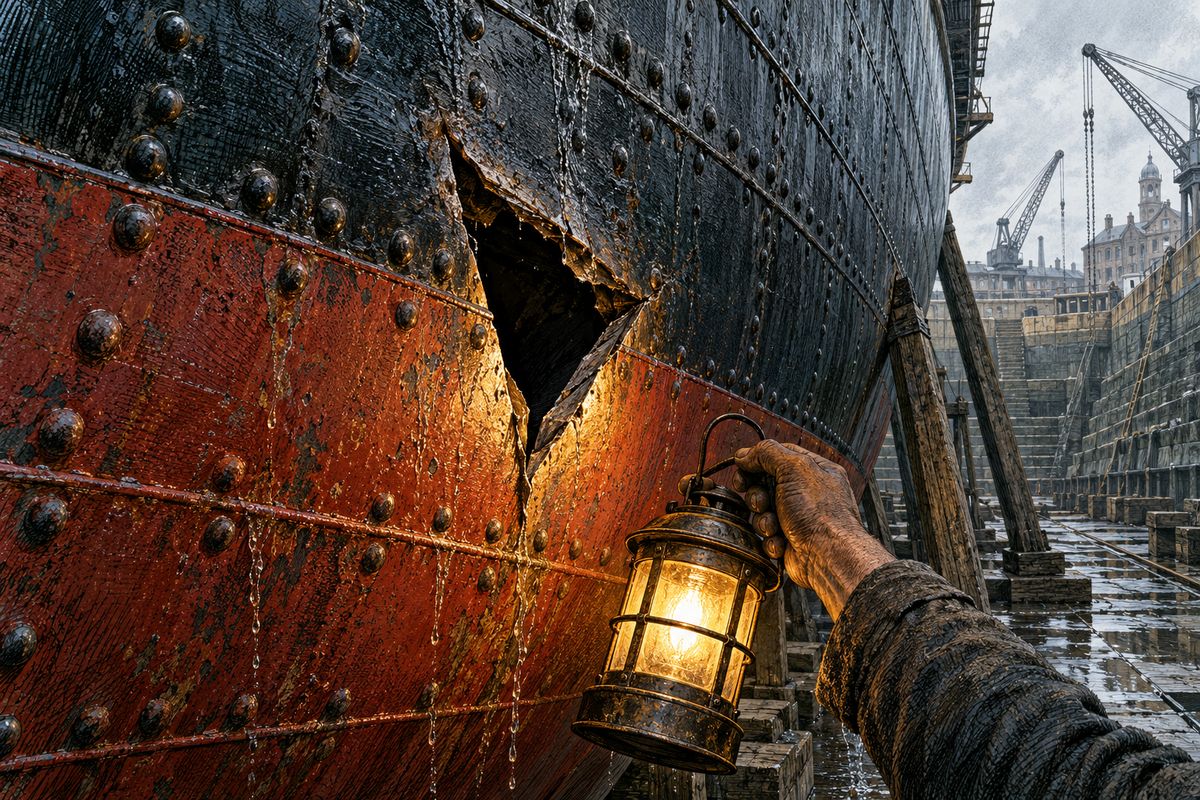
Adapted from Twenty Thousand Leagues under the Sea by Jules Verne, public domain. Pictures are AI illustrations drawn for this edition.
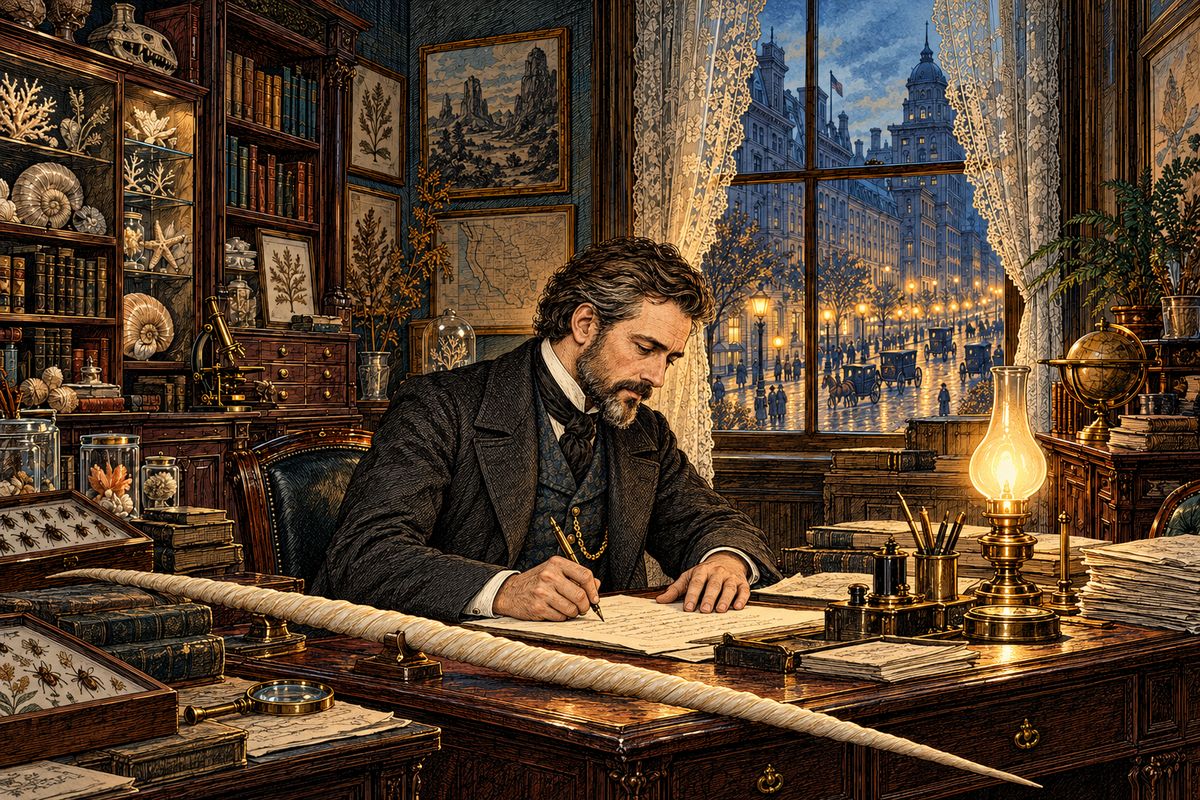
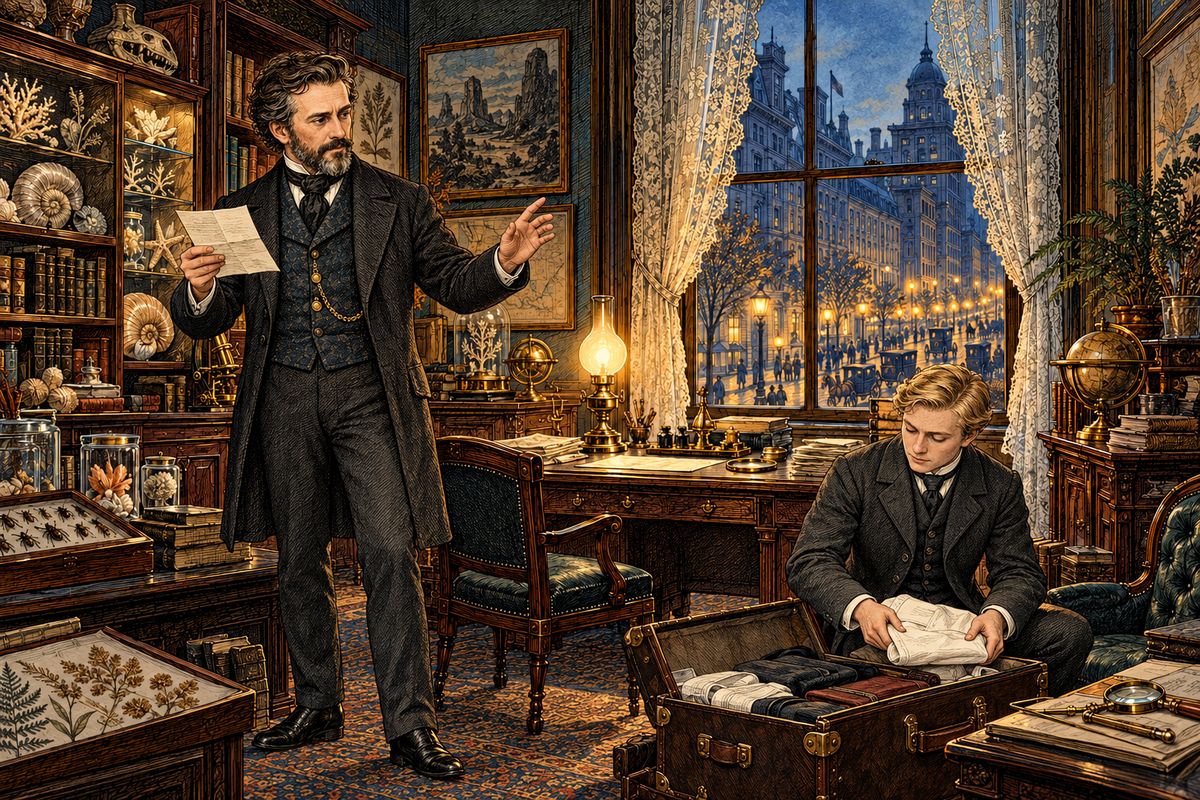
Add Stories to your Home Screen: tap
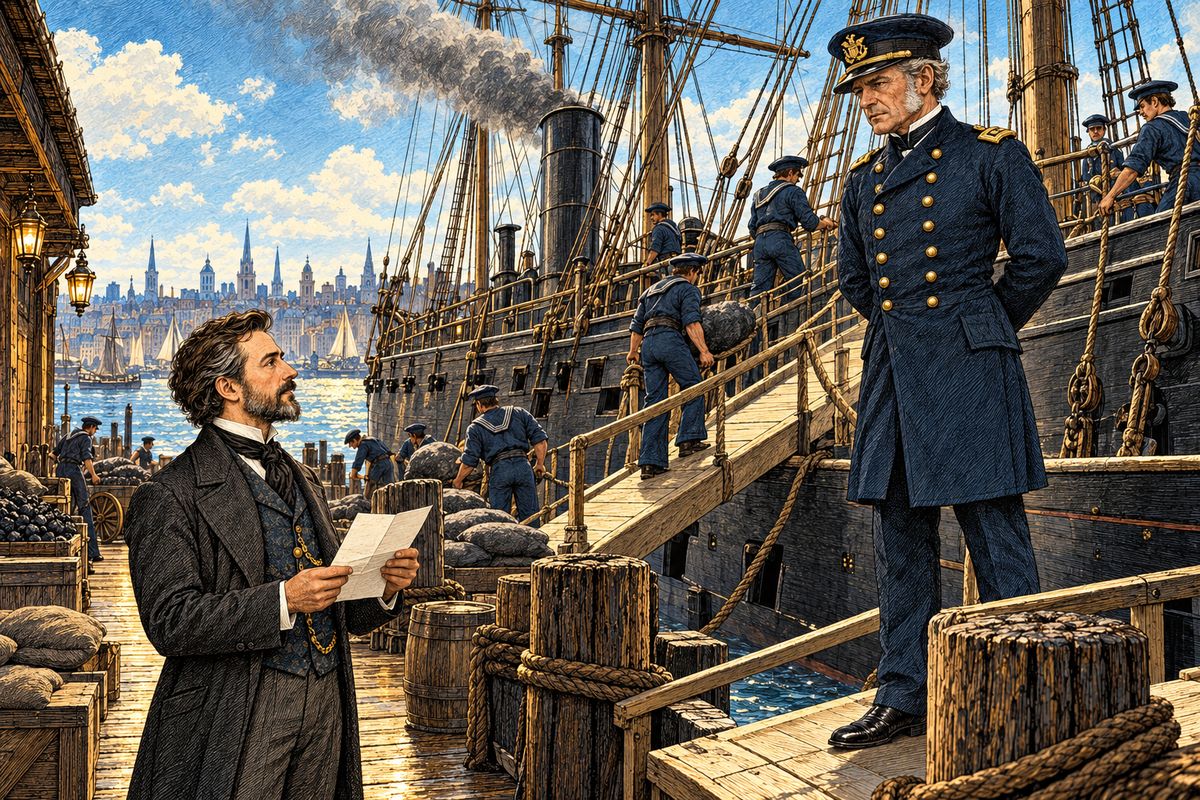
then Add to Home Screen.