
Through the Looking-Glass
Lewis Carroll · 1871
Through the Looking-Glass, and What Alice Found There by Lewis Carroll (1871), retold as a free illustrated audiobook: 40 pictures and 13 min of narration. Free to read and listen, no sign-up needed.
A gentle, playful nonsense fantasy full of wordplay and verse; its only scary moments are comic: a fall from a wall, a squabbling battle and a topsy-turvy feast.
On a snowy afternoon Alice climbs through the mirror over the fireplace into Looking-Glass House, where everything runs backwards, flowers talk and chess pieces walk. She becomes a white pawn in a giant game of chess played across the whole countryside, determined to reach the eighth square and be crowned a queen.
Characters
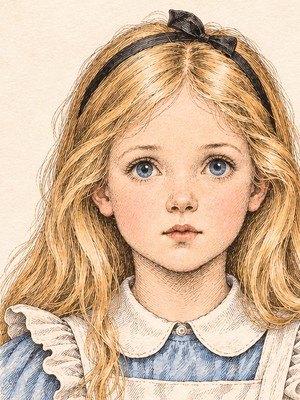
Alice
A curious, earnest girl who steps through the drawing-room mirror and sets out across a giant chessboard hoping to become a Queen.
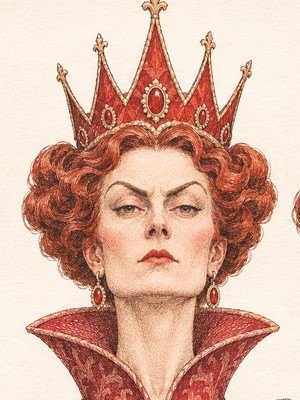
the Red Queen
A stern, brisk chess queen who makes Alice a Pawn and teaches her that it takes all your running to stay in place.
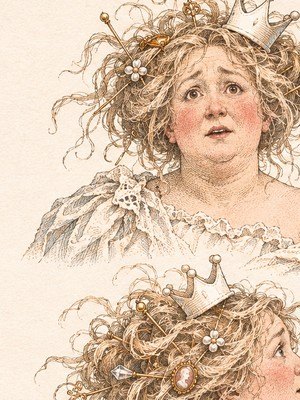
the White Queen
A flustered, kindly, hopelessly untidy queen who lives backwards and remembers things before they happen.
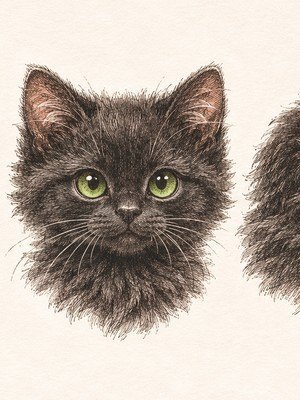
Kitty
Alice's mischievous black kitten, scolded for tangling the worsted and asked to pretend to be the Red Queen.
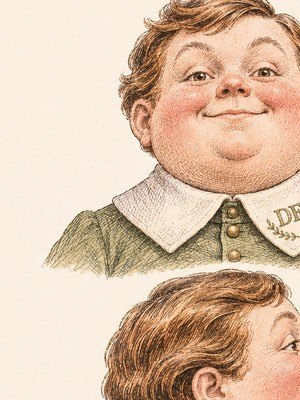
Tweedledee
A round, schoolboyish little man who argues "Contrariwise!" with his twin and recites the long poem of the Walrus and the Carpenter.
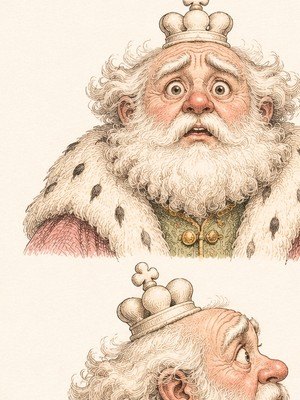
the White King
A small, anxious chess king, startled when an invisible Alice lifts him from the cinders and writes his memorandum with his own pencil.
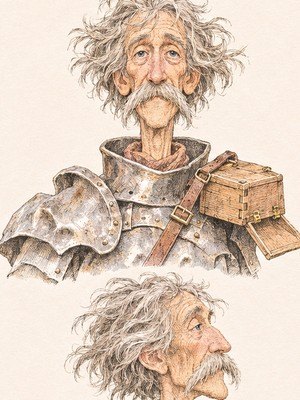
the White Knight
A gentle, shaggy-haired knight who keeps falling off his horse and is proud of his many odd inventions.
About the story
Through the Looking-Glass is Lewis Carroll's 1871 sequel to Alice's Adventures in Wonderland. On a snowy winter afternoon, Alice is playing with her black kitten, Kitty, when she starts to wonder what lies on the other side of the mirror over the fireplace. She climbs up and finds that the glass melts away like silver mist. On the other side is Looking-glass House, where the clocks grin, books are printed backwards and the chessmen walk about among the cinders.
Outside, the countryside is laid out like a huge chessboard. Alice joins the game as a pawn, hoping to reach the Eighth Square and become a queen. On the way she meets talking flowers, a Gnat as big as a chicken, the quarrelsome twins Tweedledum and Tweedledee, and a White Queen who lives backwards. The book is full of mirror logic, wordplay and nonsense verse, including "Jabberwocky" and "The Walrus and the Carpenter."
The book has lasted because its jokes work on two levels. Children enjoy the strange creatures and the silly arguments. Older readers find real puzzles about language, time, identity and what it means to be real. Lines such as "six impossible things before breakfast" and running "to keep in the same place" have become part of everyday English.
This Knownstep Stories edition is a condensed picture-book retelling in 40 illustrated pages, with about 13 minutes of synthetic-voice narration and AI illustrations made for this edition. Carroll's full original text is in the public domain, free to read, and well worth the time.
Adapted from Through the Looking-Glass, and What Alice Found There by Lewis Carroll (1871), public domain.
Questions
What is Through the Looking-Glass about?
Alice climbs through the mirror over her fireplace into a reversed world. There the countryside is a giant chessboard, and she sets out as a pawn to become a queen. Along the way she meets talking flowers, Tweedledum and Tweedledee, the White Queen and many other odd characters.
Is Through the Looking-Glass a sequel to Alice in Wonderland?
Yes. Lewis Carroll published it in 1871, six years after Alice's Adventures in Wonderland, and Alice is the heroine again. It tells a separate adventure, so it can be enjoyed on its own.
Is this edition suitable for children?
Yes, it is rated for all ages. The story is gentle, funny nonsense with no violence beyond comic squabbles. A few moments, like the oysters being eaten in "The Walrus and the Carpenter," are told with light, playful humor.
How long does this edition take to read or listen to?
About 13 minutes of narration across 40 illustrated pages, so it fits easily into one sitting or a bedtime story.
Is this the full book?
No. It is a condensed picture-book retelling of the main episodes. Carroll's complete original text is in the public domain and free to read.
Read the text version: every page's caption, with its picture, on one page.


