A picture-story retelling, after Selma Lagerlöf, translated by Velma Swanston Howard (1906)
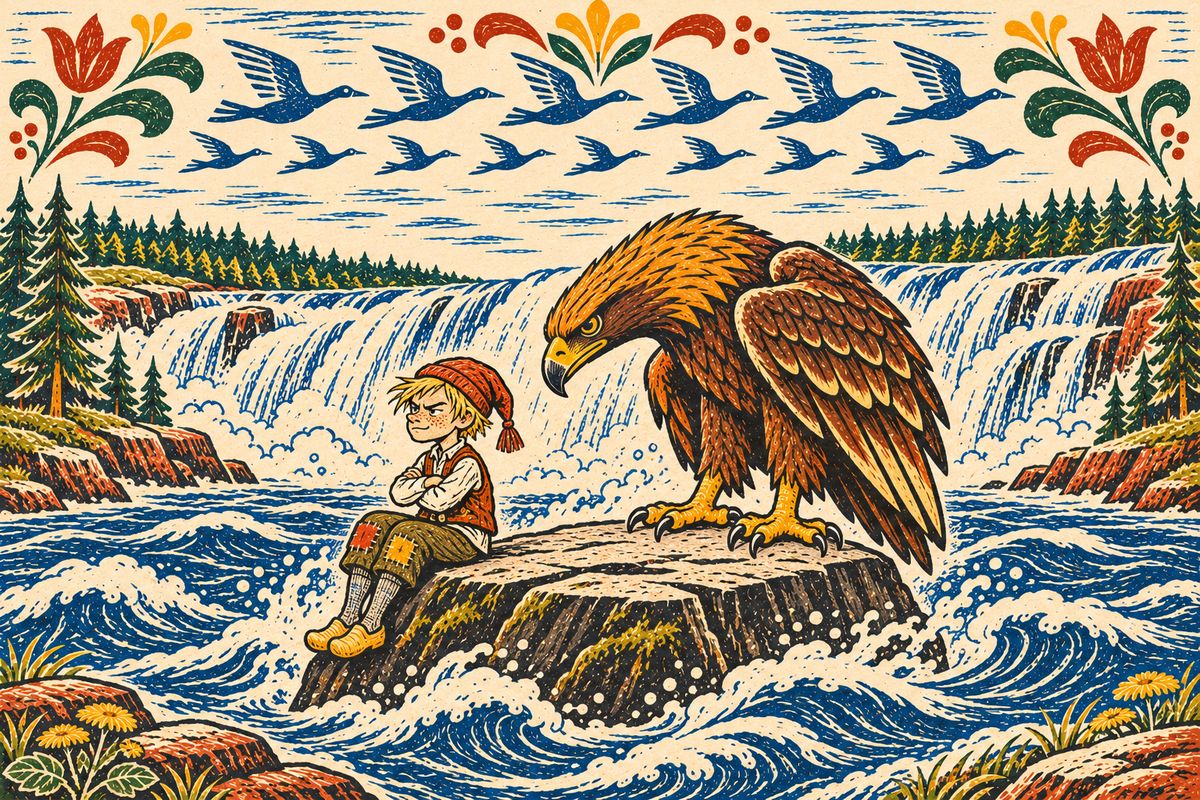
A thoughtful adventure for readers 10 and up. Foxes, storms and wild animals bring peril; illness and the death of a child are recounted with care and never shown graphically.
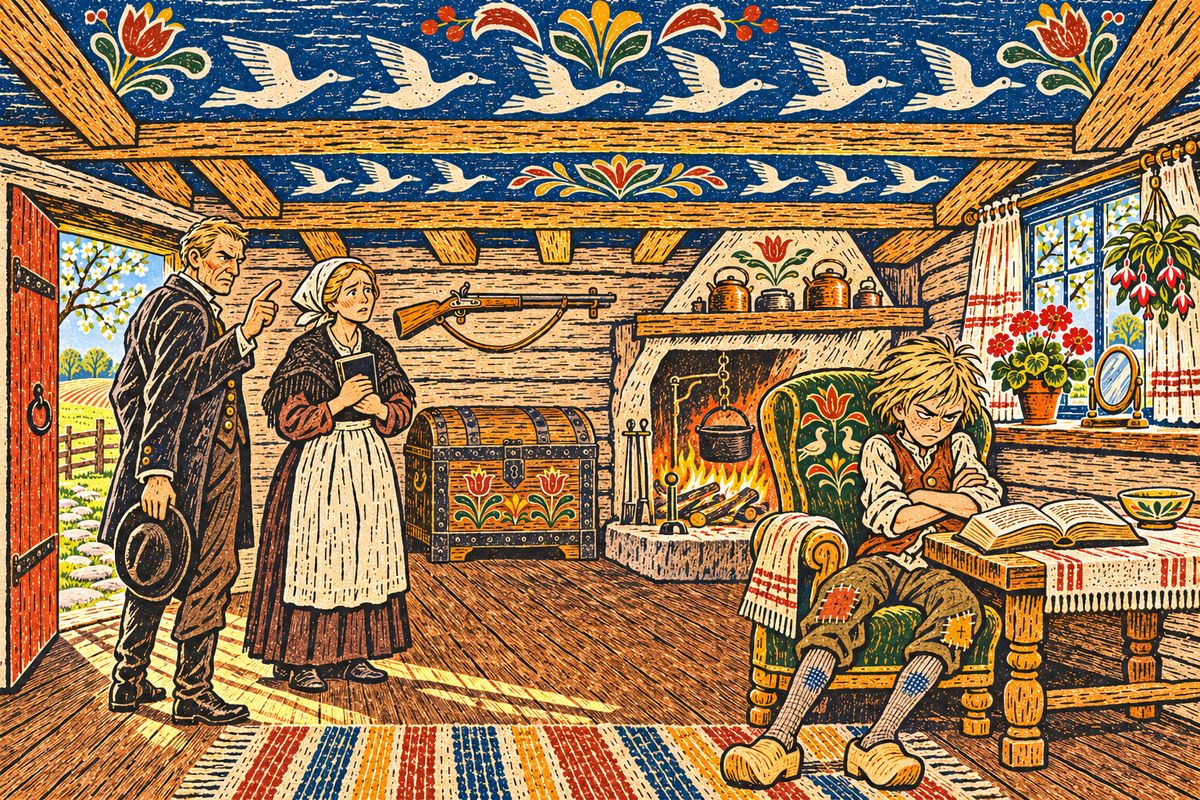
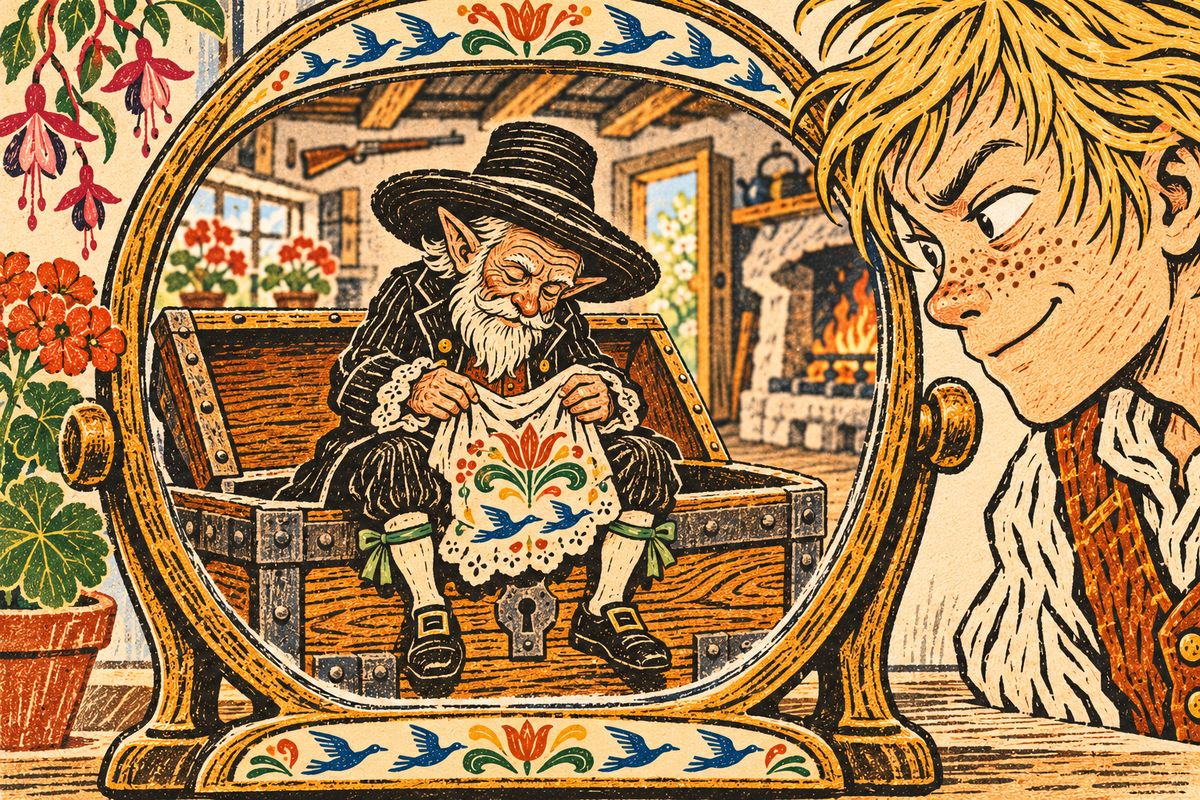
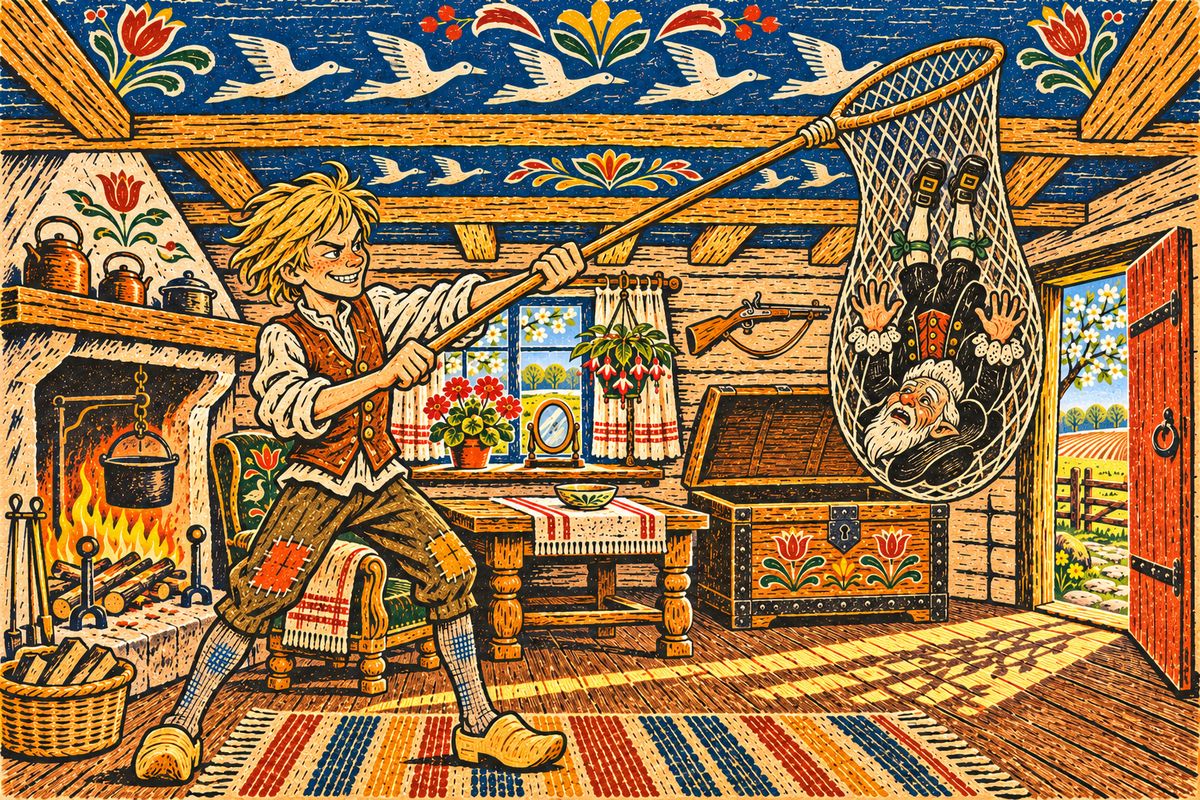
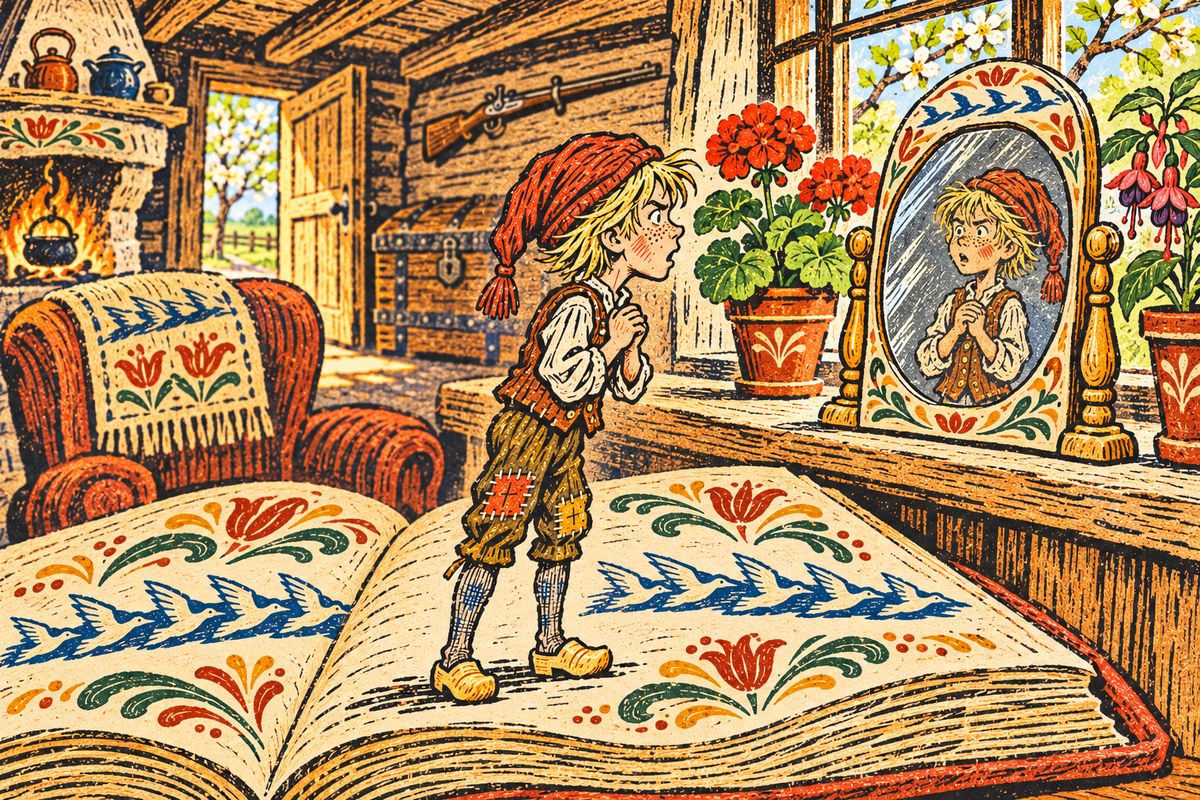
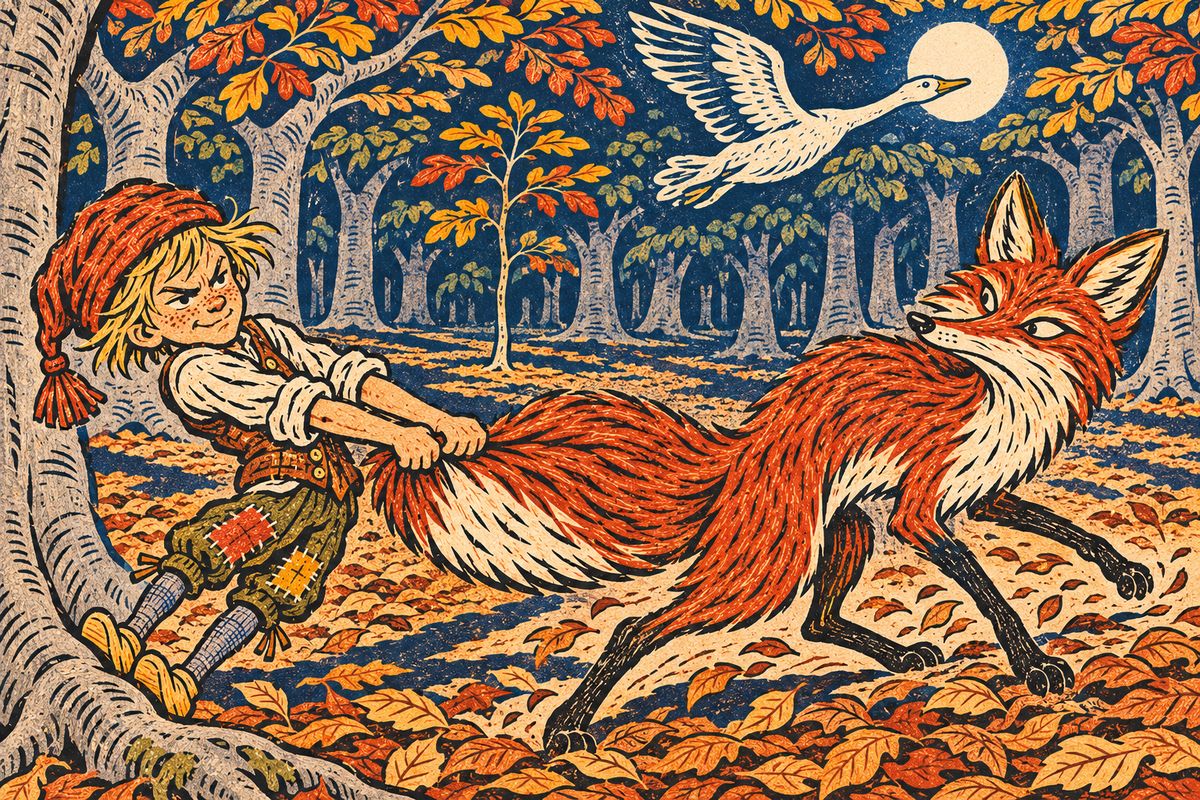
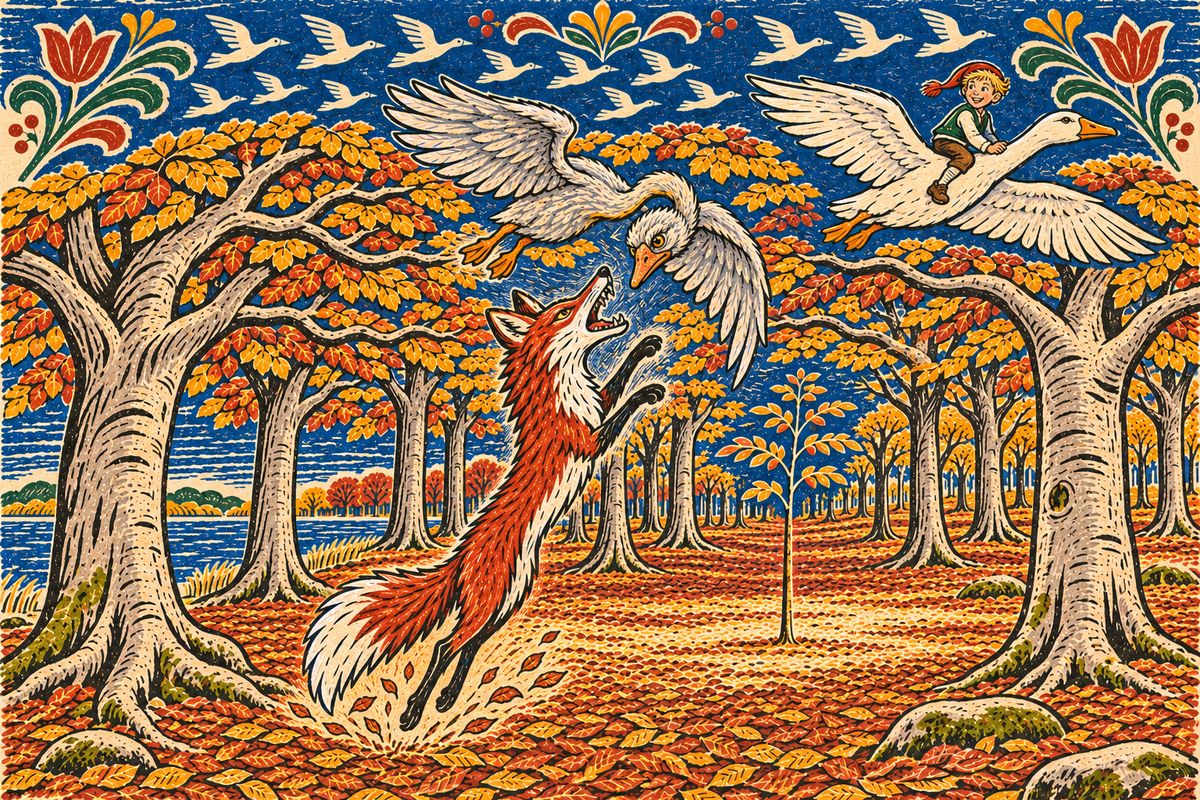
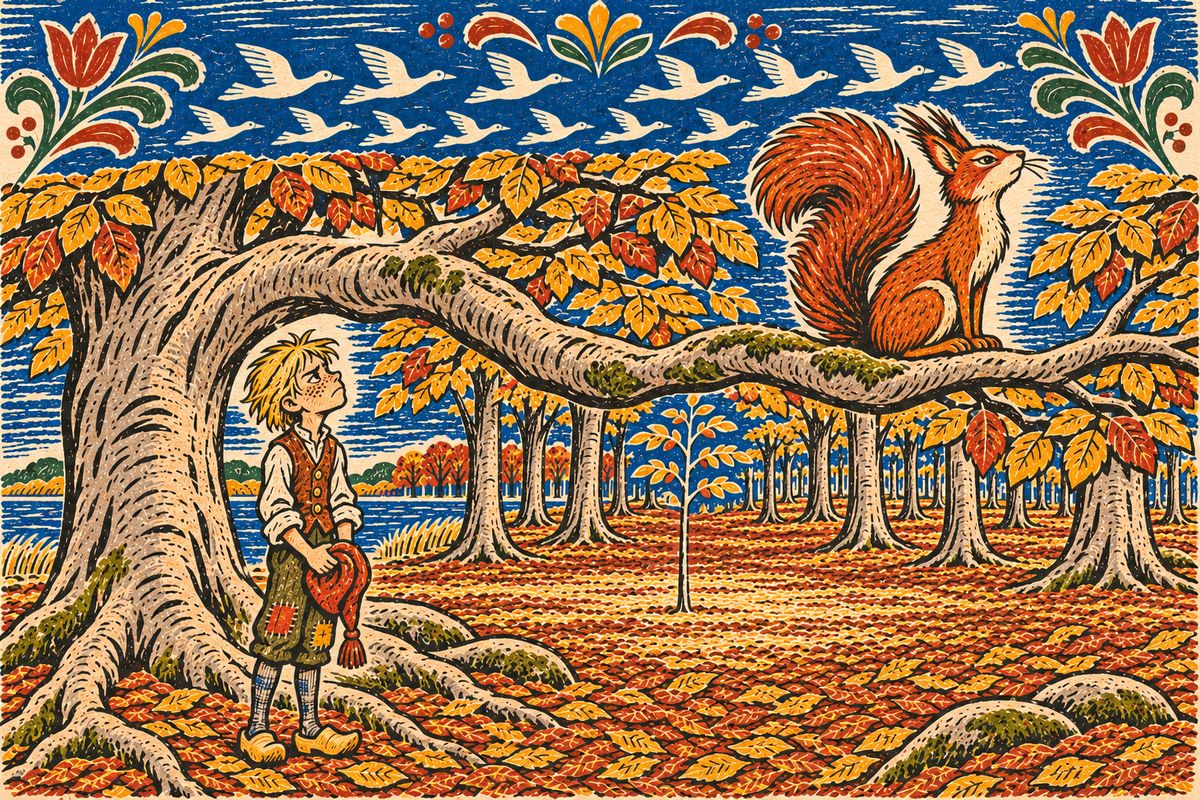
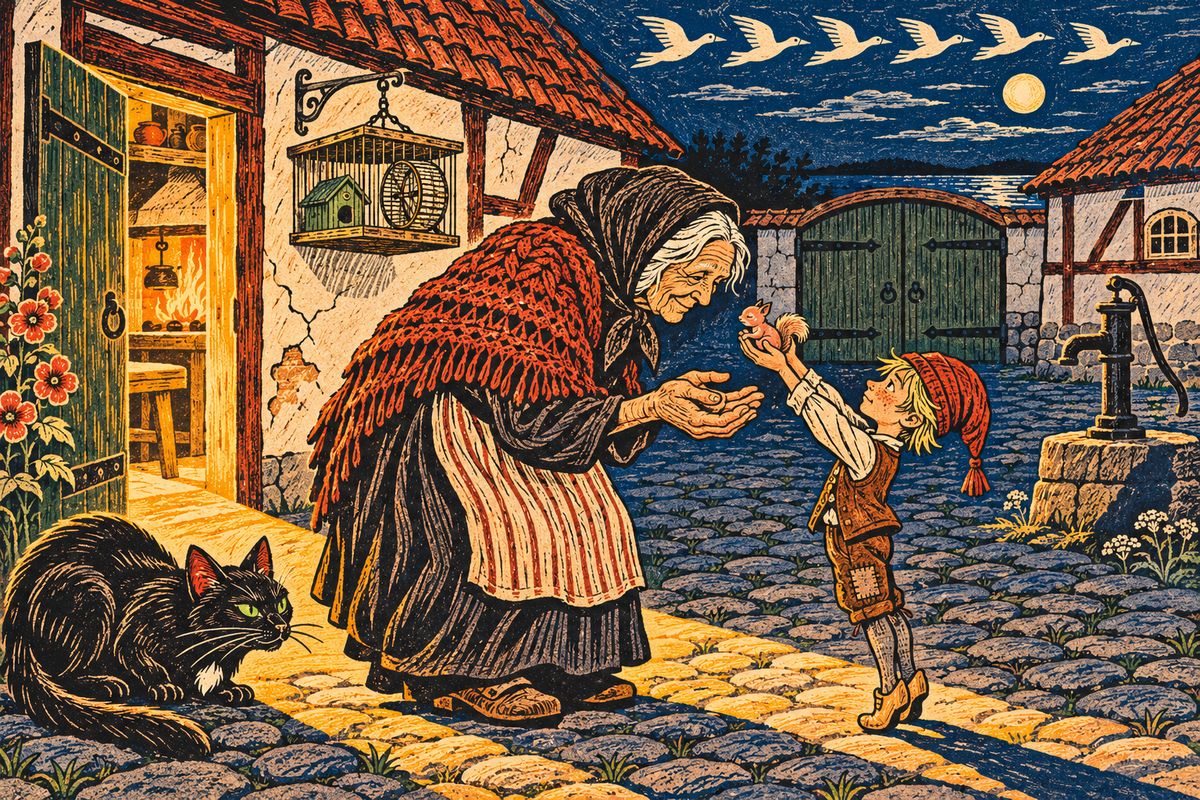
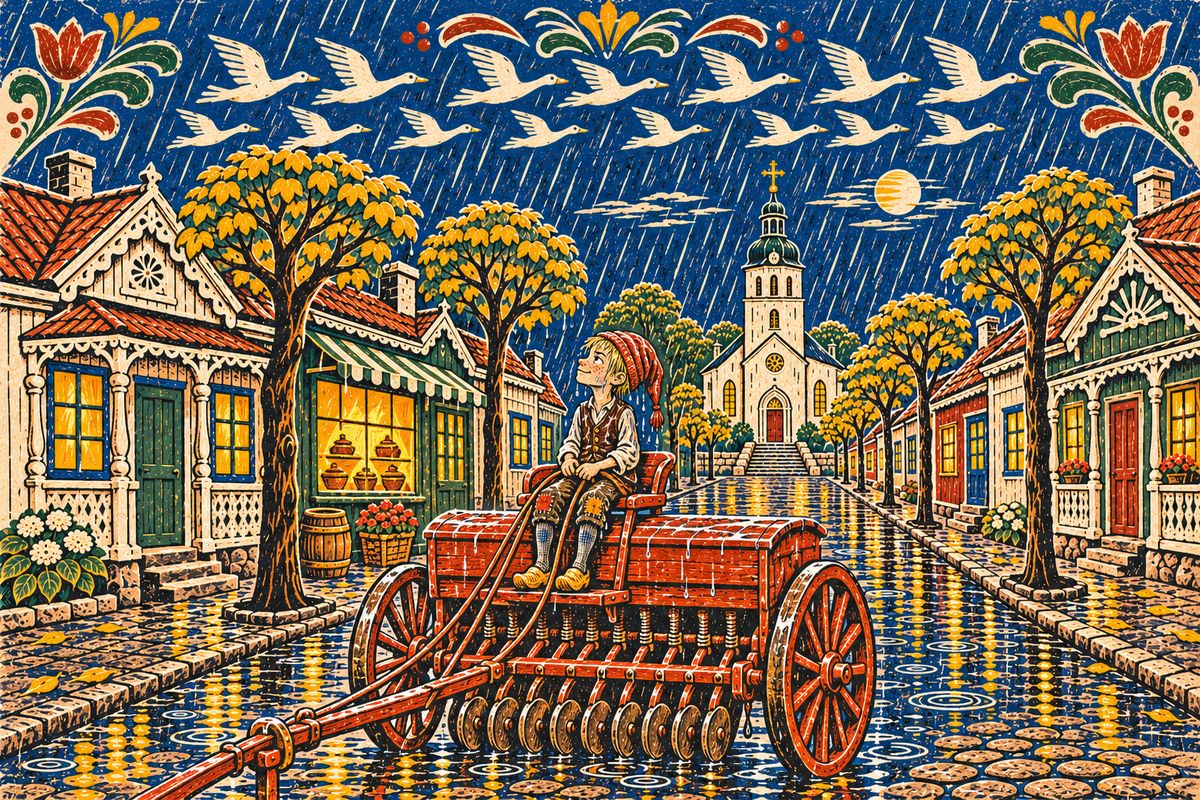
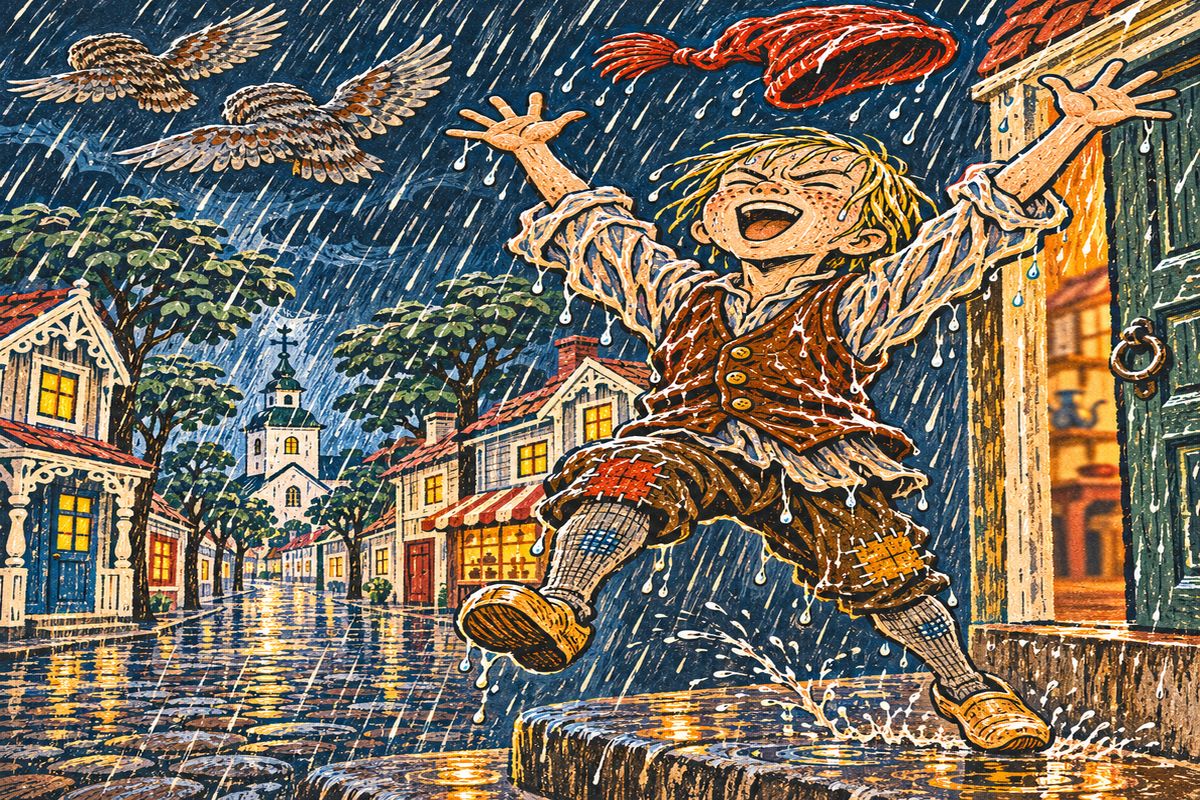
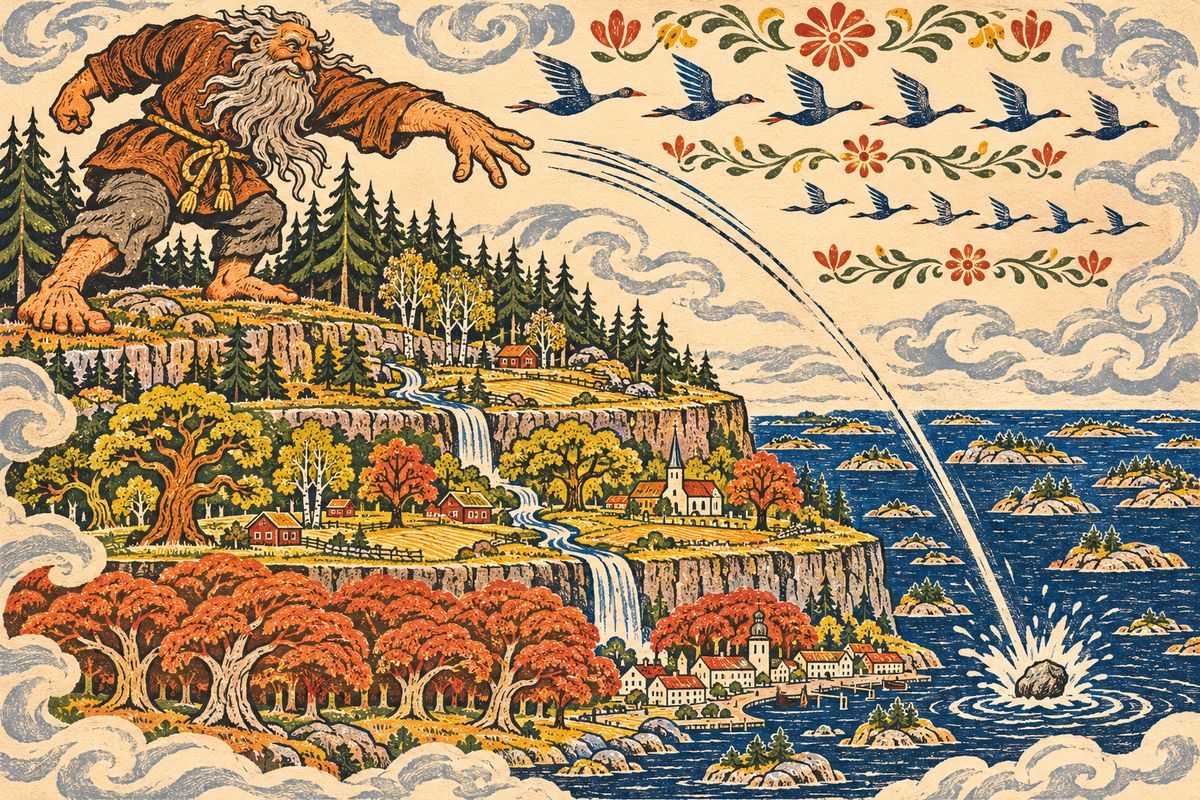
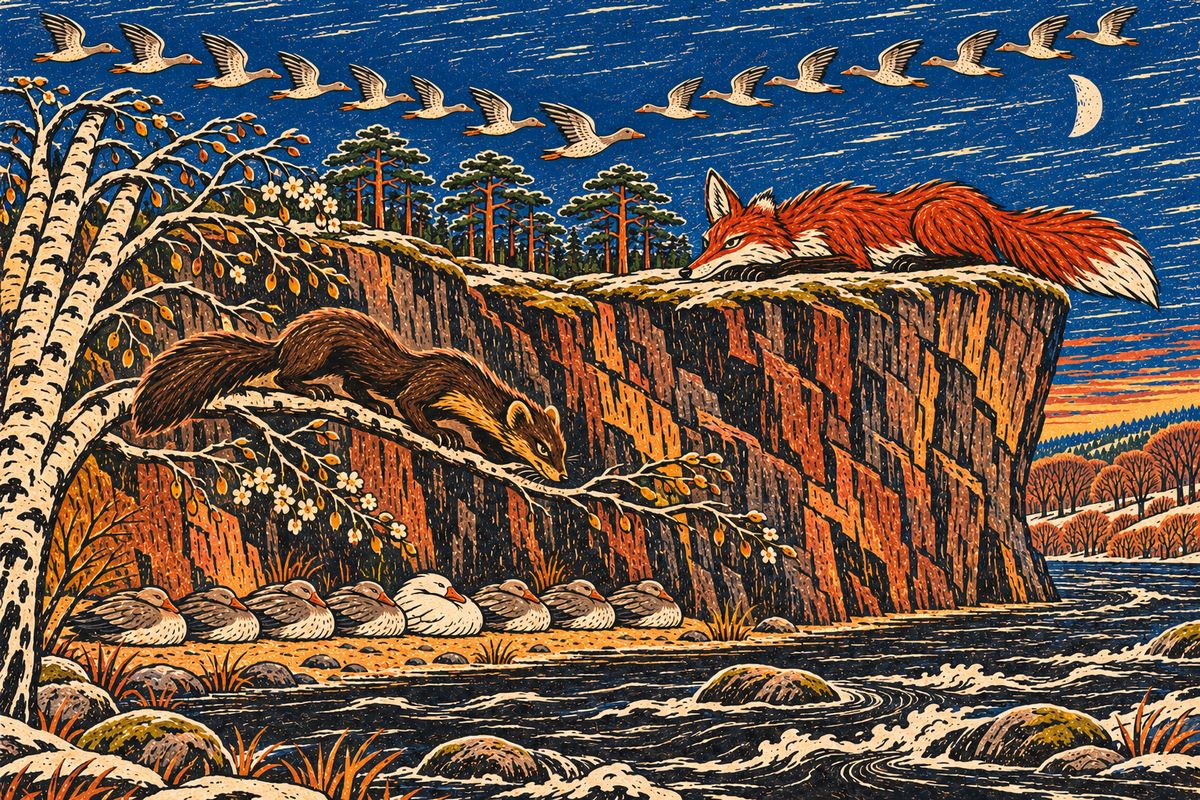
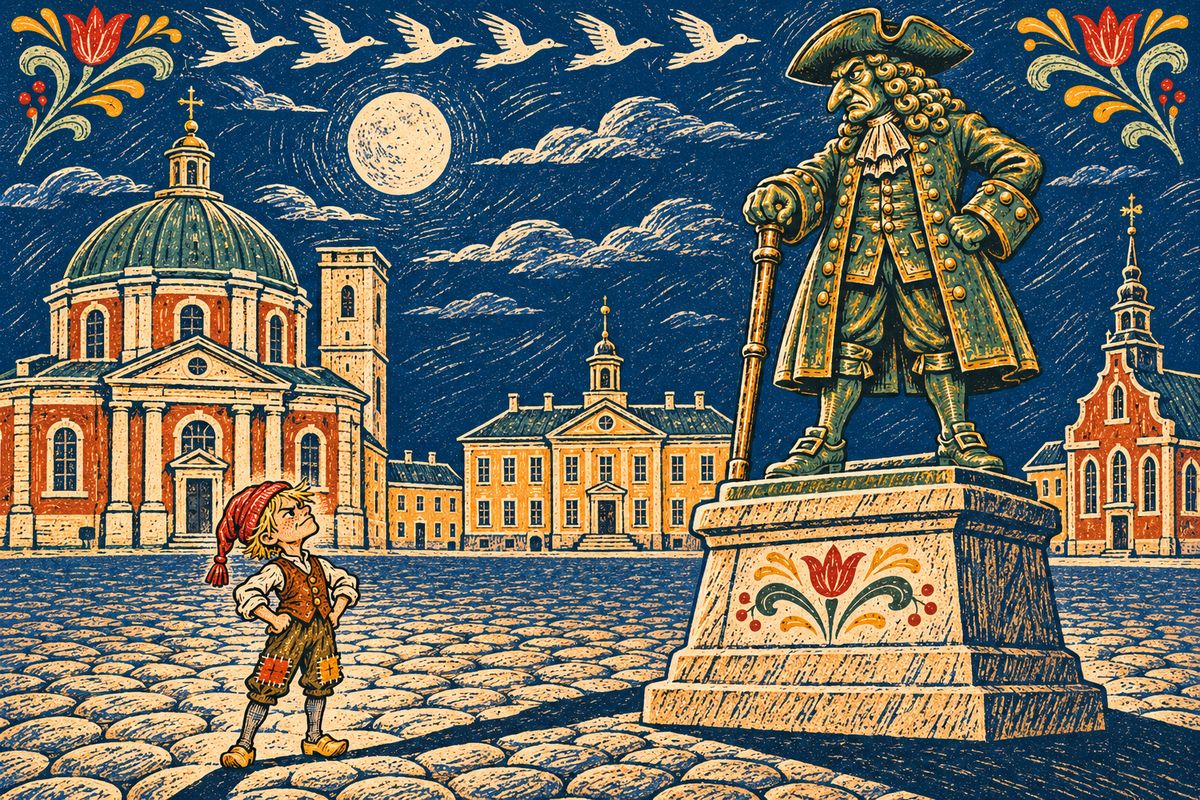
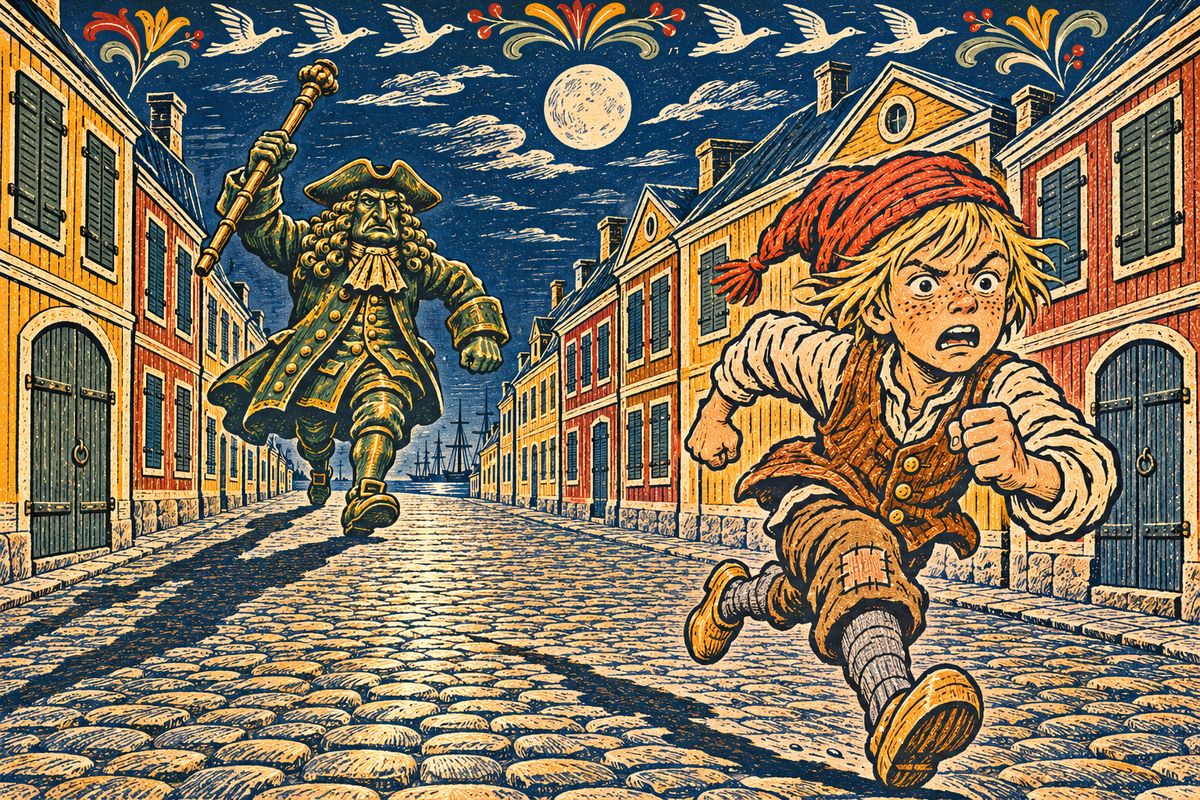
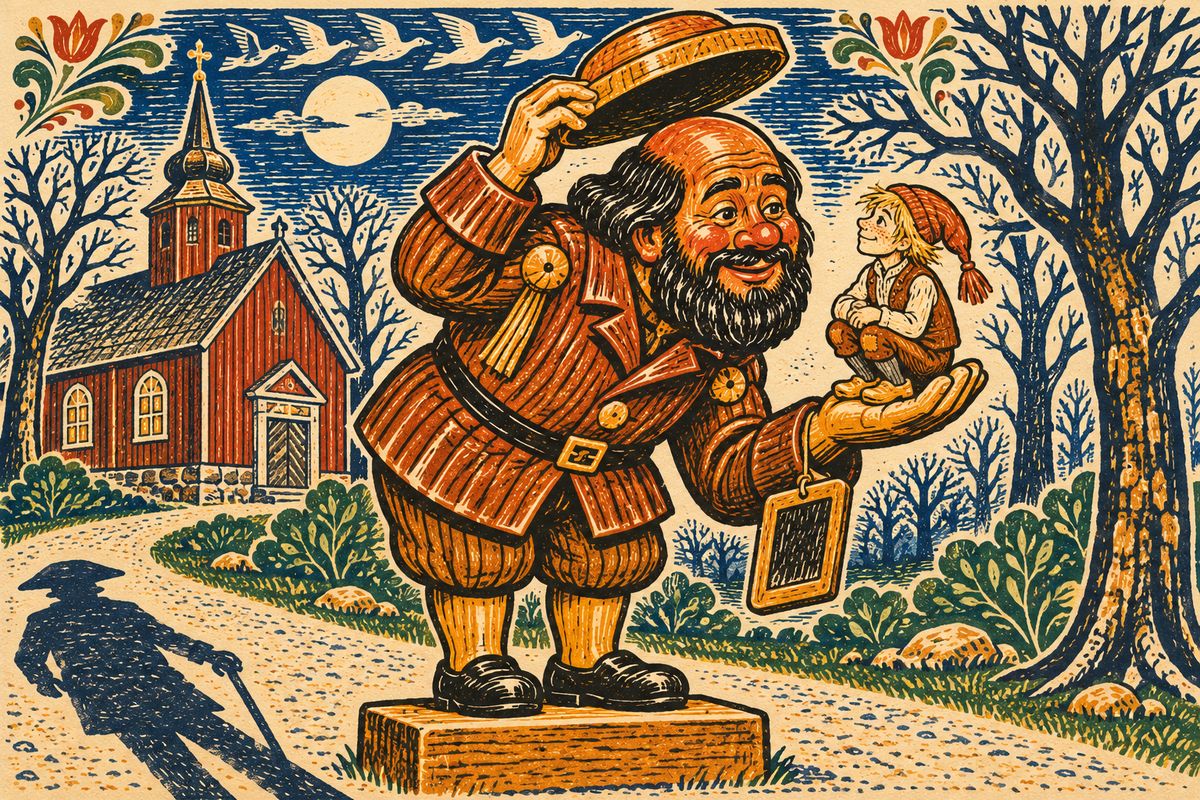
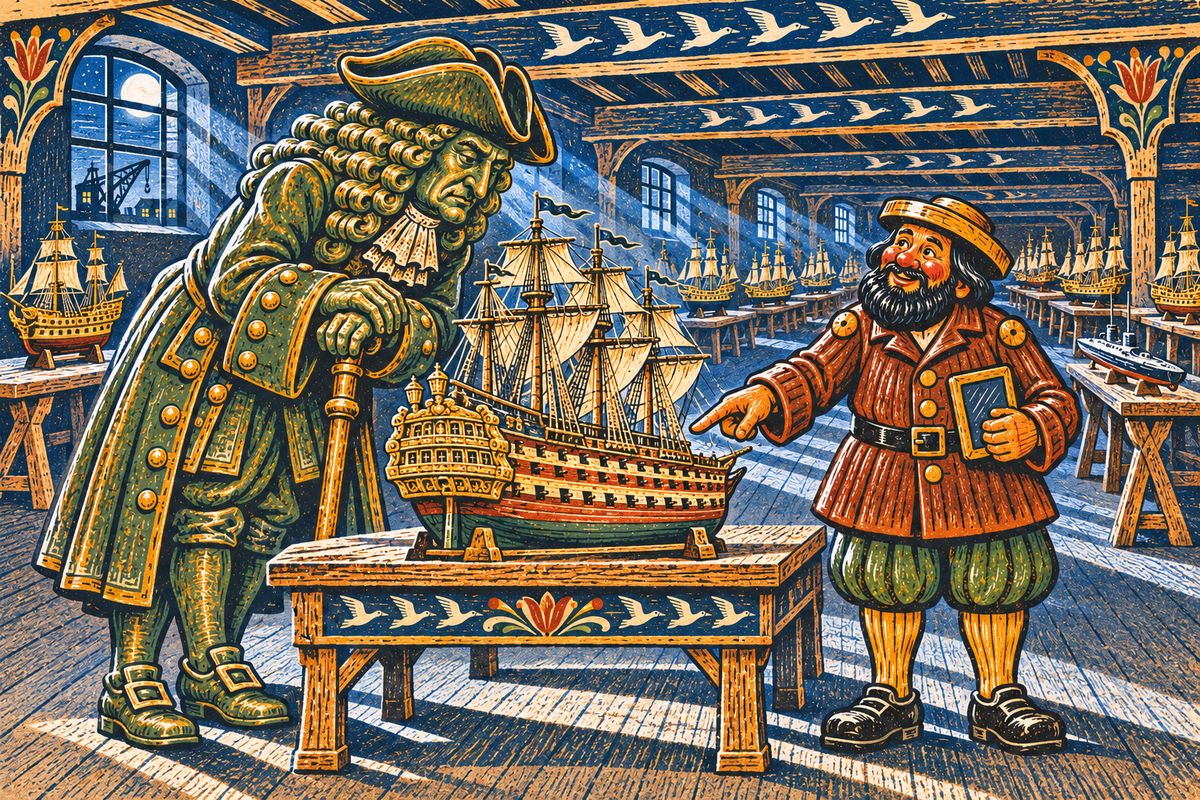
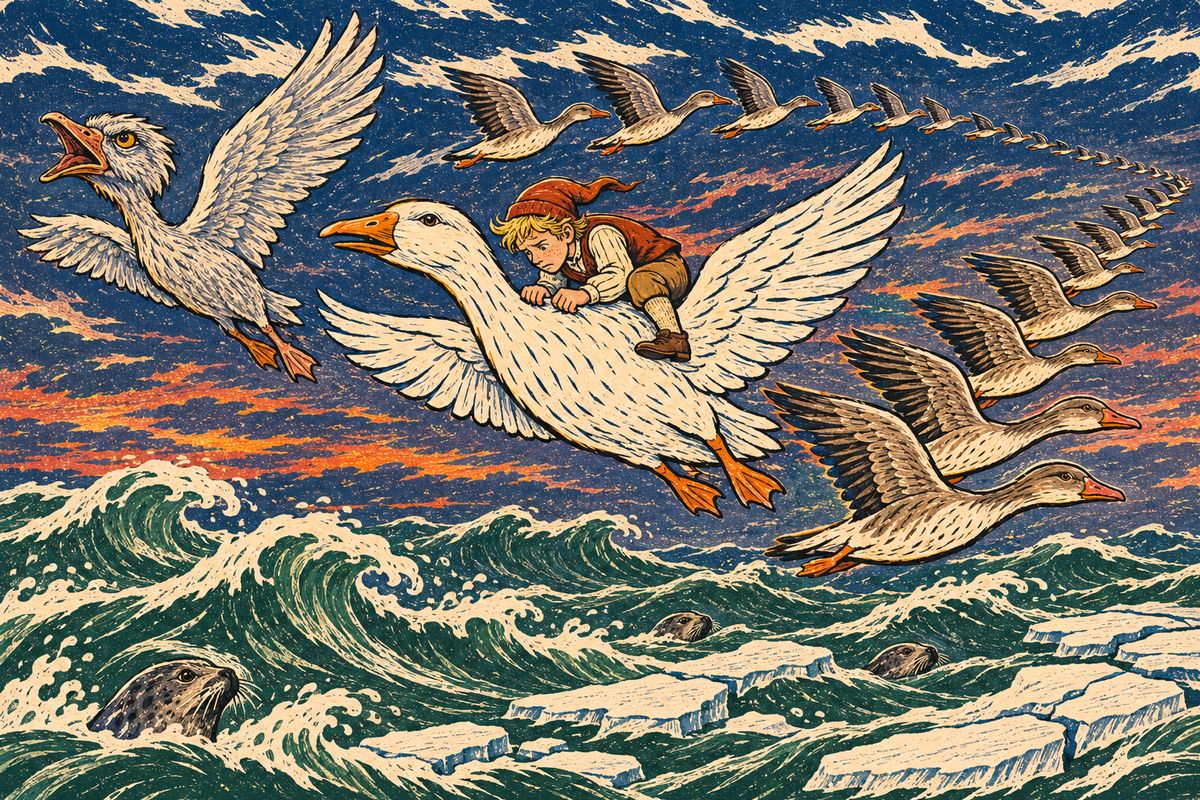
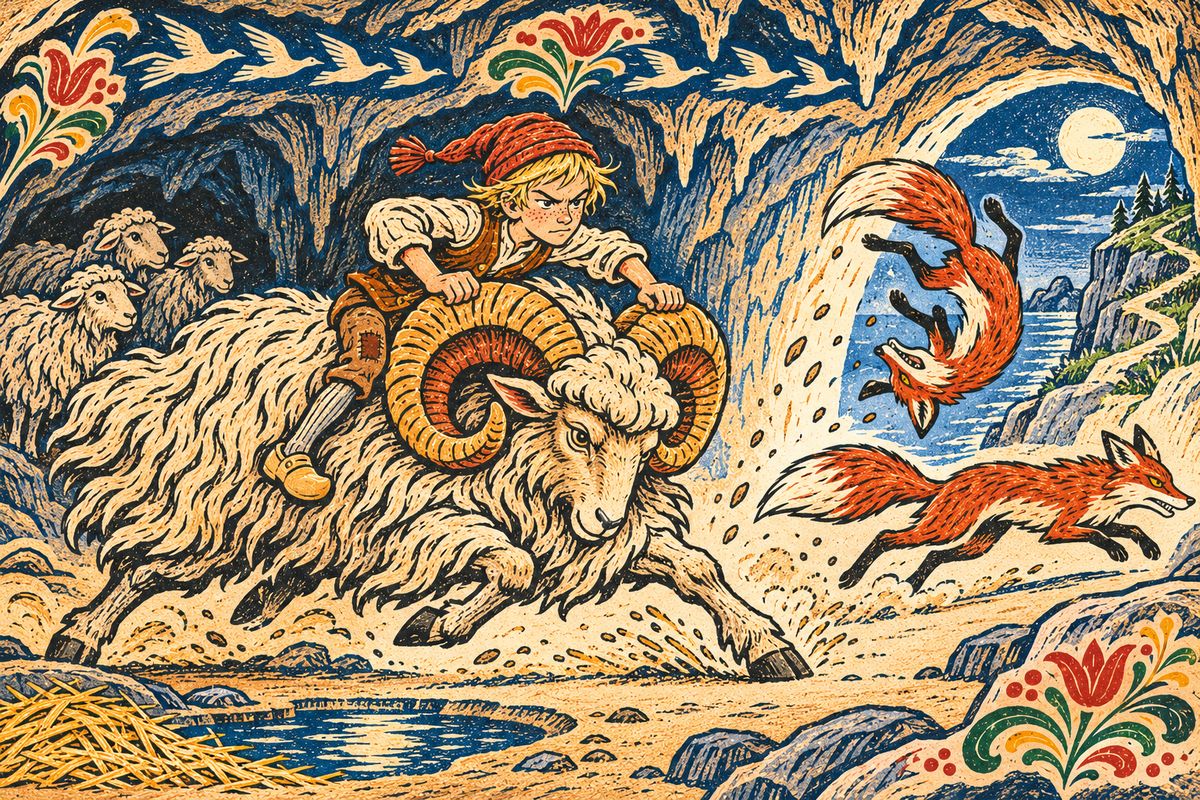
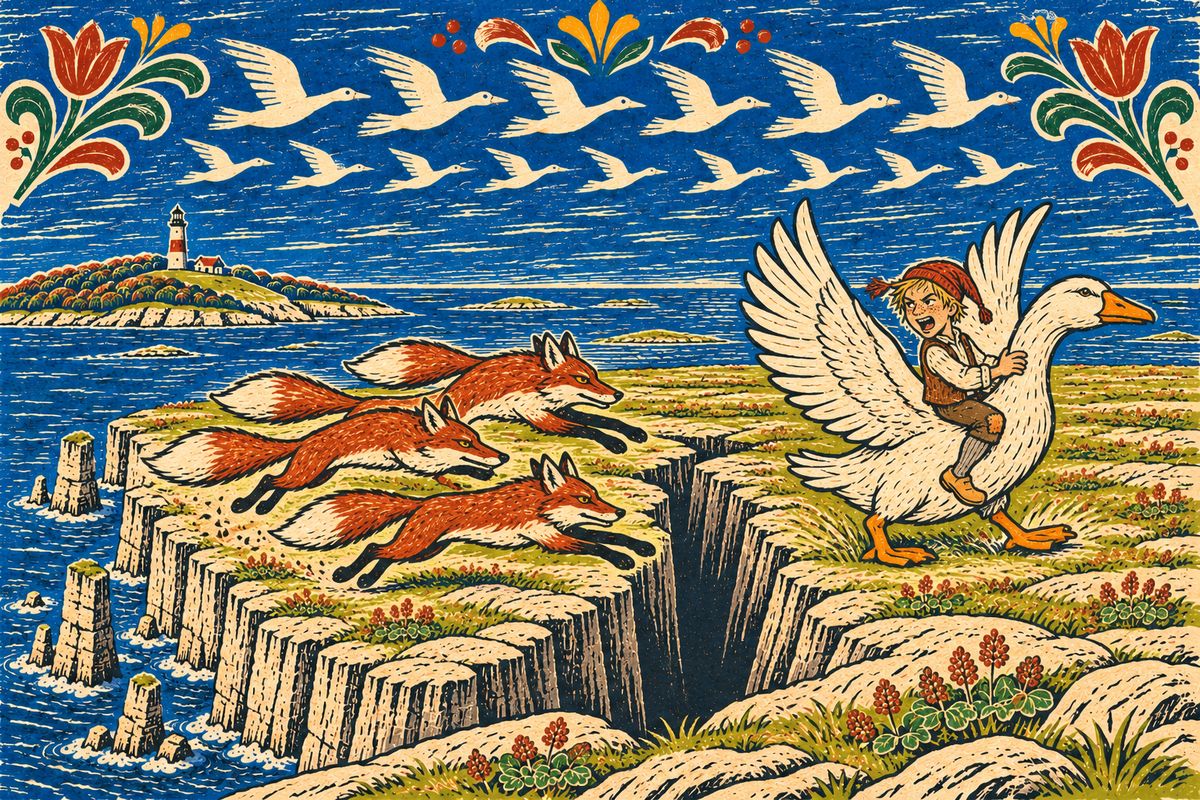
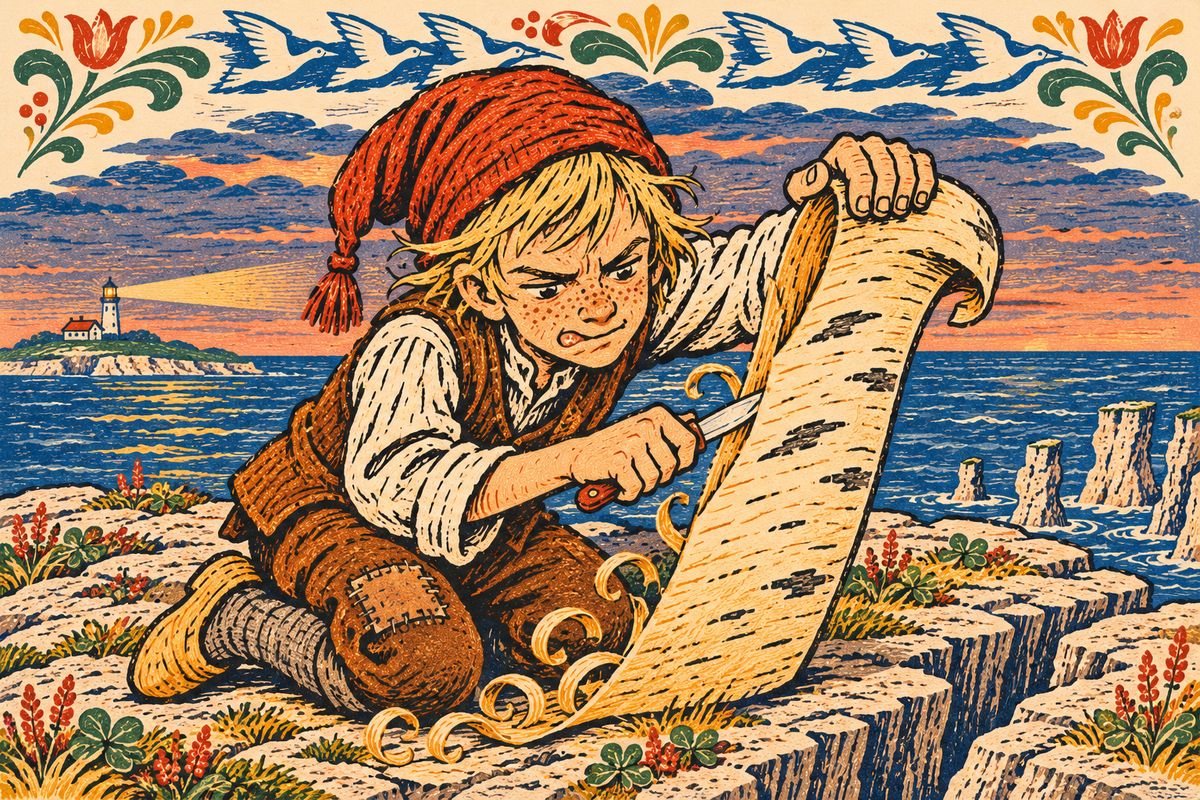
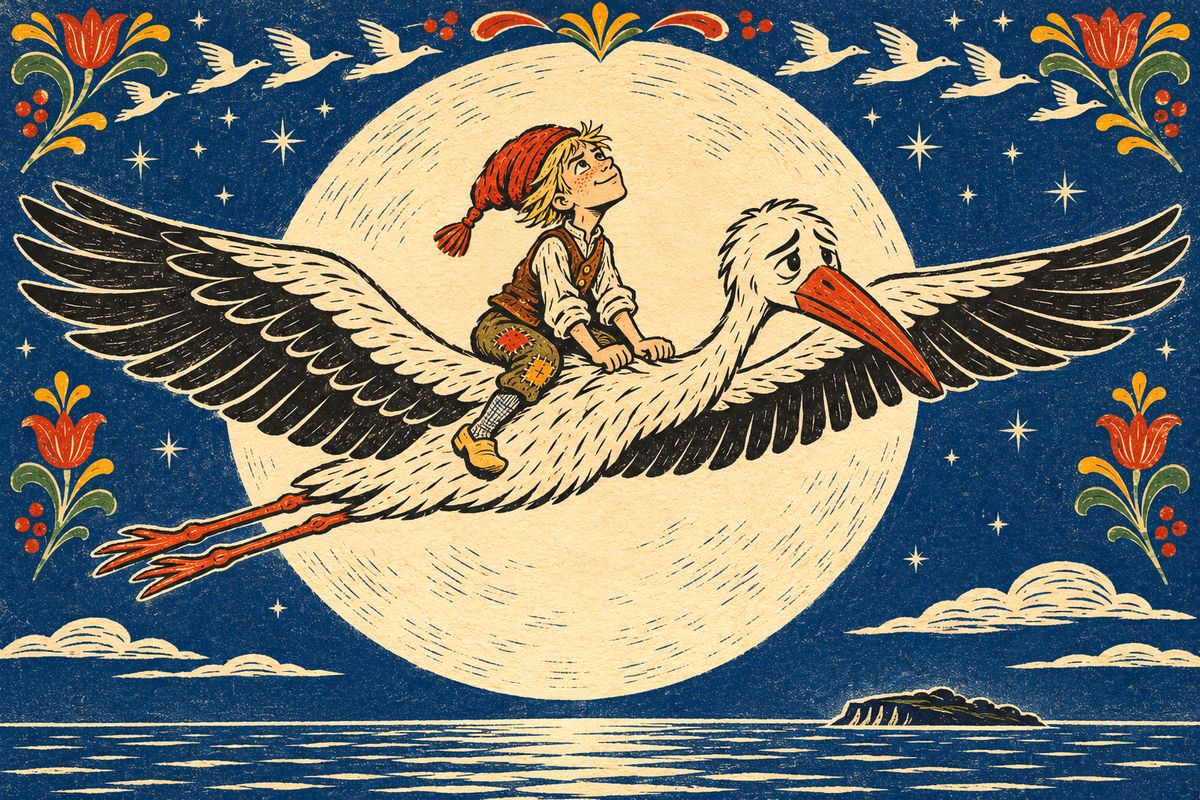
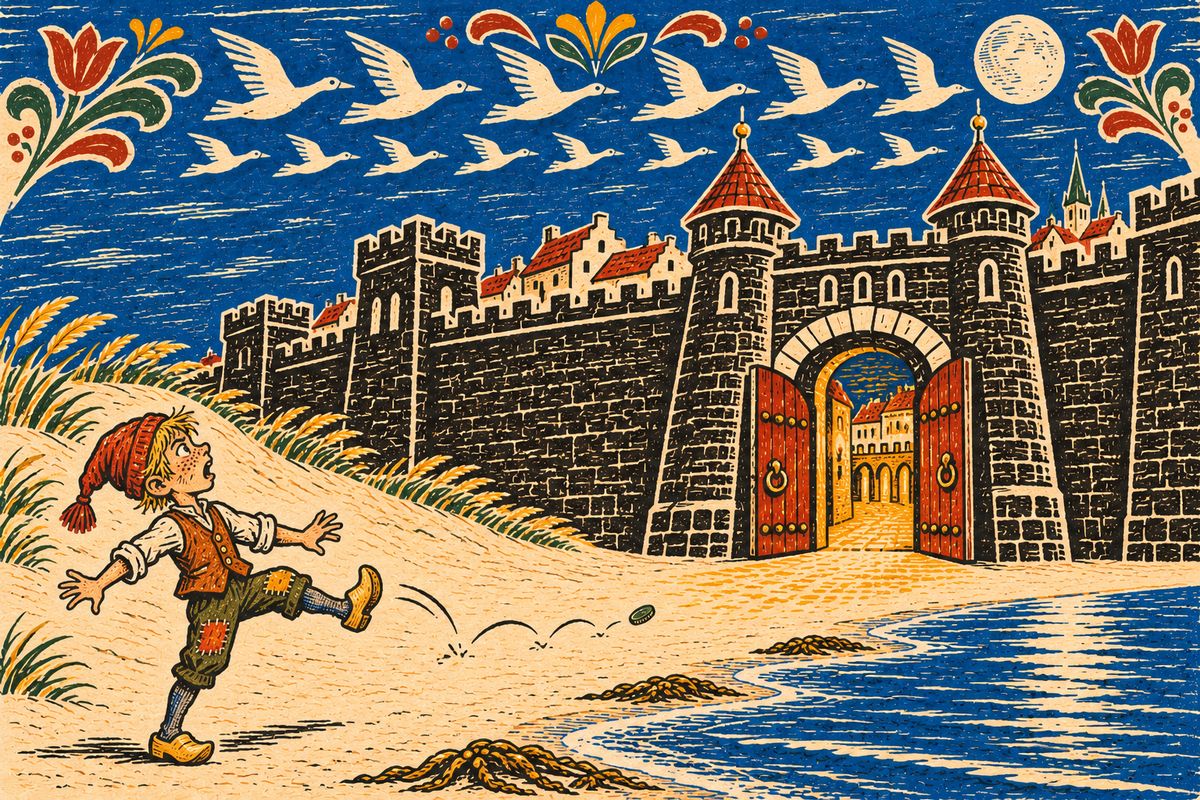
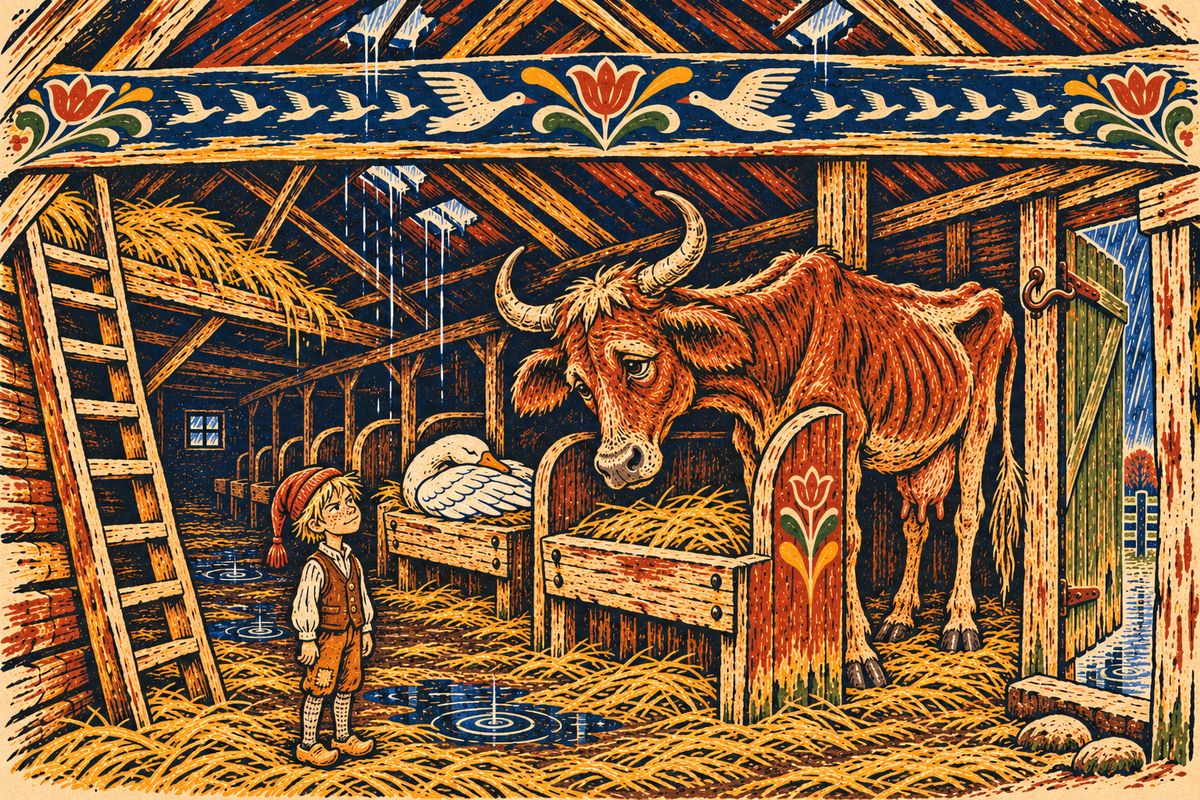
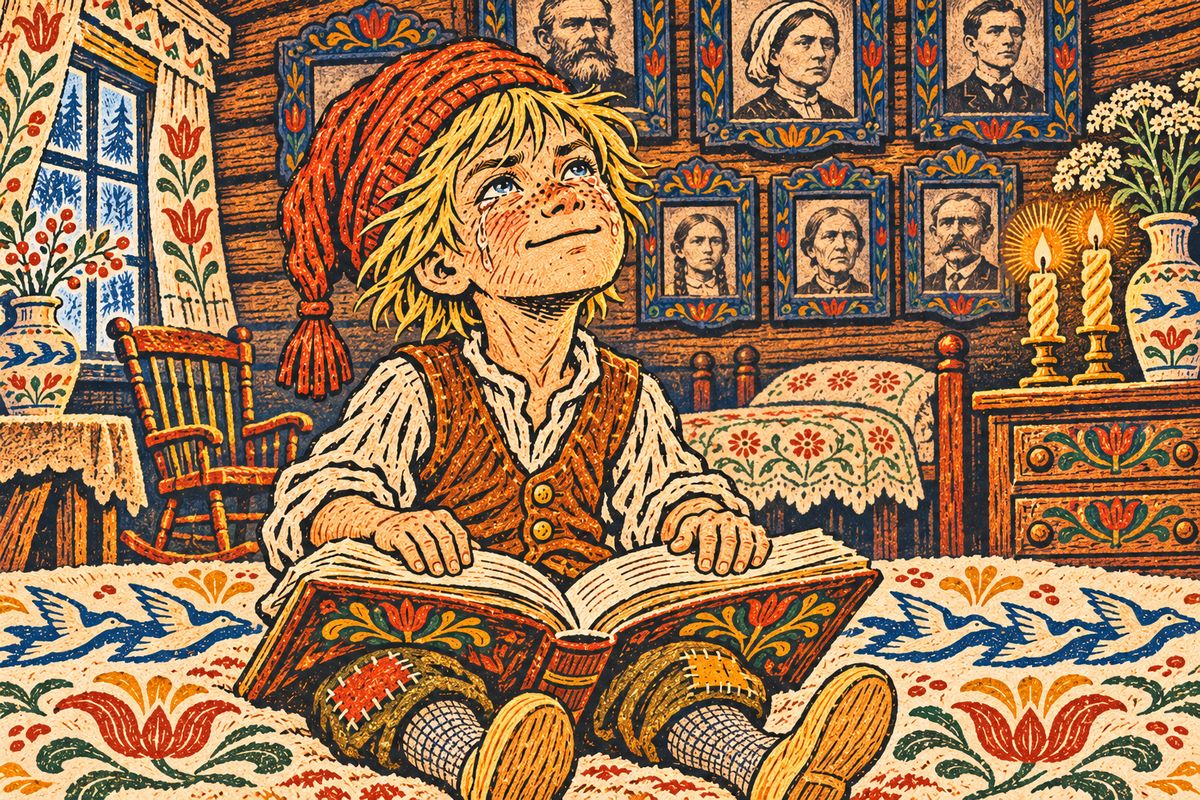
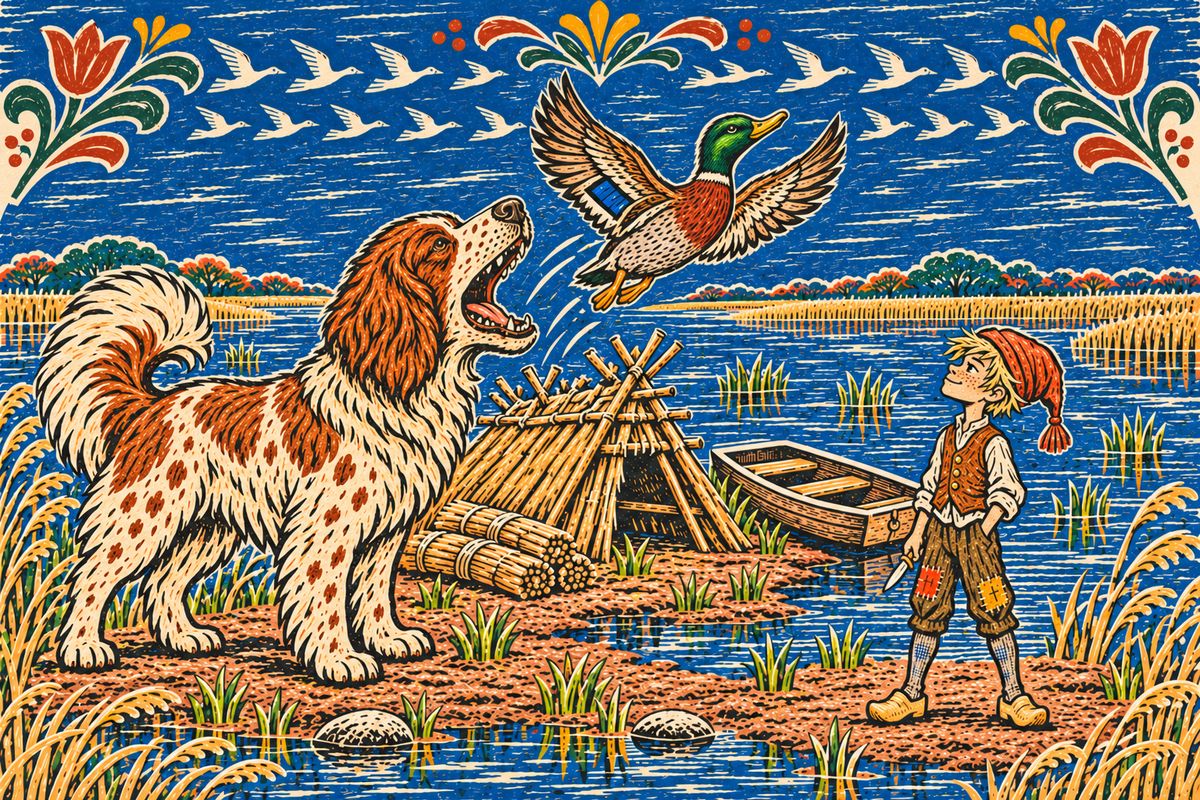
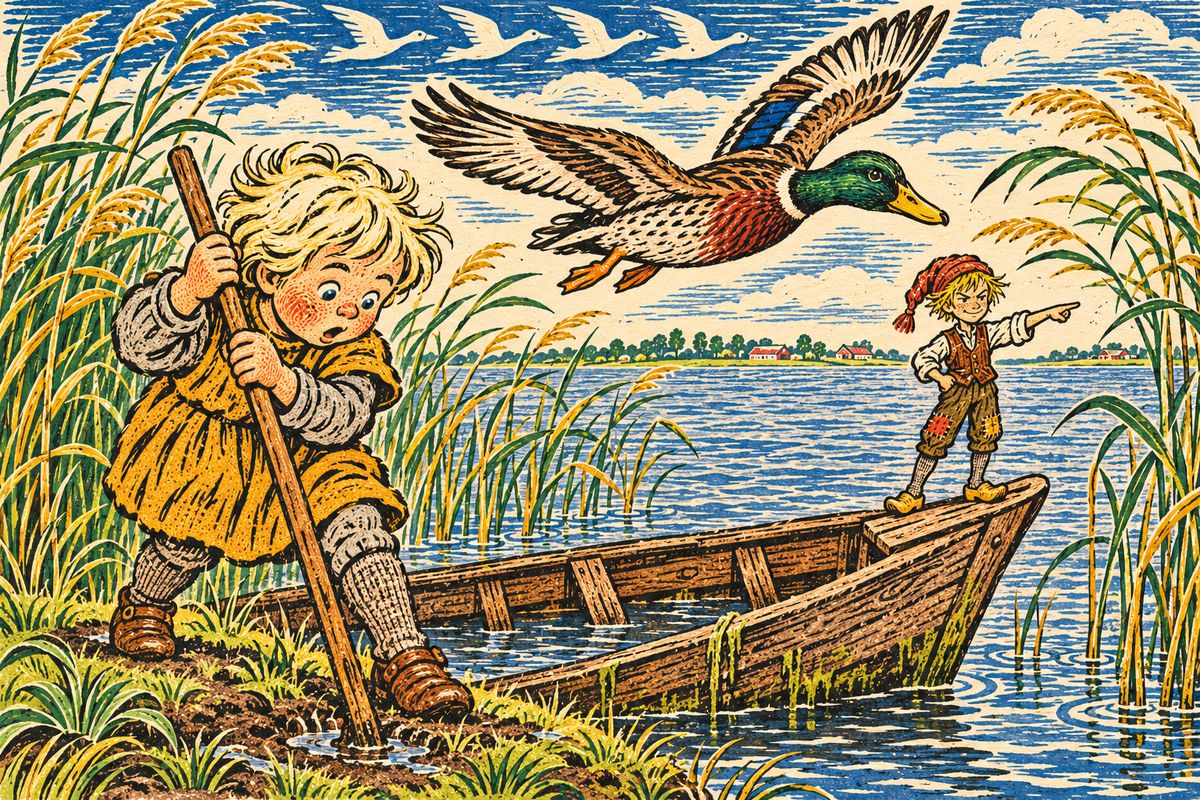
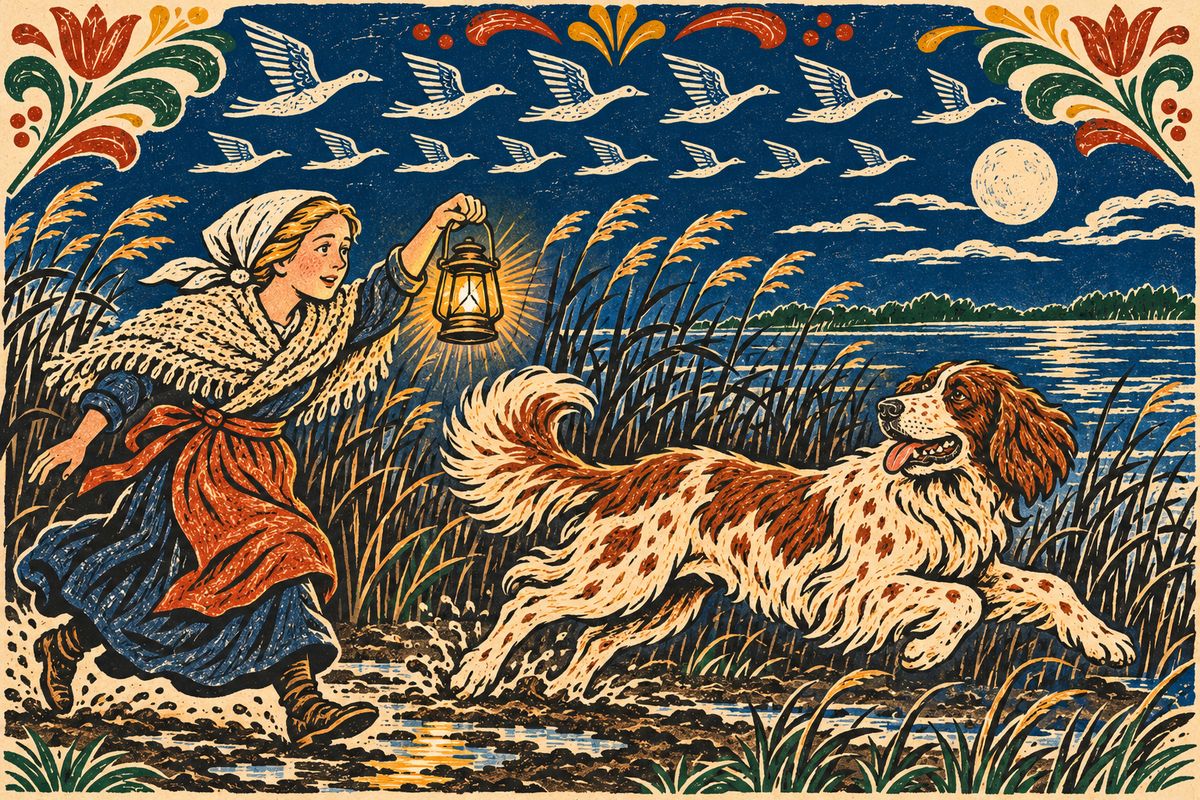
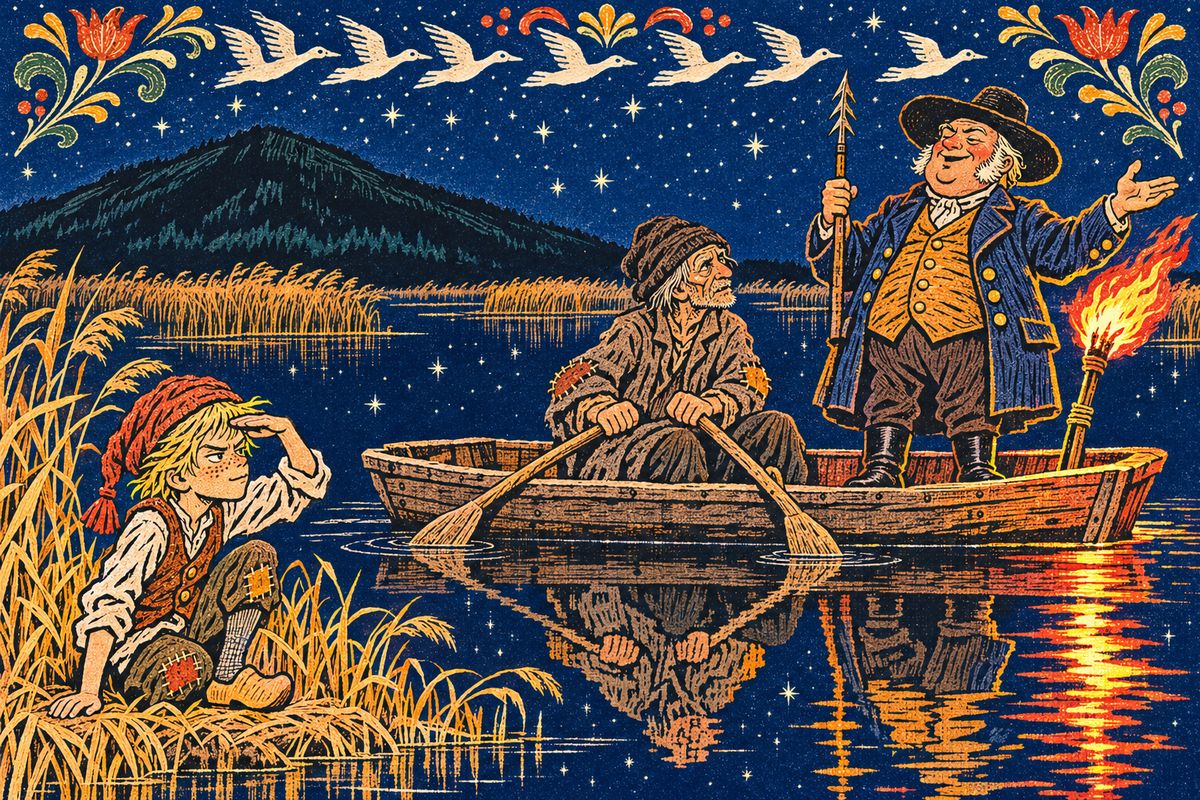
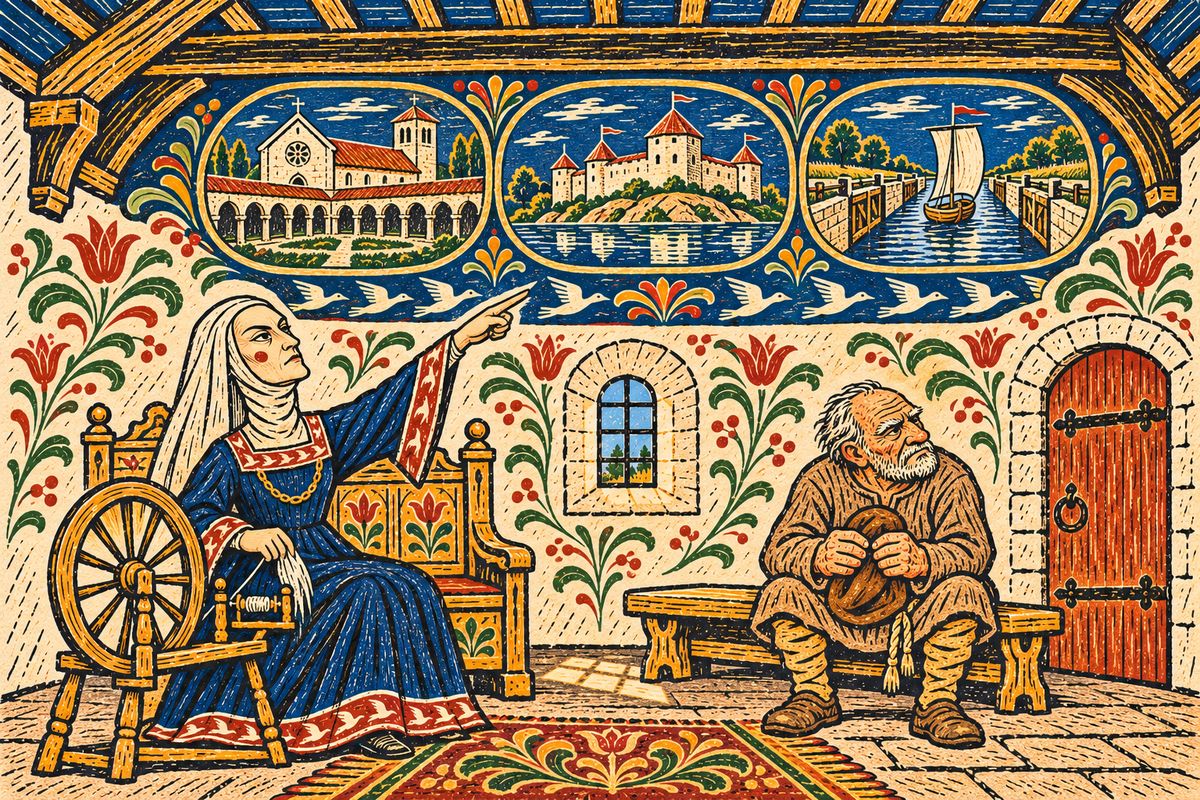
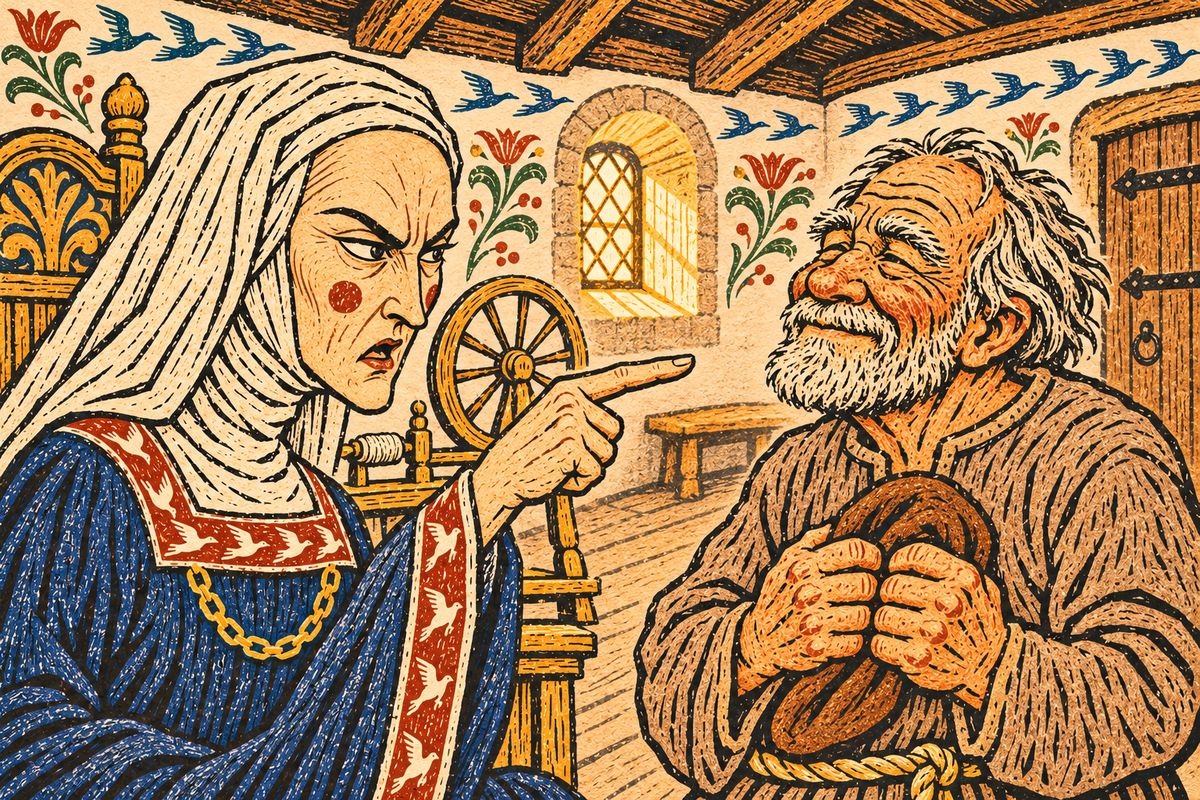
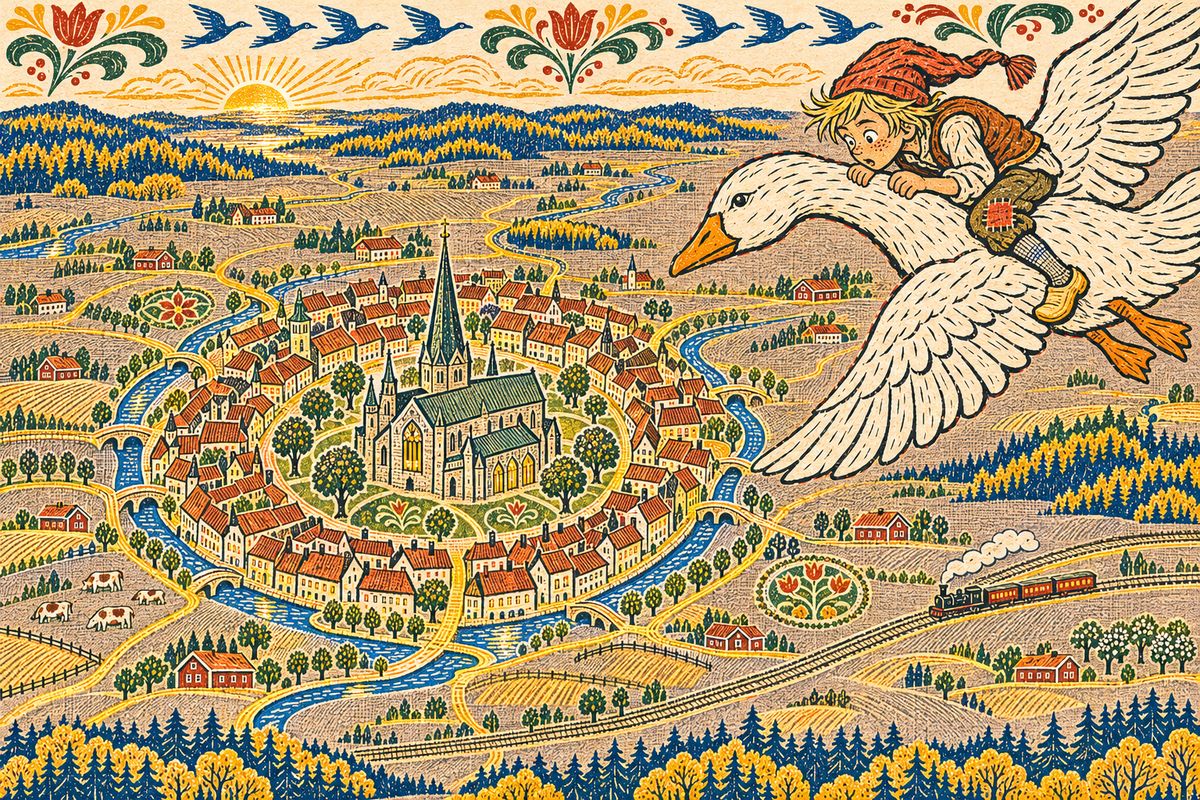
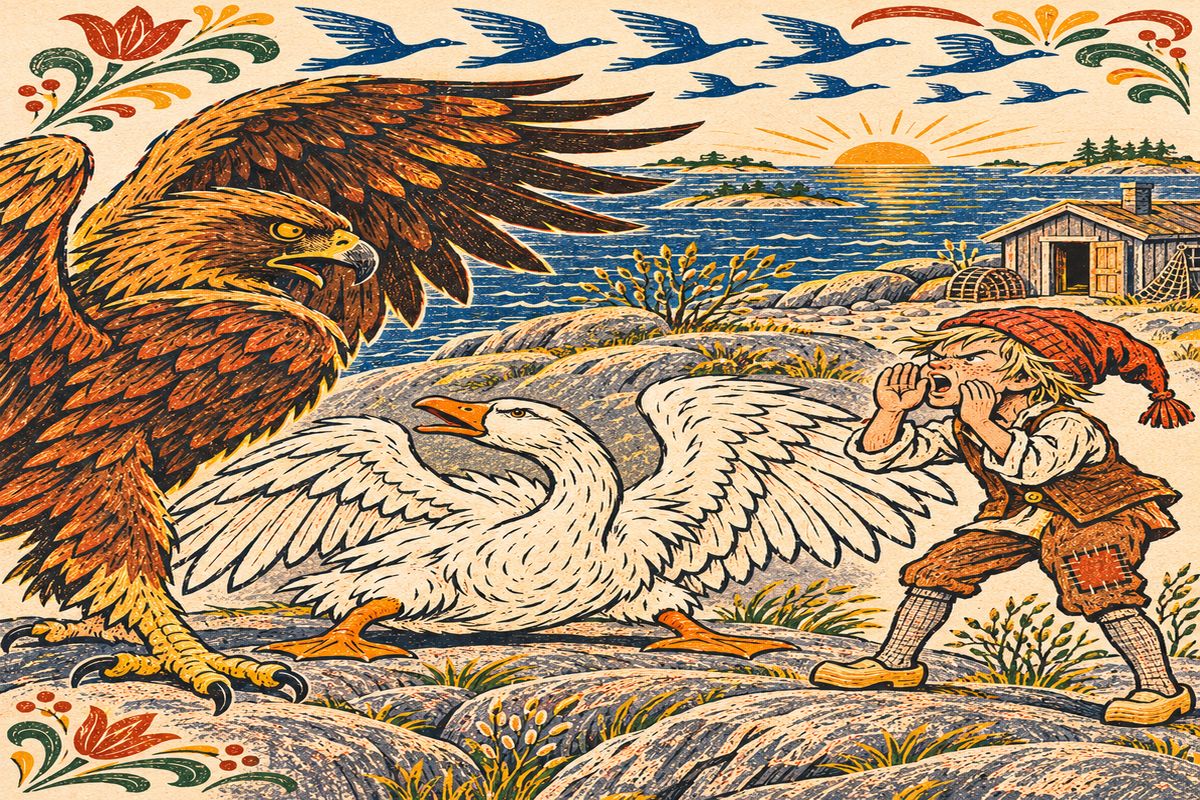
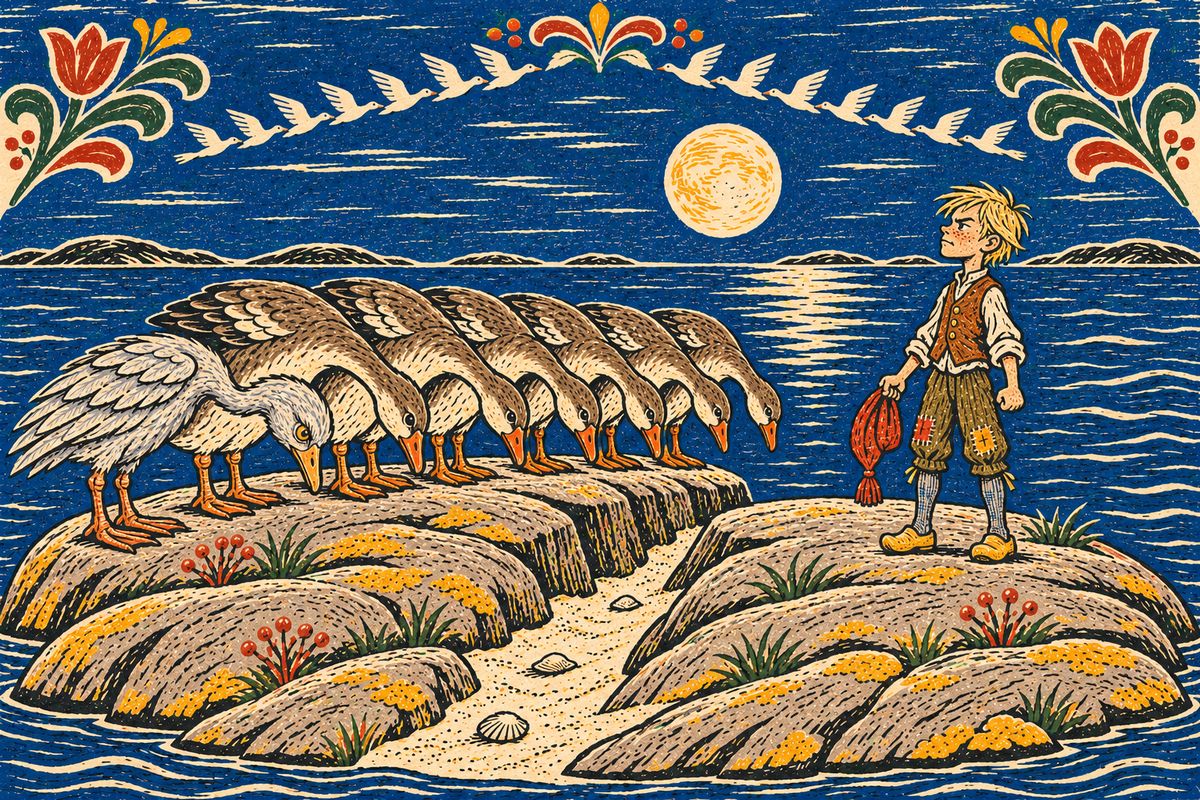
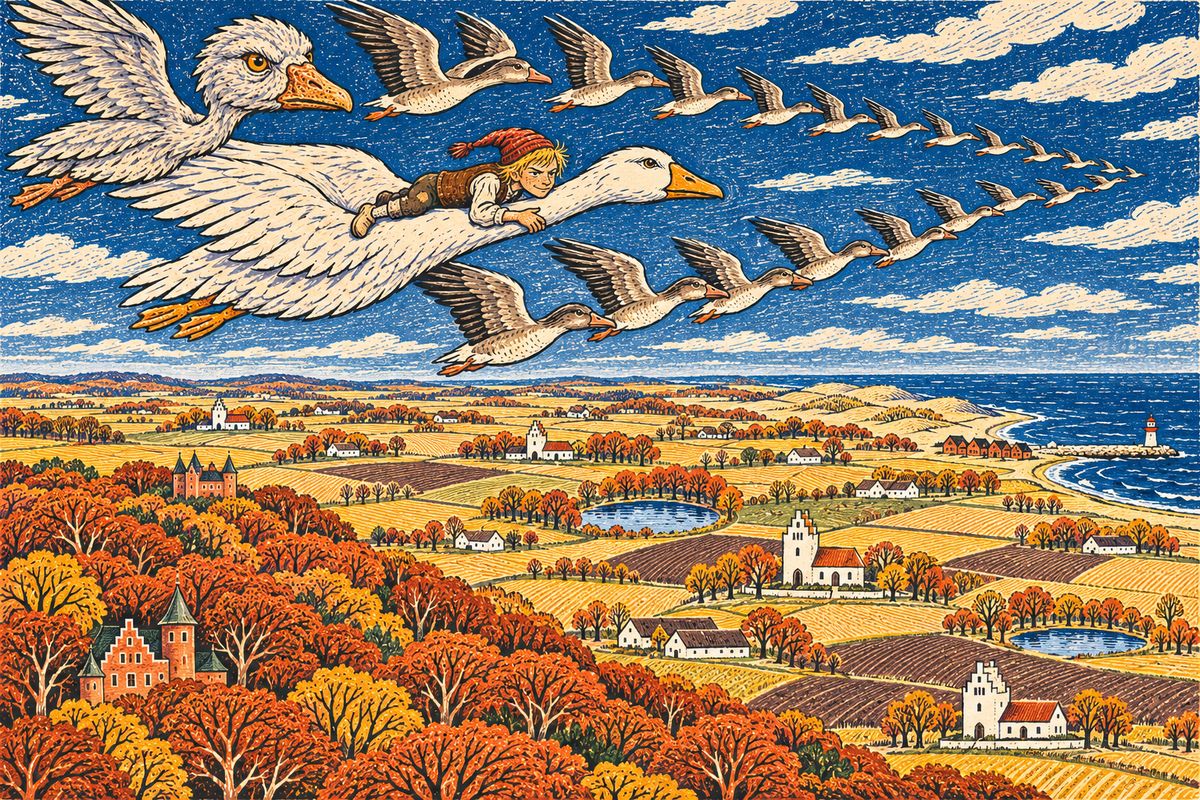
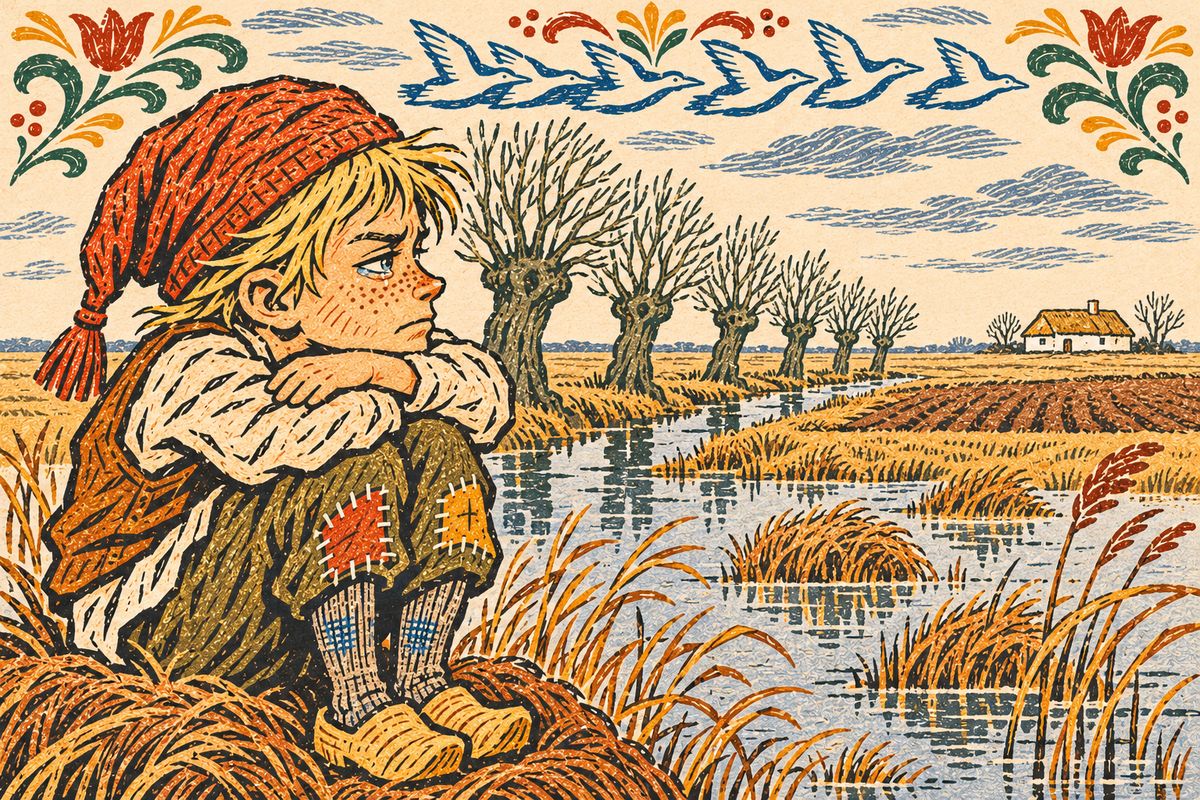
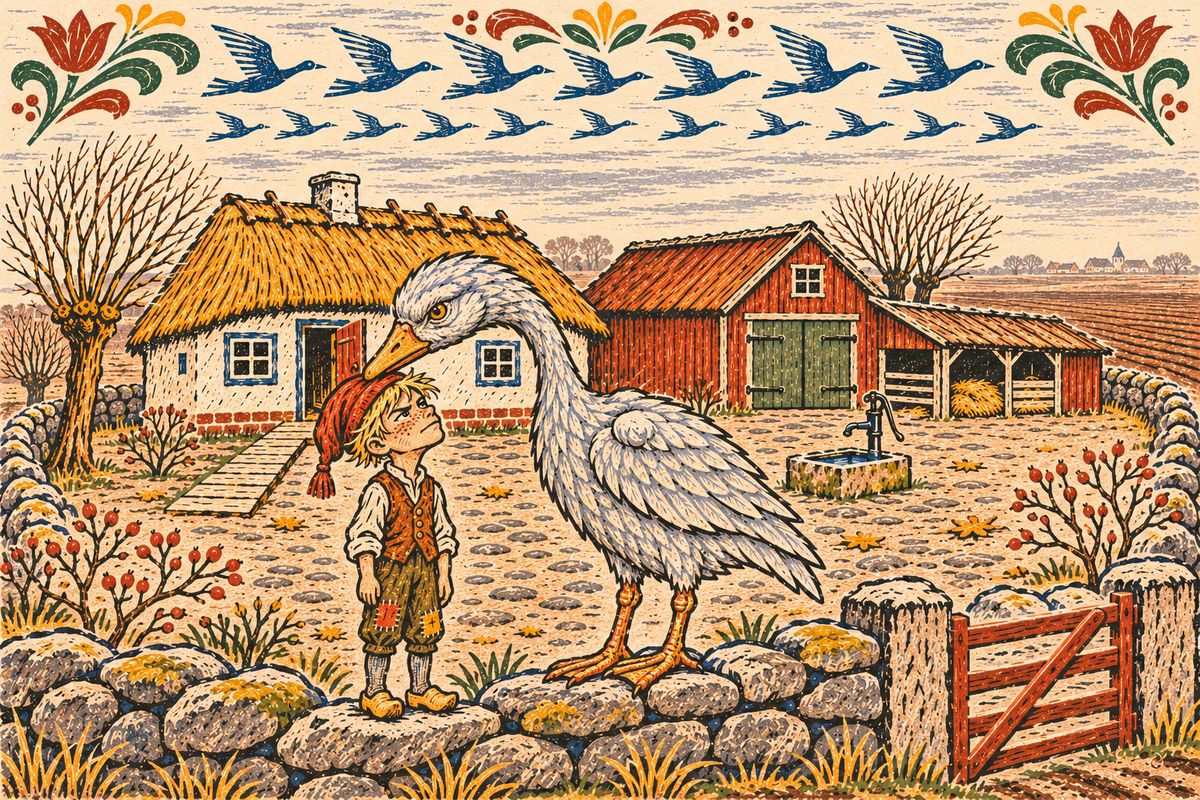
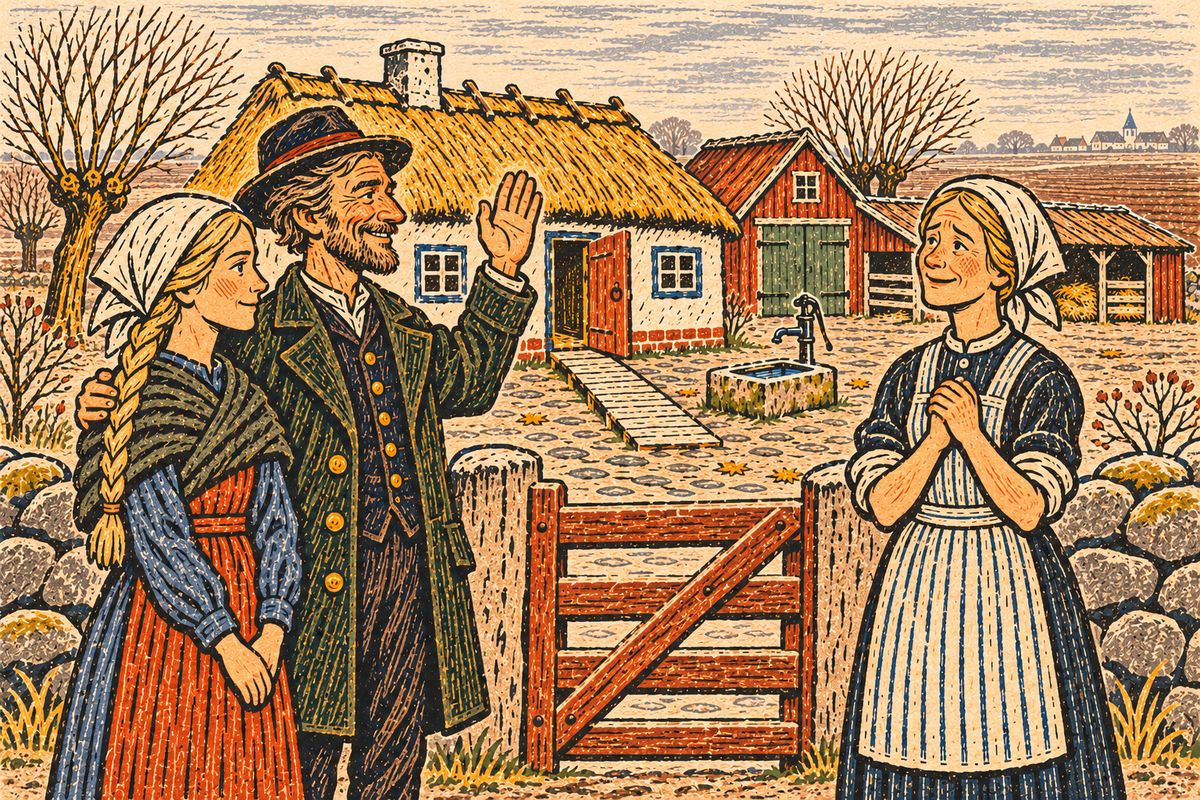
1One spring Sunday in West Vemminghög, Holger Nilsson and his wife set off for church, leaving their lazy, cruel son at home. Father made him promise to read the whole service, fourteen and a half pages of it. Alone in the big armchair, the boy mumbled through the sermon until the lark's song and the warm air sent him nodding off.2A small noise woke him. In the looking-glass on the window-sill he saw that his mother's precious oak chest stood open, and astride its edge sat an elf no taller than a hand's breadth, gazing lovingly at an old embroidery. The boy wasn't frightened at all. Such a tiny creature seemed made for a prank.3He snatched the old butterfly net from the window frame and swung it, and the elf tumbled head-first into the bottom. The elf begged to be freed, offering an old coin, a silver spoon and a gold penny. The boy agreed, then, wishing he had asked for more, began to shake the net to trap him again.4A stinging box on the ear sent him flying against the walls. When he woke, the room had grown enormous: he had to climb the chair and stand right in the book to read. Then he saw a tiny figure in the mirror. "Why, that one is dressed exactly like me!" It was himself.5Outside, a sparrow shrieked, "Look at Thumbietot!" and the hens ringed him, cackling "Served you right!" He begged the cat to say where the elf lived, but when he threatened to pull its tail again, it sprang and pinned him down, then let him go. "I only wanted you to know which one of us has the power now."6In the cowshed, Mayrose, Gold Lily and Star bellowed and tossed their horns, each remembering a cruelty: wooden shoes thrown, a wasp let loose in an ear, a mother's tears over her son. "It is well there is such a thing as justice in this world!" lowed Mayrose. Nobody would help him, and the boy crept away.7From the hedge he watched wild geese pass overhead, calling, "Come along! We're off to the hills!" Morten, the big white gander, flapped to follow. Thinking only of his parents' loss, the boy leapt down and flung his arms around the gander's neck, and Morten rose into the sky, carrying him along.8High above, the boy dared one glance down. Skåne lay spread beneath him like a huge checked cloth of green rye, yellow stubble and brown beech woods. "Fields and meadows!" honked the geese. He laughed, then remembered his misfortune and cried, and the next moment, rushing through the fresh spring air, he was laughing again.9All afternoon the white gander Morten fell further behind the wild geese. When the others called out that he was sinking, Akka from Kebnekaise only shouted back advice and never slowed down. "Tell him that he who has not the strength to fly with the flock can go back home!" Angry and proud, Morten kept going with Nils on his back.10At sunset the flock came down beside Vomb Lake, a cold, dark place still covered in ice. Morten lay on the shore, close to dying. Nils had always been cruel to him, but now he pushed and dragged the heavy bird into the water. Morten came round, caught a perch, and laid it at the boy's feet: "Here's a thank you for helping me into the water."11The wild geese said Morten could stay a few days to show what he was good for. But Nils refused to hide who he was. "My name is Nils Holgersson. Until today, I have been a human being." Akka staggered back, and the whole flock hissed at him. Morten swore to look after him, so she let the boy stay one night, then he must go home.12That night the geese roosted out on the drifting ice. Morten flew Nils out with an armful of dry grass to spread under his feet so he would not freeze to the ice. Then he tucked the boy under his wing. Buried in warm down, Nils fell asleep in less than two winks.13At midnight the ice touched the shore, and Smirre the fox crept out, snatched a goose by the wing and ran for the beech wood. Thinking he was a small dog, Nils chased him and grabbed his tail. Just as the fox opened his jaws, Nils braced against a trunk and pulled hard, and the goose fluttered free. Then he climbed a slender young beech, and Smirre lay down below to wait.14At dawn the geese came back. One by one they flew low and slow past Smirre, tempting him to leap, and in the confusion Morten carried Nils away from the young beech. All day the flock teased the fox until he dropped onto a pile of dry leaves, worn out. "Now you know, Mr. Fox, what happens to the one who dares to come near Akka of Kebnekaise!"15Akka warned the boy that foxes, martens, owls and hawks all hunted creatures as small as he, and told him to make friends with the little animals. But Sirle Squirrel turned his back. "Don't you think we know you are Nils the goose boy, who put squirrels in cages?" The birds and hares remembered his cruelty too, and no one would help him.16That Thursday Nils heard that Sirle's wife had been caught and caged at a farm by Vomb Lake. All night he ran to the hazel grove and back, carrying her starving babies to her. When the house cat crept close, he handed one baby to the old grandma watching by the pump, and she held it gently until he could climb up to the cage.17In the morning everyone laughed at the grandma until they saw four newborn squirrels in the cage. The farmer said the farm had shamed itself before animals and people, and he sent the whole family back to the hazel grove. Soon the bullfinches were singing in every bush in Övid Park: "Who is so honoured now as Thumbietot!"18When Smirre Fox drove the flock to Vittskövle, children carried off Morten. Following his trail of white down, Nils hid in a student's botanist's box and was carried through hour after hour of the castle tour. At last he found the gander in a cottage, where a woman sat clipping his wings. She took Nils for a goblin, gasped, and let go.19On Sunday Akka led the geese to Nils, walking slowly and solemnly. To thank him, she had persuaded the elf to make him human again as soon as he went home. But Nils wept. "I don't want to be human. I want to go with you to Lapland!" Akka warned him he might regret it, then agreed, and he cried again, this time for joy.20In south-eastern Skåne stood Glimminge castle, a grim stone fortress with walls so thick there was hardly room inside for anything else. No people lived there now, but deep in its cellar dwelt the last black rats in Skåne. The gray rats had taken every other town and farm from them, yet here the black rats had held out, night after night, year after year.21The cranes had invited the geese to their great dance on Kullaberg, but Akka would not take Thumbietot, and the boy sulked all day by a pond. Toward evening he looked up and cried out: the round gray stones of a long wall seemed to grow legs and run. It was an army of gray rats, marching toward the castle. "That's not a good omen," said Iksi.22Then Ermenrich the stork landed among the geese and grumbled that the black rats' fighters had all gone to Kullaberg; tonight the castle would fall. Akka said she would help, and wanted Thumbietot along. When the boy stepped forward, nose in the air, the stork snatched him up and tossed him skyward seven times, like a frog. "That's a human being, Herr Ermenrich!" shrieked the geese.23Furious, Nils rode Akka to the stork's nest on the castle roof, where the old cat, two owls and twelve feeble black rats sat in despair. Akka sent one owl to call the black rats home, and the other on a secret errand to Lund. Near midnight the gray rats found an open cellar air-hole, climbed on one another's shoulders, swarmed through the empty castle, and fell upon the grain.24But hardly had they tasted the wheat when a shrill pipe sounded from the yard. The lady owl had brought back a tiny horn pipe that Flammea the steeple-owl had found in Lund cathedral, a pipe once used to rule rats and mice. Nils stood alone in the moonlit courtyard and played, and the gray rats tumbled out of the castle and circled him, spellbound.25When every gray rat was out, the boy walked slowly onto the highway toward Vallby, piping without pause. He led them through hedges and down into ditches, and they could not help but follow. He played as long as the starlight lasted, he played at daybreak, he played at sunrise, drawing the whole gray army farther and farther from the grain at Glimminge castle.26At dawn Herr Ermenrich the stork snatched the boy up from the road and set him in his nest, begging pardon for his rudeness. When Akka praised Nils for saving the black rats, he would not take credit he hadn't earned. "I only wanted to show Herr Ermenrich that I was of some consequence," he said, and Akka trusted him all the more.27So Thumbietot rode to Kullaberg on the stork's back. Herr Ermenrich was a master flyer: he hung motionless at dizzying heights, then dropped like a stone and whirled in circles round Akka's steady wedge. The boy clung on in terror, yet knew he had never felt what real flying was until now.28On the play-day a truce reigned, and no creature need fear another. Clouds of larks, sparrows and croaking ravens poured down onto the knolls, each kind to its own. After the crows' dull dance and the grouse's spring songs came the hares, leaping, spinning and somersaulting until every watcher breathed faster: winter was over.29While the grouse sang, Smirre Fox crept onto the geese's knoll and killed the goose who cried a warning, though the flock escaped into the air. He had broken the peace. The oldest fox bit off his ear to mark him an outlaw, and Smirre fled Kullaberg and all of Skåne with the young foxes yowling at his heels.30Then the stags from Häckeberga locked antlers and shoved until every animal itched to fight. They stopped just in time, and a whisper ran round: "The cranes are coming!" The grey cranes glided down, half flying, half dancing, like mist over a marsh, and every creature, winged or not, ached to rise above the clouds.31On March thirtieth the wild geese left Vomb Lake and flew north over Skåne, past dry hills, a manor, a church steeple and a royal castle between two lakes. Then rain clouds rolled in, and from up among them Nils saw that they were enormous carts piled with sacks and barrels, all tipping their water out at once.32The rain fell all afternoon, and at dusk the geese came down under a stunted pine in a cold, half-frozen marsh. In the pitch dark Nils lay shivering under Morten's wing, listening to rustles and stealthy steps. At last, terrified, he slid out and stole off toward the lights of a village, meaning to be back before sunrise.33He had come to a cathedral town in Blekinge, where people laughed behind lit windows. Nils climbed onto a red corn-drill outside a shop and pretended to drive it. Walking past the post office, the doctor's house and the church, he marvelled at how clever human beings were, and grew dreadfully afraid he might never be one of them again.34Sitting on a doorstep in the pouring rain, Nils overheard two owls gossiping about a Skåne boy turned into an elf: if he watched over the gander until it came home safe and sound, he would be human again. The owls flew off to the church tower, and Nils flung his cap in the air. "Hurrah! Then I shall become a human being again!"35Next day, Småland was still frozen, so Akka led the flock east over Blekinge, which lay hidden in fog. Nils remembered his teacher's lesson: Blekinge was a stairway of three steps down from Småland to the sea, poor at the top and richest by the shore. An old giant had once thrown stones from up there to scare the salmon upstream, and they became the islands.36Driven out of Skåne, Smirre Fox was prowling poor, empty Blekinge when he saw a flock of wild geese with one white goose among them. He followed them to Ronneby River, but they slept on a sand-strip under a cliff he could not climb. So he sent a hungry marten creeping down the branches to reach them.37The boy could not sleep. Afraid of the dark, he had crept out from under Morten's wing to keep watch. When the marten crouched on the lowest branch, ready to spring, Nils snatched up a stone and threw it with all his strength. The marten tumbled into the river with a great splash, and the geese flew off.38Akka led the flock to the wet stones below Djupafors waterfall, but Smirre followed and coaxed Gripe the otter into the torrent. Gripe fought his way up through the foam. Just as he climbed toward the geese, Nils ran forward and jabbed his paw with his little knife, and the current swept the otter away.39At last the geese settled on a balcony of the empty Ronneby spa. Below, Smirre yowled that he would make peace if Akka threw Thumbietot down to him. "I'm not going to give you Thumbietot," said Akka. "We would willingly give our lives for his sake!" Nils lay awake, deeply moved, and from then on he truly cared for others.40On the night of April second, Akka led the flock over the sea to find a sleeping place safe from Smirre. The moonlit world looked bewitched: under a green-glass sky, the boy saw an island of black stone blocks and gold sparks, ringed with sea-monsters, and a giant on its peak raising his arms. Then the geese landed, and it turned out to be Karlskrona.41While the geese slept on the cathedral tower, the boy slid down the waterspout to see the city. The empty square made him feel tiny, and only a stern bronze statue stood on its high pedestal. To cheer himself up, he jeered at it: "What is that long-lipped thing doing here?" Then he set off toward the sea.42He had not gone far when heavy footsteps rang on the pavement behind him and a stick pounded the stones. The ground trembled and the houses shook. The bronze man had come down from his pedestal! The terrified boy dodged into a side street, but the clanging steps turned after him.43Near an old wooden church, a figure beckoned to him. It was Rosenbom, the carved wooden poor-box man. As the bronze footsteps came into the churchyard, the wooden man bent down and lifted the boy in his broad hand. He tucked him under his hat just before the king arrived, then told His Majesty that the brat had gone to hide in the shipyard.44The king made Rosenbom come along, and the two stamped into the shipyard to search. In the hall of models, His Majesty forgot all about the boy. All night the old boatswain told him of the ships, of the battles and of the men who had built Sweden's navy. Under the wooden hat, Nils listened, and tears came to his eyes.45Among the fierce old figureheads, the king ordered Rosenbom to take off his hat, and there stood Nils on his bald pate. "Hurrah for you, Longlip!" he shouted, unafraid at last. The king banged his stick, but the sun rose, and both statues melted away like mist. Then the white gander swooped down from the sky and carried the boy away.46An old gray goose advised Akka to throw Smirre off the track by flying over the sea to Öland. The water lay so smooth that sky and sea melted together, and Nils thought they had left the earth. "Think, if we are on our way up to heaven!" he said. Then two shots rang out below.47Akka climbed out of range, but Nils couldn't understand how people could shoot at such birds. Near Öland a thick fog rolled over them. The other birds made a game of it and led the strangers astray, and a kind-looking swan led them far off the route before vanishing. At last a muffled boom came through the mist: the fog-cannon. Now Akka knew the way.48At Ottenby, Morten kept vanishing in the mist. Nils followed him to a stone pile by the old wall and found him secretly feeding a hurt young gray goose named Dunfin. She greeted Nils so sweetly that he forgot to be angry. He felt along her wing, found the joint out of place, and snapped it back. She gave one shrill cry and fell still.49Nils fled, sure he had killed her, and kept it from Morten. In the clear morning the flock flew on, but Morten turned back to the stone pile, crying "Dunfin! Where art thou?" Up from the pool she rose, fresh and well. "Here am I, goosey-gander! I have only been taking a morning bath." Healed, she joined the flock.50On April sixth the geese flew along Öland, and from the air Nils saw that the island was a bare limestone plain ringed by fertile shore. Two evenings before, hiding under a windmill's stairs, he had heard two shepherds sit down above him, and the old one had begun to explain why the island looked like that.51Long ago, the old shepherd told Eric, a butterfly many miles long flew out over the East sea on silver-blue wings, until the storm tore them to pieces and it fell. Soaked with lime, its body turned to stone. "This very Öland," he said, "is nothing else than the old butterfly-body," and that is why the island always longs for its wings.52On April eighth a west storm caught the flock over Kalmar Sound and drove it far out over the open sea. Whenever the weary geese rested on the waves and dozed off, seals came swimming, and toward evening ice floes crashed together all around. "Don't go to sleep, wild geese!" Akka cried. Kaksi was swept away from the flock.53At nightfall Akka steered them into a grotto on Little Karl's Island, where grieving sheep told them that three foxes came every night and had killed every other herd. Nils kept watch, and when the foxes crept in he woke the big ram and leapt onto his back. "Now butt straight forward!" he whispered, and the foxes went tumbling out.54Next day the ram showed Nils the bird cliffs, the troll-like stone pillars and the dead sheep on the shore, and warned him of Hell's Hole. Later Morten wandered over the plateau, limping as if hurt, while Nils jeered at the foxes. They sprang after him, the gander hopped across the cleft, and behind him came only howls and falling.55That night Nils cut a message into a piece of bark, and the next morning the lighthouse keeper on Great Karl's Island found it poked under his door: "The foxes on the little island have fallen down into Hell's Hole. Take care of them!" And the keeper did just that.56On Easter Eve the moon was so bright that the boy could not sleep on the cliff top. Then a stork came flying across the moon's round face: Herr Ermenrich, who had come all the way to Karl's Island to fetch him. He promised to have Thumbietot back before sunrise, and off they flew, straight toward the moon.57They landed on a lonely sandy shore, and the stork tucked his bill under his wing to rest. The boy stubbed his wooden shoe on a little copper coin, so green and worn it was hardly worth picking up, so he kicked it aside. When he looked up, a high, dark wall with towers and a great gate stood where the sea had been.58Past dice-playing guards he ran, up one street and down another, through squares of fur-caped men, past armourers and weavers, out to a harbour of high-sterned ships and back to a cathedral blazing with gold. When he slowed down in the cloth street, the merchants spotted him. Every one of them beckoned, piling up silks and silver goblets, asking just one tiny coin for all of it.59He raced back through the gate and found the green penny, but when he turned, only the empty sea lay before him. Herr Ermenrich told him what Bataki the raven knew: proud Vineta had sunk for its vanity, and rose for one hour each hundred years. "If you had paid them even the tiniest coin, it might have stayed," said the stork.60For two days the boy grieved, until old Kaksi, blown back from Gottland, led the flock over the island's spring meadows and singing crowds to a city by the sea. Visby had walls and churches like Vineta's, but its towers stood roofless and grey. Lying in a ruined cathedral, Nils decided it was better the lost city stayed whole and splendid beneath the sea.61On Goose-fiord the ground was already white with anemones, so Akka ordered the flock to fly north at dawn, straight past Småland. Nils remembered Osa the goose-girl and little Mats, who had teased him with a joke-legend about Saint Peter botching Småland, and how he had gone for Mats until Osa sprang to defend her brother.62Next morning robber crows snatched Nils from the anemones and flew him to a far heath, big Fumle-Drumle carrying him. Smirre had promised them the boy could open a crock of silver. When chief Wind-Rush pinched him, Nils drew his knife, and the raging crow ran onto it and fell. Nils leapt into the crock and flung out the coins, and greed beat vengeance.63Fumle-Drumle hid Nils in an empty cabin and came back as Garm Whitefeather, the crows' new honest chief. But Smirre crashed through the window and killed him. Nils set the curtains alight and flung them on the fox, who fled, yet the cabin caught fire. Then a key turned in the lock: Osa and little Mats opened the door, and Nils dashed out.64"Oh, good-day, Osa goose-girl! Good-day, little Mats!" Nils cried, but they shrank back from the tiny creature, and in shame he fled onto the heath. There Morten and Dunfin swept him up into the sky. As they flew north, he looked back at his old friends, no longer a boy who picked fights, with Lapland still far ahead.
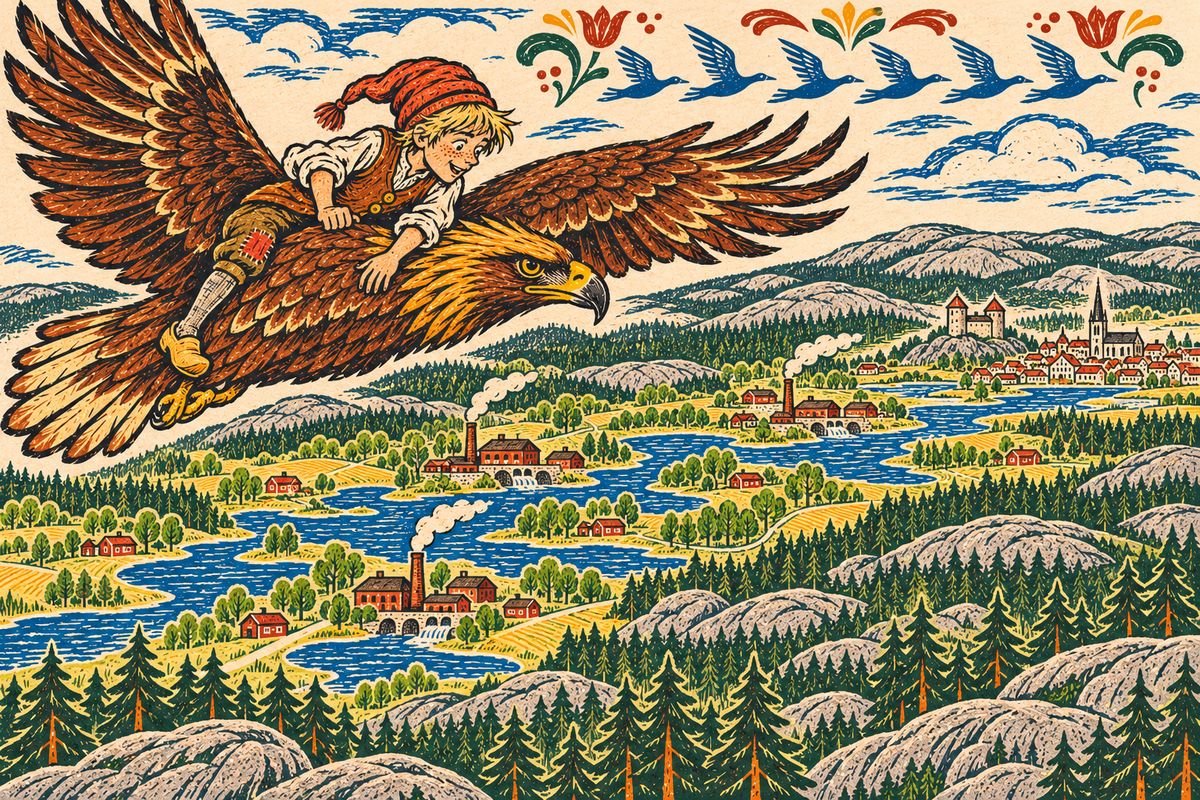
Sweden's Lakes and Forests
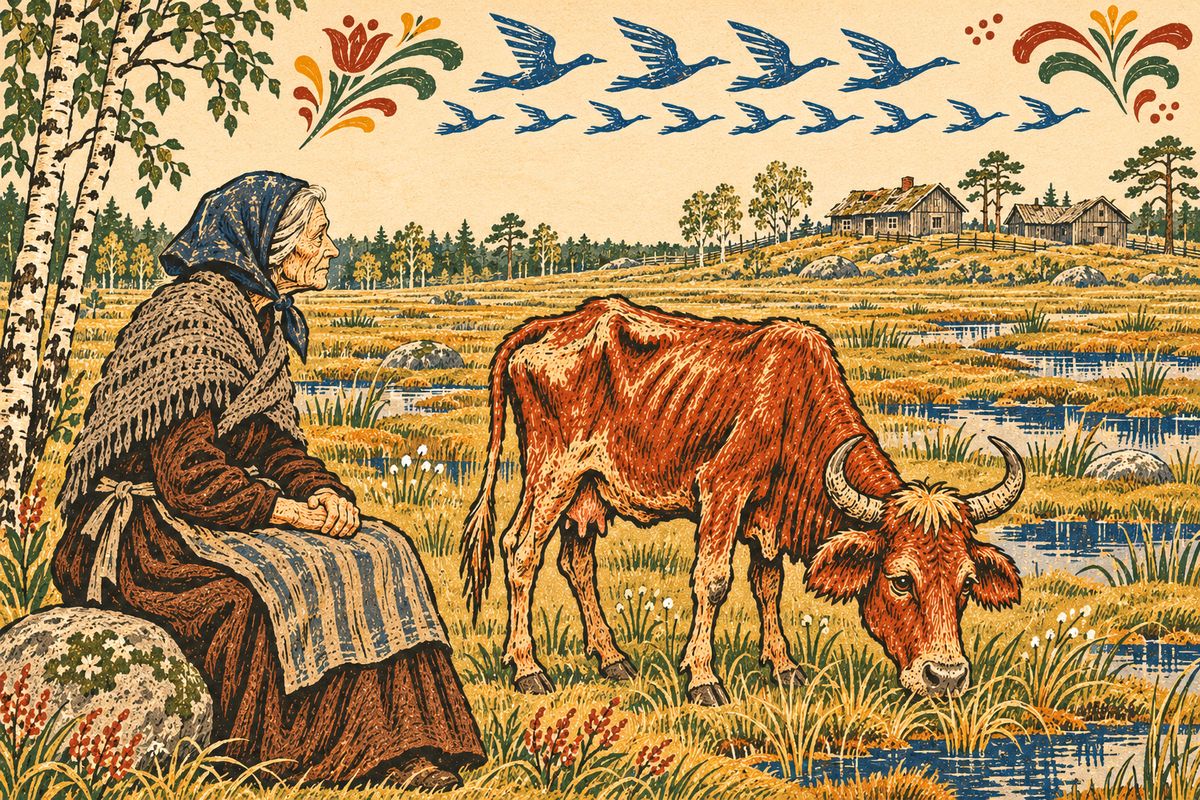
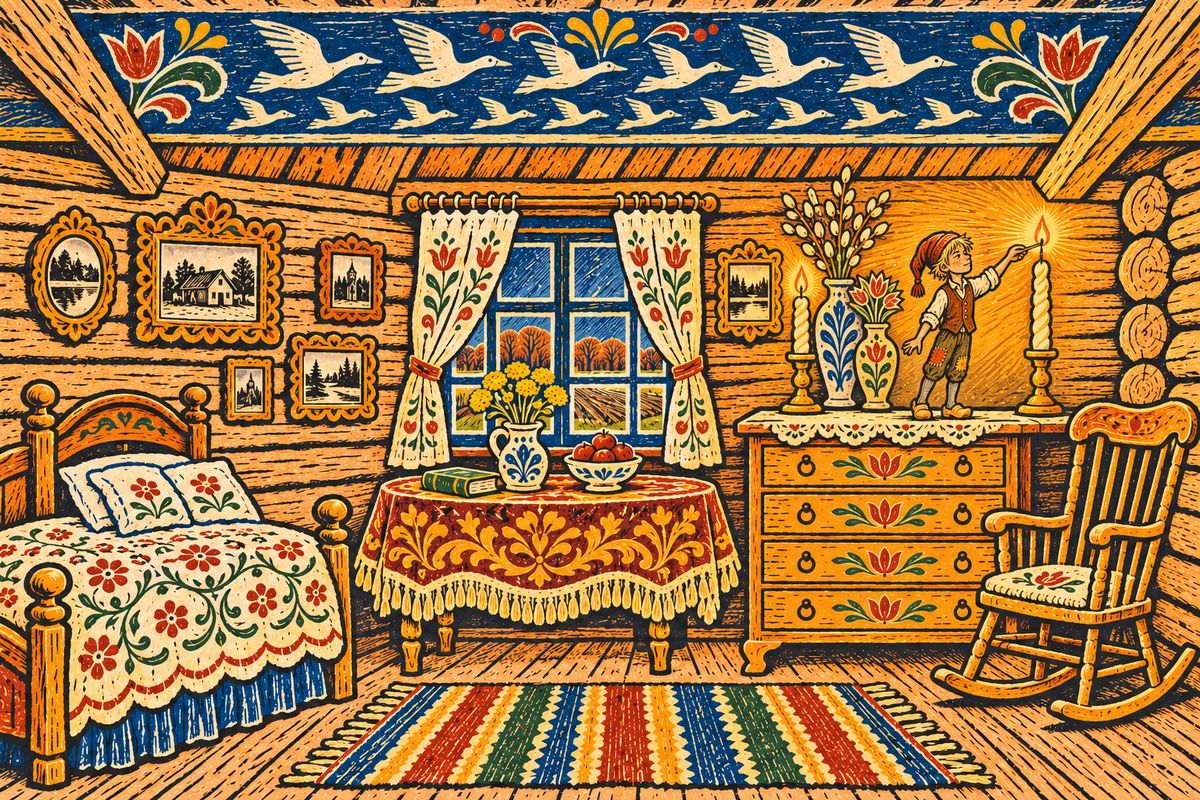
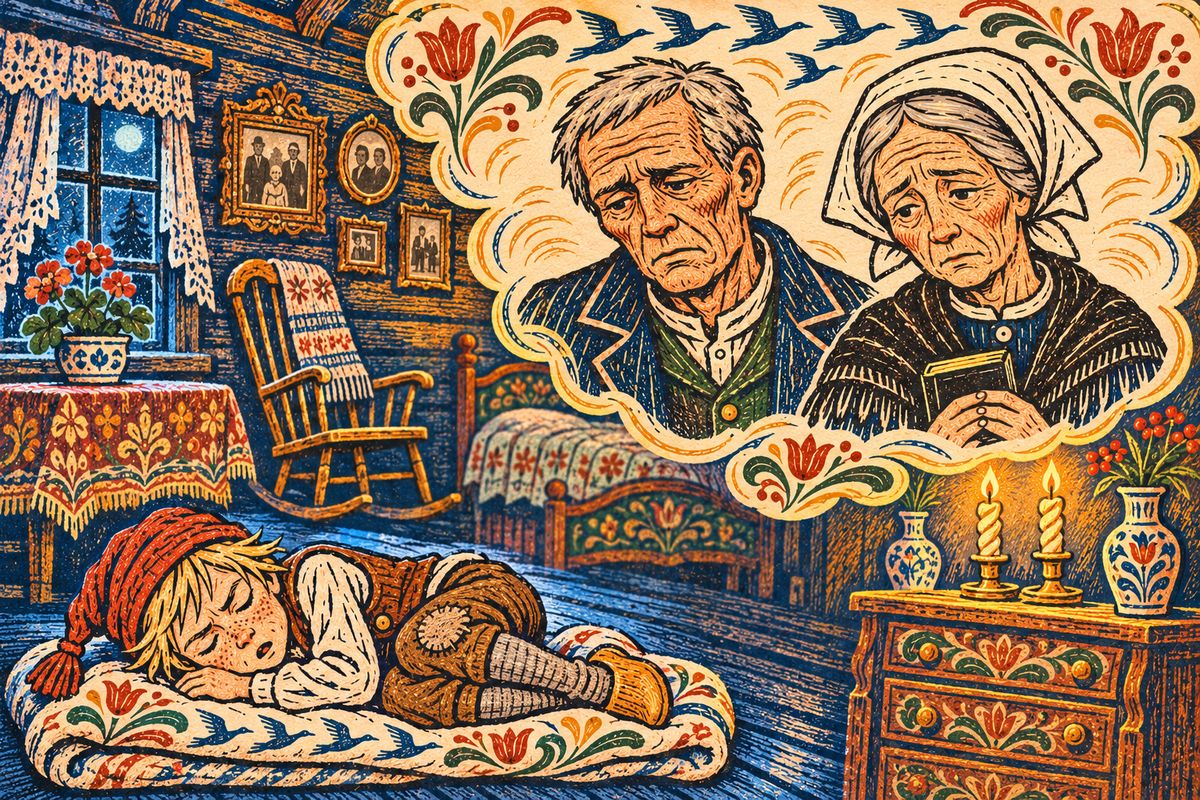
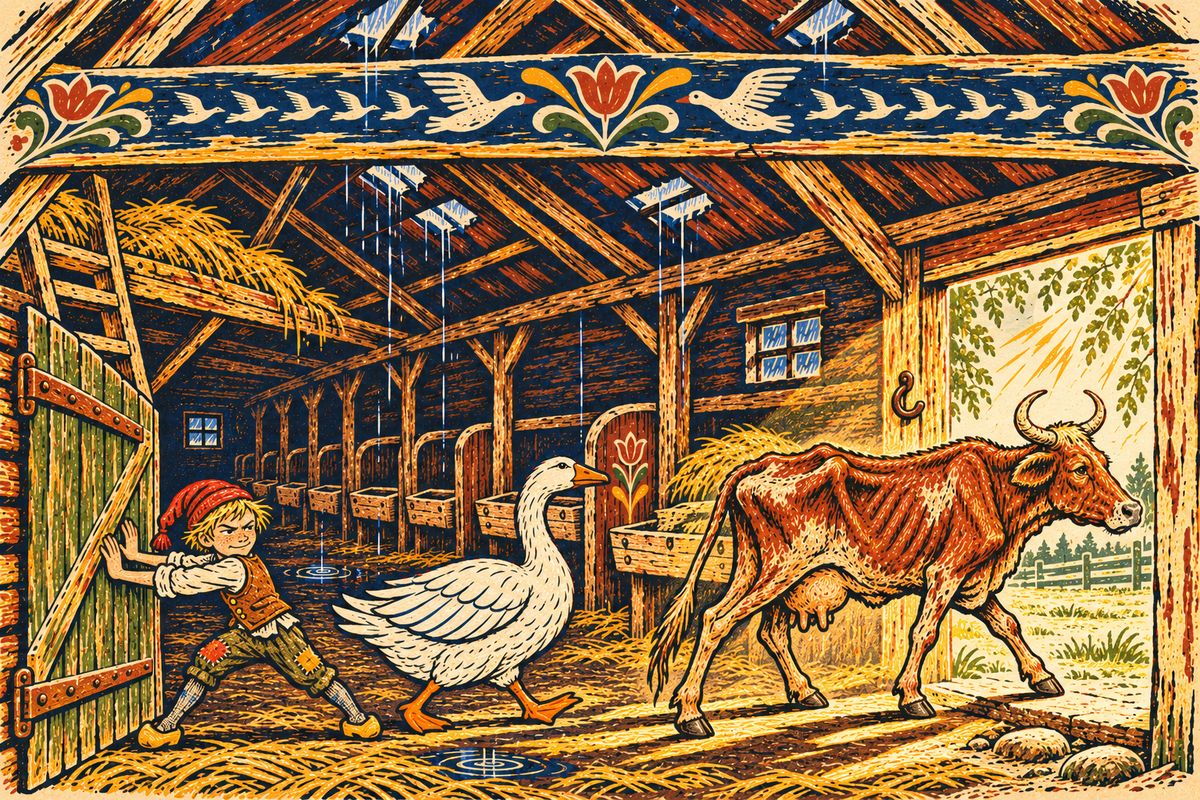
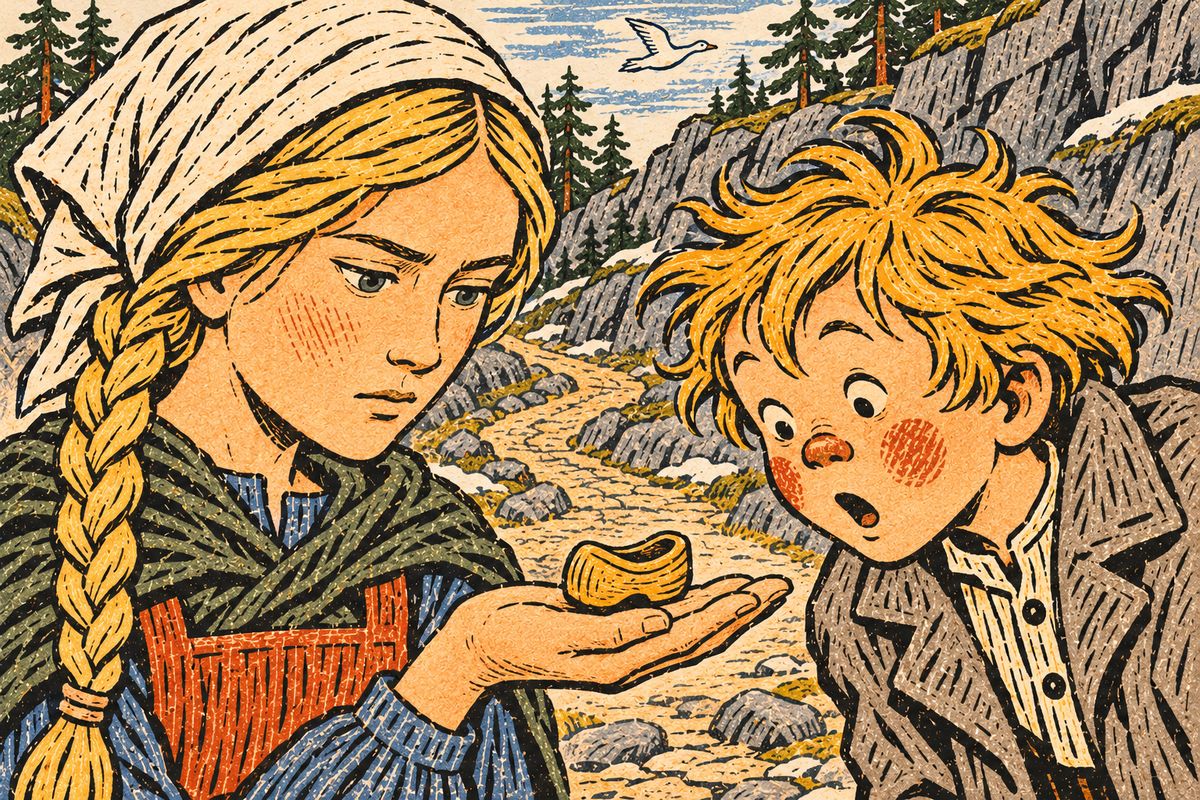
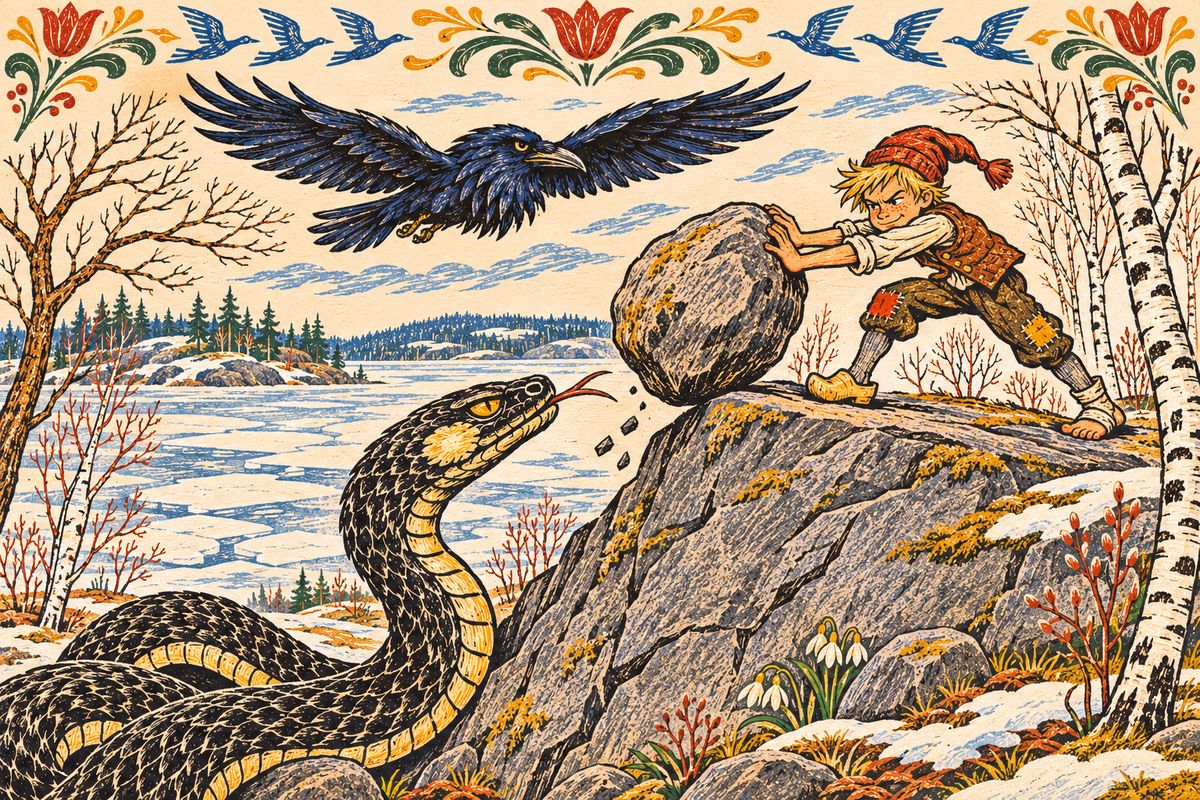
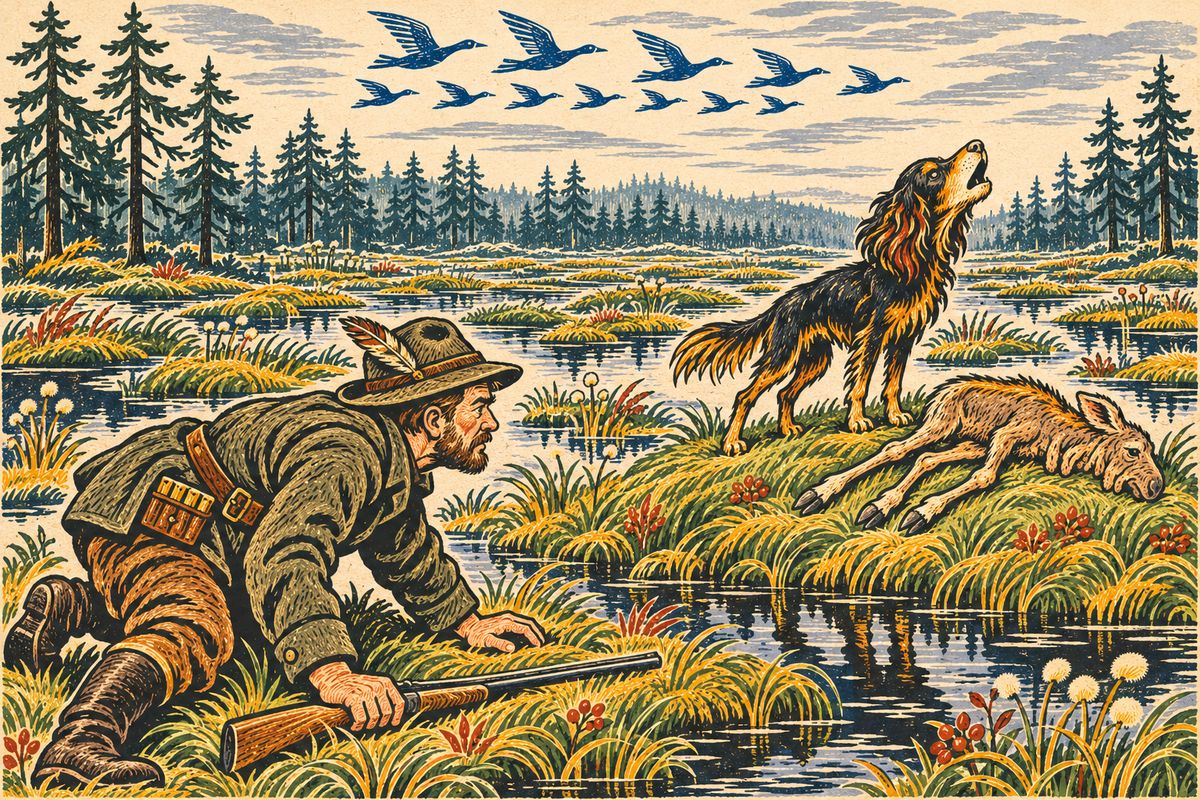
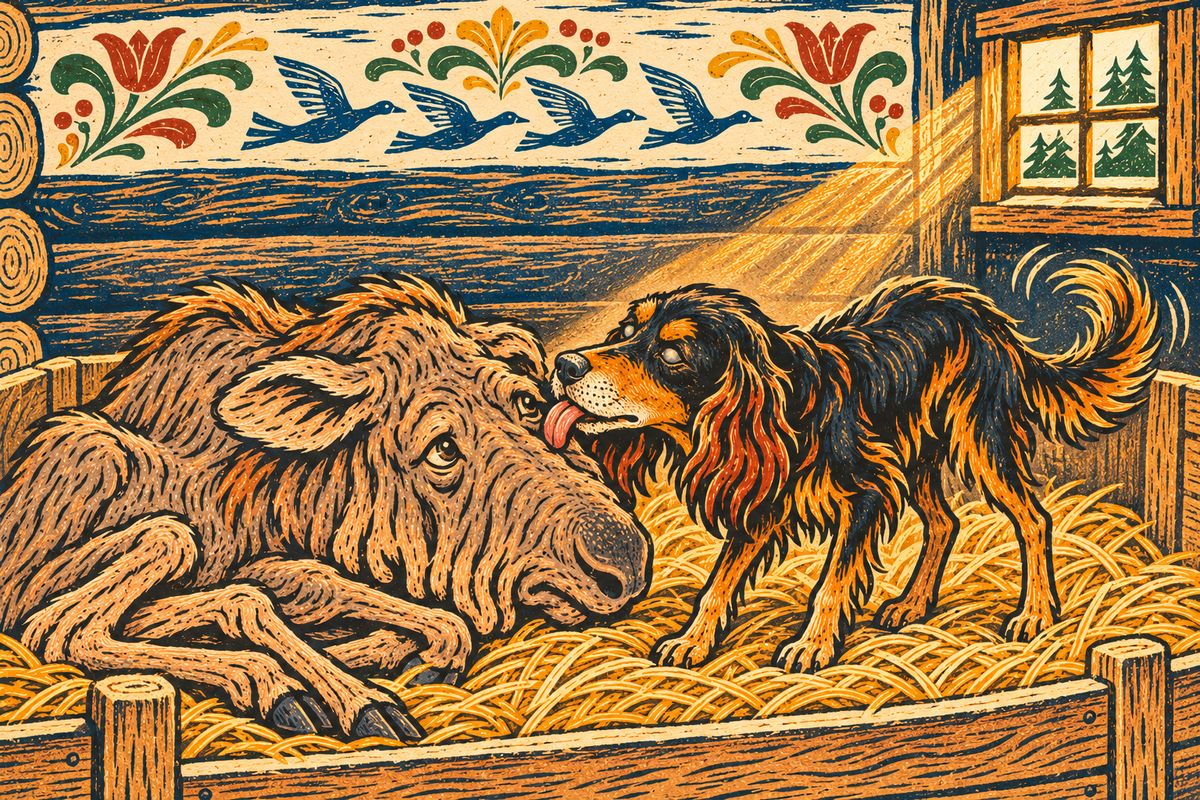
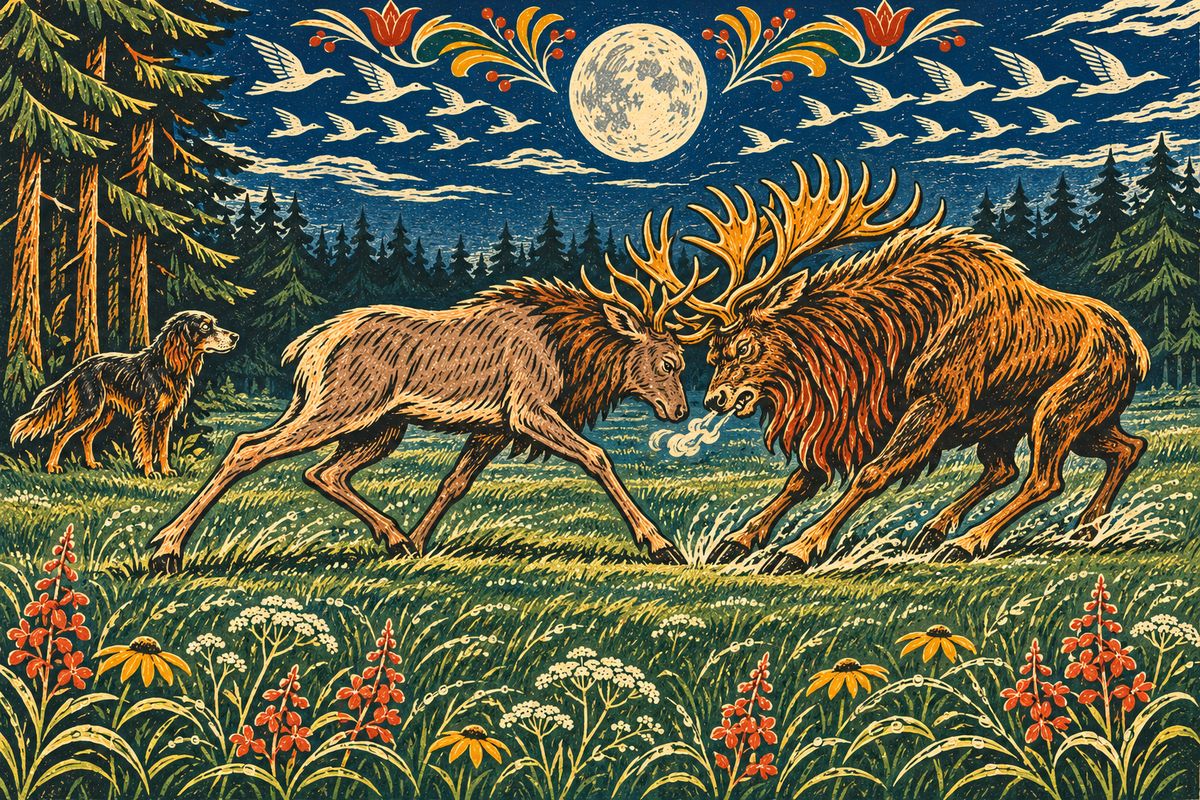
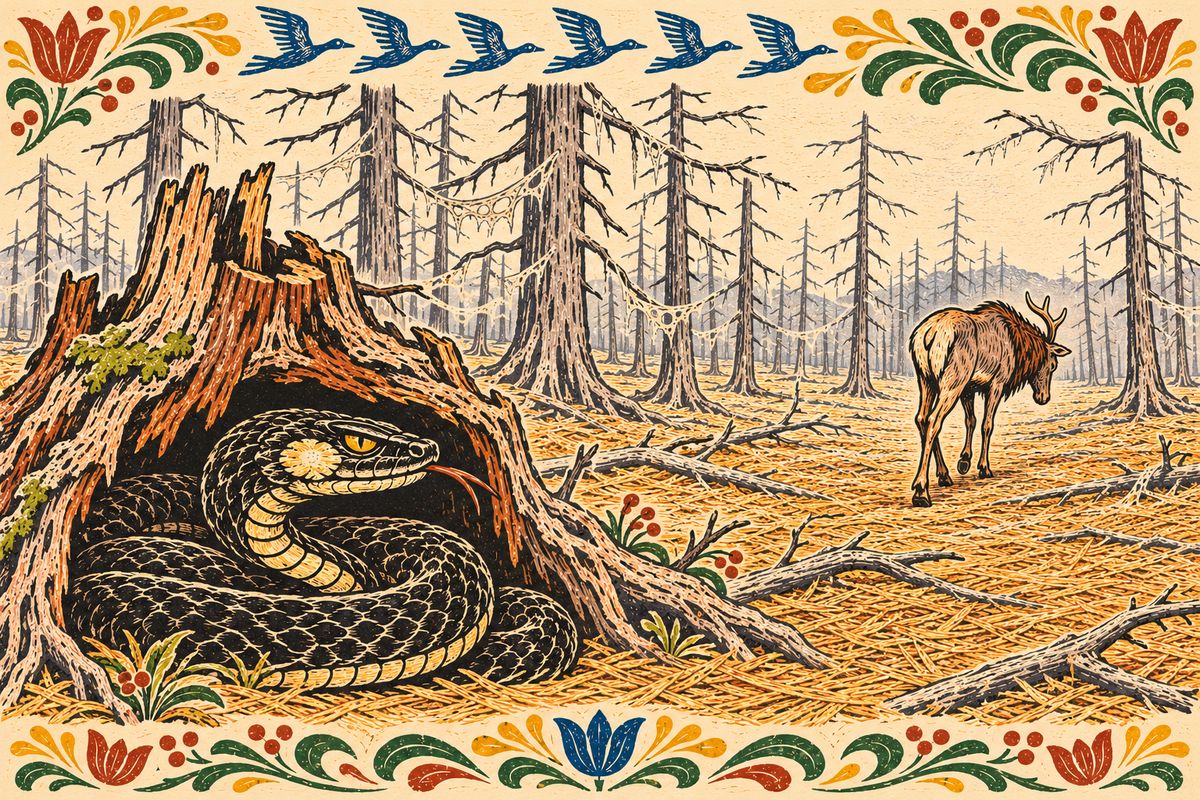
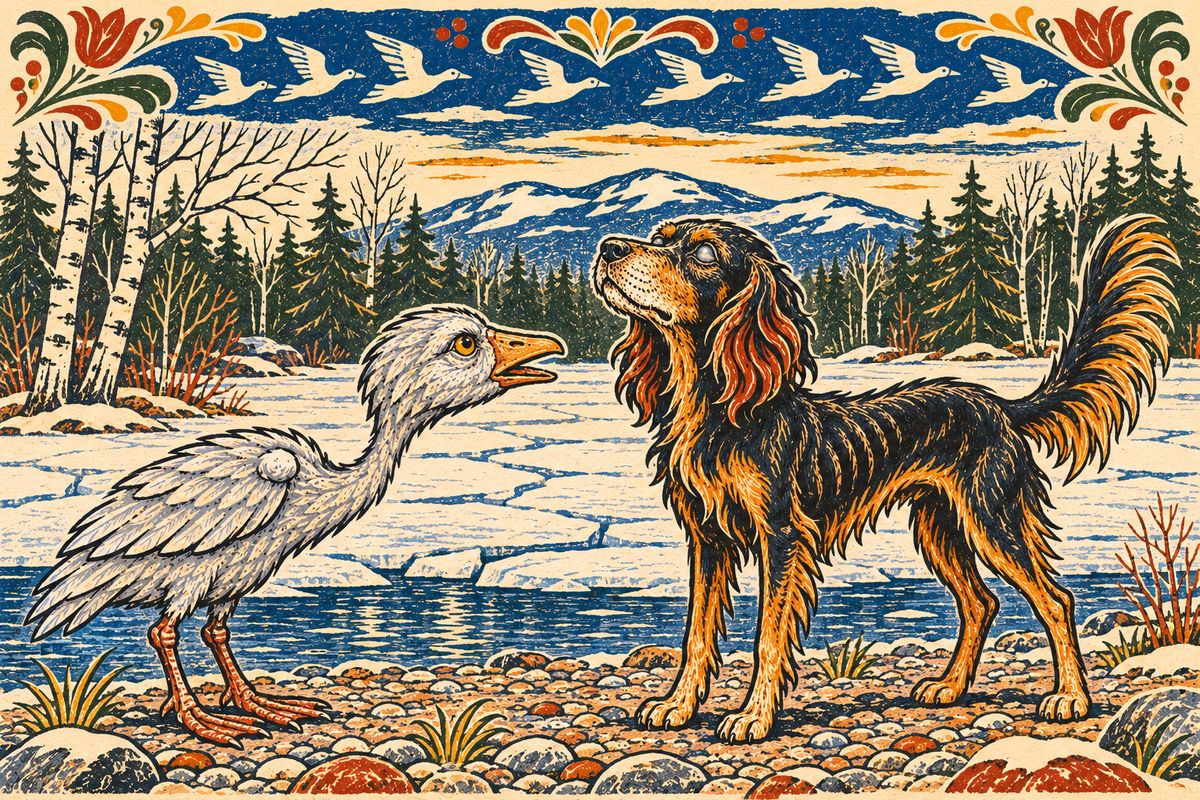
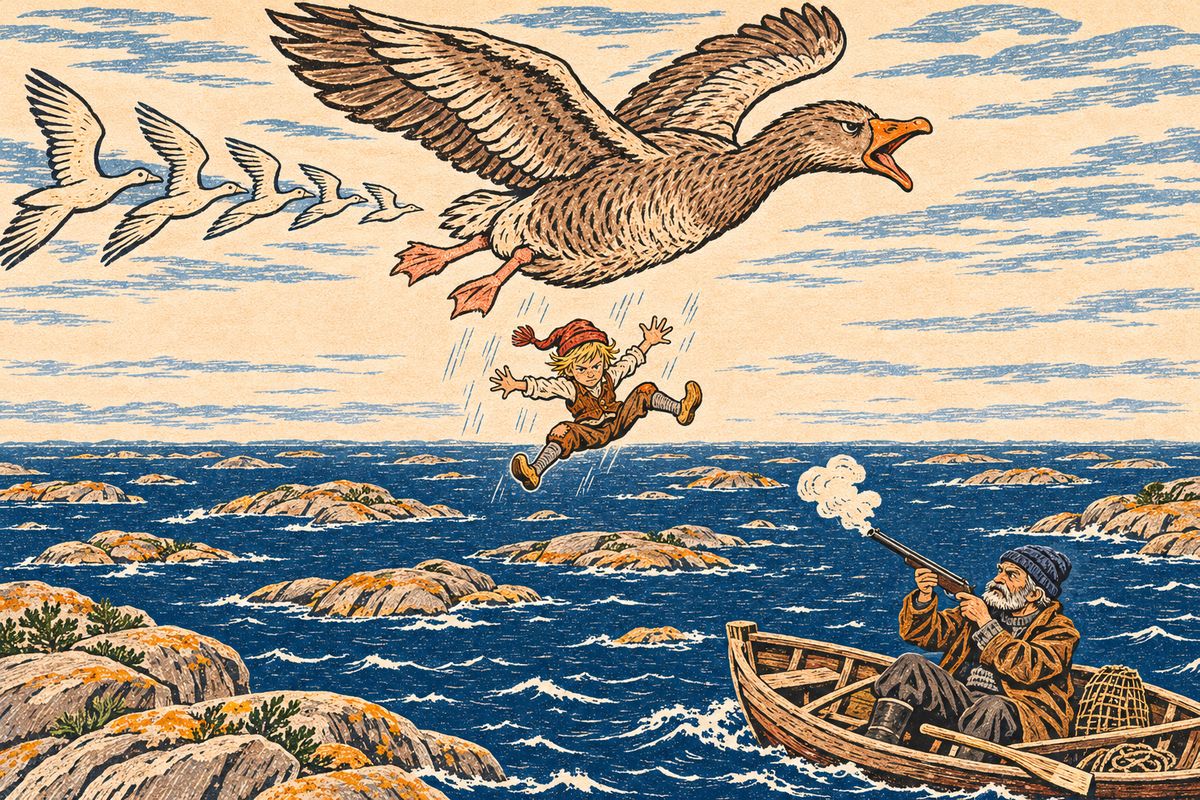
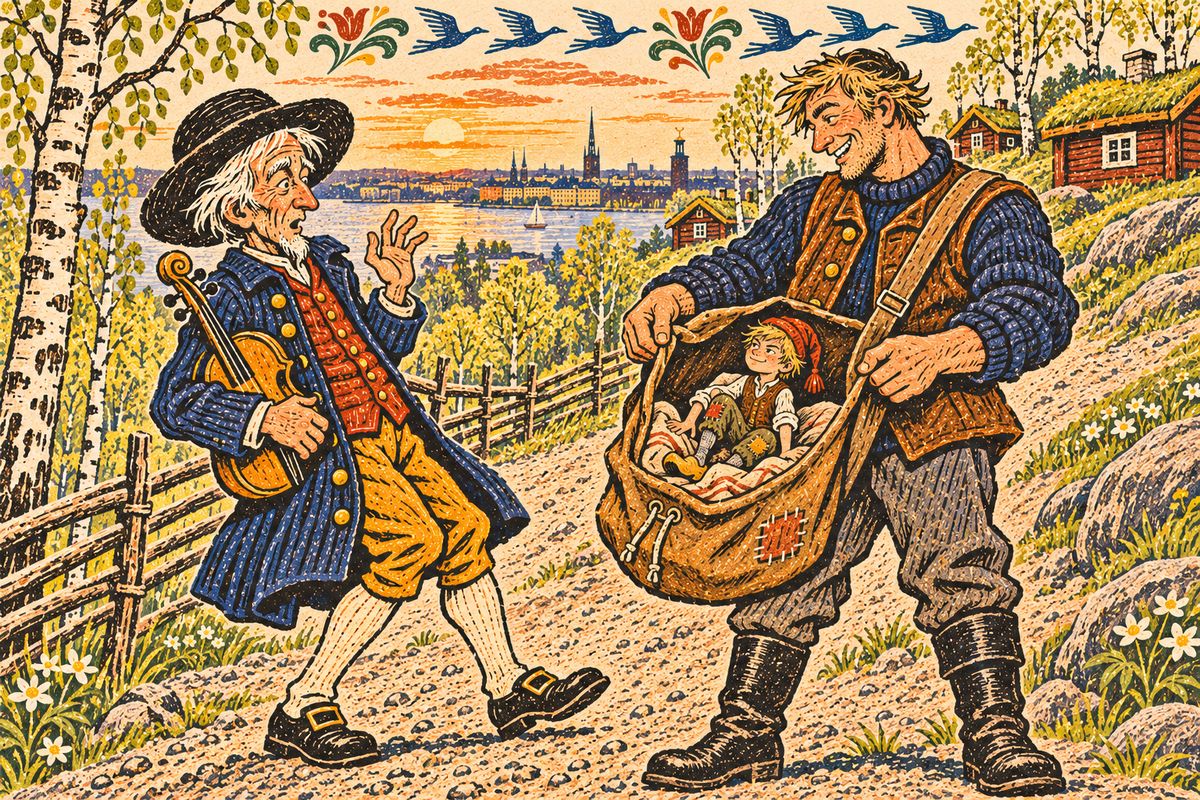
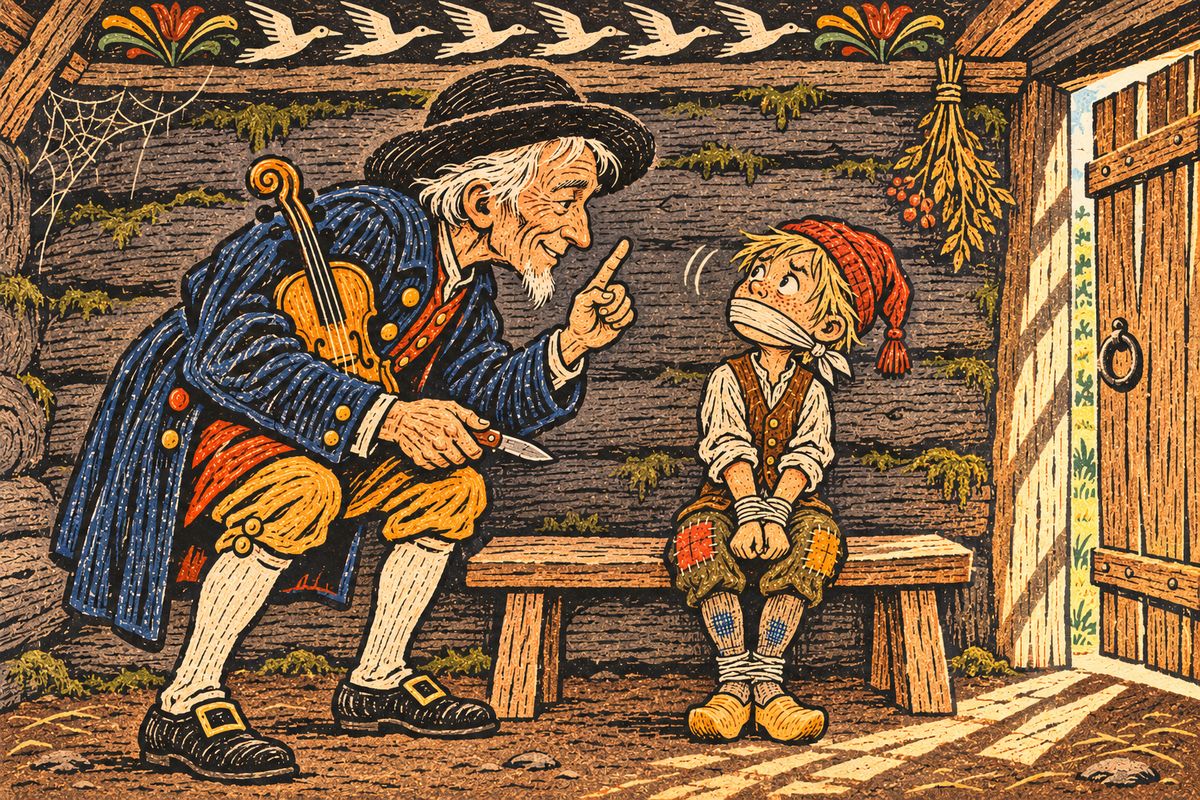
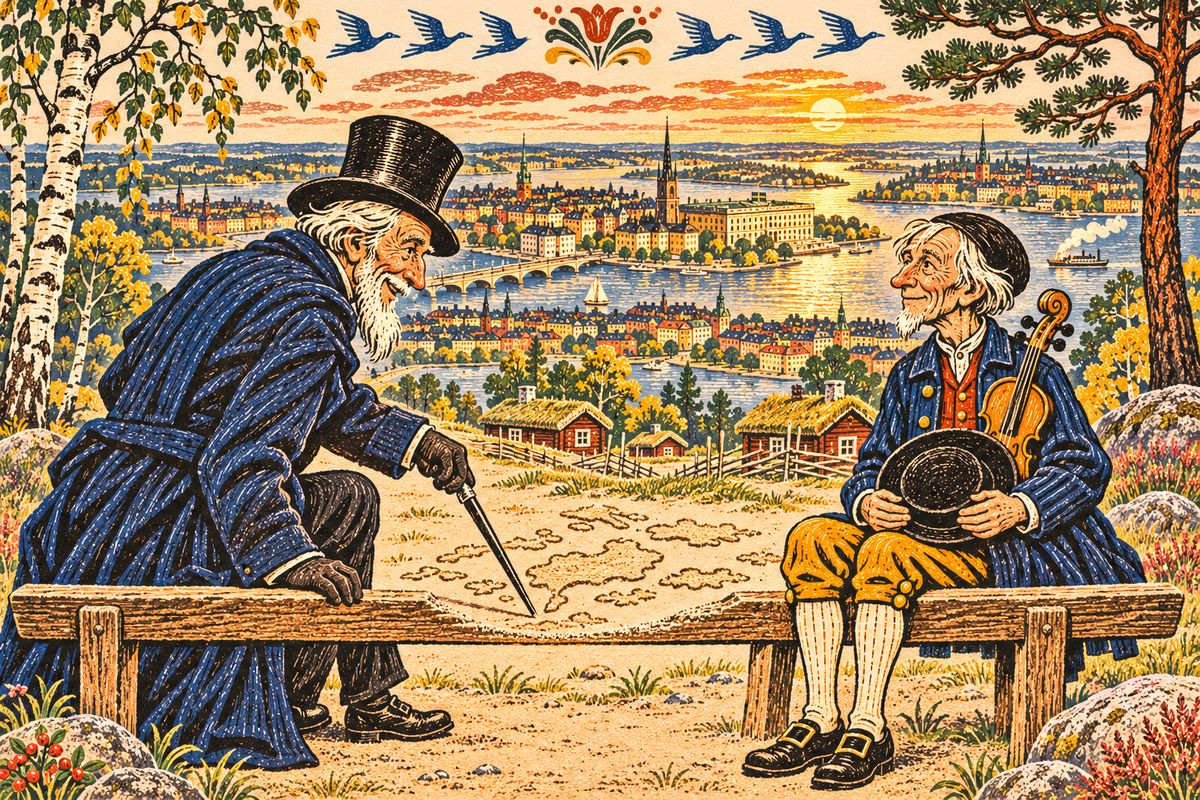
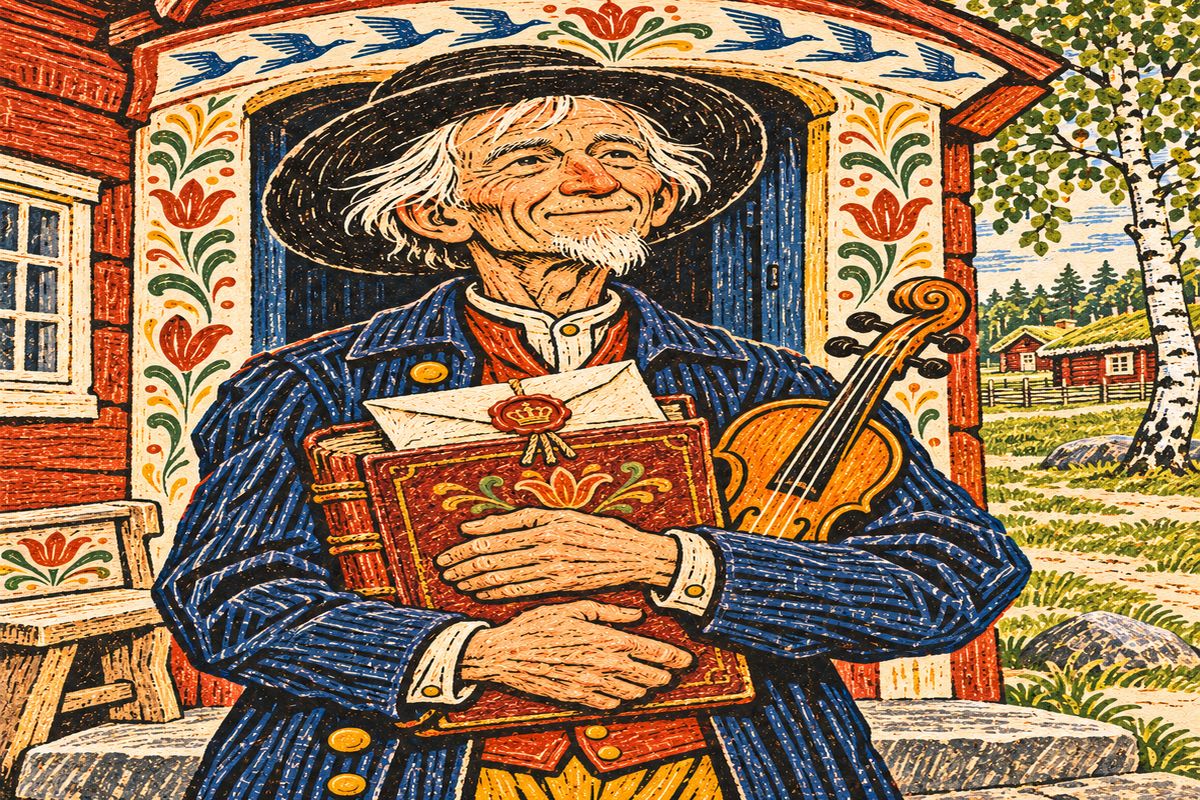
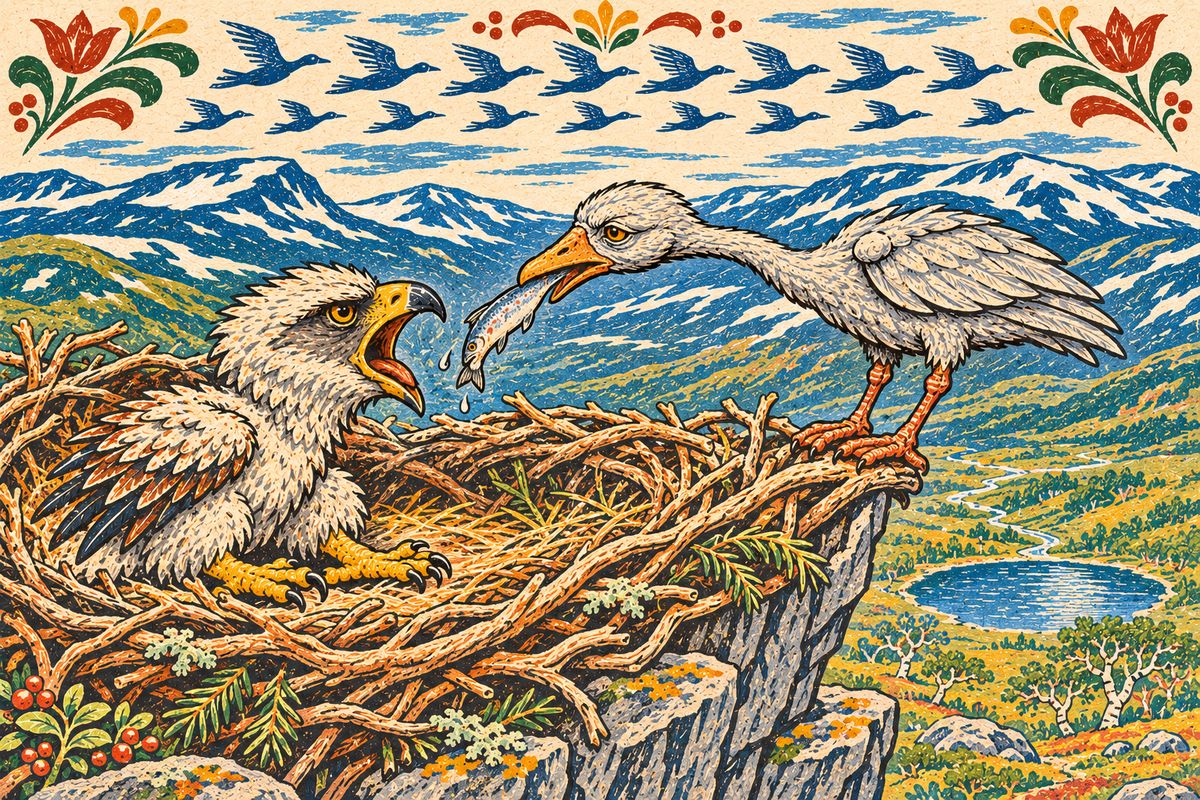
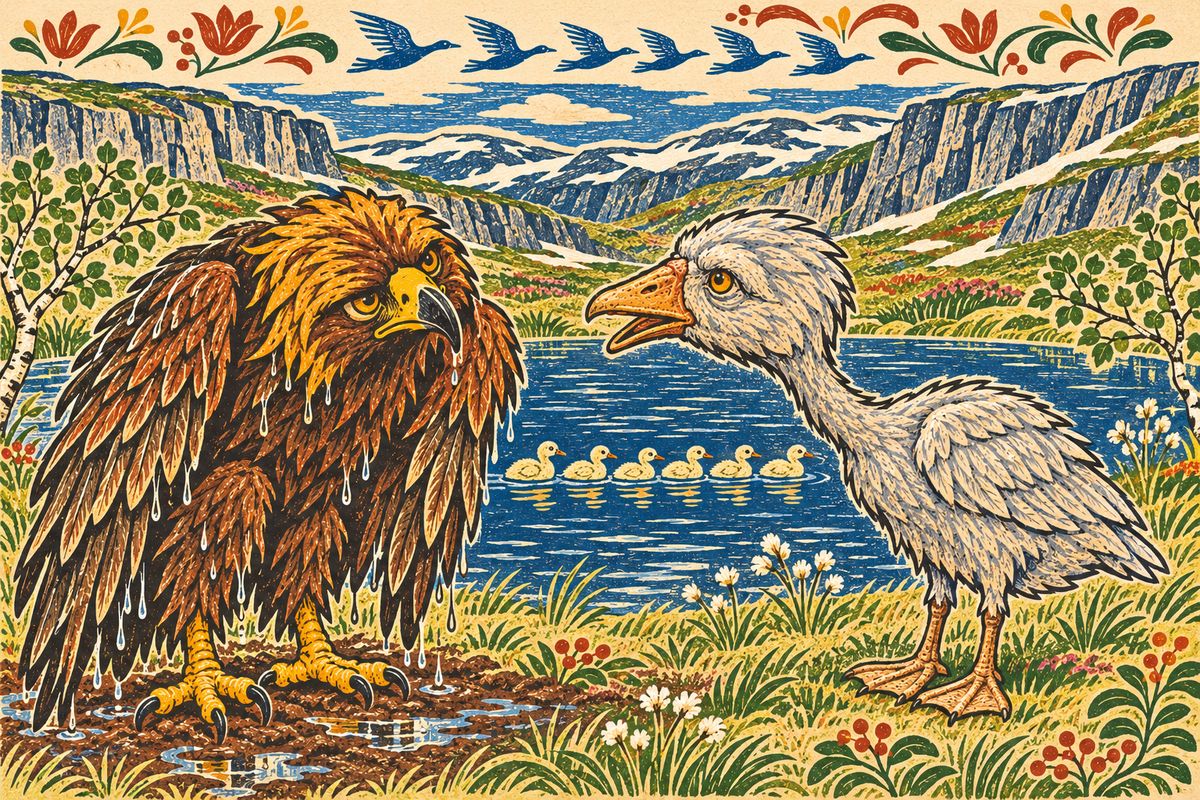
1On a cold, rainy night Nils flew north through the poorest corner of Småland with Morten Goosey-gander and little Dunfin, hurrying to meet Akka at the mountain called Taberg. Every lake and swamp below was still frozen, so a fox could go anywhere, and Nils knew Smirre would find them before morning unless they hid.2They crept into the cowshed of a lonely, tumbledown farm. The only creature there was Rödlinna, a hungry old cow who said her mistress had never come with her supper. Nils threw down hay for her, but she couldn't rest. "Go across to the cabin," she begged him, "and see how my mistress is. I fear something has happened to her."3Out in the storm Nils was blown down twice and almost drowned in a pool, and seven great owls sat grumbling on the eaves. At last he reached the cabin and looked through the cat-hole. An old grey-haired woman lay quite still on the floor, her face strangely white. She was dead. Nils fled back across the yard in terror.4Rödlinna told him about her mistress. Alone, she had raised her children and then her grandchildren on this poor farm, and one by one they all left for America. After that she let the farm go to ruin and blamed the barren swamp for taking them. That very evening she had heard that the swamp could be drained for grain, and had gone in to write and call them home.5Nils was no longer afraid. He went back into the cabin, lit the thick spiral candles on the bureau to honour her, then gently closed the old woman's eyes, folded her hands across her breast and smoothed back her thin grey hair. She had lived out her old age alone, so he would keep watch over her through the night.6He began reading a psalm, then stopped. All around him hung photographs of the children who had gone away. He had never known that parents could long for their children like this. "Poor you!" he told the portraits. "Your mother is dead. But my mother is living!" He nodded and smiled. "Both father and mother are living."7Toward morning on Friday, April fifteenth, the boy fell asleep in the old woman's cabin and dreamed of his father and mother. They had both gone gray and wrinkled. They had aged so, they said, because they longed for him. He was touched and astonished, for he had always believed they were glad to be rid of him.8He woke to clear, fine weather. After eating a bit of bread, he fed the geese and the cow, then opened the cowhouse door. When Rödlinna came to the nearest farm all alone, the neighbours would surely guess something was wrong. They would come to find the old woman and give her a proper burial.9Soon they saw Taberg, steep and broken-topped, where Akka and the whole flock waited and greeted Thumbietot with joyous cackling and fluttering. From the bare summit the land to the north ran down through blue valleys to clear Lake Vettern, shining as if filled with blue light. Paradise must look like this, the boy thought.10In the first fine spring weather the geese flew north, cackling loudly. Below them, miners, mill workers, a girl filling match-boxes and patients at the sanatorium all called, 'Where are you going?' The boy answered for the geese: 'Not this year.' At Huskvarna a schoolyard full of children shrieked, 'Take us along!' 'Not this year, but next!' cried the boy.11Lake Tåkern lay shallow and reed-ringed on the Östergötland plain, the finest bird lake in Sweden, home to thousands of ducks, swans, grebes and coots. One spring evening a young wild drake named Jarro was shot in the breast. He flew on until his strength gave out, and fell before a farm on the shore.12The young mistress nursed Jarro in a basket by the fire, and Caesar the dog, once his worst terror, became his friend. But Clawina the cat sneered from the hearth that the men meant to drain Tåkern. "You just wait until you are fat enough! Then they'll wring the neck off you," she said.13Once he was well, the farm-hand tied his wings and took him out to an islet as a decoy. Jarro called his old friends, two shots rang out and three ducks fell in the reeds, and he thought he would die of shame. After that he cried "Away! I'm only a decoy-duck!" to every bird that came near.14One morning Nils floated up in a drifting grebe nest, and when the farm-hand fired at passing geese he cut Jarro's halter, but Caesar seized the duck by the neck. "If you are as honourable as you look, you cannot wish to force a good bird to entice others into trouble," Nils said quietly. Caesar grinned, then let Jarro fly.15Little Per Ola missed Jarro so much that he slipped away and rocked an old leaky scow out onto the lake. Jarro found him as it filled and fetched Nils on his back, and together they poled the boy to a reed island. The moment Per Ola stepped ashore the scow sank; then he spent a happy day among the wild geese.16At nightfall his mother searched the shore, and the crying birds filled the dark as if they grieved with her. Her sorrow opened her heart to them, and she and her husband agreed to leave Tåkern as it was. Then Caesar took her by the skirt and led her to the lake, where they heard a child crying.17On the night of April twenty-second, Nils woke on a reed island in Tåkern to the splash of oars and a blinding torch. A scow drifted past under the stars, a poor fisherman at the oars and a smug farmer spearing eels. As Mount Omberg loomed dark behind them, the farmer boasted that Östergötland would always be honoured, and began an old family legend.18In the legend, a poor peasant asked the wise Ulvåsa-lady how Östergötland would fare. She named glory after glory: Vadstena Cloister, a royal castle, the ironworks of Finspång, great lakeside manors, the springs of Medevi, the Göta Canal, the mills of Motala and Norrköping. Each time the peasant only shook his head. "But everything is perishable."19At last the lady's cheeks flamed red. "Such pig-headed peasants as you will always be found in this province, until the end of time!" To her surprise, the peasant rose happy and thanked her. Kings' and nobles' works passed, he said, but as long as stubborn, honour-loving peasants worked the soil, Östergötland would keep its glory.20On April twenty-third the boy rode high over the great Östergötland plain, counting white churches until he lost count at fifty. The farmhouses looked so grand that the geese cried, "Here the peasants live like gentlemen!" They teased the slow ploughing oxen and the horses below, and the oxen bellowed back that they did more good in an hour than geese did in a lifetime.21In a barnyard the newly sheared ram strutted about like a lord until the geese called, "Rammie, rammie, what have you done with your horns?" He had never had any, and he butted the air in a fury. But when the geese saw little pigs being driven to market, crying for their mothers, they called down kindly, "It will be better for you than you can ever believe."22The boy remembered an old legend about a petticoat, half gold velvet and half gray homespun, whose owner covered the plain half with so many jewels that it outshone the gold. The plain below was like that homespun. Towns and farms glittered on it like trinkets, the canals ran like embroidered loops, and Linköping lay round its cathedral like a pearl-setting round a precious stone.23Past Norrköping, on a winding road toward Kolmården, the boy swung his foot and his wooden shoe slipped off. Below, it was picked up by Osa the goose-girl and little Mats, who remembered the goose-riding elf people had told them about. Osa turned the tiny shoe over and found tiny letters on it. "It says: 'Nils Holgersson from W. Vemminghög,'" read little Mats in amazement.24At a mountain lake, Nils lost a wooden shoe and went into the forest to find something to bind round his foot. A huge water-snake chased him up a rock, where the boy rolled a stone down onto it. Bataki the raven landed nearby and began the story of Karr, Grayskin and the snake called Helpless.25Twelve years before, a game-keeper was leading Karr, a setter who would not stop chasing game, into Liberty Forest to be shot. Karr broke loose and raced to the marsh where he had driven an elk calf the night before. His howling led the keeper to the dead mother and her living calf. The keeper carried the calf home and told his master, "I can't shoot that dog!"26The keeper named the ugly, gloomy calf Grayskin. He would not grow, until Karr jumped into his crib one day and a light came into his eyes. After that the dog licked and played with him every day, and Grayskin grew into a strong young elk. When he was five he was sold to a foreign zoo, so Karr took him into the moonlit forest to see what he would be giving up.27Grayskin bounded across the dangerous marsh without sinking once. Then, in a moonlit glade, he walked up to his stately kinsman Antler-Crown. The old bull drove him back across the meadow, until Grayskin planted his feet and pushed him the other way, and a point of the old elk's antlers snapped off. Back at his pen, Grayskin cried, "The elk are one with the forest!" and ran into the woods.28On his first day free, Grayskin had crushed a snake under his hoof by mistake. It was the wife of Helpless, who vowed revenge and had the owls and thrushes spare the nun-moth caterpillars. Years later they stripped the forest bare. Helpless swore to send them sickness if Grayskin left the forest forever. Grayskin went north into exile, and soon the caterpillars sickened and died.29Bataki led Nils down to the shore, where old Karr, nearly blind, had come to ask the geese for news. Akka told him that Grayskin had died bravely, leading the poachers away from his cows through snow that cut his legs. Karr lifted his head proudly. When his master called, the old dog went with him into the forest one last time. "I know everything that I need know to die content!"30In bygone days the Närke plain had a wind witch, Ysätter-Kaisa, who loved nothing better than a gale. She sent the mayor of Örebro chasing his hat across the square and teased stingy and quarrelsome folk, but she always took honest people and poor children under her wing. Some say she is dead and gone. Others are not so sure.31On the eve of the Örebro cattle fair the rain turned to sleet, and dozens of animals stood tied outside an overcrowded inn. A worn-out old horse had carried the boy there from the geese's island in Hjälmar Lake. "I was born on that farm across the road," he said. "Its barns stand empty, but the people are too stingy to share. Can you get us in?"32A gust flung open the farm's empty hay shed for the boy. Another wrenched the farmhouse door from the master's hand, and in came Anna and Britta Maja, beggar girls whose cabin Lars's father had sold over a debt. Lars was already brooding over his father's hard ways. When he heard their bedtime prayer he wept, and when his mother asked to keep the girls, he agreed.33Once he was calm, Lars lit his lantern to bring the old horse in out of the storm at last. The wind had blown the shed open again, and the whole floor was covered with sleeping animals. While he shouted at them to get out, one old horse rose and laid its head on his shoulder. "My old horsy!" he said. "I'll buy you back."34On a bright, windy morning Osa the goose-girl and little Mats took a shortcut across the ice of Lake Hjälmar. On Vin Island an old woman ran out to wave them back, but they walked on, turning every crack and puddle into a game. "If we only look before us," said Mats, "we can do it."35Out in the open the wind grew stronger, and a roar rose like the noise of a great mill. Far in the west a white bank of foaming waves came charging against the ice. The ice heaved under their feet, cracks spread with a hollow boom, and it broke into floes. Lost and terrified, the children stood still and wept.36Then a flock of wild geese rushed overhead, and above their honking a small voice called the children to the right. When a wide gap stopped them, it cried, "Stand where you are!" The floes drifted together, and the voice sent them straight ahead until, half an hour later, they waded ashore at Ljunger Point.37Still frightened, they ran inland, but Osa told Mats to wait and went back to the shore. She set the little wooden shoe on a stone where it could plainly be seen, and ran off without looking back. The instant she turned, a big white gander shot down from the sky like lightning and carried the shoe away.38On April 28th a hard west wind blew all day over the Westmanland mining district, but Akka, fearing Smirre Fox in the east, kept turning the flock back into it. Toward evening a violent gust tossed the geese about like balls and lifted the boy clean off the gander's back. He drifted down like a falling leaf into a deep, roofless mine pit.39Before he could climb out, a mother bear seized him and called her cubs, Brumme and Mulle, to come and play with their treat. They tossed him about like a cat with a mouse until he dropped: 'Mamma Bear, he won't play any more!' At bedtime the cubs fell asleep with their paws laid over him, and he was too worn out to do anything but sleep too.40In the night Father Bear climbed down and smelled a human. When a cub's paw made the boy sneeze, the bear opened his huge jaws to eat him. Quick as a flash, the boy struck a match on his leather breeches and stuck it into the bear's mouth. Snorting at the sulphur, the bear asked whether he could make enough of those 'little blue roses' to burn a whole forest.41Father Bear carried him to the roaring ironworks by the waterfall, where sparks showered and red-hot iron crawled across the floors like snakes, and ordered him to burn it all down. Thinking of ploughs, axes, rails and the many people who lived by the iron, the boy refused, though he expected to die. 'The iron is so great a blessing that it will never do to harm it.'42Just then a hunter's rifle clicked close by. The boy shouted a warning, and the bear fled with him to safety and, in thanks, whispered him the bears' password. The next morning the geese, who had thought him dead, found him asleep among them. He said a 'big eagle' had carried him back, and when the gander asked about it, Akka said quickly, 'We must not forget entirely to eat breakfast today.'43For days a storm lashed the country north of Lake Mälar, and the swollen lake overflowed its low shores, drowning fields and farmyards. In a birch grove Smirre Fox met Agar the carrier-pigeon and slyly gave her a false message: Daylight, the swan-king, begged Akka to bring Thumbietot to Hjälsta Bay. "Better not tell Akka it came from a fox," he added.44Akka's flock flew to Hjälsta Bay and found the swans' nests torn loose and drifting, but the proud swans would not show their grief. Hundreds rested in order of rank, the young at the edges and the old nearer the middle, with Daylight and Snow-White at the centre. Akka led her geese in a neat line down an avenue of white birds.45Then the swans spied the white goosey-gander at the end of the line and jeered at a goose dressed in white feathers. Daylight hissed with rage, flew at Morten and tore out feathers, and the swans pressed in to pluck him. But a red-tail shrilled the hawk alarm, and a cloud of little birds dived at the swans crying "Shame, shame, swans!" until the geese escaped.46That night the hungry boy hopped onto a drifting stump and poled ashore with a stick. Near the bank he saw Smirre wading toward a sleeping lady swan. "Get up, get up!" Nils cried, beating the water. The swan rose, but the fox turned on the boy, who ran for his life across the open meadows toward the cabin lights.47Nils reached a cabin and whispered his plan to the cranky, half-blind watch-dog inside the kennel, where he secretly unbuckled its collar. When Smirre sat grinning that he knew how far the chain could reach, the loose dog sprang and pinned him, and the boy buckled the collar round the fox's neck. "Now, Smirre Fox, I hope you'll make a good watch-dog!" Nils laughed.48Near Lake Mälar, Dunfin knew she was close to home, and she begged until the geese agreed to a one-day detour to her family's island. They flew east over a great city wrapped in mist. Its spires and rooftops seemed to float on the water. "Now I know where I am!" cried Dunfin.49The geese landed on a rocky skerry far out at sea. Dunfin's parents were overjoyed to see their lost daughter again. Her sisters, Prettywing and Goldeye, had knocked her wing out of joint and left her behind on Öland, and they hurried over crying "Welcome!" as if they were glad. Dunfin was deeply moved and never saw through them.50Out of jealousy, the sisters tricked Dunfin into feeding Morten poisonous roots, but Nils and Akka made him cough them up. Next they talked Morten into fighting a raiding eagle. Morten was bleeding when Nils shouted for Akka. At her name the eagle broke off and flew away. To Nils's astonishment, it was the same eagle that had once carried him back to the flock.51At dawn the flock left the island, but the grey goose flying with them flapped heavily and noisily. It was Prettywing, who had slipped into Dunfin's place. She snatched Nils and fled with the wild geese close behind. Then a shot rang out from a fisherman's boat below. Prettywing opened her bill and dropped Nils into the sea.52Old Clement Larsson, a fiddler from Hälsingland, guarded the peasant cottages at Skansen and was so homesick he could hardly bear it. One May evening the fisherman Ashbjörn held open his game bag on the hill path. Inside lay a tiny boy, tied hand and foot with sail thread, who had dropped from a flock of wild geese. "Here's something for Skansen!"53Remembering his mother's warning to be kind to the tiny folk, Clement paid twenty kroner for him and carried him to an empty moss-covered hut. He offered freedom if the boy stayed in the park: a white food bowl meant stay, a blue one meant go. Only the threat of a glass case for all Stockholm to stare at made the boy nod three times.54Outside, a stately old gentleman found Clement pale and homesick, sat him on a bench above the city, and drew a map in the sand with his cane. He told how a fisherman once hid a mermaid's seal skin on four little river islets. When she slipped away and was lost in the stream, her beauty passed into those waters and shores, and ever after they drew people to them.55The gentleman told how a fortress, a wall and churches rose on the islets, and how the little town grew into a capital that belonged to all Swedes. Next day a royal servant brought a big red book from the King himself. Within a week Clement gave notice. He was content now, but he had to go home and tell everyone the King had sat beside him.56Two years before Nils's journey, the eagles of a Lapland cliff never came home. Akka flew up and found a starving eaglet in a nest strewn with old bones. He screamed for grouse, but she brought him fish and frogs, and he grew big and strong, believing the old goose was his mother. She named him Gorgo.57Down in the glen Gorgo played with the goslings, but he nearly drowned trying to swim like them. "Why can't I swim like the others?" he asked. He wondered too why lemmings fled from his shadow and why he ate fish and frogs. Each time Akka answered, "You'll be a fine bird all the same."58When the flock flew south, the other birds jeered at the eagle in Akka's train. Over a farm the hens shrieked "An eagle!" and in a fury Gorgo dove on them. Akka beat him with her bill for it. Later Gorgo said he would live as an eagle, and proud Akka banished him from her flock for good.59Years later a hunter caught Gorgo and sold him to Skansen, where he sat caged in a heavy gloom with two listless old eagles. Thumbietot climbed onto the cage roof and filed at the steel wires night after night. One dawn he whispered, "Try now, Gorgo!" On his third try the eagle burst out through the hole and soared away into the clouds.60Nils stayed behind, still held by his promise, because the old Laplander had set out a white bowl instead of a blue one. Then Gorgo swooped back and refused to leave him. "Such a promise one need not keep!" When Nils still said no, the eagle seized him in his talons and carried him north, out under the open sky toward Lapland and the flock.
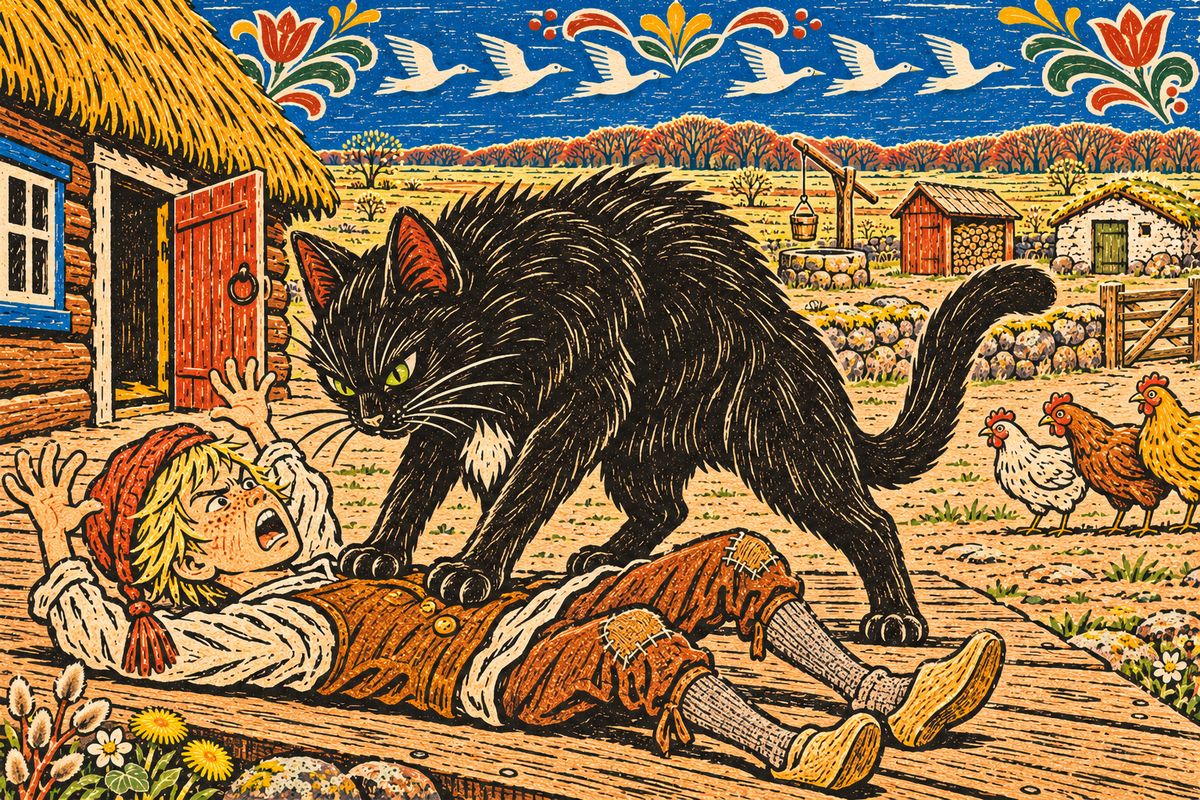
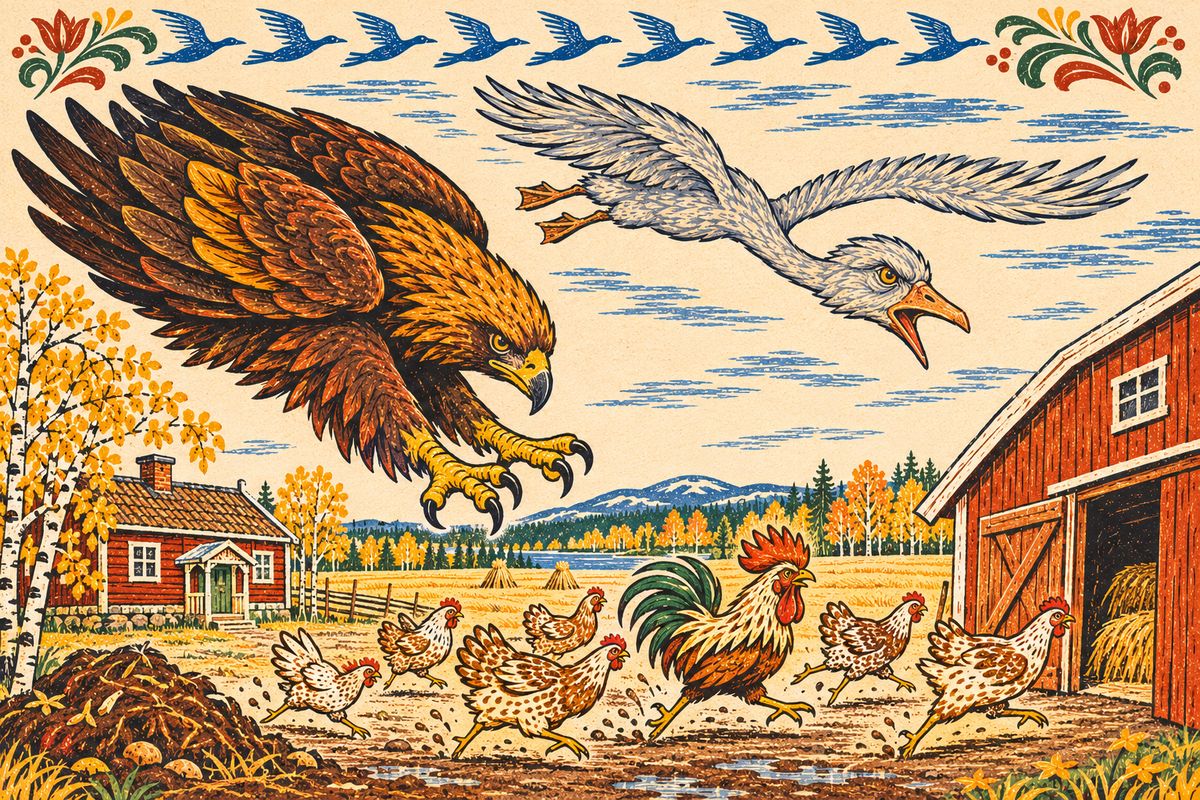
The Wonderful Adventures of Nils: To Lapland and Home
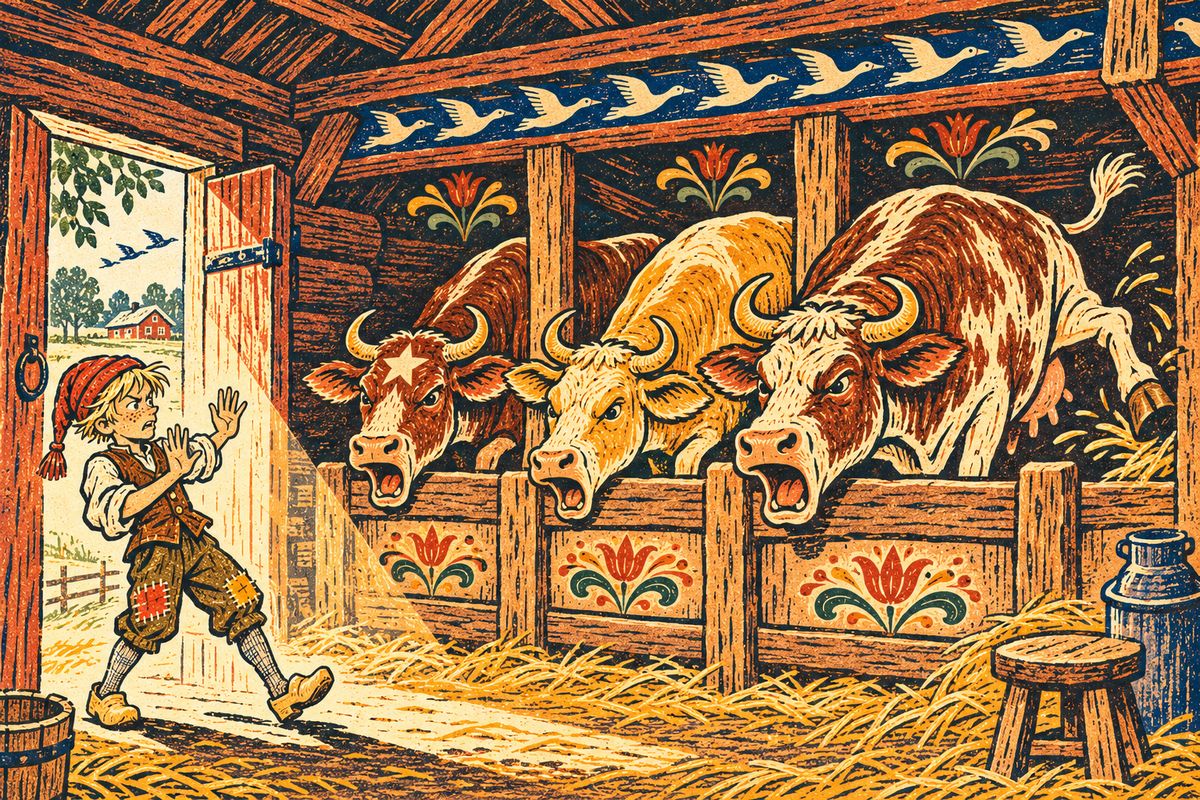
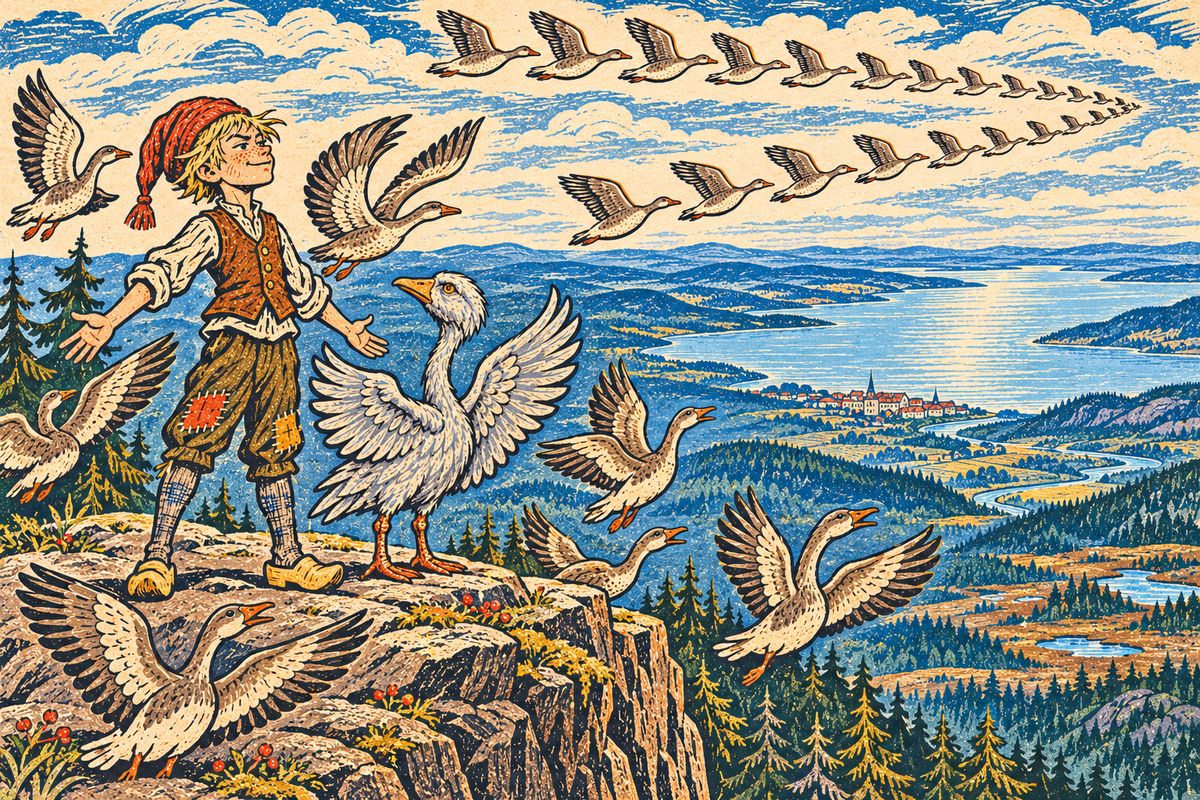
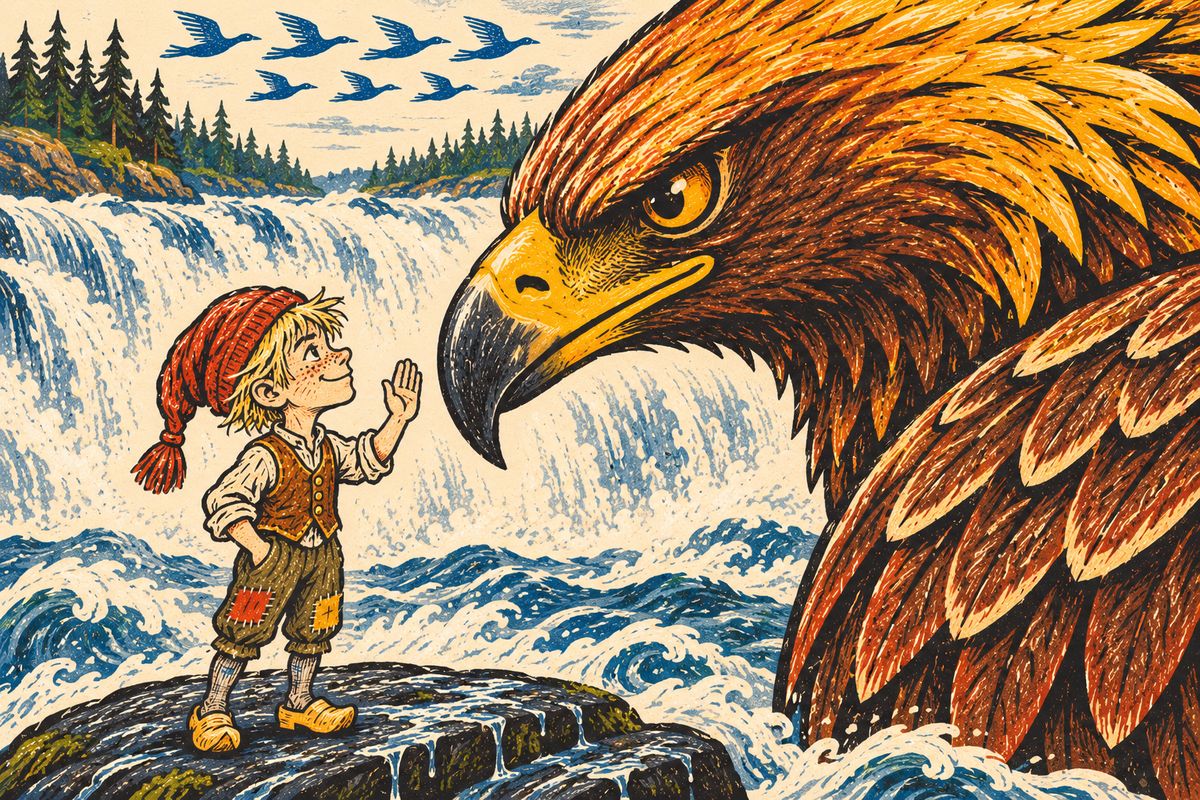
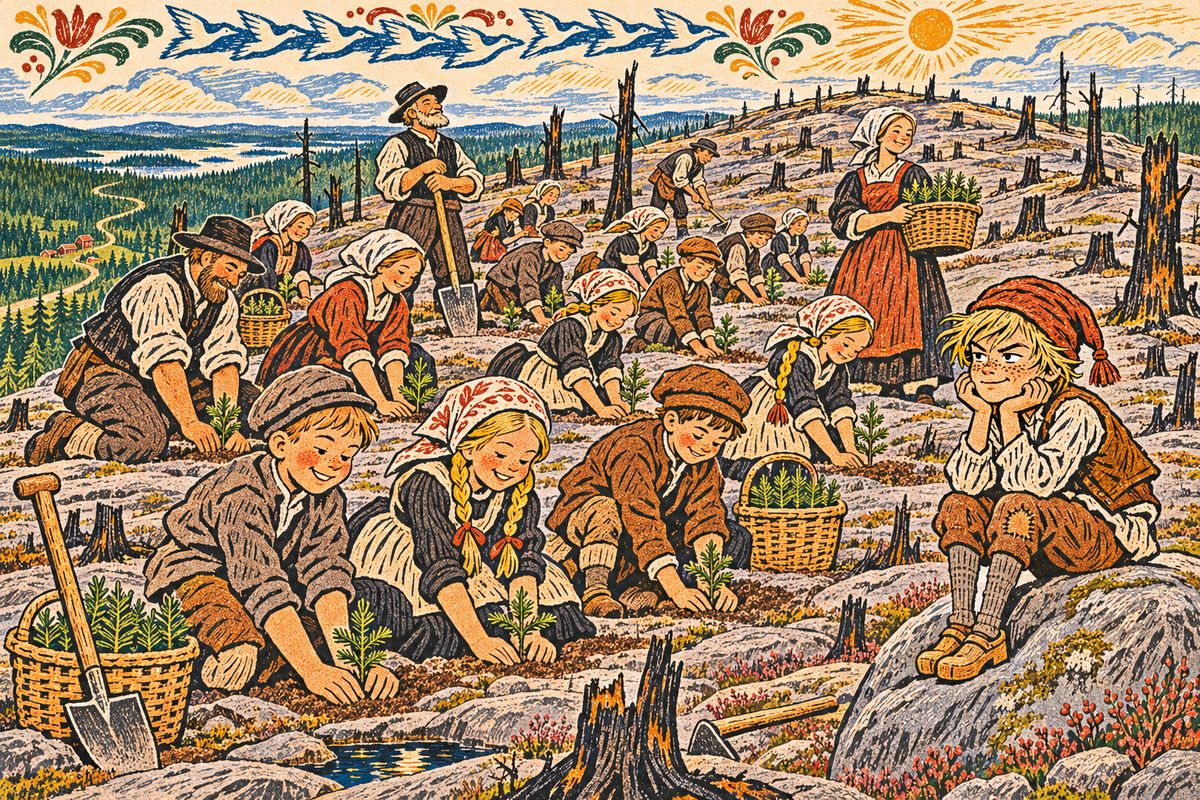
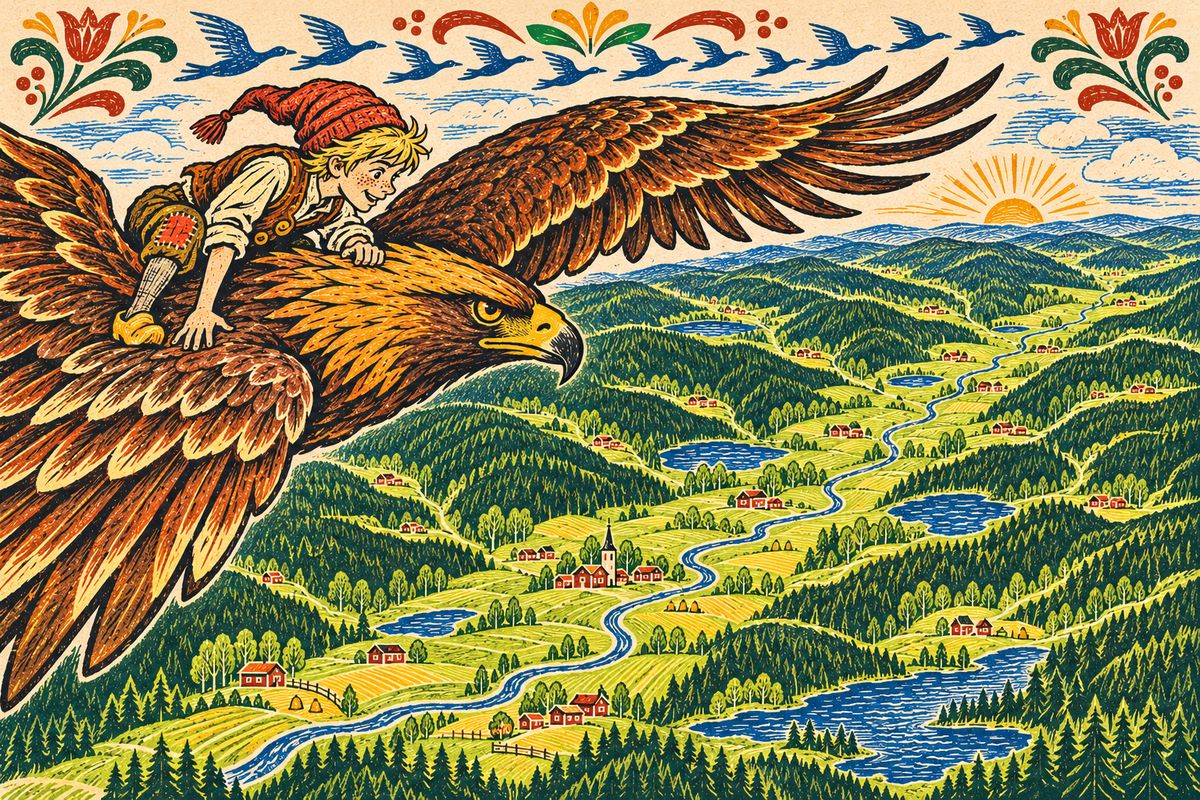
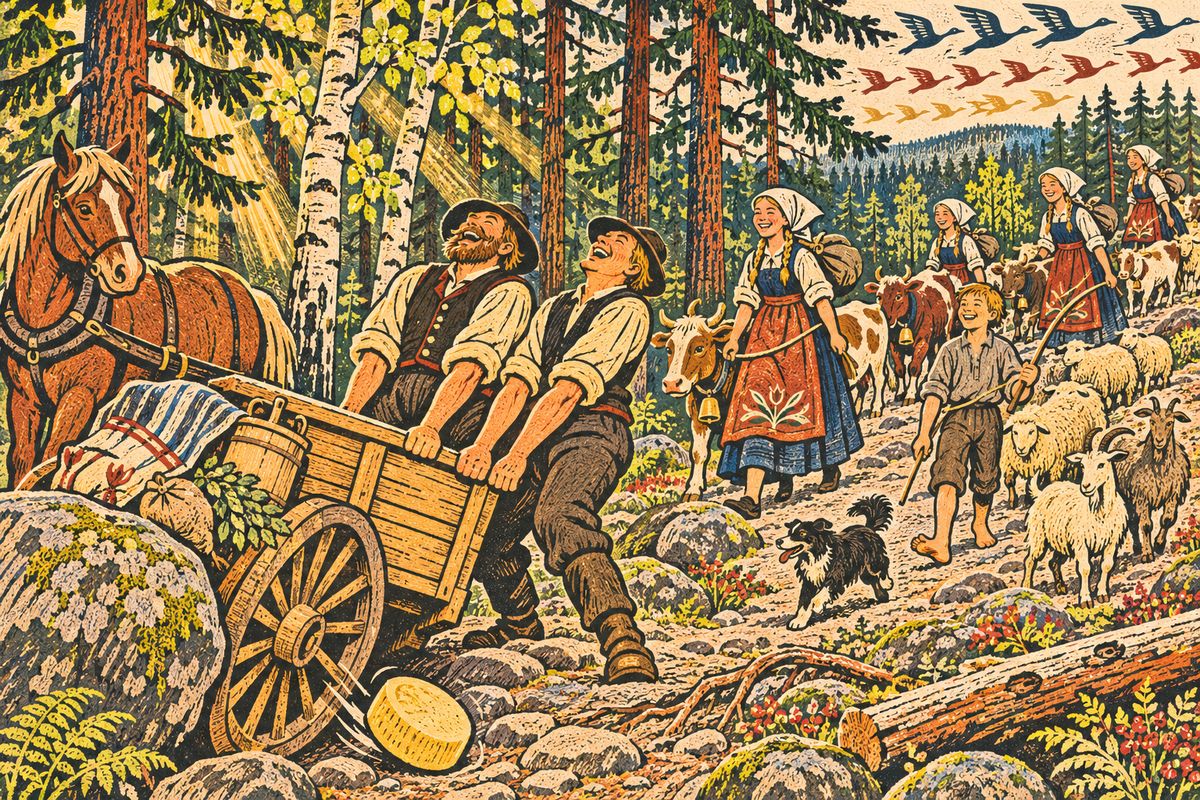
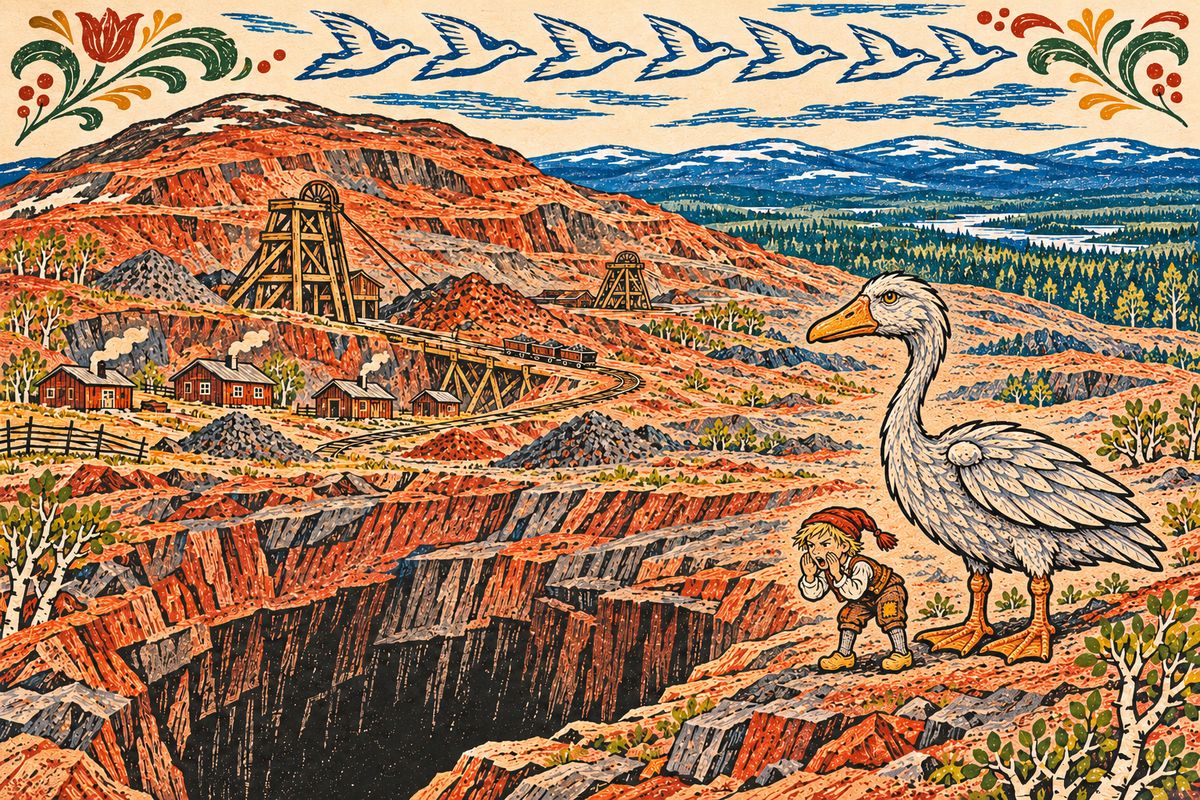
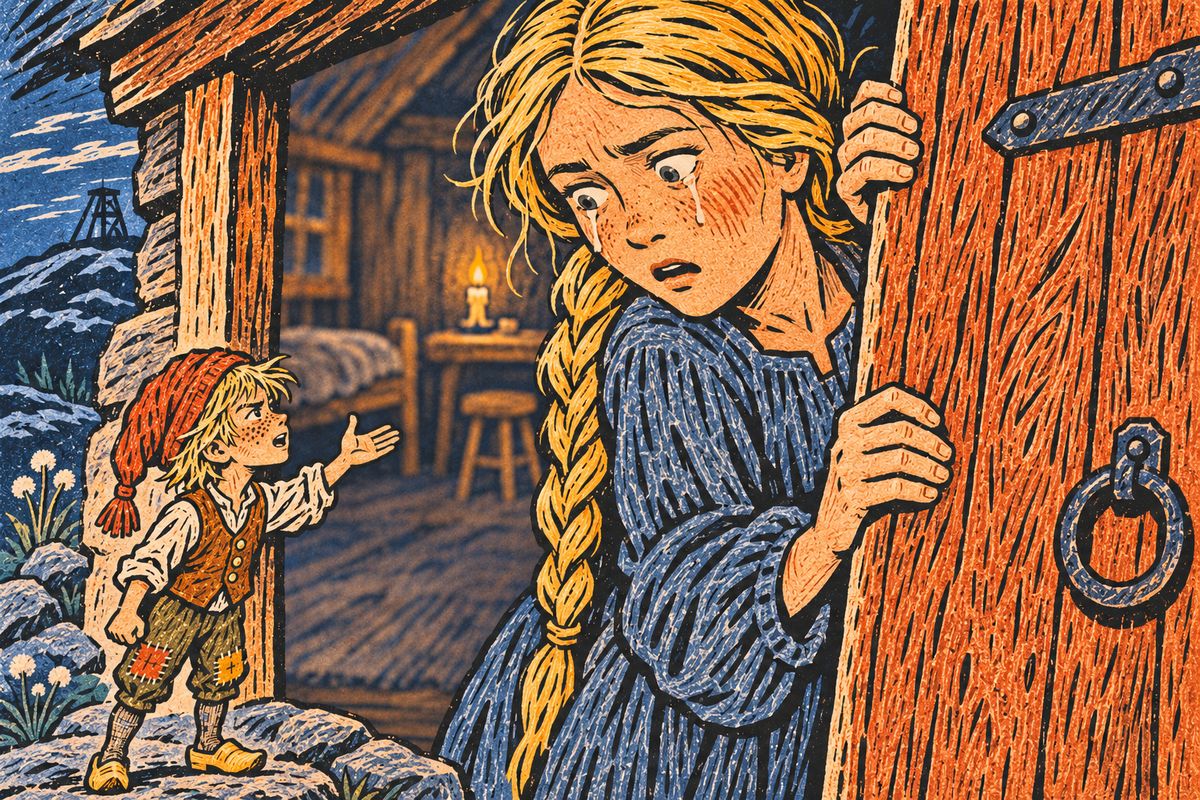
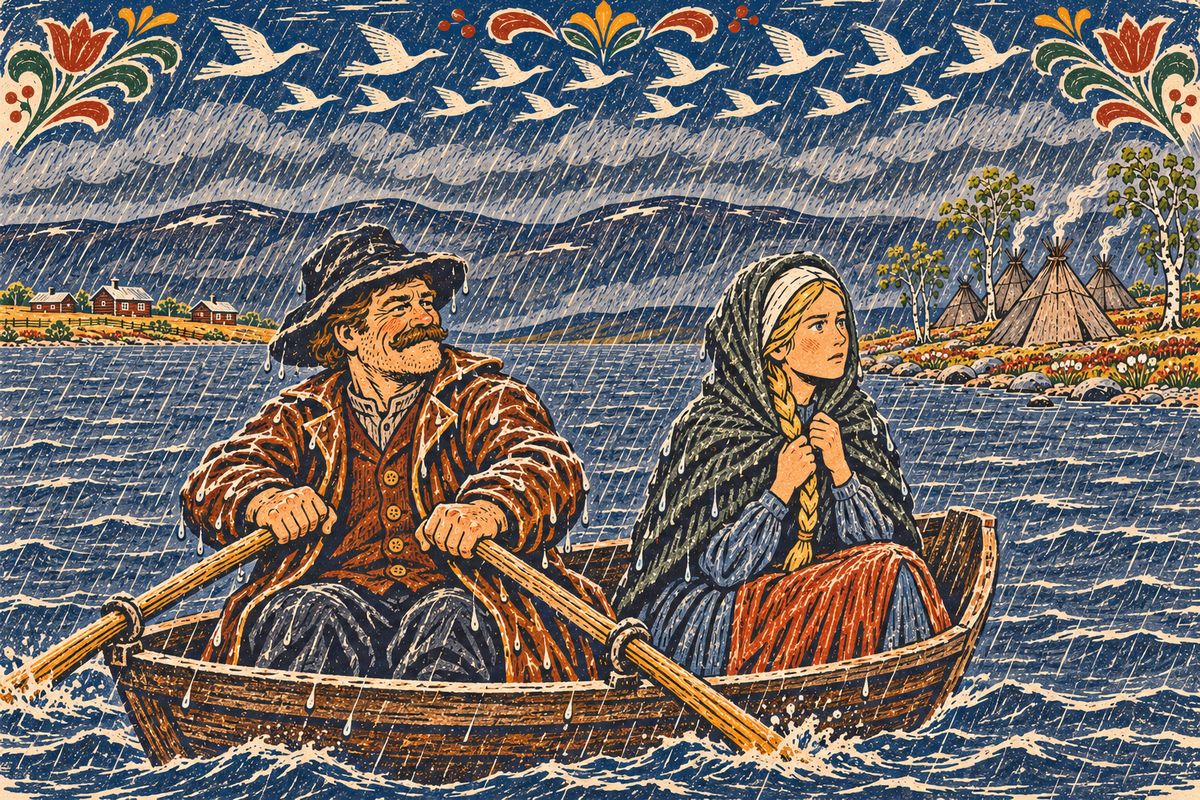
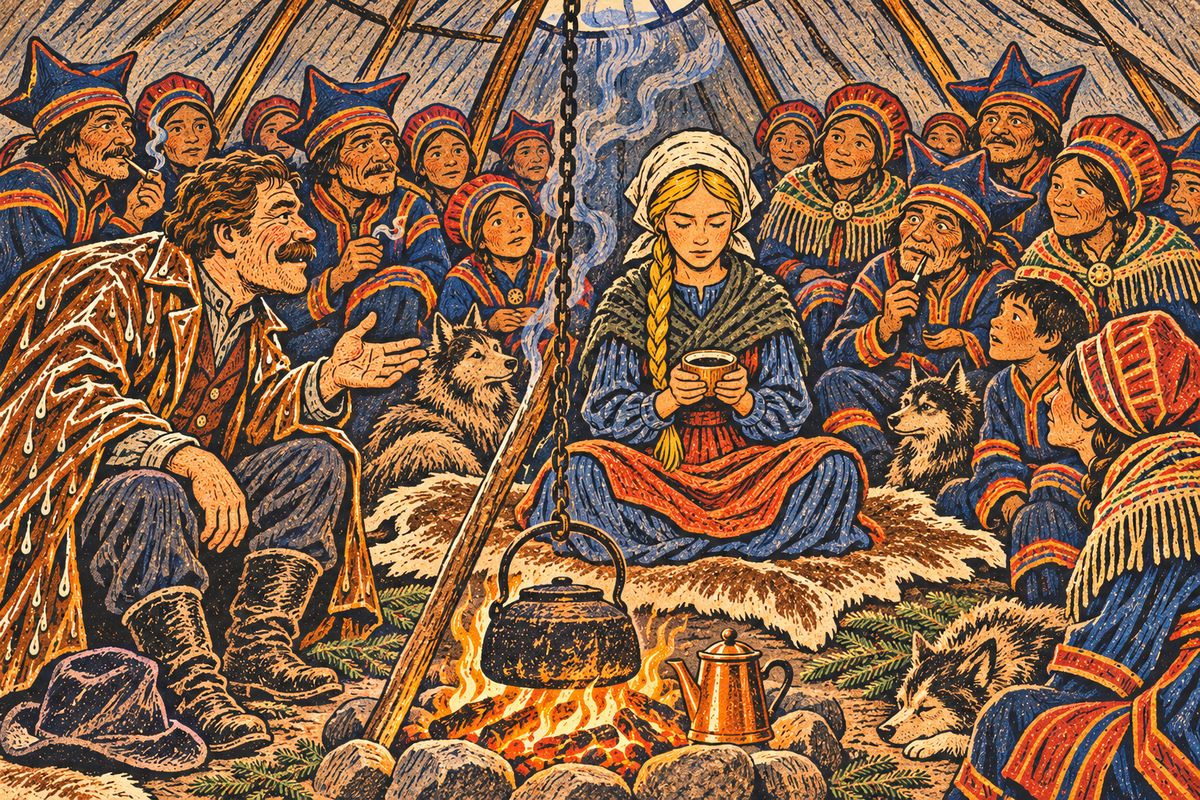
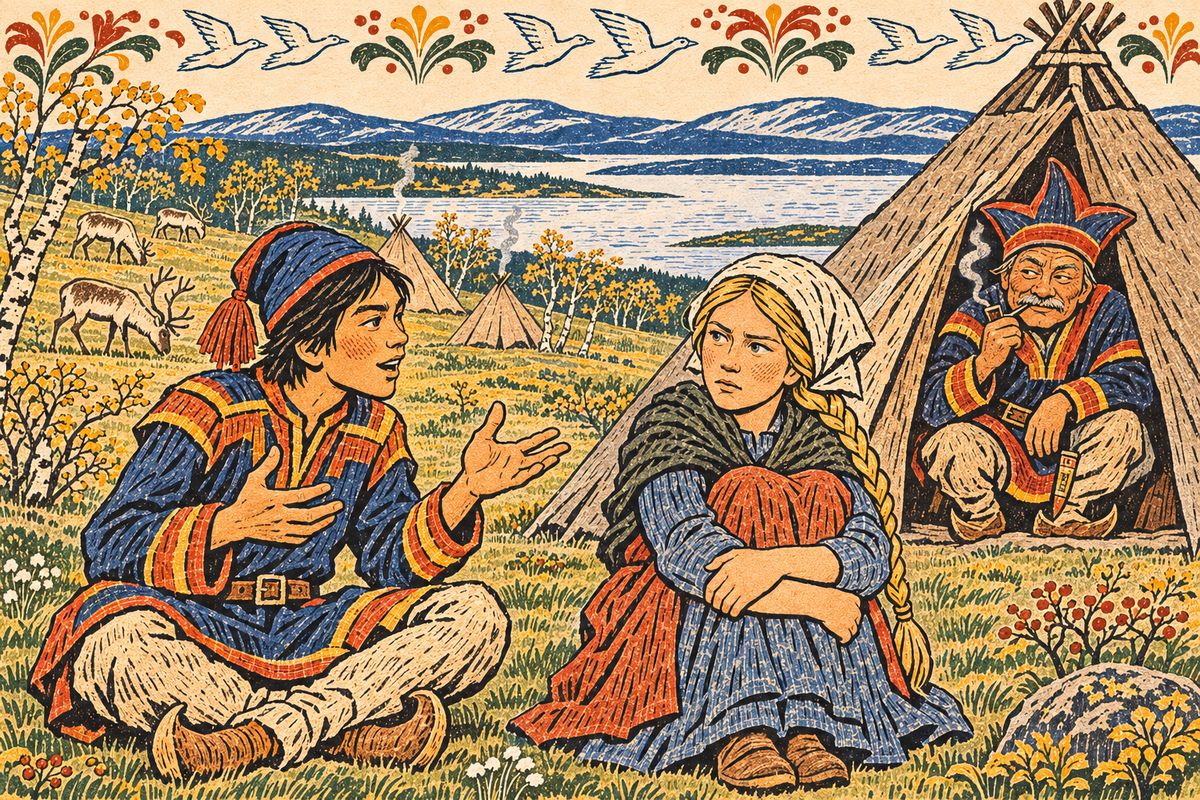
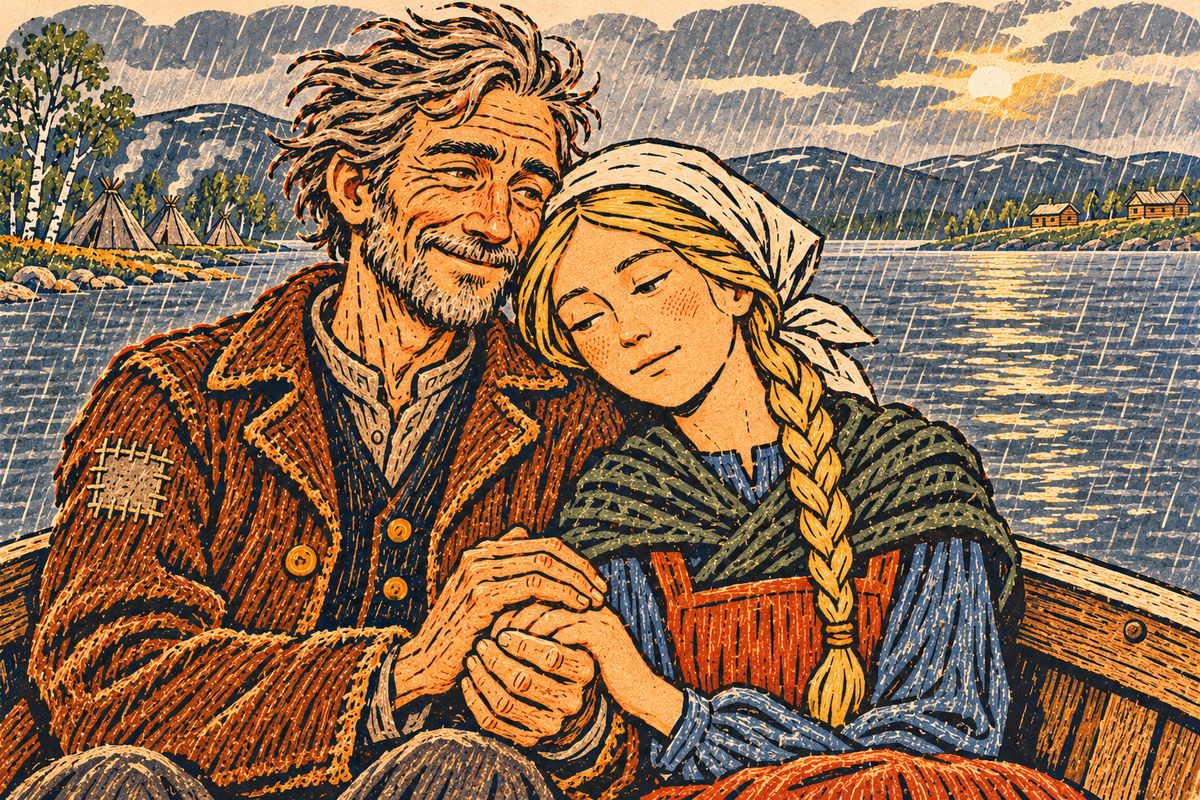
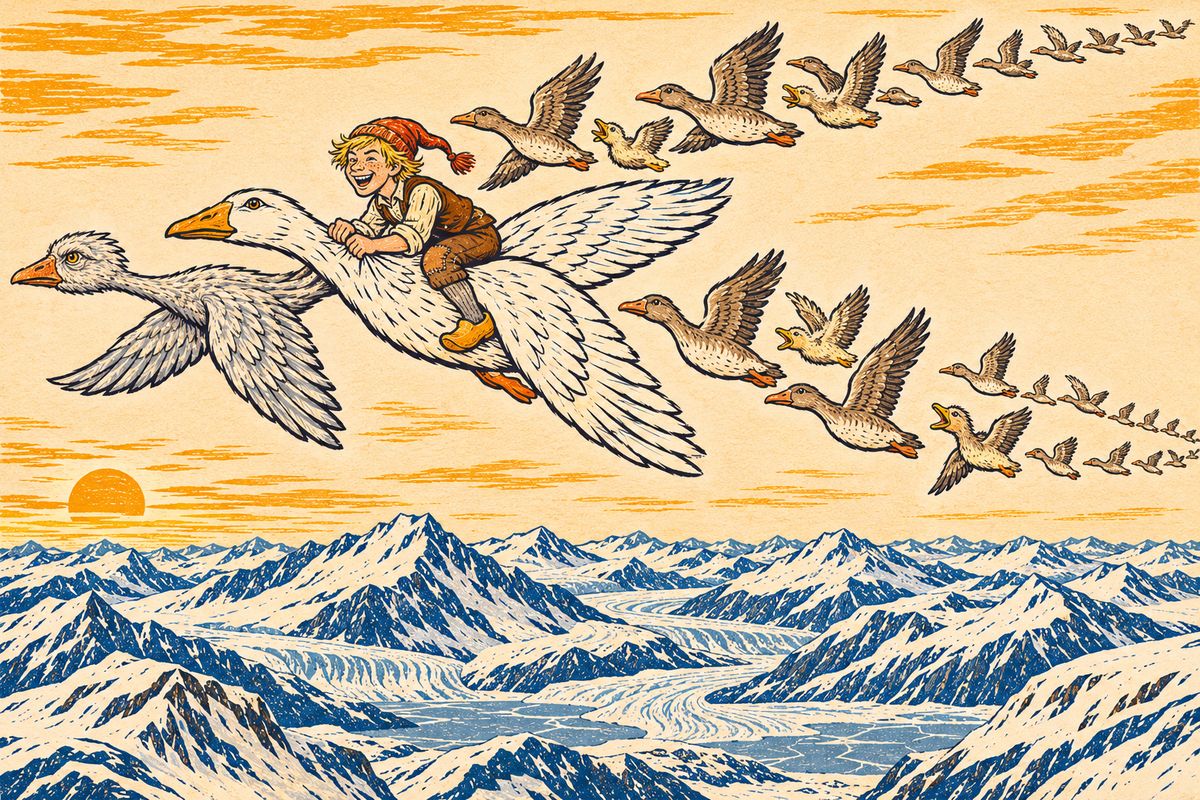
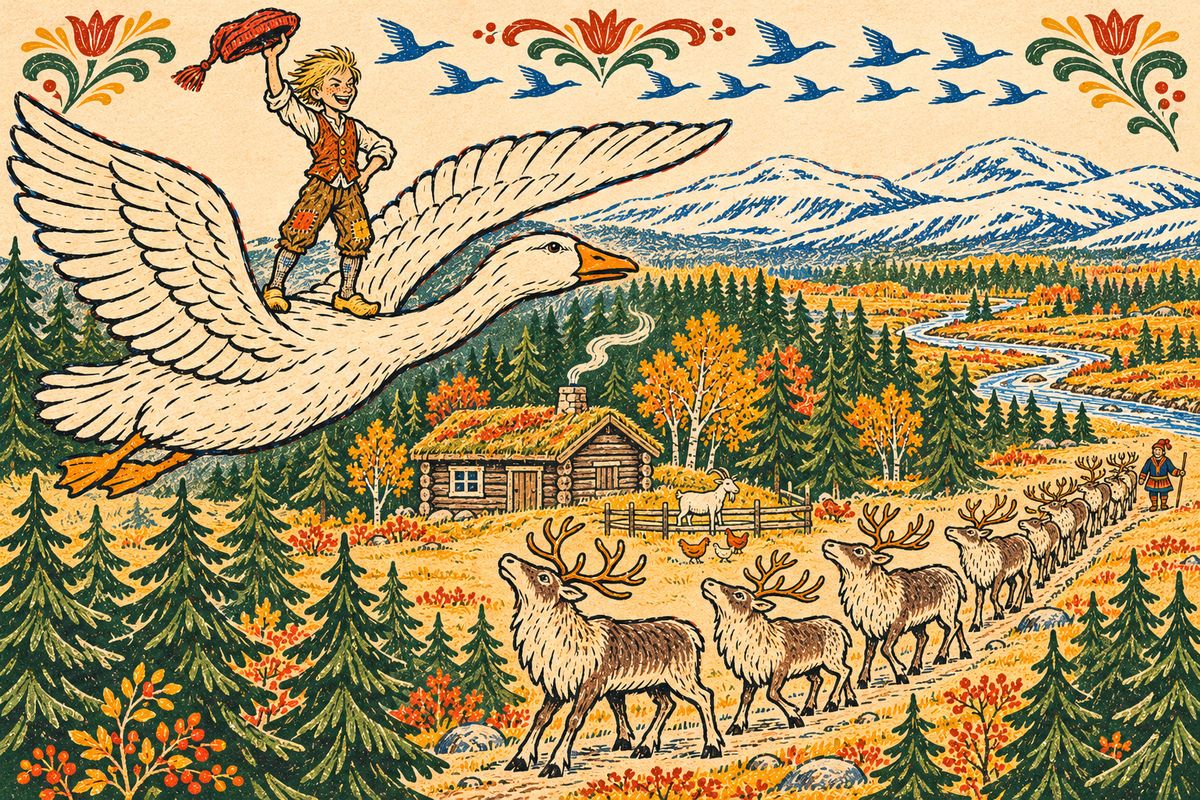
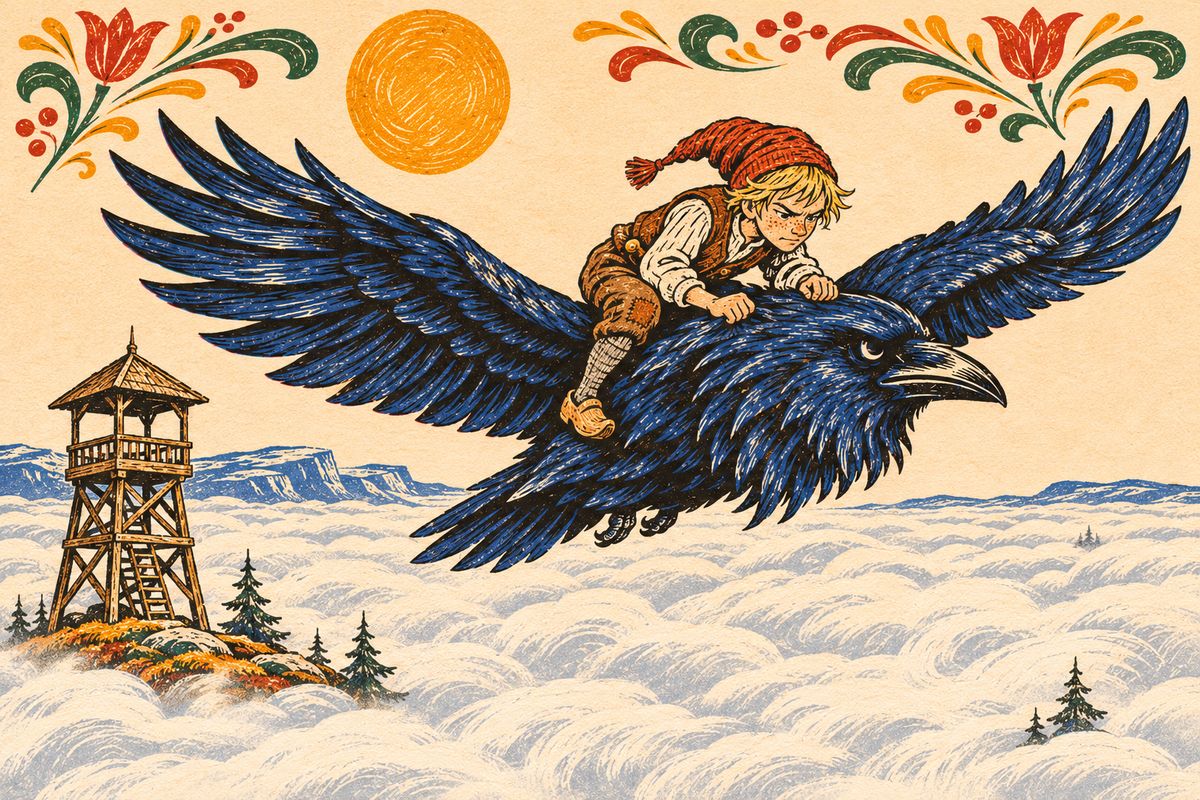
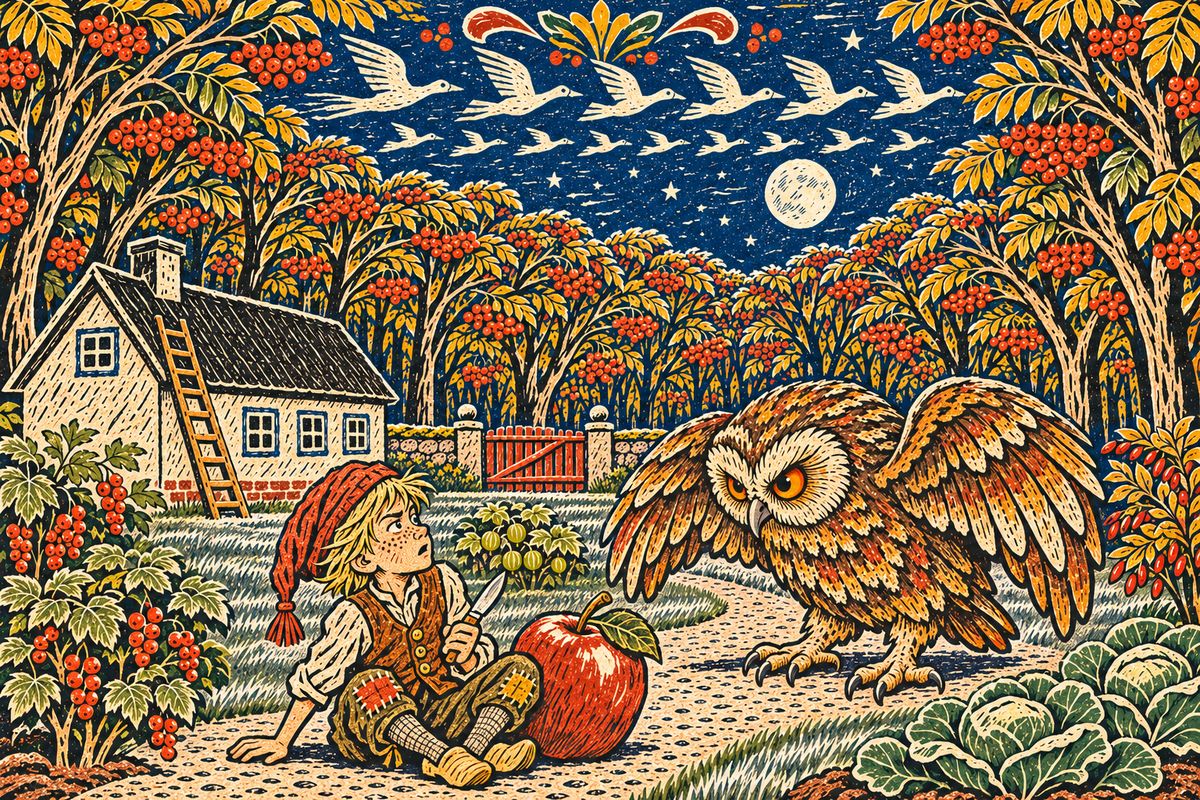
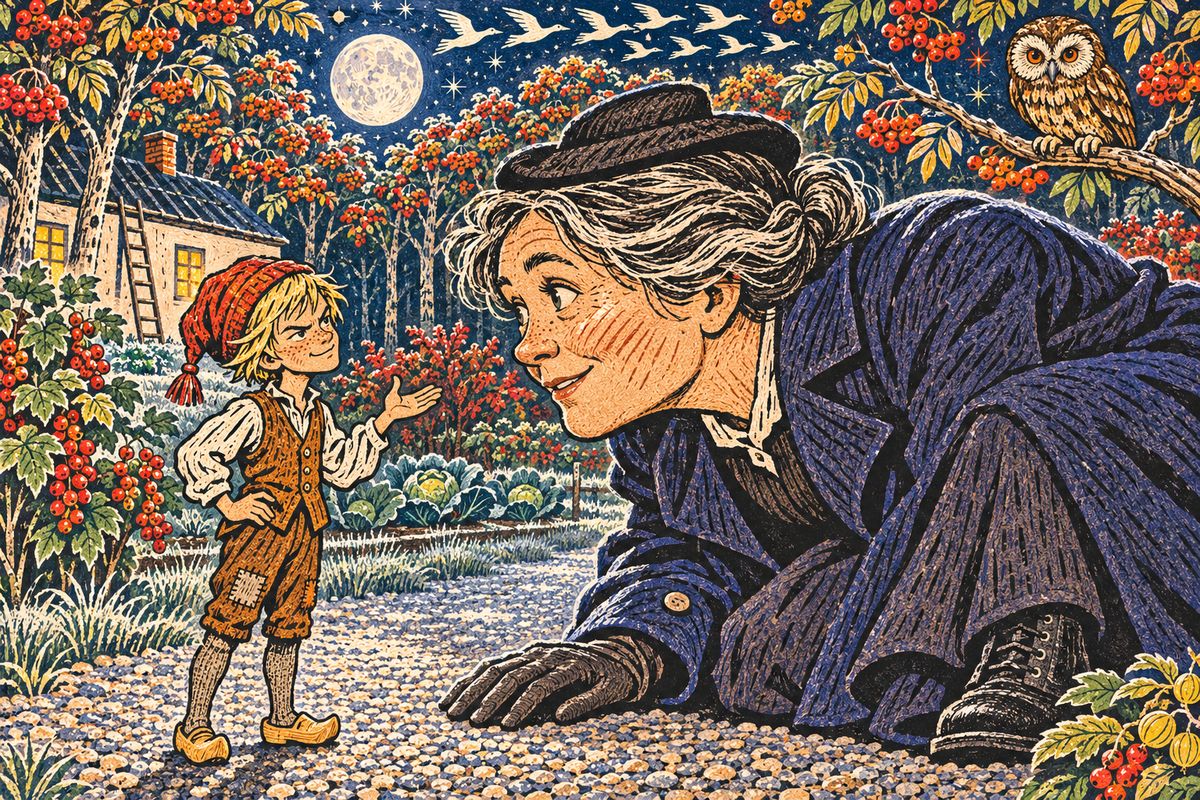
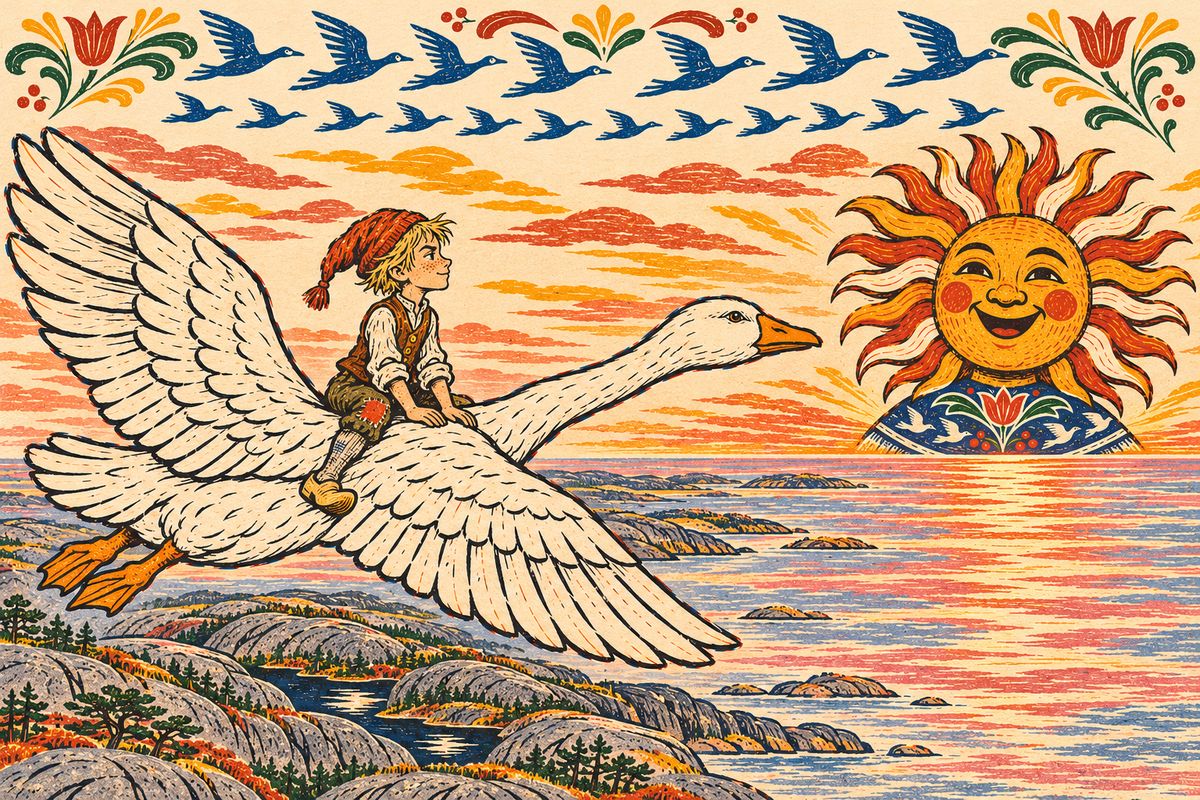
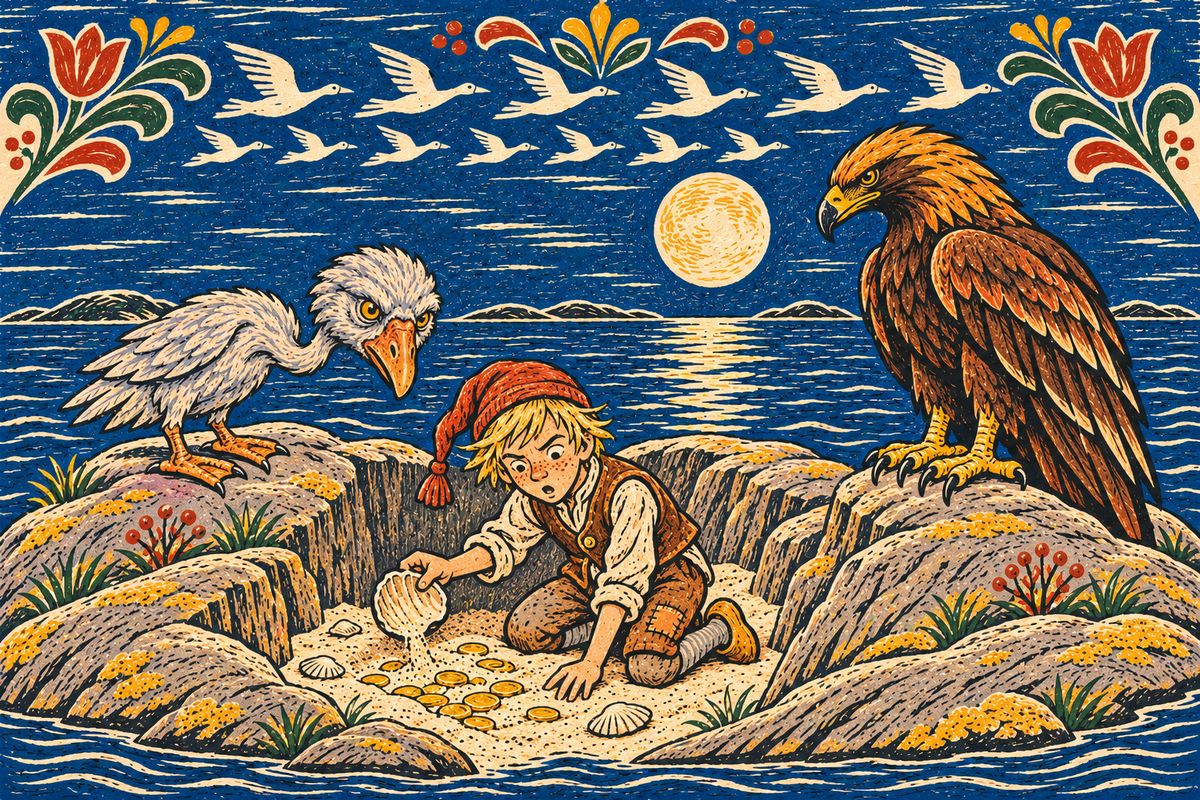
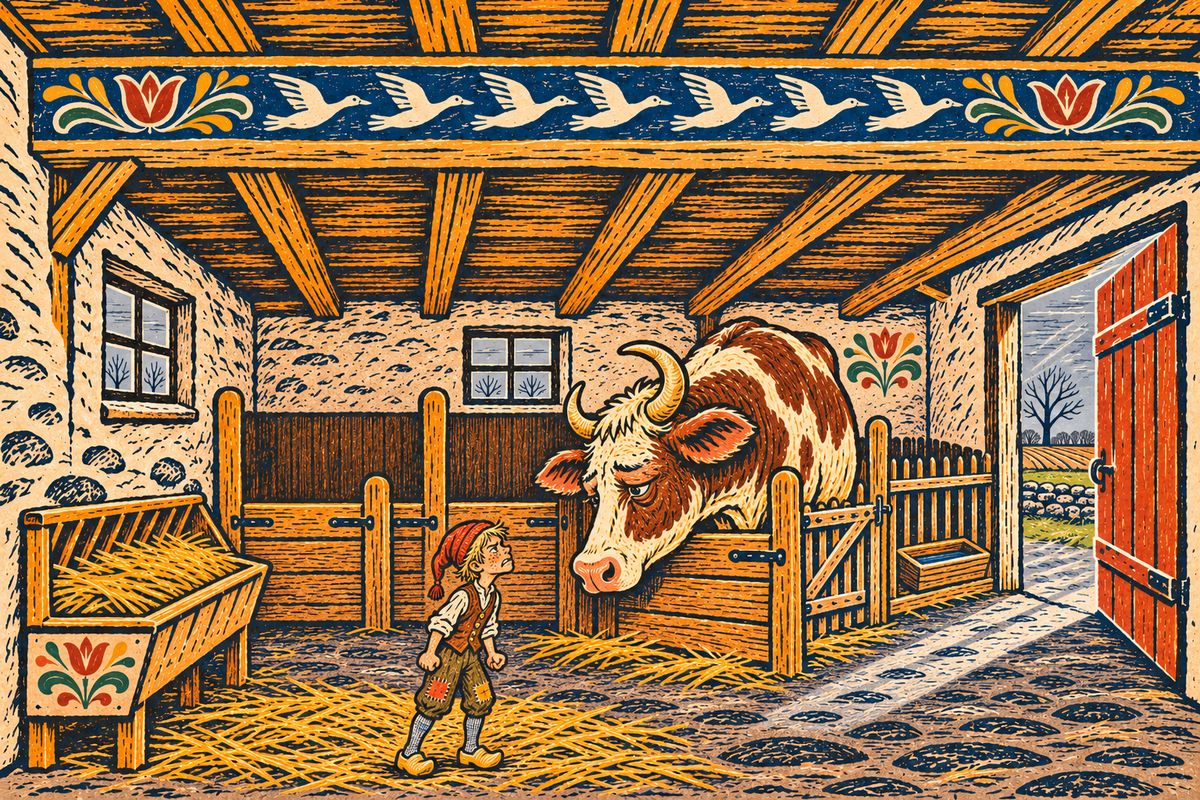
1Far north of Stockholm, Gorgo the eagle set Thumbietot down on a rock in the middle of the roaring rapids at Älvkarleby, where no one could run away. The boy turned his back in anger. Then the eagle confessed that Akka from Kebnekaise had raised him, and that they had quarrelled. "I wish you to make peace between us," he said.2Nils felt kindly toward the eagle now, but he explained he had promised Clement Larsson, the homesick fiddler from Hälsingland, to wait at Skansen. Gorgo had an answer for that. "My wings can carry you wherever you wish, and my eyes can find whatever you seek," he said. He would find the fiddler by sundown tomorrow, and so the two became friends.3Nils rode willingly on the eagle's back as they flew north over Gästrikland. The land wore a spruce skirt and a grey-stone jacket, the boy thought, but around its waist ran a priceless girdle. It was embroidered with blue lakes and green groves, the great ironworks shone along it like jewels, and its buckle was a whole town.4Gorgo left the boy on a burnt, bare mountaintop and went hunting. Soon a blue-and-yellow banner came up the path, and behind it the parish schoolchildren with spades and pine seedlings to plant a new forest. Their parents came up to laugh at the game, stayed to help, and before long the whole parish was planting a forest for those who would come after them.5On Thursday, June sixteenth, Gorgo carried the boy over Hälsingland, searching ravine after ravine for the old fiddler. Pale-green forest spread below, split by a broad, bright valley with smaller valleys branching off. "This land is like a leaf," thought the boy, "and the valleys are its veins."6That morning every farm emptied. Cows, sheep and goats streamed out, and whole families led them up stony forest paths to the summer farms, the girls calling to the herd in song. Carts bumped on stones and tipped over, spilling butter tubs and cheeses, but the people only laughed and set them right.7Toward evening, at a lonely stock farm on a stony tract, Gorgo spotted little Clement Larsson chopping wood. "I have fulfilled my obligation," said the eagle, settling in a thick pine. That night the eldest dairymaid offered her muffler for the best story, and Bernhard told of a Delsbo dean who saw the Wood-nymph judge the animals on Black's Ridge.8But Clement told how he had freed a tiny elf at Skansen and spoken with the King himself, and the dairymaids gave him the muffler. Asked what had become of the elf, he admitted he had left the blue bowl for an old Sámi man to set out. At once a pine cone struck him on the nose, though nobody had thrown it.9On June seventeenth Gorgo flew north over the dark spruce forests of Medelpad. "Up here they have forests for fields," the eagle said. He showed the boy the cleared field of stumps, the bare cabin where the reapers had slept through the winter, and the rough road that carried the harvest to the river. "They have to be hardy men to mow a field like this," said Nils.10Down the River Ljungen, daring log-drivers leapt from stone to stone and ran across rolling logs, as if the water dared not harm them. At the river's mouth stood whole cities of sawmills, then young Sundsvall and Aln Island, lined with forty mills or more. "It is a great country that we have!" Nils marvelled. "Wherever I go, there is always something new for people to live upon."11The day before, Gorgo had tried to find food for the starving boy, but wherever he swooped, sparrows and crows screamed "Robber!" and farmers came running with rifles. Then they reached a farmyard where a tall, fair woman was cooling sugared buns. She laughed and held one up high. "If you want it, come and take it!"12Next morning Nils sat high in a pine eating that bread while Gorgo went hunting. He was moved that the woman had shared her food with a hated bird of prey. "If I ever become human again, I shall find her and thank her," he thought. Then he smelled smoke, and saw that on the ridge beyond, the forest itself was burning.13The fire leapt the brook and came roaring up his ridge. Nils slid down the trunk and ran across smouldering ground beside a lynx, an adder and a mother grouse with her chicks. In the glen below, a few men stood their ground. They felled trees, poured brook water over the earth and beat back the flames with wet pine branches.14After a long, hard fight the men conquered the fire, but only black stumps were left of the beautiful forest. When Nils climbed a rock to look, the owl and the hawk turned their hungry eyes on him. Then a familiar voice called out. Gorgo came sweeping through the smoke and carried him off among the clouds.15At Skansen the boy had heard an old Sámi man tell how the birds once sent five scouts north. The gull found islands, the lark plains, the grouse forests, the loon lakes, and the snow sparrow mountains. The scouts called one another liars, but the wise old birds rejoiced: the North held all five lands, more than many a mighty kingdom.16On June 18th Nils rode Gorgo over that very country, Westbottom. The eagle seemed to hang still while forests, rivers and towns slid slowly south beneath them. Even a train stood still until a station master waved his flag, and then it too glided south. Though it was night, the sun still shone in the boy's face.17Over Lapland, sleepy Nils dozed in Gorgo's talons and dreamed. The Sun led a merry parade of plants, beasts and people north, but one by one they dropped back in fear. Only Nils followed it to an icy cave, where the Ice Witch set her wolves, Cold, North Wind and Darkness, on it. "Teach him that Lapland is MINE!" she shrieked.18He woke with a cry in a glen below the eagles' cliff, the geese's own summer home! He tiptoed past Dunfin and Morten asleep by their nest and found Akka keeping watch. Hearing how he had freed Smirre, she said proudly, "You have acted in a way that makes me wish I had done that myself." Then Nils told her the eagle who brought him was Gorgo, freed from Skansen.19On a Småland heath lived a cheerful family of comb makers, poor but always laughing. One night they took in a sick, homeless woman. Before she died she begged them to cast her out, for a gipsy, she said, had cursed anyone who was kind to her. But they would not turn a sick person from their door.20After the stranger died, one funeral followed another until the cabin fell silent; four brothers and sisters were gone. The jolly father could no longer work or joke. When his eldest daughter fell ill too, he fled from all the misery, and the mother took Osa and little Mats away.21In Skåne the mother worked in the beet fields at Jordberga until the sickness took her as well. Osa and Mats kept her room by tending the farm's geese. Two years later, after a lecture on the White Plague, they asked the lecturer their question. "No person can bring sickness upon another that way," he told them.22The two set out on foot to tell their father it was illness, not a curse. One farm after another sent them on, and everywhere they taught people to scrub, air and burn infected bedding. But at Malmberget, Mats strayed too near the shaft when a blast went off. Nils ran to call the miners, but it was too late to save him.23After the burial, Osa wept alone until she fell asleep and dreamed that Mats said, "I'll send some one to help you." Then came a real knock: it was Thumbietot, who told her where her father was. Waking fully, she was terrified of the elf and shut the door. Even so, next morning she set off the way he had told her.24One afternoon in July, rain beat down on Lake Luossajaure. Söderberg, a workman who could speak Sámi, rowed Osa across from Kiruna, because the elf had told her that her father was living with the Sámi people who camped on the far shore.25Inside the smoky tent, the Sámi people squeezed them in and poured coffee. When Söderberg told how bravely Osa had buried her little brother, they took the pipes from their mouths and stared at her in wonder. "Bra, bra!" said a man beside her. Her father was not there, though. They only said he had gone fishing.26The next morning Aslak, a Sámi boy who spoke Swedish, told Osa an old legend. After the Black Plague, a Swedish girl and a Sámi boy were the only ones left alive. She followed him and his reindeer, grumbling at first, but after a year she would not leave that free life. His father, Ola Serka, overheard, and it gave him an idea.27Ola found grey, broken Jon Esserson fishing and told him he meant to adopt a brave girl called Osa, whose father must be dead. Jon threw down his rod and hurried to the camp. Later that day Söderberg rowed back with father and daughter holding hands. His eyes were clear again, and Osa could be a child once more.28On Saturday, October first, Nils rode Morten south out of snowy Lapland behind Akka, while twenty-two new goslings wailed about tired wings, empty stomachs and too many mountain names to learn. Akka never slowed down. "Wild geese must learn to eat air and drink wind," she said.29Nils was glad to leave. His summer of Kebnekaise, glaciers and wolf caves was over, and he longed to be human again so that Osa would not be afraid of him. He cheered the first pine forest, cabin, goat and chicken. The reindeer wished the geese a pleasant journey, but the bears grumbled about birds too afraid of a little cold to stay home.30Worn out after three days of rain, the boy fell asleep in an observation tower in Härjedalen. When the chattering tourists finally left, the geese were gone. Bataki the raven landed beside him. Akka had flown on to escape a hunter, he said, and he carried the boy after them. But a white fog rose over the land, and the flock was lost from sight.31Over grains of wheat by Sonfjället, Bataki told of a man from Hede chased by wolves across the ice. He turned back to rescue old Finn-Malin, sent her ahead with the sledge, and hid under his huge brewer's vat. 'There is always a third way out of a difficulty,' he said. Then came a smith who forged nails with no fire, and a settler who found a new land.32On a grave mound at Lillhärdal, Bataki finally spoke plainly: the elf would make the boy human again only if he brought Morten home for his mother to slaughter. The boy leaped up in a rage. 'That's only one of your base fabrications!' he cried. Bataki only nodded toward the sky. There came Akka, leading the whole flock.33Akka could not deny what Bataki had said: Nils could only become human again if he brought Morten home safe, and Morten would then be killed. The boy made her promise to keep it from the brave gander. Afterwards he sat glum on Morten's back, not even glancing down at Dalarna or the endless forests of Värmland. "I shall probably travel around with wild geese the rest of my life."34That evening Nils slipped away from the geese to a little homestead whose garden was walled by tall mountain-ash trees. In the moonlight he found berries on every bush and a big red apple on the path, and he thought of staying behind alone. Then something like a birch stump with glowing eyes landed beside him. It was a brown owl, and after a few questions she flew at him, claws out.35Just then a grey-haired woman, who had come home to her childhood farm Mårbacka hoping to find the book about Sweden she could not write, heard his cries and parted the fighters. Nils told her all his travels on the goose's back. She listened, astonished and happy: here was her book. Might this be her father's answer to her longing for home?36Flying west over Dalsland and Bohuslän, Nils coaxed Morten into wintering abroad. The gander longed for home, but he said he could never be parted from the boy. At sunset the sea opened before them, and the big red Sun seemed to tell Nils, “It's not worth while to be sad.”37At midnight Akka flew Nils and her six old companions to a tiny rock among the Väder Islands, where Gorgo the eagle was already waiting. Years ago a storm had driven the geese there, and they had found bags of gold in a sandy cleft. Nils dug with a shell and struck coins scattered through the sand.38Then the geese bowed and offered Nils the gold as his wages, but he begged to go abroad with them instead. Gorgo passed on the elf's message: Nils's parents had sold two cows and might lose their croft. Nils clenched his fists. “He sha'n't turn me into a traitor to a friend! My father and mother are upright folk.”39After weeks of waiting on the Falköping plain, the wild geese crossed Halland Ridge into Skåne at last. Akka flew the goslings over beech-clad ridges and castles, across the great plain of fields and little white churches, and down the Öresund coast. "Now look down! Look well!" she called each time. "This is how it looks in foreign lands."40At last Akka came down on a marsh in Vemminghög township, as if she had flown over Skåne only to show the boy his country could stand beside any in the world. But Nils was not thinking about rich or poor lands. Ever since he had seen the first willow grove, his heart had ached with homesickness.41On the eighth of November Akka brought Nils to the stone hedge around his old home. Before she left, she asked him to remember the wild creatures. "You can easily afford to leave us a few bare rocks, shallow lakes and remote forests." Then she turned back and gently stroked him with her bill.42Nils hurried to the cow shed, where only Mayrose was left. Her old companions had been sold to pay for a lame horse, she said, and his parents believed their son had stolen the gander and run away. "They have mourned you as one mourns the loss of the dearest thing on earth."43The new horse told Nils that something sharp was stuck in his foot, so Nils scratched a message on the hoof with his knife. Then, hiding in the stable, he saw Osa and her father, Jon Esserson, arrive. They praised Nils to his parents and left them with fresh hope. "I don't feel unhappy any longer," said his mother.44Holger Nilsson read the words scratched on the hoof and pulled out a sharp piece of iron. Meanwhile, Morten led Dunfin and their six goslings into his old goose pen to show off his former home, and the mistress bolted them in. "I'm afraid we'll have to kill them tonight," she said. Morten Gooseday was only two days away.45When Morten cried "Thumbietot, come and help me!", Nils overcame his shame and knocked at the cabin door. "Mother, you shan't touch the goosey-gander!" His mother cried out with joy, held him close and drew him inside. "Mother and father!" he cried. "I'm a big boy. I am a human being again!"46Before sunrise on November 9th, Nils left Morten Goosey-Gander asleep in his pen and stood alone, big as he was, on the strand by Smyge. When Akka's flock came, he could not make the old calls or understand theirs. "Here am I, where are you?" he shouted, waving his cap, but the frightened geese flew farther out to sea.47He sat down on the sand and hid his face in his hands. Then wings rustled: old Akka had turned back, and something told her who he was. She landed beside him, and the others crowded round. When they went quiet, knowing he no longer understood them, he stroked Akka, then Yksi, Kaksi, Kolme, Neljä, Viisi and Kuusi, his comrades from the very start.48He walked up the strand to part from them while they were still sad. From the shore meadows he watched many flocks shrieking over the sea, but one flew on silently, its wedge perfect and its wing strokes strong and sure. The boy longed so for his departing comrades that he almost wished he were Thumbietot again.
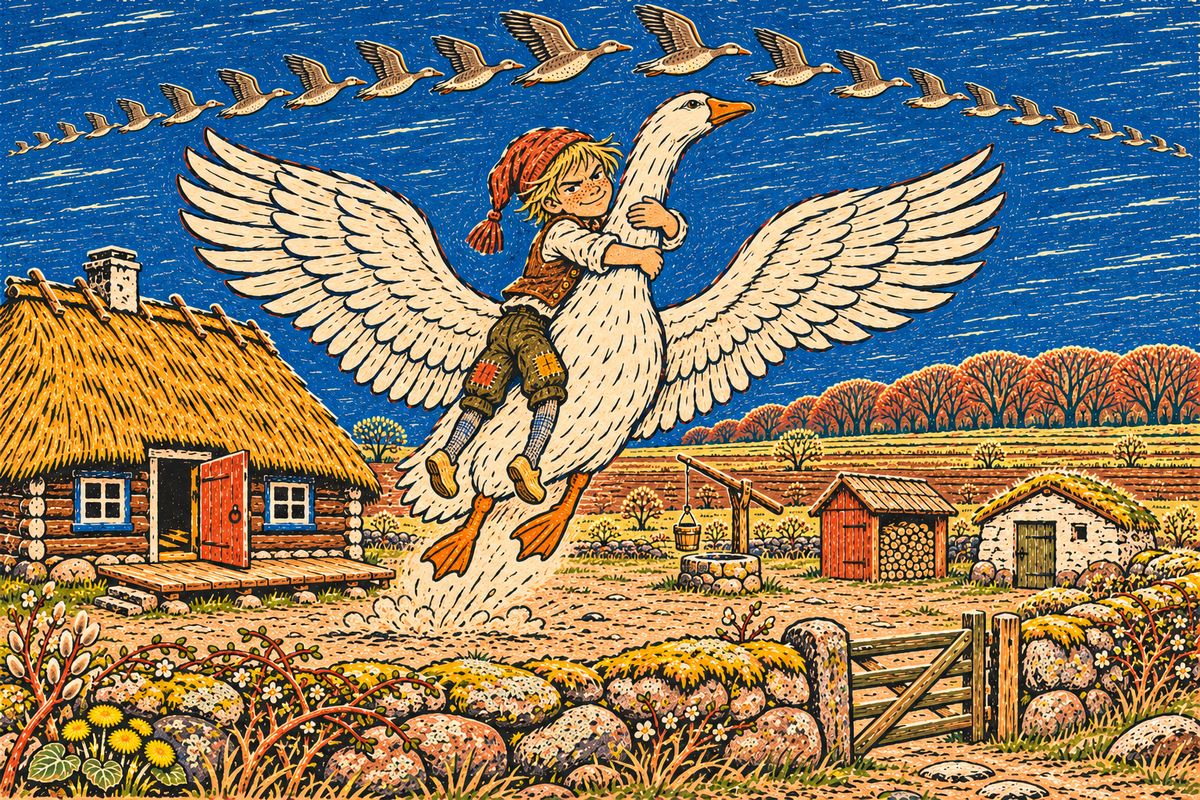
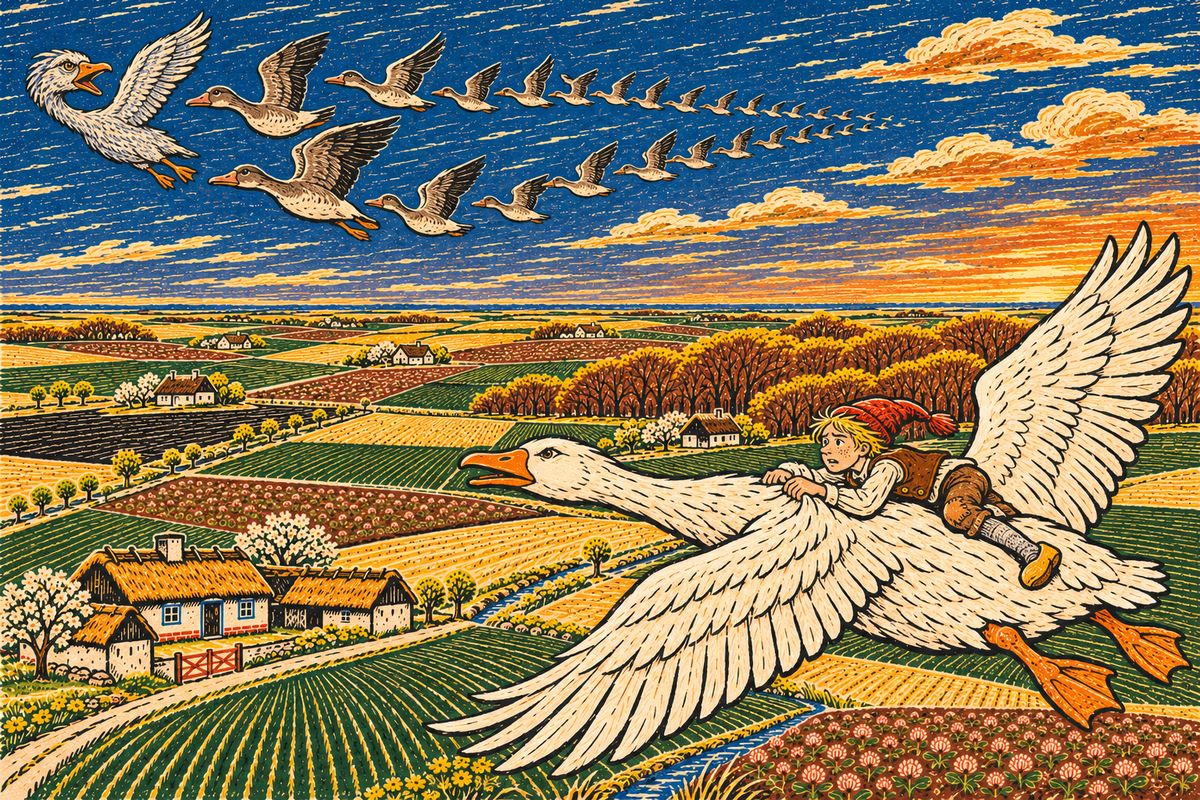
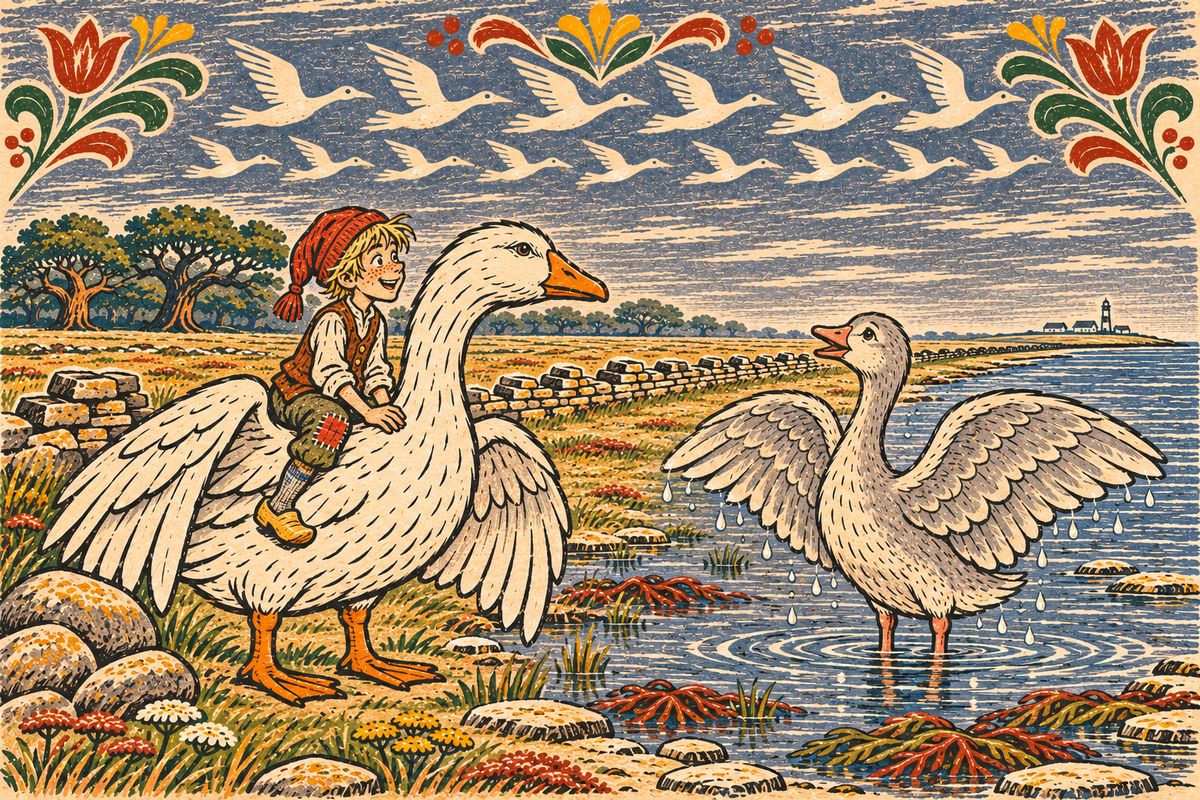
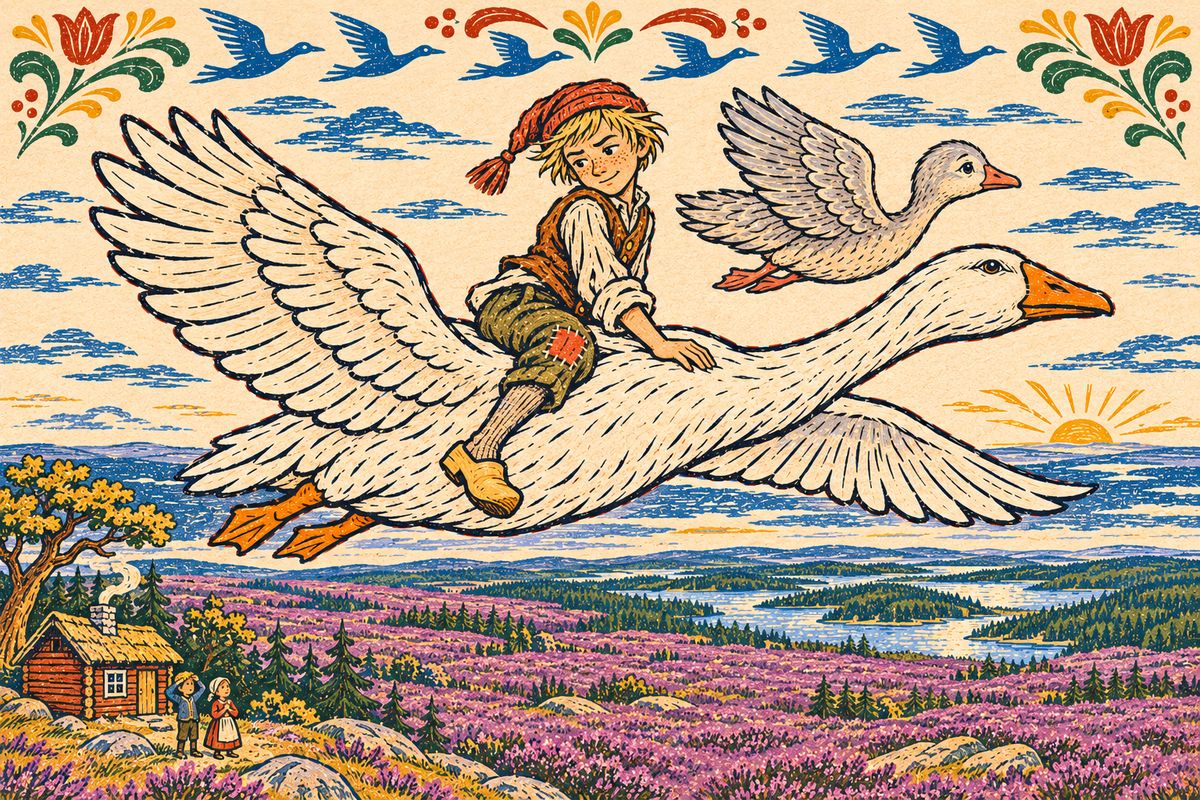
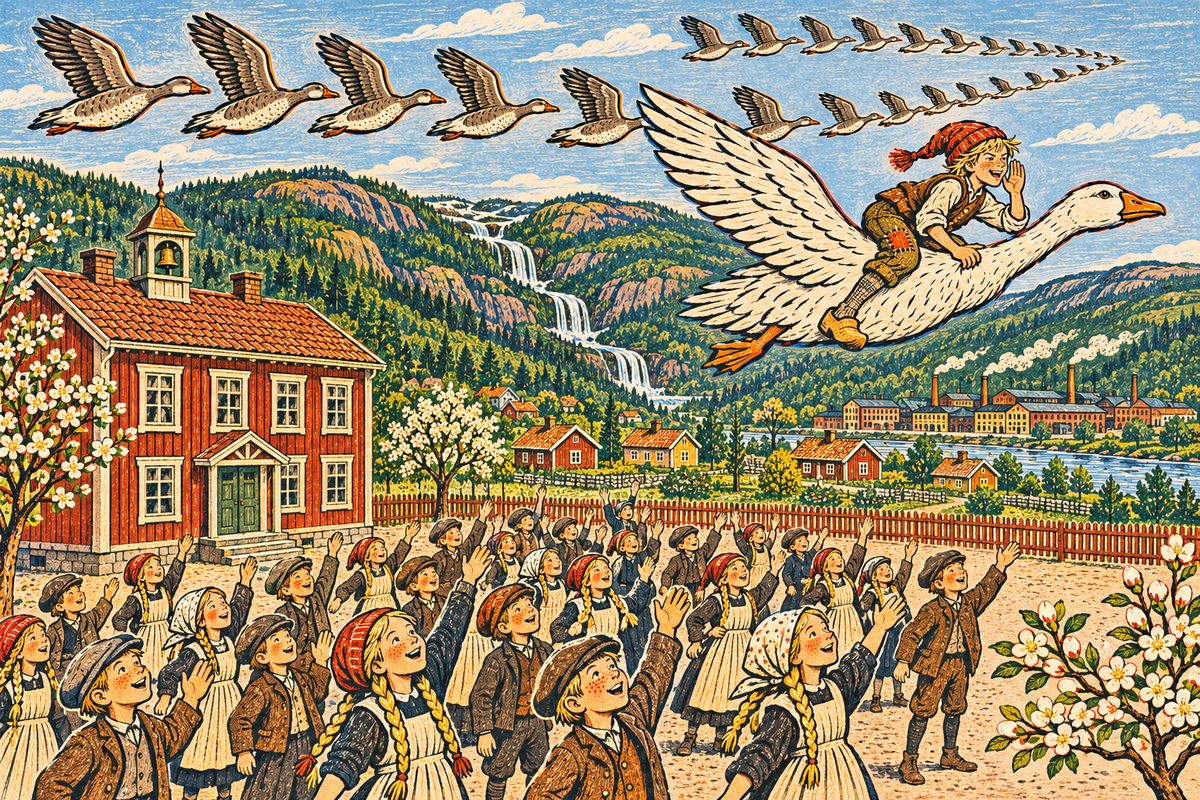
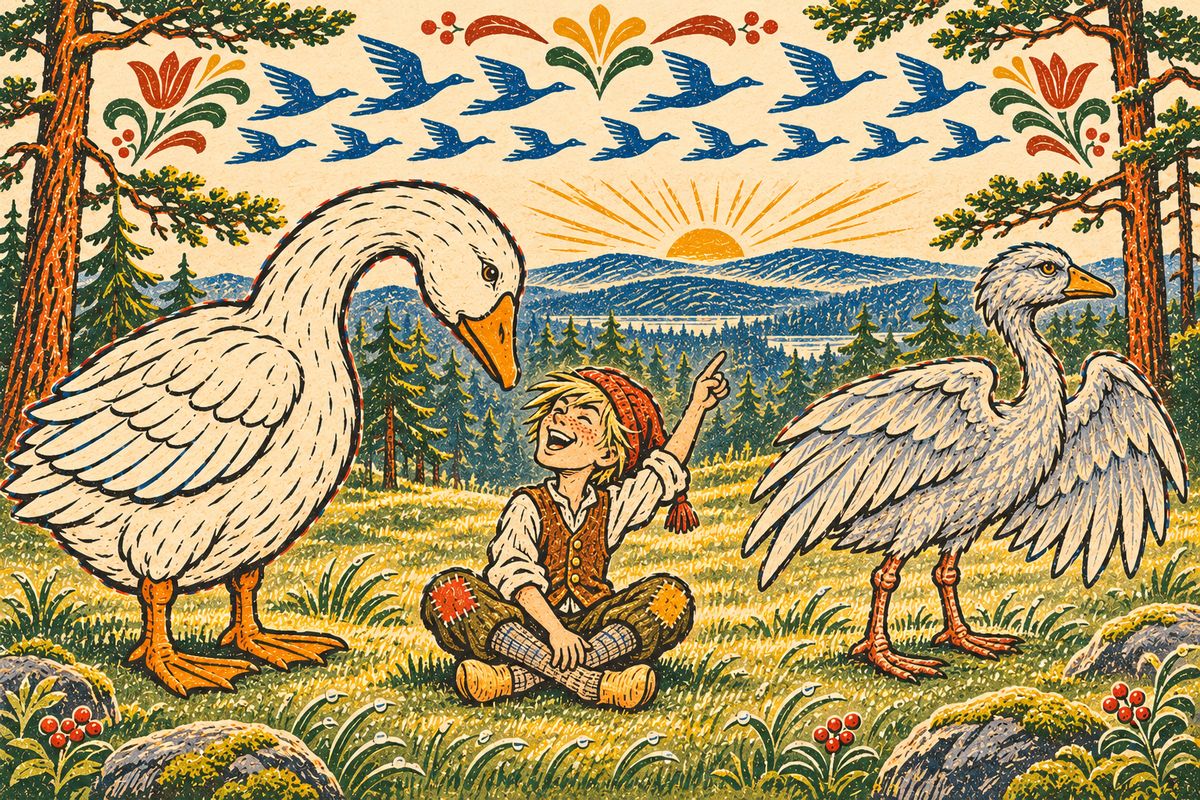
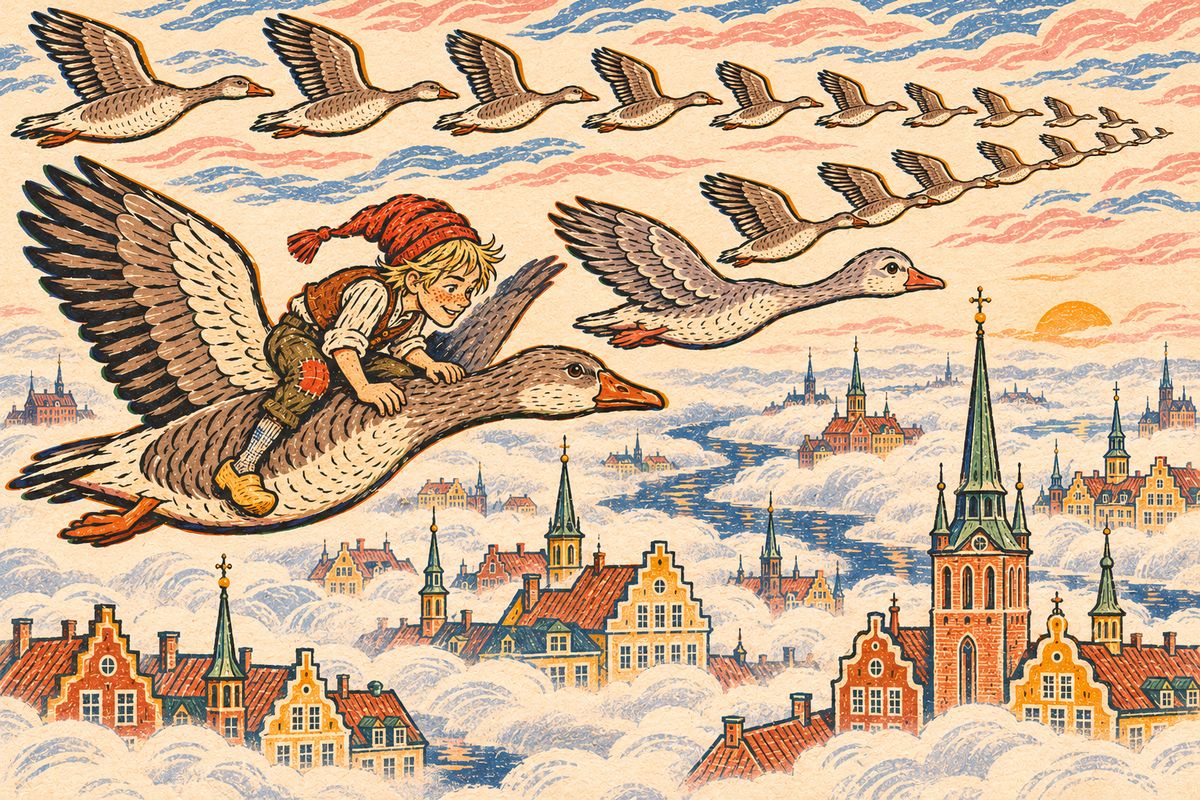
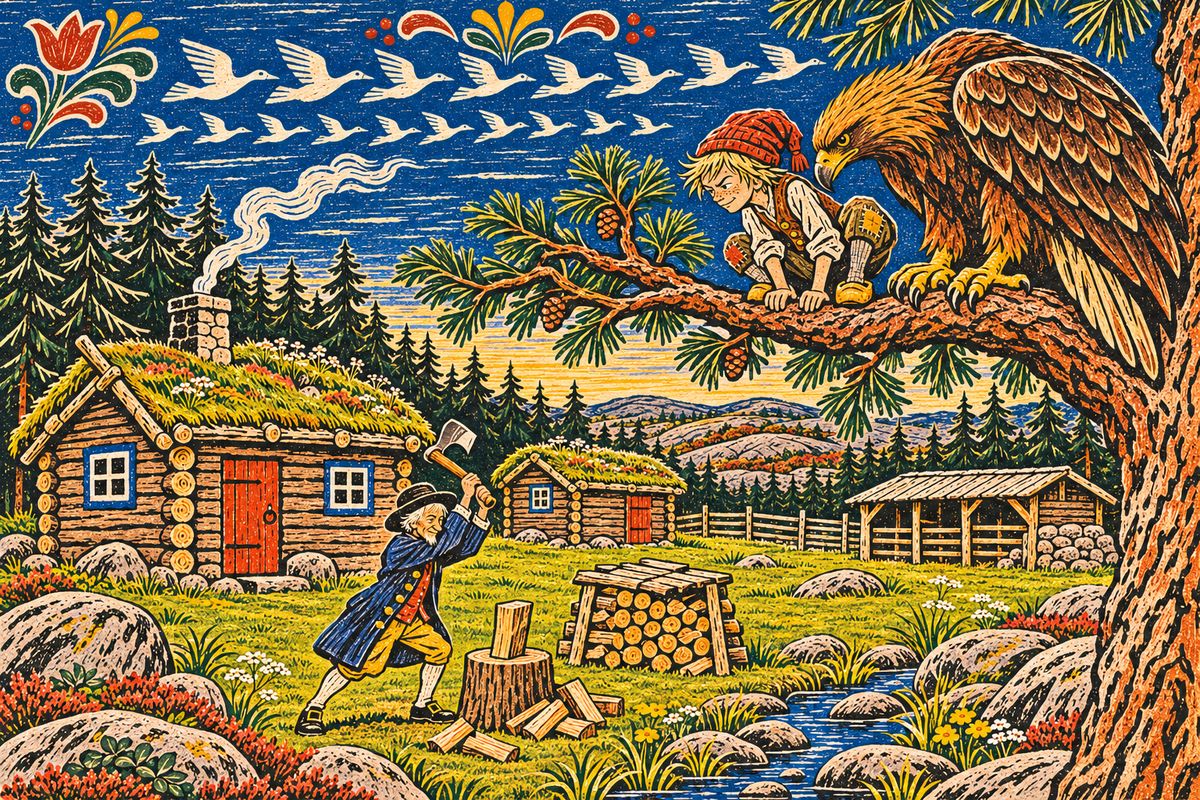
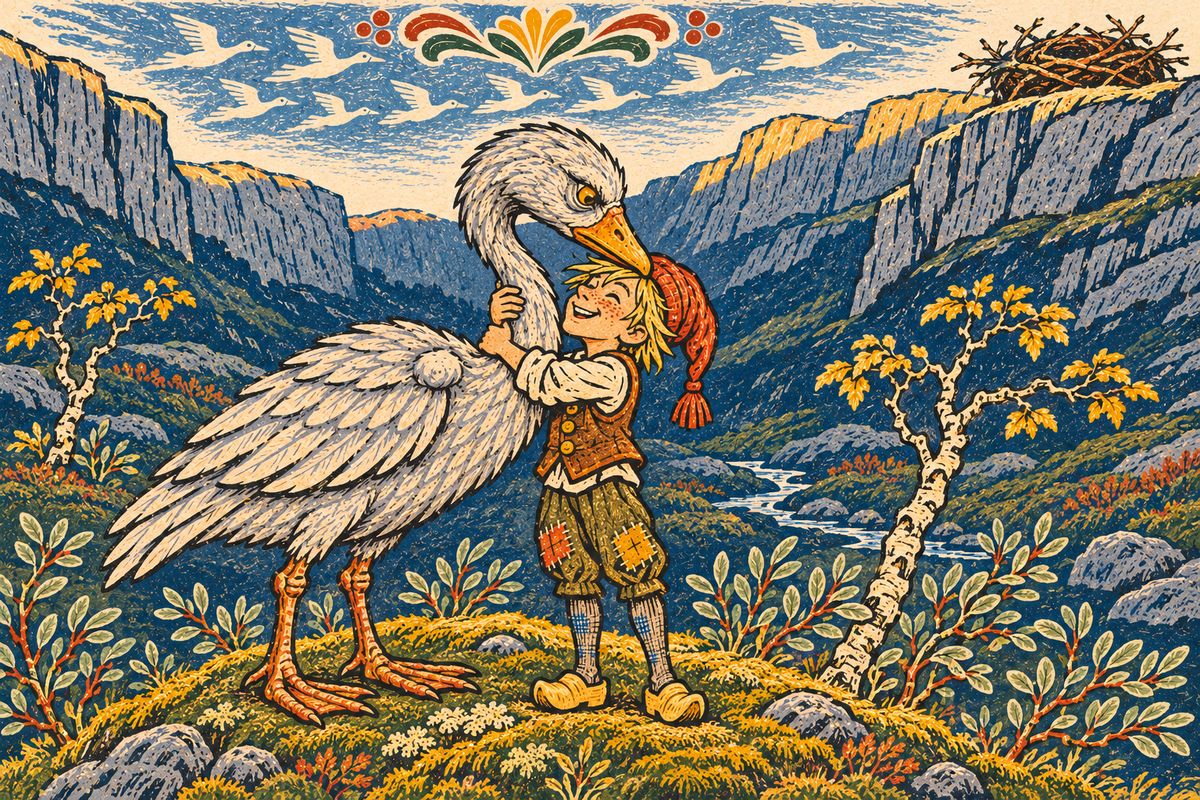
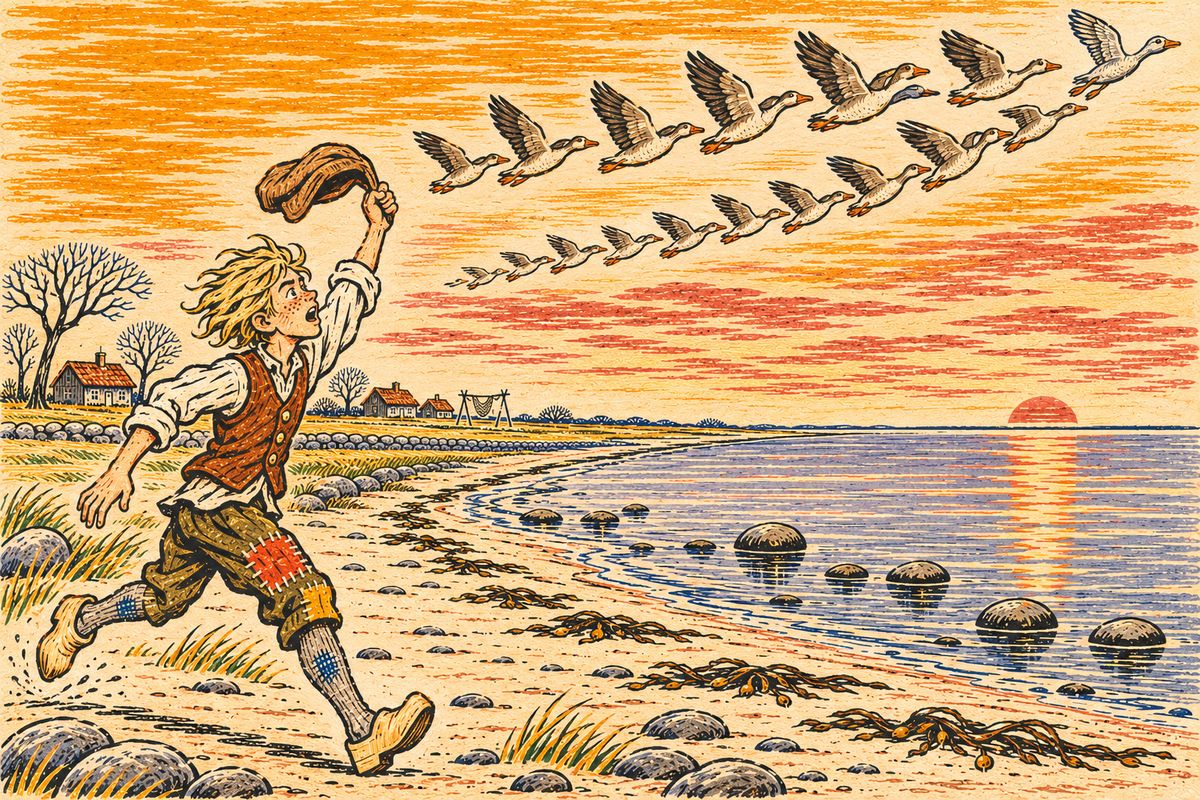
Adapted from The Wonderful Adventures of Nils by Selma Lagerlöf, public domain. Pictures are AI illustrations drawn for this edition.
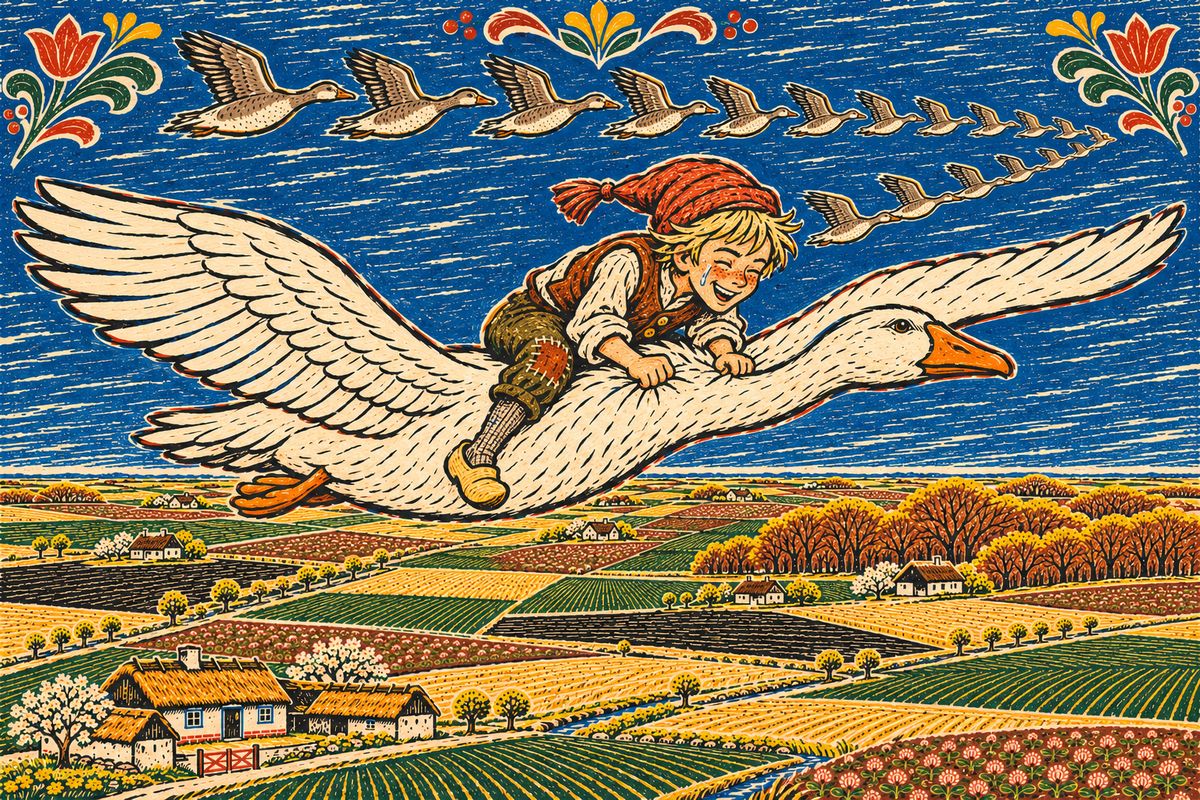
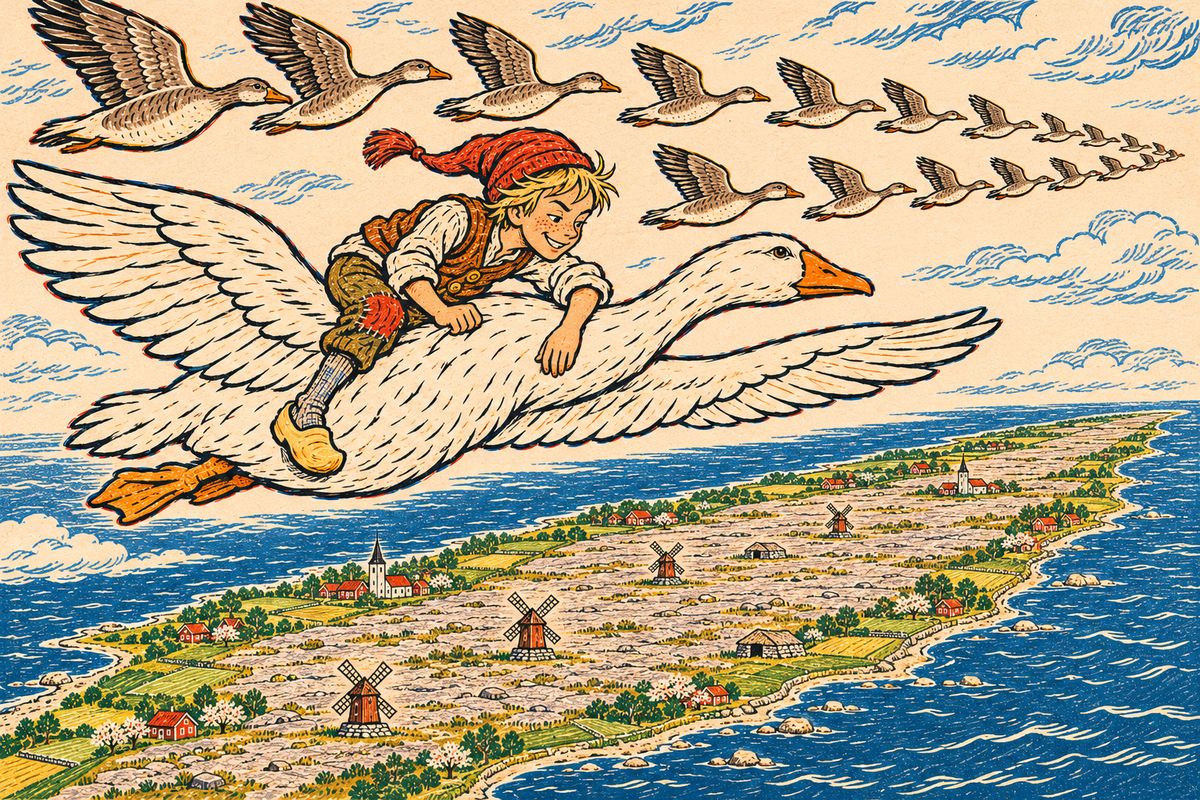
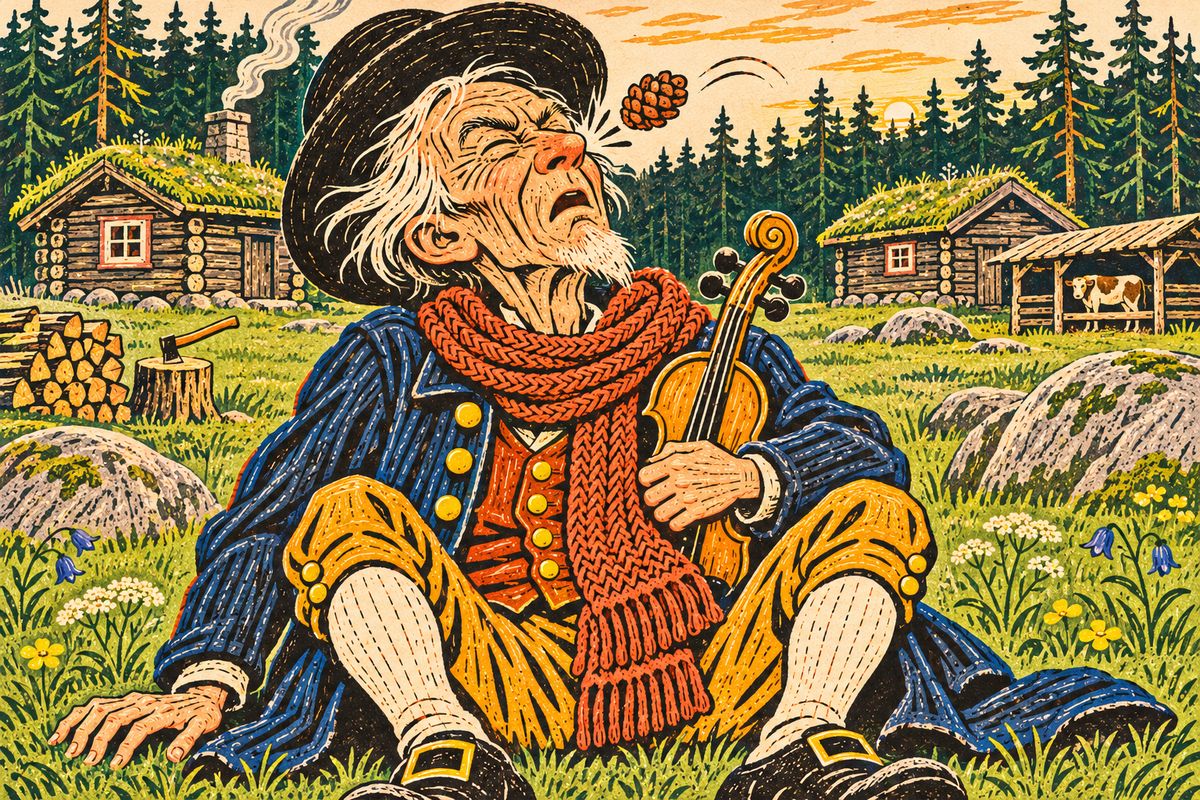
Add Stories to your Home Screen: tap
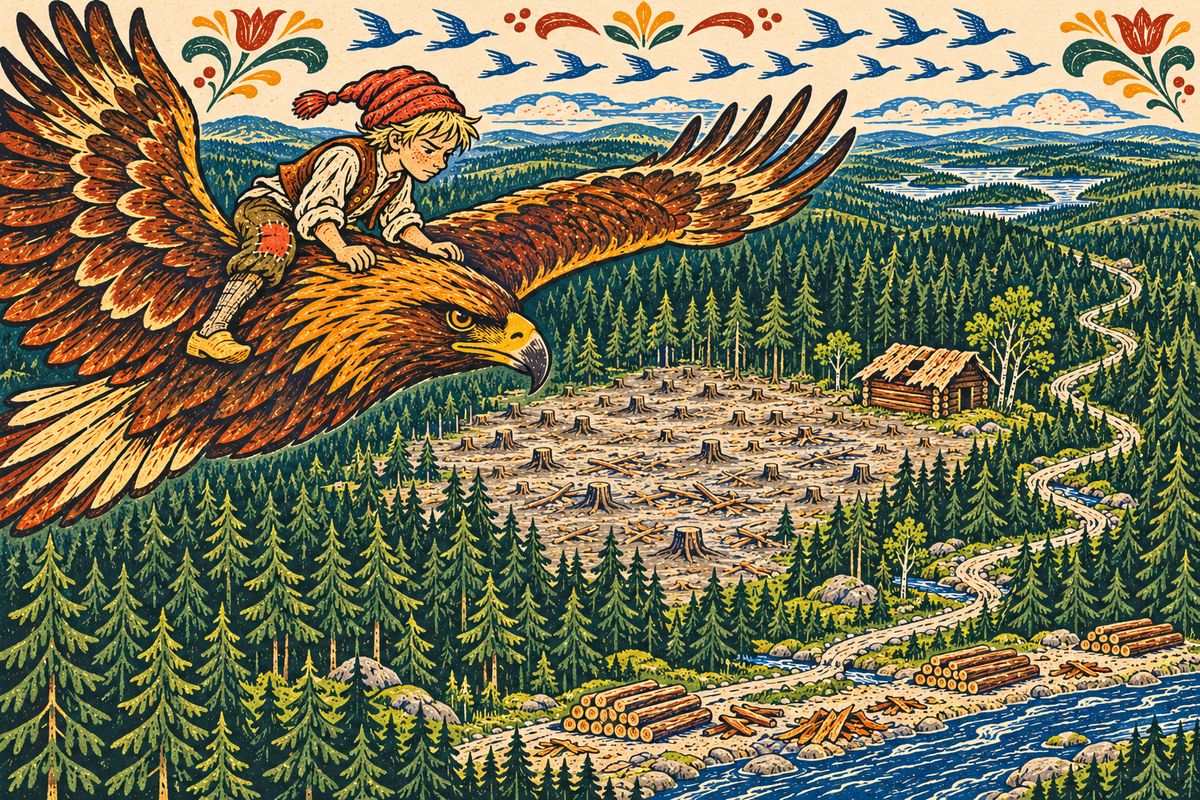
then Add to Home Screen.