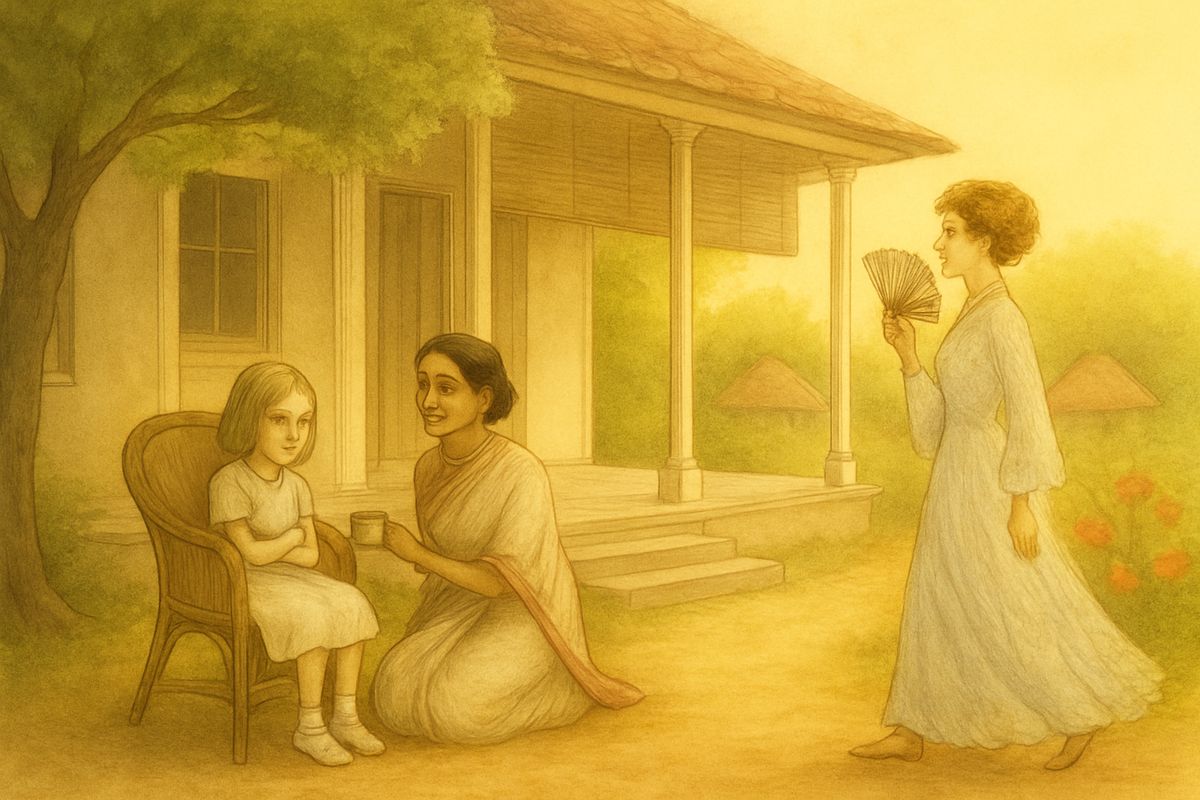
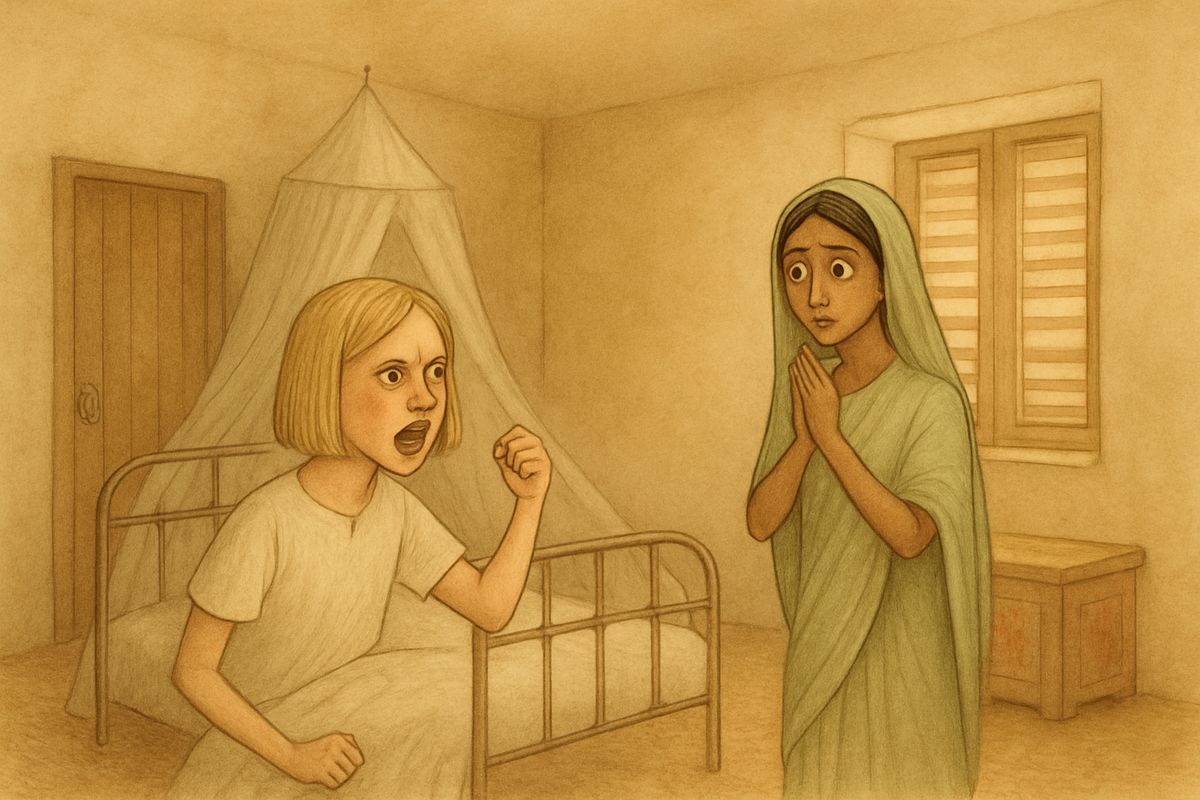
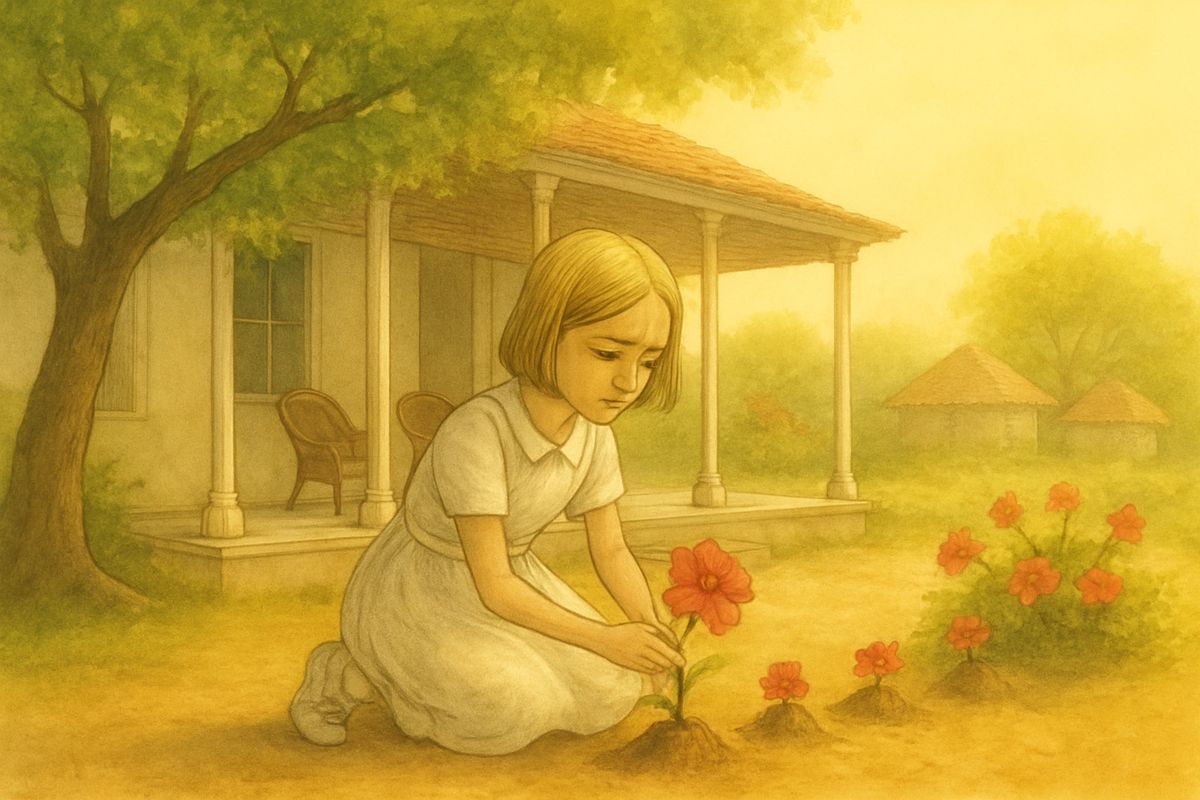
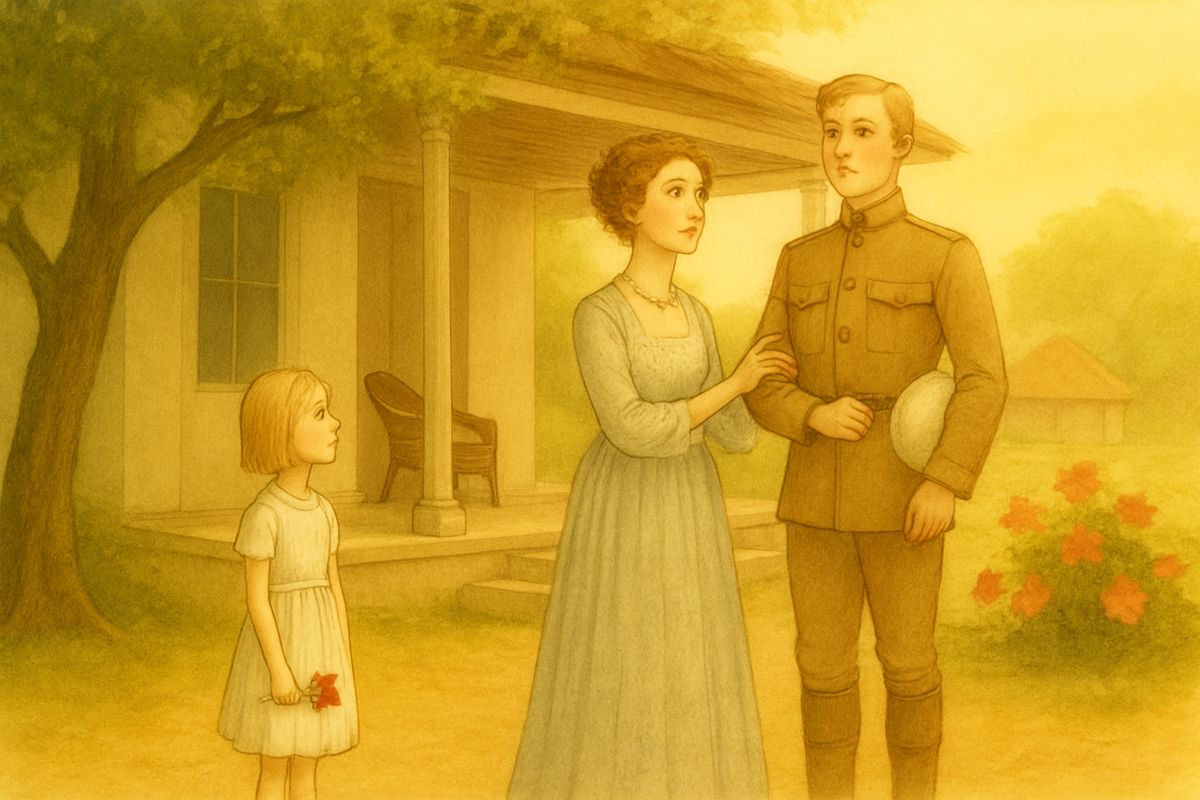
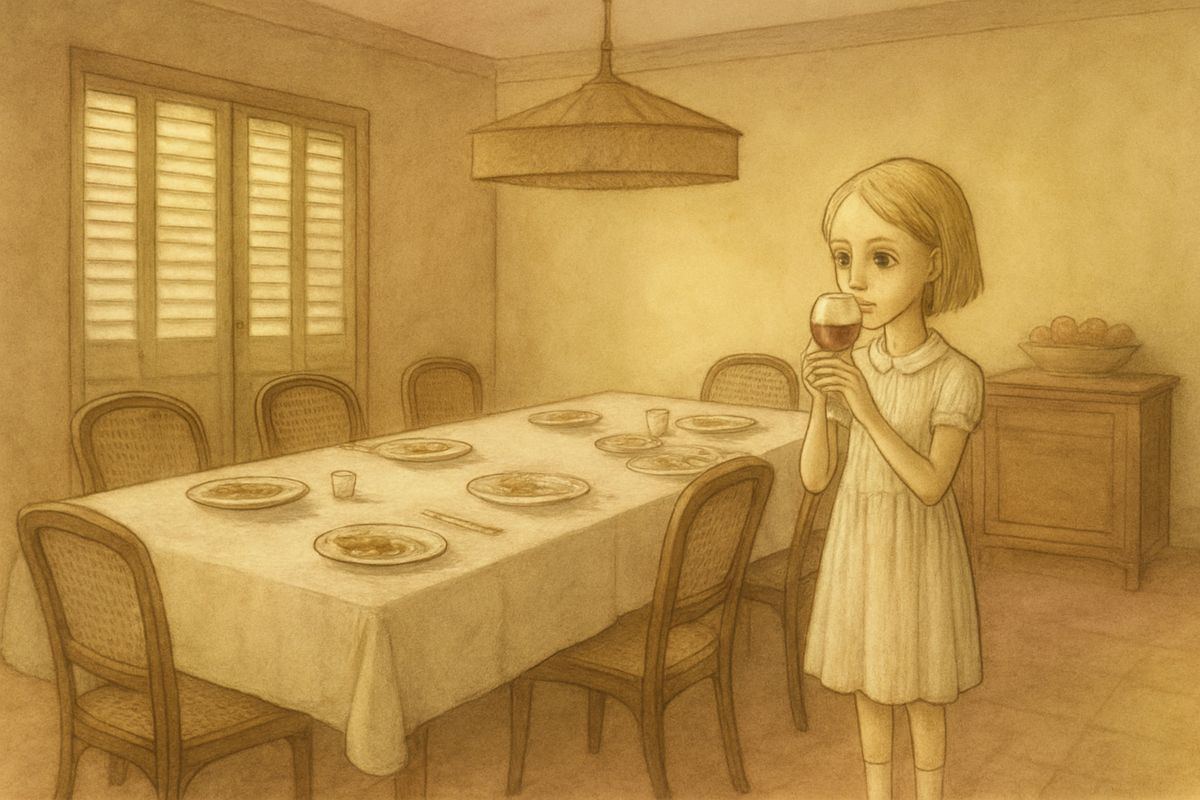
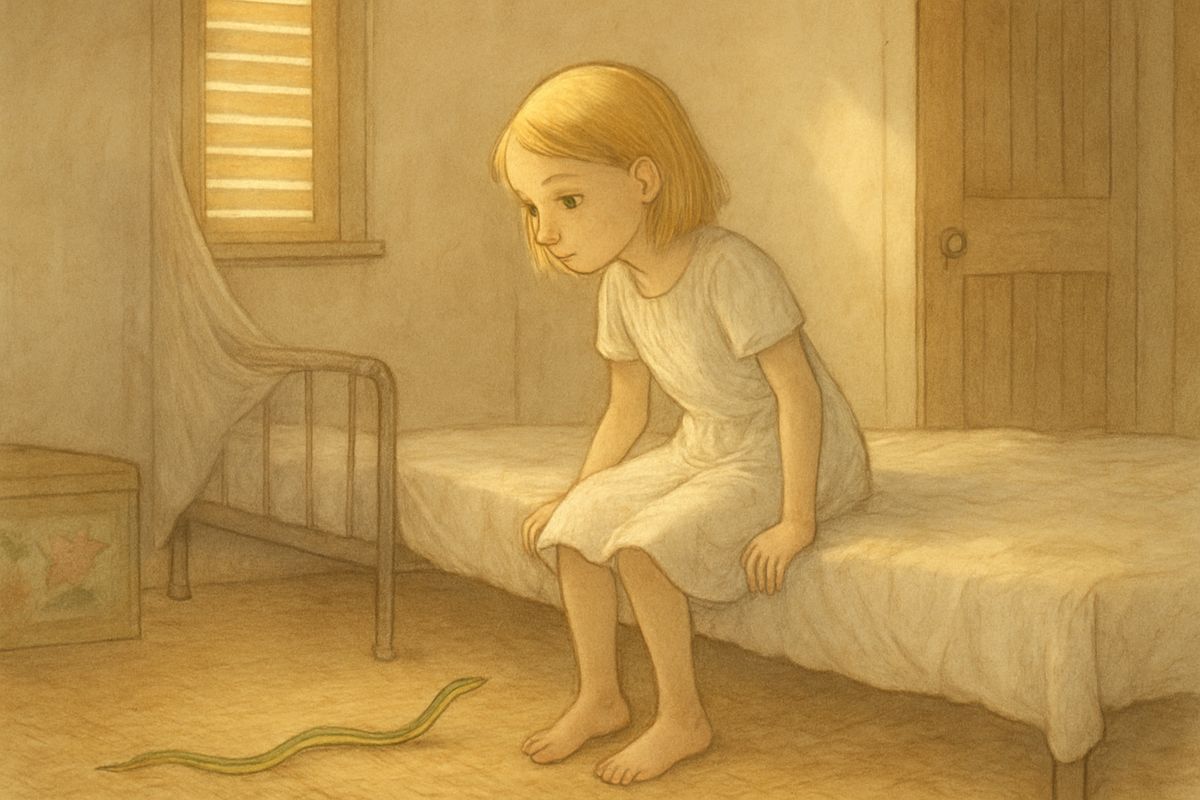
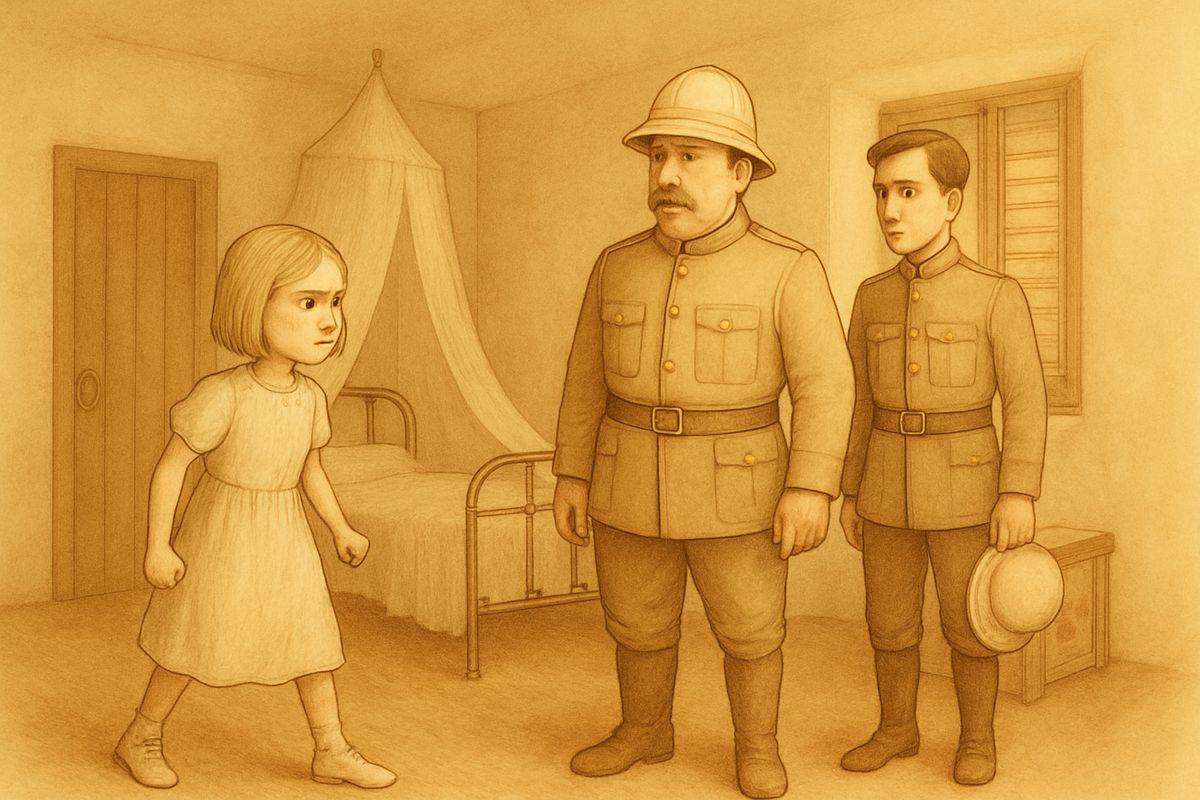
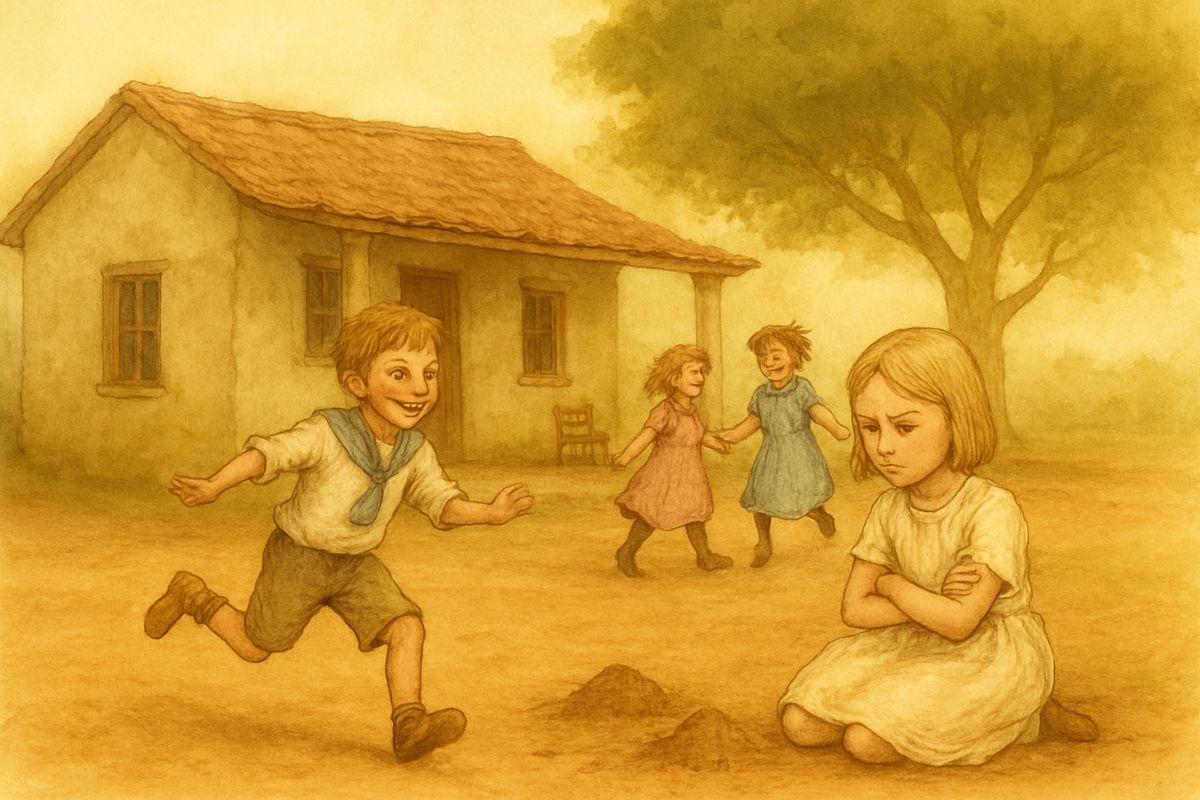
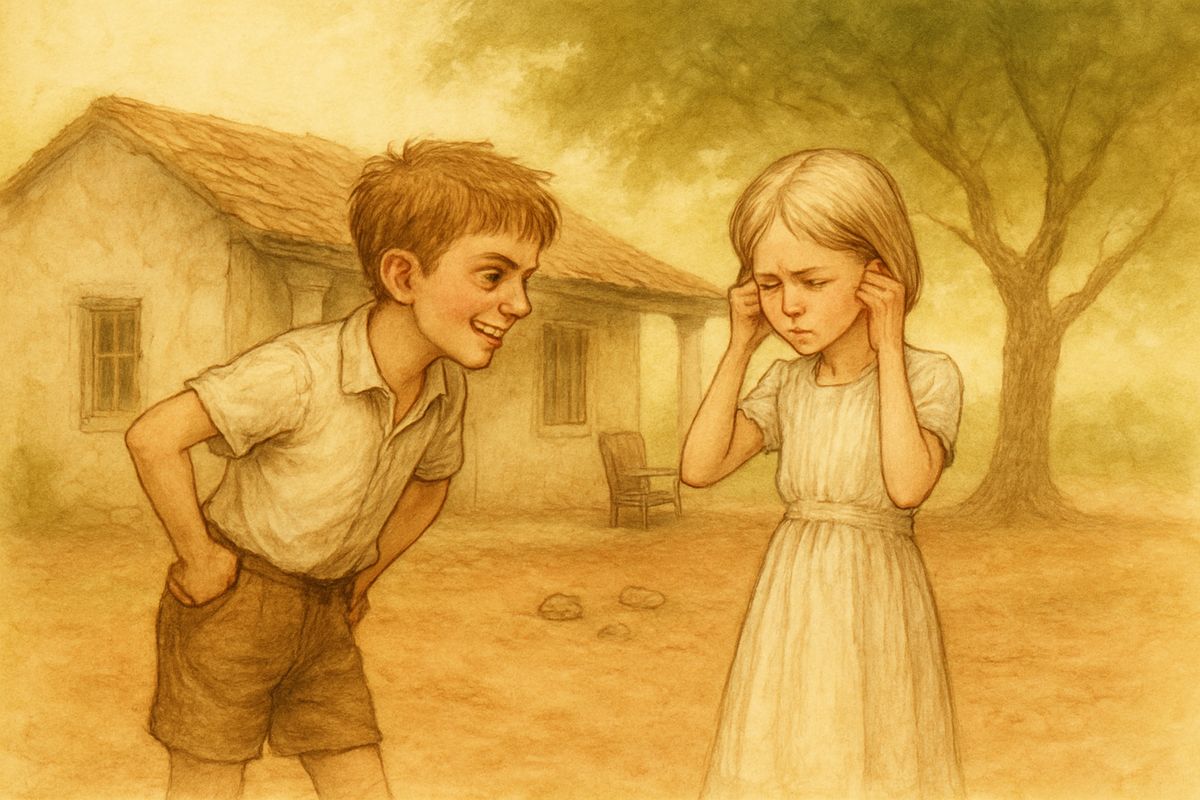
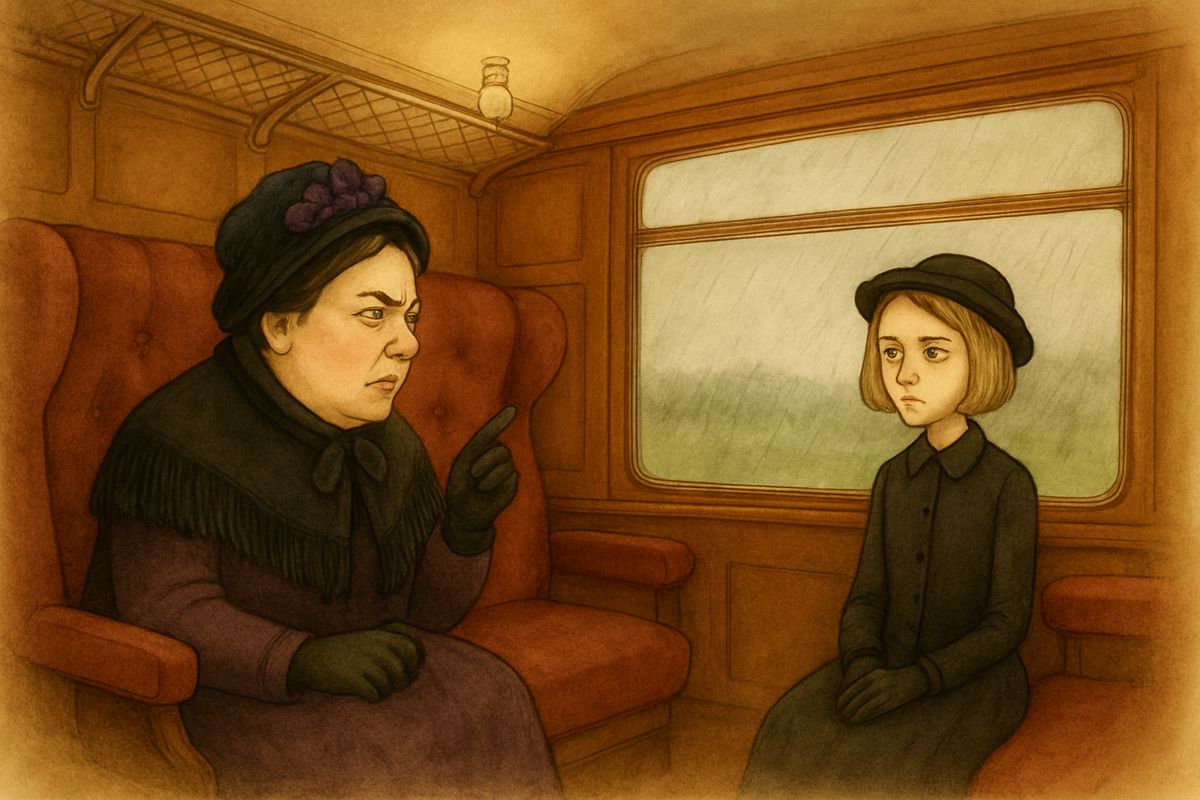
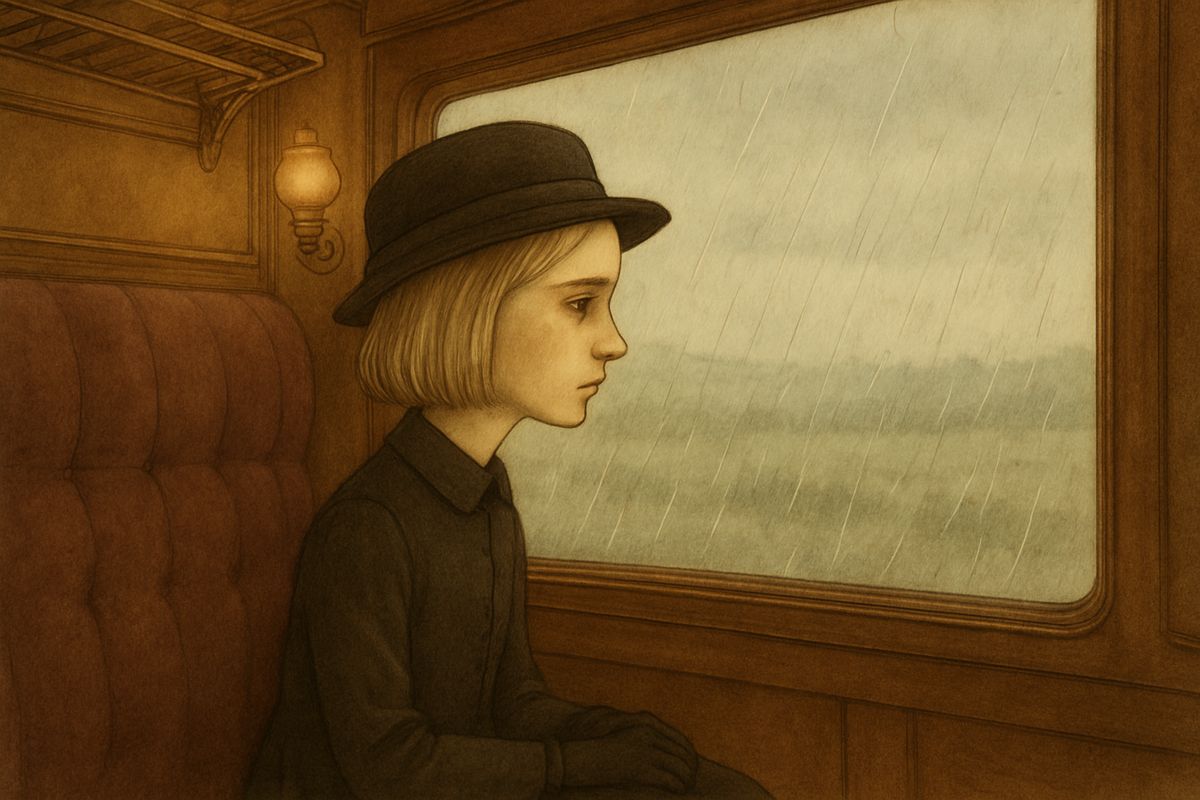
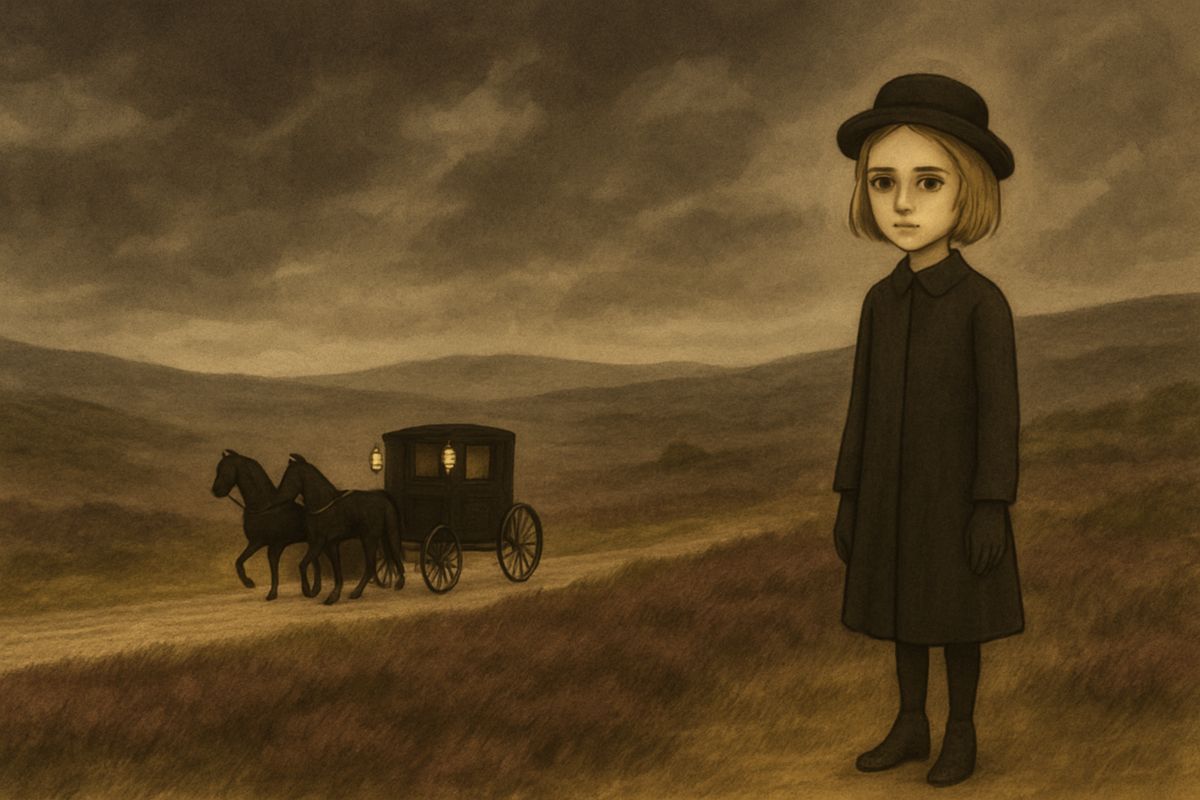
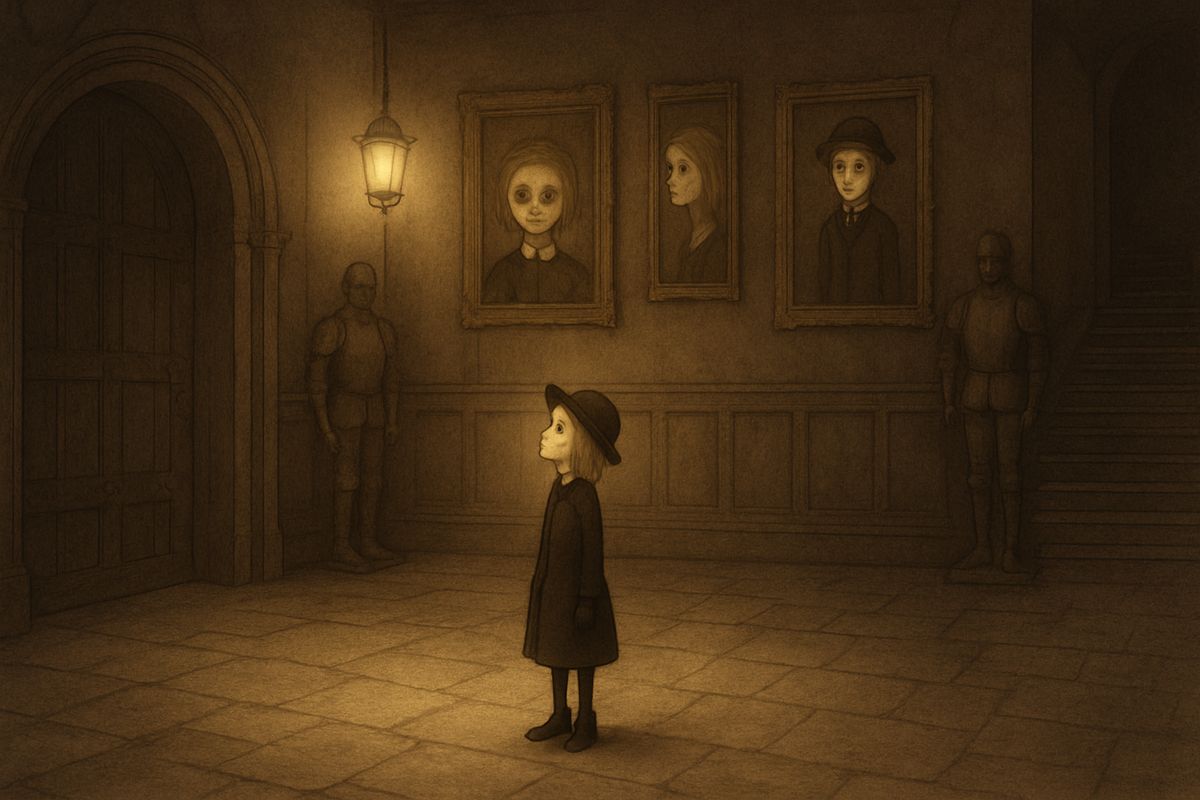
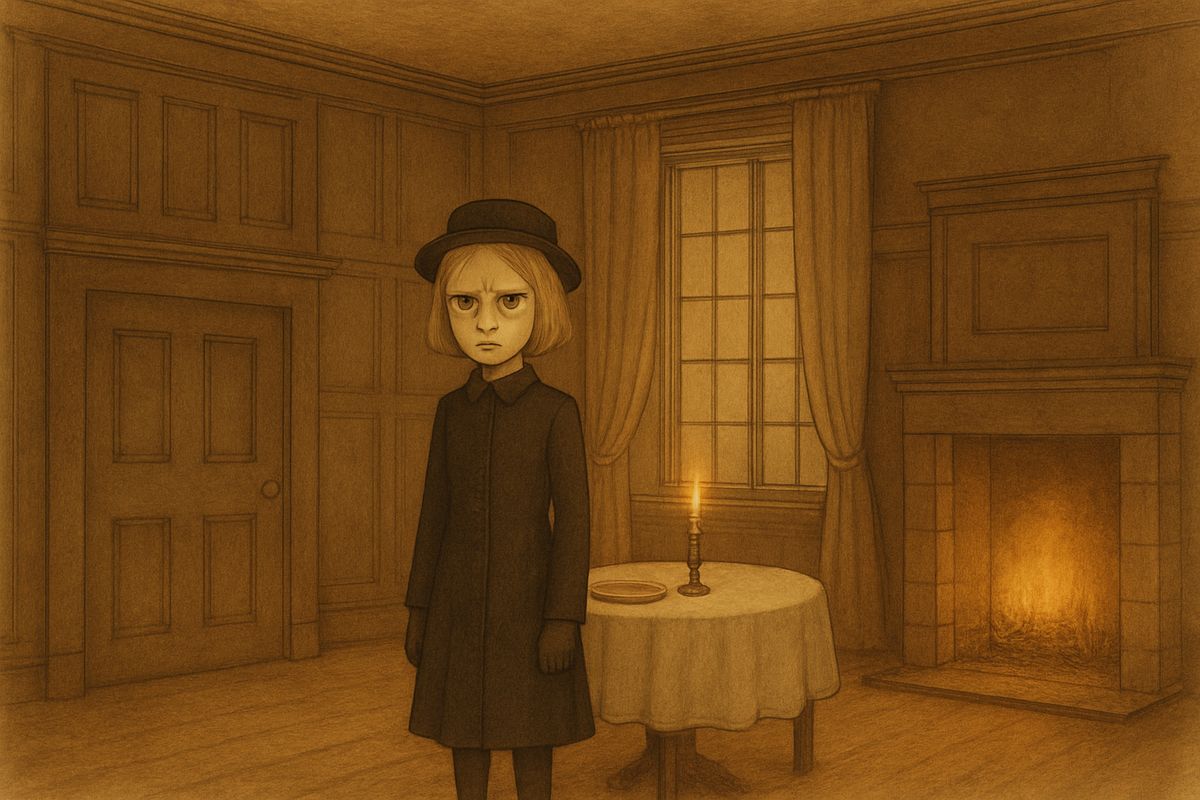
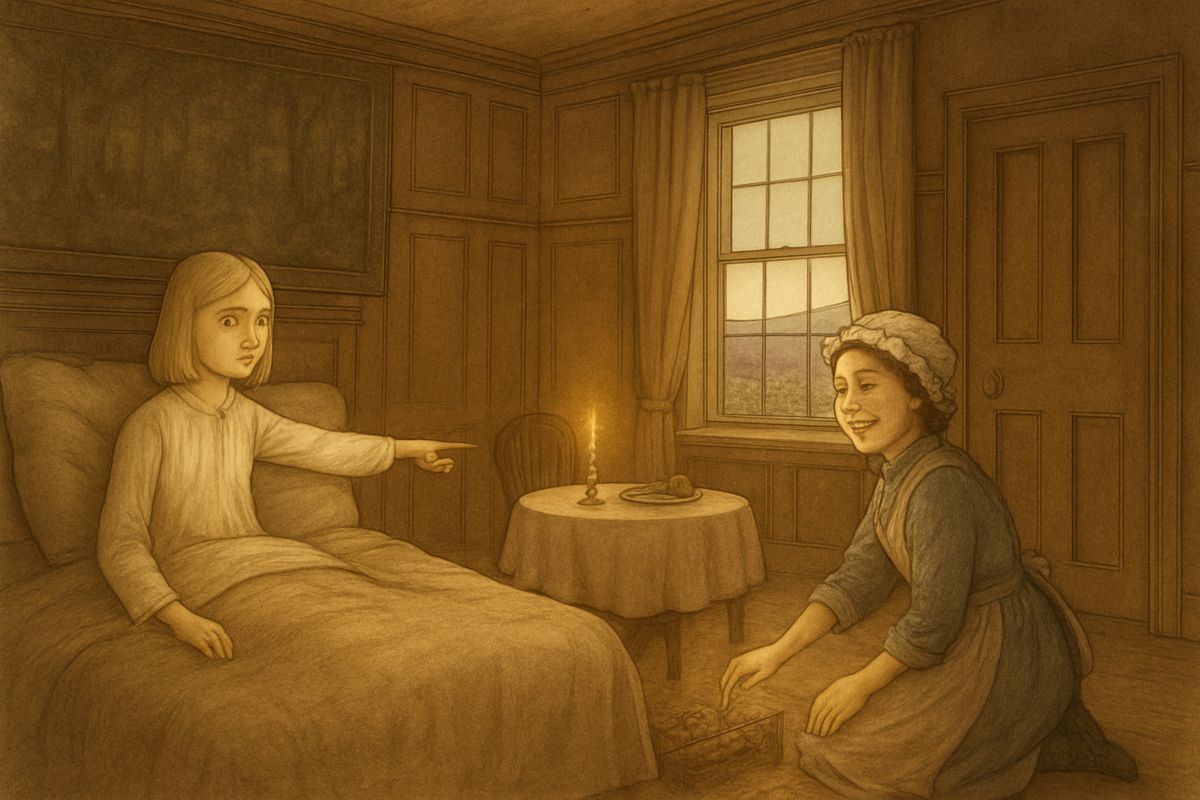
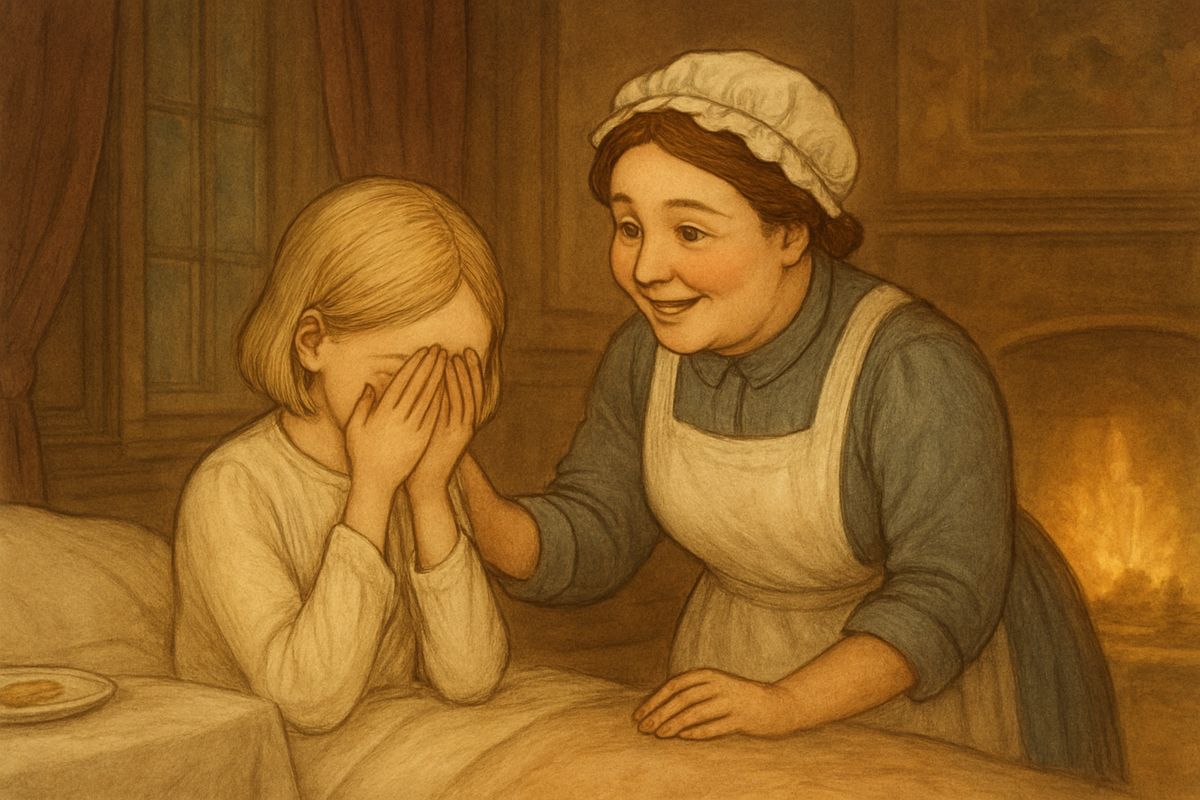
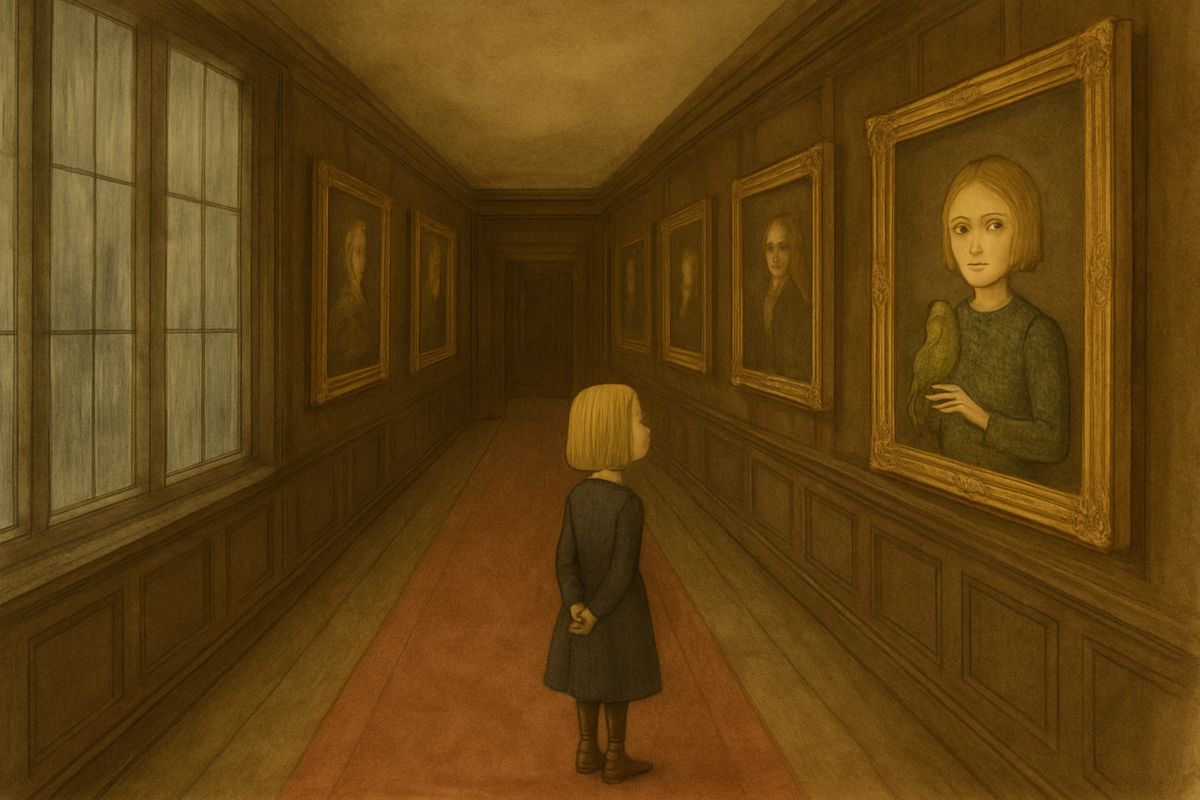
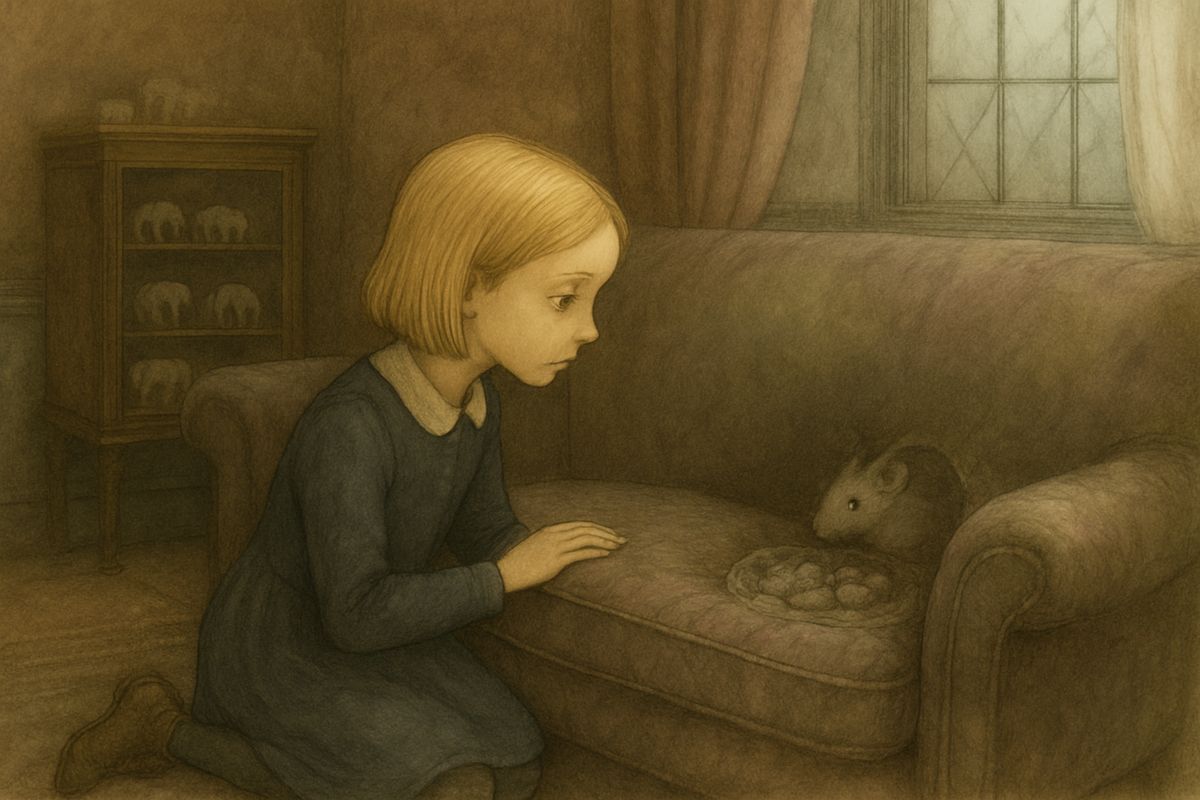
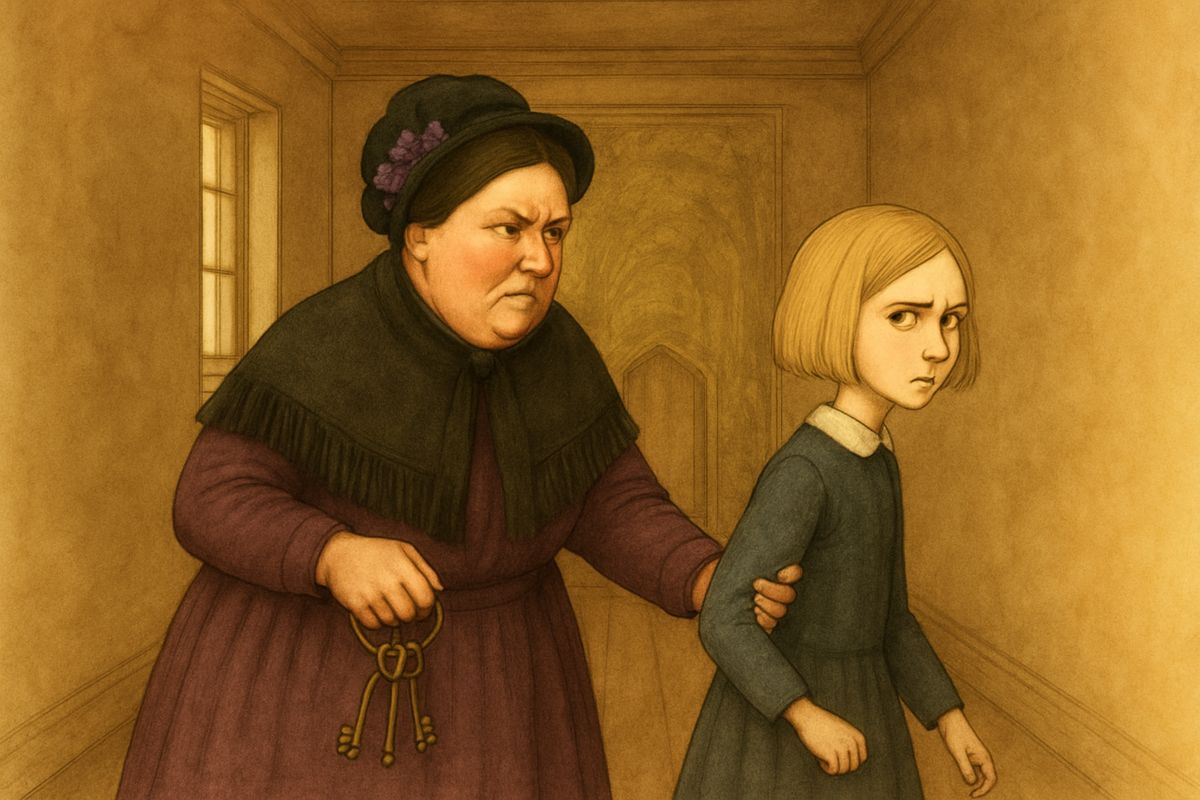
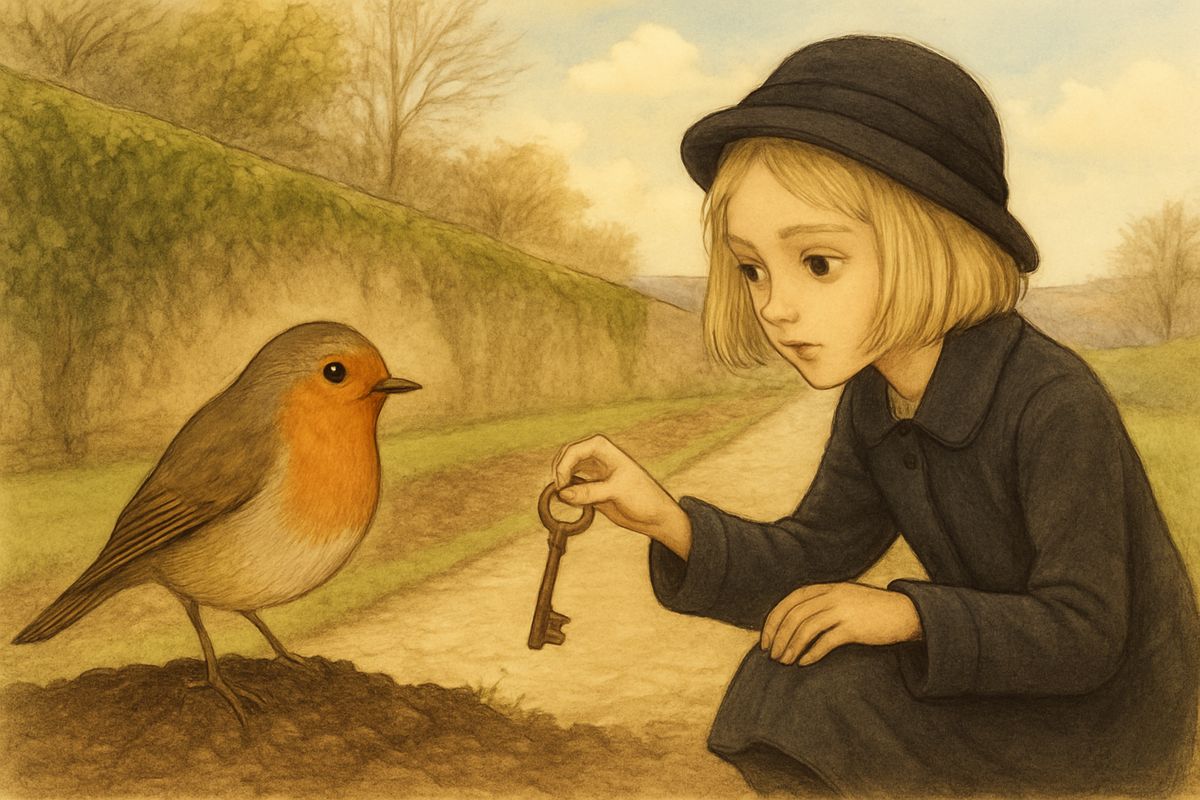
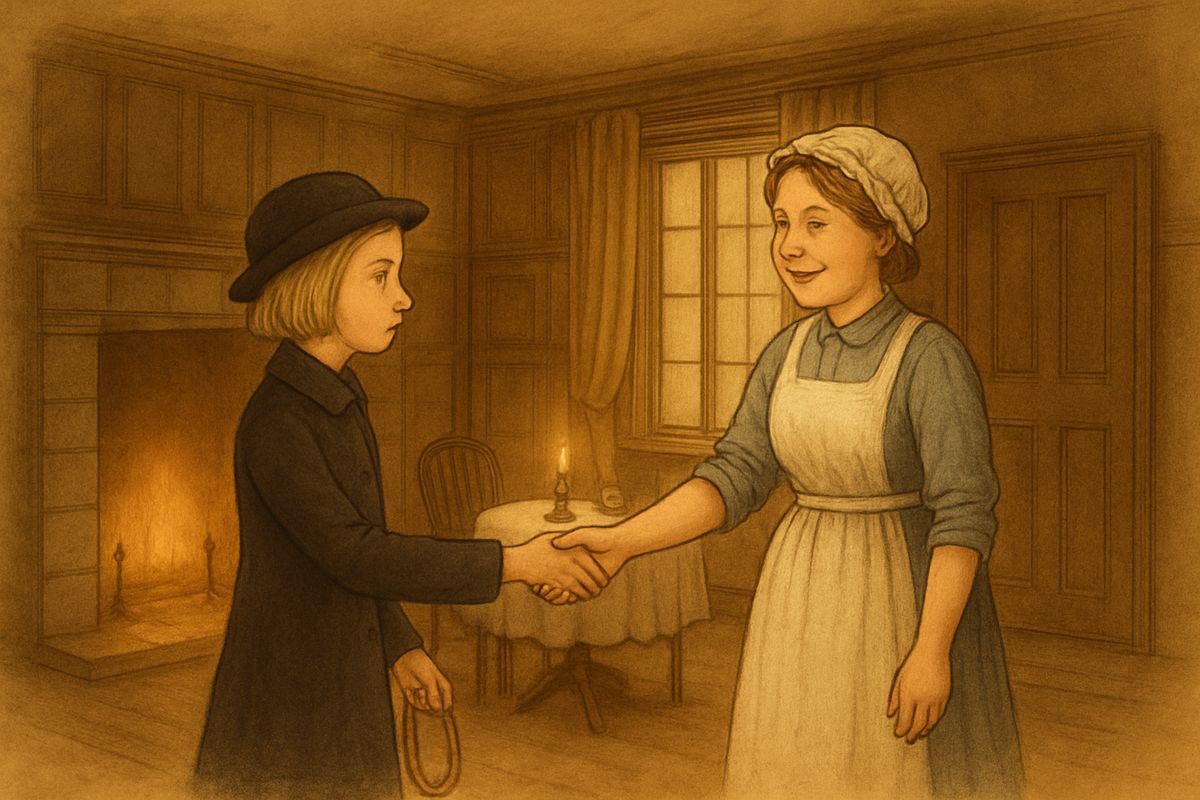
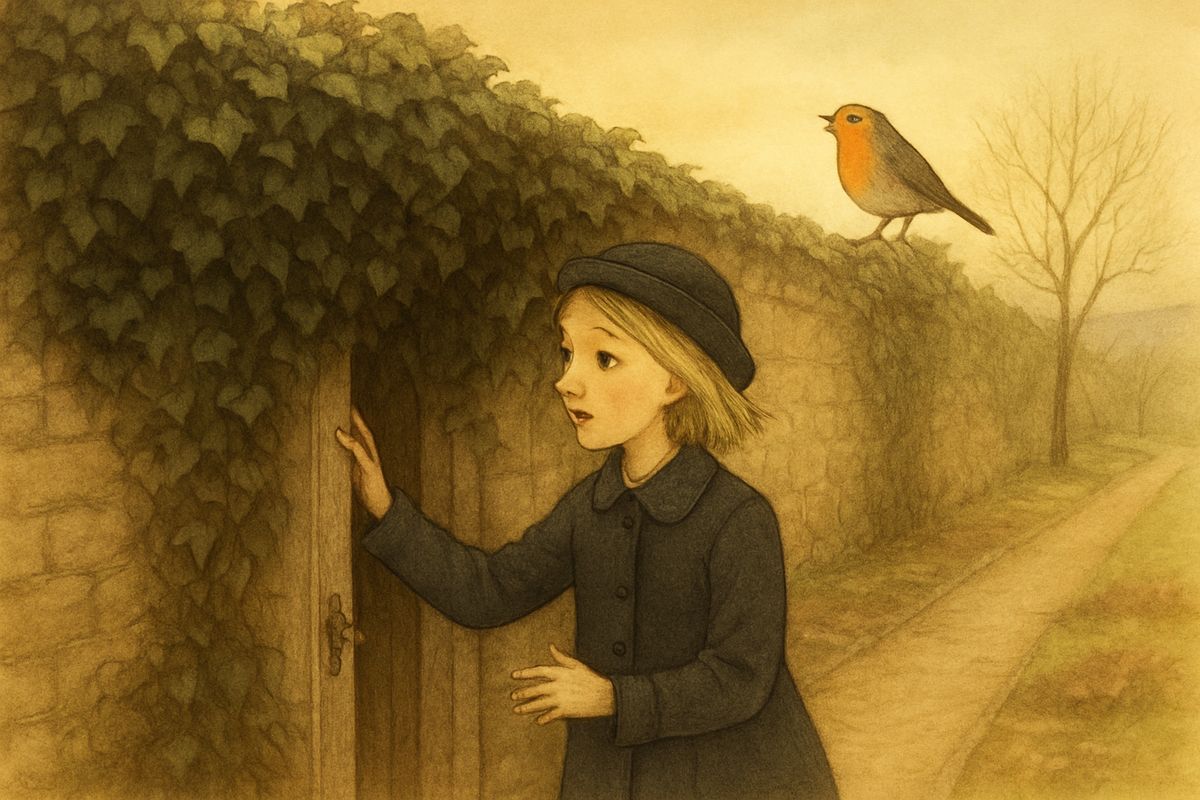
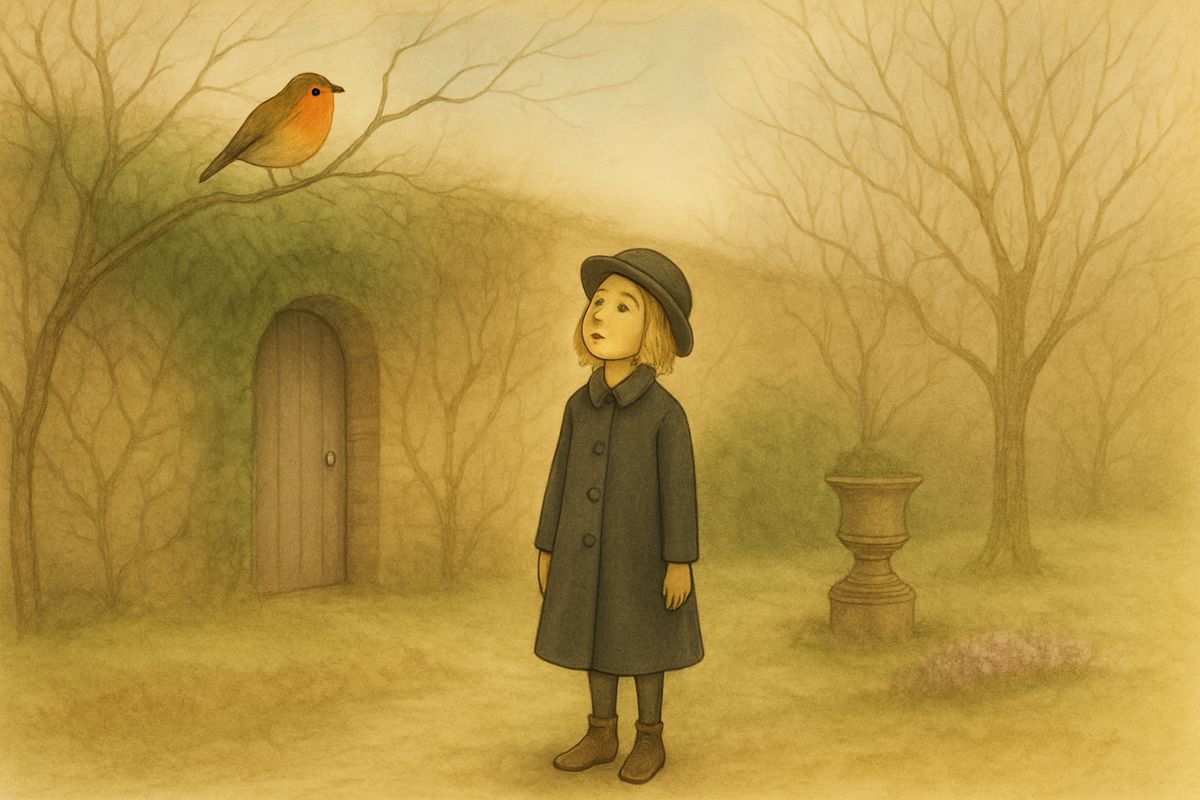
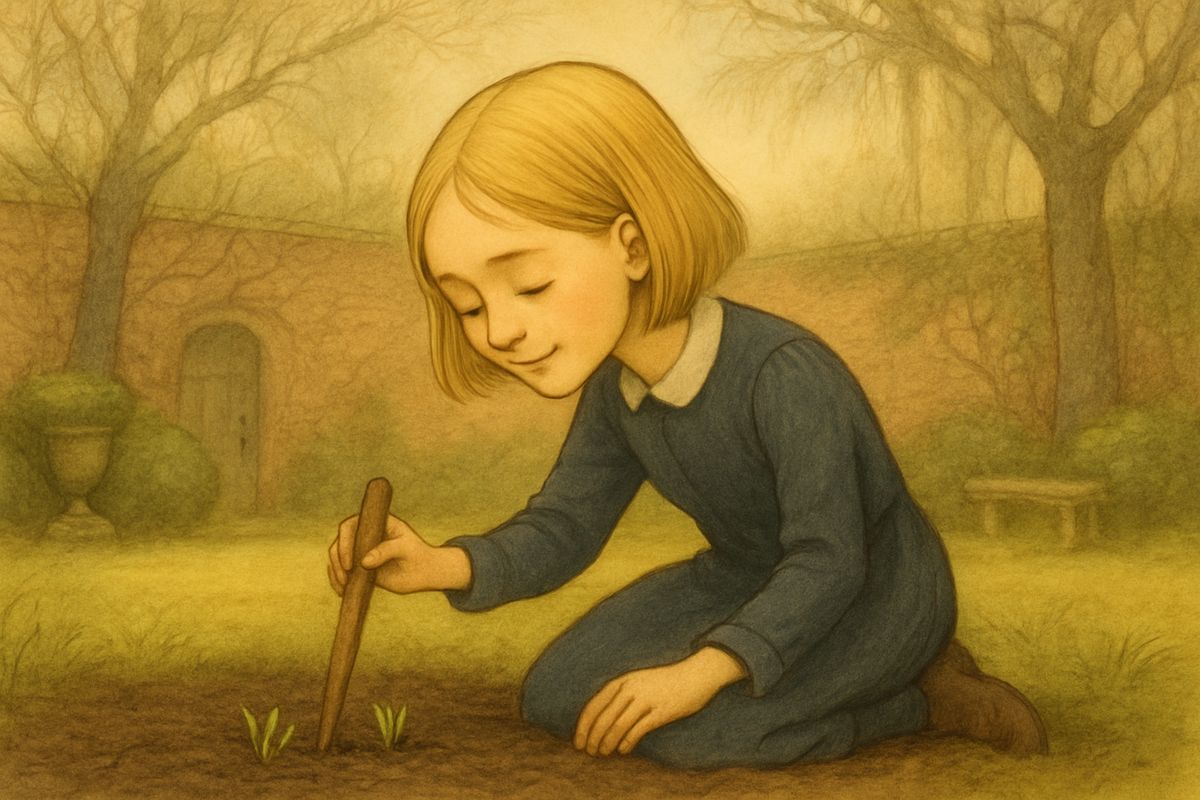
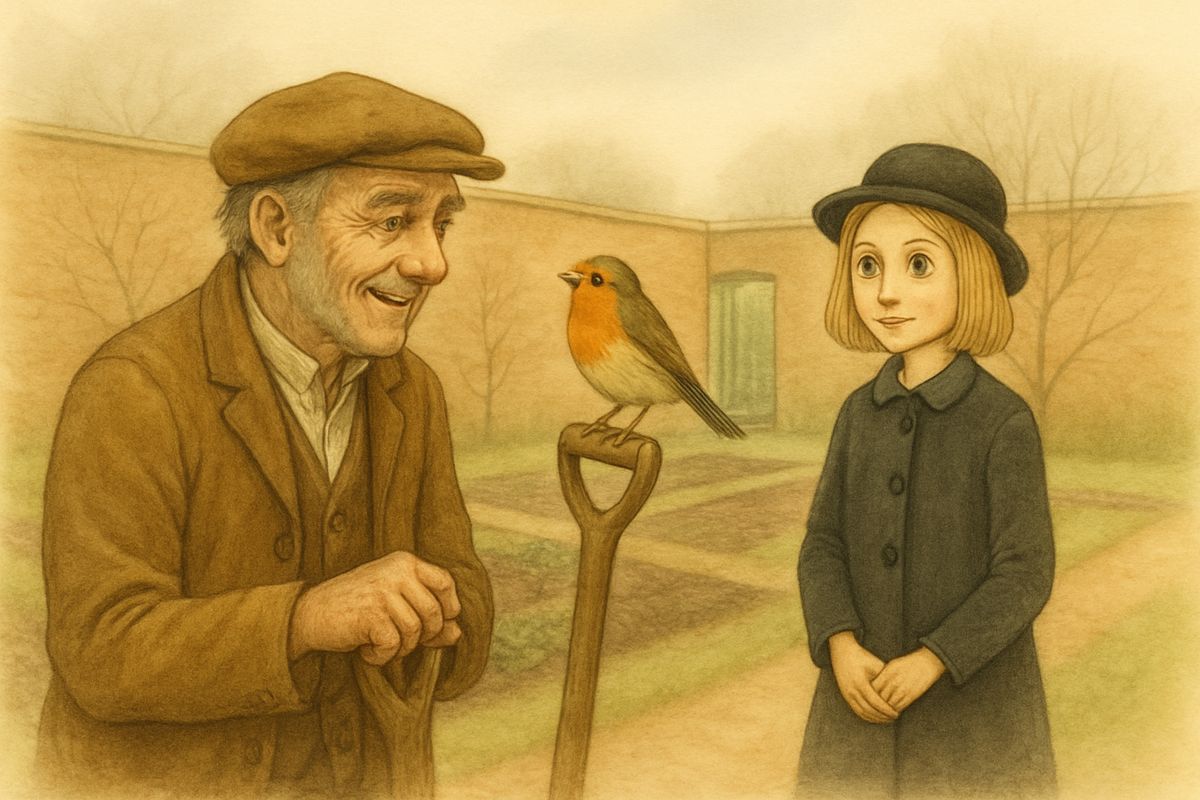
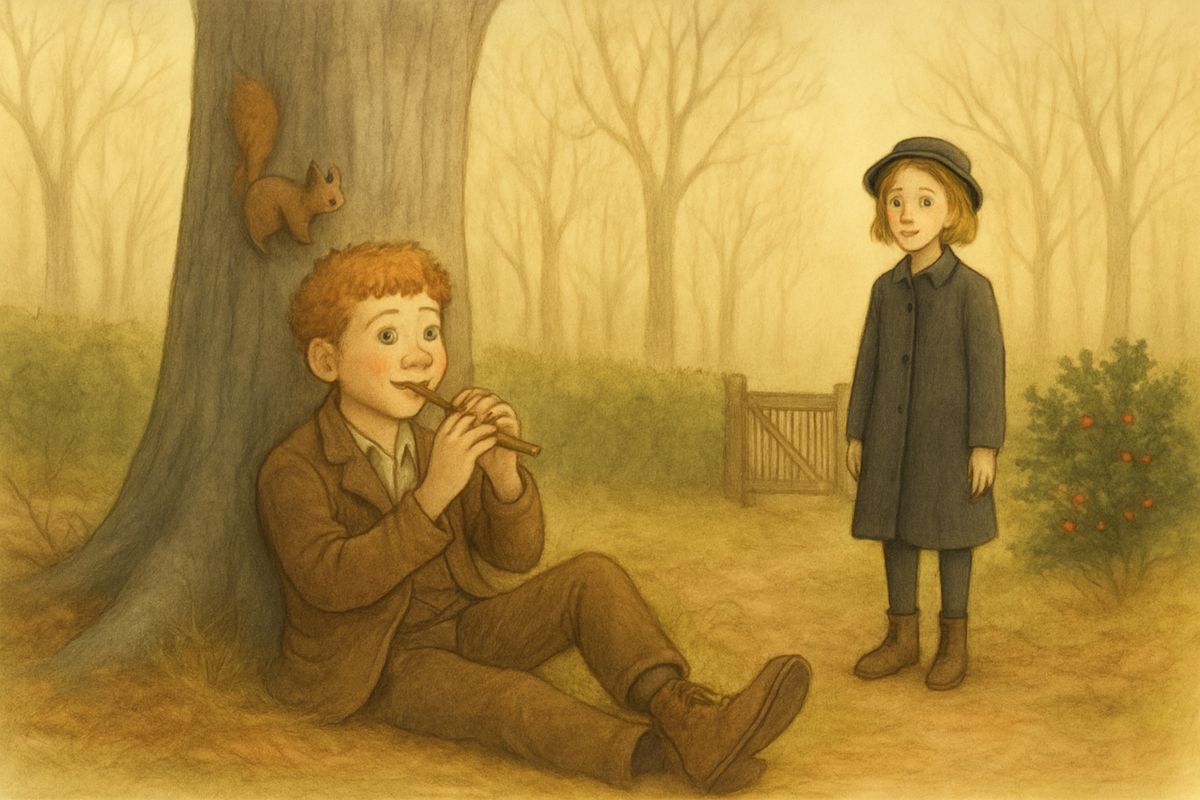
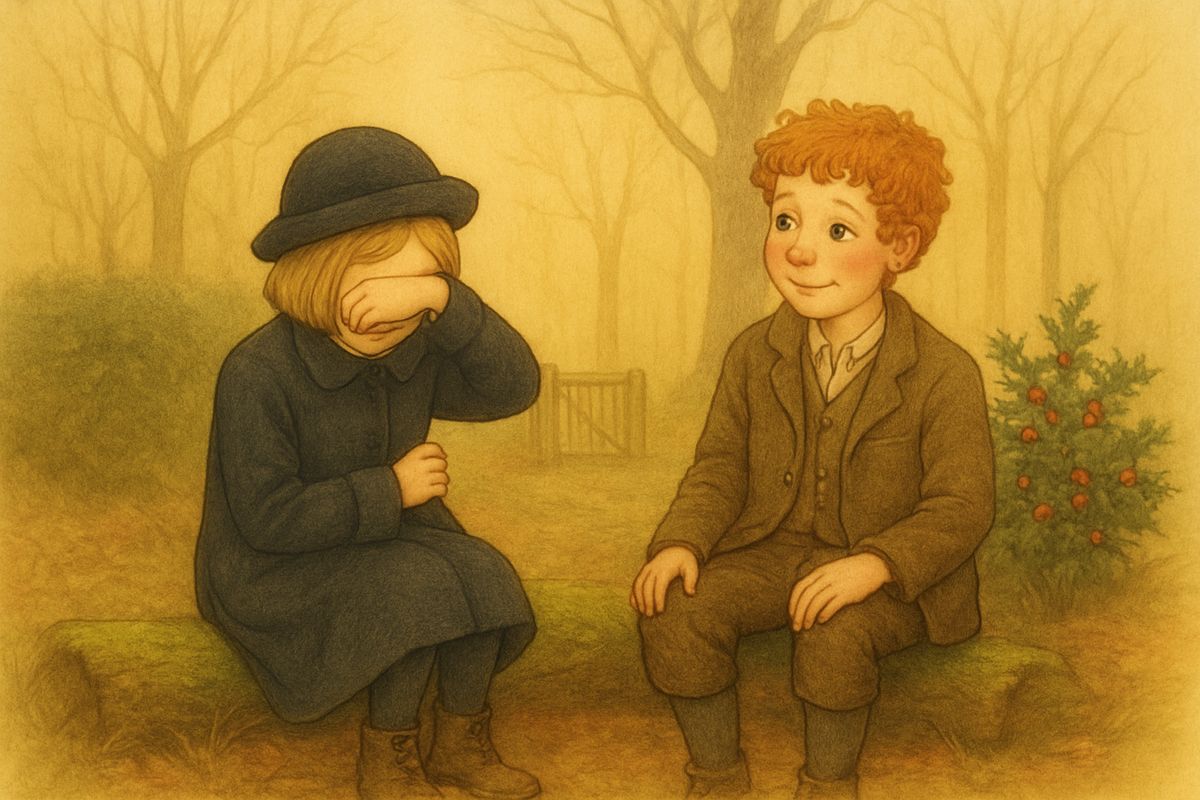
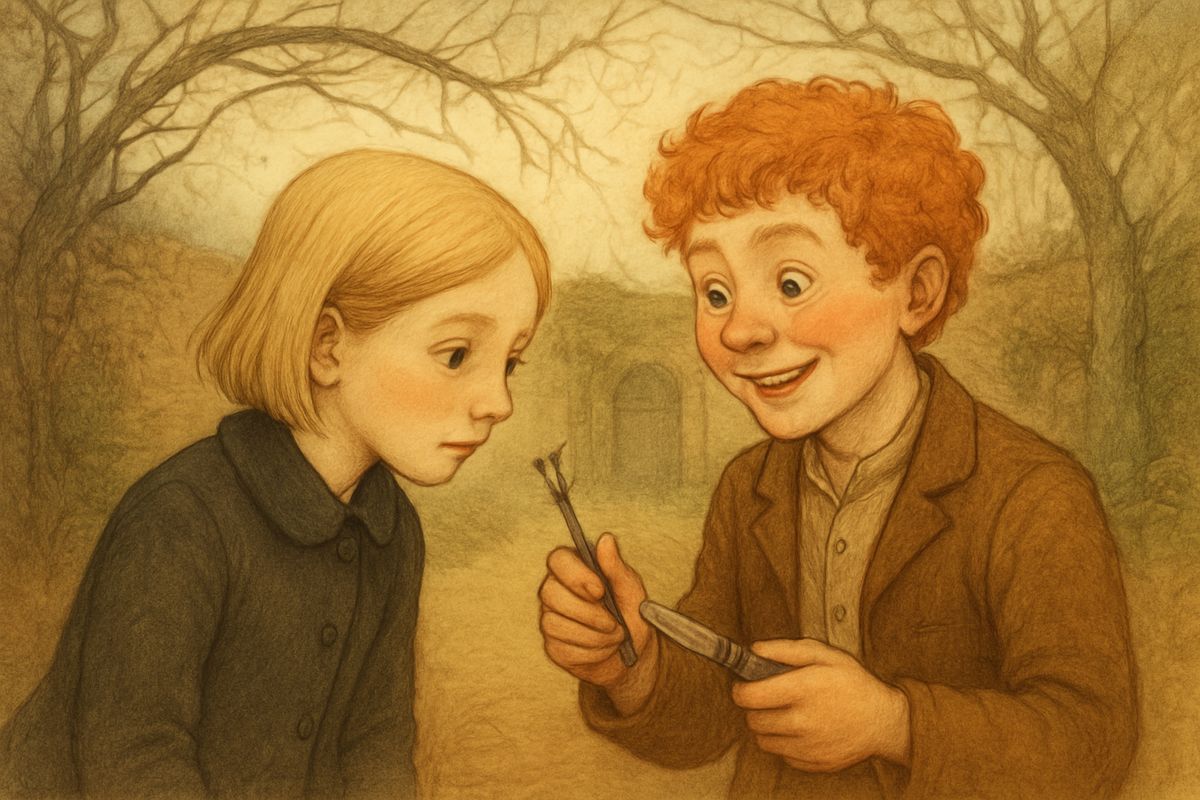
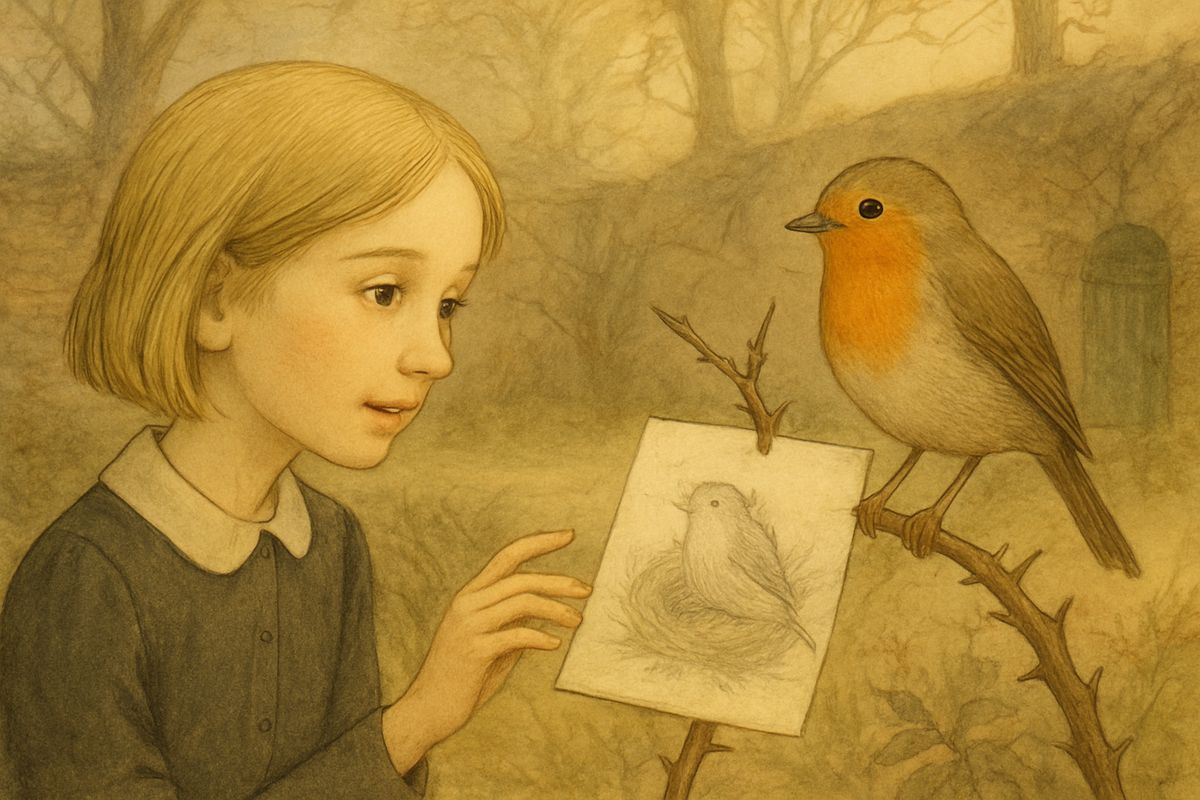
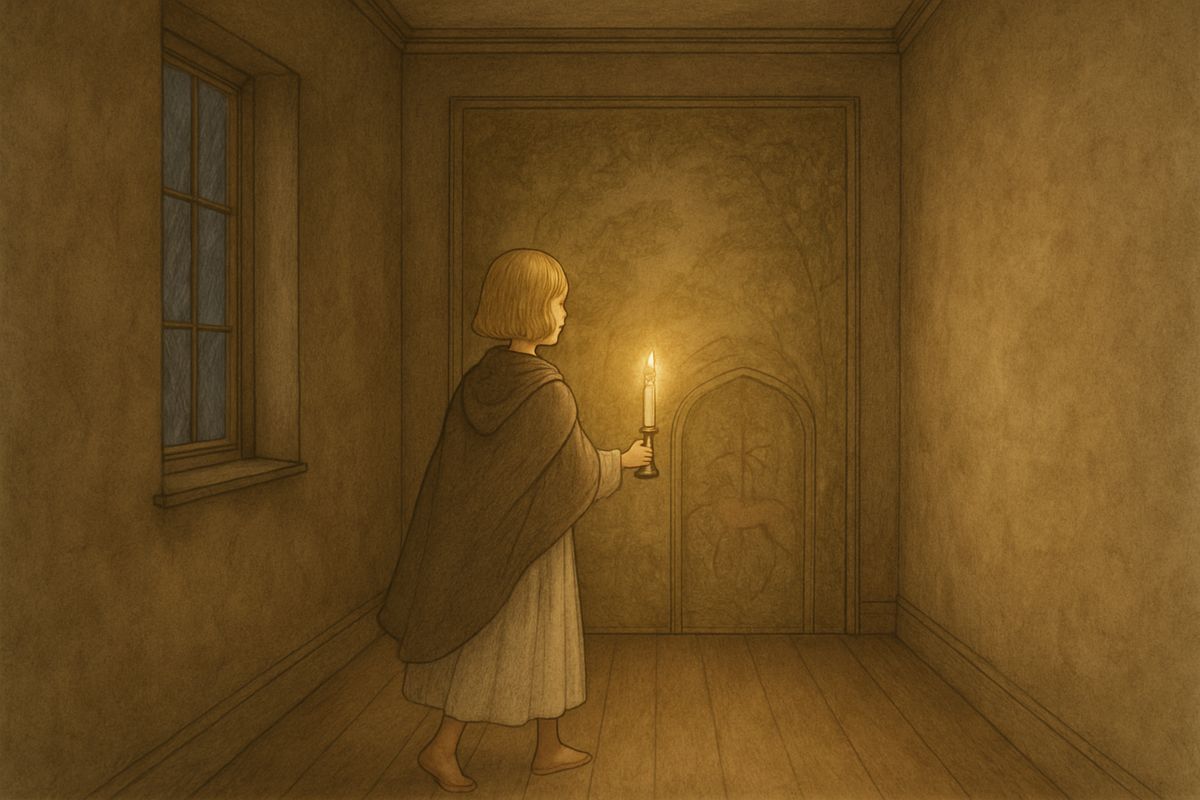
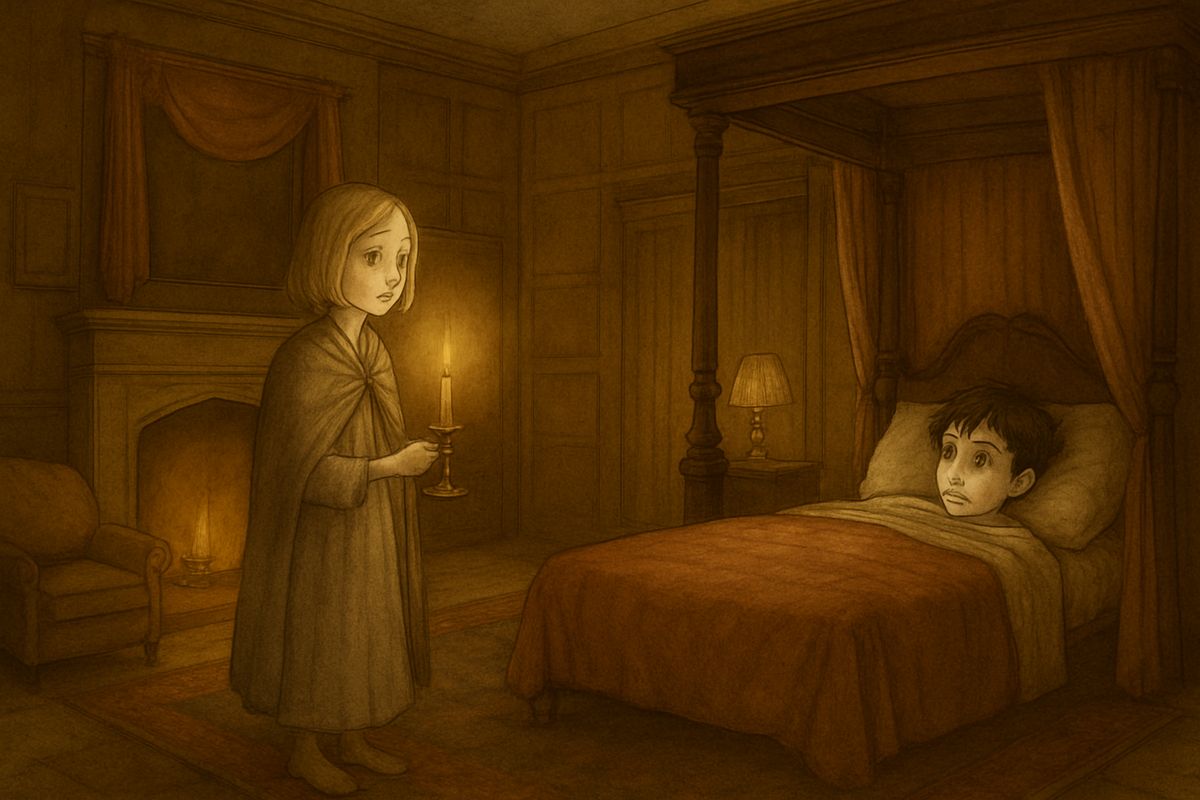
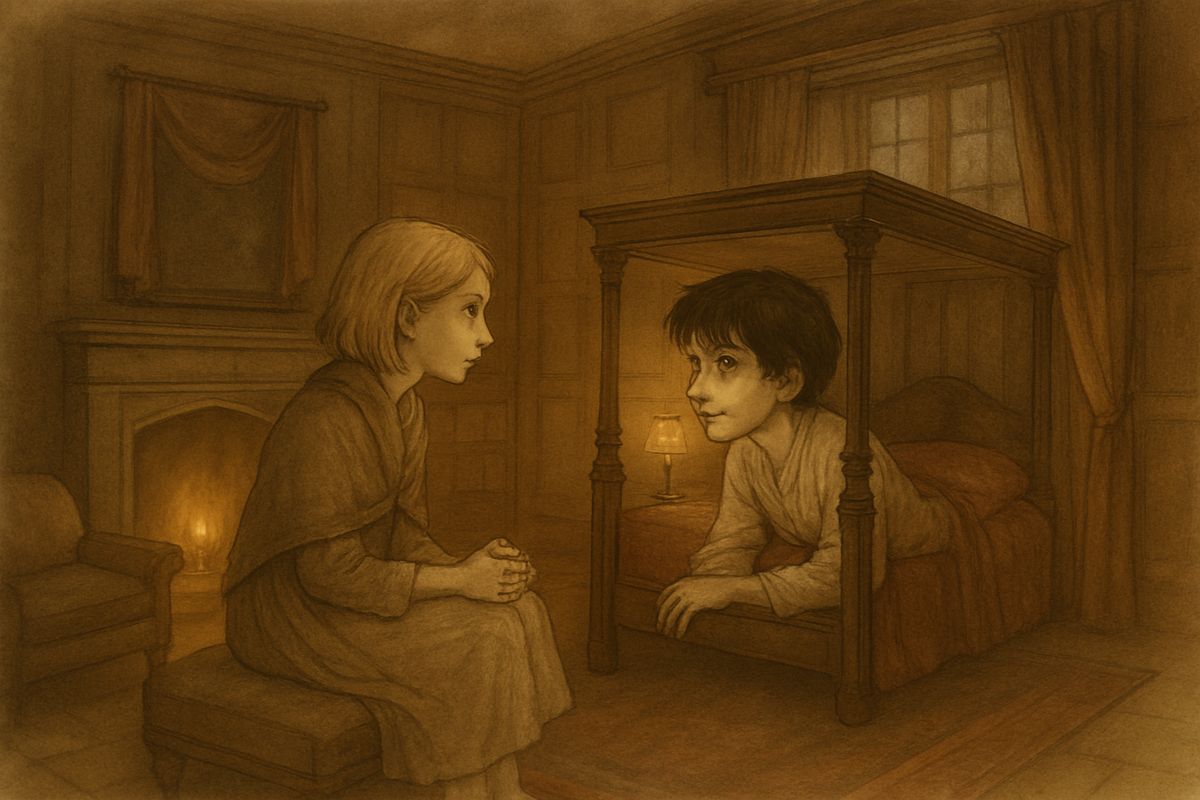
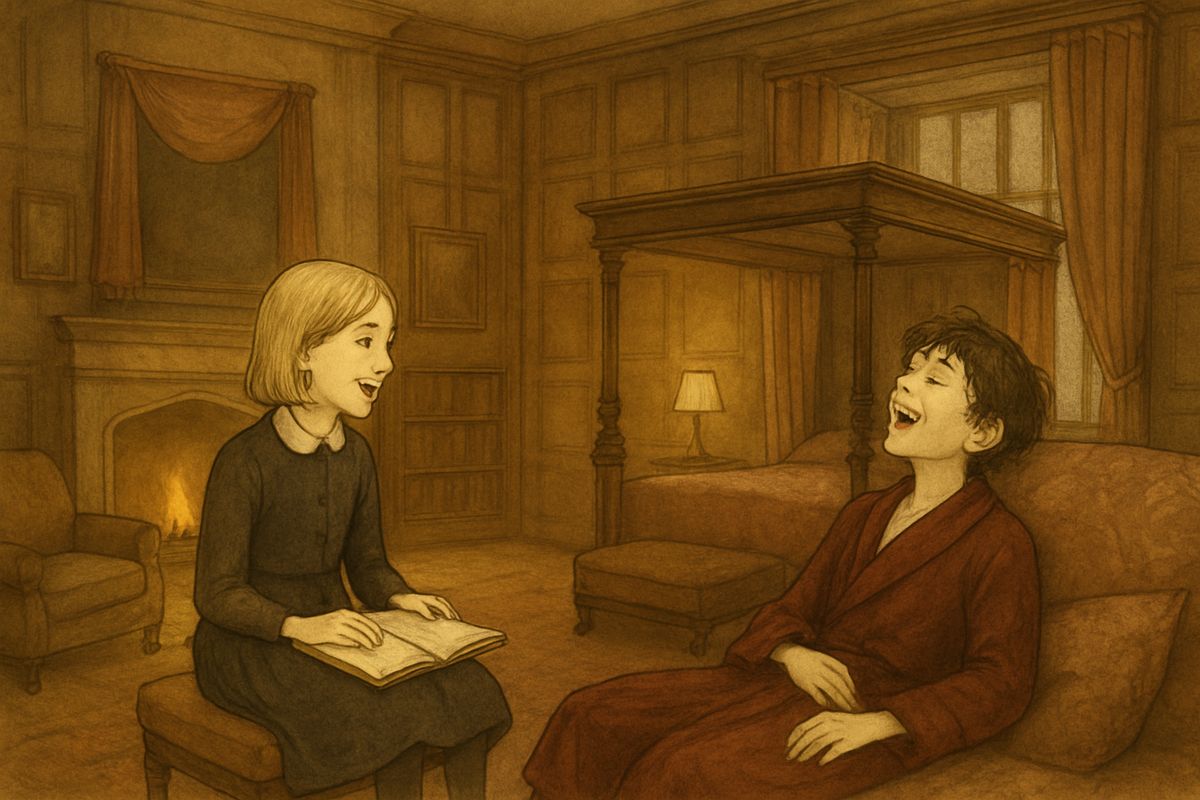
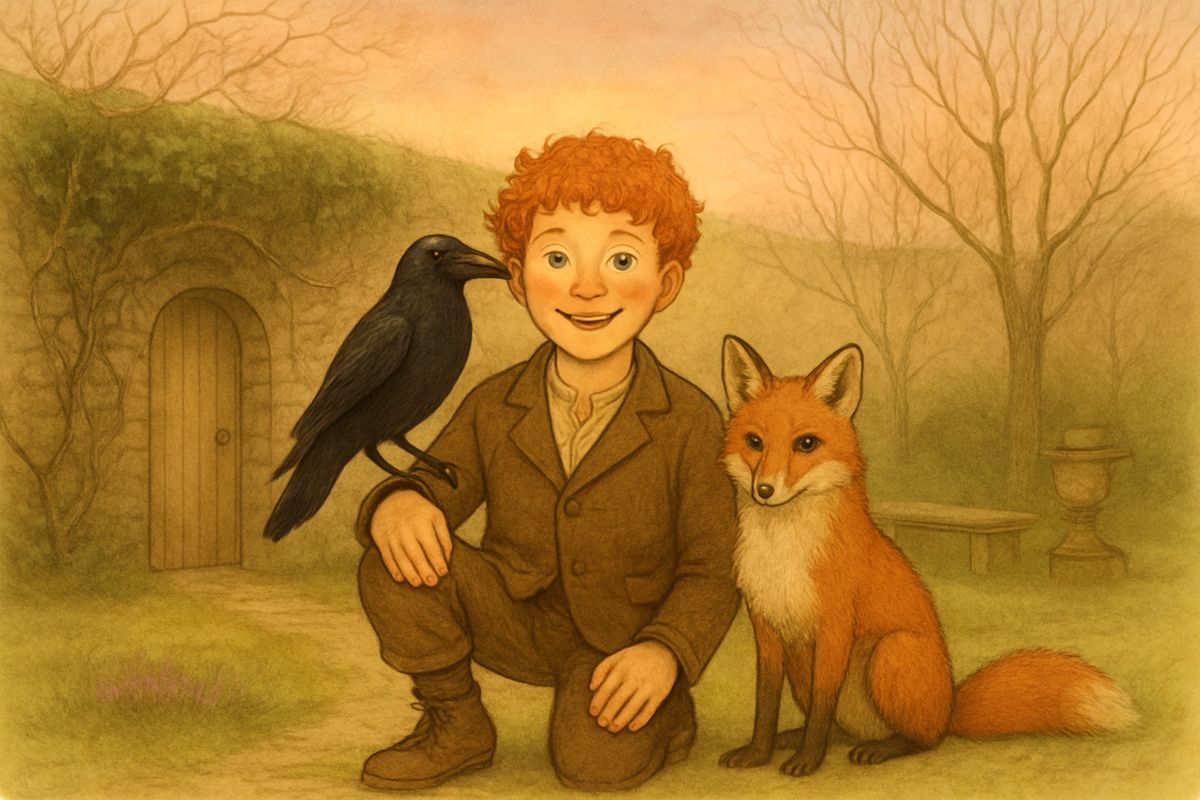
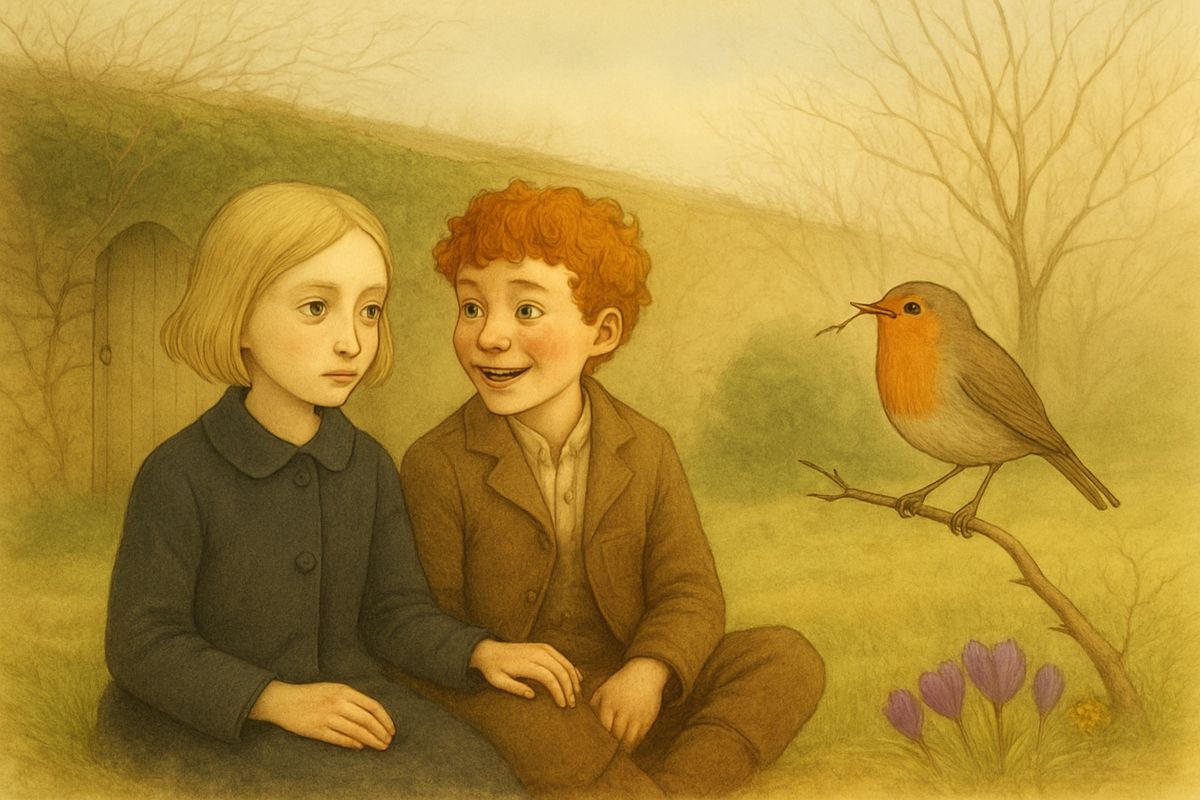
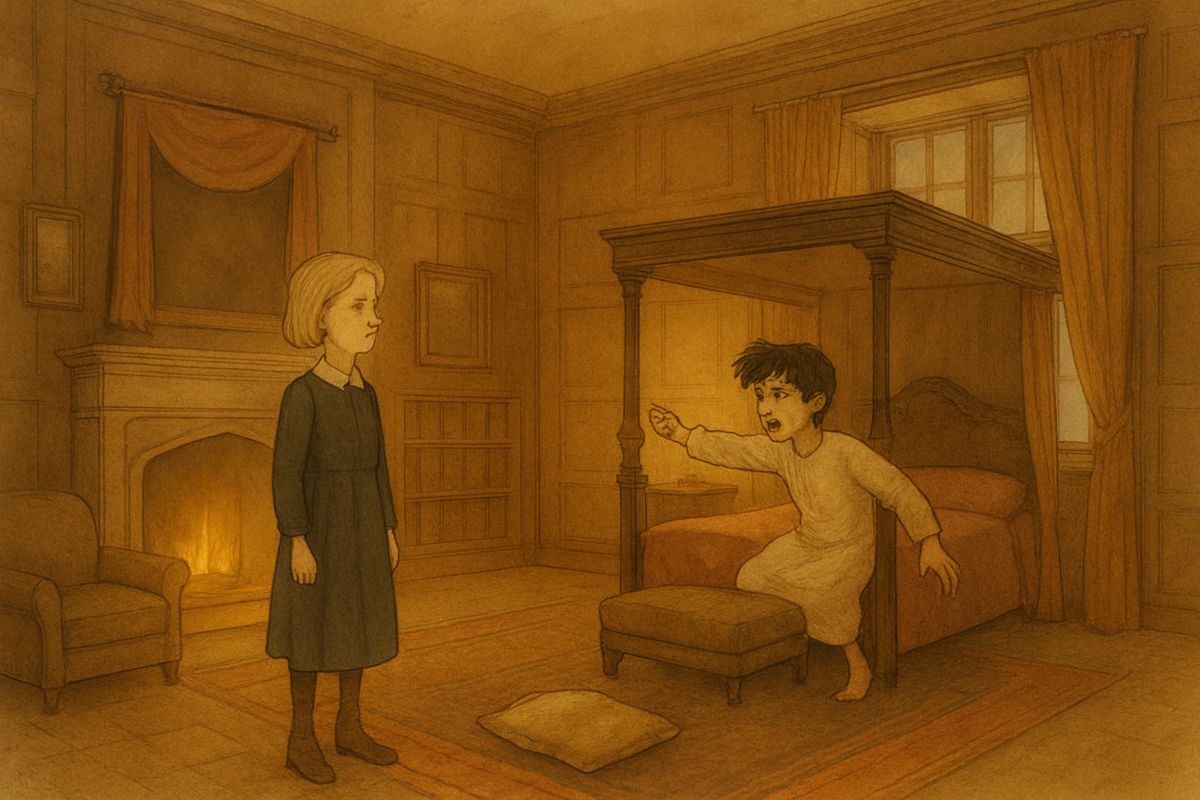
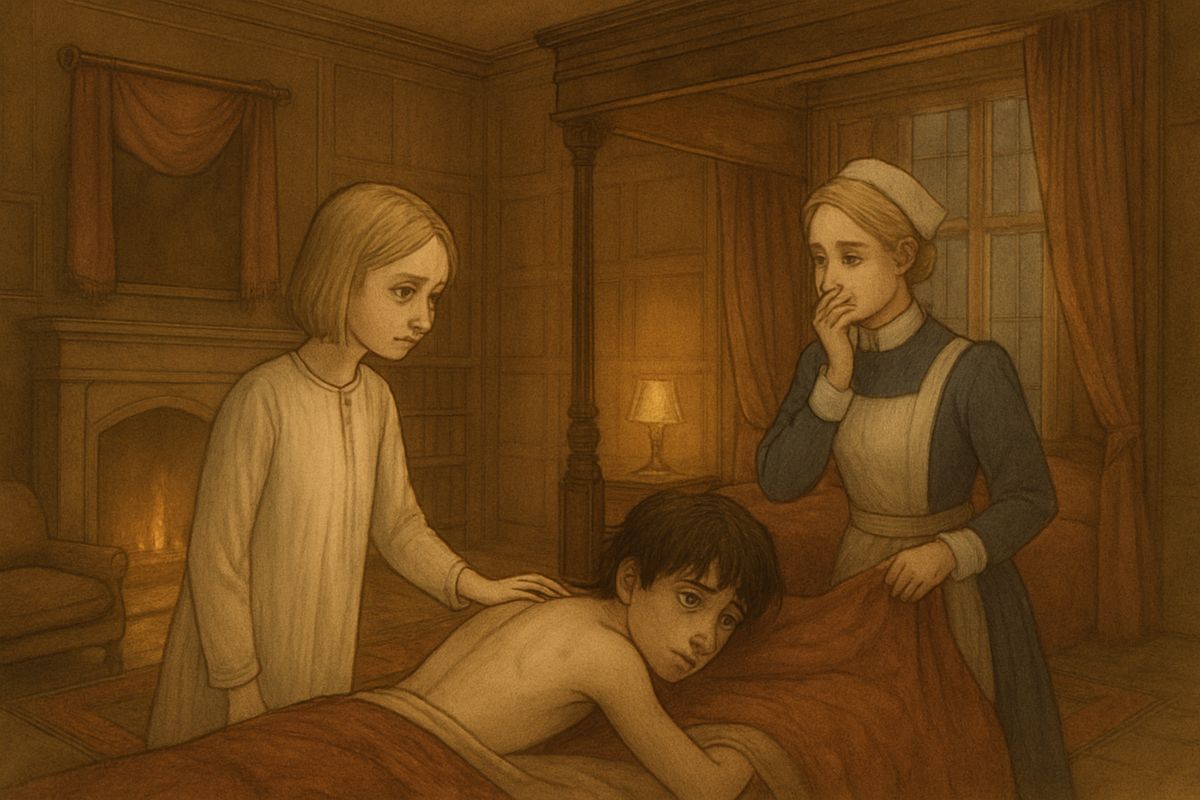
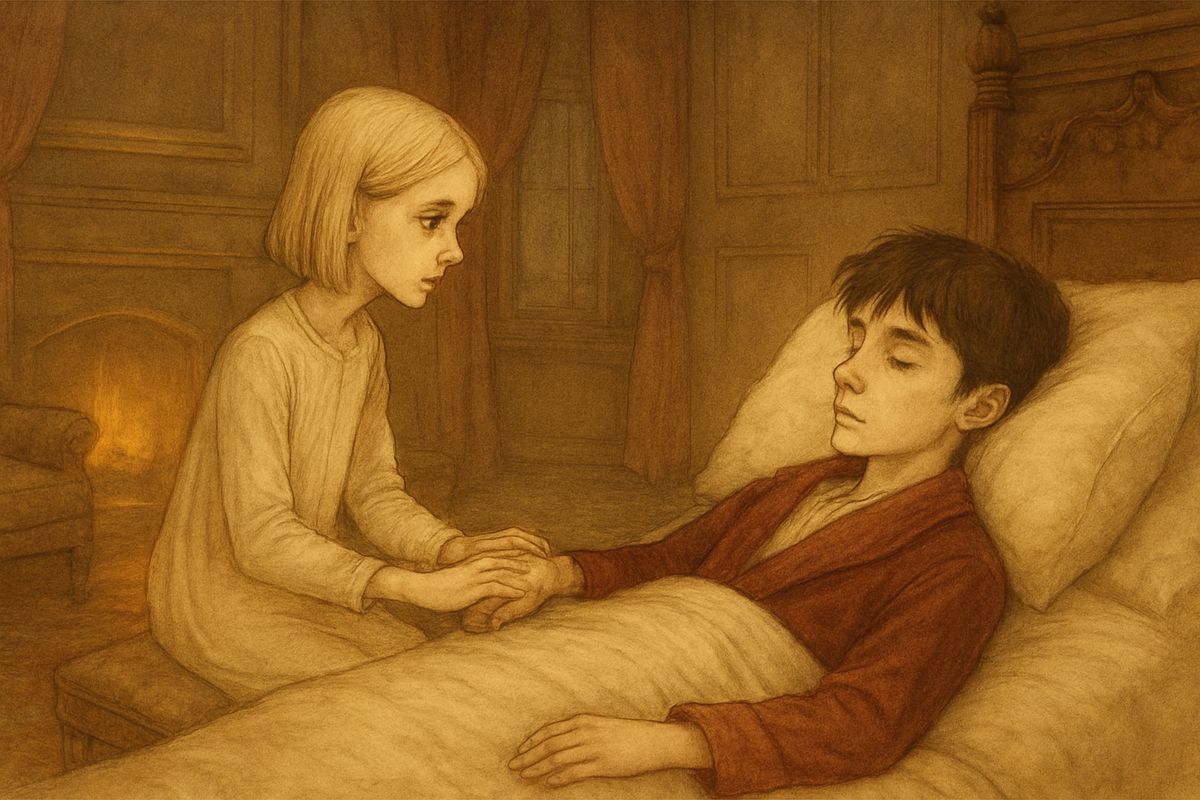
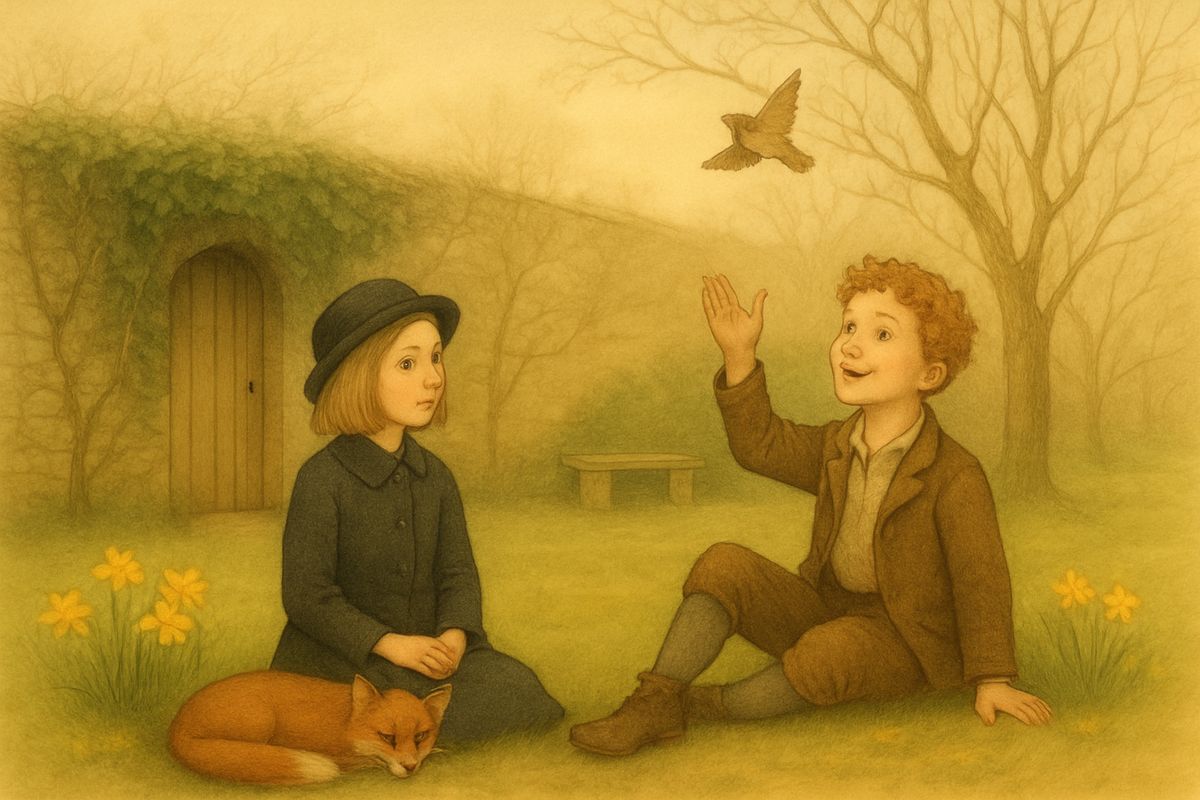
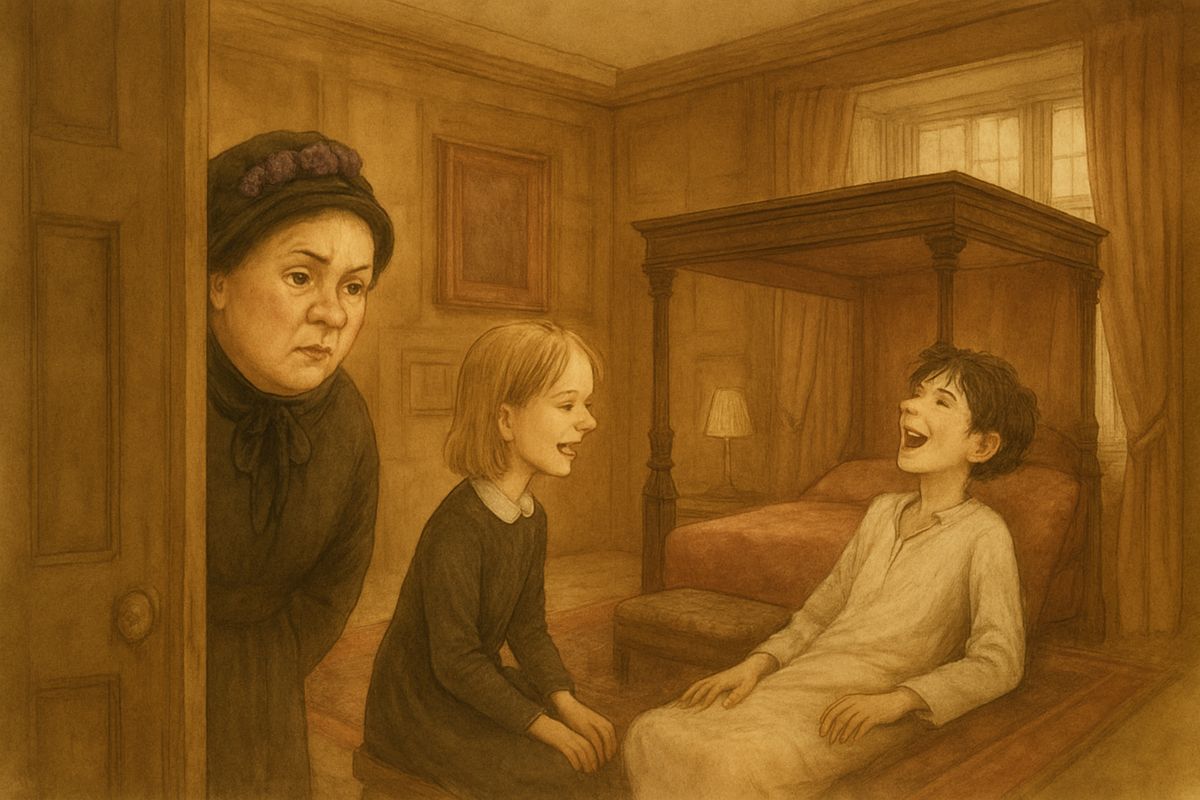
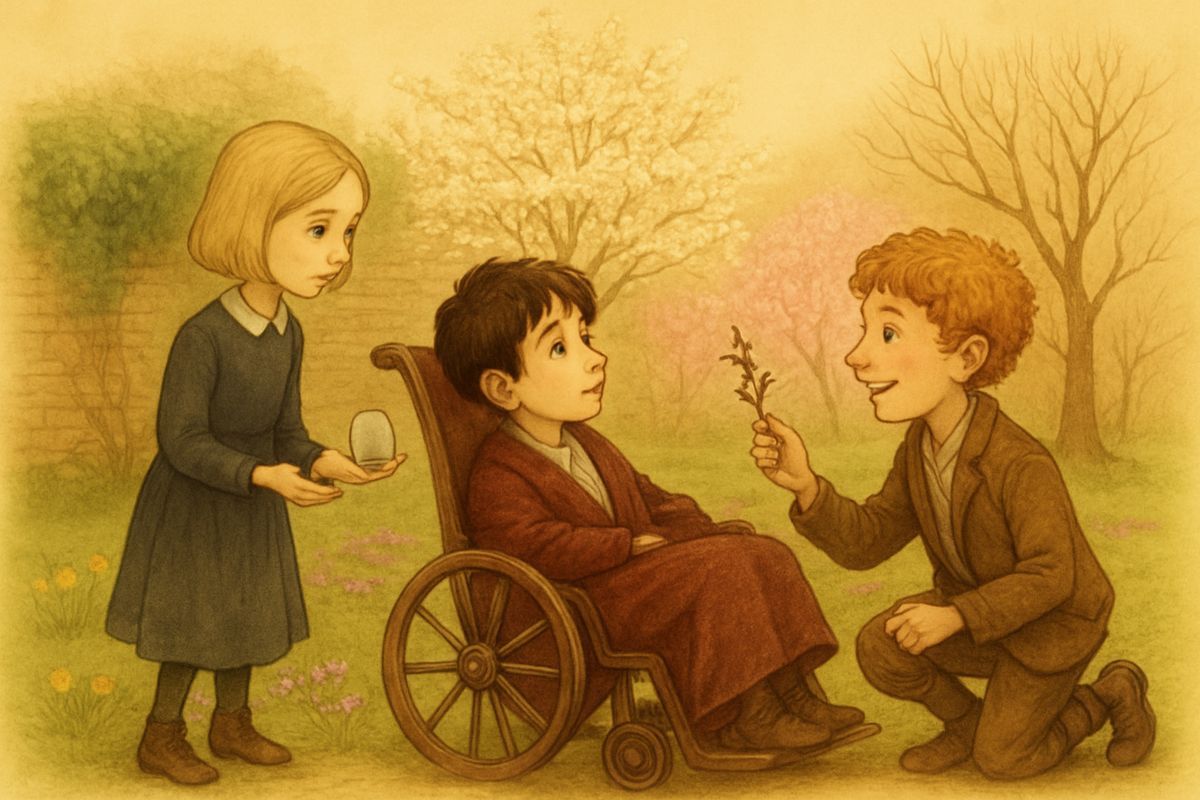
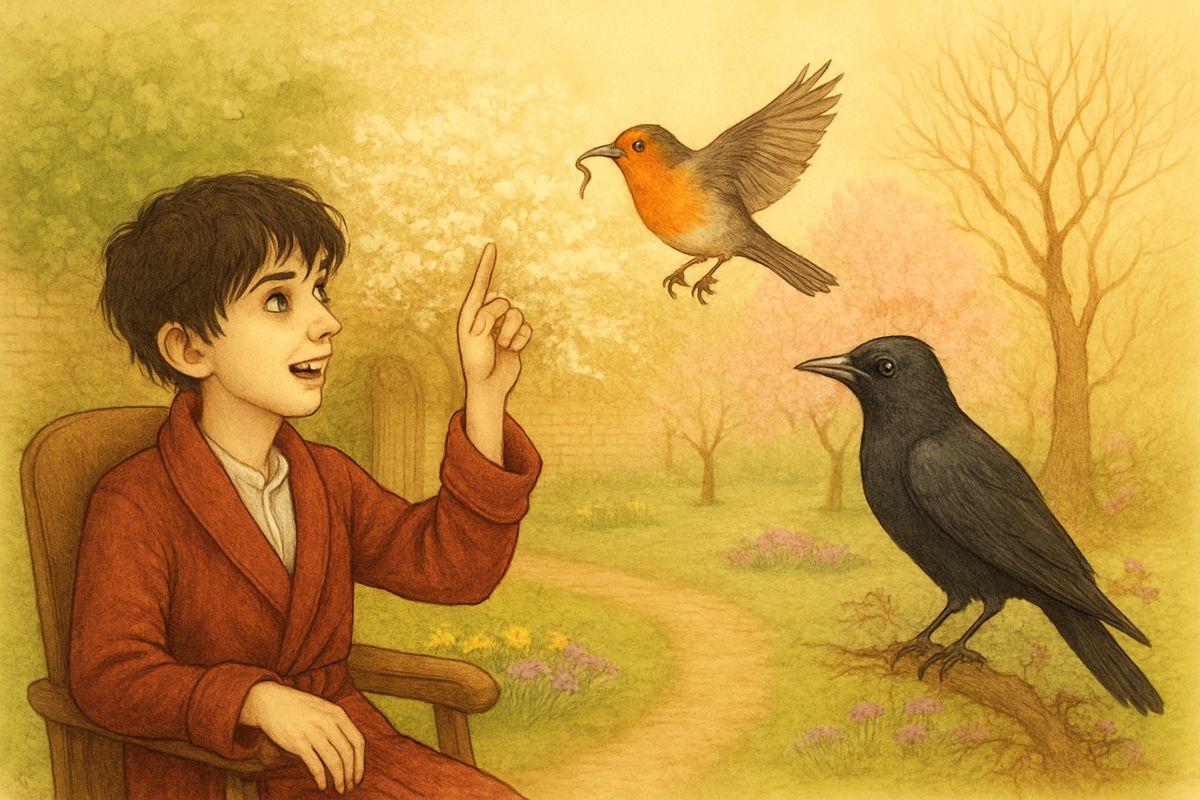
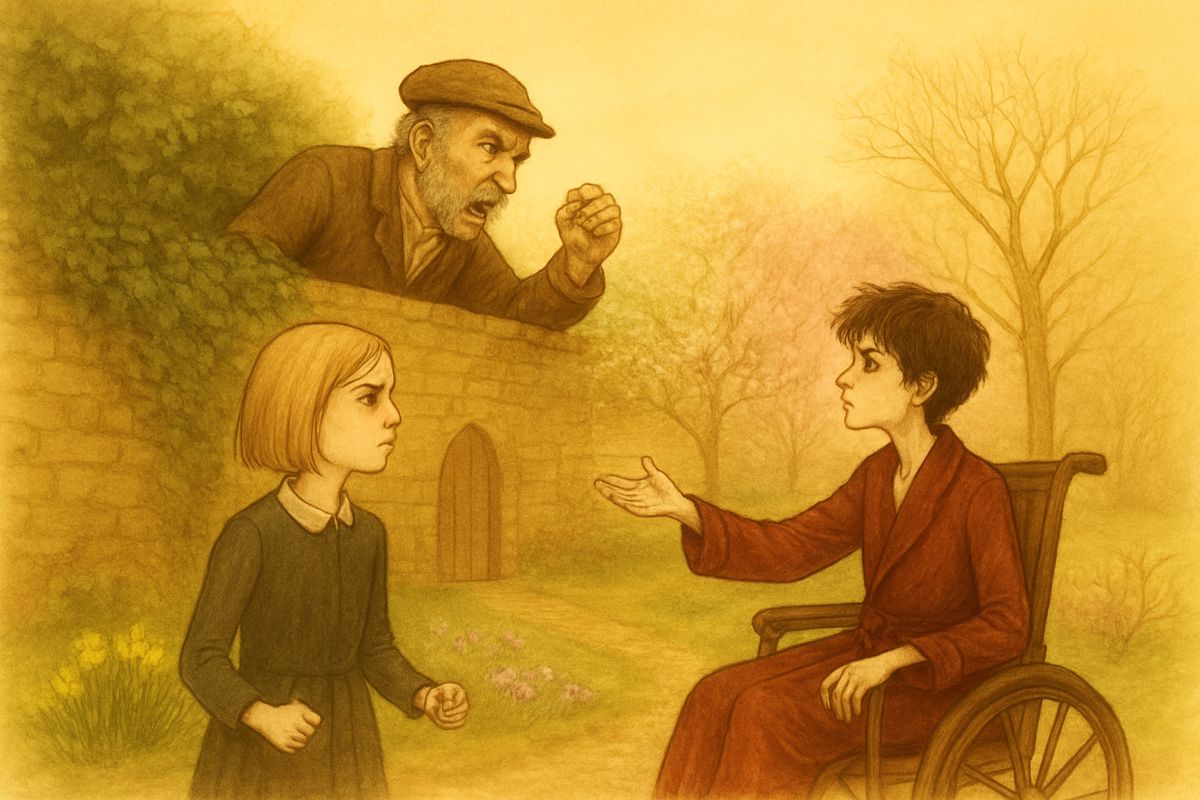
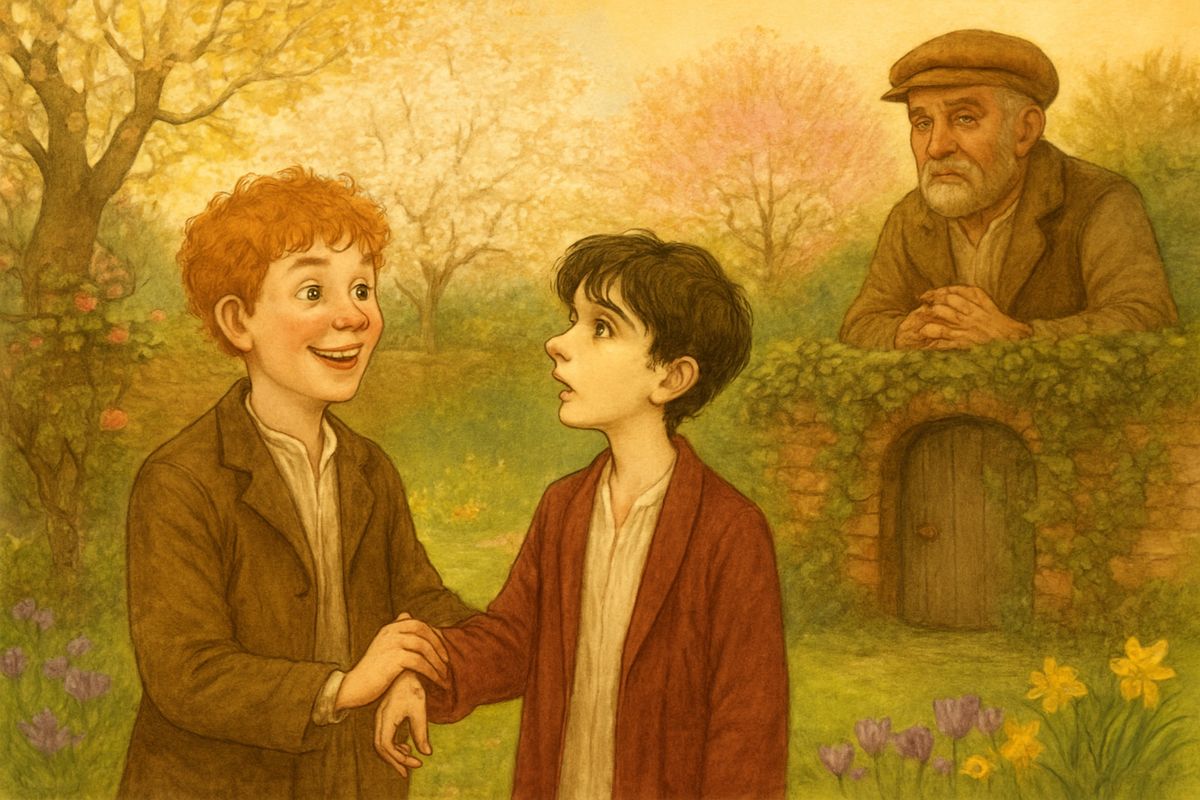
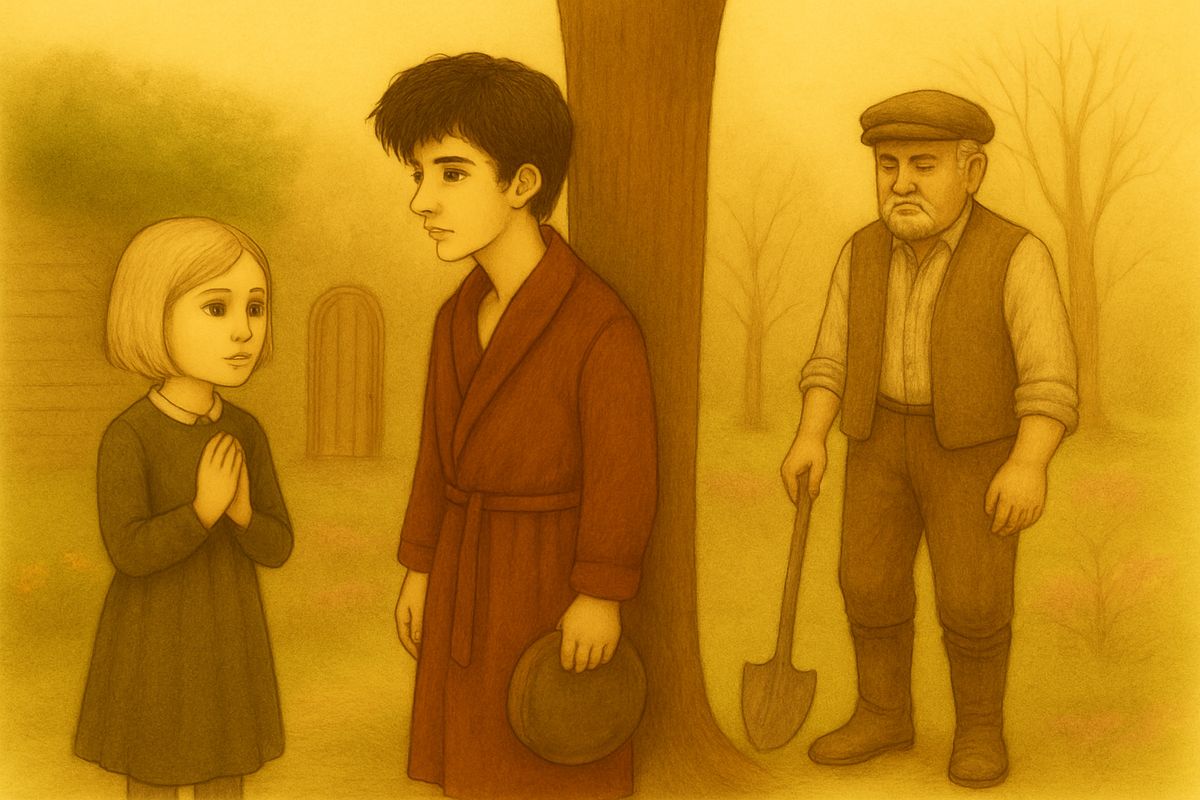
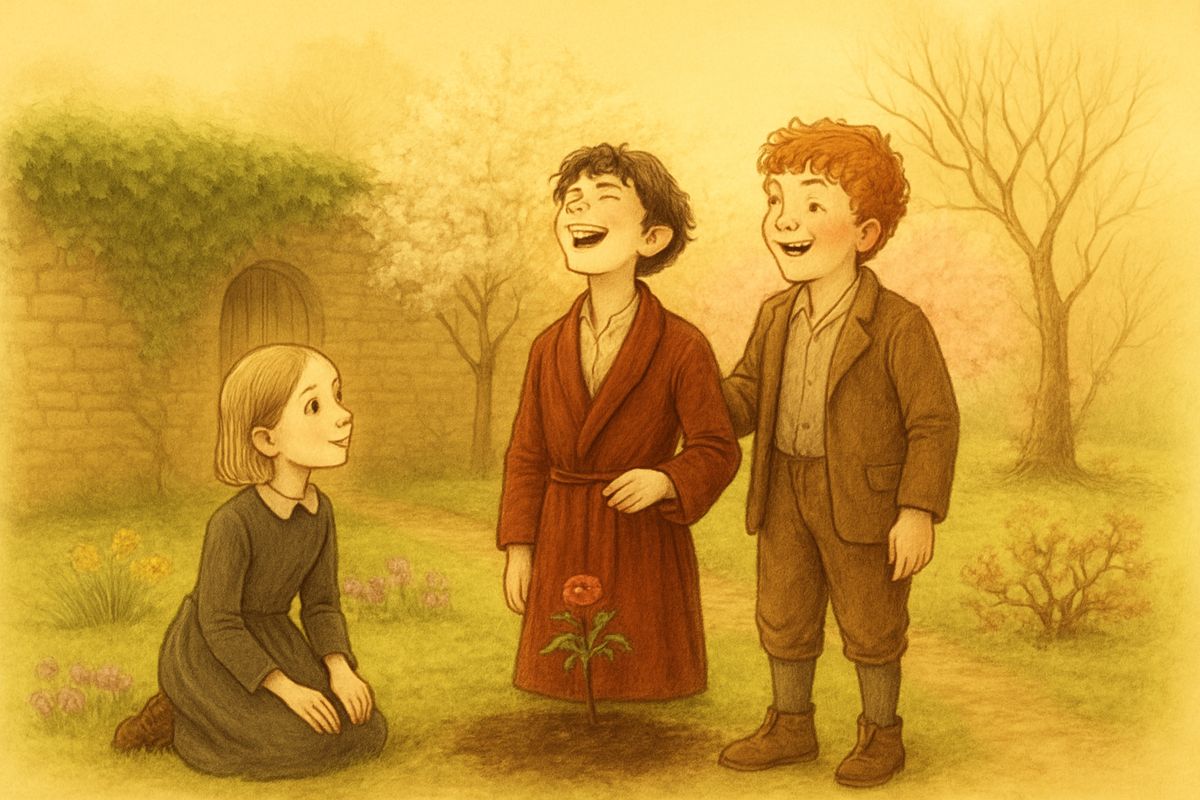
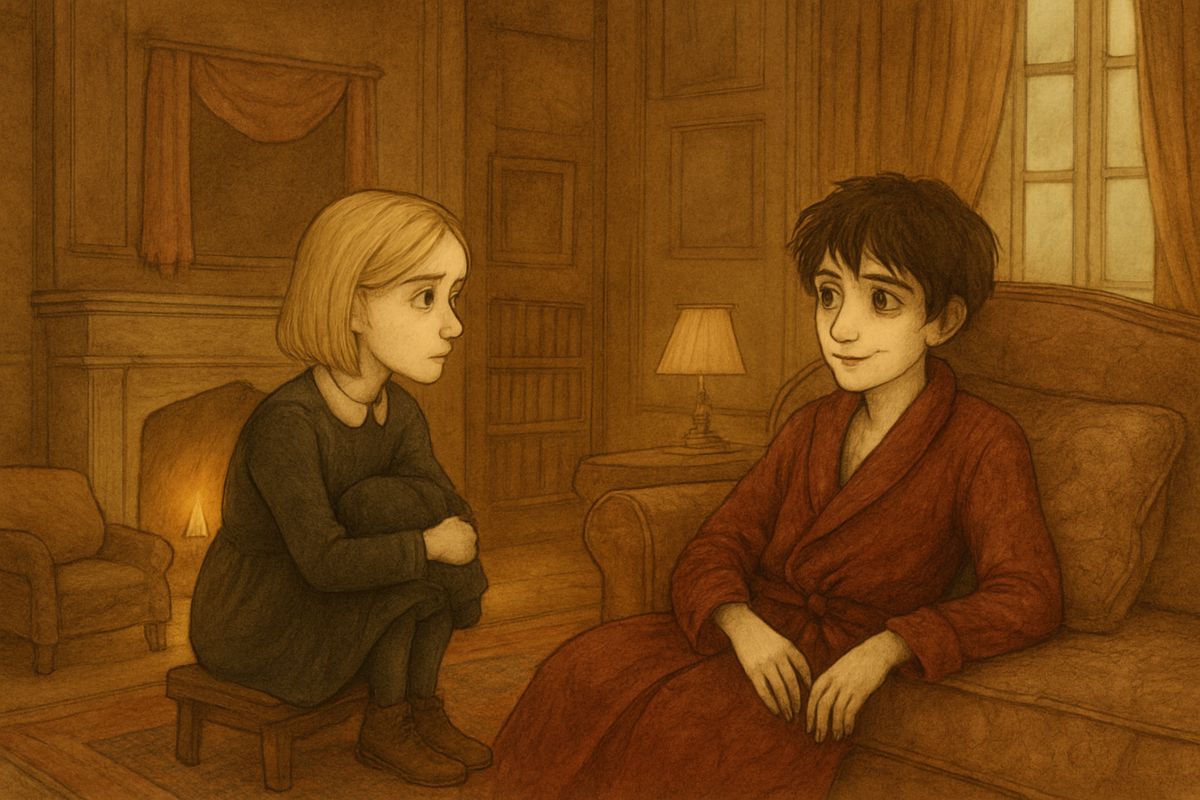
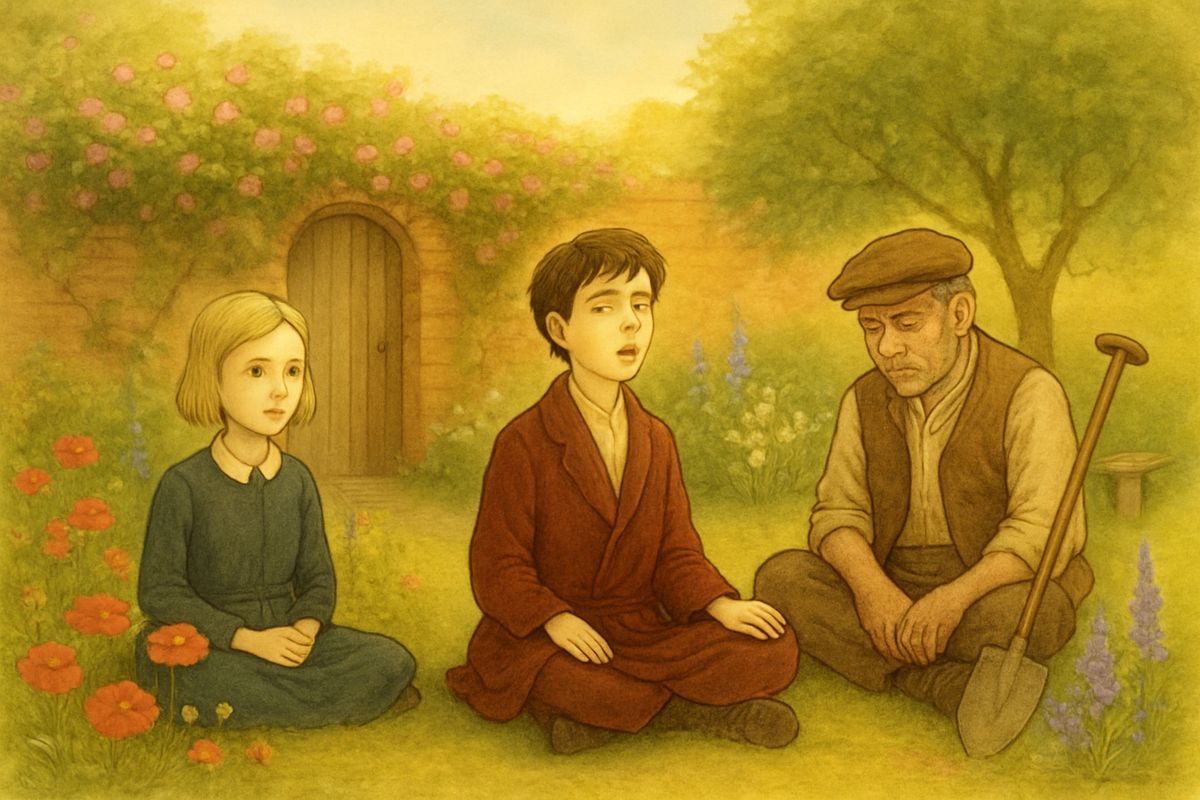
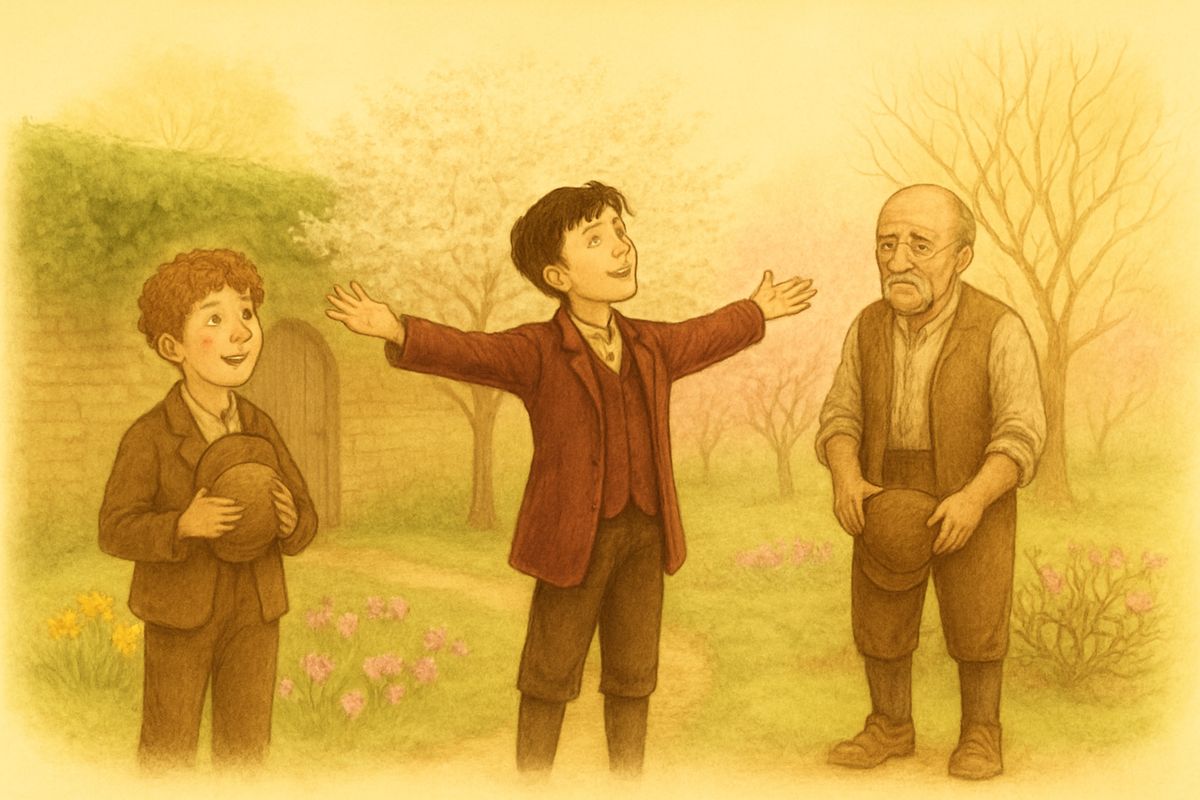
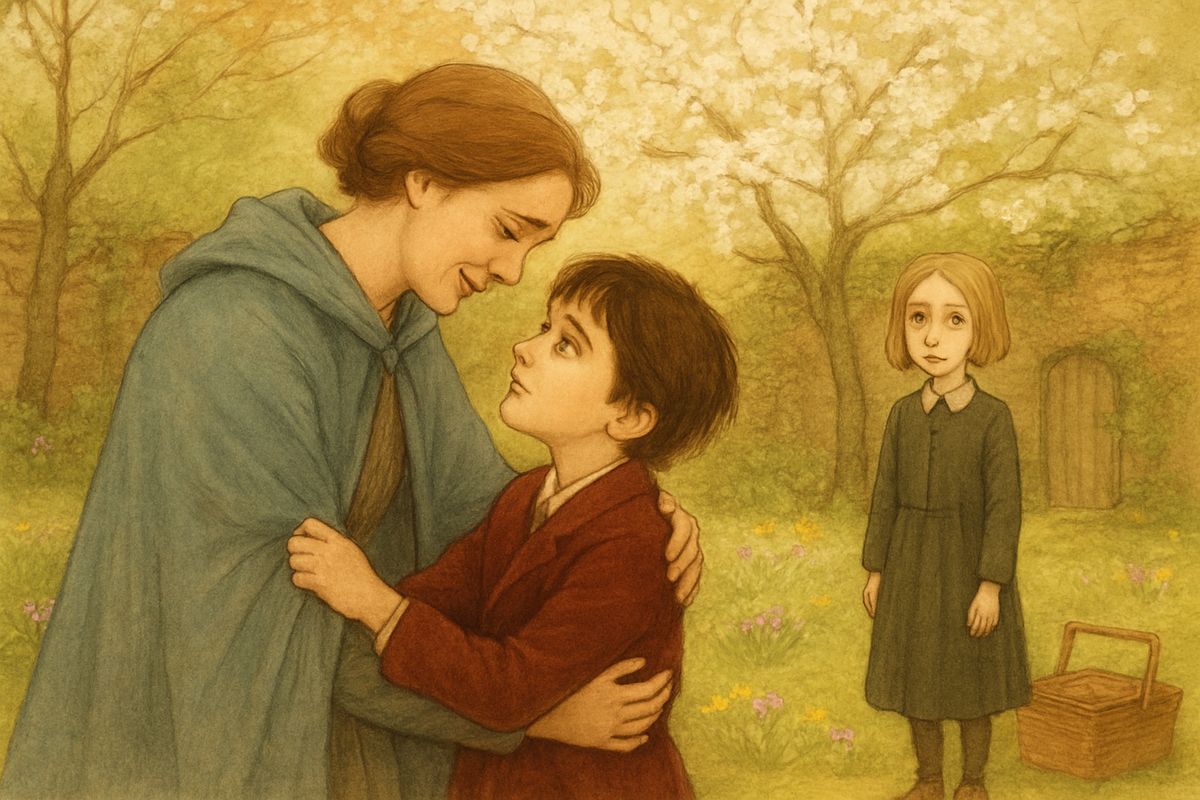
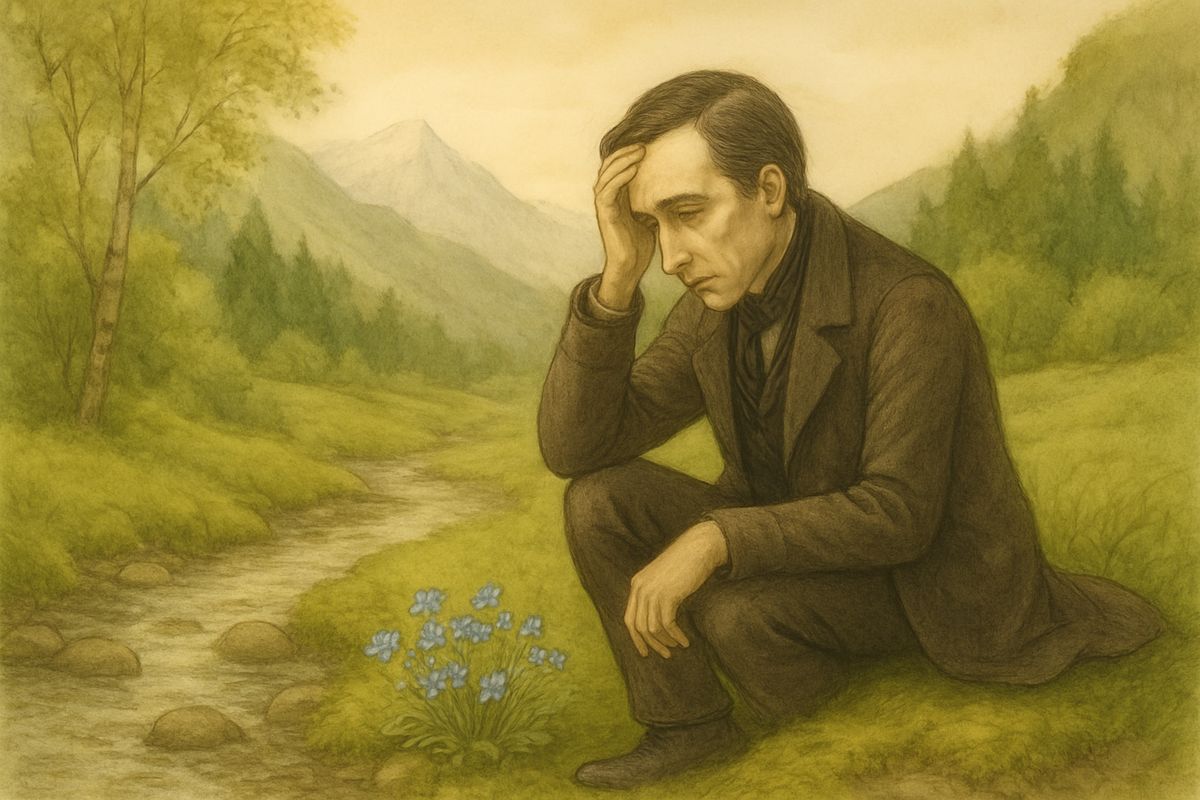
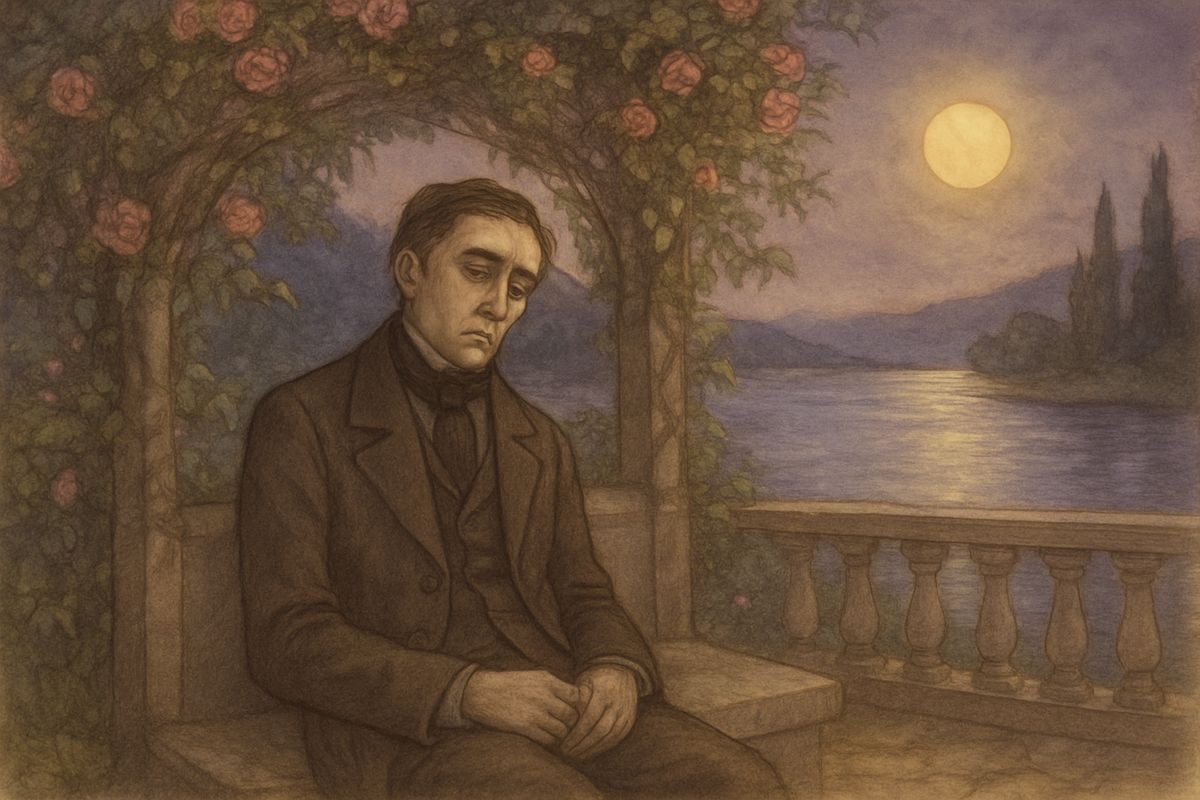
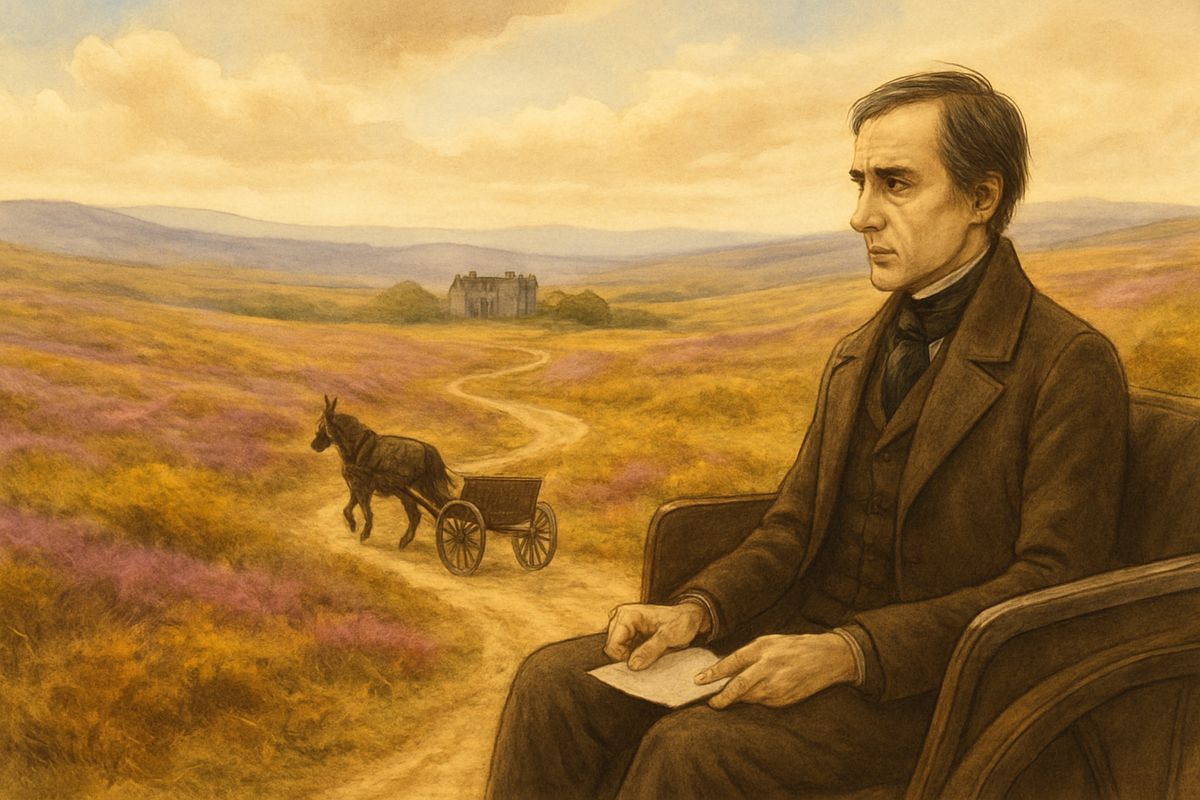
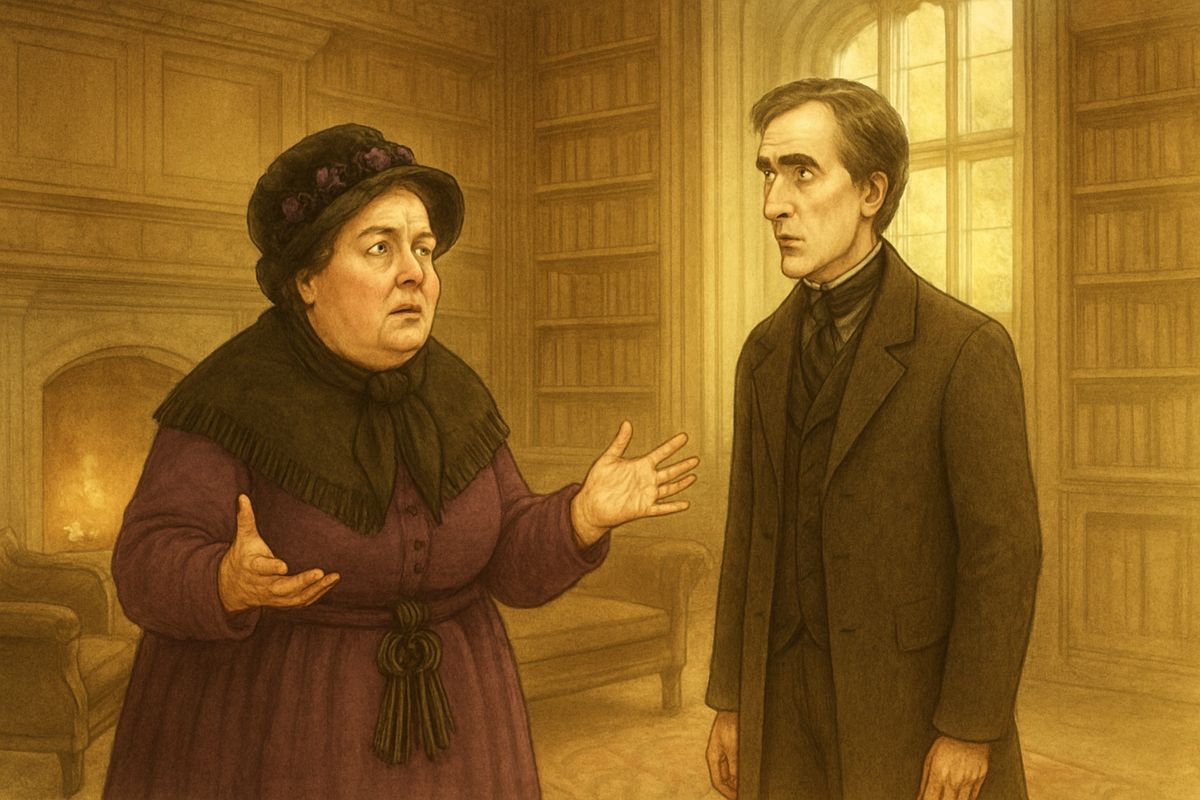
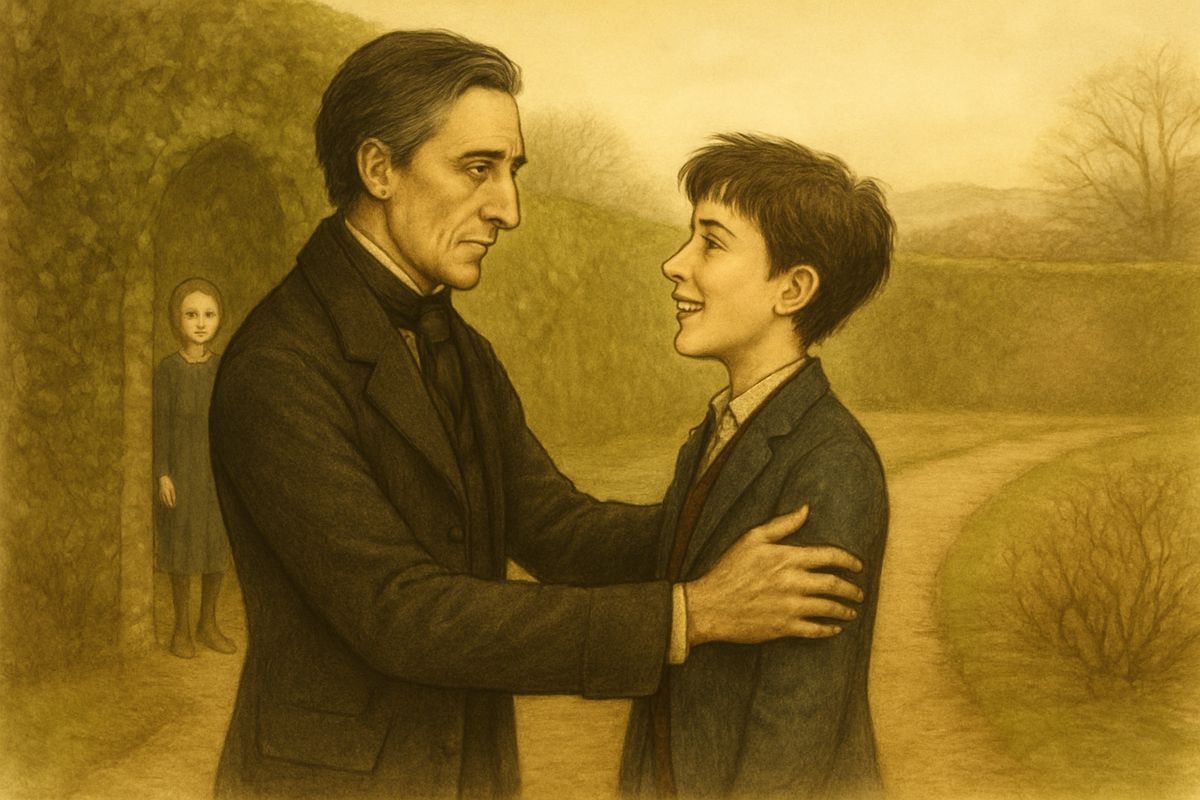
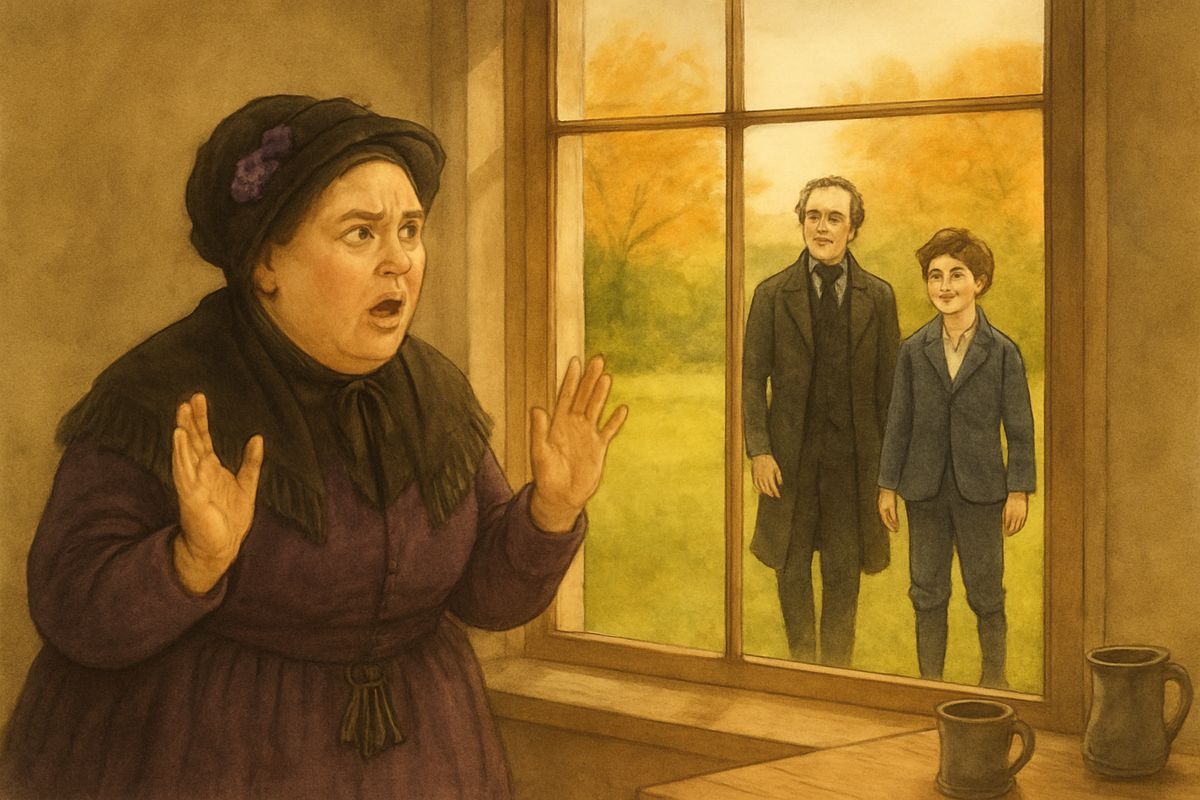
1Mary Lennox was born in India to a busy father and a beautiful mother who cared only for parties and did not want a little girl. Kept out of sight by her Ayah and given her own way by every servant, by nine Mary was as sour, sallow and selfish a child as ever lived.2One frightfully hot morning Mary woke to find a strange woman at her bedside instead of her Ayah. “Why did you come? Send my Ayah to me,” she demanded, but the frightened woman only stammered that the Ayah could not come.3Nothing was done in its usual order that morning, and the servants hurried by with ashy, scared faces. Left alone, Mary wandered into the garden and stuck scarlet hibiscus blossoms into little heaps of earth, muttering, “Pig! Pig! Daughter of Pigs!” at the Ayah who had not come.4Her mother came onto the veranda with a fair young officer, her eyes scared. “You ought to have gone to the hills two weeks ago,” he said. Then loud wailing rose from the servants’ huts. The Ayah had died in the night, for cholera had broken out, and the Mem Sahib fled indoors.5In the panic that followed, everyone forgot Mary. On the second day she crept into the empty dining room, where a meal sat half-eaten and chairs were pushed back. She ate some fruit and drank a glass of sweet wine, not knowing how strong it was, then went back to her nursery and slept for a long time.6When she woke, the house was perfectly still. Mary wondered if everyone had got well and who would look after her now. Nobody came. Only a little snake rustled across the matting, watched her with jewel-bright eyes, and slipped under the door. “It sounds as if there were no one in the bungalow but me and the snake.”7At last men’s footsteps sounded, and two officers opened the nursery door. “A child alone! Who is she?” cried the first. Mary stamped her foot. “Why does nobody come?” Barney looked at her sadly. “Poor little kid,” he said. “There is nobody left to come.” Her father and mother had died in the night.8After the cholera, Mary was taken to the shabby bungalow of an English clergyman, Mr. Crawford, who had five quarrelling children. When Basil leaned over the pretend garden she was making under a tree, she cried, “Go away! I don’t want boys!” So he danced round her making faces, and soon all the children were singing “Mistress Mary, quite contrary.”9Basil told her scornfully that she was being sent home to England, to an uncle called Mr. Archibald Craven who lived in a great, desolate old house where no one ever went near him. “He’s a hunchback, and he’s horrid.” Mary turned her back and stuck her fingers in her ears, but afterward she thought about it a great deal.10After the long voyage, Mary was handed over in London to her uncle’s housekeeper, Mrs. Medlock, a stout woman in a very purple dress whose bonnet flowers trembled when she moved. The two disliked each other at once. On the rainy train north, Mrs. Medlock told her of the house: six hundred years old, with nearly a hundred locked rooms, and a master grieving for his dead wife.11Mary stared out at the grey slanting rain and wondered a queer new thing: why she had never seemed to belong to anyone, even when her father and mother were alive. Other children were someone’s little girl, but she never had been. She did not know it was because she was so disagreeable, and she watched the rain until she fell asleep.12It was dark when they reached Thwaite Station and drove five miles across Missel Moor. The wind made a wild, low, rushing sound over the heather. “It’s not the sea, is it?” Mary asked. At last a light twinkled in the lodge window, and the carriage rolled on up a long avenue where the trees met overhead like a dark tunnel.13The house rambled round a stone court with hardly a light in it. Its huge oak door, studded with iron nails and bound with iron bars, opened into an enormous dim hall, where the painted faces and the suits of armour made Mary not want to look. On the stone floor she was a very small, odd black figure, and she felt as lost as she looked.14She was led up a broad staircase and along corridor after corridor to a room with a fire and a supper on the table. “This room and the next are where you’ll live, and you must keep to them,” said Mrs. Medlock, and left her there alone. That was how Mistress Mary came to Misselthwaite Manor, feeling more contrary than ever before in her life.15Mary woke in her tapestried room to find a young housemaid named Martha kneeling at the hearth, raking out the cinders and lighting the fire. Beyond the deep window stretched the moor like an endless, dull purplish sea. "I hate it," said Mary. Martha only grinned: she loved the moor, and was sure Mary would too.16Mary ordered Martha about as she had ordered her Ayah in India, and when Martha cheerfully told her to dress herself, she flew into a rage. Then, suddenly lonely, she sobbed into her pillow. "Eh! you mustn't cry like that there," begged Martha. Her rough kindness calmed Mary, who began to listen as Martha chattered about her mother and her brother Dickon, whom wild creatures on the moor followed.17Martha sent her out to play, mentioning that one garden had been locked for ten years: Mr. Craven had shut it when his wife died, and buried the key. Wondering about it, Mary wandered through bare wintry lawns into the walled kitchen-gardens, one opening into the next through green doors. There was nothing pretty about them now.18When Mary mentioned a red-breasted bird, surly old Ben Weatherstaff smiled and whistled softly, and the robin flew down beside his boot. "I'm lonely," Mary said, finding it out as the robin looked at her. Ben said he was lonely too, except for the robin, his only friend. The brood had scattered, and the little bird had been lonely as well.19Day after day Mary ran in the wind from the moor until her cheeks grew pink, and one morning she was hungry enough to empty her porridge bowl. Along the long ivied wall the robin found her again and hopped ahead, chirping. "I like you! I like you!" she cried, running after him. But however she searched, the wall had no door.20That night, by the fire, Martha told why Mr. Craven hated the garden: his young wife used to sit on a rose-covered branch there, and one day it broke, and she died. As the wind wuthered, Mary heard a far-off crying somewhere inside the house. Martha looked confused. "It was th' wind," she said, "or Betty Butterworth, th' scullery-maid. She's had th' toothache all day." Mary did not believe her.21Next day the rain poured down, so Mary set out alone to count the hundred rooms. Corridors led to corridors, and in a long gallery the portraits seemed to stare back at her. One stiff, plain little girl in green brocade held a green parrot on her finger. "Where do you live now?" Mary asked her. "I wish you were here."22Behind doors that opened slowly and heavily she found room after room. In a velvet sitting-room she played for a long while with about a hundred little ivory elephants, then heard a rustle. In a hole in a sofa cushion a grey mouse peeped out, with six babies asleep beside her. Here at least were seven creatures who did not look lonely at all.23Lost on the way back, Mary heard a short, fretful cry through the walls. She touched a tapestry and it fell open as a door, and there was Mrs. Medlock, keys in hand and very cross. She pulled Mary back to her room and slammed the door. Mary sat pale with rage on the hearth-rug. "There was someone crying—there was—there was!"24When the storm blew away, the sky was a brilliant, sparkling blue. Asked by Martha how she liked herself, Mary thought, then said, "Not at all—really." Out on her walk the robin followed her and hopped onto a patch of freshly dug earth. In the soil Mary saw a rusty ring. It was an old key that looked as if it had been buried a long time.25After her day at home Martha brought Mary a present: a skipping-rope with red and blue handles, bought with tuppence from her own wages. Mary had never seen one. When she had tried it, she turned back at the door and stiffly held out her hand. "It was your two-pence really. Thank you." Soon she was skipping all through the gardens, cheeks red.26On her own walk the robin sang from the ivy, and Mary told him he ought to show her the door. Just then a gust of wind swung the ivy aside, and beneath it was a round door-knob. Mary found the lock, and the key turned with both hands. She looked behind her, pushed the door slowly open, and slipped inside the secret garden.27Behind the door lay the strangest, loveliest place Mary had ever seen. Leafless roses hung from tree to tree like grey curtains and bridges, and nothing moved. Walking softly under the arches, she wondered whether it had all died in ten years alone. "Is it all a quite dead garden? I wish it wasn't."28Then, in an old flowerbed, she spied sharp little pale green points poking through the black earth. Something was alive! With a pointed stick she cleared the grass from round them so they could breathe, working for hours. She came in flushed and starving, and that evening Martha helped her print a letter asking Dickon to buy seeds and garden tools.29Through a week of sunshine Mary crept up on Ben Weatherstaff until he grumbled less. One morning the robin hopped right onto his spade handle, and the old man went soft as a whisper. Then he let slip that he had once tended a young lady's roses, ten years ago. "They run wild, but they was in rich soil, so some of 'em lived."30Following a low, strange whistle through the gate into the wood, Mary found a red-cheeked boy piping under a tree while a squirrel, a pheasant and two rabbits crept close to listen. "Don't tha' move," he said softly. "It'd flight 'em." It was Dickon, come with the tools and seeds himself.31On a log Dickon showed her the seed packets, but when he offered to plant them and asked where her garden was, Mary went red and then pale. Clutching his sleeve, she swore him to secrecy, then burst into tears. "I've stolen a garden. It isn't anybody's. They're letting it die, all shut in by itself."32She led him through the ivy door, and Dickon gazed round and round. "It's like as if a body was in a dream." With his knife he cut a grey, dead-looking branch and showed her green inside: it was as "wick" as she was. All morning they cut away dead wood and loosened the soil round the roots together.33Dickon praised her clearings: crocuses, snowdrops and daffodils, all ready to grow. Kneeling beside him, Mary tried his own Yorkshire: "Does tha' like me?" He liked her wonderful, he said. As she left for dinner she asked once more if he would ever tell, and he promised that her secret was as safe as a missel thrush's nest.34Mary ran in, pink and breathless, and told Martha she thought Dickon was beautiful, turned-up nose and all. Then Martha had news: Mr. Craven was home, and because her mother had stopped him on the moor and spoken up for the child, he wished to see Mary before he went away again.35Mrs. Medlock led her far down strange corridors to a study, and left her there. By the fire sat a man with high, crooked shoulders and black hair streaked with white. His face would have been handsome if it had not been so miserable. "I forgot you," he said. "How could I remember you?"36She only wanted to play out of doors, Mary told him, and when he asked if she wanted toys or dolls, she quavered, "Might I have a bit of earth?" Something softened in his dark eyes. "Take it, child, and make it come alive," he said, and he ordered that she be let to run wild and free.37Mary raced back to the garden, but Dickon was gone; only the robin watched from a rose-bush. "Was he only a wood fairy?" she wondered. Then she saw a scrap of paper pinned to the bush with a long thorn: a rough drawing of a bird sitting on its nest, and under it the words "I will cum bak."38One wild spring night the wind wuthered round the old house and kept Mary awake, until she heard that faint, far-off crying again. Taking her candle, she crept down the long dark corridors with her heart thumping and pushed through the tapestry door. "I am going to find out what it is," she whispered.39Beyond it, in a great firelit room, a pale boy lay crying in a carved four-poster bed. He stared at her with huge grey eyes. "Are you a ghost?" he whispered. "No," said Mary. "Are you one?" He was Colin Craven, her uncle's own son, and no one had ever told her he existed.40Colin said coolly that he would not live to grow up, and that his father could hardly bear to look at him. But when he heard of the locked garden his eyes shone, and he vowed to make the servants open it. "Oh, don't!" cried Mary. If it stayed a secret, they might slip in together one day.41Colin liked a secret far better than ordering people about. Then he had Mary pull a cord, and a rose-silk curtain slid back from a portrait of a laughing girl with a blue ribbon in her bright hair and eyes just like his. "She is my mother," said Colin. "I don't see why she died."42When his eyes grew heavy, Mary drew her footstool close and did what her Ayah used to do in India: she stroked and patted his hand and sang a low little Hindustani song. Soon his black lashes lay against his cheeks, and she crept away with her candle.43Next day Martha went red with fright at Mary's news and told of Colin's screaming tantrums and the old fear that he would grow a hunched back. But Colin sent for Mary at once, and when Martha trembled he spoke to her like a little Rajah: "I'll take care of you. Now go away."44Mary told him all about Dickon and the busy, sunny moor, and would not let him talk of dying. Soon the cousins were laughing like any healthy ten-year-olds, when in walked Dr. Craven and Mrs. Medlock, aghast. Colin calmly said Mary must come whenever he sent for her, then ordered tea. "Those muffins look so nice and hot. Tell me about Rajahs."45Through a whole week of rain Mary spent hours with Colin, reading, and talking of Rajahs, gardens and Dickon. Colin hated being stared at, but he thought he wouldn't mind Dickon, the boy who charmed animals. "He's a sort of animal charmer," he said, "and I am a boy animal." They both laughed till they could hardly stop.46On the first sunny morning Mary woke at dawn, dressed in five minutes and slipped out by a side door. The grass had turned green and birds sang everywhere. Inside the secret garden Dickon was already at work, with Captain the fox cub and Soot the rook. "Th' world's all fair begun again this mornin'," he laughed.47Crocuses had burst into purple and gold, rose stems showed swelling buds, and a green veil was creeping over the grey walls. When the robin flew in with a twig, the children sat as still as grass. Very softly they made their plan: Dickon would push Colin's chair, and they would bring him into the garden in secret.48Mary forgot Colin and stayed in the garden all day, weeding and pruning with Dickon in golden light. That evening she found Colin sulking in bed. They quarrelled fiercely. "Shall they, Mr. Rajah!" Mary cried, and Colin threw his pillow at her, though it fell at her feet. "I'm going," she said, "and I won't come back!"49In the night terrible screams woke the house. The pale nurse begged Mary to come, and Mary stormed in shouting, "Hysterics!" Colin sobbed that he had felt a lump on his back, so Mary made the nurse show her. She examined his thin back like a stern little doctor. "There's not a single lump there!" she declared.50Colin's terror melted into relief, and the two children made up, reaching for each other's hands. When the nurse had gone, Mary sat close by the bed and described the garden in spring in a low, slow voice: roses climbing, crocuses rising, a green veil creeping over everything. "Perhaps the robin has found a mate," she whispered. And Colin was asleep.51The morning after Colin's tantrum, Mary ran out to the secret garden, where Dickon sat under the apple tree with Captain, Soot and two tame squirrels called Nut and Shell. When she told him about Colin, he looked up at the sky full of birds. "We mun get him out here," he said, "an' get him just soaked through wi' sunshine."52Back at Colin's bedside, Mary talked the broadest Yorkshire she could until they both laughed so hard the room echoed. Mrs. Medlock, about to come in, drew back into the corridor and listened in amazement. Then Mary held both his hands and whispered the real secret: Dickon would come tomorrow, and "there is a door into the garden. I found it."53That afternoon Dr. Craven came expecting a shaken, sobbing boy and found Colin sitting up on his sofa over a garden book, announcing like a young Rajah that he would go out in his chair with his cousin, and Dickon would push it. Downstairs Mrs. Medlock repeated what Dickon's mother had told her: "She's a child, an' children needs children."54Colin slept all night and woke smiling. Soon Mary came running in, windblown and pink-cheeked, smelling of leaves. "It has come! It has come, the Spring! Dickon says so!" she cried. She flung the window wide, and fresh air and birdsong poured in while Colin lay back and drew in long breaths of it.55After breakfast they heard a caw and a tiny bleat, then Dickon's boots clumping along the corridor. He came in smiling with the fox at his side and squirrels and crow on his shoulders, and set the newborn lamb on Colin's lap. Kneeling, he gave it its bottle, and as it sucked hungrily, Colin forgot all shyness and the questions poured out.56Windy days and a threatened cold kept Colin indoors more than a week, while he, Mary and Dickon planned a secret route to the garden like generals. Then he summoned the head gardener, Mr. Roach, and ordered like a young Rajah: "No one is to be near the Long Walk. You have my permission to go, Roach."57That afternoon the strongest footman in the house carried Colin downstairs and settled him in his wheeled chair among rugs and cushions, where Dickon was waiting. The Rajah waved them off with the same grand words, and the footman and nurse hurried inside to giggle in private.58Dickon pushed the chair slowly along their roundabout route, and Colin lifted his face to the sky and drank in the scent of gorse from the moor. In the Long Walk by the ivied walls they began to whisper, as Mary pointed out each place: "This is where the robin flew over the wall."59Under the big lilac Mary showed where the robin had uncovered the key, and Colin sat bolt upright. Then she stepped close to the wall and lifted the hanging green curtain of ivy. "Here is the handle, and here is the door. Dickon, push him in—push him in quickly!"60Colin covered his eyes until the door had shut behind them. Then he looked round and round at green leaves, blossoming trees, gold and purple flowers and warm sun, and a pink glow crept into his ivory face. "I shall get well! I shall get well!" he cried. "And I shall live forever and ever and ever!"61Under the plum tree, white with blossom and humming with bees, Colin lay back in his chair like a fairy king beneath his canopy. Mary and Dickon brought him treasures one by one: buds opening and buds shut tight, a woodpecker's feather, the empty shell of a bird hatched early.62When Colin asked about the old grey tree with the broken branch, Mary and Dickon went quiet. Just in time the robin flashed by with food for his mate. "He's taking her tea to her," Colin laughed, and soon they had a tea of their own: hot crumpets on a white cloth, while Nut and Shell made off with cake and Soot gulped down half a crumpet.63As the sun sank, Colin admitted his legs shook so that he was afraid to stand. Then he cried out, "Who is that man?" Old Ben Weatherstaff was glaring over the wall from his ladder, shaking his fist at Mary. Dickon wheeled Colin straight up to him, and Ben stared as if at a ghost: "Tha'rt th' poor cripple."64Fury filled Colin with a strength he had never known. He tore off his rugs and, with Dickon gripping his arm, stood up on the grass as straight as an arrow. "Look at me!" he flung up at the wall. Ben's weather-wrinkled cheeks ran with tears. "Tha'lt make a mon yet. God bless thee!"65Colin walked to a nearby tree and stood against it, proud and straight, while Mary whispered, "You can do it! You can do it!" Ben came in through the door and told them how Colin's mother had loved her roses. For years after she died he had climbed over the wall to do a bit of pruning in secret.66Colin picked up Mary's trowel and began to dig, and Ben fetched him a rose to plant. "I want to be standing when it goes," Colin said as the sun slipped down. With Dickon's help he rose, and as the lovely afternoon ended, he stood on his own two feet, laughing.67Back in his room, Colin ordered Dr. Craven about as usual, and afterwards Mary told him plainly that he was queer. "But so am I," she said, "and so is Ben Weatherstaff." Colin frowned, then slowly smiled. If he went every day to the garden, he decided, he would stop being queer, because there was Magic in there, good Magic.68Through the wonderful summer months the garden burst into roses, poppies, delphiniums and lilies. Colin called his idea a scientific experiment. Every morning the friends sat cross-legged in a circle under the plum tree with Dickon and his creatures while Colin chanted, "The Magic is in me! The Magic is in me!" The bees hummed so sleepily that old Ben dozed off.69After the chant Colin walked slowly all round the garden, leaning on Dickon's arm, and grew stronger every day with the exercises Dickon had learned from Bob Haworth, the strongman. Indoors he groaned and pretended to be ill. Safe in the garden, he and Mary laughed into his cushions, then ate up Mrs. Sowerby's warm currant buns, fresh milk and potatoes roasted in Dickon's little stone oven.70Back at the house the children hardly touched their meals, yet they grew rosier every week. Mrs. Medlock was baffled, and Dr. Craven could find no way they might be getting food in secret. The girl had grown pretty, said Mrs. Medlock, and the pair laughed together like crazy young ones. "Perhaps they're growing fat on that." "Perhaps they are," said Dr. Craven. "Let them laugh."71The secret garden bloomed and bloomed, and in the close-grown corner the robin's mate sat warming her Eggs. At first the robin watched Colin's slow, stop-and-start steps with alarm, until he remembered his own first short flights and decided the boy was only learning to walk, the way a fledgling learns to fly.72One streaming wet morning Mary had an inspiration: the hundred unused rooms of the manor. The footman wheeled Colin to the picture-gallery and left them alone, and Colin sprang from his chair and ran from end to end. That afternoon Mary saw the curtain drawn back from his mother's laughing portrait. "It doesn't make me angry any more to see her laughing," Colin said.73Weeding after the rain, Colin suddenly dropped his trowel, stood up tall and flung out his arms. "I'm well! I'm well!" he cried. Ben gruffly suggested the Doxology, so with caps off Dickon sang it in his strong boy's voice, and they all sang it again. By the Amen, old Ben's chin was twitching and his leathery cheeks were wet.74Through the ivied door came Dickon's mother, Susan Sowerby, in her long blue cloak. She toured their garden, said she believed in the Magic, and shared a picnic feast with them under their tree. At parting Colin clung to her cloak and wished she were his mother too. "Thy own mother's in this 'ere very garden, I do believe," she said. "Thy father mun come back to thee!"75Thoughts can be as strong as sunlight, or as bad as poison. For ten years Archibald Craven had let dark thoughts fill him as he wandered far from home. Then, resting by a little stream in the Austrian Tyrol, he gazed at the blue forget-me-nots, and something in him came loose. "I almost feel as if—I were alive!" It was the very day Colin cried out in the garden.76In golden autumn he came to the Lake of Como, where he slept more gently. One moonlit night he fell asleep on a terrace among late roses and dreamed of a sweet, far voice calling his name. "Lilias! Where are you?" he cried. "In the garden," it answered, like a golden flute. "In the garden!"77In the morning a letter came from Yorkshire, from Susan Sowerby: "Please, sir, I would come home if I was you." Remembering his dream, Mr. Craven set off at once. On the long journey he thought of his boy as he never had in ten years, and the drive across the purple moor felt, strangely, like coming home.78At the Manor he sent for Mrs. Medlock, who came flushed and flustered. Master Colin was different, she said; nobody could make him out. He ate enormously, laughed with Miss Mary, and stayed out of doors from morning till night. "In the garden, sir. He's always in the garden." Mr. Craven hardly heard the rest.79He walked down the Long Walk to the ivied door, and stopped. Inside the locked garden, feet were running and children were laughing. Suddenly the door burst open and a boy who had just won a race dashed straight into his arms: tall, handsome, glowing, with his mother's grey eyes. "Father," he said, "I'm Colin. You can't believe it. I scarcely can myself."80Inside, the garden blazed with autumn gold, late roses and lilies, and Colin told the whole story of the Magic, laughing and tumbling over his words. "I shall walk back with you, Father." Indoors, Mrs. Medlock shrieked, and every servant crowded to the window: across the lawn came the Master of Misselthwaite, and beside him, head high, walked Master Colin.
Adapted from The Secret Garden by Frances Hodgson Burnett, public domain. Pictures are AI illustrations drawn for this edition.
Add Stories to your Home Screen: tap
then Add to Home Screen.