A picture-story retelling, after Gaston Leroux, translated by Alexander Teixeira de Mattos (1910)
A gothic romance and mystery with deaths, a kidnapping and a death-trap under the Opera, shown through shadow, distance and the moment before or after, never in gruesome detail.
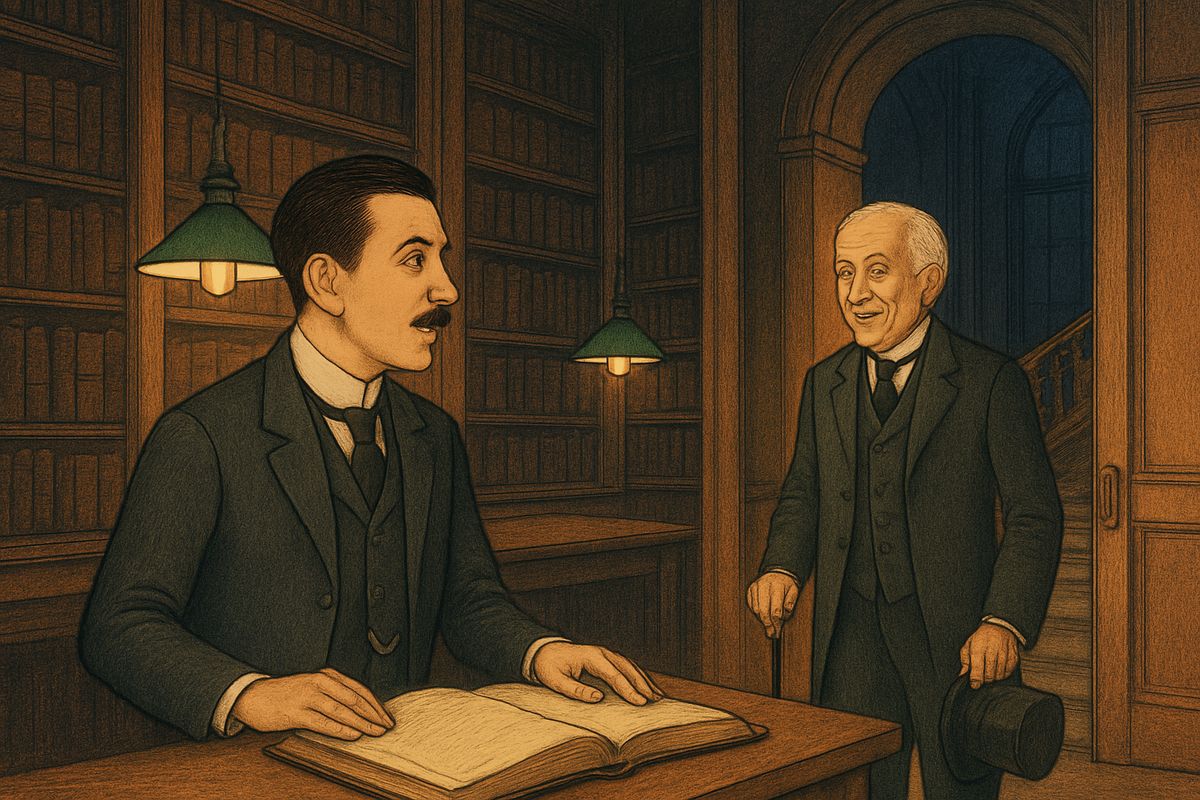
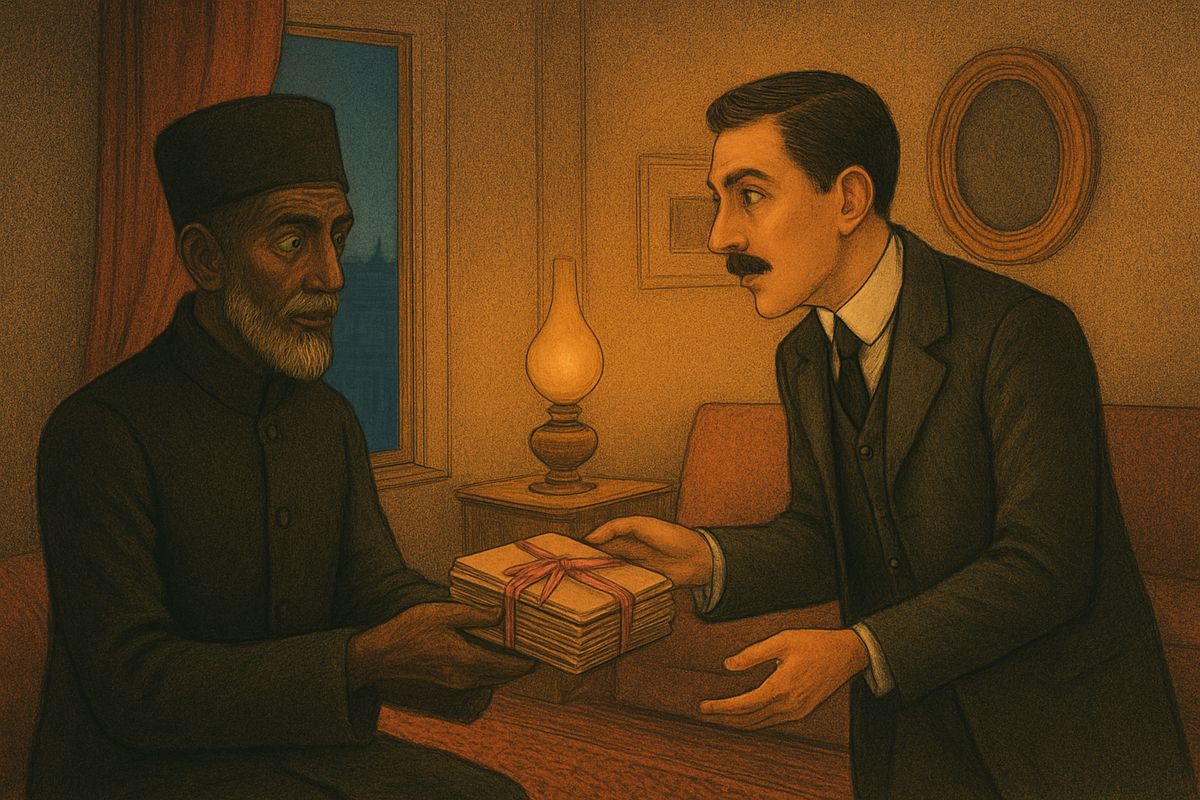
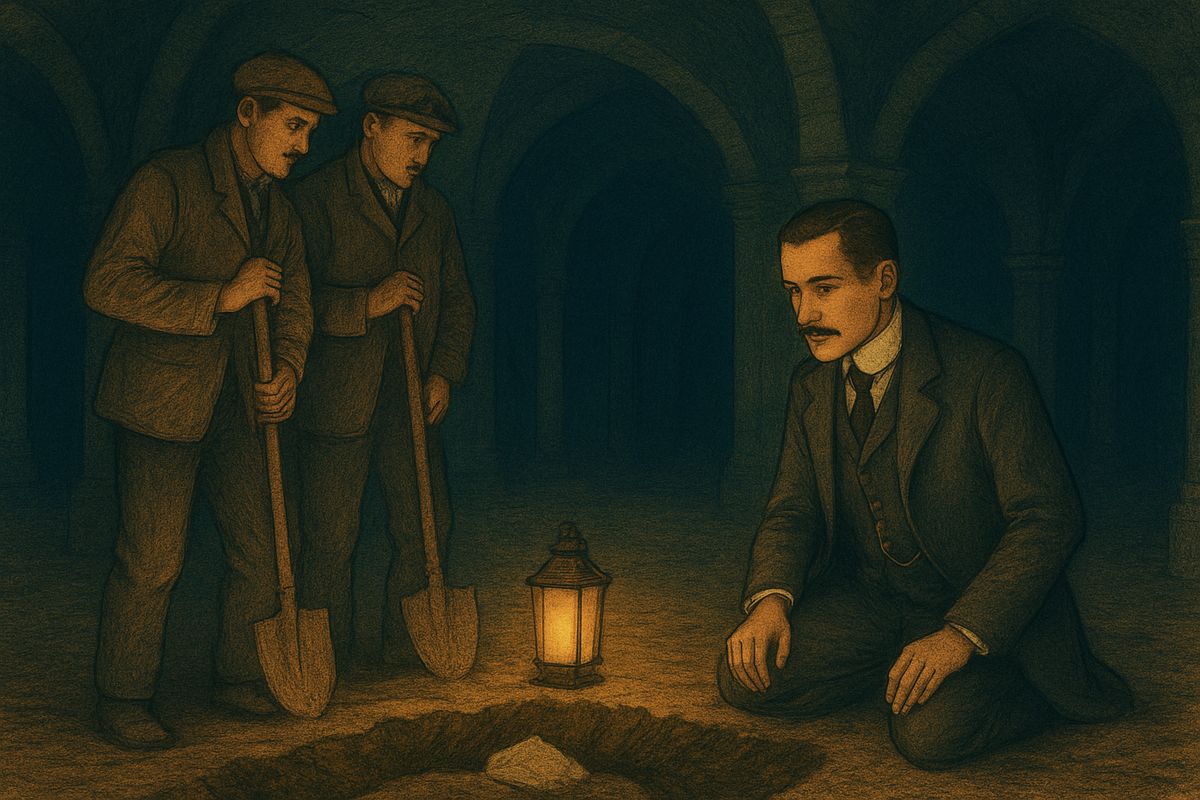
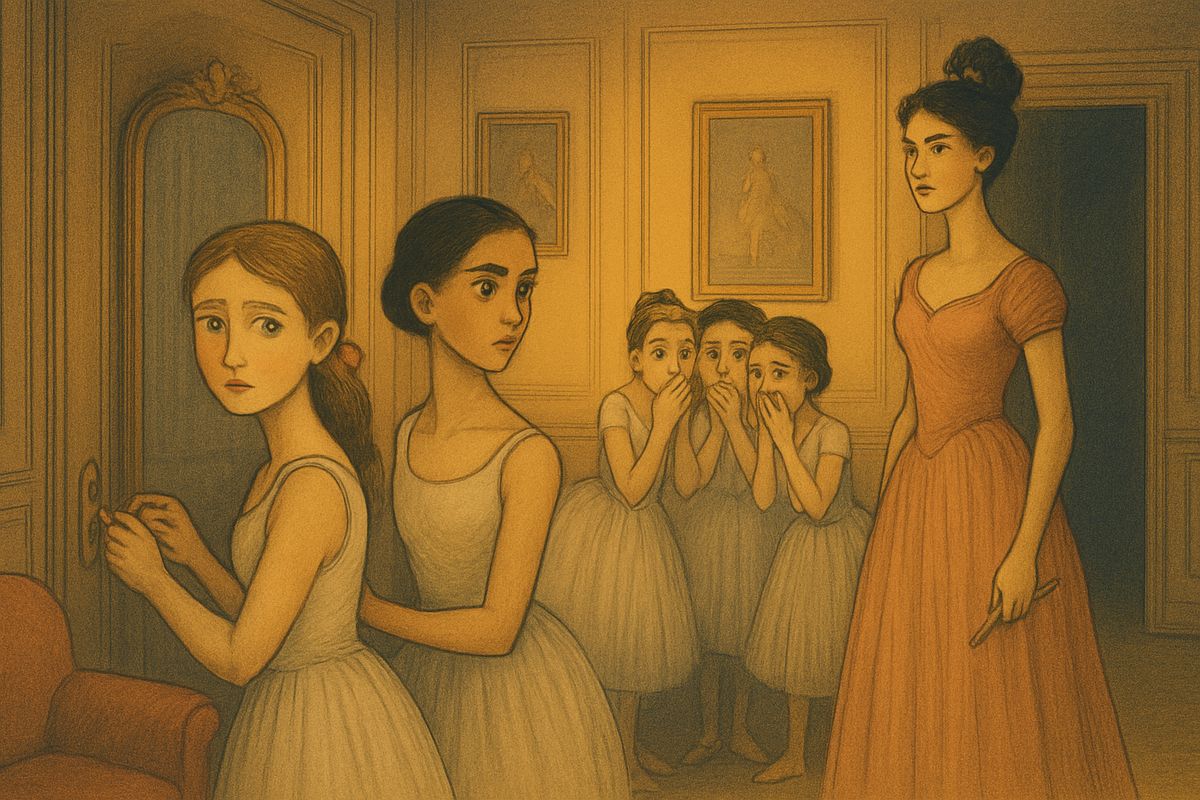
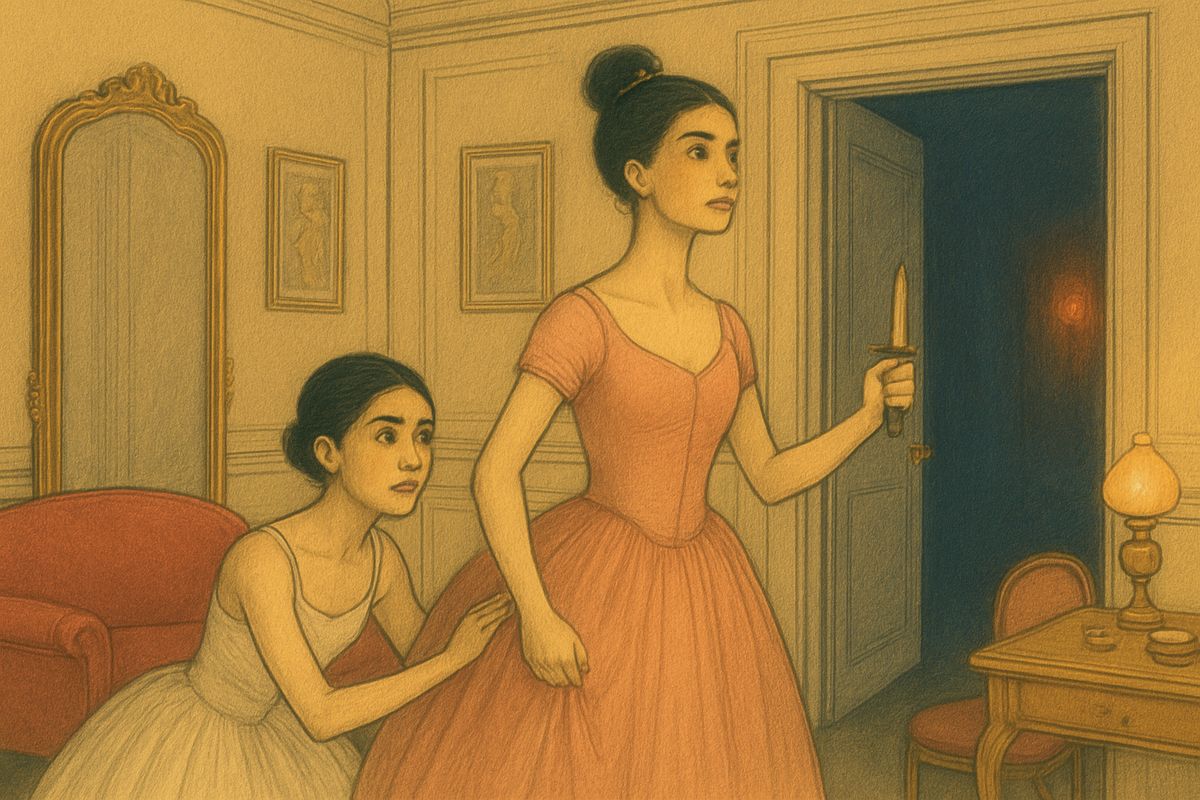
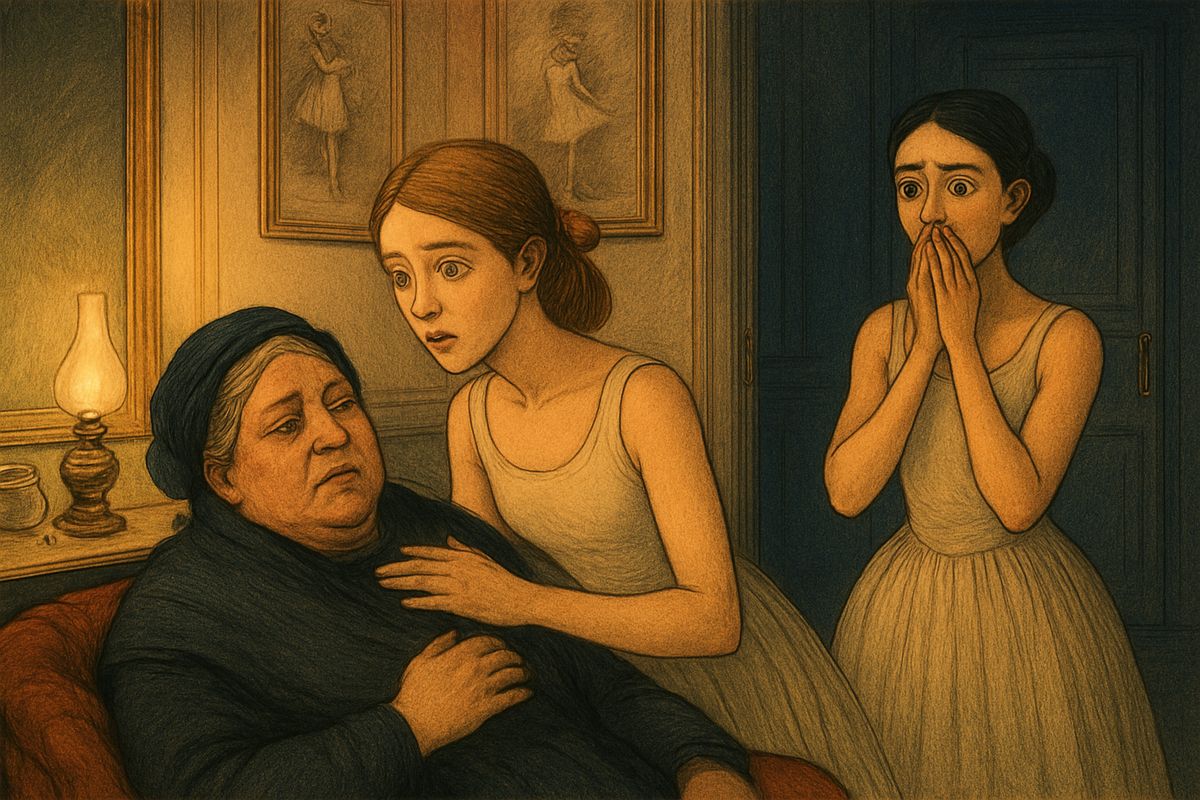
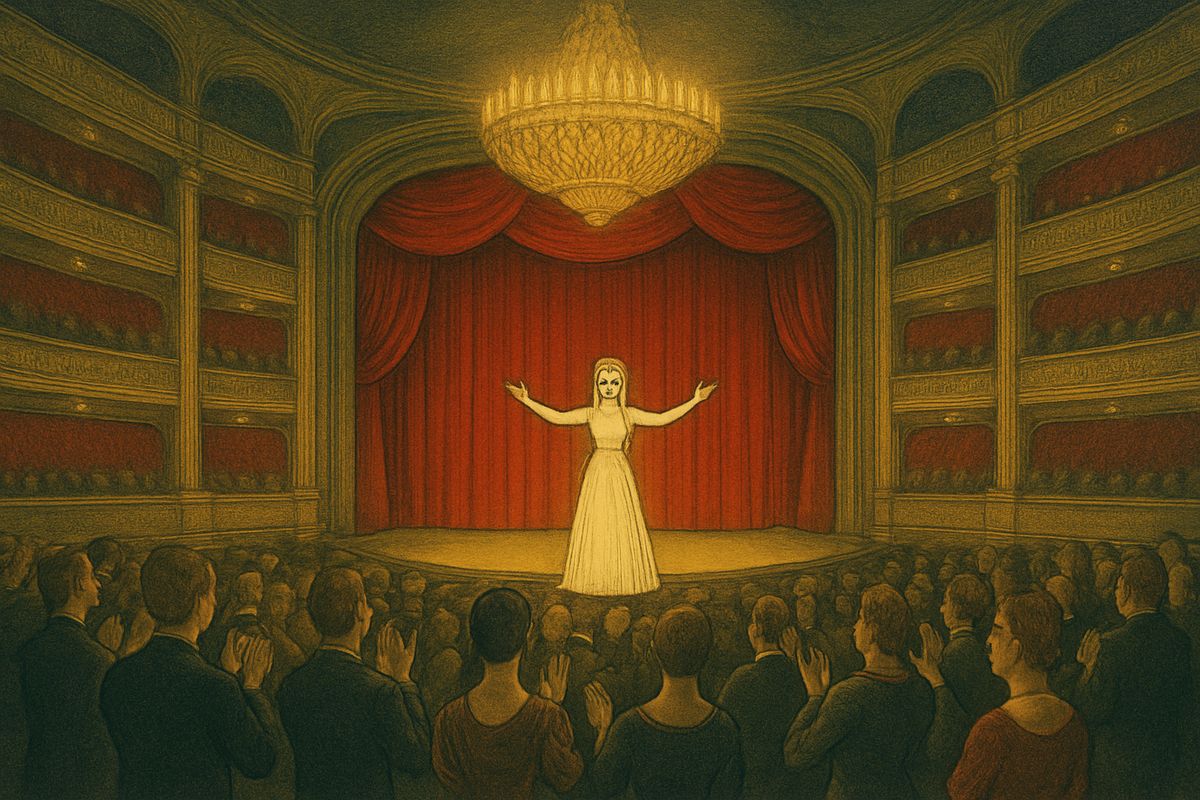
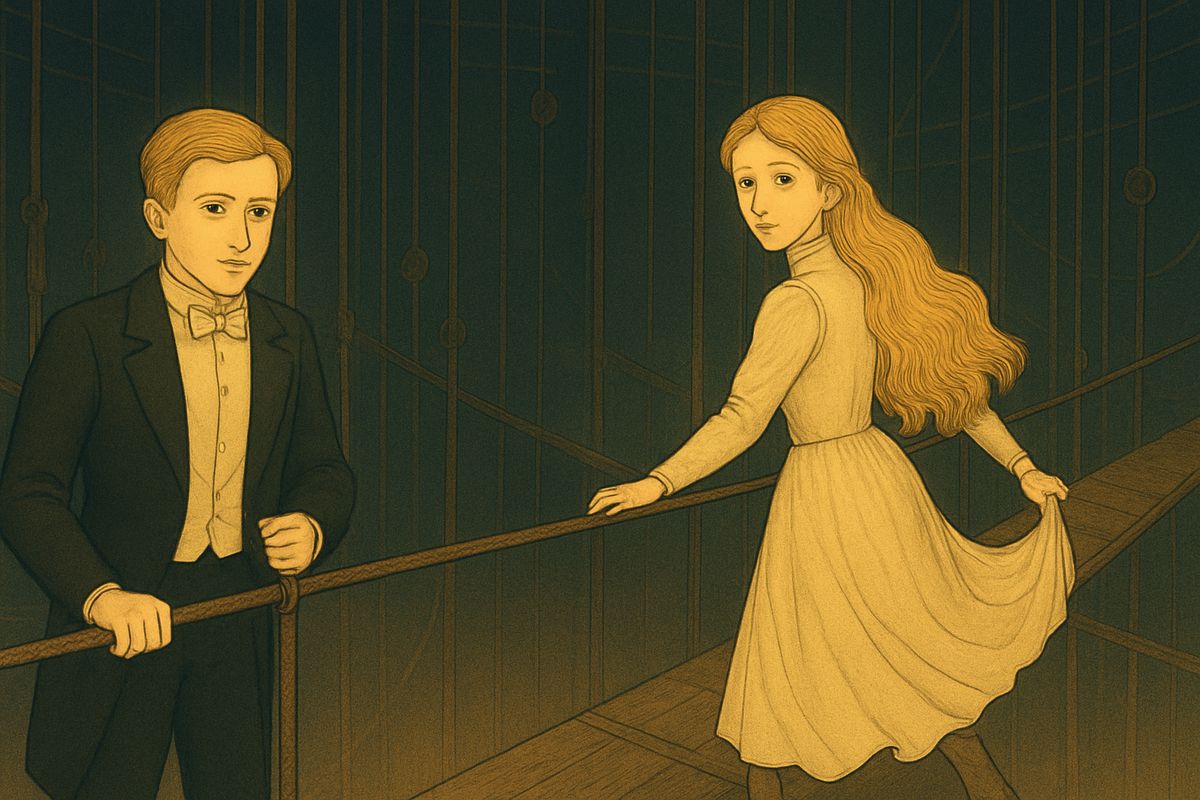
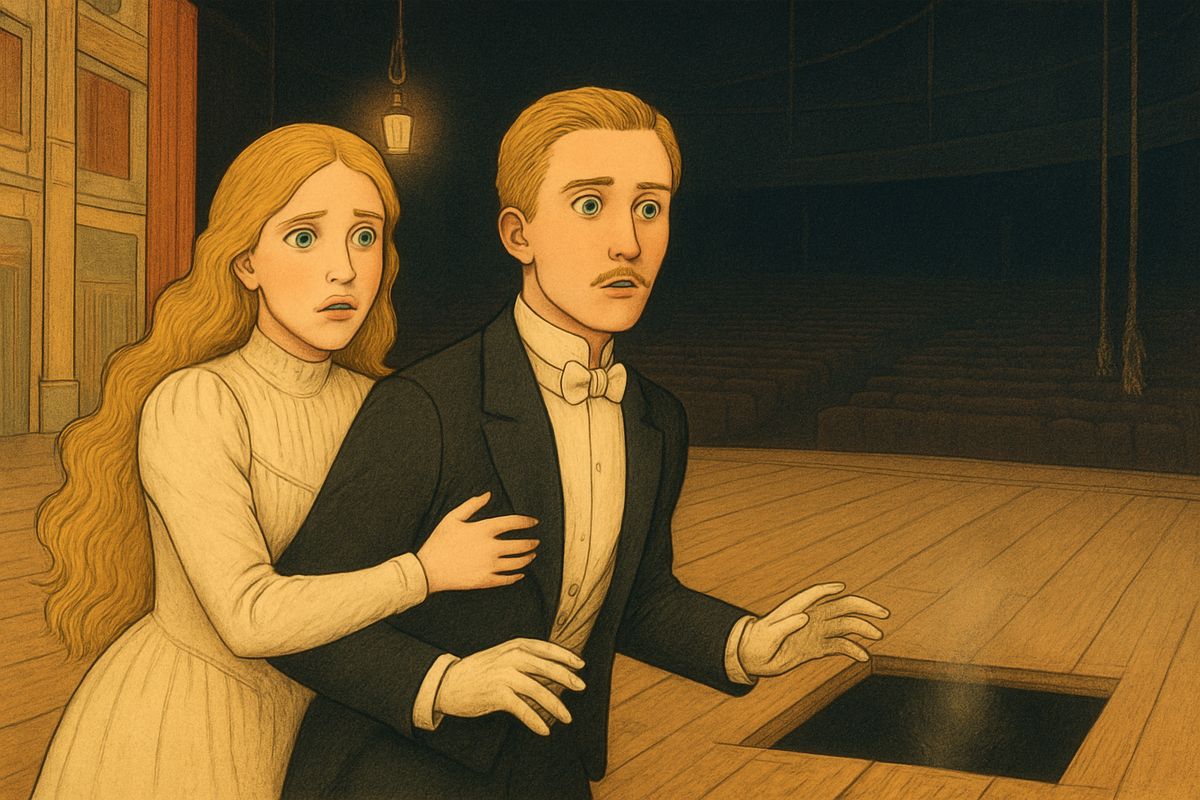
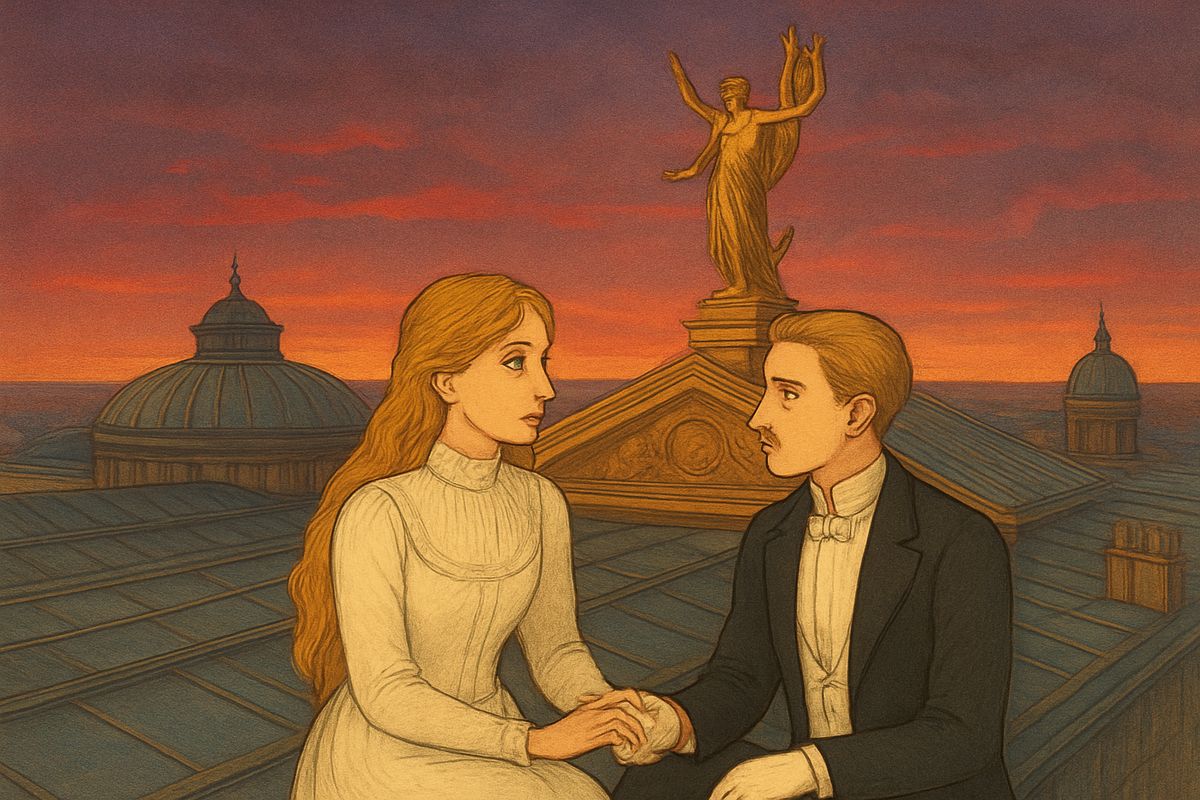
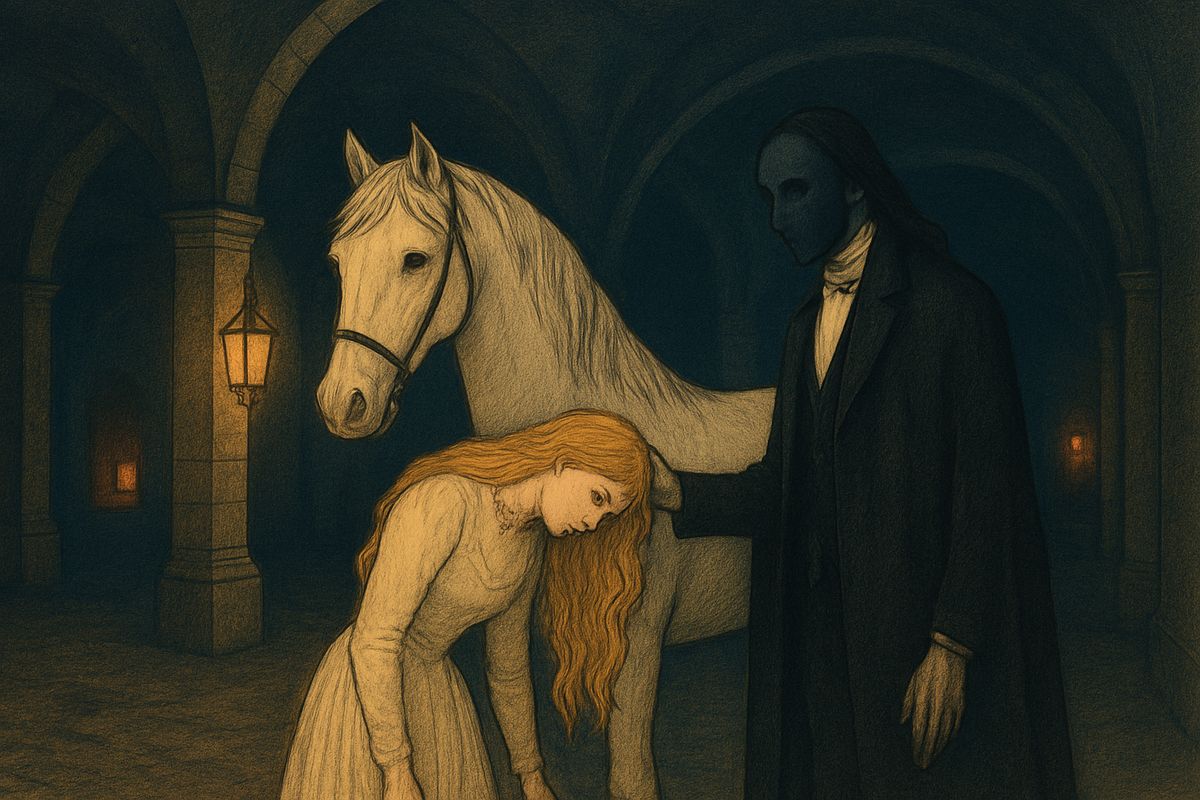
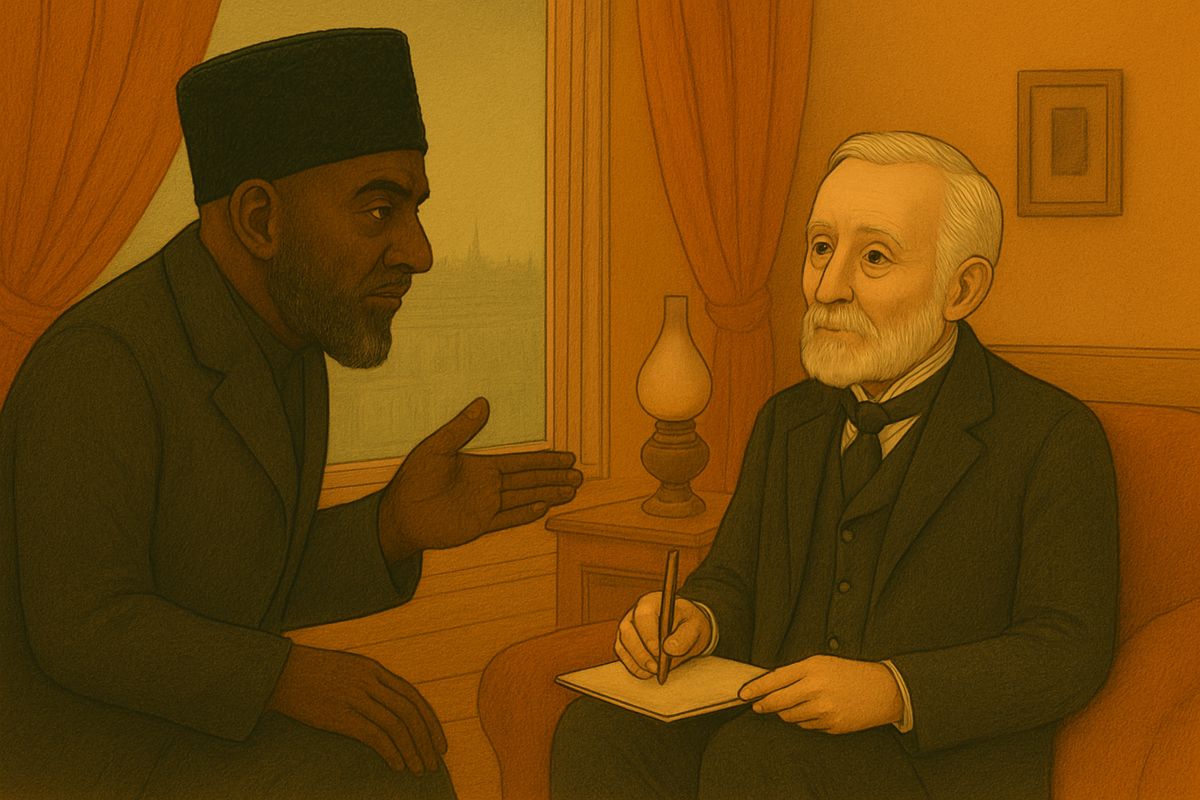
1Years after the tragedy, a writer searched the Opera's archives until he was certain the famous ghost had been a living man. Then he met M. Faure, the old magistrate of the Chagny case. Faure recalled it all: Christine Daae kidnapped, the Vicomte Raoul vanished, Count Philippe found dead beside the lake under the Opera. But at the word "ghost" he only laughed.2Faure had dismissed one witness as a dreamer: the man all Paris called the Persian. The narrator traced him to a little flat in the Rue de Rivoli. There the old man told everything he knew, with childlike candour, and handed over Christine's own letters. "Do as you please with them," he said. Now the narrator could not doubt it. The ghost was no myth.3With the papers in hand, the narrator walked the ghost's vast kingdom from roof to cellar. Then workmen digging far beneath the Opera, to bury recordings of great singers' voices, uncovered a skeleton. The newspapers called it a victim of the Commune. The narrator knew better, and proved it: these were the remains of the Opera Ghost.4On the night of the old managers' farewell gala, half-a-dozen ballet girls burst into La Sorelli's dressing room, and little Jammes locked the door behind them. In the passage, they gasped, they had met a gentleman in evening dress who seemed to step straight out of the wall, and above his collar was a death's head. "It's the ghost!"5The skull face came from Joseph Buquet, the chief scene-shifter, who had met the ghost on the little stair to the cellars. "His eyes are two big black holes, as in a dead man's skull," he said. The skin was a nasty yellow, and there was no nose at all. Since then, rumour had added a fireman's floating head of fire and the chorus-master Gabriel's terrified fall downstairs.6Then something rustled outside like silk sliding over the door. Little Meg Giry clung to Sorelli's gauze skirt, begging her not to open it, but Sorelli drew the dagger she always carried and flung the door wide. The corridor was empty, lit only by a red gas-flame. Afterwards Meg whispered a secret: Box Five, on the grand tier, belonged to the ghost and must never be sold.7Heavy footsteps pounded down the passage, and Mother Jammes burst in and collapsed into an armchair. "Joseph Buquet is dead!" He had been found hanging in the third cellar. Yet by the time men rushed down to cut him free, the rope had vanished. The terrified girls huddled round Sorelli and hurried off to the foyer together, through the ill-lit passages.8At the farewell gala, after famous composers had conducted their own works, the shy understudy Christine Daae sang Marguerite in Faust in place of the ailing Carlotta. Her voice was so superhuman that the whole house rose to its feet cheering, while Christine sobbed and fainted in the arms of her fellow-singers.9In their box, Count Philippe de Chagny, head of one of France's oldest families, applauded loudly beside his young brother Raoul, a shy naval officer on leave. Turning, Philippe found Raoul deathly pale. "Don't you see that the woman's fainting?" Raoul whispered, then rose at once to go backstage.10Raoul pushed into Christine's crowded dressing-room behind the doctor and had everyone cleared out. As she woke, he knelt and kissed her hand: he was the little boy who had gone into the sea to rescue her scarf. Christine glanced at her doctor and maid, and all three laughed.11Later, waiting alone in the deserted passage, Raoul put his ear to her door and heard a man's masterful voice command Christine to love him. She answered, weeping, that she sang only for him. Then the grave voice said, "Your soul is a beautiful thing, child. The angels wept tonight."12Christine came out alone, veiled and wrapped in furs, and passed him without locking the door. Raoul slipped inside to find total darkness. He struck a match, lit the gas, searched the cupboards and felt the walls, but the room was empty. "Am I going mad?" he said aloud.13Raoul wandered blindly through the Opera until an icy draught struck his face at the foot of a staircase. Workmen came down carrying a stretcher under a white sheet. It was Joseph Buquet, they said, found hanging in the third cellar. Raoul took off his hat, stepped aside to let them pass, and went out.14At the farewell supper, while the retiring managers handed their two tiny master-keys to their successors, guests noticed a pale, hollow-eyed figure at the end of the table who neither ate nor drank. Suddenly he spoke: "The death of that poor Buquet is perhaps not so natural as people think." Debienne and Poligny turned whiter than the tablecloth.15In the office, the old managers warned of a ghost and opened the rulebook. In a clumsy red hand someone had added clauses: twenty thousand francs a month for the Opera ghost, and Box Five on the grand tier for his use at every performance. Richard and Moncharmin decided it was a fine joke and laughed until they ached.16A few days later Richard opened a letter addressed in the same childish red ink. The writer demanded his box and signed himself, politely, "Opera Ghost"; more notes followed, signed O.G. Sure that Debienne and Poligny were behind it, the managers sent them Box Five for the night. The old managers wrote back that the box belonged to HIM.17So Richard sold Box Five. That night the people who had bought it came straight back out to the box-keeper, laughing: "When we went in, we heard a voice saying that the box was taken!" The box was completely empty. Their giggling disturbed the whole house, and an inspector had a municipal guard clear the box twice.18Summoned to the office, Mme Giry proudly explained: the ghost gave three little knocks, asked in a soft man's voice for a footstool, and left her tips on the shelf, once even a box of English sweets. The managers roared with laughter. "That will do, Mme Giry. You can go." They dismissed her and the inspector, and resolved to look into Box Five themselves.19After her triumph, Christine hid from everyone. Then one morning she wrote to Raoul. She had not forgotten the little boy who went into the sea for her scarf, she said, and she was going to Perros, where her father lay buried with his violin. Raoul missed the morning train and rode the Brittany express all night, reading her note over and over.20Nearing the coast, he remembered. Years before, Daddy Daae, a Swedish fiddler without equal, had tramped the Breton villages with his little daughter, playing for every festival and refusing every halfpenny. One windy day at Trestraou, Christine's scarf blew out to sea. A small boy ran into the waves fully dressed to fetch it, while his governess shrieked from the sand.21All that summer the children went from cottage to cottage asking old Bretons for legends. Best of all were Daddy Daae's tales of the North at twilight, and above all of the Angel of Music, unseen, who visits every great artist once. Christine asked if he had ever heard the Angel. "When I am in Heaven," he promised, "I will send him to you!"22When her father died, Christine's voice seemed to die with him, until the gala night. At the Setting Sun inn she greeted Raoul without surprise: her dead father had told her he would come. But when he roughly accused her of hiding a man in her dressing-room and repeated the voice's words, "You must love me!", she went deathly pale, burst into tears and fled.23That evening, on the heath where they once watched for the Korrigans to dance, Christine told him the truth as she believed it. Her father was in Heaven, and the Angel of Music came to her dressing-room to give her lessons every day. When Raoul laughed and said someone was making game of her, she cried out and ran away from him.24Near midnight Raoul followed her white figure across the snow to the churchyard. As she knelt at her father's grave, the clock struck twelve, and an invisible violin played 'The Resurrection of Lazarus' more perfectly than Daddy Daae ever had. When the music stopped, the skulls heaped against the church wall seemed to chuckle. Then one rolled to Raoul's feet, and another.25A shadow glided along the wall and into the church. Raoul caught a corner of its cloak before the high altar. The figure turned, and in the moonlight from the stained glass he saw a death's head with scorching eyes. His courage failed him. At dawn he was found half-frozen on the altar steps and carried back to the Setting Sun.26Richard and Moncharmin went to look into the matter of Box Five. In the gloomy, empty house, with dust-sheets heaped over the stalls like a frozen sea, both saw a shape in the box. Moncharmin saw a death's head on the ledge; Richard saw an old woman like Mme Giry. When they ran up, laughing, the box was perfectly ordinary.27On the Saturday morning a letter in red ink waited for them. 'So it is to be war between us?' wrote O. G. He wanted his box back, Christine to sing Margarita, Mme Giry restored and his monthly allowance paid, or Faust would be given that night in a house with a curse upon it.28Then Lachenel the stud-groom stormed in, slapping his boot with his whip: Cesar, the white horse of the Profeta, had been stolen from the Opera's cellar stable. 'I saw a black shadow riding a white horse,' he whispered, 'and they disappeared in the darkness of the underground gallery.' It was the ghost, he said.29Richard kicked Mme Giry out of his office and gave her post to his own concierge. That night, while Carlotta's friends packed the house against an imaginary plot, the managers sat defiantly in Box Five. Returning after the interval, they found a box of English sweets and an opera glass on the ledge. Nobody knew who had put them there.30As Christine sang Siebel's flower song, she saw Raoul in his box, and her voice faltered. Raoul hid his face in his hands and wept, thinking of the letter she had left him after fleeing Perros: 'You must have the courage not to see me again... My life depends upon it. Your life depends upon it.' Behind him, the count gnawed his moustache.31Carlotta sang the jewel song in triumph, certain of her voice. Then, in the garden duet, on the words 'a deep languid charm,' she croaked like a toad: 'Co-ack!' The house froze in horror. Bravely she began the line again, and again the toad burst out. In Box Five, the managers felt someone breathing close behind them.32Collapsed in their chairs, the managers heard an impossible voice in their right ears: 'She is singing to-night to bring the chandelier down!' They looked up and screamed. The great chandelier slipped from its hook and crashed into the stalls amid shrieks and a rush for the doors. Richard's concierge, at the Opera for the first time, was killed.33After the chandelier fell, Christine vanished for a fortnight, and the worried managers would only say she was on leave. Raoul hurried to Mamma Valerius, who lay smiling in bed and told him, as if it were the happiest news in the world, "She is with her good genius ... the Angel of Music!"34That night Count Philippe told him Christine had been seen driving in the Bois with a shadowy companion. Raoul waited on the frozen moonlit road until a brougham came by with her face at the window. He cried out "Christine!" The window snapped shut, and the carriage raced off into the night.35Then came a muddy, unstamped note from Christine: he was to meet her at the Opera's masked ball, wearing a white domino. At midnight a black domino squeezed his fingertips and led him silently through the crowd of wild, noisy revellers.36In the crush-room a crowd had gathered round a figure all in scarlet: a death's head under a plumed hat, with a huge red-velvet cloak trailing behind him like a king's train. A skeleton hand gripped one reveller who dared to touch him. Raoul knew that face at once: the death's head of Perros-Guirec!37Christine pulled him away to an empty box upstairs. When Red Death came down the stairs outside, Raoul jealously tried to rush after him, but she flung her arms across the door: "In the name of our love, Raoul, you shall not pass!" When he raged at her, she took off her mask and showed a face worn pale with grief. "Dear, it is a tragedy!"38Later Raoul hid behind the curtain in her dressing-room and heard her sigh, "Poor Erik!" Then a wonderful man's voice came singing through the walls, "Fate links thee to me for ever and a day!" Christine walked toward the great mirror, met her own reflection, and vanished. Raoul was left facing only himself.39The next day Christine sat by Mamma Valerius' bed, rosy again and coolly distant. Raoul noticed a plain gold ring on her finger, and when he told her that her Angel's name was Erik, she went white with terror. "Unhappy man! Do you want to be killed?" she whispered, and begged him to forget the man's voice.40Christine still wore the plain gold ring, but Raoul's polar expedition was only a month away, and she had a merry idea: a secret engagement. Every afternoon in her dressing-room they dined on three biscuits, two glasses of port and a bunch of violets. "This is a happiness that will harm no one," she said.41A week later Raoul cried that he would not go to the North Pole. Christine saw how dangerous the game had become and vanished for two days. She came back in triumph: with Carlotta gone from the stage, she sang in La Juive to thunders of applause, still wearing the gold ring Raoul had not given her.42The spell was broken, so Christine led Raoul through her make-believe empire instead: the painted garden of a stage set, the little girls' dancing-school where she handed out sweets, and, high above the clouds, the grid, where she ran ahead along frail bridges among thousands of ropes. When he hesitated, she pouted, "You, a sailor!"43But Christine grew nervous and started at shadows. When Raoul stopped over an open trap-door, she clutched him: "Everything that is underground belongs to him!" As she dragged him away, the trap-door snapped shut so quickly that neither of them saw the hand that worked it.44One afternoon, pale and red-eyed, Christine fled with Raoul far from the trap-doors, up through the rafters to the lead roof. At sunset they sat beneath the bronze Apollo and she began her confession: for months a heavenly voice in her dressing-room had taught her to sing, and she had believed it was the Angel of Music her father had promised.45On the night the chandelier fell, the voice sang to her, and her dressing-room seemed to stretch away into the mirror. Suddenly she was in a dark passage, seized by a masked man in a cloak. He set her on Cesar, the white horse of the Profeta, and they wound downward past distant furnaces where black figures fed the red fires.46On the shore of a leaden lake the masked man rowed her across the black water, his eyes never leaving her. Beyond lay a drawing-room crowded with beribboned flowers, and there he spoke, and it was the voice. "I am not an Angel, nor a genius, nor a ghost ... I am Erik!"47Erik showed her his black-draped room with its coffin bed and the organ where he composed Don Juan Triumphant. Later, as they sang Othello, Christine tore off his mask and saw a living death's-head. Erik roared with grief and rage, then crawled away sobbing to his organ, and his music moved her so deeply that she swore she would not fear his face.48To win her freedom she had lied to him, Christine said, and now she must go back one last time; after tomorrow night's singing, Raoul would carry her away. "Take my lips, for the first time and the last." As they kissed, they saw a huge night-bird with blazing eyes clinging to the string of Apollo's lyre above them.49Running down from the roof, away from the blazing eyes, Raoul and Christine found a strange figure blocking the stairs on the eighth floor. It wore a long frock-coat and a pointed cap and waved them toward another passage. "Quick! Go away quickly!" "Who is he?" Raoul asked. "The Persian," Christine whispered. "He is always in the Opera."50In her dressing-room they planned to flee together at midnight the next day. Then Christine went deathly pale. Erik's plain gold ring was gone from her finger. She guessed it had slipped off during their kiss under Apollo's lyre. "Woe to us both!" she cried, because Erik had sworn to take revenge if she ever parted with it. Even so, she would not run away that night.51That night in bed Raoul shouted "Humbug!" into the dark three times. Then two eyes like blazing coals appeared at the foot of his bed. He took his revolver, aimed a little above them and fired. The eyes vanished. On the balcony the servants found a trail of blood that ran along the rail and up the gutter-spout. "A ghost who bleeds is less dangerous!" Raoul said.52The next night Christine sang Marguerite in Faust to a cool house, until she poured her whole heart into the prayer to the angels. On "My spirit longs with thee to rest!" the gaslights failed and the stage went black. When the light came back a moment later, she was gone. Singers, stagehands and subscribers rushed onto the empty boards, everyone shouting a different theory.53Raoul wandered the stage calling "Christine! Christine!" while people laughed at him. In her dressing-room he pushed at the great mirror, but it would not move for him. When the police commissary arrived, Raoul followed the crowd to the managers' office. At the door a hand touched his shoulder and a voice whispered, "Erik's secrets concern no one but himself!" It was the Persian, who bowed and disappeared.54The Opera Ghost had already been paid his first twenty thousand francs. Mme Giry carried the sealed envelope to Box Five while the managers watched it all evening. But when they finally broke the unbroken seals, the real notes were gone, and in their place were twenty fakes from the 'Bank of St. Farce.'55When the second payment fell due, Richard accused Mme Giry of theft. She proudly recited the Ghost's letter promising that her Meg would be Empress, then slapped Richard's ear with the envelope, and the notes flew everywhere. Finally she confessed that she always swapped the envelopes, and that the real one went into Richard's coat-tail pocket.56Now each manager half-suspected the other, so they re-staged the night of the first payment exactly. Mme Giry slipped the envelope into Richard's pocket and was promptly locked away. Then Richard bowed and walked backward through the wings before nobody at all, with Moncharmin following close behind and waving the astonished onlookers away.57Locked in their office, Moncharmin pinned the notes inside Richard's pocket with a safety-pin and watched them without blinking. At the last stroke of midnight he felt the pocket. They tore it inside out. 'I can feel the pin, but I can't feel the notes!' The pin was still in its place, but the pocket was empty.58Commissary Mifroid came to hunt for the vanished Christine. He scoffed at Raoul's story of Erik, the Angel of Music, and announced that Count Philippe had carried her off by carriage on the Brussels road. Raoul ran out to chase them, but in the very first corridor a tall man in an astrakhan cap blocked his way. 'I am the Persian!'59Raoul was rushing off to find Christine when the Persian stopped him and led him back to her dressing-room. There his servant brought a pair of long pistols. The Persian said Erik had built these walls himself, and that in Persia they called him the 'trap-door lover.' "I do not hate him," he said sadly. "If I hated him, he would long ago have ceased doing harm."60The Persian pressed a hidden spring in the wallpaper, then waited by the great mirror with his pistol raised. At first their reflection only rippled like water. Then, all at once, the mirror rose, swung round on its pivot in a blaze of cross-lights, and carried the two men out of the bright room into total darkness.61They dropped through a trap-door into the cellars and hid behind a partition while the police commissary searched nearby. Mauclair, the chief gas-man, and his two assistants lay sprawled at the foot of the stairs. They weren't dead, just drugged into a deep sleep, and that was how the stage lights had failed at the moment Christine vanished. The Persian whispered one word: "HE!"62When the police had gone, the Persian made Raoul hold one hand at eye level with the arm bent, as if waiting for the word to fire, and keep it there. As they went down into the deep cellars he explained only that it was a matter of life and death. Raoul didn't know why, but a raised arm meant Erik's Punjab lasso could not close round a throat alone.63In the fifth cellar a floating head of fire came at them through the dark, with a dreadful scratching noise behind it. Pressed against the wall, they felt a flood of rats pour over their feet and up their legs. Then the head called out: "Don't move! I am the rat-catcher! Let me pass, with my rats!" He was only a man with his lantern turned on his own face.64There was no way in across the lake. The Persian had once rowed out there, drawn on by a sweet voice singing from under the water. Then two arms had shot up from below and dragged him in. It was Erik, breathing through a hollow reed. He had recognised his old friend, let him go and laughed: "Never get into my boat again!"65So they climbed back to the third cellar and crawled to the spot behind the old Roi de Lahore scenery where Joseph Buquet had been found hanged. The Persian pressed a stone, which swung open. They took off their boots, squeezed through and dropped into Erik's house. Overhead the stone shut again. In the lantern light the walls were all mirrors, and a catgut noose lay at their feet. "The Punjab lasso!" breathed the Persian.66Deep beneath the Opera, the Persian and Raoul had dropped into a six-sided room lined with mirrors, an iron tree with an iron branch standing in one corner. Through the wall they heard a moan, then the monster's voice: "You must make your choice! The wedding mass or the requiem mass!"67Erik had finished his opera Don Juan Triumphant and wanted to live like everybody else. On his knees before Christine he begged her to marry him and be taken out on Sundays, swearing he would be gentle as a lamb. "All I wanted was to be loved for myself." Then he wailed, "You don't love me!"68An electric bell rang and Erik left to answer it. At once Raoul called through the wall, and a faint voice answered. Christine was bound tight. Erik, she whispered, would blow them all up unless she said yes by eleven tomorrow night. The key of their prison lay in a leather pouch by the organ, "the bag of life and death."69Erik came back soaked and sang a thundering Dies Irae for the stranger who had rung, then caught Christine with his bag. When Raoul cried out, Erik guessed who was there. Light flooded the mirror room and became an endless tropical forest, and his ventriloquist's voice leapt through the walls: "Woe to them that have a nose and come to look round the torture-chamber!"70The heat rose until they were roasting. Raoul saw Christine among the trees and fired at a roaring lion, though only a mirror broke. At dawn a desert lay around them, then a shining oasis. They crawled to it and licked the glass, which was burning hot. Exhausted and desperate, Raoul sank to his knees as the Persian searched the floor for an escape.71Beside the lasso at the foot of the iron tree, the Persian saw a black-headed nail in a groove in the floor. He snatched the pistol from Raoul and pressed the nail. No door opened in the wall. Instead, a trap-door dropped open in the floor, and cool air rose from the darkness below.72A winding stair led down to a cool cellar lined with small barrels. As the Persian staved one in, a street-cry seemed to drift from far away: "Barrels! Barrels! Any barrels to sell?" Raoul held out his cupped hands, hoping for water. The Persian flung away his lantern, because Raoul's hands were full of gunpowder.73It was eleven o'clock, almost to the minute, and the Opera above was full. Erik had left Christine two ebony caskets: turning the bronze grasshopper would blow everyone up, the scorpion would mean yes. "If, in two minutes, you have not turned the scorpion, I shall turn the grasshopper." Weeping, Christine turned the scorpion.74There was no explosion, only a hiss and a gurgle. Water poured over the powder barrels, up the stair and across the mirror floor, and nobody turned it off. Whirled against the dark glass, the two men caught the iron tree and clung to its branch as the water rose toward the ceiling. "Erik! Christine!"75The Persian woke in a prim little bedroom deep under the Opera, full of waxed mahogany chairs, antimacassars and shells. "It is all that I have left of my poor unhappy mother," Erik whispered. Raoul slept on a sofa. Christine moved about without a word, silent as a nun. Erik said he would take them up to the surface, to please his wife.76He woke again in his own flat in the Rue de Rivoli, left at his door by a stranger. Then came the news that Count Philippe was dead, found on the shore of the Opera lake, and that Raoul had not come home. The Persian went to the examining magistrate, M. Faure, who wrote down every word and treated him as a madman.77The Persian was writing everything down when Erik himself came in, weak and white as wax, saying he was dying of love. He sobbed as he told it. Christine had let him kiss her forehead and had not died. She had wept with him and mingled her tears with his, and she had whispered, "Poor, unhappy Erik!"78Erik had pressed the plain gold ring into Christine's hand as his wedding gift for her and Raoul, then freed the young man and let the lovers go, after she promised to bury him one day with the ring. That night a cab took Erik back to the Opera. Three weeks later the Époque printed a single line: "Erik is dead."79Years later, the narrator and the Persian followed the evidence through the Opera. Judge Faure had long since filed the case away. The stolen francs had come back to the managers in an envelope marked "With O. G.'s compliments". "R. C." was still scratched on a dungeon wall, and there was a trap-door beside the managers' desk. Even the great column by Box Five sounded hollow.80Erik was a mason's son from near Rouen, and his own parents were horrified by his face. He ran away to the fairs, where he was shown as the "living corpse". Then he built a trick palace for the Shah of Persia, who wanted him killed for knowing its secrets. Tired at last, he took work on the Opera's foundations and stayed below.81Long afterwards, workmen digging under the Opera found a skeleton near the little well, where the Angel of Music had first carried Christine. The narrator knew it by the plain gold ring on its finger, which Christine had kept her promise to bring. He prayed for God's mercy on it. Poor, unhappy Erik: how could one do anything but pity the Opera ghost?
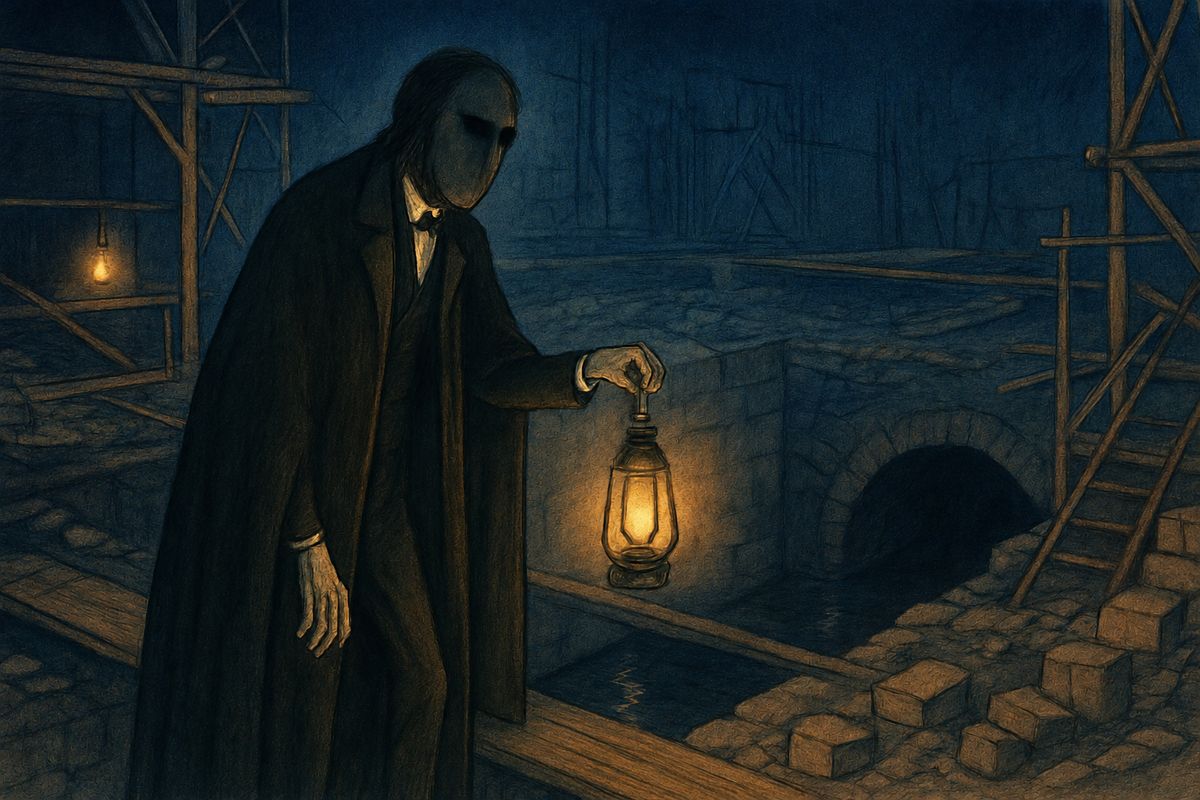
Adapted from The Phantom of the Opera by Gaston Leroux, public domain. Pictures are AI illustrations drawn for this edition.
Add Stories to your Home Screen: tap
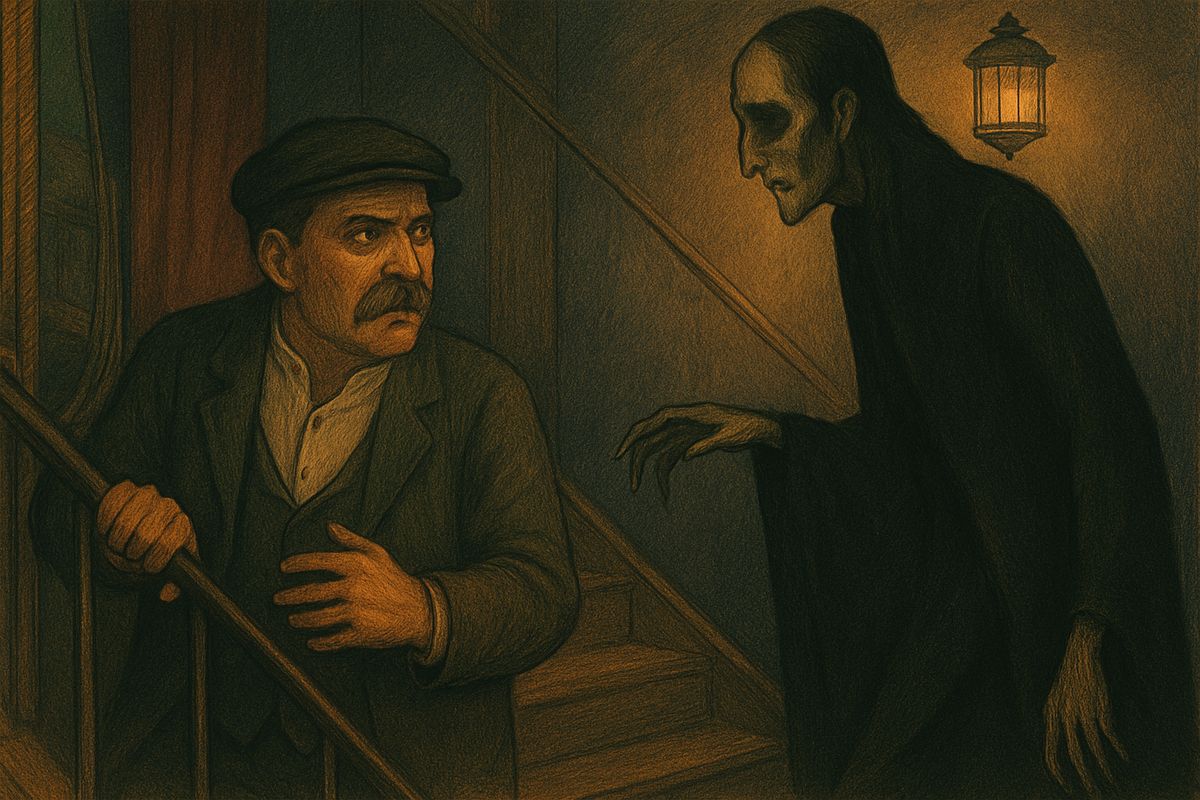
then Add to Home Screen.