1I set down these lines in India for my relatives in England, on my word of honour. The camp tale ran thus: a Yellow Diamond, called the Moonstone, once shone in the moon-god's forehead. When the god was carried to Benares, Vishnu came to three Brahmins in a dream, ordered the stone guarded by three priests in every generation, and foretold disaster for anyone who seized it.2For centuries the gem passed from one conqueror to the next, and the priests' successors followed it in disguise, carrying its curse along. At last it reached Tippoo, Sultan of Seringapatam, who had it set in the handle of a dagger. Even in his palace, rumour said, three trusted officers of his household were the guardian priests, still keeping watch in secret.3None of us took the story seriously except my cousin, John Herncastle, who loved anything marvellous. The night before the assault, angry that we called it a fable, he lost his temper. "You'll see the Diamond on my finger," he boasted, "if we take Seringapatam!" A roar of laughter greeted him, and we all thought the matter ended there.4We stormed the city on the 4th of May, 1799. At dusk, with Tippoo found dead, Herncastle and I met outside the treasury, where we had been sent to stop the looting. He looked half mad after the day's slaughter. The soldiers kept shouting "Who's got the Moonstone?" as a joke, and then terrible yelling broke out across the courtyard.5I ran towards the cries and found two Indians, officers of the palace, lying dead across an open doorway. Inside the armoury a third man was sinking at someone's feet. The man turned, and I saw it was John Herncastle, a torch in one hand and a bloody dagger in the other. The stone in its hilt flashed like fire.6The dying man rose to his knees, pointed at the dagger in my cousin's hand, and spoke in his own language: "The Moonstone will have its vengeance yet on you and yours!" Then he fell dead. Herncastle rushed at the soldiers crowding in behind me, shouting at me to clear the room. I put two reliable sentinels on the door.7In the morning General Baird proclaimed that any thief would hang. Herncastle held out his hand with a calm "Good morning." I asked what the dying man's words had meant. He said he knew no more than I did. "Is that all?" "That is all." I turned my back on him, and we have not spoken since. I believe crime brings its own fatality.8On 21 May 1850, Mr. Franklin Blake called on old Gabriel Betteredge with a plan agreed with the lawyer Mr. Bruff: everyone who had witnessed the loss of the Indian Diamond would write down only what they had seen themselves. "Nobody knows as much as you do, Betteredge," he said, "so you must take the pen in hand."9Betteredge protested modestly that he wasn't up to the task, while privately thinking himself quite clever enough, then sat helpless at his desk for two hours. So he did what he always did when in doubt: lit his pipe and opened Robinson Crusoe, which only the day before had warned him of the folly of beginning a work before counting the cost.10Instead of the Diamond, he wrote about himself. He started as page-boy at fifteen to the three beautiful Miss Herncastles and followed the youngest, Julia, when she married Sir John Verinder, rising to bailiff and at last house-steward. His marriage to Selina Goby, whom he once tried to buy off with a feather-bed and fifty shillings, left him a daughter, Penelope, now maid to Lady Verinder's only child, Rachel.11Penelope's diary gave him a proper starting date. On 24 May 1848, Lady Verinder told him that her nephew Franklin Blake, back from years abroad, would come the next day to stay for Rachel's birthday. Betteredge remembered the nicest boy alive. Rachel remembered a tyrant who had driven her about in string harness: "I burn with indignation when I think of Franklin Blake."12On the Thursday afternoon, while the ladies were out, three Indian travelling conjurors with small hand-drums arrived on the terrace, along with a pale English boy carrying their bag, and asked to perform for the lady of the house. Remembering the silver plate-basket left out on the pantry table, Betteredge sent them away. Their courteous leader answered with a beautiful bow.13Penelope, hidden behind the roadside hedge, watched the leader pour ink into the boy's palm until he went rigid, staring into it. Asked whether the English gentleman was on the road to this house and had It about him, the boy answered "Yes." Betteredge laughed it off as rehearsed hocus-pocus, but later that day Franklin took it seriously: he believed 'It' meant the Moonstone.14Rosanna Spearman, the second housemaid, had once been a thief. Lady Verinder took her from a London reformatory to give her a fresh chance. When Rosanna missed dinner, Betteredge went to fetch her from her favourite spot, the Shivering Sand, a lonely quicksand that trembled at the turn of the tide. He found her alone there, crying.15Rosanna said she was crying for the years that were gone. Betteredge told her that her past was all sponged out. She touched the dull patch on his coat where she had cleaned off a grease spot the day before. “The stain is taken off,” she said. “But the place shows, Mr. Betteredge—the place shows!”16As the sand began to shiver, Rosanna whispered that she thought her grave was waiting for her there. Then a voice called from the sandhills: it was Mr. Franklin Blake, four hours before he was expected. Rosanna's face turned a deep, beautiful red, and she fled without a curtsey or a word.17Franklin had come early to shake off a dark-looking stranger who had followed him in London. He feared the man was linked with the three Indians seen at the house that morning. Then he drew out a sealed parcel. Inside was the wicked Colonel Herncastle's Diamond, the Moonstone. The Colonel had left it in his will to Franklin's cousin Rachel as a birthday present.18Betteredge remembered the Colonel's one visit to the family, two years before, on the night of Rachel's birthday party. Lady Verinder refused to see her brother, and Betteredge carried down a politer version of her refusal. The Colonel only laughed softly to himself. “Thank you, Betteredge. I shall remember my niece's birthday.”19Franklin explained the Colonel's strange arrangements. If he were murdered, the Moonstone was to be sent to Amsterdam and cut into several stones, so it would no longer exist as one Diamond. His will also had a condition: Rachel would only receive it if her mother was still living. Was it a dying man's penance, or revenge on his sister through her child?20Betteredge's advice was one word: “Wait.” Rachel's birthday was four weeks away, and until then the Diamond should go back where it had been safe before, into a bank. Delighted to be doing something on horseback, Franklin had the fastest horse saddled and galloped off to lock the stone in the strongroom at Frizinghall.21Betteredge put off his daughter's questions, and later his mistress's, with made-up answers. But Penelope said Rosanna had come home merry and tearful by turns, asking endless questions about Mr. Franklin. “Father, Rosanna has fallen in love with Mr. Franklin Blake at first sight!” Betteredge laughed till he cried, and Penelope gently called him cruel.22Franklin came back safely with the bank receipt in his pocket. Rachel took special care over her hair that evening. After dinner she and Franklin sang duets while Lady Verinder played the piano, and the music carried out through the open windows. Late that night, Franklin could talk only of his charming cousin. She had put the Diamond clean out of his head.23Near midnight, while locking up, Betteredge saw a shadow on the moonlit gravel, and light feet hurried away into the shrubbery. He and Samuel the footman searched the grounds and found no one. All they found was a small bottle of thick, sweet-smelling liquid as black as ink. Betteredge thought at once of the Indians, and the ink they had poured into the boy's hand.24The Indians did not come back in the weeks before Miss Rachel's birthday, so Mr. Franklin found her something to do. He invented a paint 'vehicle' that stank so badly the dogs sneezed, put an apron on her, and the two of them spent every spare hour together decorating the door of her boudoir with griffins and cupids.25Mr. Franklin gave up his cigars because Rachel hated the smell, and came down every morning looking worse for lack of sleep. Still, a cousin from London stood in his way: a photograph of Mr. Godfrey Ablewhite, the famous charity speaker, stood in Miss Rachel's bedroom. 'Do take to your cigars again,' she begged. He refused.26The second housemaid puzzled us more than ever. Rosanna quietly kept putting herself in Mr. Franklin's way, and he never noticed her. One morning Penelope caught her at his dressing-table, taking out the rose Miss Rachel had given him and putting one of her own in its place. We hushed it up.27On June 21st Mr. Franklin brought the Moonstone back from the bank and Rachel took it in her hands. It shone with a yellow, moony light you could fall into. Mr. Godfrey clapped and cried 'Exquisite!', but my lady stood at the window reading her brother's Will, and her face looked grim.28That afternoon Mr. Godfrey led Rachel into the rose-garden and proposed, and she refused him. 'Let us remain cousins still,' she said, and gave him her hand. Penelope was watching from behind the holly. Left alone, he ground his heel into the gravel and muttered, 'Awkward! Very awkward!'29Twenty-four people sat down to dinner, and every eye was on Rachel: Mr. Franklin had fixed the Moonstone with silver wire as a brooch on her white dress. Mr. Candy the doctor joked about burning it. Mr. Murthwaite, the traveller, just stared at it, then said quietly, 'If you ever go to India, Miss Verinder, don't take your uncle's birthday gift with you.'30The dinner went wrong from start to finish. When Mr. Franklin admitted he had been sleeping badly, Mr. Candy said he needed a course of medicine. Mr. Franklin answered that medicine was just 'groping in the dark'. They argued back and forth, getting hotter each time, until my lady had to stop them.31After dinner the Indian drum sounded on the terrace. The jugglers had come back, and Rachel stood there showing them the Diamond. Then Mr. Murthwaite came up quietly behind them and spoke to them in their own language. They spun round as if struck. Their leader went pale, bowed, and said the performance was over.32In the shrubbery Mr. Murthwaite leaned against a tree with his cheroot. 'Those men are no more jugglers than you and I are,' he told me. 'They are high-caste Brahmins in disguise.' Having heard the Colonel's story, he said they would wait like cats to get the Diamond back. It must go to Amsterdam and be cut up.33The carriages came and so did the rain, and it poured as if it meant to go on all night. Everyone else went home in closed carriages, but Mr. Candy had come in his open gig. When I warned him he'd be soaked, he laughed that a doctor's skin was waterproof, and drove off into the dark.34When the birthday guests had gone, Rachel chattered that she would keep the Moonstone in the Indian cabinet in her sitting-room. "Your Indian cabinet has no lock to it," her mother warned, but Rachel laughed off the worry. Saying good-night, she slipped Franklin's locket from her dress and showed it to him with a secret smile. Betteredge caught the moment in the hall mirror.35Betteredge locked up and lay awake till sunrise, hearing nothing but the rain. At eight o'clock Penelope came flying down the stairs: "The Diamond is gone!" In Rachel's sitting-room the cabinet doors stood open and the drawer was empty. White as her dressing-gown, Rachel repeated the words in a voice not her own, then locked herself in her bedroom.36Franklin galloped to Frizinghall to accuse the Indian jugglers, but the police had seen all three at their lodging-house at midnight, and the case against them fell apart. Later that morning Rachel came down to the terrace, walked straight past Godfrey, and spoke to Franklin so fiercely that he stood speechless. She would not tell anyone what she had said.37Superintendent Seegrave of the Frizinghall police arrived, sure of himself and loud. When the frightened maids crowded into the sitting-room, he pointed at a small smear in the fresh paint under the door lock. "Look what mischief the petticoats of some of you have done already. Clear out!" Rosanna Spearman, standing nearest the smear, was the first to slip away.38Seegrave all but called Penelope the thief and searched every servant's box, with Betteredge handing over his own keys first. He found nothing. Meanwhile Rosanna brought Franklin a dropped ring in the library and lingered, half frightened and half familiar: "They will never find the Diamond, sir, will they? No! nor the person who took it." That afternoon Franklin telegraphed to London for help.39On Friday a famous London detective arrived: Sergeant Cuff, grizzled, thin as a rake and dressed in black like an undertaker. He said not a word about the robbery. He headed straight for the rose garden, lectured the gardener on grass paths, and stroked a white musk rose as if it were a child. Betteredge wondered how this man had ever made his name.40Franklin's paint dried in twelve hours, so the smear had already been eight hours dry when Seegrave blamed the maids' petticoats. "You have put the clue into our hands," Cuff told Franklin. Then Rachel burst out of her bedroom. "Do your duty by yourself — and don't allow Mr. Franklin Blake to help you!" she said bitterly, before locking herself in to weep.41Penelope had seen the door unmarked at midnight, and her dress had no paint on it, so someone had brushed the wet paint between midnight and three in the morning. Cuff sent the Superintendent away and stood at the window, quietly whistling "The Last Rose of Summer." When Franklin asked who had stolen the Diamond, Cuff answered calmly: "Nobody has stolen the Diamond."42Sergeant Cuff told Lady Verinder that the paint smear must be on someone's clothing, and proposed searching every wardrobe in the house, hers included, so the servants would not feel insulted. Then Rosanna Spearman brought in the washing-book. When she had gone, Cuff quietly remarked: "The last time I saw her, she was in prison for theft."43No keys arrived. Instead a pencilled note came down from Lady Verinder: Rachel flatly refused to let her wardrobe be searched. "I won't, because I won't." The Sergeant said only "Ah!", like a man hearing what he expected, and called off the whole search, since it must be everyone or no one. Then he calmly trimmed his nails.44Walking along the shrubbery path, Mr. Franklin's favourite walk, Cuff murmured "Hullo!" He had spotted Rosanna hiding among the bushes. Out of pity, Betteredge admitted that the poor girl loved Mr. Franklin. Cuff then questioned the servants one by one, and when he came out his advice was: if Rosanna asks to go out, let her go, but tell me first.45Over the tea-pot, the spiteful maids told Betteredge what they had already told Cuff. On the night after the theft, Rosanna's door had been locked and the keyhole stopped up, and at four in the morning a fire was crackling in her room, in June. Mr. Franklin decided she must be the thief, but Cuff forbade him to say a word.46Cuff had followed Rosanna to Cobb's Hole and seen her head north with something under her cloak. At dusk he knelt on the beach near the Shivering Sand and read her muddled footprints. "Purposely confused, I should say." She had waded through the water to the rocks and back. She had come here to hide something, not to destroy it.47At the Yollands' cottage, Cuff charmed Mrs. Yolland over Dutch gin until she let things slip. Rosanna had written a long letter, meant to leave her place, and bought a japanned tin case and two dog-chains. "Chain's surest," she had said. Cuff worked it out: the case was chained up and sunk somewhere. But what was inside it?48Back at the house, Cuff stopped by the garden wicket-gate and looked up at Miss Rachel's window, where lights were moving back and forth. He bet that she had decided to leave the house within the last hour, the same hour Rosanna came back from the sands. Lady Verinder confirmed it, and Rachel's departure was put off until two o'clock.49"But for her self-control," said Cuff of Lady Verinder, "the mystery would have been at an end tonight." The truth burst on Betteredge at last. He seized the Sergeant by the collar and pinned him to the wall. "Ah," said Cuff, "you've guessed it at last." He believed Rachel had had her own Diamond all along, with Rosanna helping her.50Later Rosanna rushed past Betteredge with her hand pressed to her heart. Mr. Franklin explained: she had stolen up beside him at the billiard table, "Yes, if I dare," but he kept knocking the balls about. "He looks at the billiard balls," she said bitterly. "Anything rather than look at me!" Her confession, if it was one, went unspoken.51Near midnight Betteredge found the Sergeant coiled up on three chairs across the corridor to Miss Rachel's room, with his coat for a pillow, so that Rachel and Rosanna could not meet in the night. "Blame the Diamond," he said. "I wish to God the Diamond had never found its way into this house!" cried Betteredge. "So do I," said Cuff gravely.52Next morning Sergeant Cuff caught Mr. Franklin on the shrubbery walk, just as Rosanna appeared at the far end with Penelope trying to pull her back. Cuff raised his voice so she would hear. Mr. Franklin, seeing the trap, answered just as loudly: "I take no interest whatever in Rosanna Spearman." Rosanna turned at once and let herself be led away.53Penelope warned that the words had turned Rosanna to stone. Betteredge found her sweeping the bedroom corridor, pale and neat, her eyes dim "as if she had been looking at something too long." She answered him like a woman in a dream, said she knew a better way to relieve her mind than confessing to my lady, and would not stop her sweeping.54Cuff came back from Frizinghall having learned that Rosanna had secretly bought long cloth, enough to make a plain nightgown to replace one stained with paint. At two the carriage arrived for Miss Rachel. She kissed her mother hastily, whispered "Try to forgive me, mamma," and pulled her veil down so fiercely that she tore it.55Rachel ignored the Sergeant's warning that leaving would hinder the search, and ignored Franklin's outstretched hand. "Drive on!" she cried. Franklin stepped back thunderstruck, and later begged Betteredge to get him to the train. As the carriage passed the lodge trees, Cuff watched a second man, his own, climb silently into the rumble beside the footman.56Then Cuff found that the policeman Joyce had lost track of Rosanna an hour before. The kitchen-maid Nancy had last seen her slipping out of the back door to give the butcher's man a letter to post. It was addressed to Cobb's Hole, the Yollands' village, and she did not care that it would not arrive until Monday.57A garden boy had seen her running toward the sea. Cuff sent for one of her boots, and Betteredge carried it down through a storm of rain and wind. On the open beach the boot fitted a fresh footprint exactly. Cuff tried it in print after print, and every one led out to the South Spit. Not one came back.58Betteredge fell to his knees, sure she had come there weary of her life. The fisherman Yolland said no boat could have reached her through that sea. A slip from the Spit would have landed her on a shelf of rock, waist-deep, so she must have gone into the Deeps herself. "What the Sand gets, the Sand keeps for ever."59On the way back a groom brought a note Penelope had found in Rosanna's room: "When you next see the Shivering Sand, try to forgive me once more. I have found my grave where my grave was waiting for me." Betteredge burst out crying, and shrank from Cuff: "It's the dread of you that has driven her to it."60At the house the news had got there first. Lady Verinder flung open her door, beside herself with horror, with Franklin trying to calm her. "You are answerable for this!" she cried at the Sergeant, and ordered Betteredge to pay him and send him away. Cuff quietly refused to be blamed, and she let Franklin lead her back inside.61Penelope, the only servant in tears, told Cuff that Rosanna had died for love of Mr. Franklin. Betteredge begged that he be spared knowing it. Franklin, believing Rachel would only come right once he had gone, would not hear what Cuff meant to tell Lady Verinder about her. Betteredge left him at the window with his face hidden in his hands.62In her sitting-room, with the rain beating at the window, Lady Verinder heard Sergeant Cuff out. Rachel, he said, had secret debts; she had hidden the Moonstone to pawn it, with Rosanna, a former thief who knew a London money-lender, as her go-between. "I know my child," Lady Verinder answered. "The circumstances have misled you."63Cuff proposed to shock Rachel with the news of Rosanna's death and see whether she would confess. Lady Verinder agreed, on one condition: as her mother, she would put her to the test herself. Refusing umbrella and company, she took the reins of the pony-chaise and drove off alone through the pouring rain to Frizinghall.64The chaise came back without her. Lady Verinder's letter reported that Rachel swore she owed no money and had never had the Diamond since the night it vanished, but would explain nothing more. A cheque fell out with it: Cuff was dismissed. Betteredge read it aloud; the Sergeant only lifted his dismal eyebrows and said, "Go on."65Betteredge dared him to back his opinion, and Cuff, shaking his hand warmly, turned prophet. Betteredge would hear from the Yollands when Rosanna's letter arrived on Monday; he would hear of the three Indians again; and he would hear of a London money-lender, whose name Cuff wrote in Betteredge's pocket-book: Mr. Septimus Luker, Lambeth.66Cuff went off to the station still quarrelling with Begbie the gardener about roses. That evening Franklin left too; his aunt's letter said that for now he and Rachel were better apart. Penelope cried as he said goodbye. Asked where he was going, he pulled his hat down over his eyes: "I am going to the devil!"67On Monday the first prophecy came true. Limping Lucy, the fisherman's daughter, found Betteredge in the grounds, struck her crutch three times on the ground and screamed that Franklin Blake had murdered Rosanna, whom she had loved like a sister. She held Rosanna's sealed letter for him, and would put it into no hands but his.68Tuesday's post said Franklin had already left England, nobody knew for where, and the Quicksand kept Rosanna's secret. In London Rachel threw herself into a whirl of operas and balls. Then on Saturday a newspaper came from Cuff: Mr. Septimus Luker complained of three Indians lurking round his house. All three prophecies had come true in under a week. And here Betteredge laid down his pen.69A new pen now took up the story: Miss Drusilla Clack, Lady Verinder's poor and fiercely pious niece. She began with dear Mr. Godfrey, who, in a lodging in Northumberland Street, had been seized from behind, blindfolded, half-strangled and searched by unseen men. "I have lost nothing," he said bravely afterwards, "but Nervous Force."70In Montagu Square Rachel bullied Godfrey into telling her the rumour: that he had pawned the Moonstone. She sprang up, wild with remorse, and stamped her foot. "I know that Godfrey Ablewhite is innocent!" She signed a declaration for him, which he gallantly burned once she had gone, while Lady Verinder, turning bluish, secretly swallowed six drops of medicine.71Alone with Drusilla, Lady Verinder confessed she had a hidden heart disease and might die any day; Mr. Bruff came at five, and the Will was signed. Clack saw souls to save. She slipped a tract under her aunt's sofa cushions, then crept through the whole house leaving tracts among the geraniums, the music, even in a dressing-gown pocket.72The doctor sent every tract back, so Clack returned with pious letters instead and, hearing a man on the stairs, hid behind the curtains of the little room. It was Godfrey. He knelt before Rachel and begged her to marry him, though she confessed she loved another, unworthy man. At last, wretched and reckless, she whispered, "Take me!"73As Rachel reached for the curtain, Samuel's frightened cry rang from the stairs: Lady Verinder had fainted and could not be revived. Rachel knelt by the sofa holding her mother's head, but the doctor's verdict came soon. Lady Verinder was dead, and every one of Clack's letters lay unopened.74Franklin Blake, after a stiff exchange of seven notes, forbade Clack her pages of sermons on the death. A month later, in Brighton, after a private walk with Mr. Bruff, Rachel declared, "I shall never marry Mr. Godfrey Ablewhite." Godfrey arrived, was released, and told Clack with perfect calm that he had submitted, and felt only relief.75Next day old Mr. Ablewhite descended, with Mr. Bruff close behind. As Rachel calmly refused all reasons, the old man's bald head went pink, then scarlet, then purple. "My son is a mean-spirited hound!" he roared, blaming Herncastle pride, cursing Miss Jane Ann Stamper, and, in revenge, resigning as Rachel's guardian and ordering her out of his house.76Mr. Bruff offered Rachel a home with his own family, and she accepted gladly. When Clack hinted that Lady Verinder had died unprepared, Rachel screamed and fled with Bruff, and Penelope banged the door behind them. "I was left alone in the room," wrote Clack, still forgiving everyone, and planning to leave Rachel the Life of Miss Jane Ann Stamper in her will.77Mr. Bruff, the family lawyer, took up the pen in his own dry way. Sir John's will had been one line: "Everything to my wife." Lady Verinder's will was more careful. Rachel would have only a life-interest: a fine income and two houses, but neither she nor any husband could ever raise sixpence on the property itself.78Then Bruff learned that Lady Verinder's will had already been looked at, in secret. Under pressure, a fellow solicitor named his client: Godfrey Ablewhite. So Godfrey was after Rachel's money. On a walk at Brighton, Bruff told her everything. She went pale and silent, and later broke off the engagement without a word of blame.79Some weeks later a polite stranger called at Bruff's office in European dress. Bruff felt sure he was the chief of the three Indians. He unwrapped a casket inlaid with jewels and calmly asked for a loan against it. Bruff refused, and the visitor wrapped it up again without a word of protest.80He rose to go and asked just one question: if a loan were made, when could it normally be repaid? "In one year," said Bruff. For the first time, the Indian looked him straight in the eye. Later a frightened Mr. Luker admitted that he had been asked the same thing.81That night at a dinner, the traveller Mr. Murthwaite explained the plot to him. The Moonstone had been pledged to Luker and was locked in a bank. Whoever pledged it could redeem it after a year. "The Indians have been defeated twice running," he said. "They won't be defeated a third time."82Bruff wrote the date down so that he would not forget it: "June, forty-nine. Expect news of the Indians, towards the end of the month." Murthwaite would be far away in Central Asia by then. But somewhere in London, three patient men would be watching the door of a bank.83In the spring of 1849, Franklin Blake was camped at the edge of a desert in the East when his servant came back late with the post. The letter with the black mourning border came from Mr. Bruff: his father was dead, and he was heir to a great fortune. By daybreak he was on his way home to England.84In London he went straight to Portland Place, but Rachel would not see him and sent back a single cold line refusing to write to him. Mr. Bruff could think of no reason except that she still had not forgiven him for helping the search. Franklin rang for his portmanteau. "If time, pains, and money can do it, I will lay my hand on the thief who took the Moonstone!"85At sunset he reached the old house, shut up and empty now, and found Gabriel Betteredge in his usual corner of the yard, in the beehive chair with his pipe, his dogs and his Robinson Crusoe. The old man swore the book had just foretold this visit. But Franklin would not sleep under Rachel's roof, so Betteredge found him rooms at a nearby farm.86Betteredge said Rosanna Spearman had left a sealed letter for him. Next morning the old man boasted he was down with "detective-fever", and the two of them hurried to Cobb's Hole. Limping Lucy led Franklin down behind the boats, stared at him in disgust and pushed the letter into his face. "Oh, my lost darling! what could you see in this man?"87The letter held a memorandum describing a hiding-place. At the turn of the tide Franklin went out alone on the South Spit, lined up the beacon with the coast-guard flagstaff and laid down his stick. Fighting his fear as the quicksand shivered beneath him, he reached under the rocks, found a rusted chain and pulled up a japanned tin case.88Inside was a rolled linen nightgown with the smear from Rachel's freshly painted door on it, just the proof Sergeant Cuff had told them to look for. Franklin looked for the owner's mark and read his own name. Without knowing it, he had been hunting himself: on the paint-stain's evidence, he was the thief.89In Betteredge's parlour, with grog to steady him, Franklin opened the long letter from the case. "This confession can be made in three words. I love you." Rosanna told him she had loved him since the day he came over the sandhills. Making his bed the morning after the theft, she had found the paint on his nightgown and kept it.90Sure he had stolen the Diamond to pay his debts, Rosanna decided to shield him. She sneaked off to Frizinghall for longcloth, then sat up all night behind a locked door sewing an identical nightgown, so his drawer would be complete when the laundry was counted. She hid the stained one at the Shivering Sand, so even Cuff could never find it.91Betteredge was halfway through the letter when a stranger came quietly in: Ezra Jennings, assistant to Mr. Candy, who had lost his memory after a fever. His hair was black on top and white at the sides, and his soft brown eyes rested gently on Franklin. Betteredge said nobody in the place liked him. Franklin could not stop looking at him.92The letter ended with her last hope that he would say one kind word to her. Franklin realised that twice he had pushed her away without knowing it: at the billiard-table he had looked at the balls instead of at her, and in the shrubbery he had loudly said he felt "no interest whatever in Rosanna Spearman." She had gone to the quicksand believing it.93Franklin walked to the station with Betteredge, the nightgown packed in his bag, and asked if he had been drunk on the birthday night. One weak brandy-and-water, the steward said; and as a boy he had never walked in his sleep. "Did you walk in your sleep to Mr. Luker's, too?" Both theories were gone.94That night in Hampstead, Mr. Bruff went over the nightgown and Rosanna's letter by lamplight, then spoke gravely. "She believes you have stolen the Diamond." Franklin remembered the old row over his Paris debt, which had already shaken Rachel's faith in him, and Bruff agreed to a bold plan: Rachel would be asked to the house, and Franklin would meet her alone.95At three o'clock Franklin let himself in through the garden gate and opened the music-room door. Rachel rose from the piano and came slowly towards him, and he took her in his arms and kissed her. For a moment she seemed to forget. Then she pushed him away in horror. "You coward! You mean, miserable, heartless coward!"96"I saw you take the Diamond with my own eyes!" Rachel had lain awake that night. At one o'clock she watched him walk into her sitting-room in his nightgown with a candle, his eyes bright, not blank. In the mirror she saw him open the cabinet drawers one after another and take out the stone.97She had once written him a letter offering a secret loan, so he could put the Diamond back without anyone knowing, and she tore it up when she saw him leading the hunt for the police. She would not believe a word he said. Yet as he left, she ran after him: "Franklin, I forgive you! Say you forgive me!"98Franklin promised Bruff to stay away from her. Sergeant Cuff's rose-covered cottage was empty, because he had gone to Ireland about roses, and Godfrey, left £5,000 by an old lady, had just gone abroad. So Franklin turned to the birthday guests at Frizinghall. Mr. Candy, grey and shrunken after his fever, kept saying he had something to tell him, and could not remember what.99Franklin went slowly down the stairs, sure the doctor had something vital to tell him that he would never manage to say. At the bottom a door opened softly, and a gentle voice spoke behind him: "I am afraid, sir, you find Mr. Candy sadly changed?" He turned and came face to face with Ezra Jennings.100Mr. Candy's strange assistant, Ezra Jennings, led Franklin off the road to a patch of turf above the moor. There he told the worst of his life: a vile slander that had followed him from post to post, the woman he had given up, and an incurable illness that only opium held off. "I am a dying man," he said quietly.101Back in his bare surgery, Jennings laid out two sheets. During Candy's fever he had taken down the doctor's raving word for word, then filled the gaps in red ink. The fragments made sense: annoyed by Franklin's jokes about medicine, Candy had secretly given him laudanum from Lady Verinder's medicine chest, meaning to admit the trick the next morning.102Jennings argued that his notes could prove nothing to anyone else. Franklin would have to take the Diamond again, unaware, in front of witnesses. That meant giving up his cigars abruptly, as he had last year, sleeping badly again, and taking a second dose in the same house. "Don't forget to lock up your cigars," Jennings told him.103From then on, Jennings's journal told the story. Franklin lay awake night after night, just as before. Then Rachel wrote back. Jennings's letter alone had convinced her that Franklin was innocent, and she clearly still loved him. She offered her house and wanted to be there. "Shall I live to see a happiness of others, which is of my making?" Jennings wrote.104Old Betteredge called the plan a conjuring trick, but he obeyed his young lady. With his huge pocket-book and blunt pencil, he wrote down every order for refurnishing the house, along with his own exceptions. The stuffed buzzard could not go back in the hall, he explained gravely, because when it was put away "he burst."105On the night of the experiment, Rachel arrived secretly with Mr. Bruff and her chaperone, Mrs. Merridew. Franklin was kept upstairs and knew nothing of it. Jennings measured out forty minims of laudanum. Rachel added the water, then took the piece of crystal standing in for the Moonstone and put it in the same drawer of the Indian cabinet.106At eleven, in front of Bruff and Betteredge, Jennings gave Franklin the dose. He then kept him talking about the Diamond, the bank, and the Indians at the door. Just before midnight Franklin's eyes began to glitter. He sat up, muttering to himself: "I wish I had never taken it out of the bank."107Then Franklin took the candle and walked out of the room, silent and sure of his way. The three men followed in their stockings, down the stairs and along the corridor to Rachel's sitting-room. Rachel stood without a sound in her dark doorway while he opened one drawer after another and lifted out the false stone.108He did not get as far as last year. The crystal slipped from his hand onto the floor, his head sank, and he fell asleep on the sofa, so the second purpose of the experiment, finding the Diamond, failed. But Bruff wrote out and signed a statement of what he had seen. "In our legal phrase," he told Jennings, "you have proved your case."109Rachel begged to keep watch with Jennings until morning. As grey daylight filled the room, she knelt by the sofa so that when Franklin opened his eyes, he would see her face first. Jennings, writing quietly in his journal, put down his pen. "Shall I leave them together? Yes!"110By eleven the house was empty; everyone had taken the train to London. Rachel had pressed Jennings's hand as if to say "This is your doing!", and he had been promised a visit in the autumn. Then he went back to his patients and his lonely rooms, and to the choice between pain and opium. "I have seen a little sunshine," he wrote.111After the night of the experiment, Franklin and Rachel were reconciled without a word of explanation. The next morning they set off for London with Mr. Bruff to watch the bank. Ezra Jennings could not be persuaded to come, and there was something very sad in seeing their best and dearest friend left standing alone on the platform as the train moved out.112In the crowded bank in Lombard Street, Franklin and Mr. Bruff watched Septimus Luker leave with two policemen in plain clothes, then chased a harmless chemist's clerk in grey. Mr. Bruff's sharp-eyed errand boy, Gooseberry, saw what they missed: Luker's hand slipping something to a tall, dark sailor with a bushy black beard.113Gooseberry hung on behind the sailor's cab, then trailed him through the dusk to Shore Lane. Another man, dressed like a mechanic, was watching the sailor from across the road, and a passing cab stopped beside him. A dark-faced man leaned from its window to give him orders: the Indians had their own spy. The sailor took a room for the night at the 'Wheel of Fortune.'114The next morning Sergeant Cuff, retired and dressed like a countryman, called on Franklin and gave him a sealed envelope: 'Compare the name of the guilty person with the name that I have written in that sealed letter.' Hearing Gooseberry's story, they hurried to the tavern. The sailor's door was barricaded. Inside, the man lay dead on the bed beside a small, empty box.115Cuff found a thin white line at the dead man's brow and pulled off the wig and beard, then washed the stain from his face. Horror-struck, he told Franklin to open the sealed letter first. The name inside was Godfrey Ablewhite. Franklin looked at the man on the bed. It was Godfrey Ablewhite, smothered in the night and robbed of the Moonstone.116Cuff's report laid bare Godfrey's double life. In public he was a charitable speaker. In secret he kept a villa and a mistress, paid for with twenty thousand pounds stolen from a young man whose trust he managed. Ruin was weeks away. On the birthday night he gladly slipped Mr. Candy's laudanum into Franklin's brandy-and-water as a 'joke.'117Later that night Godfrey followed Franklin, half-asleep under the drug, as he took the Diamond from Rachel's cabinet. Back in his room, Franklin pressed it into Godfrey's hand: 'Take it back, Godfrey, to your father's bank. It's safe there.' Then he fell asleep. Godfrey kept the stone and pawned it to Luker for two thousand pounds. A year later a legacy let him buy it back.118In September Mr. Candy wrote with sad news. Ezra Jennings had died in his arms at sunrise, asking to be buried in a grave with no name. At the last he asked to be lifted to see the sun. The light touched his face, a look of great beauty came over it, and he whispered, 'Peace! peace! peace!'119Franklin and Rachel were married in Yorkshire on 9 October 1849. A year later Franklin came beaming into Betteredge's room with a secret: a child was on the way. The old steward had already marked the very passage in Robinson Crusoe. 'Now, sir, do you believe in Robinson Crusoe?' 'Betteredge,' said Franklin, 'I'm convinced at last.'120The three Indians had slipped from their ship off the Indian coast and vanished. In 1850 Mr. Murthwaite, travelling as a pilgrim, saw them again before a great moonlit crowd near Somnauth. They embraced and went three ways, never to meet again. Then the curtain was drawn back, and the Moonstone shone once more in the forehead of the Moon god.
Adapted from The Moonstone by Wilkie Collins, public domain. Pictures are AI illustrations drawn for this edition.
Add Stories to your Home Screen: tap
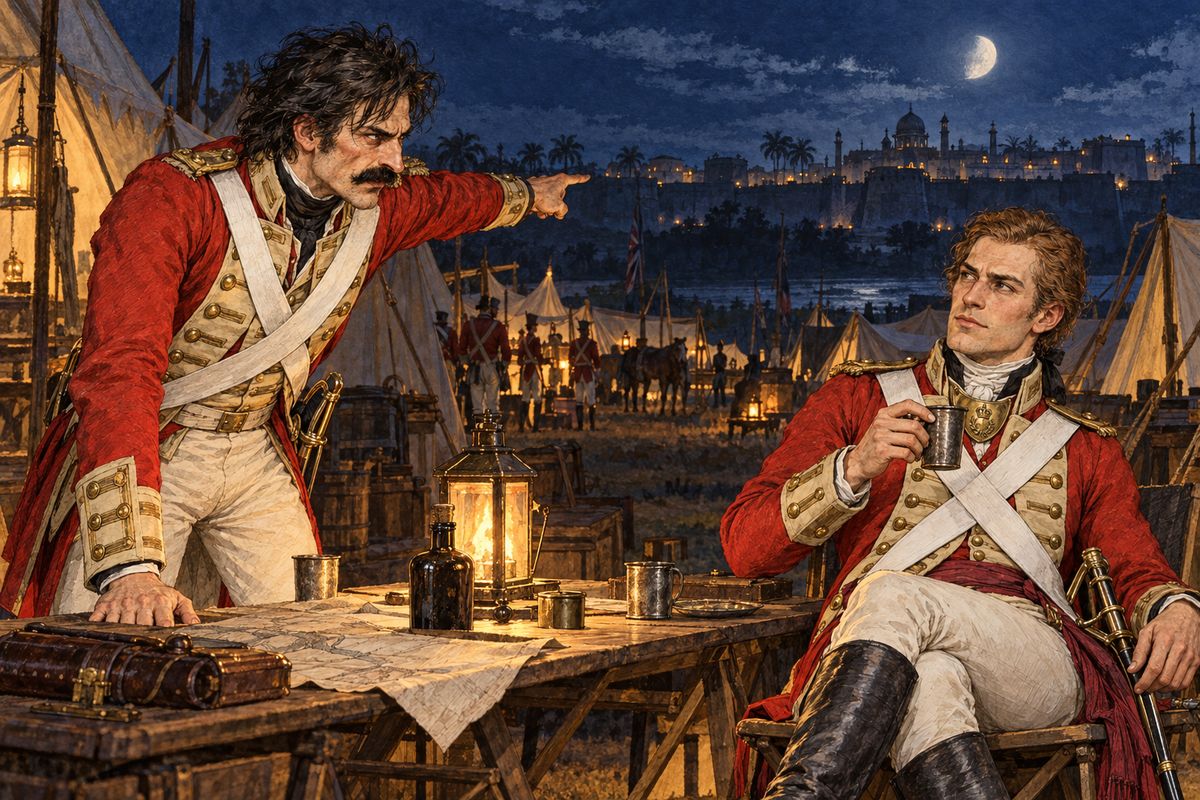
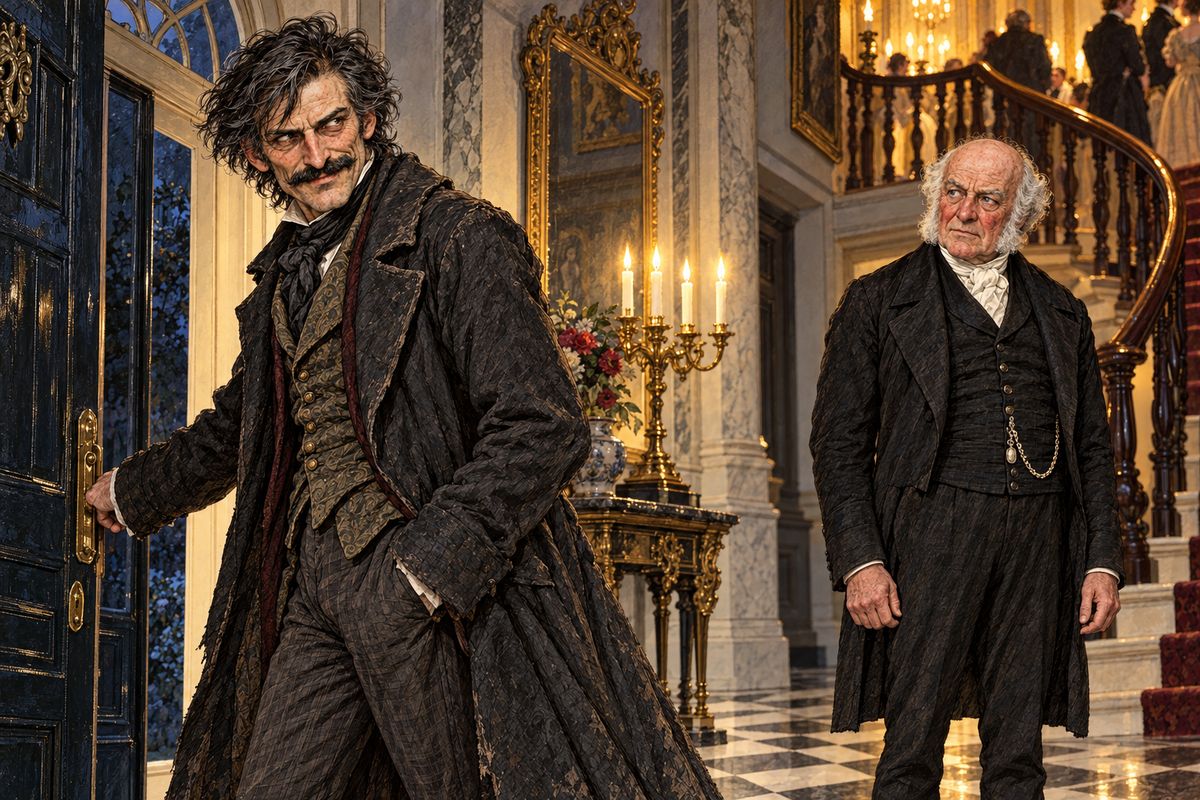
then Add to Home Screen.