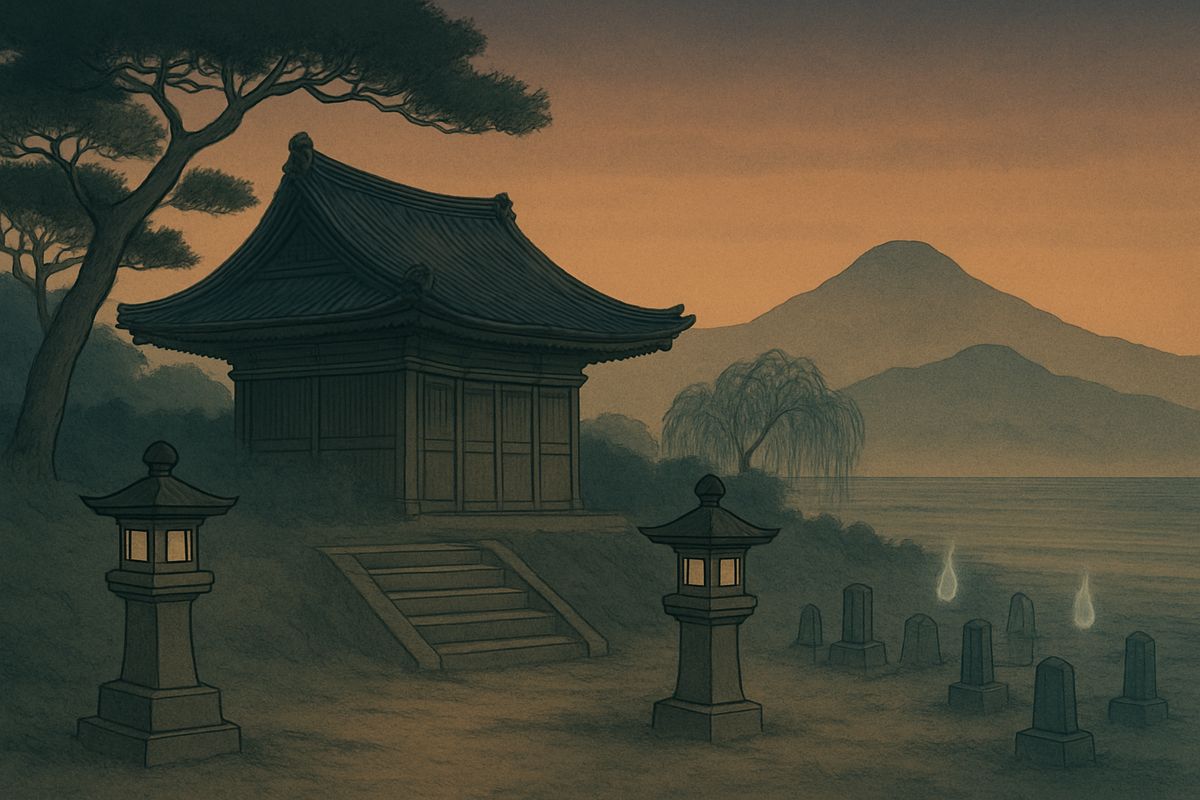
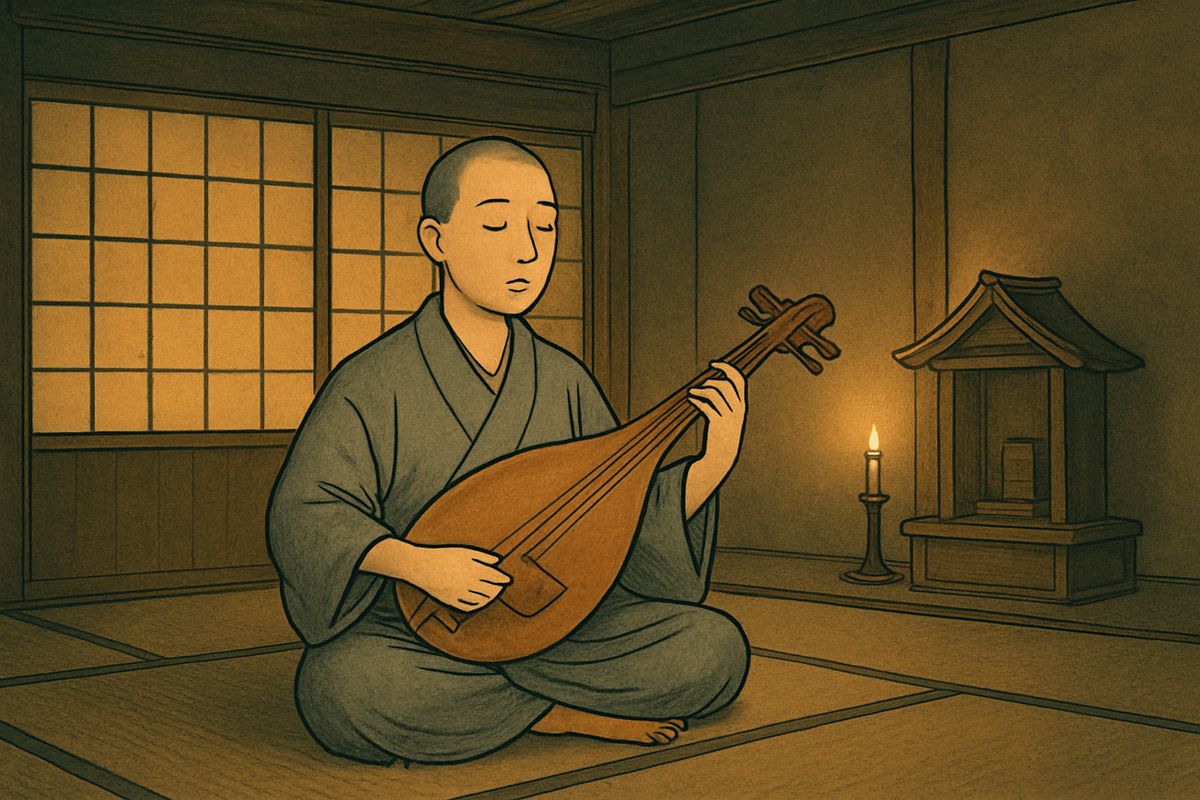
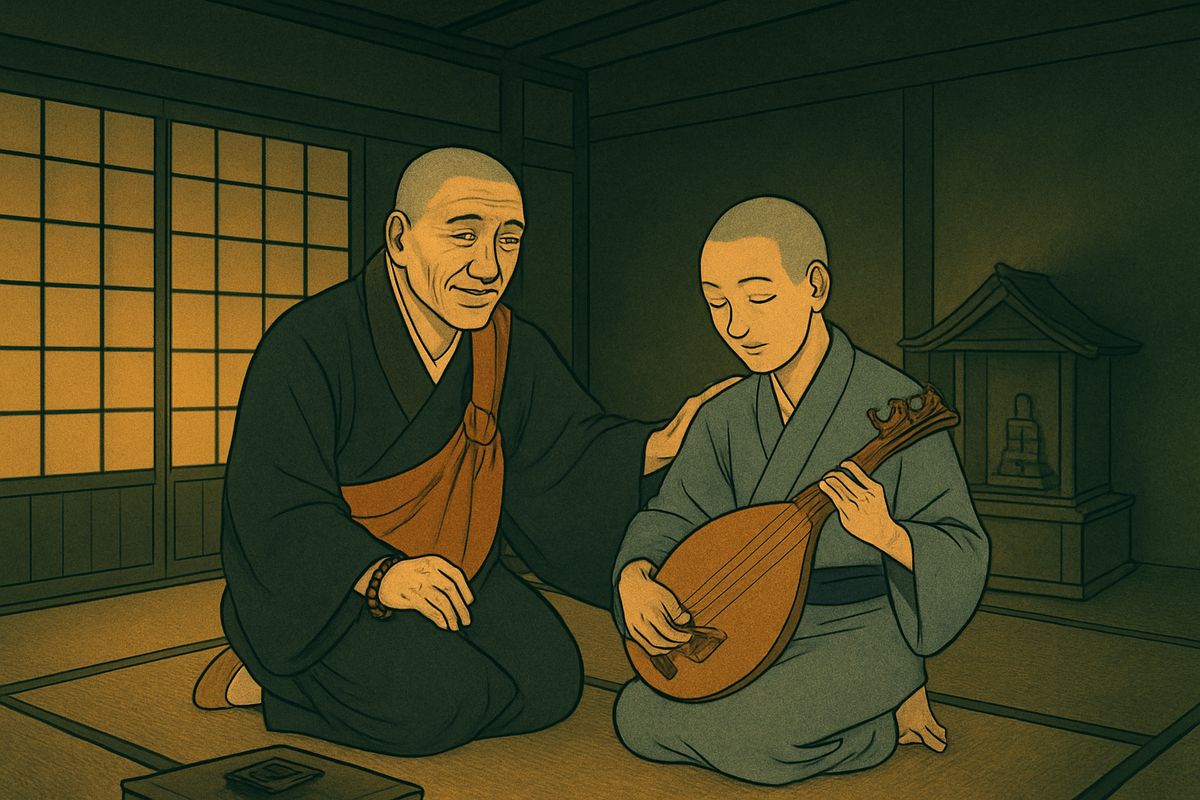
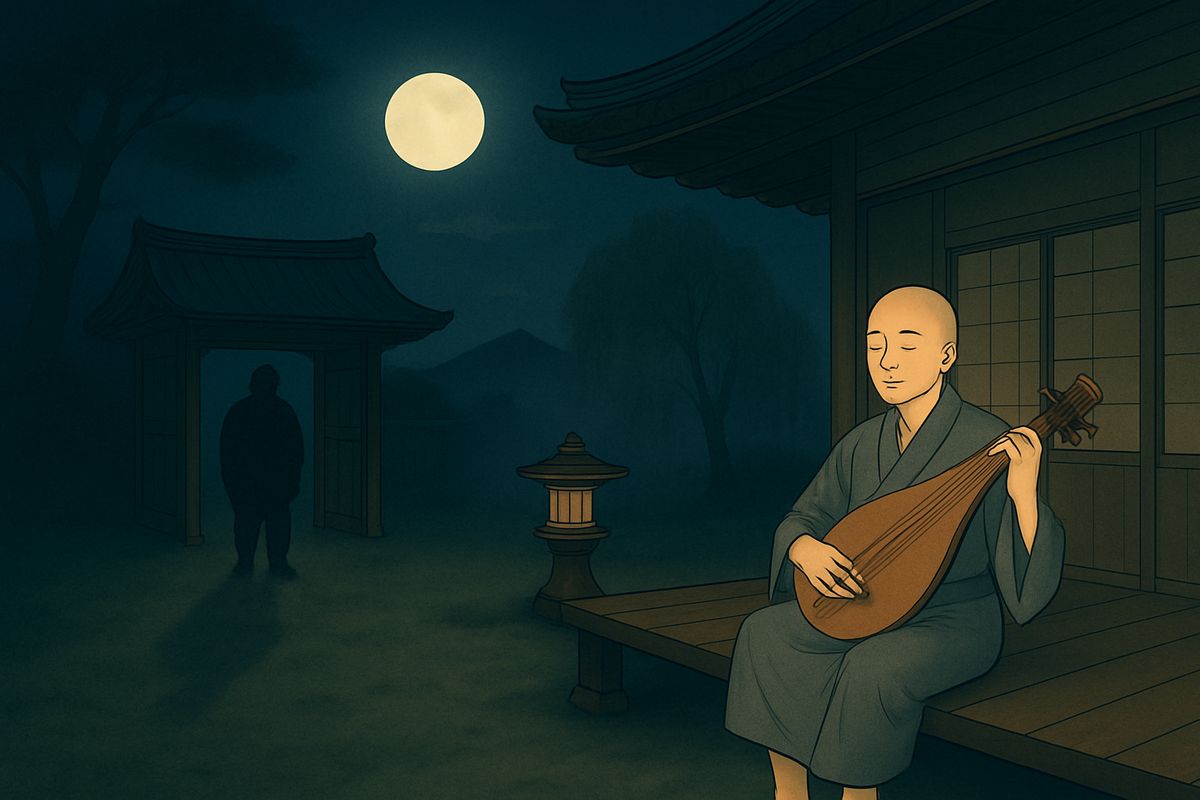
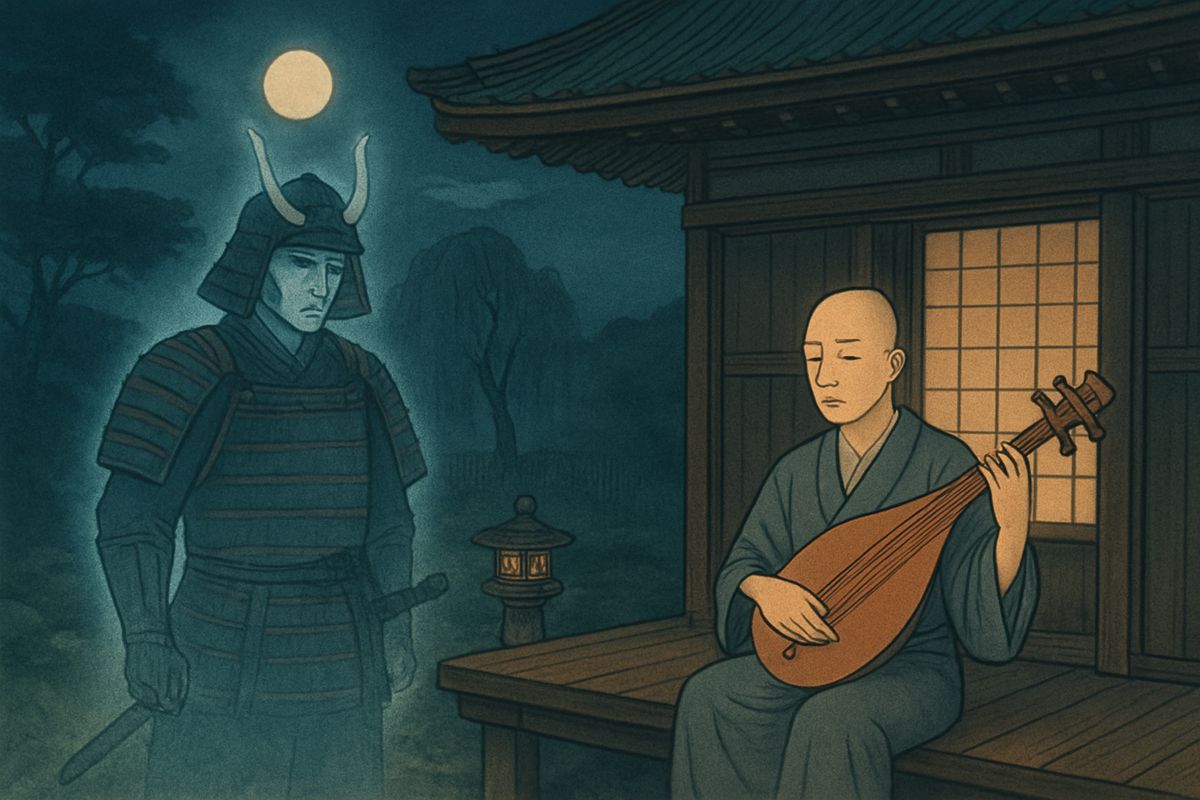
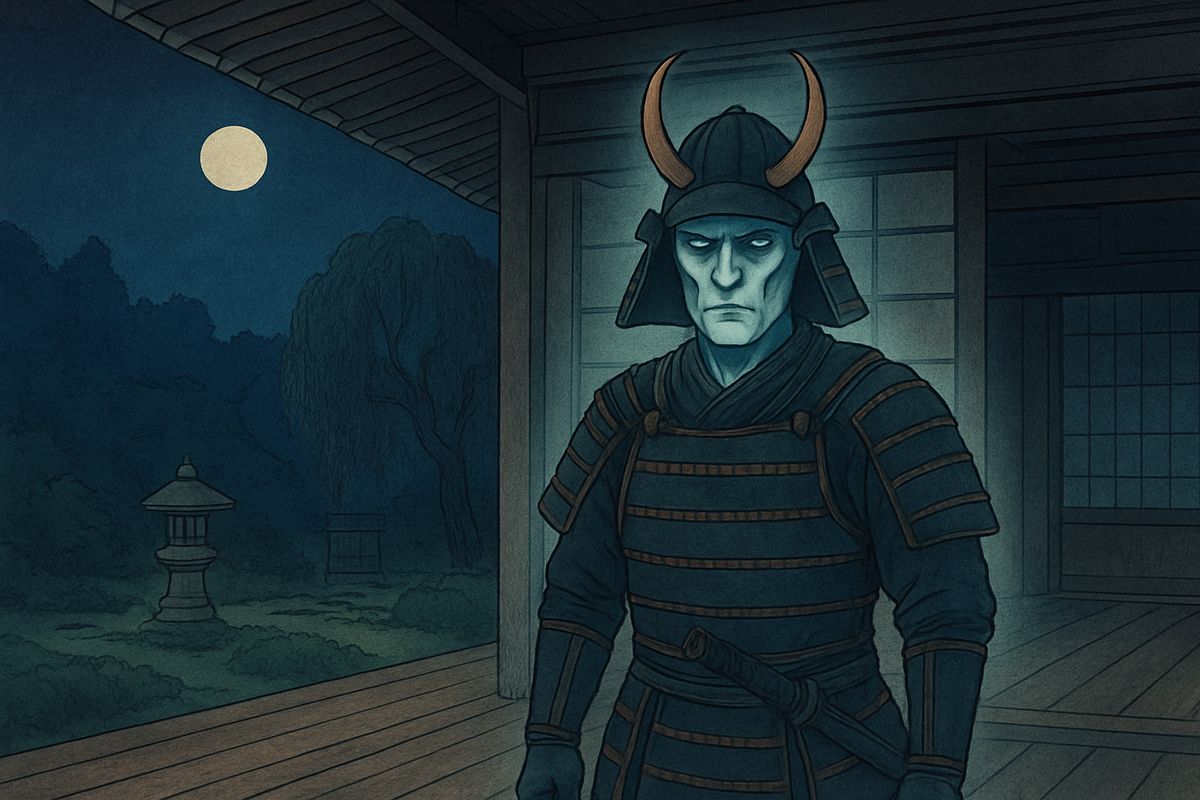
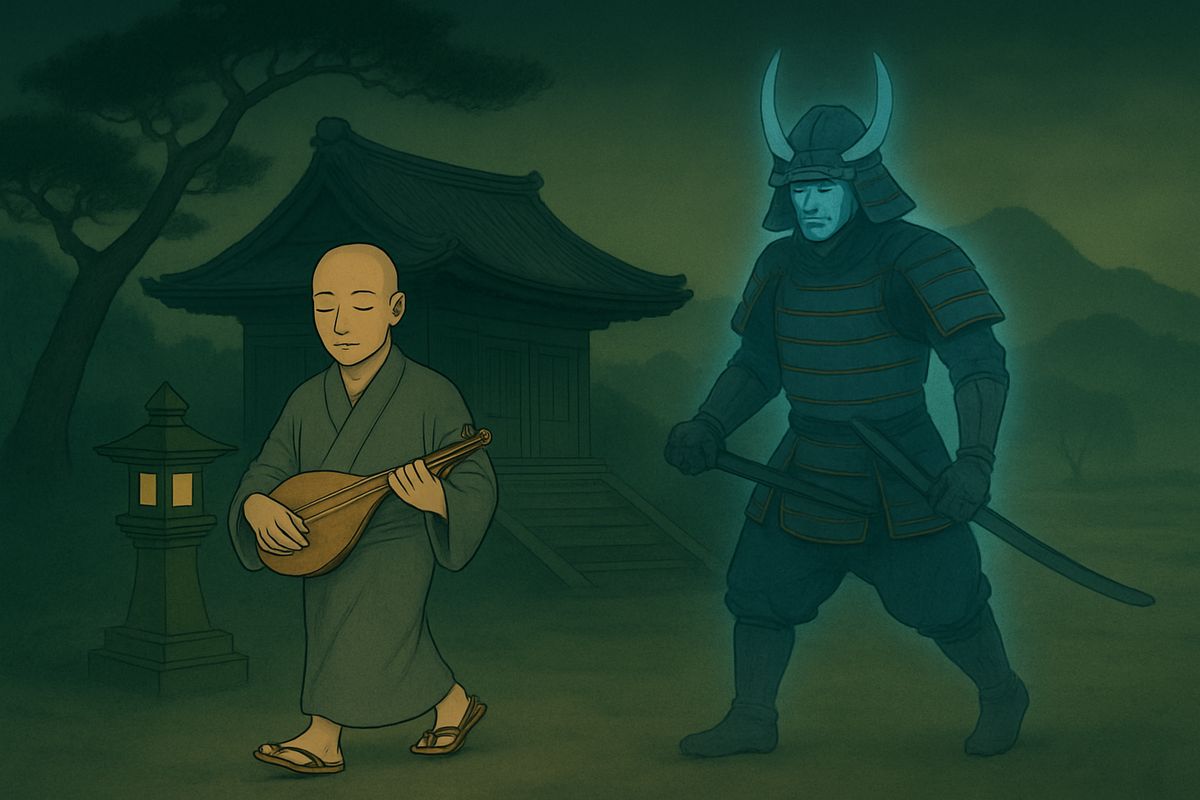
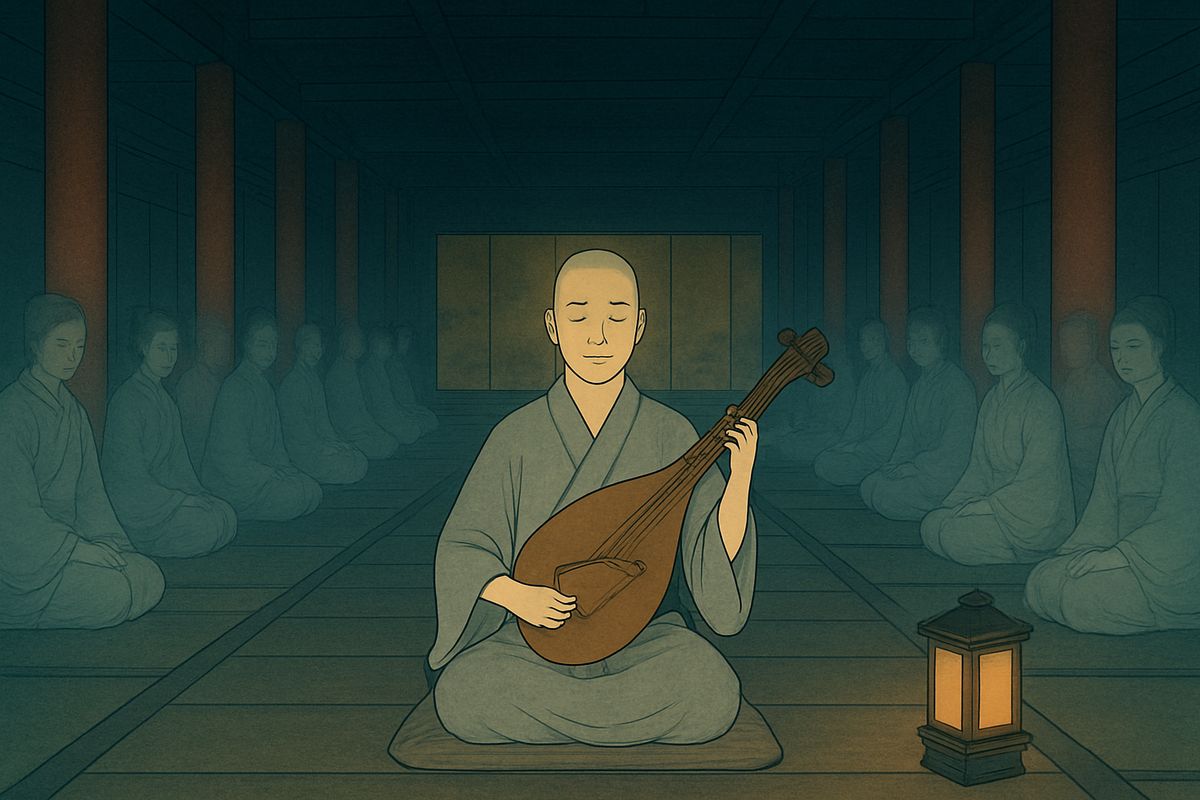
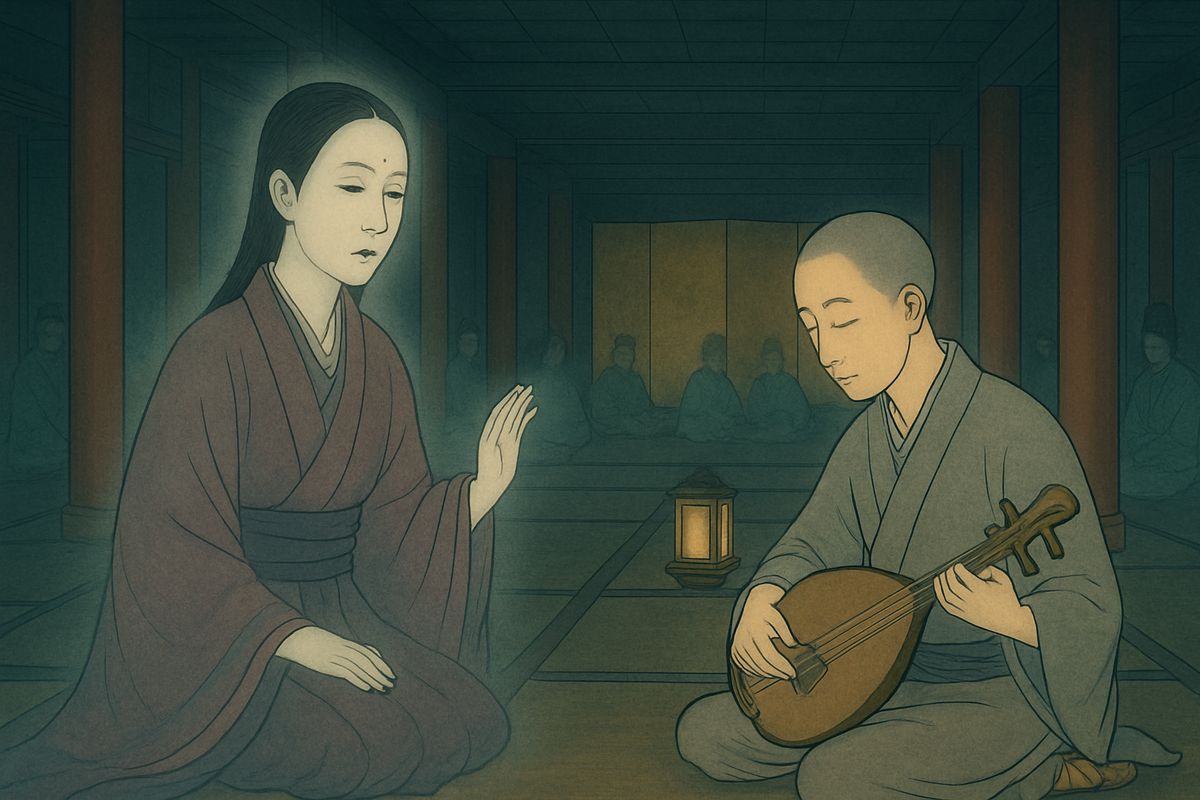
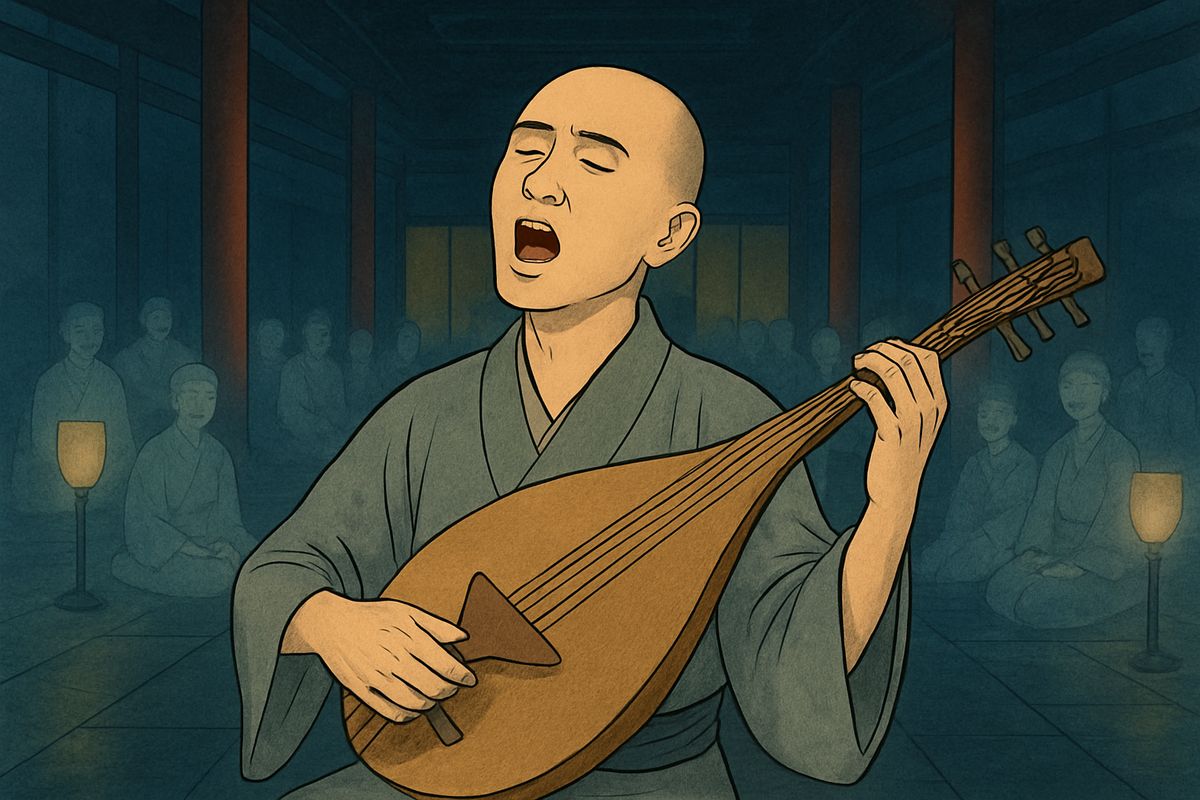
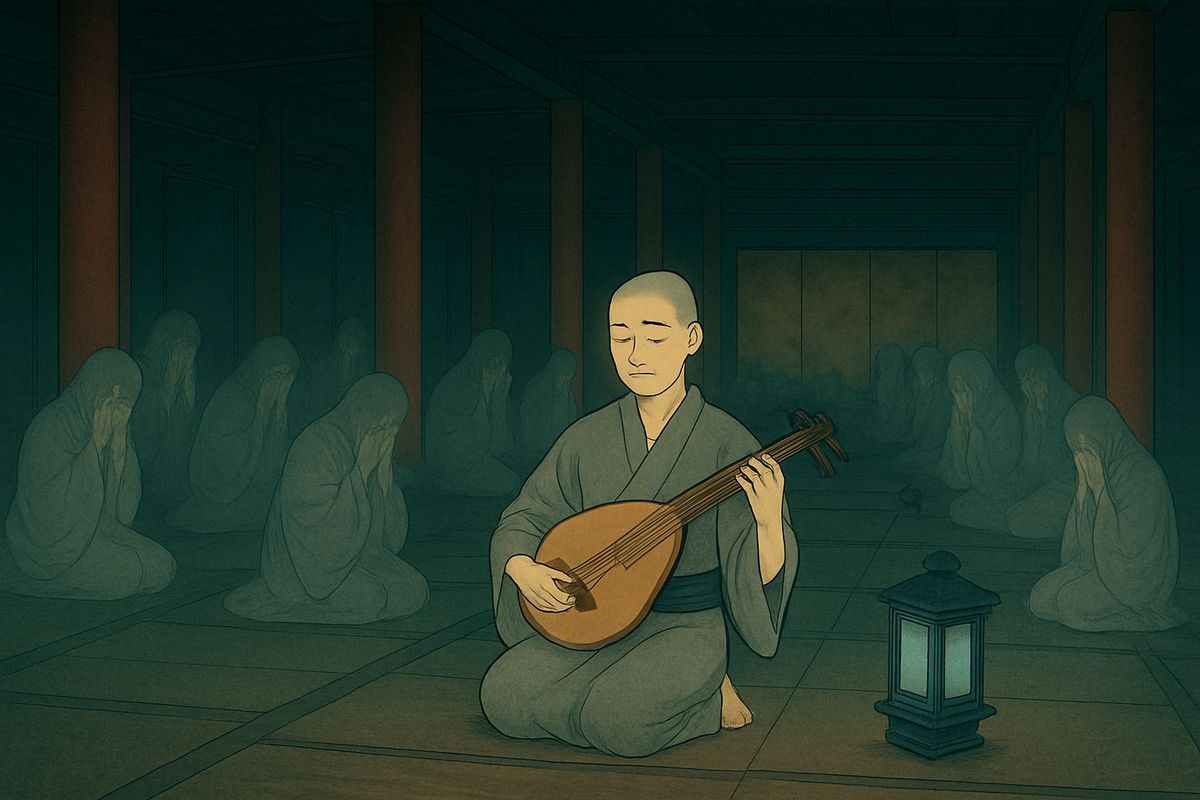
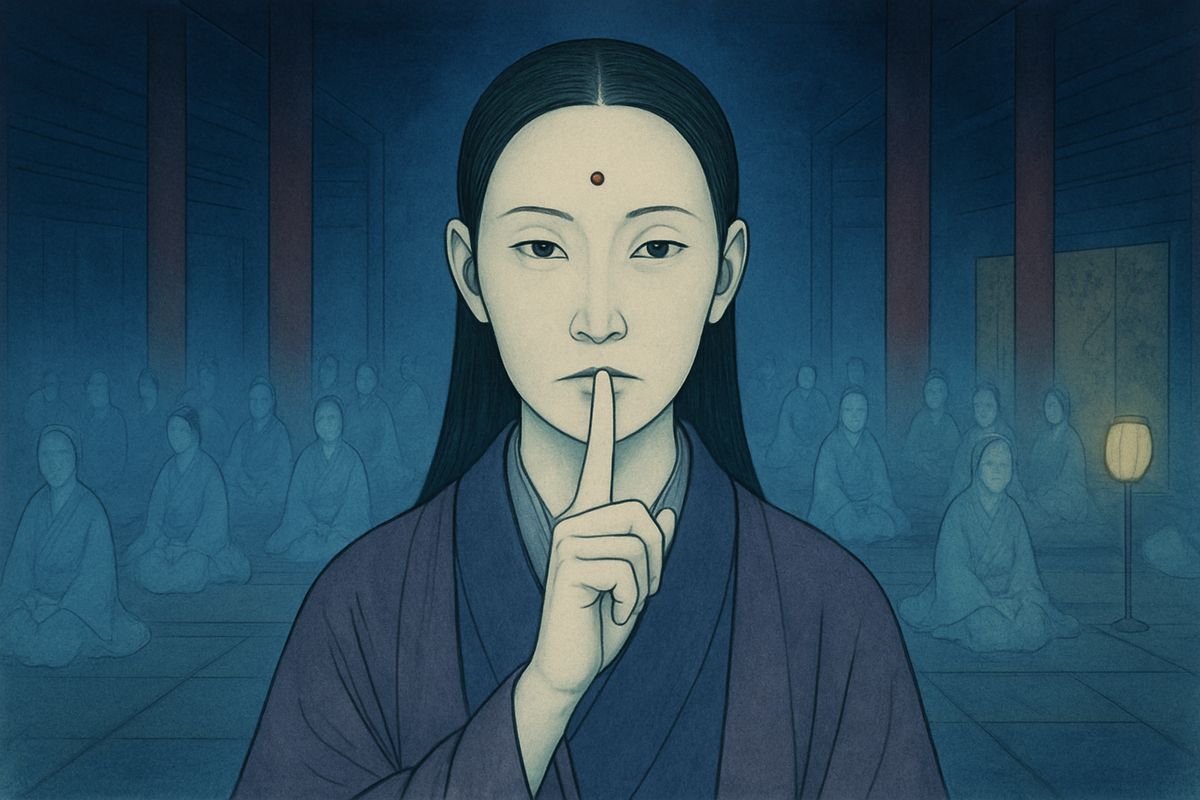
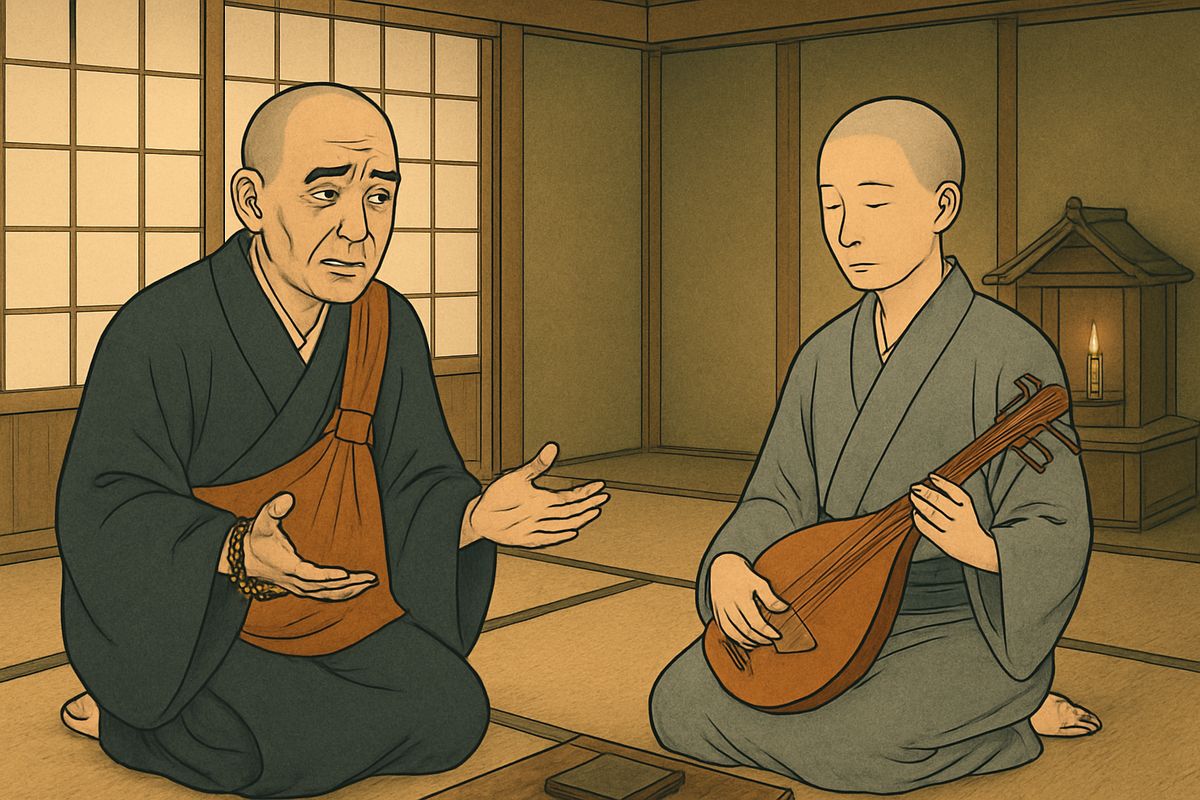
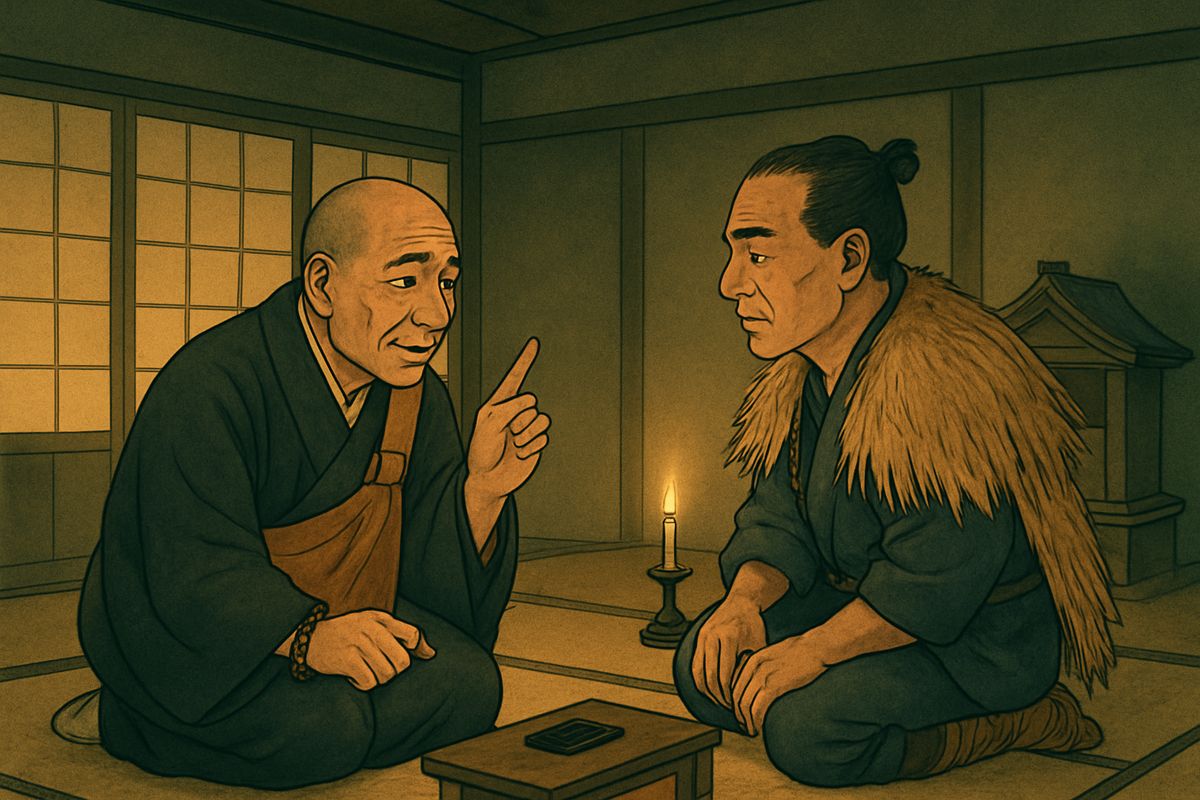
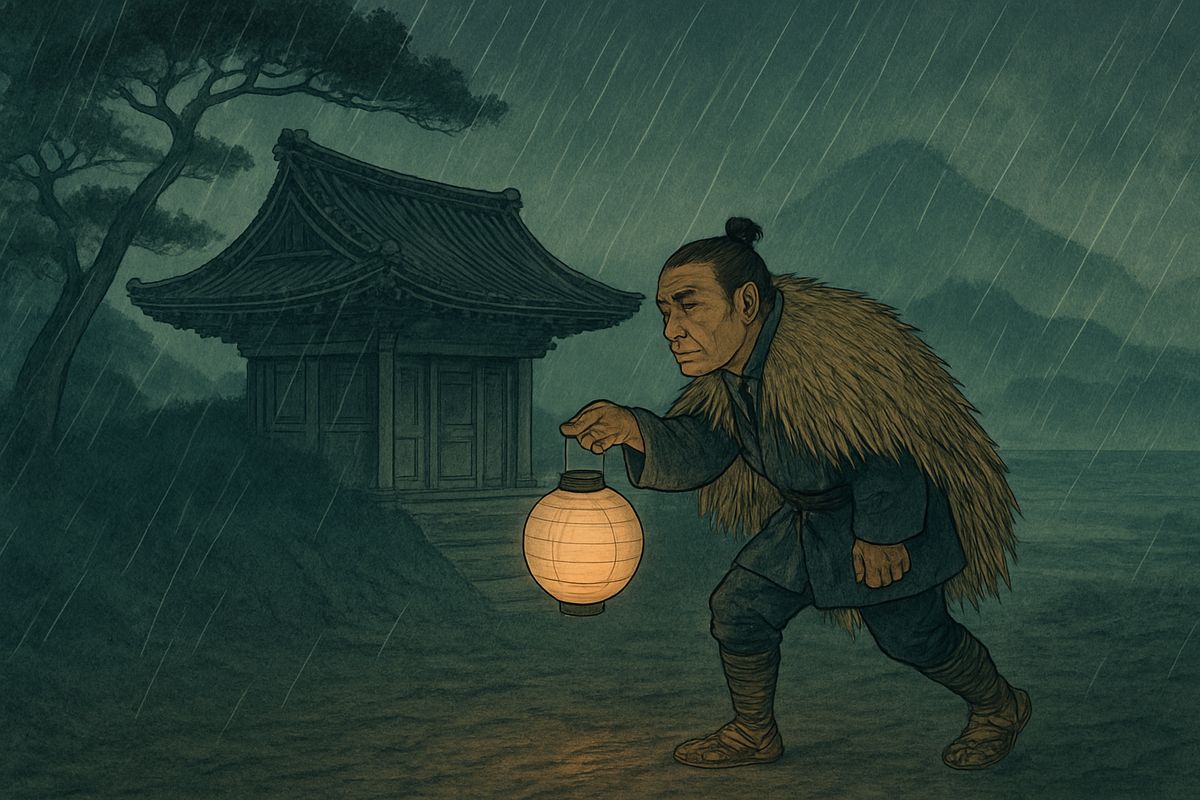
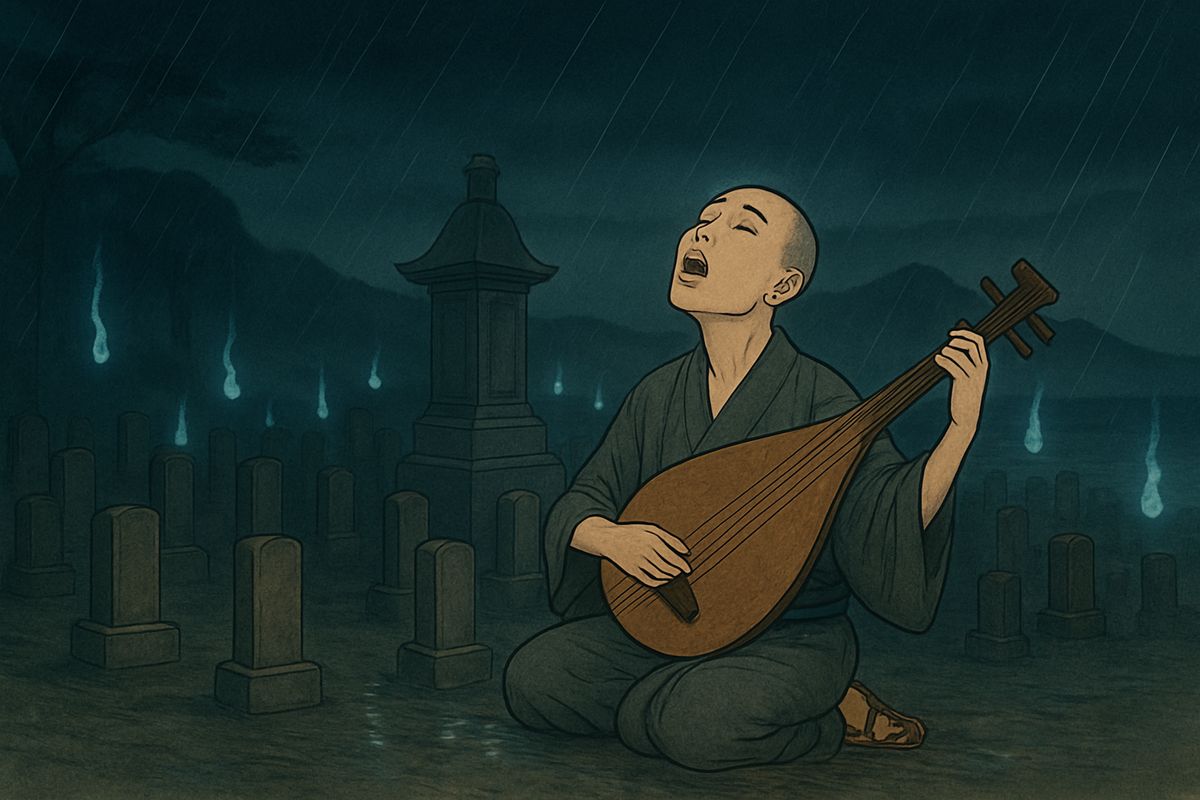
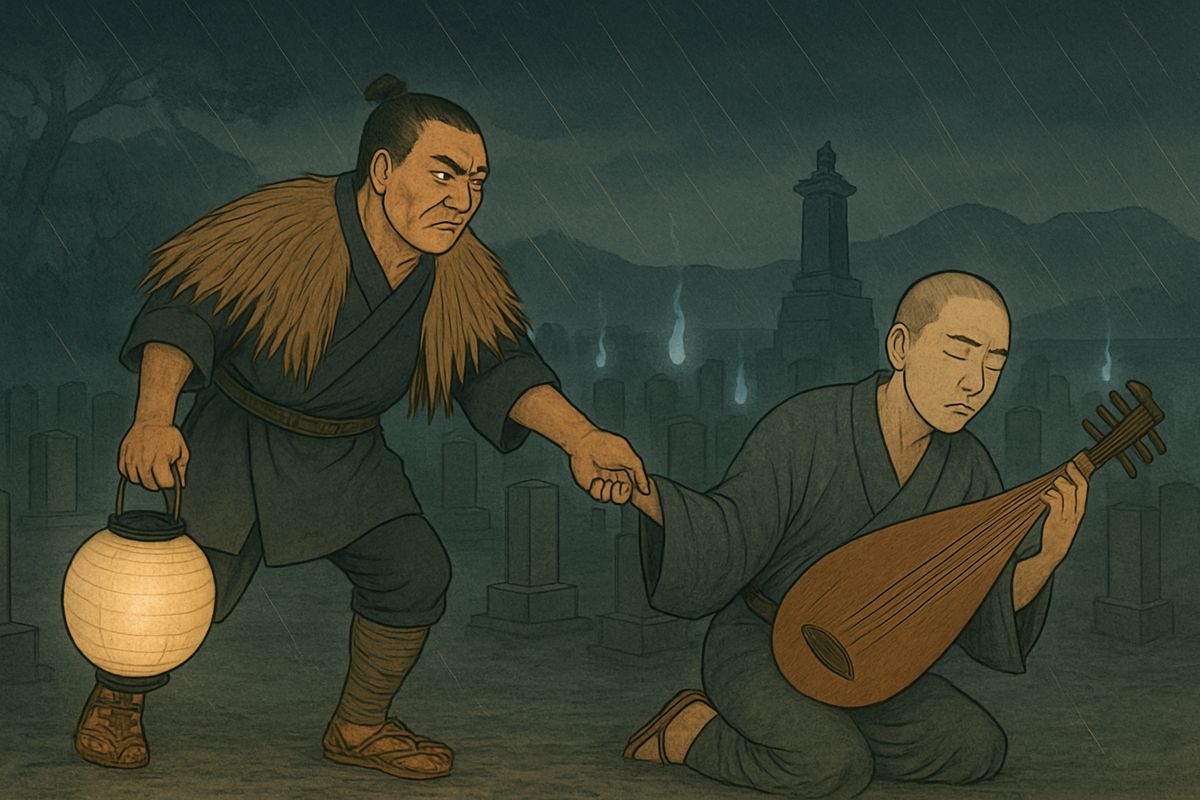
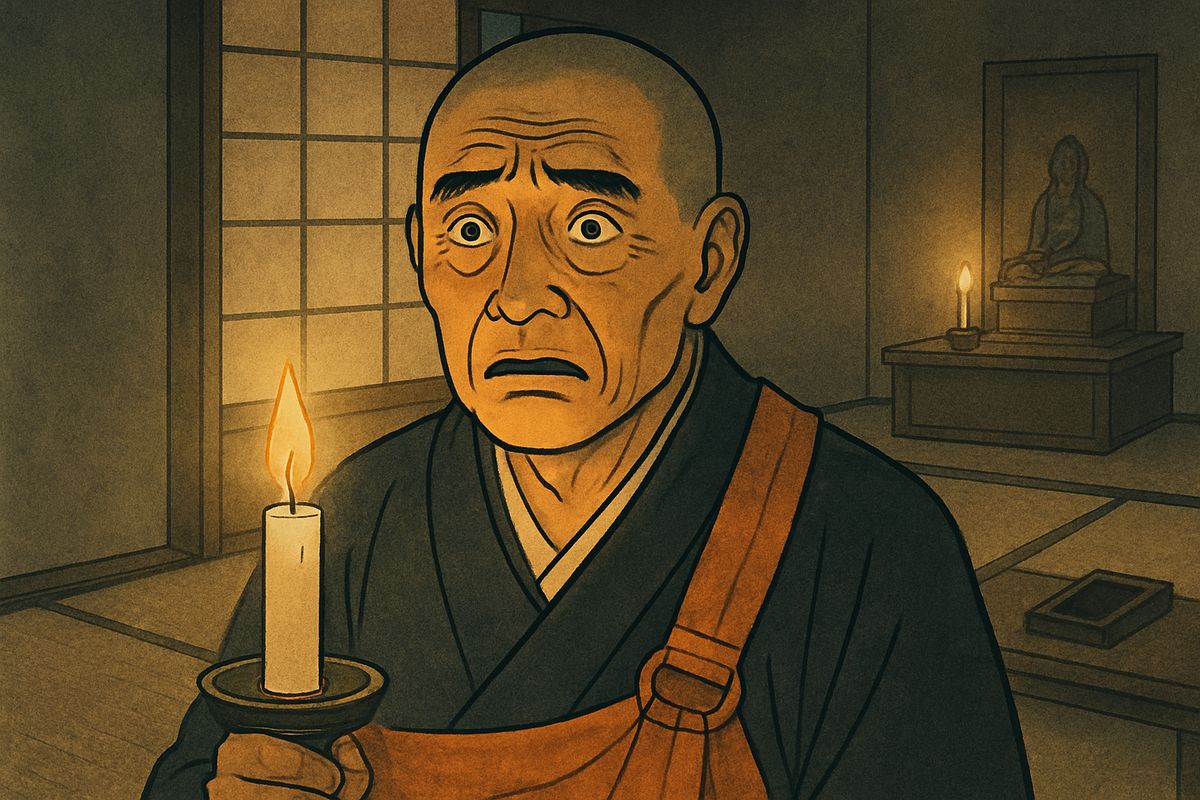
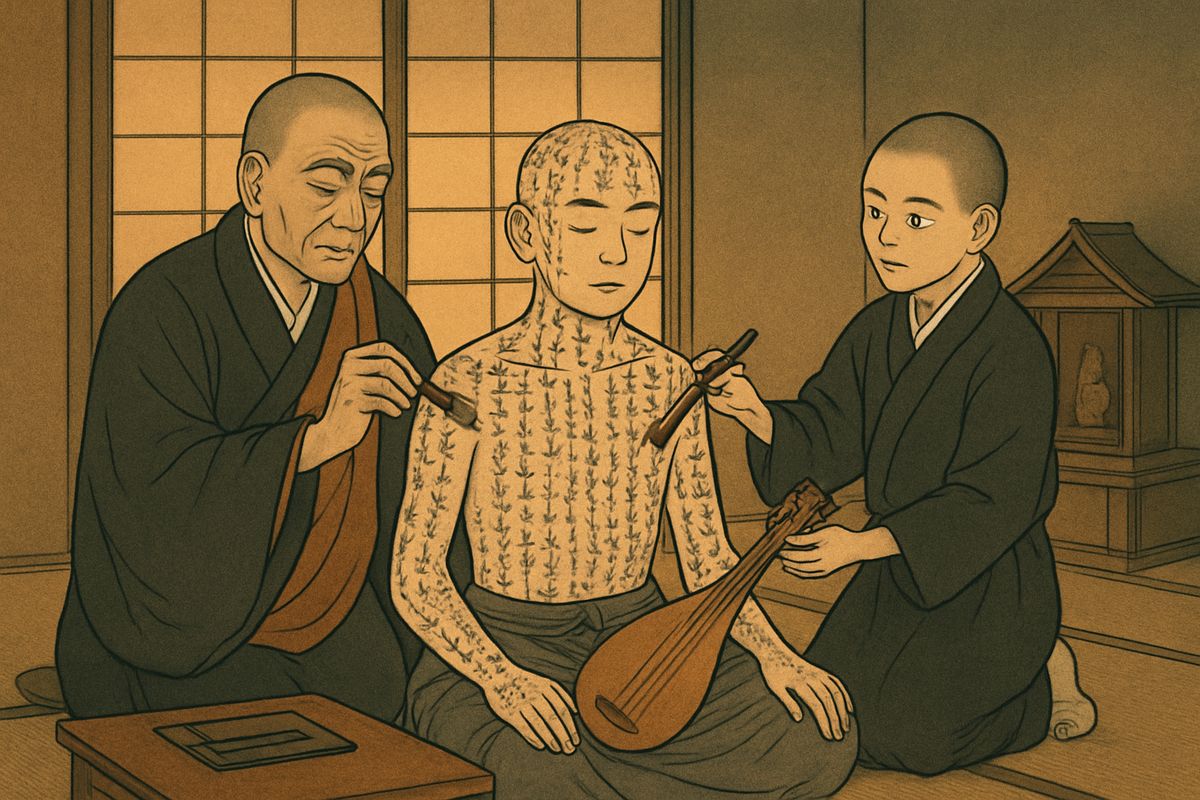
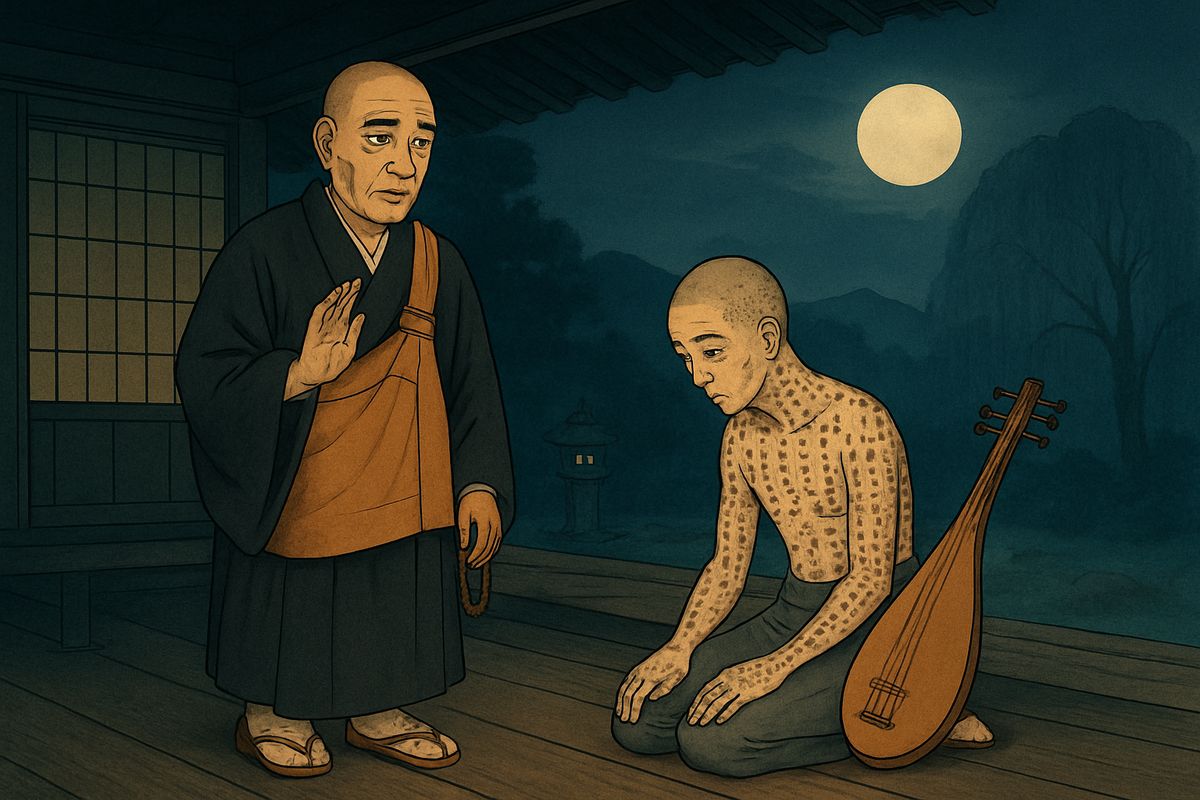
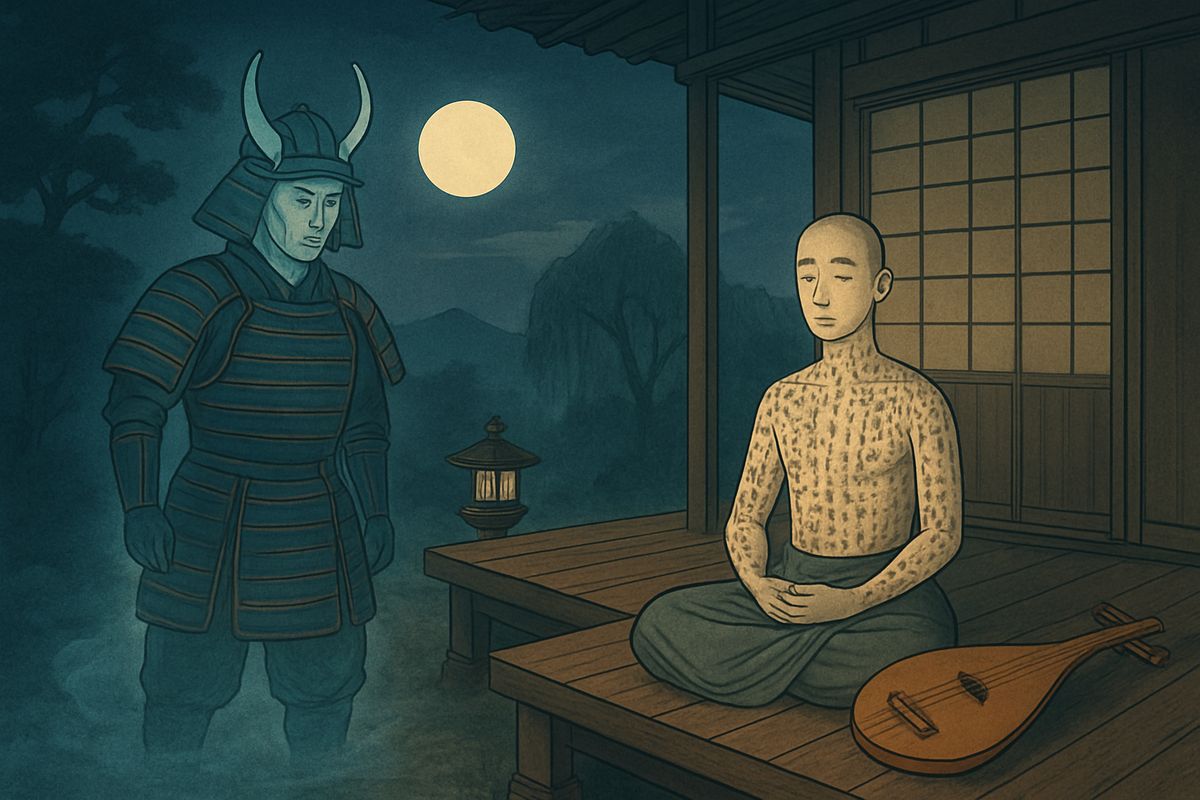
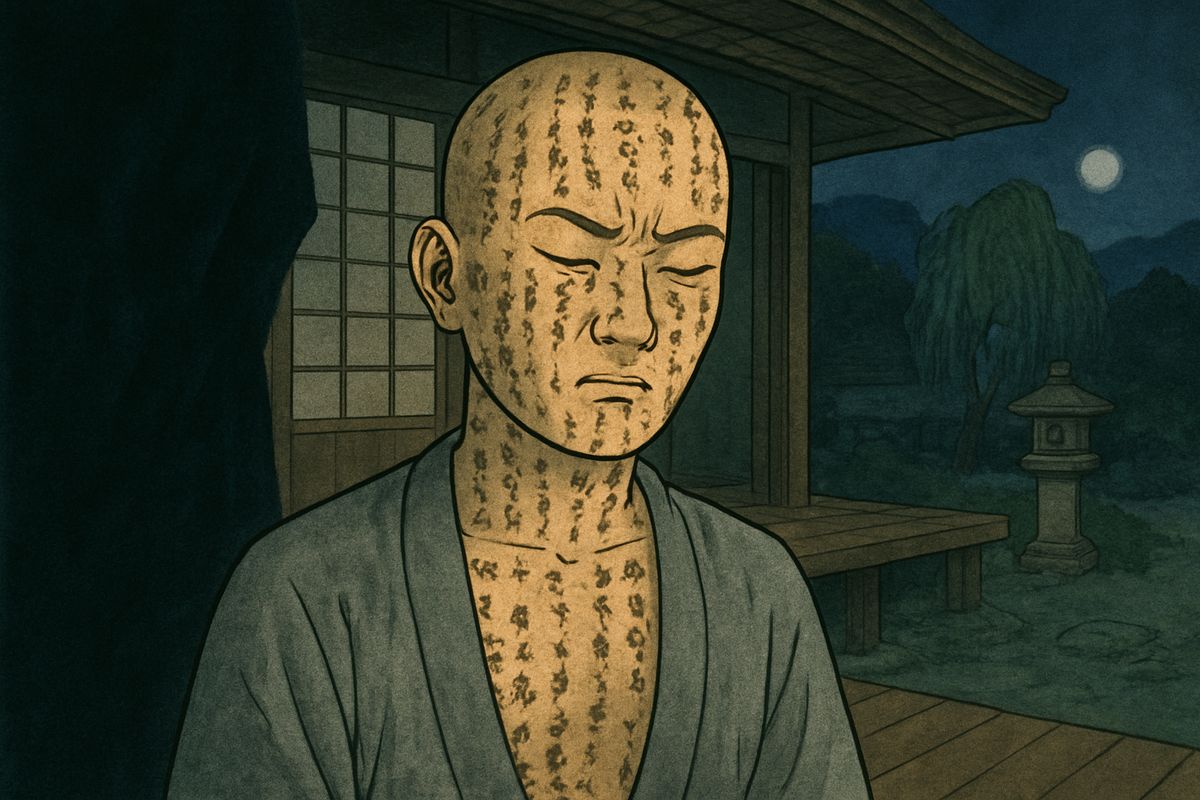
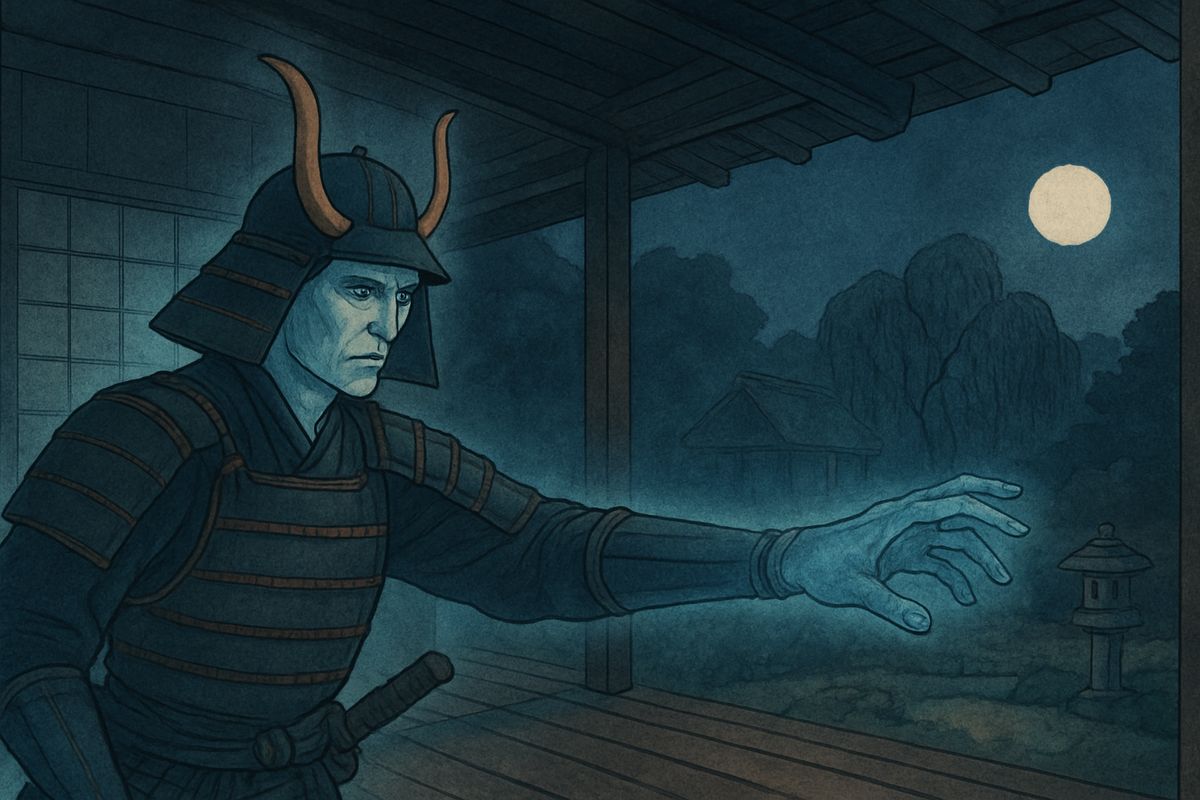
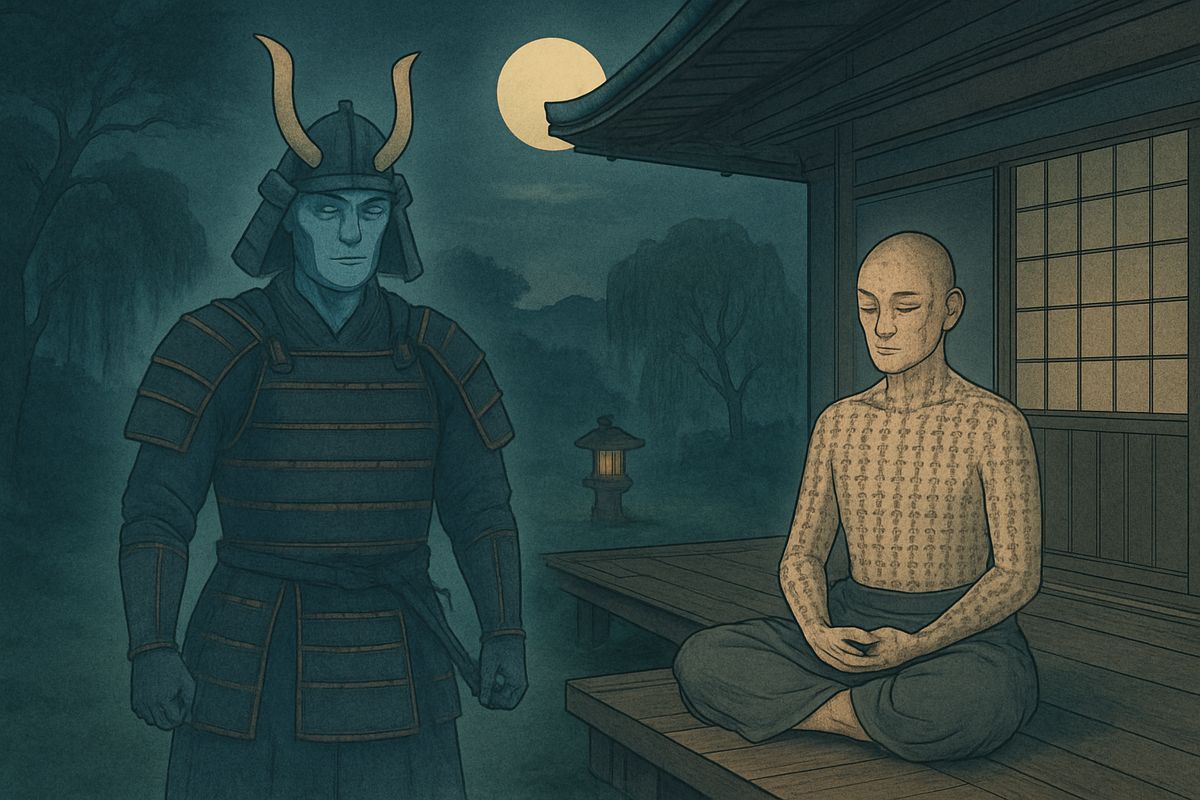
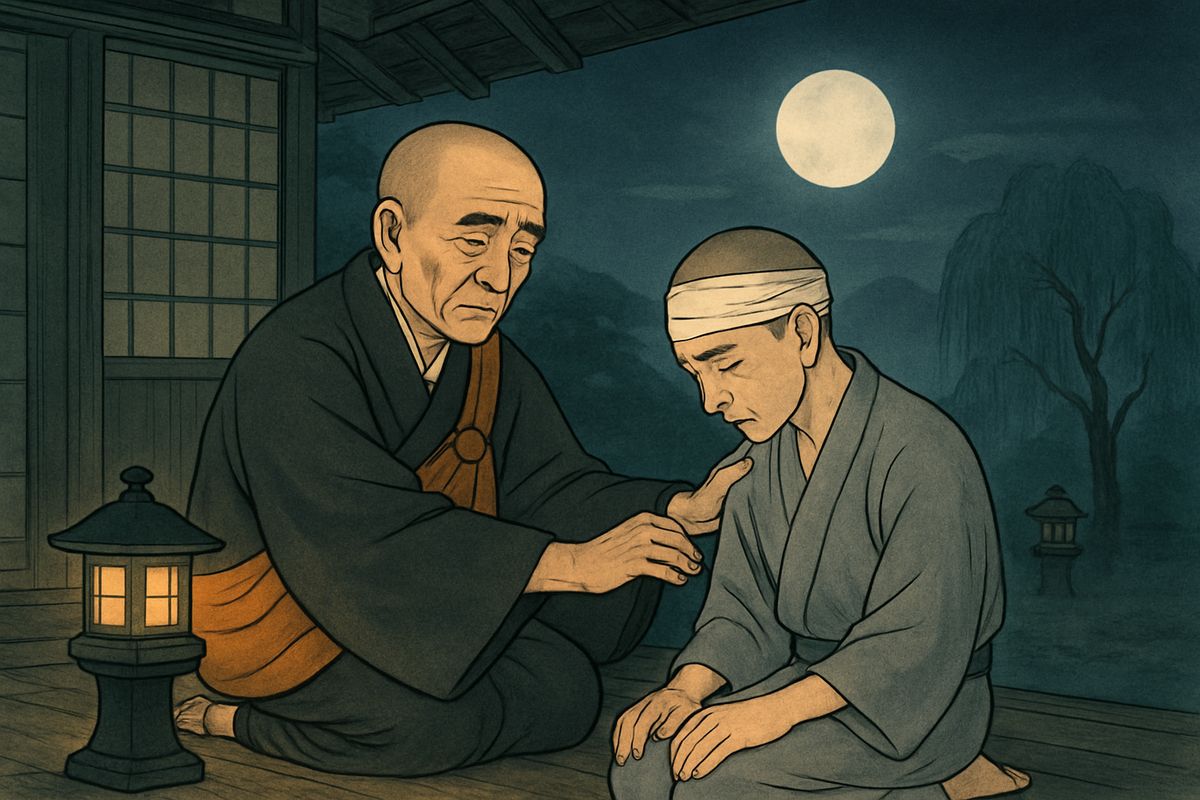
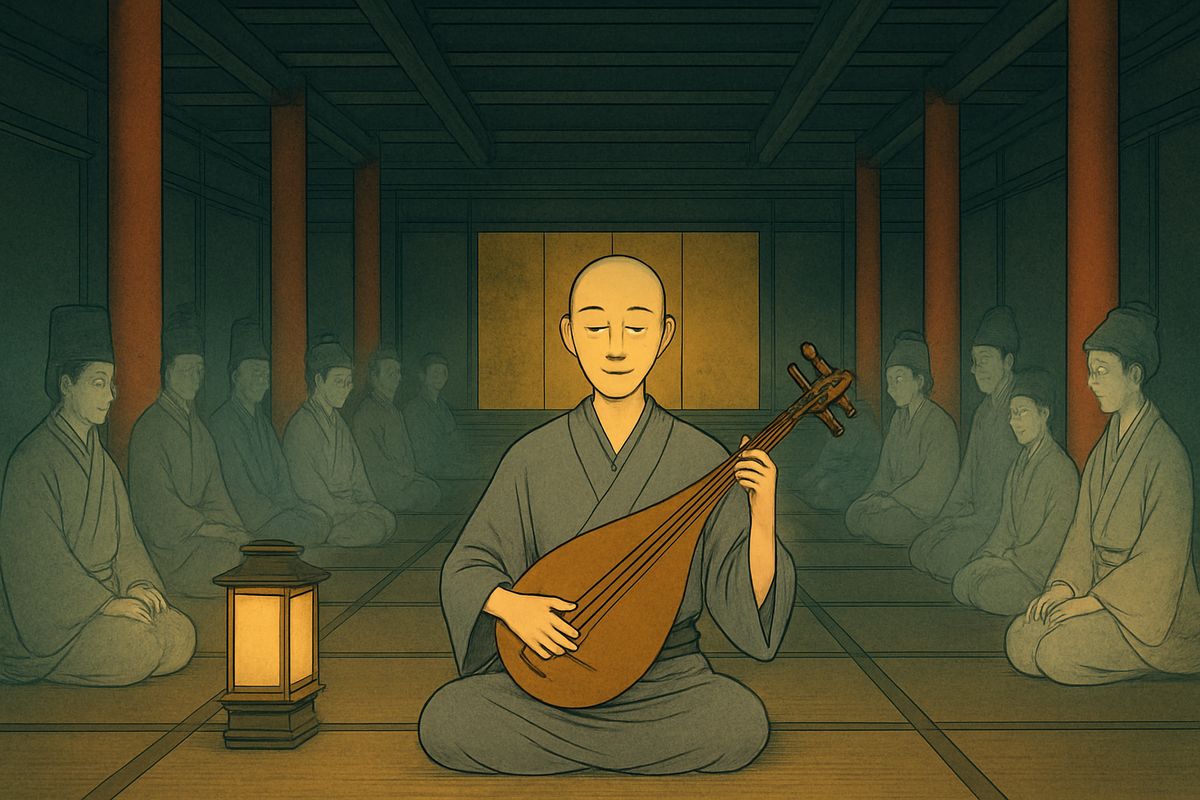
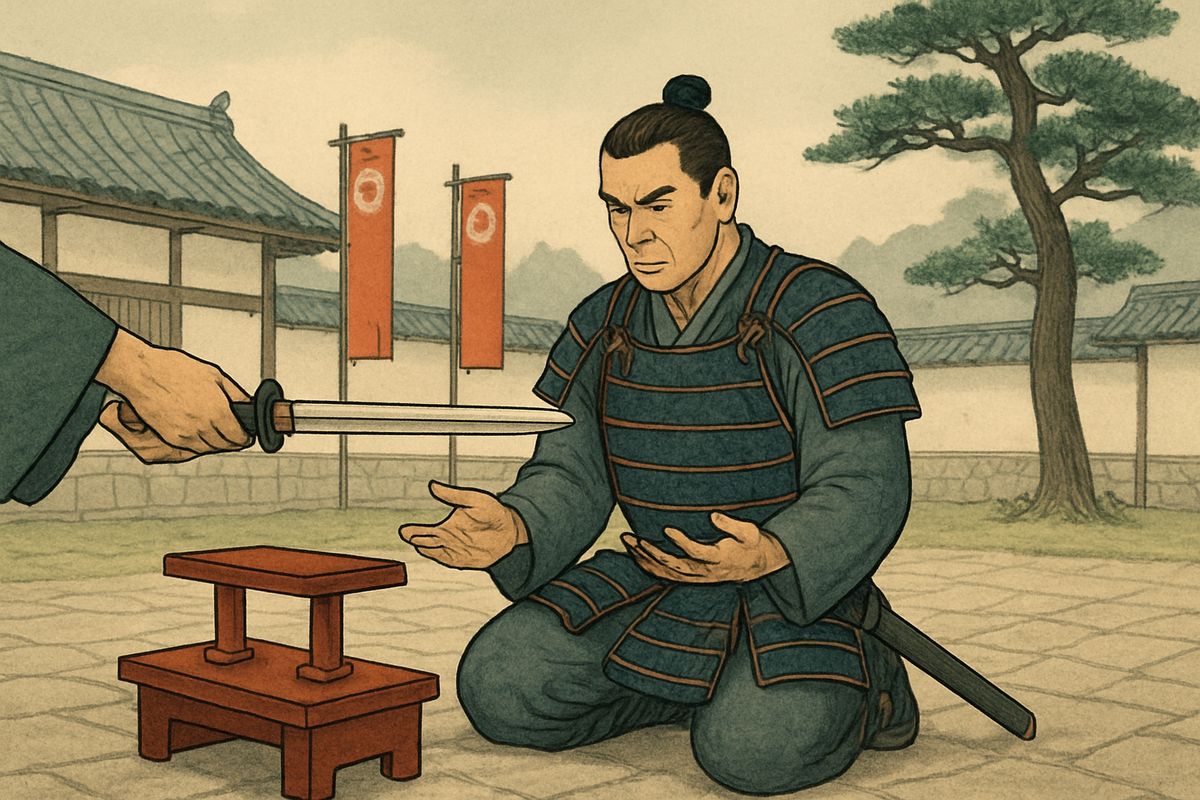
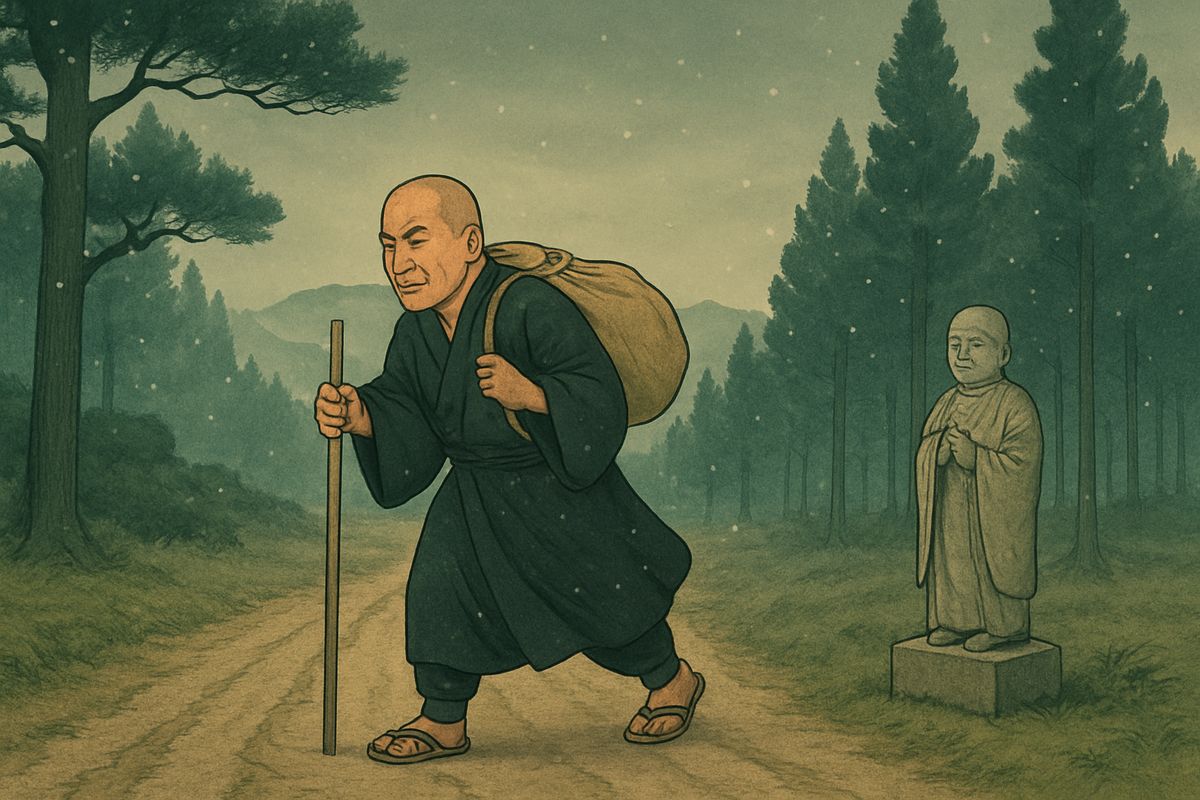
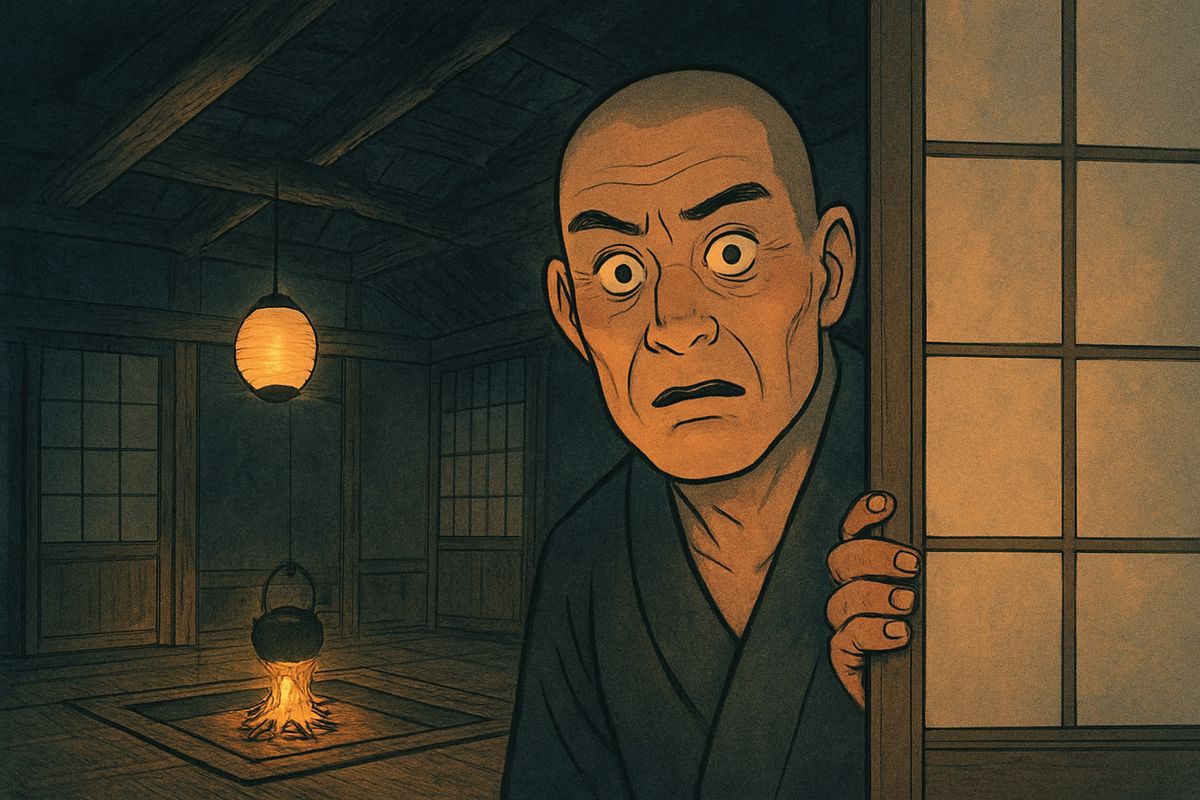
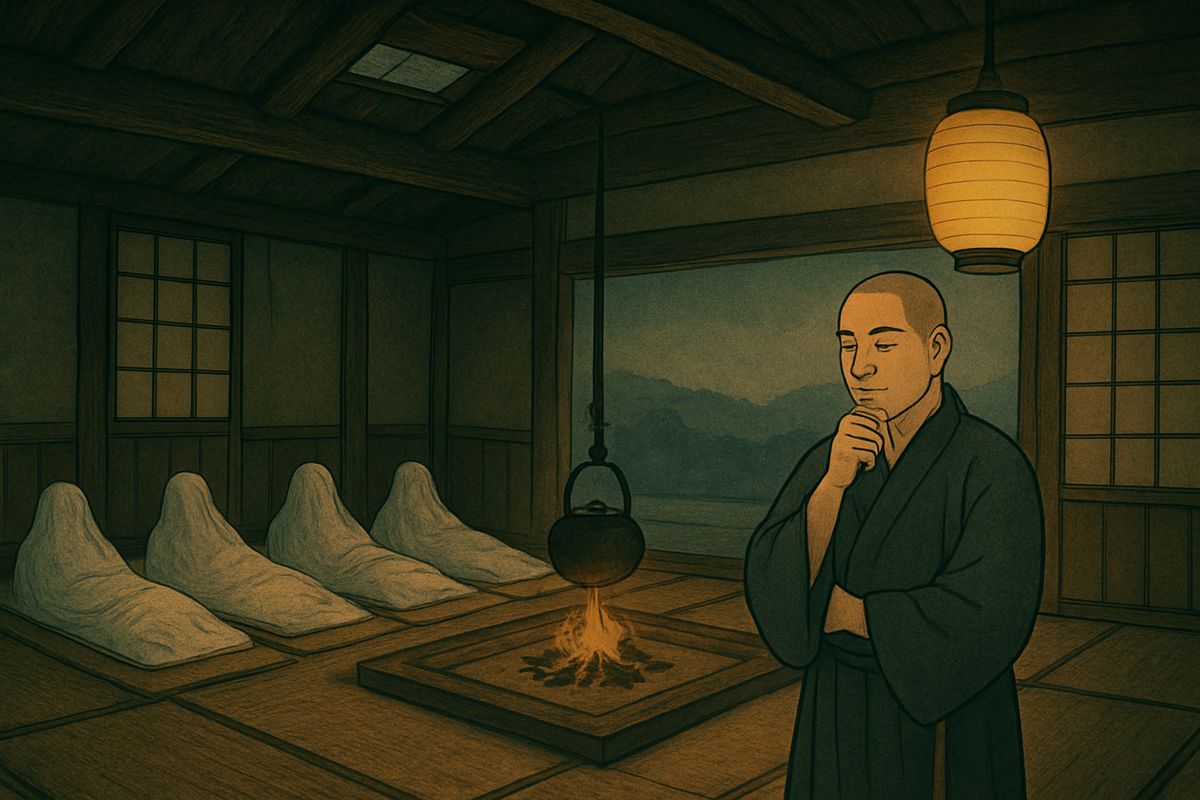
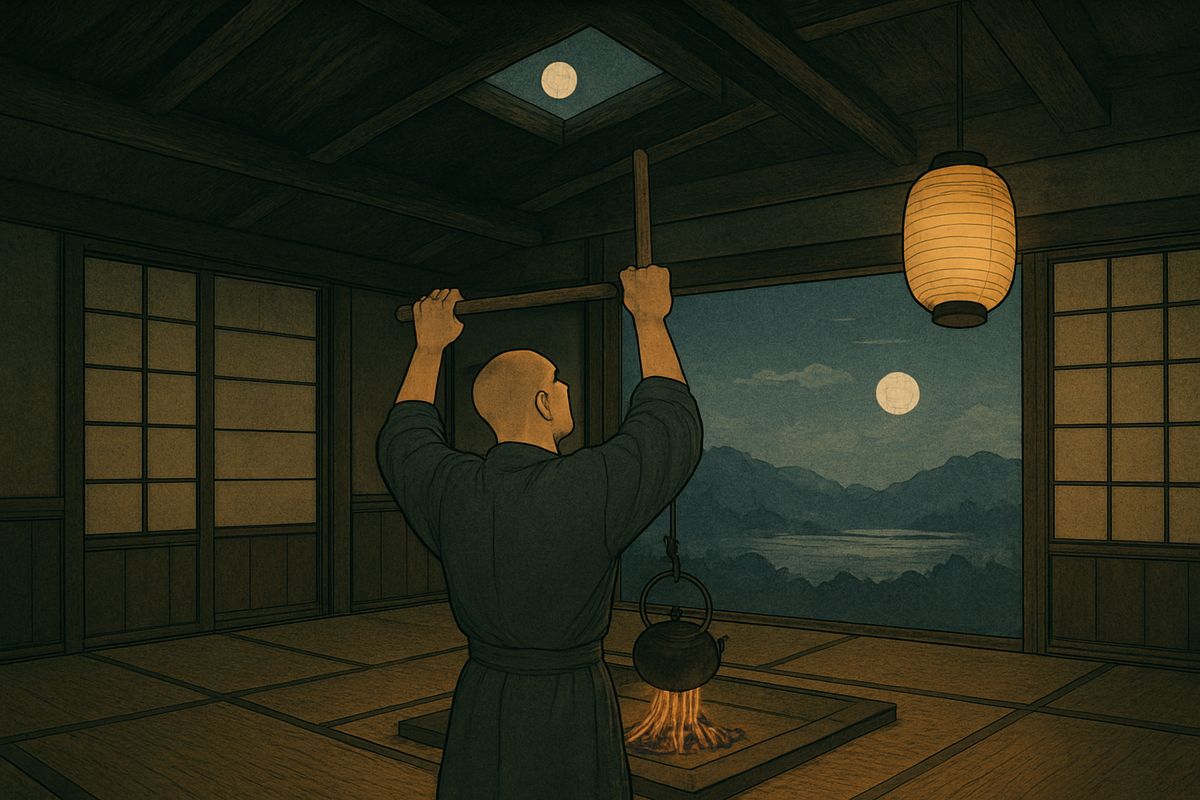
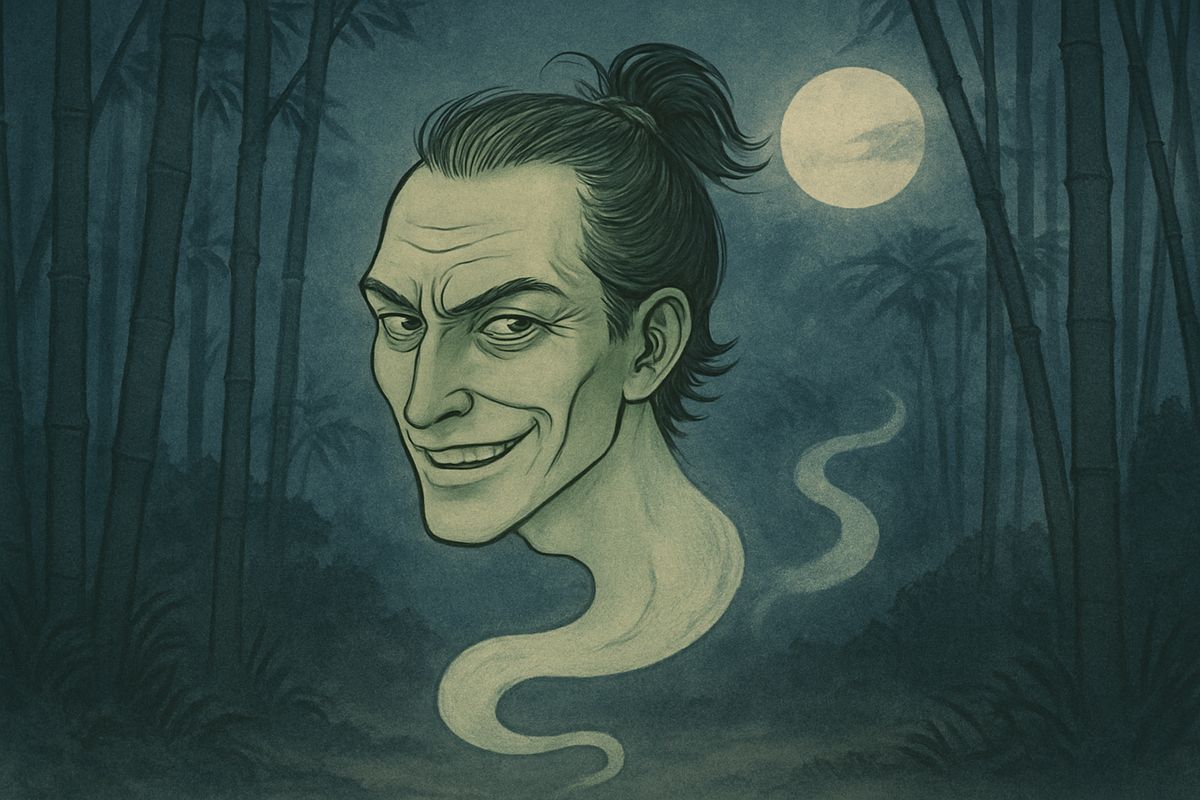
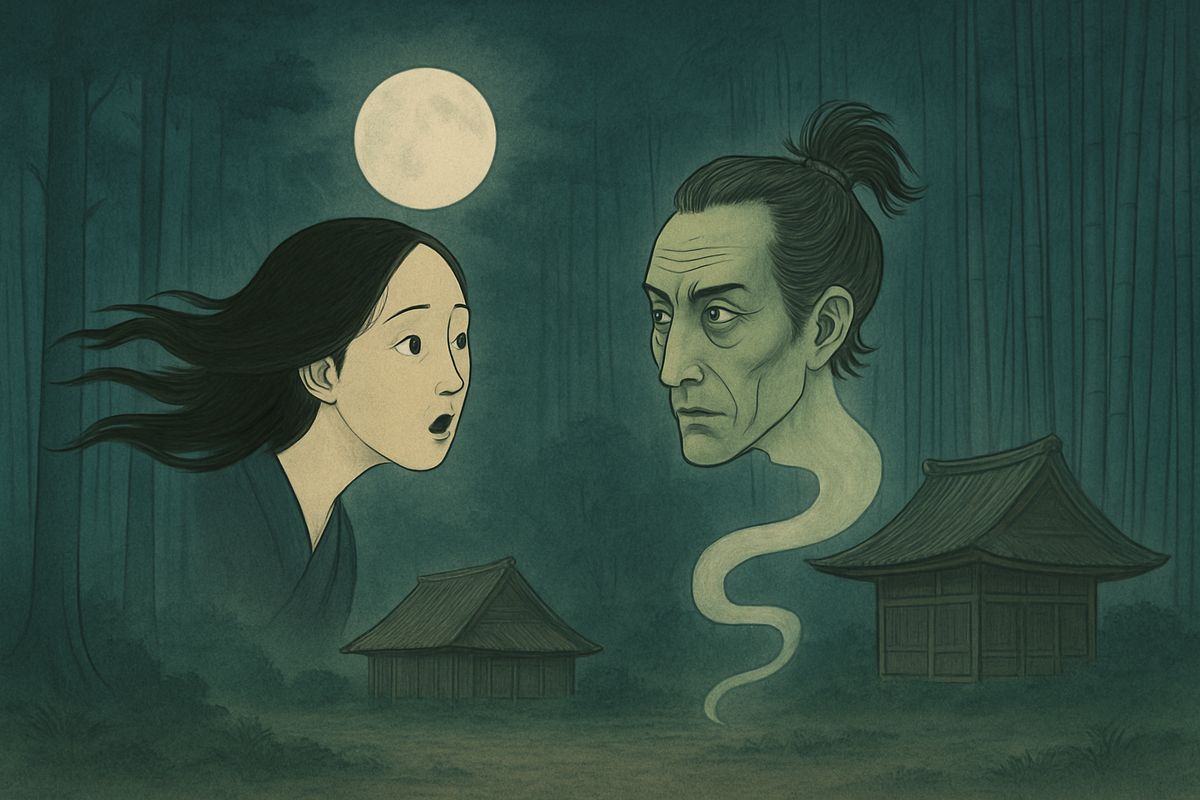
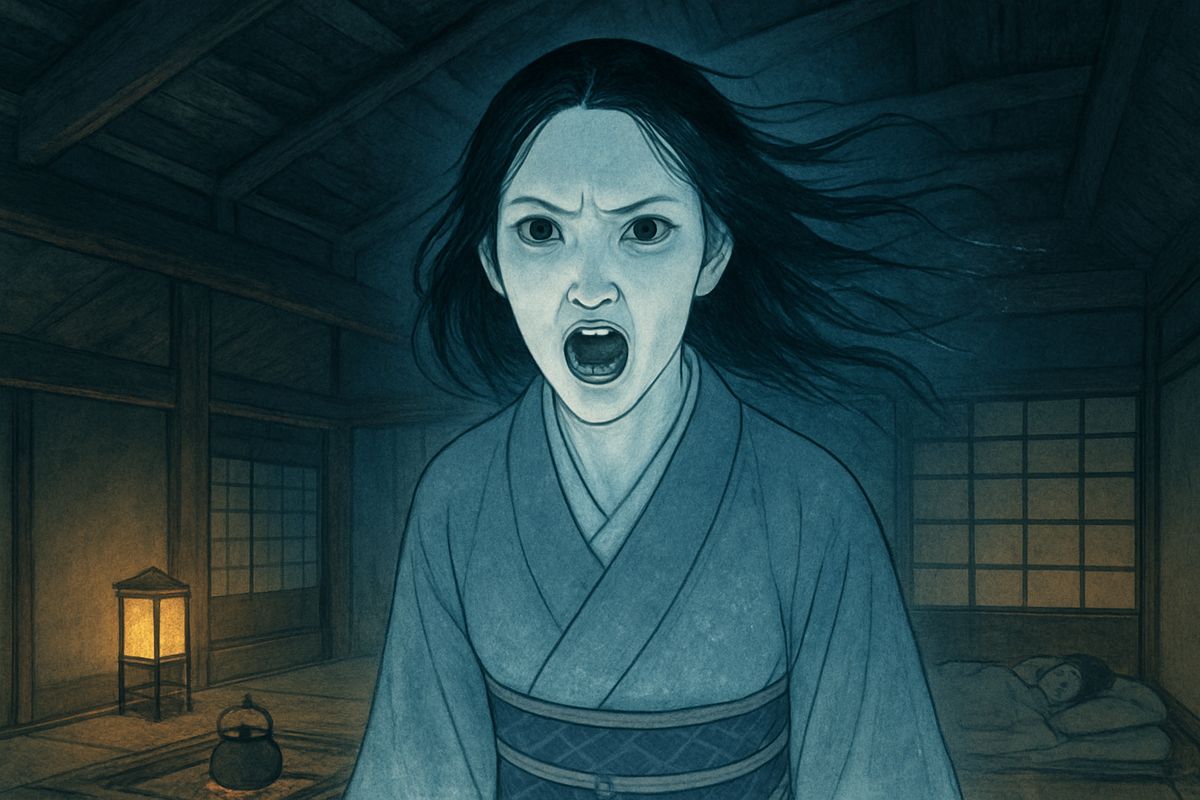
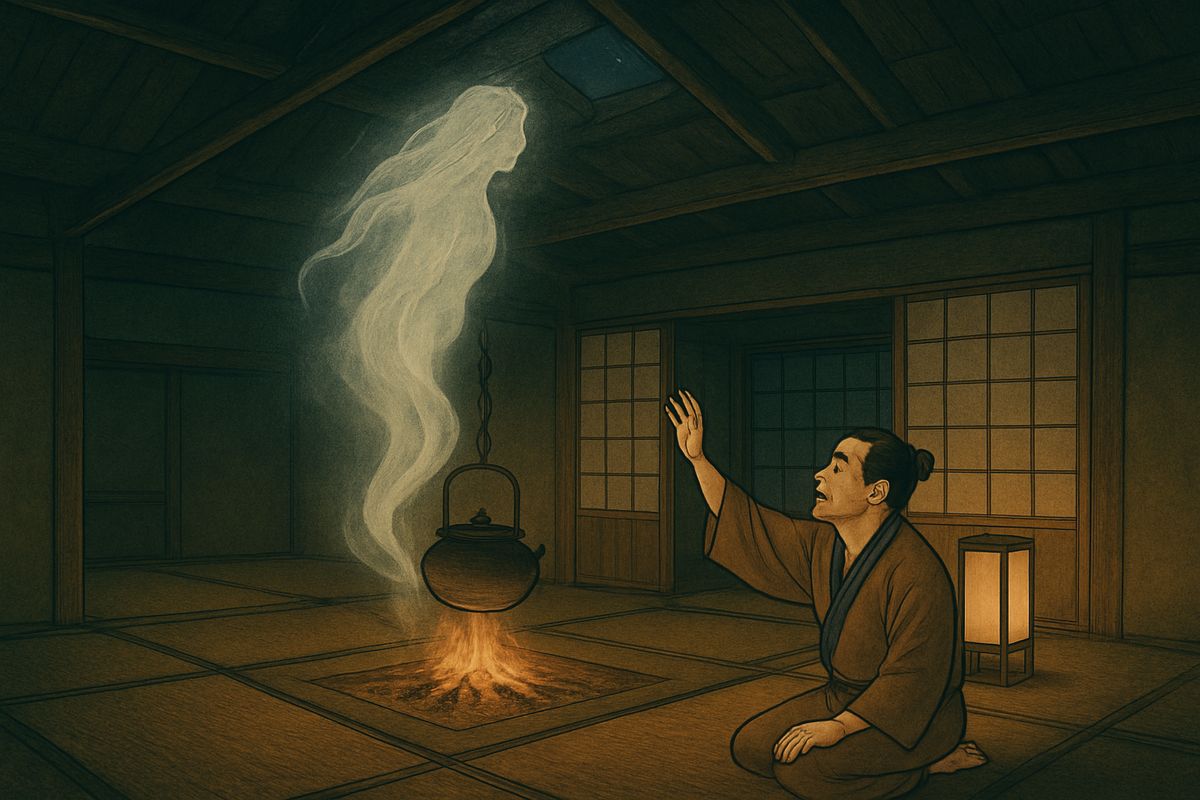
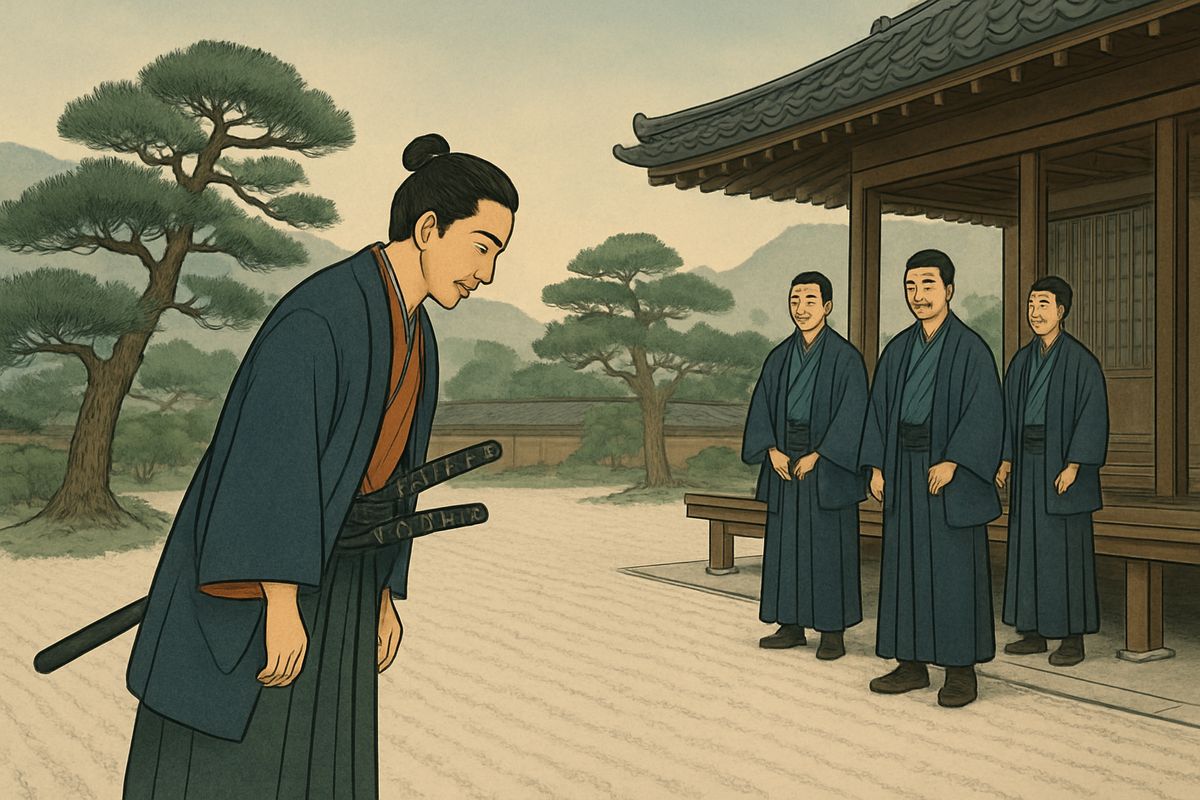
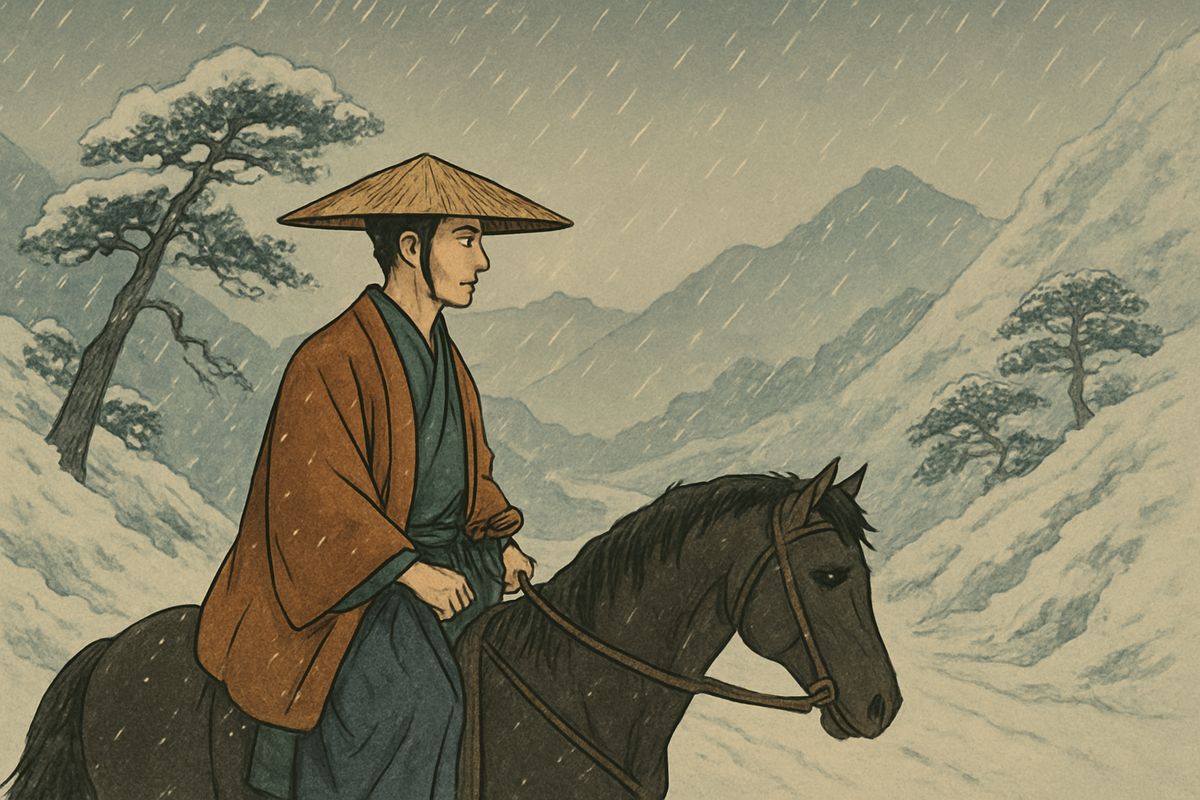
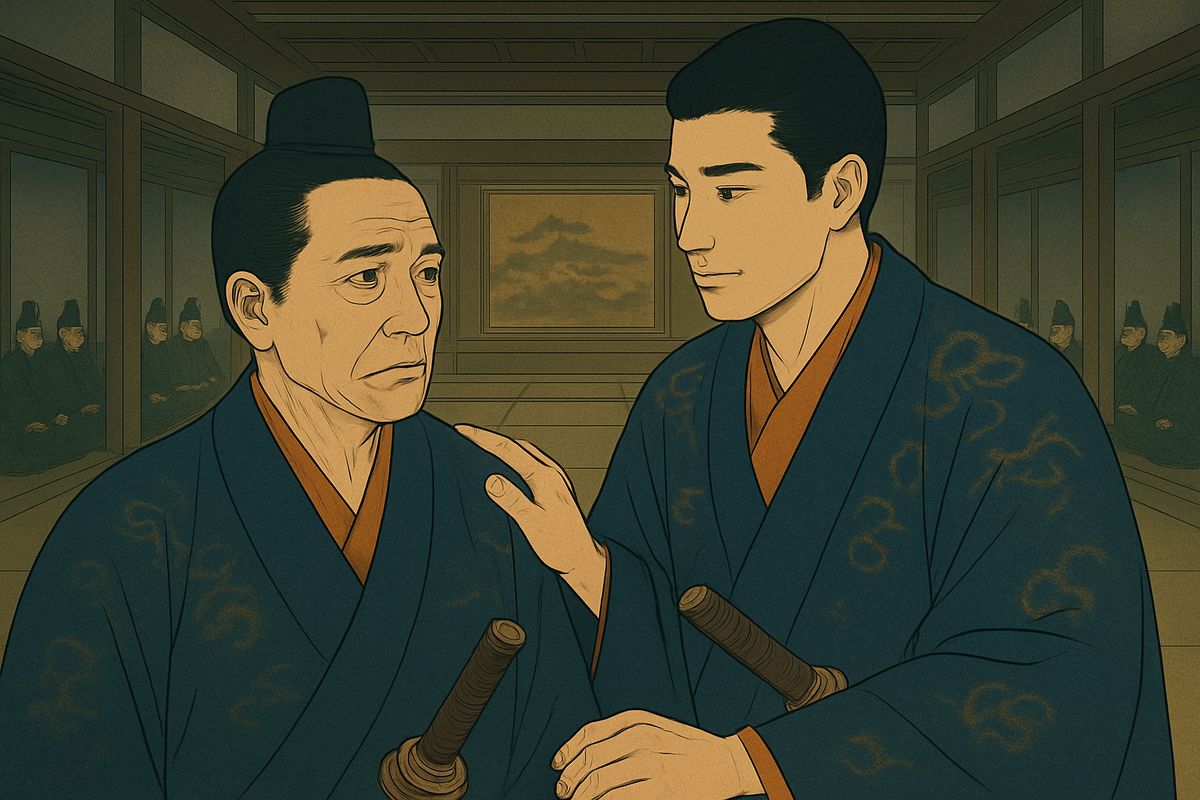
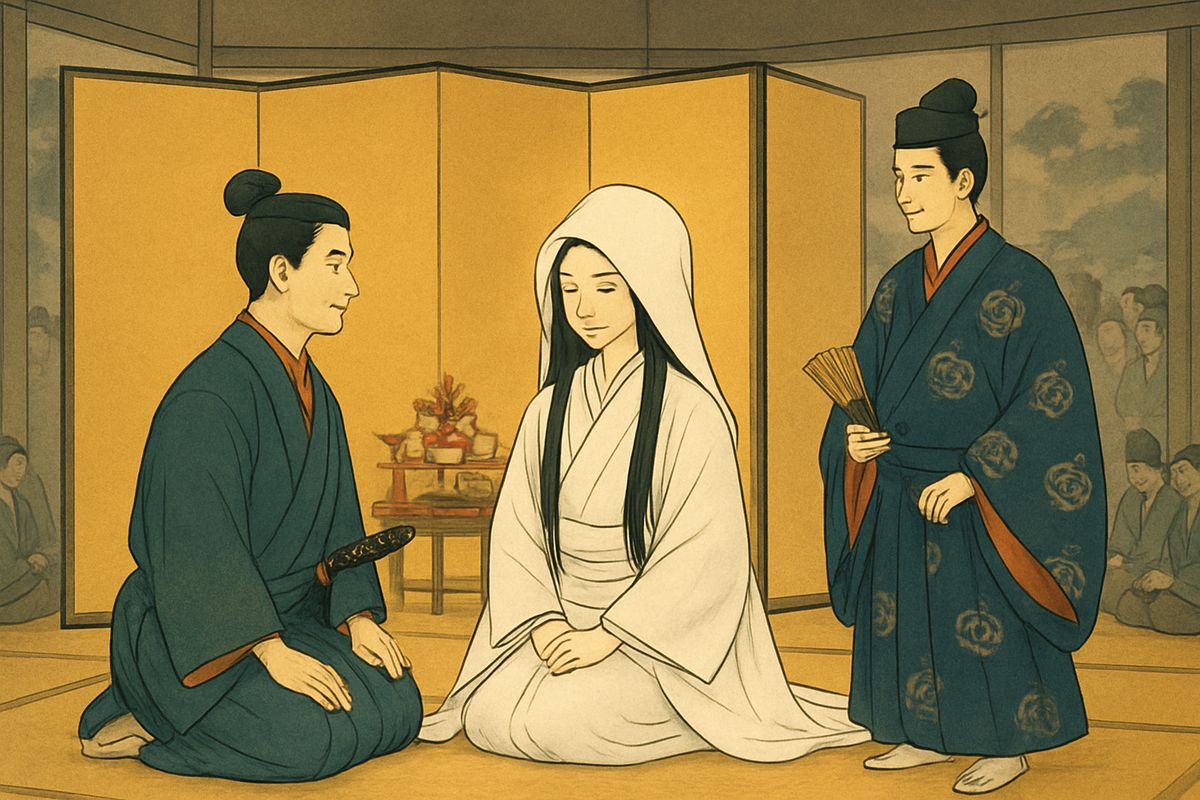
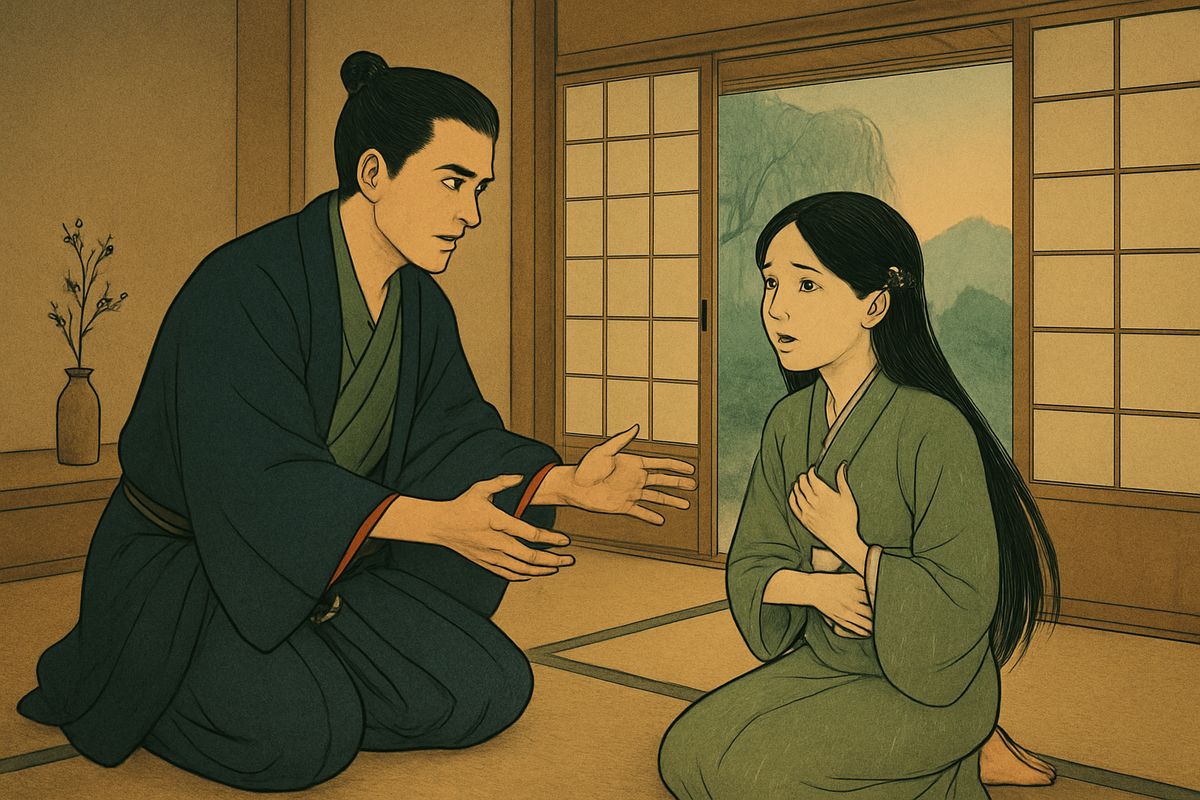
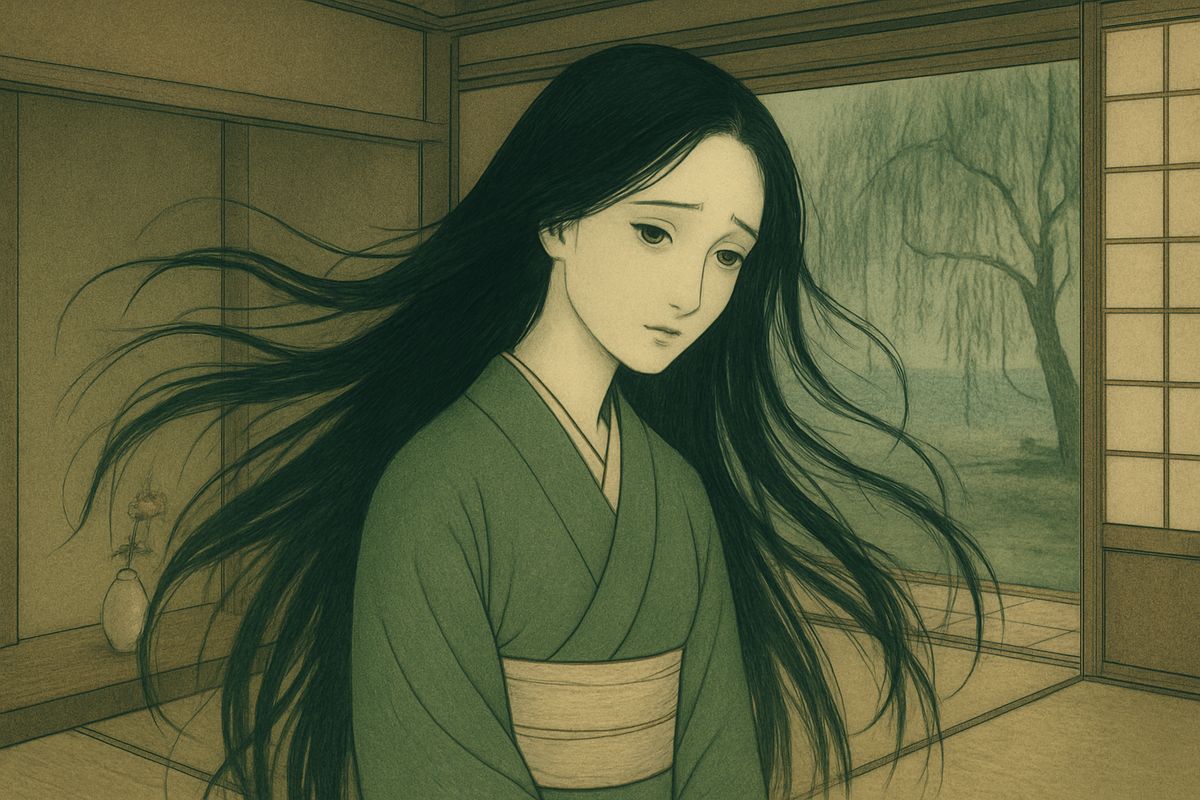
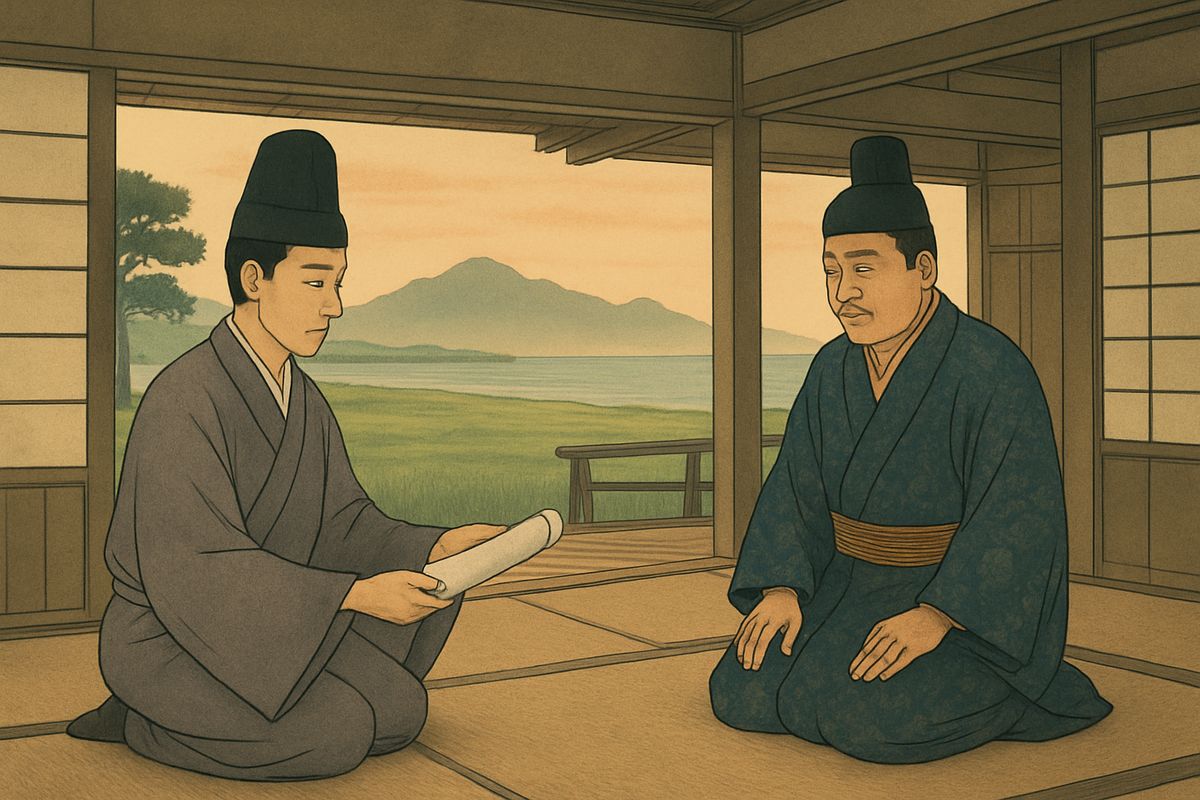
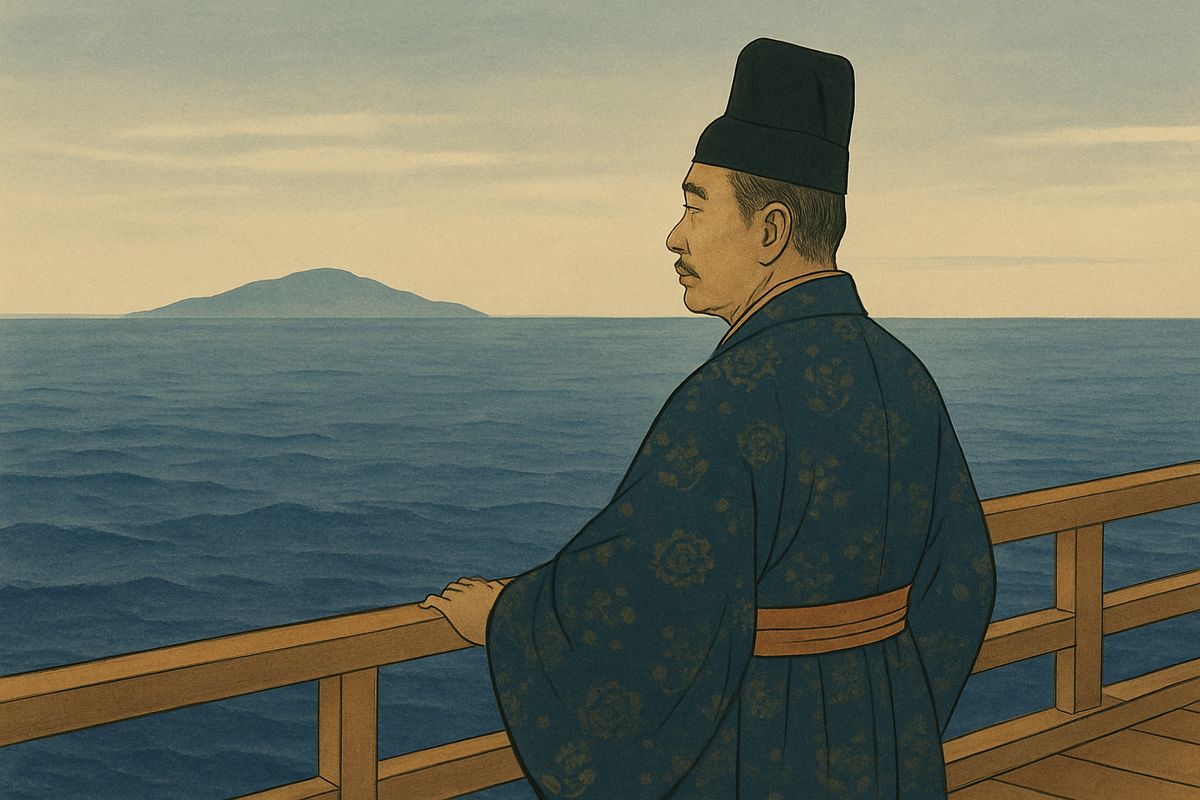
1More than seven hundred years ago, at Dan-no-ura, the Heiké clan perished utterly in their last sea battle, with their women, children and their infant emperor. Ever since, that sea and shore have been haunted.2On dark nights, ghostly fires the fishermen called Oni-bi flitted above the waves. To calm the restless dead, the temple of Amidaji was built at Akamagaséki, with a cemetery of Heiké tombs close beside the beach.3Some centuries ago there lived at Akamagaséki a blind young man named Hōïchi. So wonderfully did he sing the story of Dan-no-ura upon his biwa that, it was said, even the goblins could not keep from weeping.4The kindly priest of the Amidaji loved music, and he invited the poor young singer to make the temple his home. In return, Hōïchi had only to play for his friend on certain evenings.5One hot summer night the priest was called away, leaving Hōïchi alone. The blind man sat on the verandah practising his biwa. Midnight passed. Then he heard footsteps cross the garden from the back gate.6A deep voice called his name, harsh as a command. "Hōïchi!" Startled, the blind man answered, "Hai! I am blind—I cannot know who calls!"7The stranger spoke more gently. His lord, a person of very high rank, had visited the battlefield of Dan-no-ura that day and now wished to hear Hōïchi sing of it. "Take your biwa and come with me at once."8In those days no one lightly disobeyed a samurai. The warrior led Hōïchi away with a hand like iron, walking very fast, his armour clanking. Hōïchi began to think himself in good luck.9They passed a great gate and entered a house. Women's hands led Hōïchi over endless polished floors into a vast hall, where silk rustled like leaves in a forest and voices murmured in the speech of courts.10A woman's voice, the Rōjo in charge of the ladies, spoke to him. "Recite the story of the battle at Dan-no-ura," she said, "for the pity of it is the most deep."11Hōïchi chanted the fight on the bitter sea, his biwa sounding like straining oars, hissing arrows and crashing steel. All around him, voices whispered, "Not in all the empire is there another singer like Hōïchi!"12But when he sang of the drowning of the women and children, and the infant emperor in Nii-no-Ama's arms, the whole assembly wailed so wildly that the blind man grew afraid of the grief he had stirred.13The Rōjo said their lord would reward him, and he must play every night for six more nights. "But you shall speak to no one of your visits here," she warned. "Our lord travels in secret."14The samurai brought Hōïchi home near dawn, and the next night came for him again. But this time his absence was noticed. "Where have you been, friend?" asked the worried priest. Hōïchi only answered, "Some private business."15The priest suspected that the lad had been bewitched by evil spirits. He asked no more, but quietly told the temple servants to follow Hōïchi if he left the temple again after dark.16The very next night Hōïchi slipped away. The servants lit lanterns and followed, but it was rainy and very dark, and the blind man vanished at a strange, swift pace. They searched every street in vain.17Returning by the shore, they heard a biwa furiously played in the cemetery. There sat Hōïchi alone in the rain before the tomb of Antoku Tennō, while the fires of the dead burned all around him like candles.18"Hōïchi San! You are bewitched!" the servants cried, shaking him. But he answered sternly, "To interrupt me before this august assembly will not be tolerated." So they dragged him home by force.19At last Hōïchi told the priest everything. "My poor friend, you are in great danger!" cried the priest. "You have been visiting no house, but the tombs of the Heiké. Obey the dead again, and they will tear you to pieces."20Before sundown, the priest and his acolyte took their brushes and wrote the holy Hannya-Shin-Kyō sutra all over Hōïchi's body—his chest and back, his head and face, even the soles of his feet.21"Tonight you will be called," the priest warned. "Whatever happens, do not answer and do not move. Sit still, as if meditating. If you stir, you will be torn asunder."22After dark Hōïchi sat alone on the verandah, his biwa laid beside him. He sat still as a stone for hours. Then came the footsteps, across the garden, and the deep voice: "Hōïchi! Hōïchi! HŌÏCHI!"23"No answer! That won't do," grumbled the voice. Heavy feet mounted the verandah and halted beside him. For long minutes there was dead silence, while Hōïchi's heart pounded in his chest.24"Here is the biwa," muttered the gruff voice, "but of the biwa-player I see only two ears! Those ears I will take to my lord, in proof that his commands were obeyed."25Fingers of iron gripped his ears and tore them away. Great as the pain was, Hōïchi made no cry. The heavy footsteps faded into the night, and still he dared not lift his hands.26Before sunrise the priest came hurrying back and found Hōïchi still sitting there, hurt. At his friend's voice the blind man sobbed out his story. "All my fault!" cried the priest. "The acolyte forgot to write on your ears!"27With a good doctor's help Hōïchi soon recovered. His strange tale spread far and wide; nobles came to hear him sing, and he grew wealthy. But ever after he was known as Mimi-nashi-Hōïchi: Hōïchi-the-Earless.
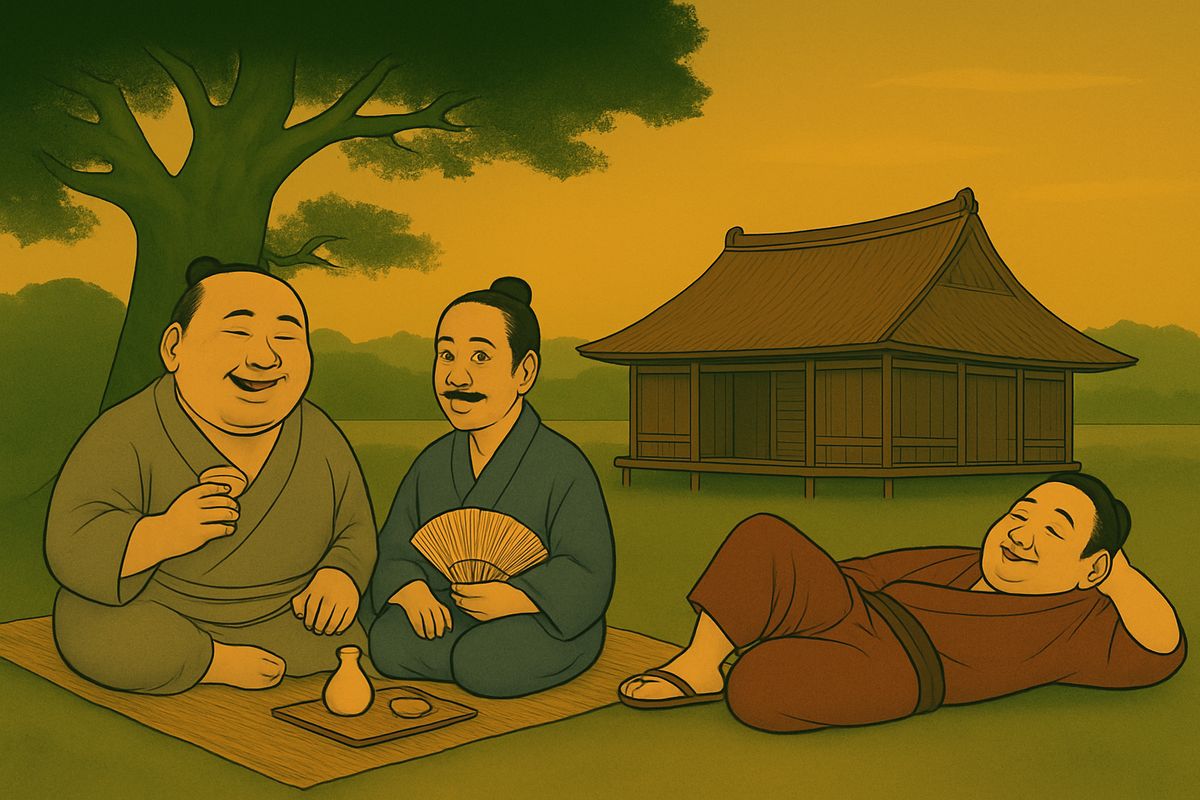
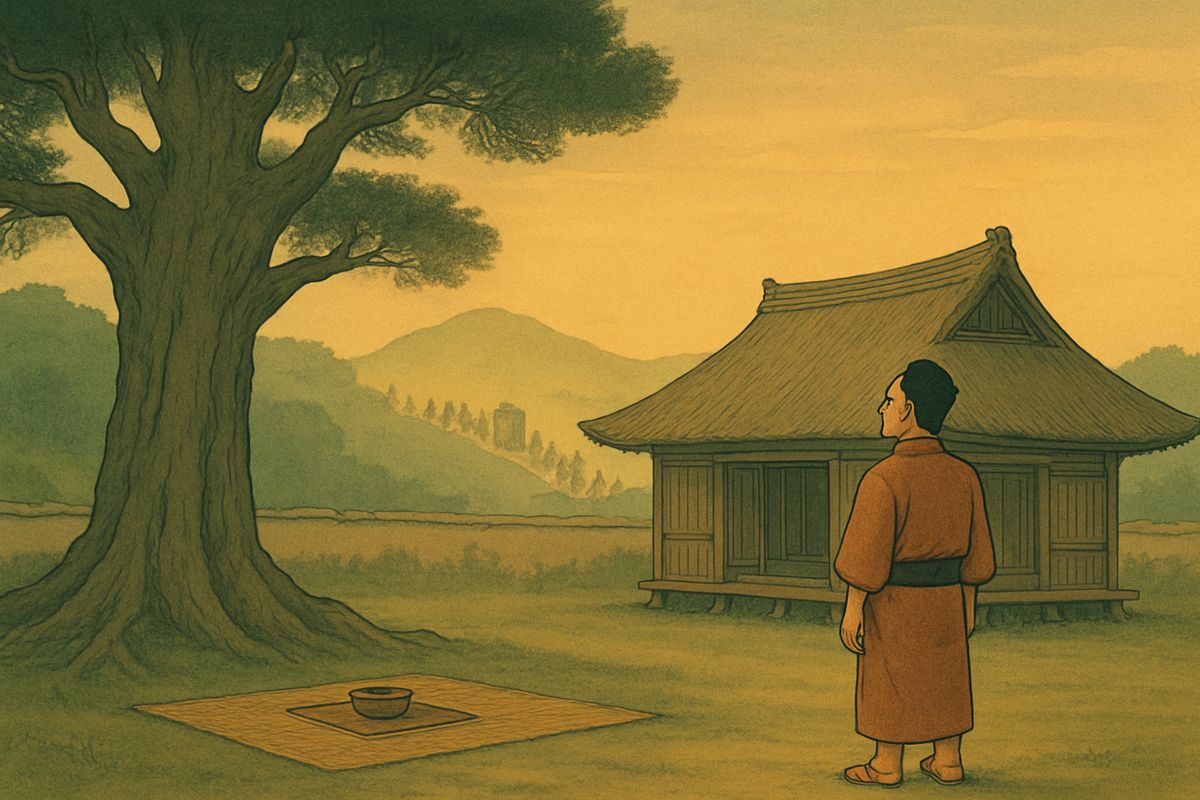
Rokuro-kubi
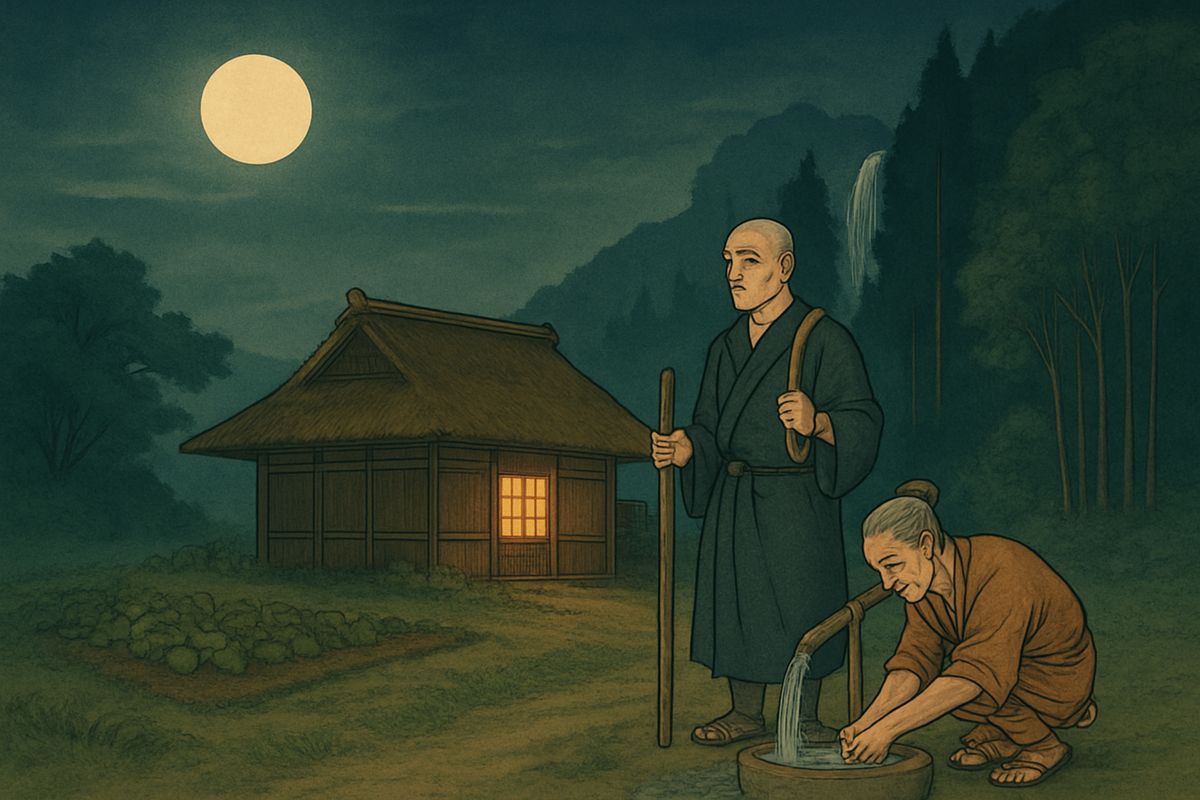
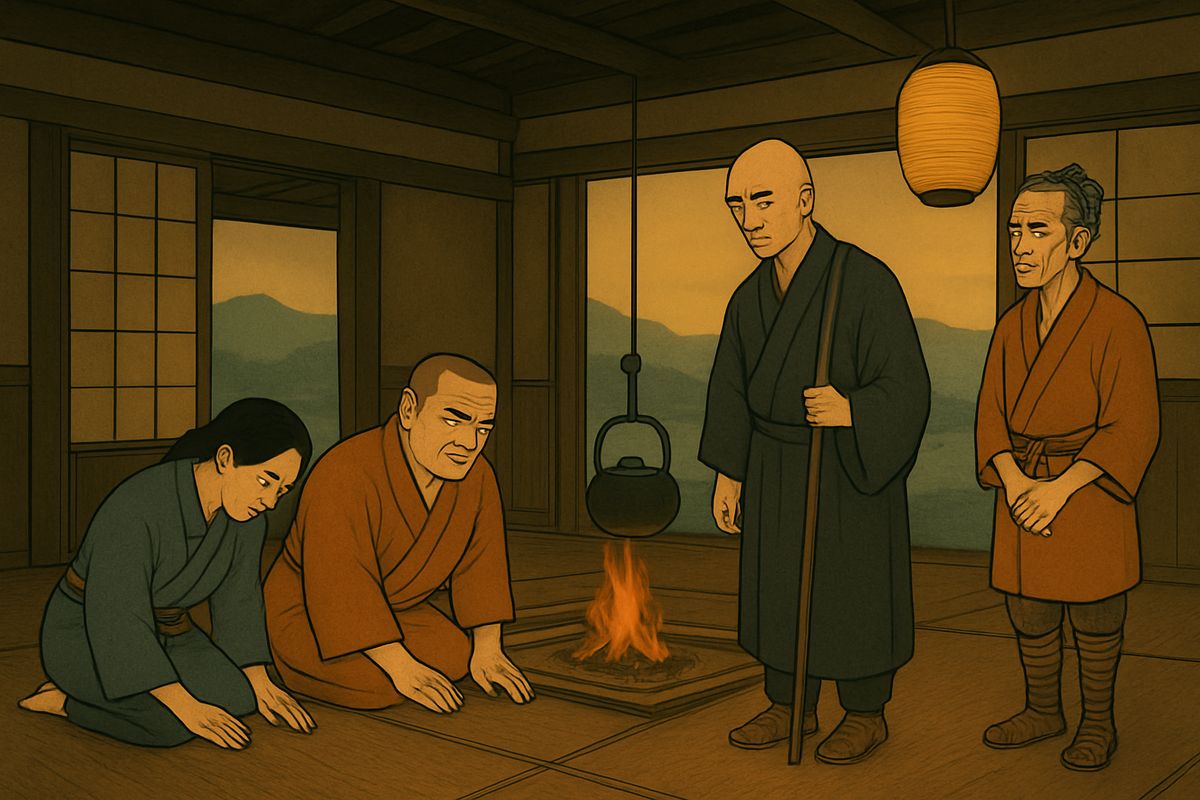
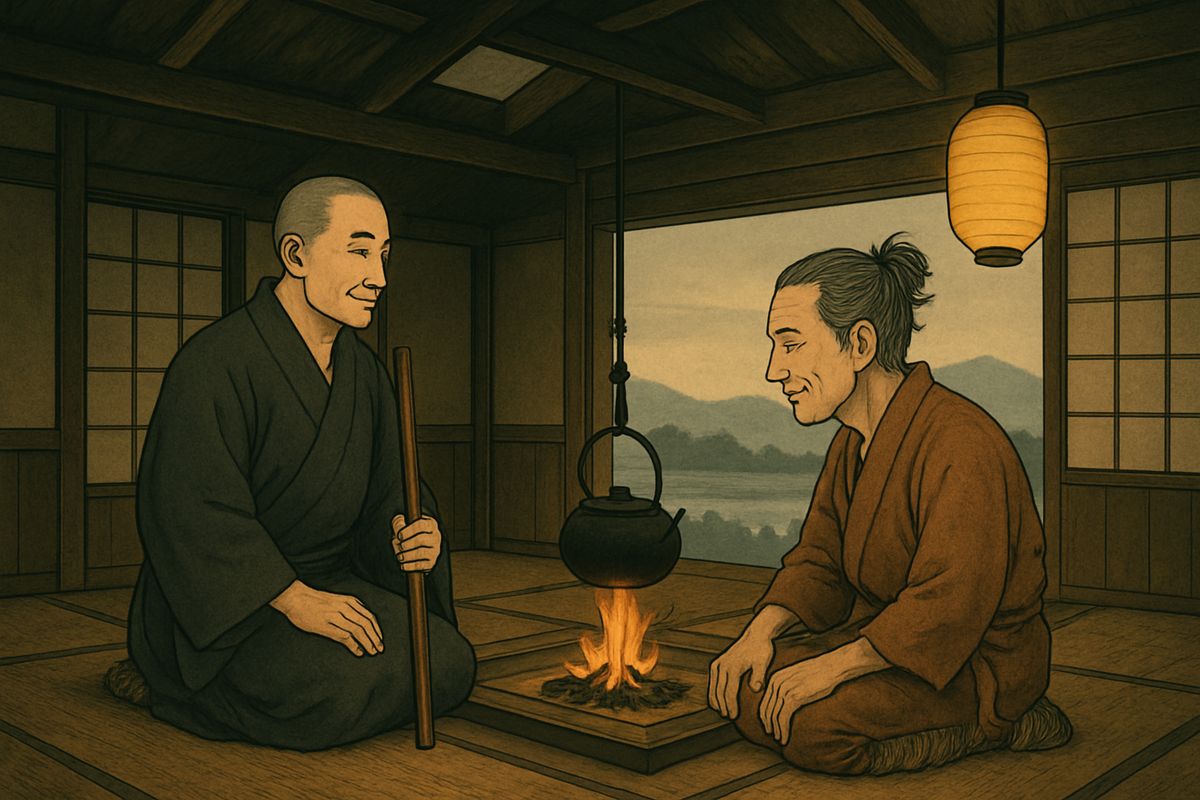
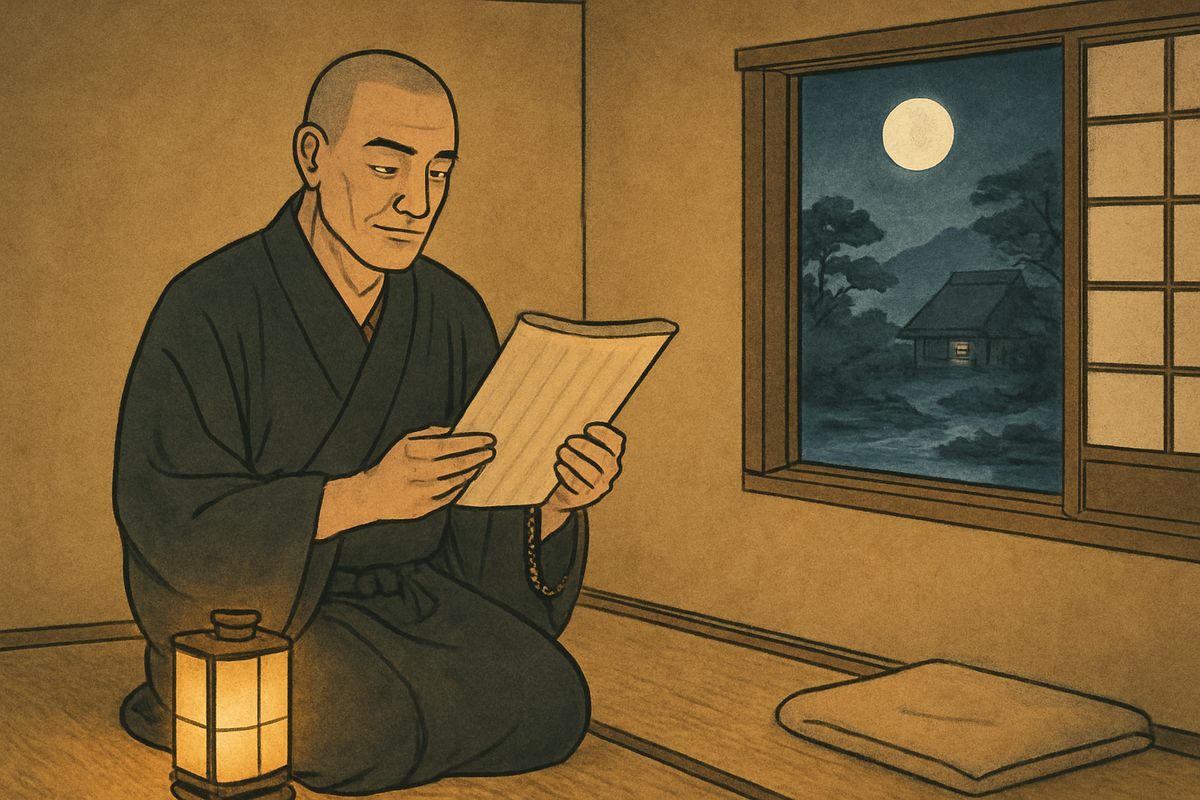
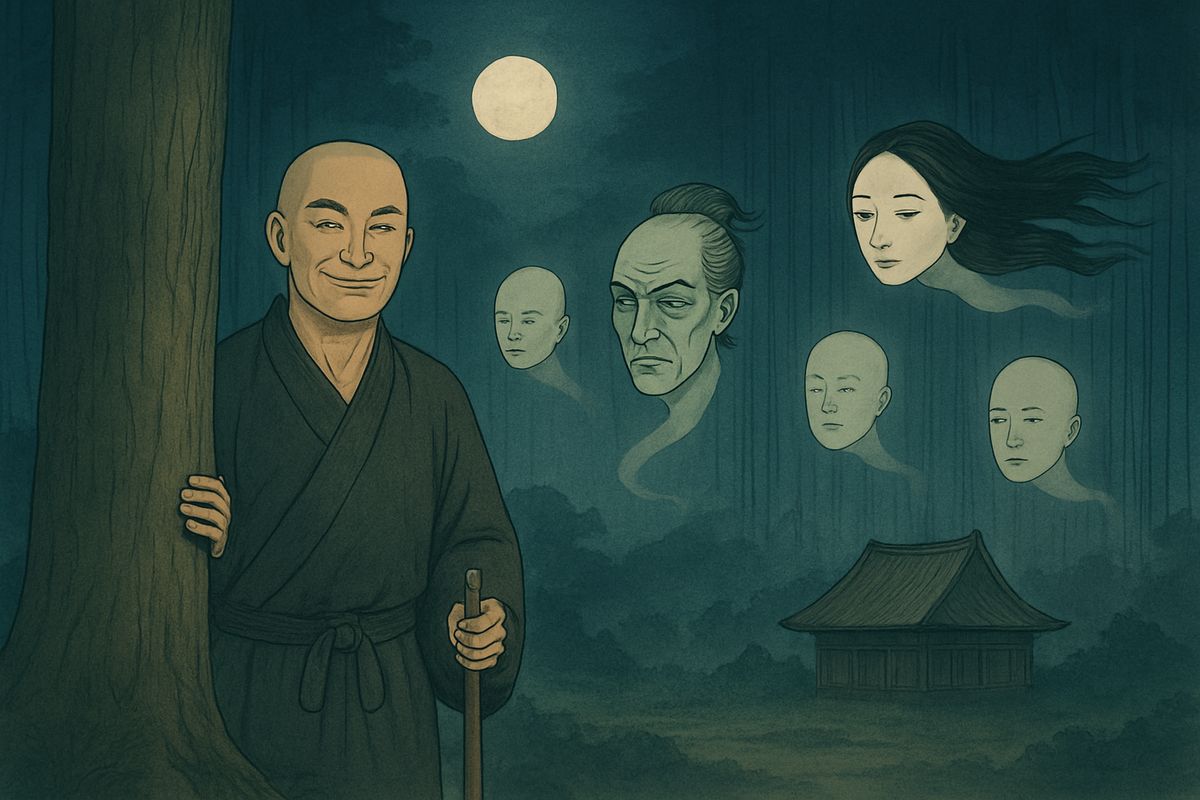
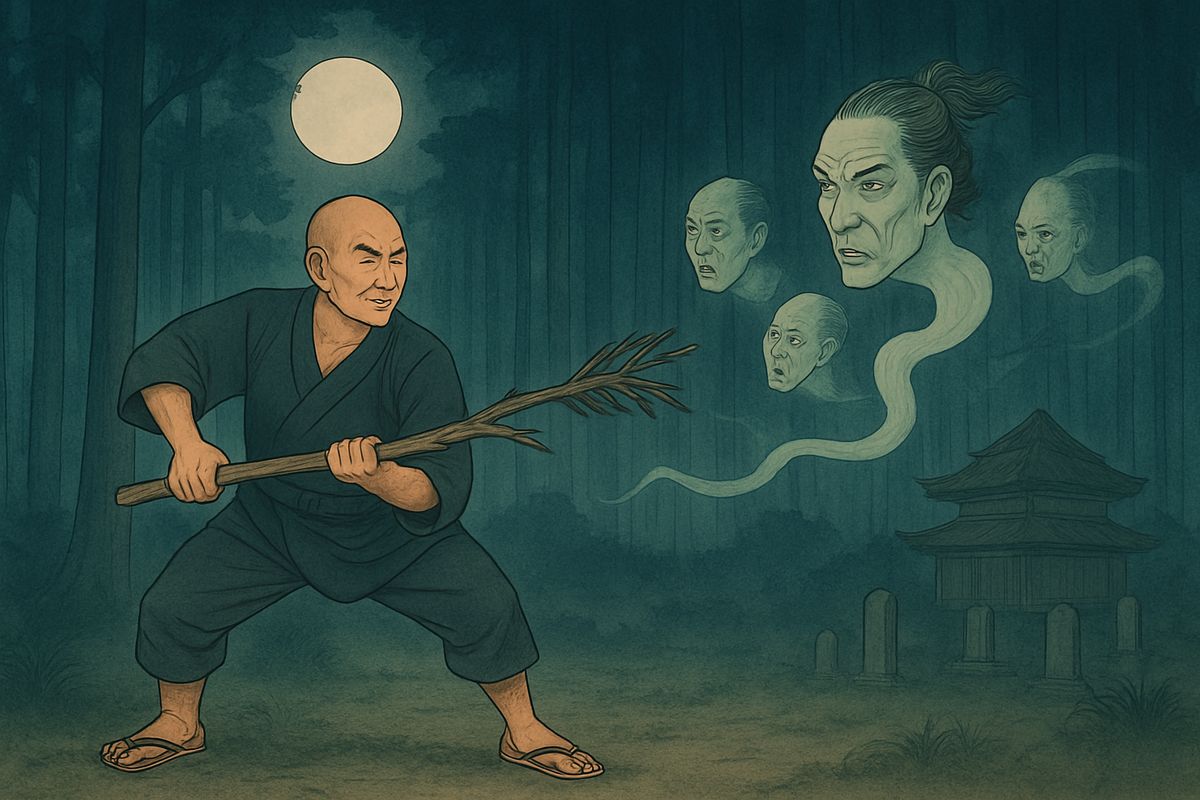
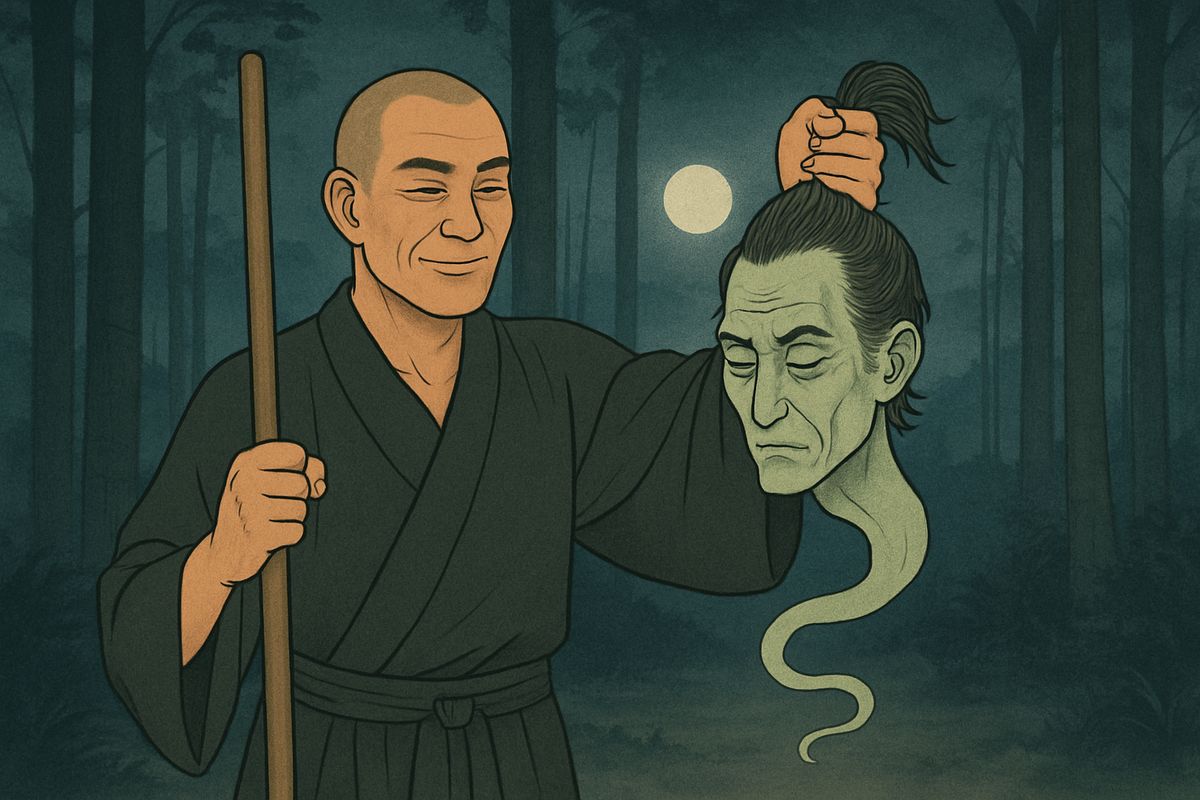
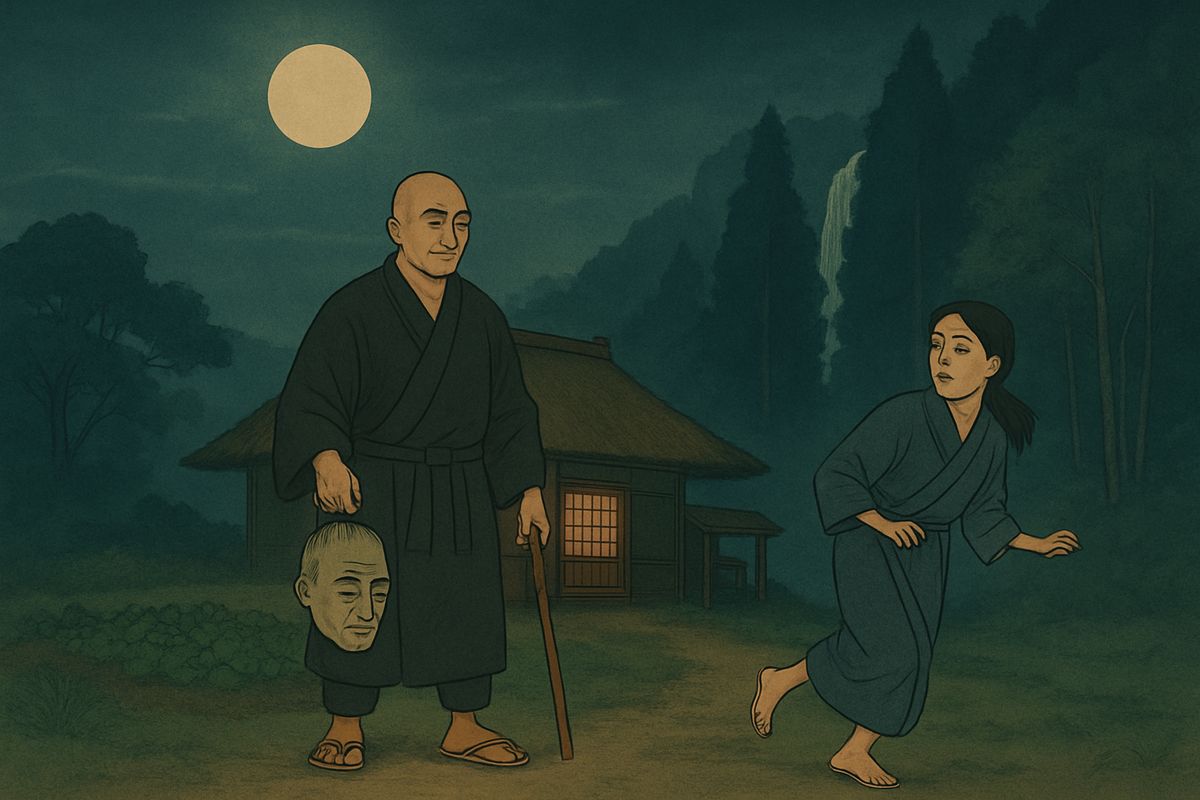
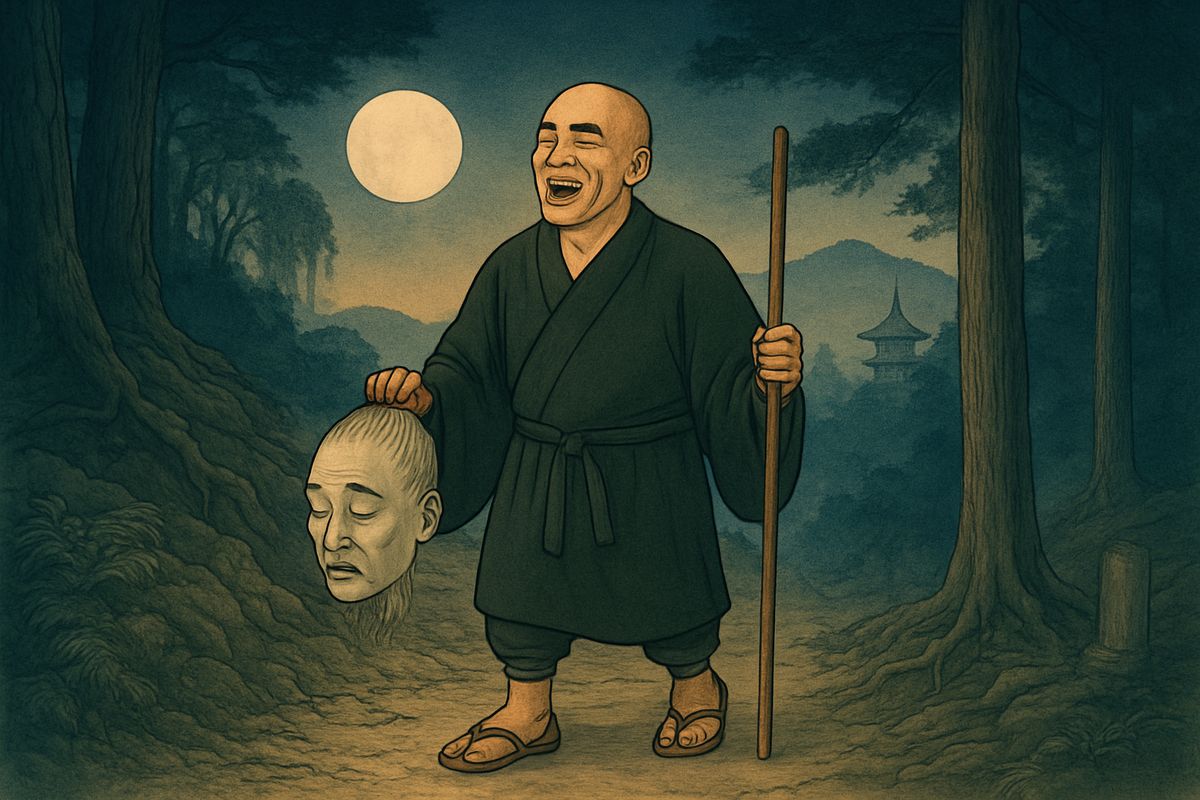
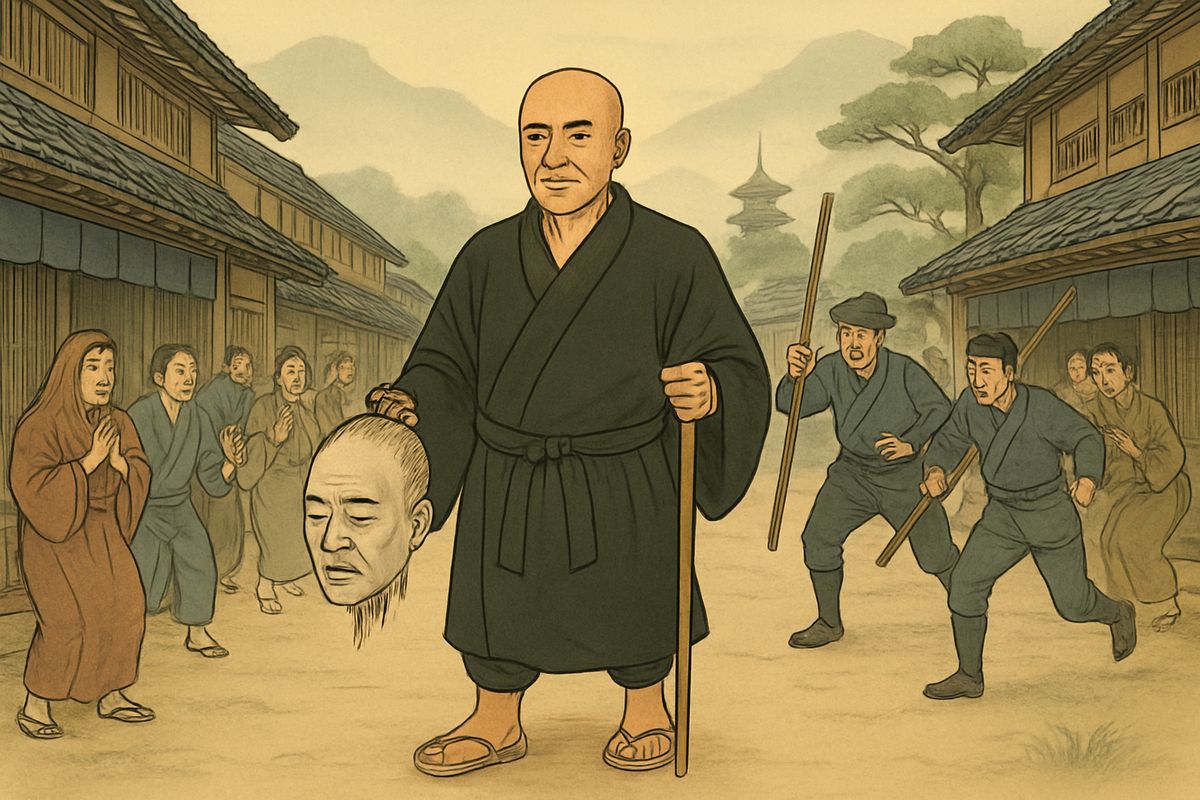
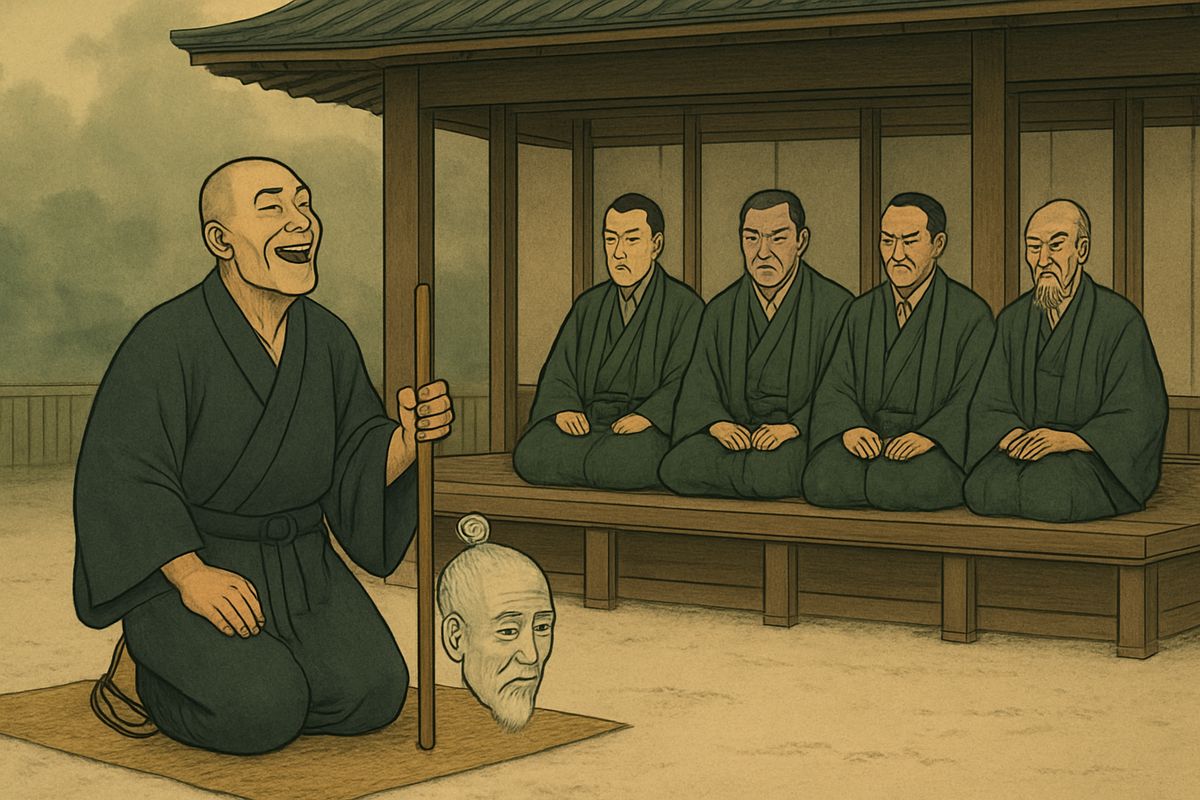
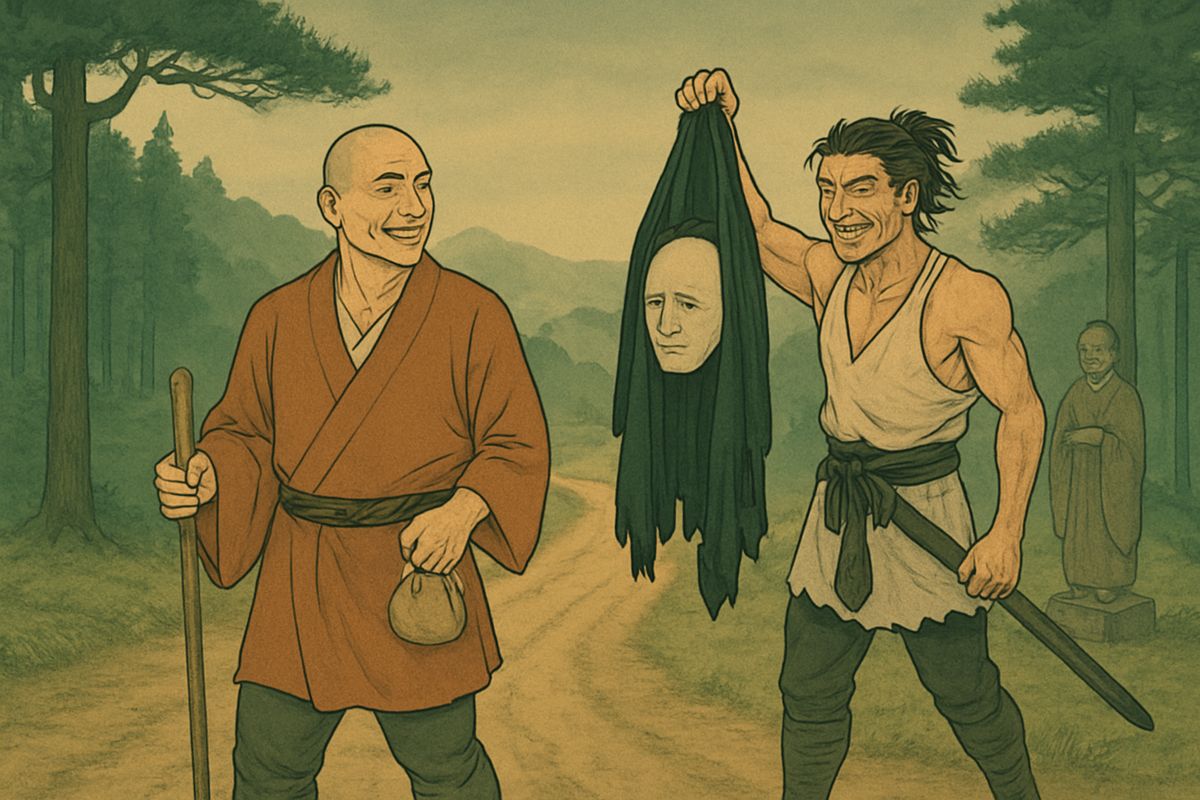
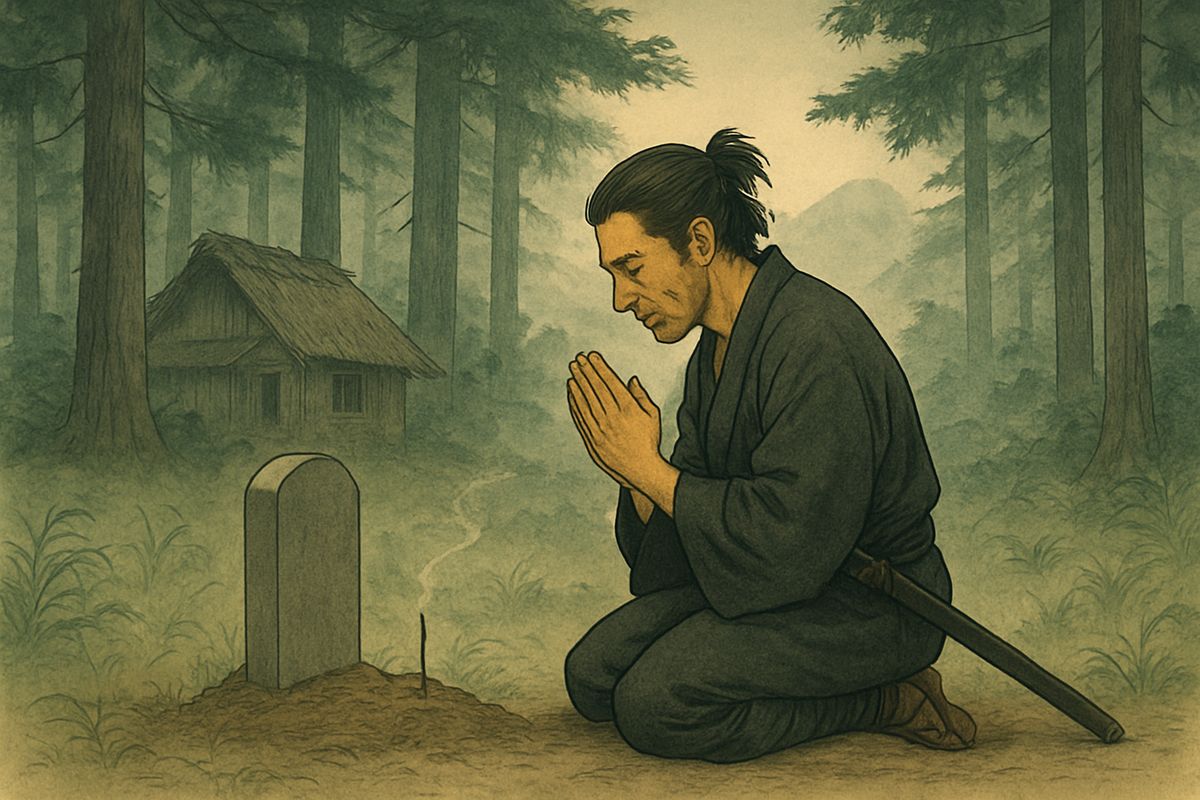
1Nearly five hundred years ago, the samurai Isogai served Lord Kikuji of Kyūshū. He was stronger and more skillful with sword, bow and spear than any of his teachers, and he won high honours in the Eikyō war.2When the house of Kikuji fell, Isogai stayed loyal to his lost lord and would serve no other. He cut off his hair and became a traveling priest named Kwairyō, going boldly to places where no other priest dared to go.3One evening in the lonely mountains of Kai, night overtook him far from any village. Kwairyō lay down happily on the grass beside the road. For him a rock was a good bed and a pine root an excellent pillow.4A woodcutter came along the road carrying an axe and a bundle of wood. He stopped in surprise. “Are you not afraid, Sir? There are haunters about here, many of them!”5Kwairyō laughed and said he feared no goblins and loved lonely places. But the woodcutter begged him to come to his poor thatched hut, where at least there was a roof. Liking his kind tone, the priest agreed.6The woodcutter led him up a narrow, dangerous path through the forest. It ran along cliffs, over slippery roots and between jagged rocks, lit only by the light of the full moon.7At the top of the hill stood a small thatched cottage, glowing with light. The two men washed their feet at a bamboo water pipe. Beyond the trees, a waterfall swayed in the moonlight like a long white robe.8Inside, four men and women were warming their hands at the hearth. They bowed low and greeted the priest with perfect manners. “These are good people,” thought Kwairyō, “taught by someone who knows the rules of propriety.”9“You were not always a woodcutter,” said Kwairyō. The host smiled sadly. Once he had served a daimyō, he said, but his love of wine and women had ruined his lord's house and caused many deaths. Now he tried to atone.10Kwairyō promised to recite the sutras for his host's sake. While the household slept, he read and prayed late into the night by lantern light. Then he opened the little window to look at the beautiful moonlit garden.11Feeling thirsty, he quietly slid open the screen to the main room to go and get a drink. By the lantern's light he saw the five sleepers lying there, and every one of them was without a head!12There was no blood, and the necks had not been cut. Kwairyō remembered an old book: if you move the body of a Rokuro-Kubi while its head is away, the head can never join it again.13He dragged the host's body to the window and pushed it outside. The back door was barred, so the heads must have flown out through the smoke-hole in the roof. Gently he unbarred the door and slipped out.14Stealing from shadow to shadow, he reached the grove and hid behind a tree. There, in the moonlight, the five heads flitted about, chattering together as they gobbled up worms and insects.15The host's head stopped eating. “That fat priest! When we eat him, our bellies will be full. But we cannot touch him while he prays. Somebody go and see if he has fallen asleep.”16The young woman's head flew to the house, light as a bat, and came rushing back. “The priest is gone!” it cried. “And worse — he has taken our master's body, and I don't know where he has put it!”17The host's head turned frightful. Its eyes bulged, its hair bristled, its teeth gnashed and it wept tears of rage. “Then I must die! But first I will get that priest! There he is, behind that tree!”18All five heads sprang at Kwairyō. But the strong priest had pulled up a young tree, and he swung it with tremendous blows. Four of the heads fled into the dark.19The host's head kept flying at him, and at last seized his left sleeve in its teeth. Kwairyō grabbed its topknot and struck it until it gave a long moan and was still. But its jaws would not let go.20Back at the house, he found the other four goblins crouched together, their heads rejoined to their bodies. When they saw him at the back door, they screamed, “The priest! The priest!” and fled into the woods.21The eastern sky brightened, and Kwairyō knew goblins had no power by day. Looking at the head on his sleeve, he laughed aloud. “What a souvenir! The head of a goblin!” Then he strolled down the mountain.22In the town of Suwa, he marched down the main street with the head dangling at his elbow. Women fainted and children ran screaming, until the police seized the priest and carried him off to jail.23The magistrates demanded to know why a priest was parading a murdered man's head. Kwairyō laughed long and loud. “I did not fasten it to my sleeve. It fastened itself there! It is the head of a goblin.”24The others wanted him executed at once, but the old magistrate asked to see the head. On the back of its neck he found strange red markings, and the edge was smooth, like where a falling leaf comes away from its stem.25“This is a true Rokuro-Kubi,” he said. “But who are you, Sir? You look more like a soldier than a priest.” When Kwairyō gave his old name, Isogai of Kyūshū, a murmur of admiration filled the court.26His judges became his friends. They took him with honour to the daimyō, who feasted him and gave him a handsome present. Kwairyō left Suwa as happy as a priest can be, still keeping the head as a souvenir.27A few days later, a robber stopped Kwairyō on a lonely road and ordered him to strip. Kwairyō handed over his robe at once, and the robber jumped back when he saw what hung from its sleeve.28The robber admired him and offered five gold coins and his own robe for the head, to frighten people with. “It is truly a goblin's head,” warned Kwairyō. Then he took the money and went on his way, laughing.29Near Suwa the robber heard the true story and grew afraid of the goblin's spirit. He carried the head back to the empty cottage in Kai, buried it in the grove and set up a tombstone, which, the storytellers say, stands there still.
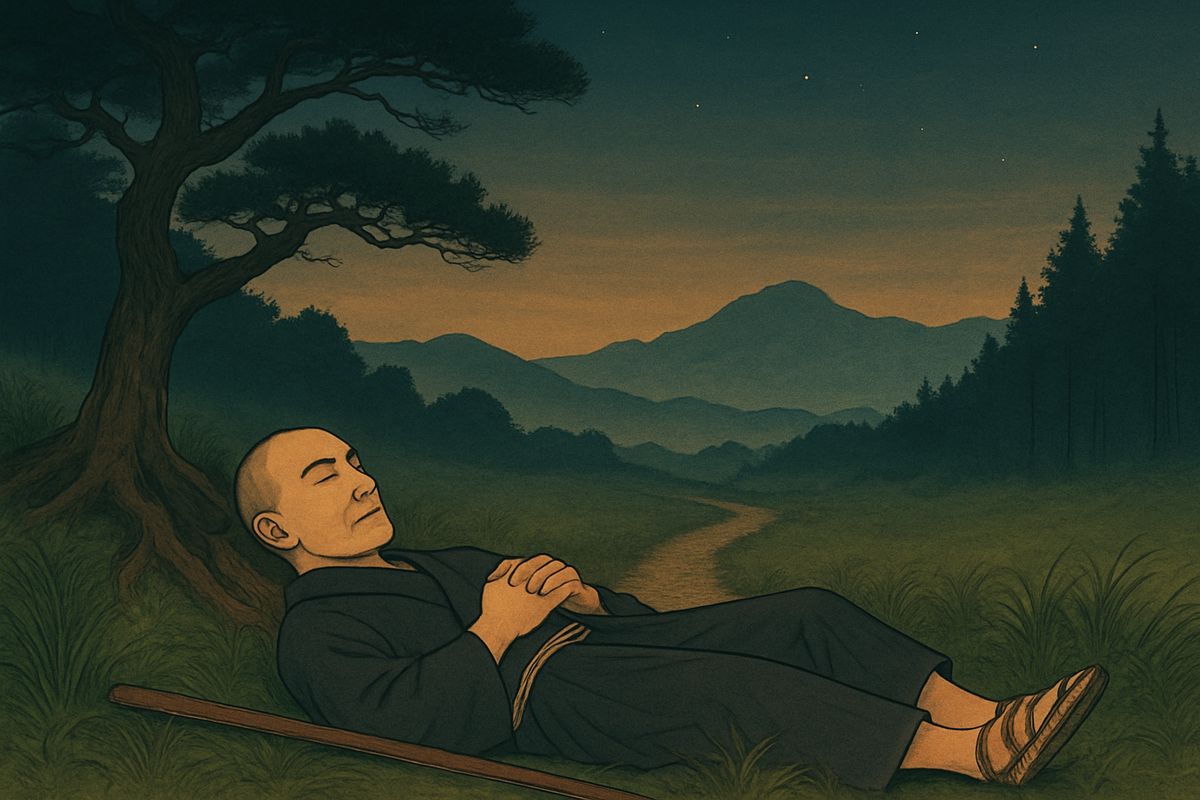
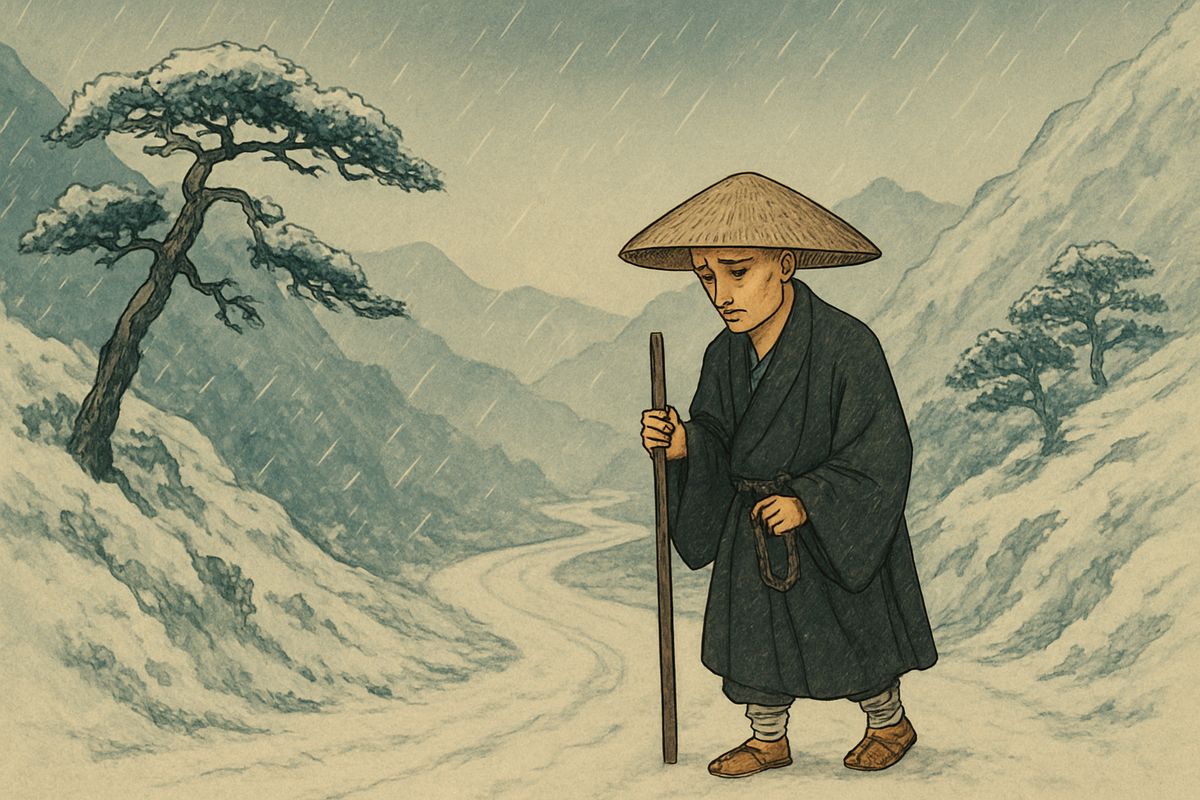
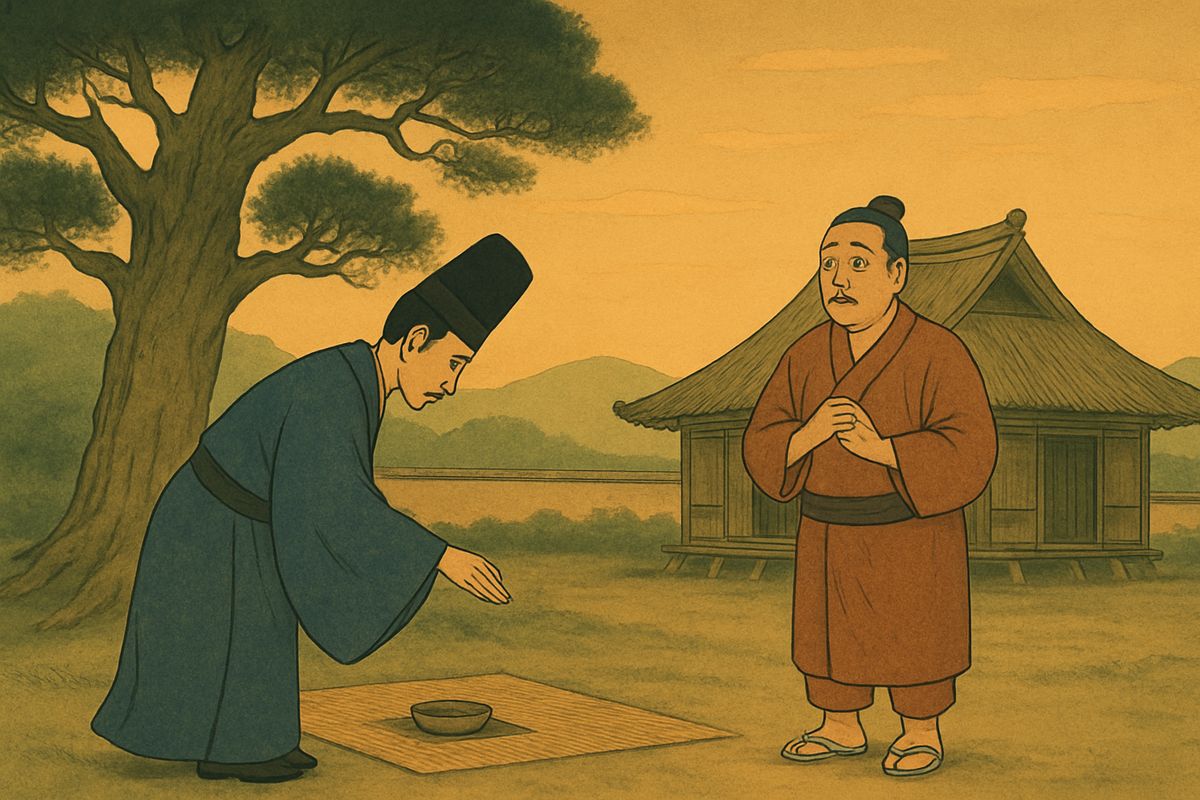
Yuki-onna
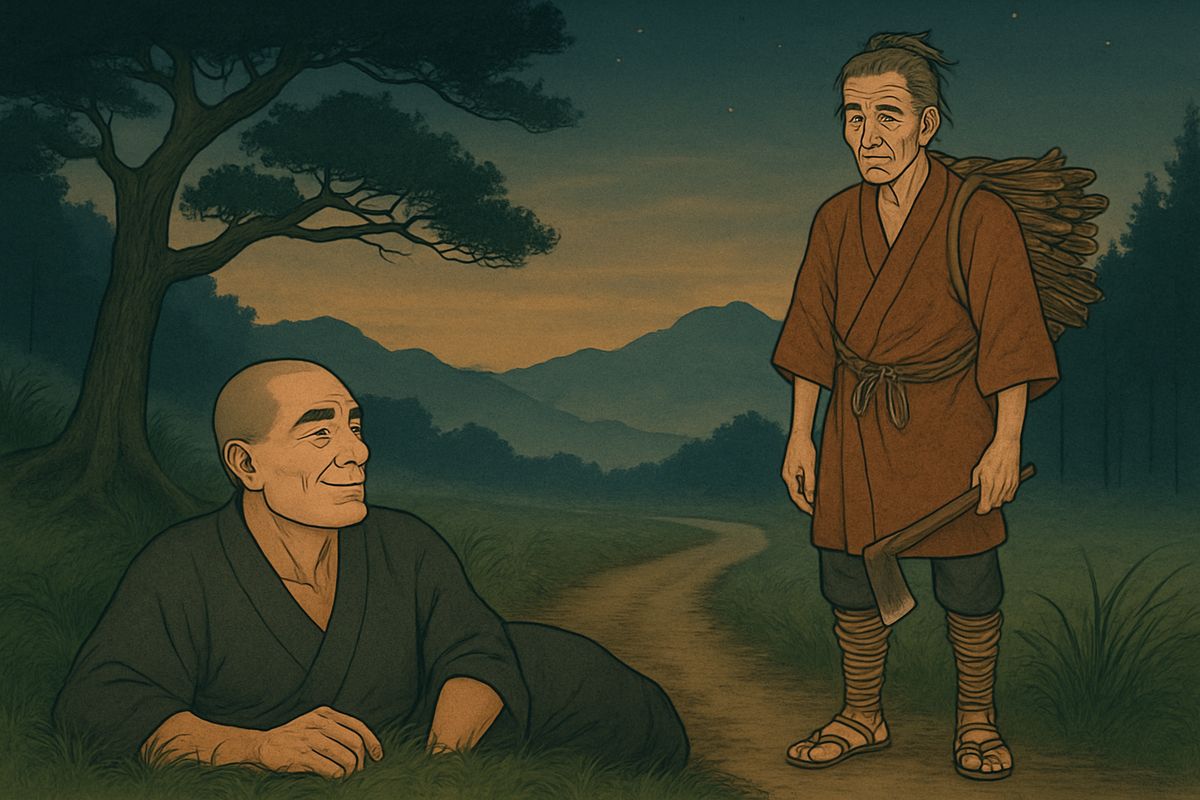
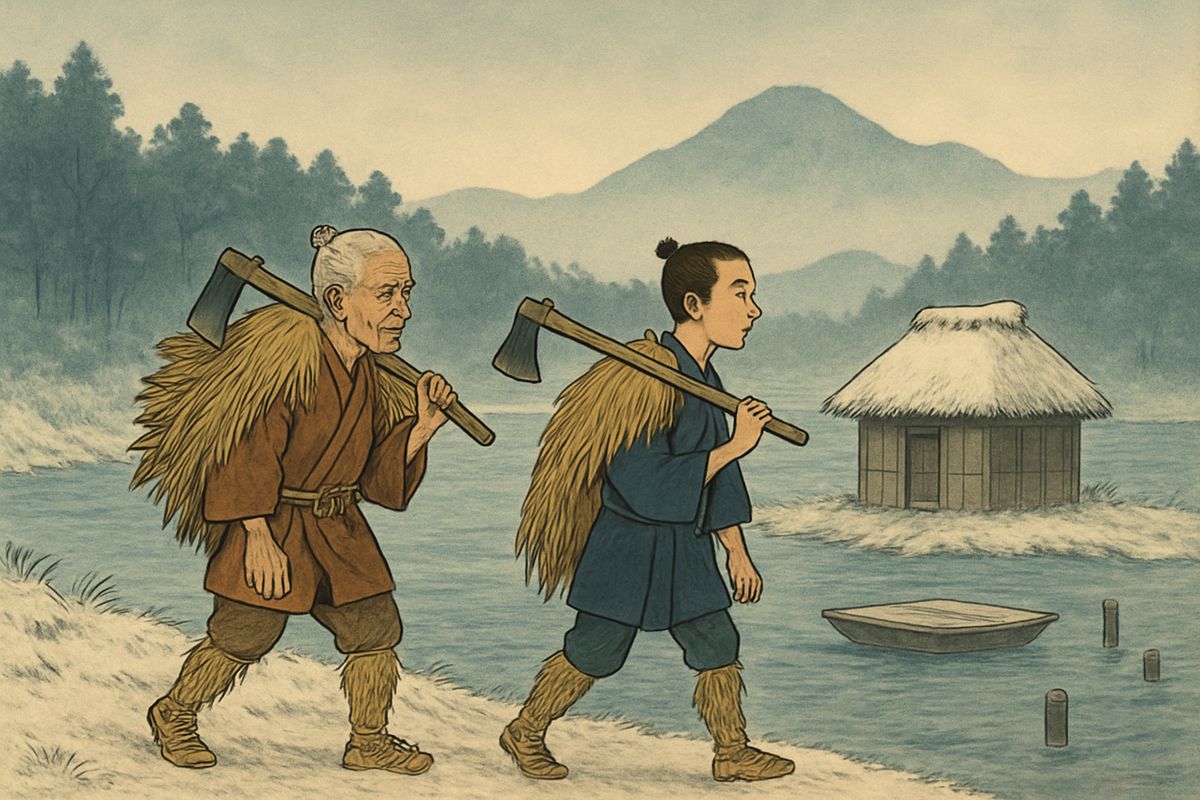
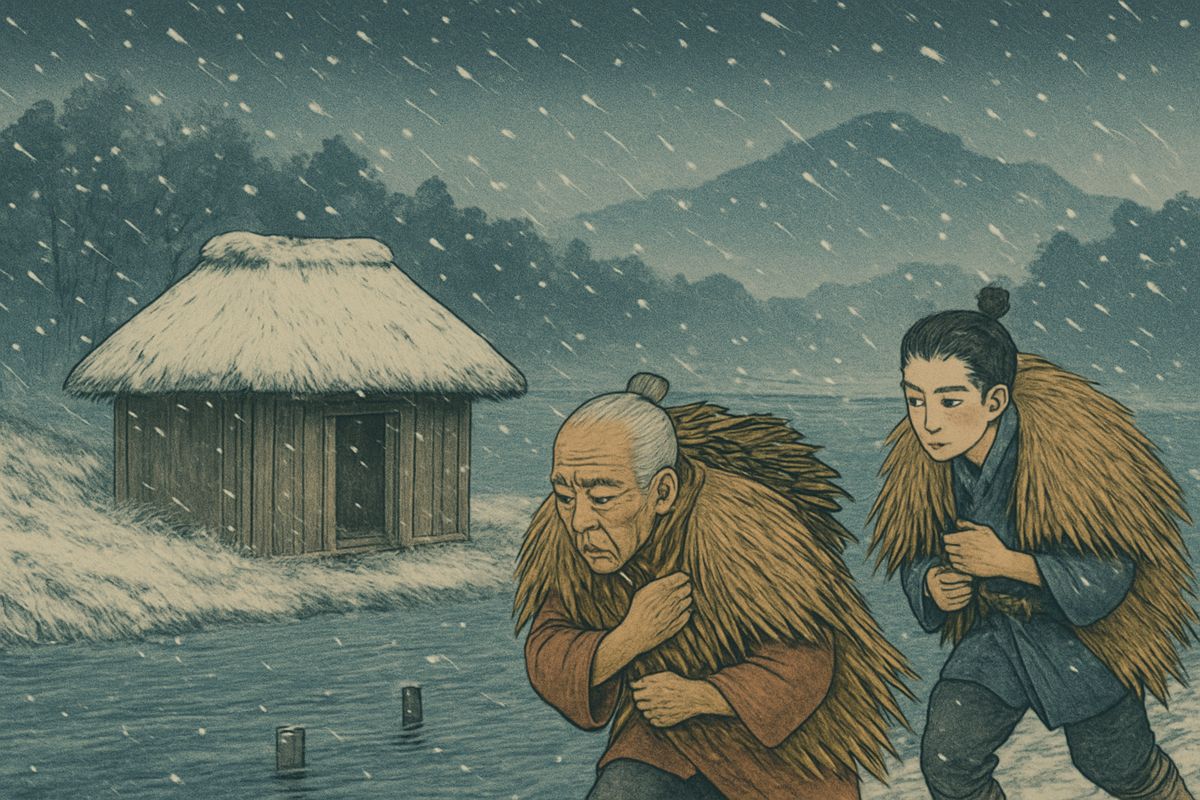
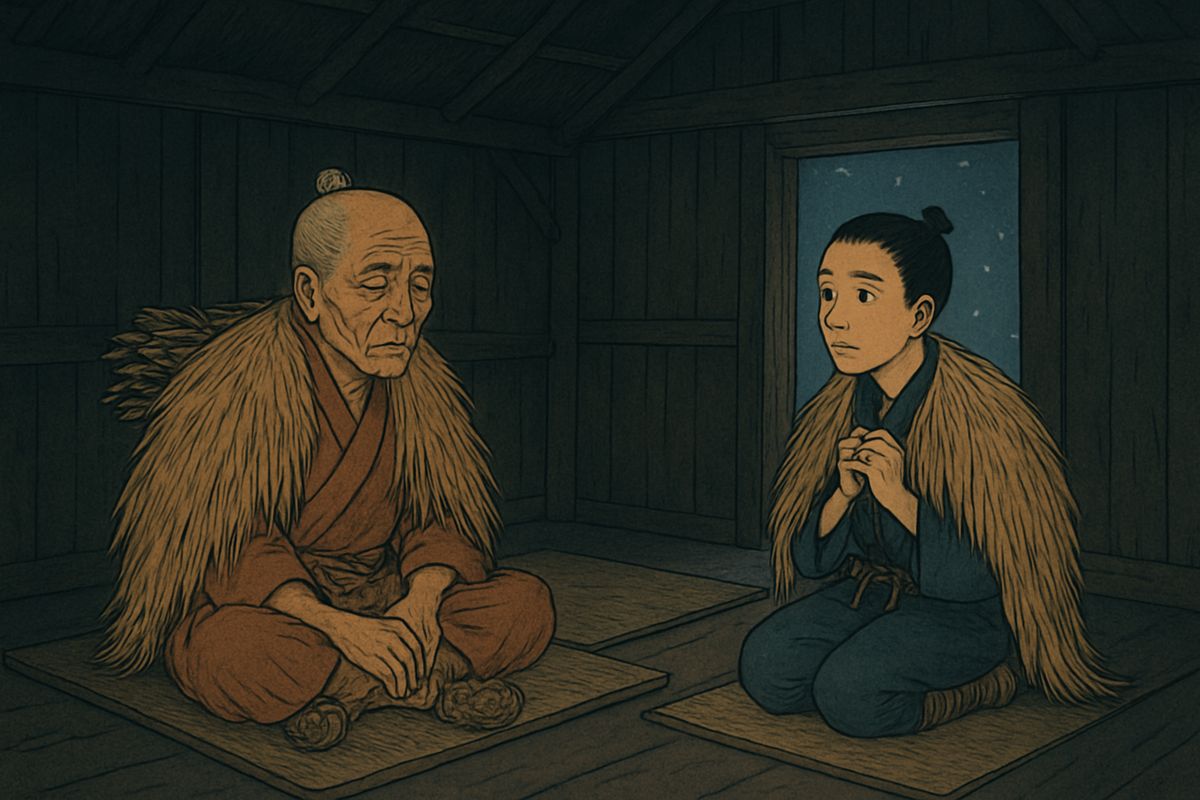
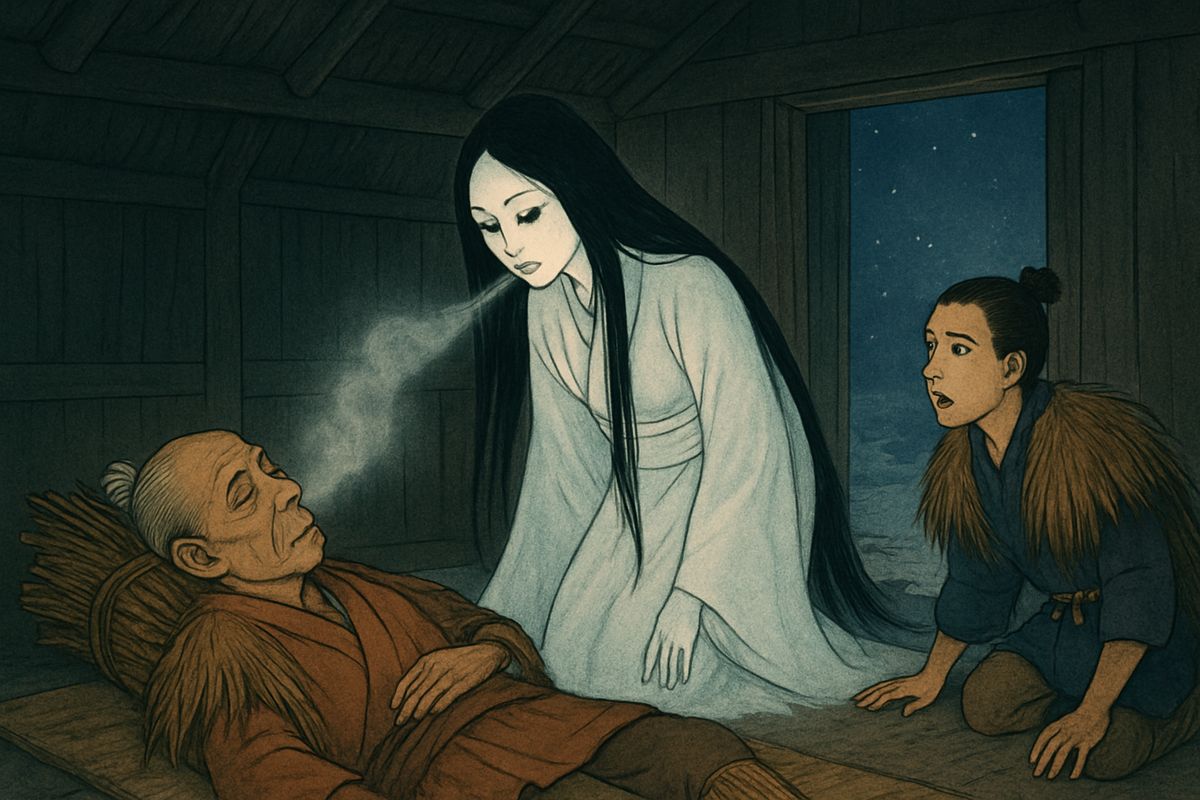
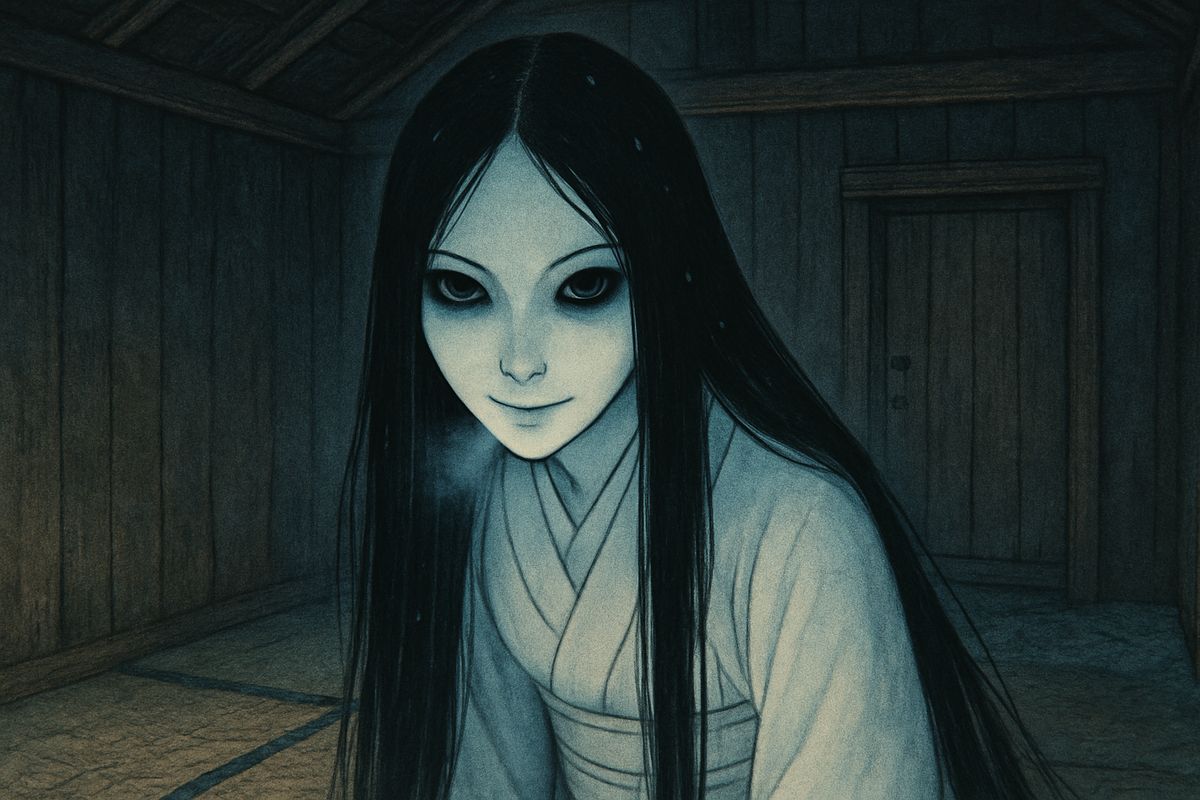
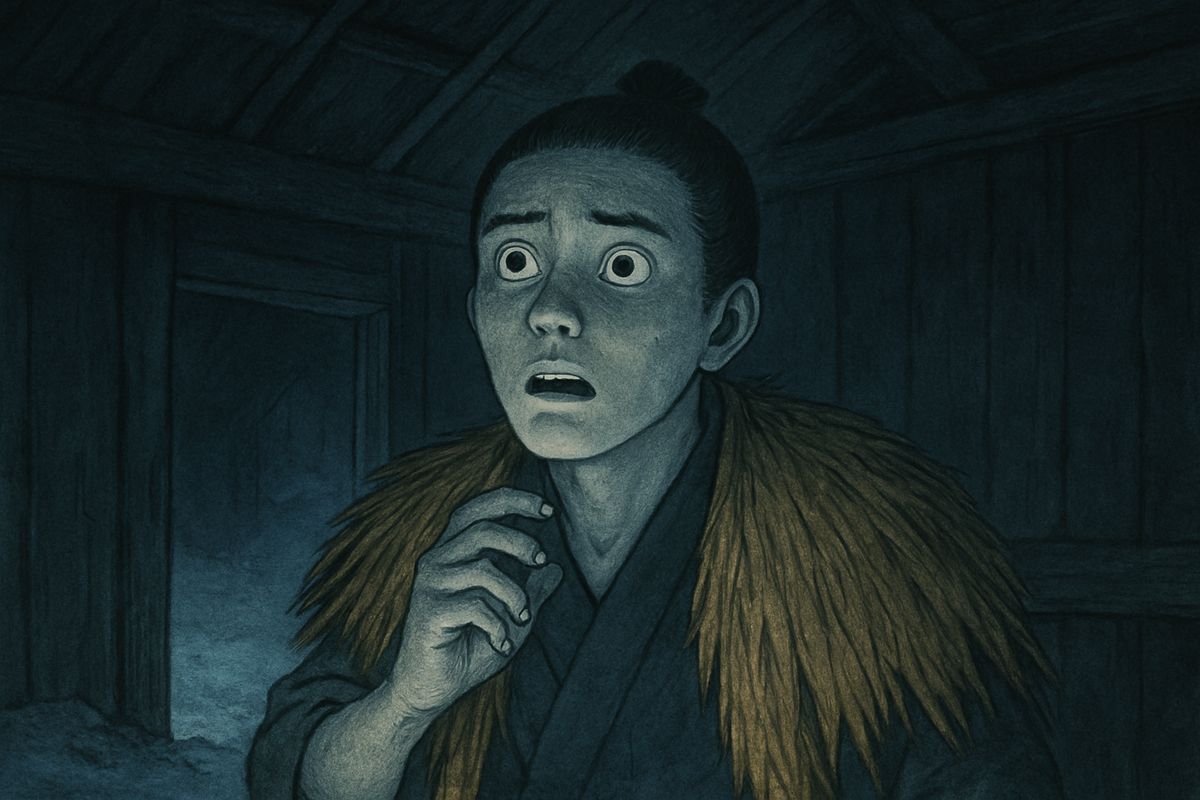
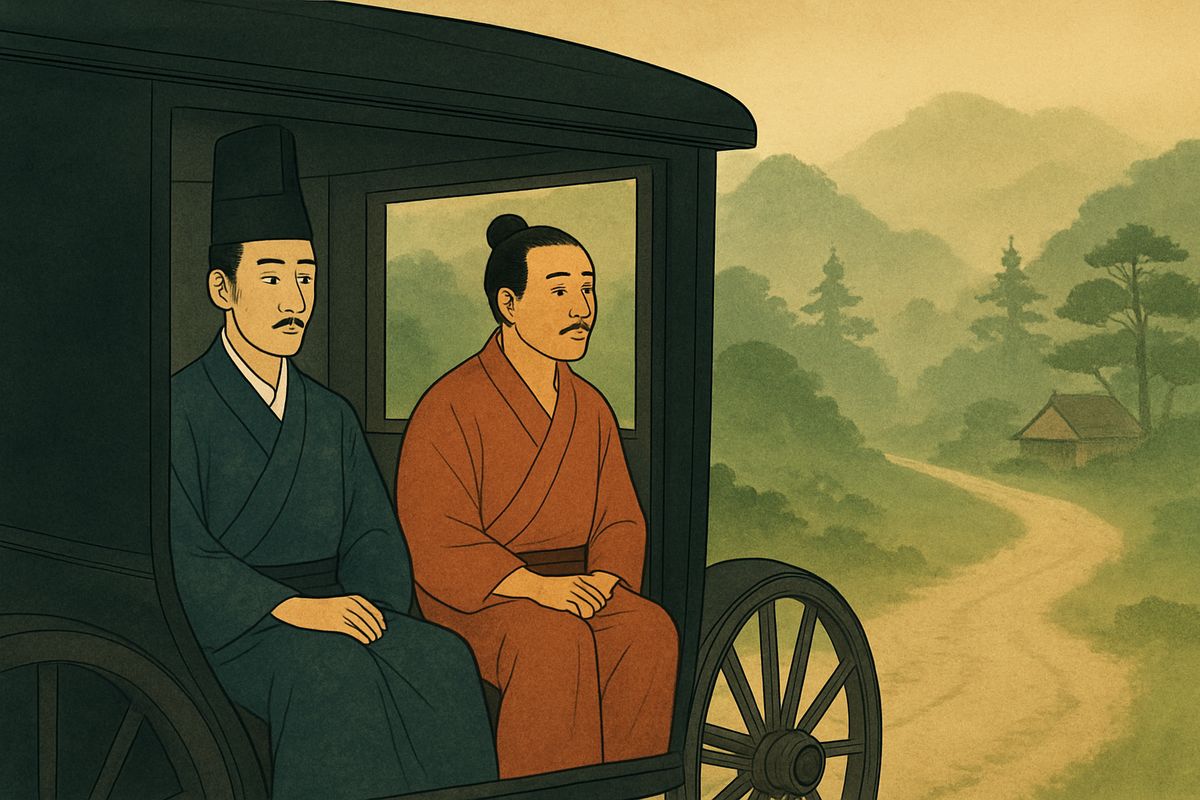
1In a village of Musashi Province lived two woodcutters: old Mosaku and his apprentice Minokichi, a lad of eighteen. Every day they crossed a wide river by ferry to reach their forest, for no bridge built there had ever withstood its floods.2One bitter evening a great snowstorm overtook them on the way home. The boatman had gone, leaving his boat on the far bank, so the two took shelter in his tiny hut, which had no fire and no window.3The old man fell asleep almost at once. But Minokichi lay awake a long time under his straw coat, listening to the howling wind and the roaring river while the hut creaked like a junk at sea.4He woke to snow blowing in his face. The door stood open, and by the snow-light he saw a woman all in white bending over Mosaku, breathing on him a breath like bright white smoke.5Then she stooped over Minokichi until her face almost touched his. She was very beautiful, but her eyes made him afraid. "If you ever tell anybody what you saw tonight, I shall know it, and then I will kill you."6She glided out through the doorway and vanished into the storm. Minokichi barred the door and called to Mosaku, but the old man did not answer. Reaching out in the dark, he touched Mosaku's face and found it cold as ice.7By dawn the storm was over. The returning ferryman found Minokichi lying senseless and brought him home. He was ill a long while, but he told no one about the woman in white, and when he was well he went back to cutting wood alone.8One winter evening the next year, on his way home, Minokichi met a tall, slim girl with a voice like a song-bird. Her name was O-Yuki; she was orphaned and going to Yedo to find work. As they walked, their eyes said as much as words.9Minokichi invited her to rest at his house, and his mother welcomed her with a warm meal. O-Yuki behaved so nicely that the mother begged her to stay. She never went to Yedo at all, and became Minokichi's wife.10The years passed. O-Yuki was a devoted wife and bore ten fair-skinned children, and Minokichi's mother died praising her. The village women aged early, but O-Yuki stayed as young and fresh as the day she came.11One night, while the children slept, O-Yuki sat sewing by a paper lamp. Watching her, Minokichi at last told her of the night in the ferryman's hut and the beautiful White Woman. "Indeed, she was very like you."12O-Yuki flung down her sewing and rose over him, shrieking into his face. "It was I—Yuki it was! But for those children asleep there, I would kill you this moment! Take very, very good care of them!"13Even as she screamed, her voice grew thin, like a crying of wind. She melted into a bright white mist that spired up to the roof-beams and shuddered away through the smoke-hole. Never again was she seen.
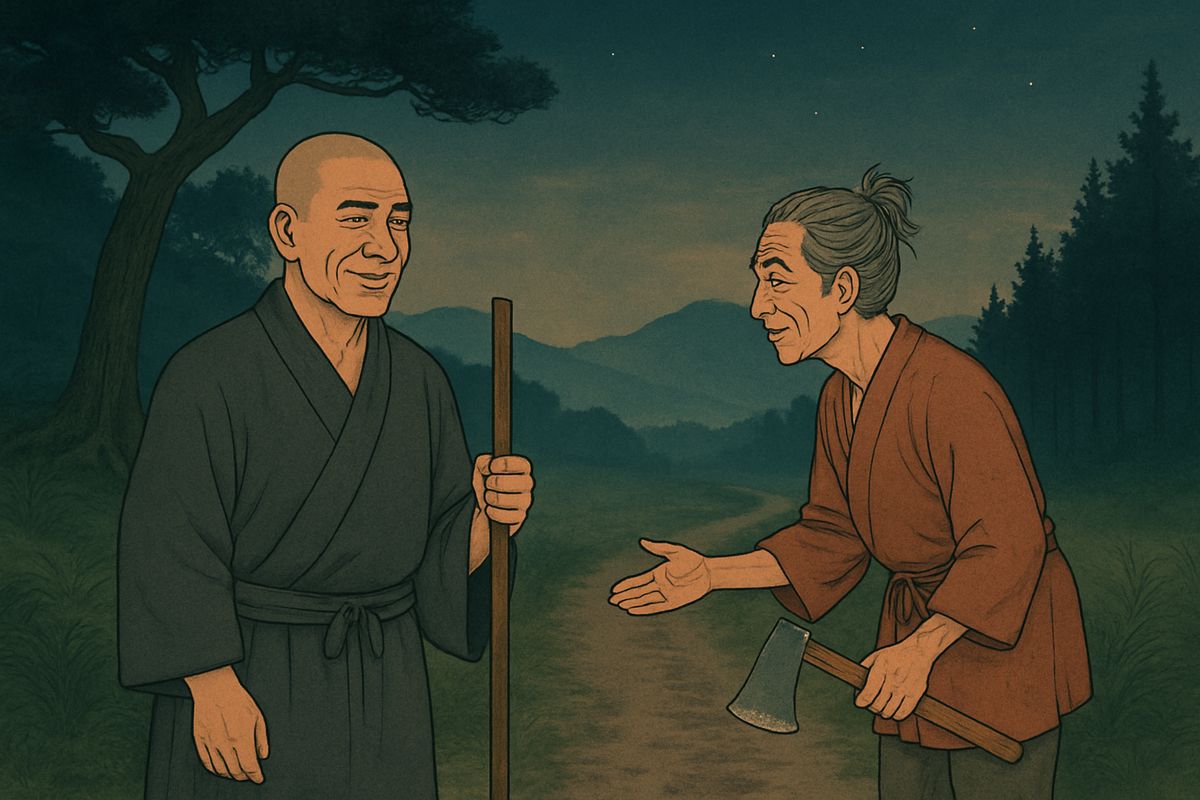
The Story of Aoyagi
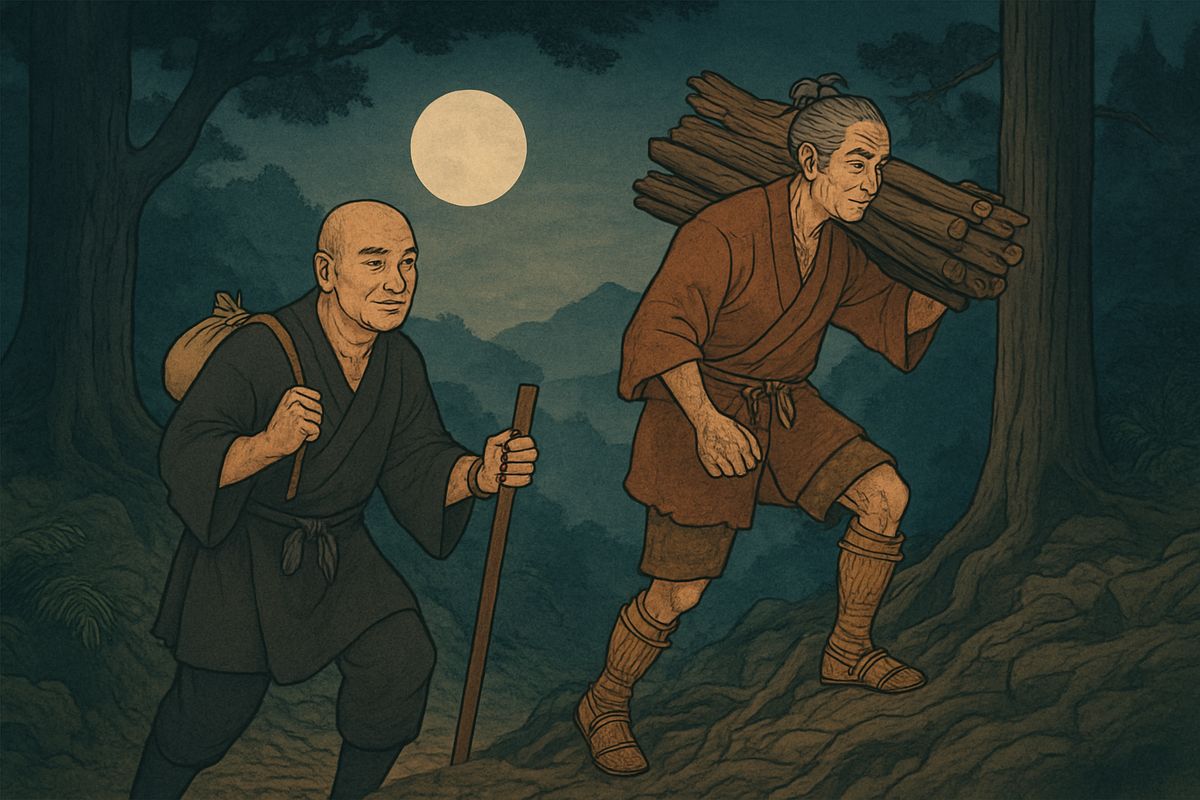
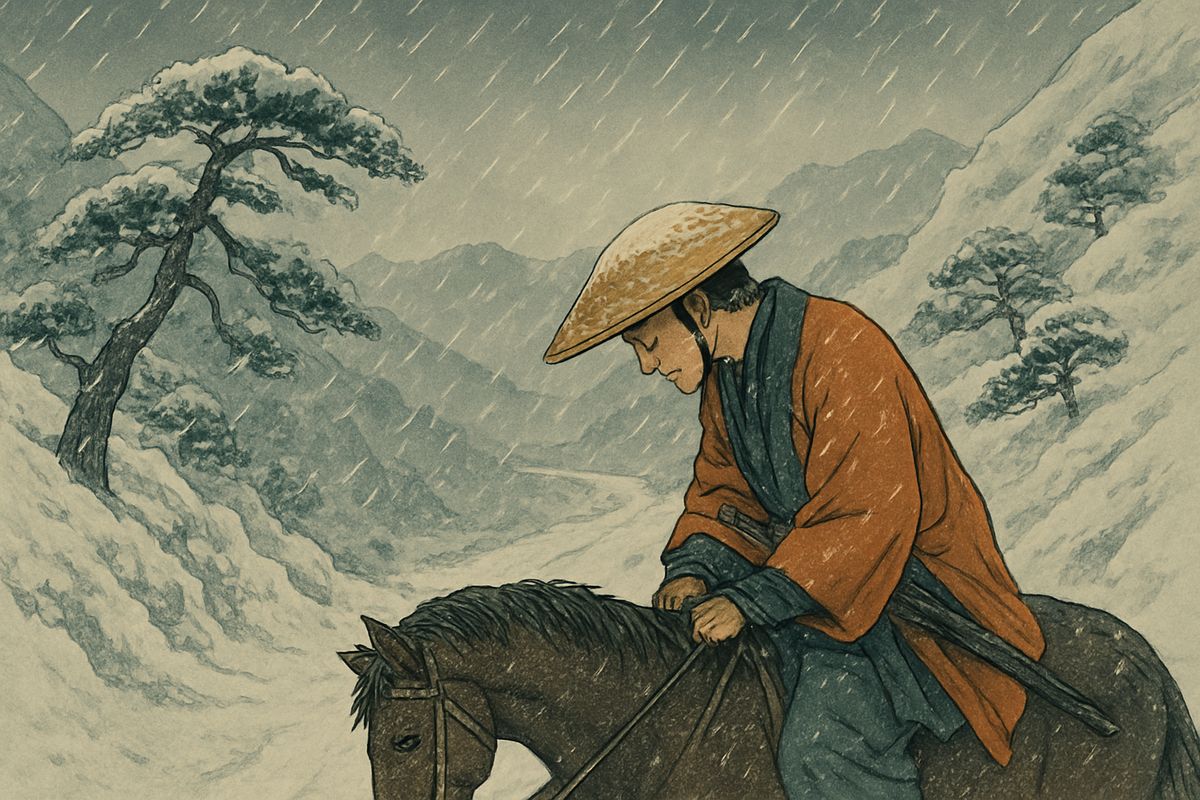
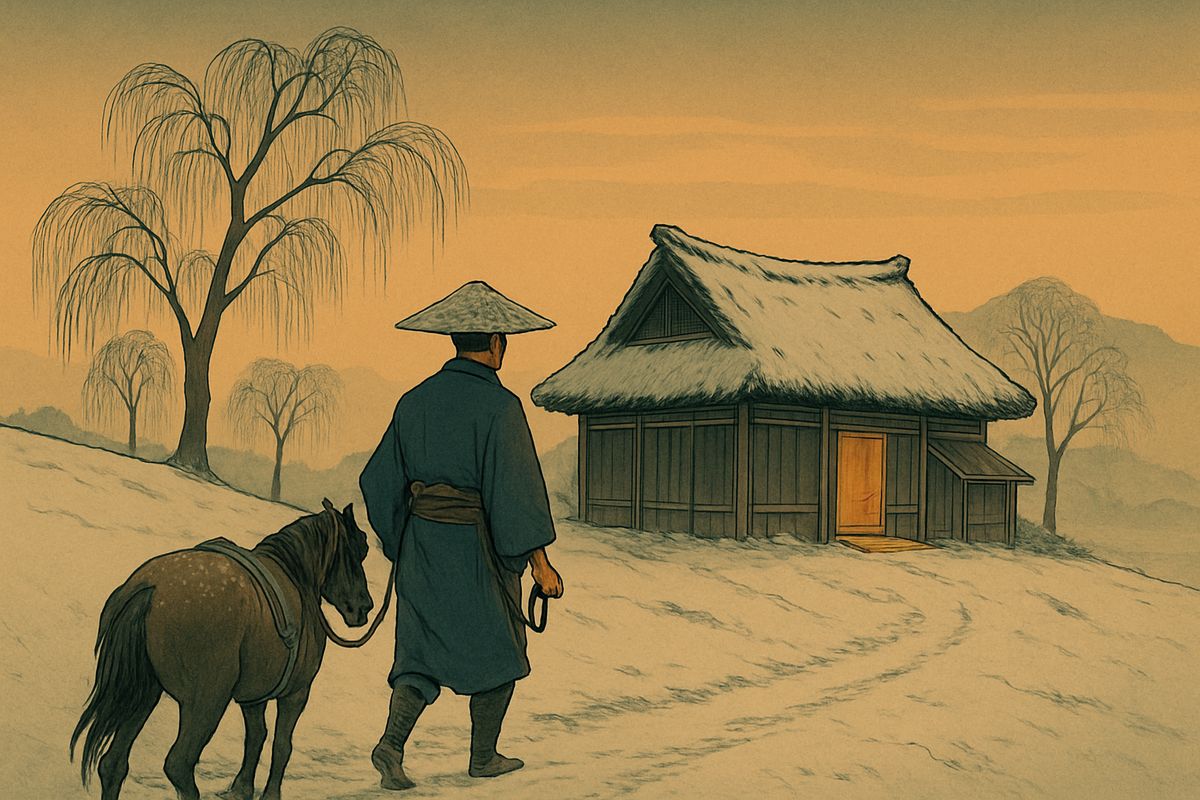
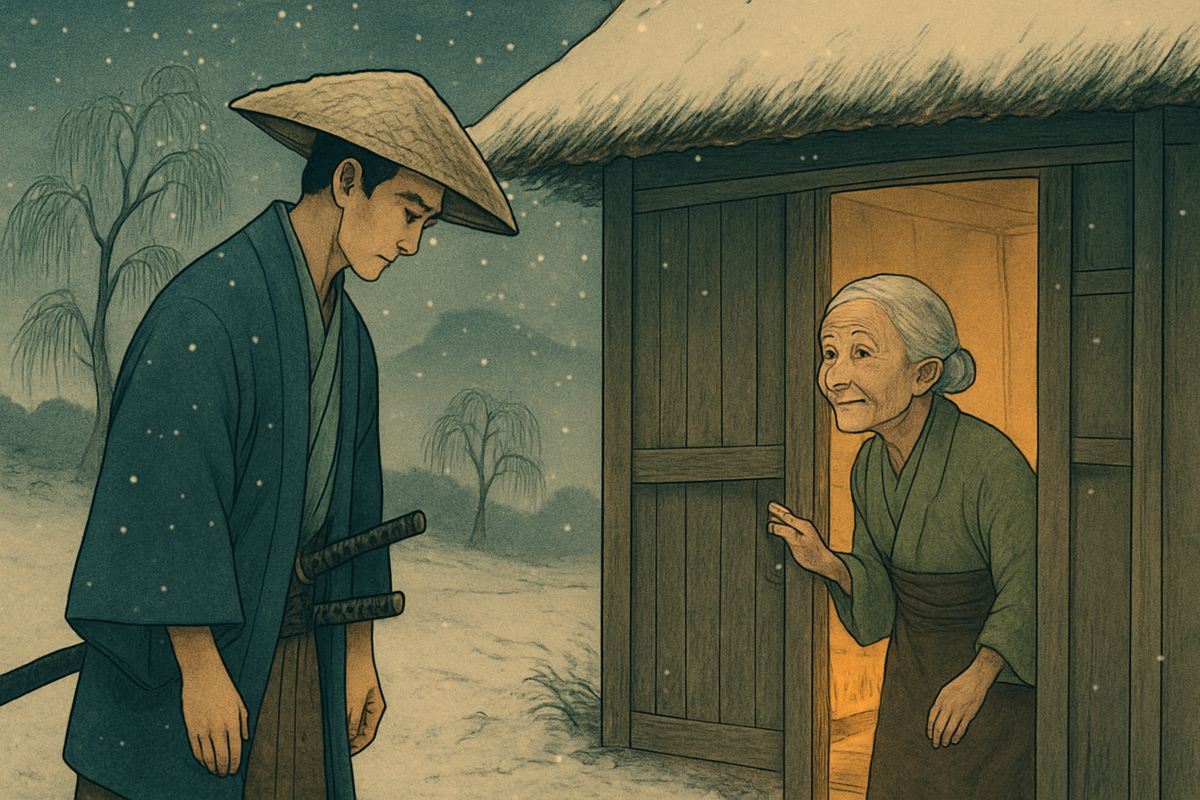
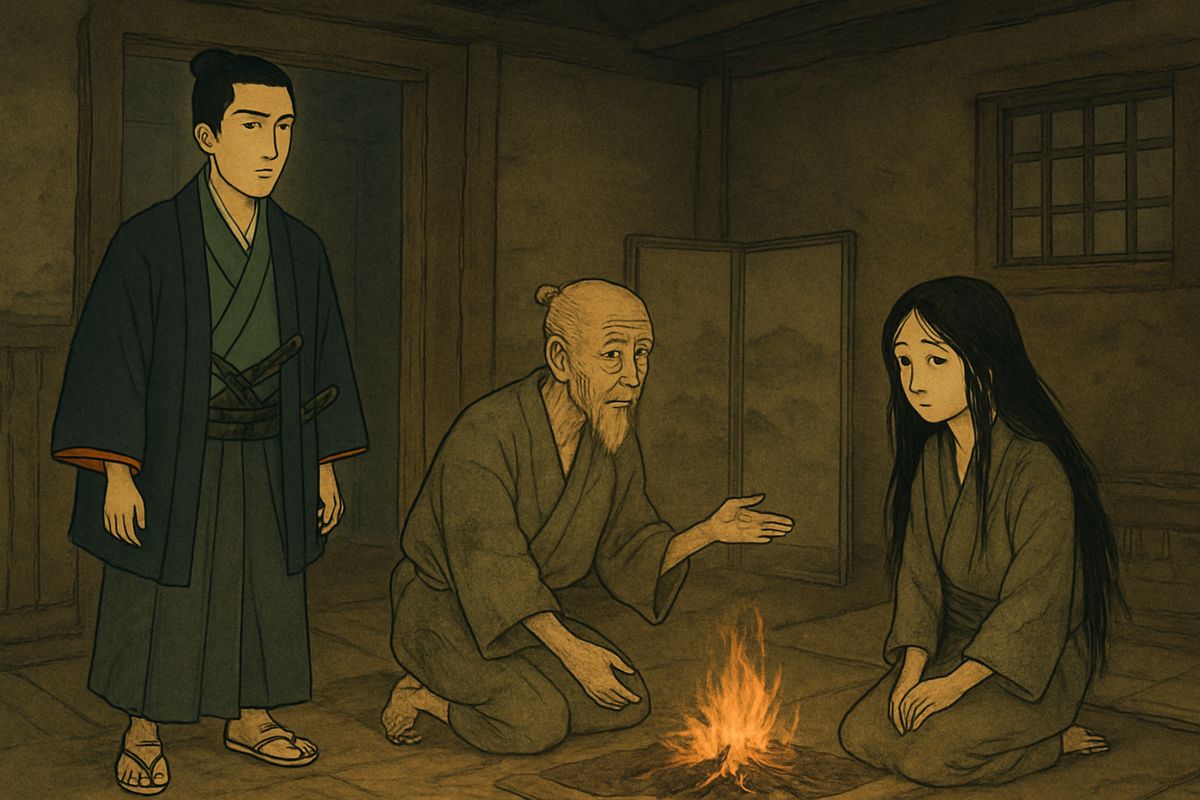
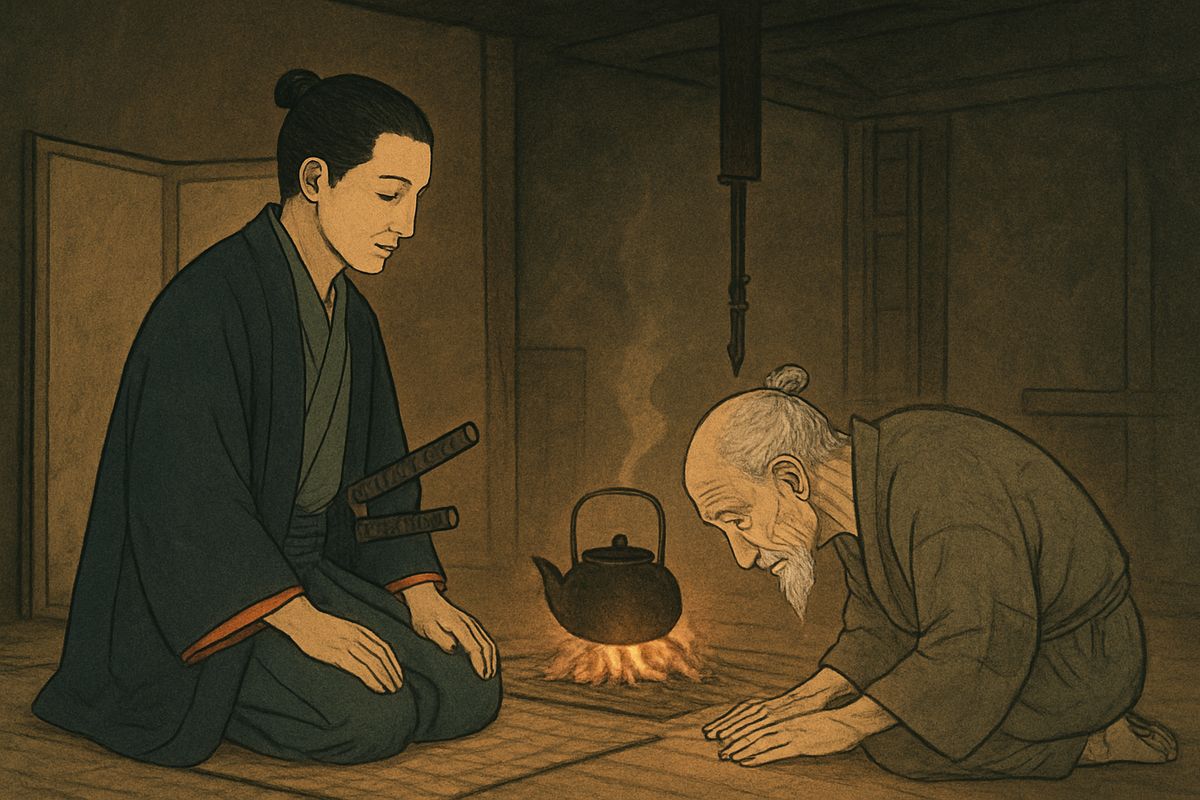
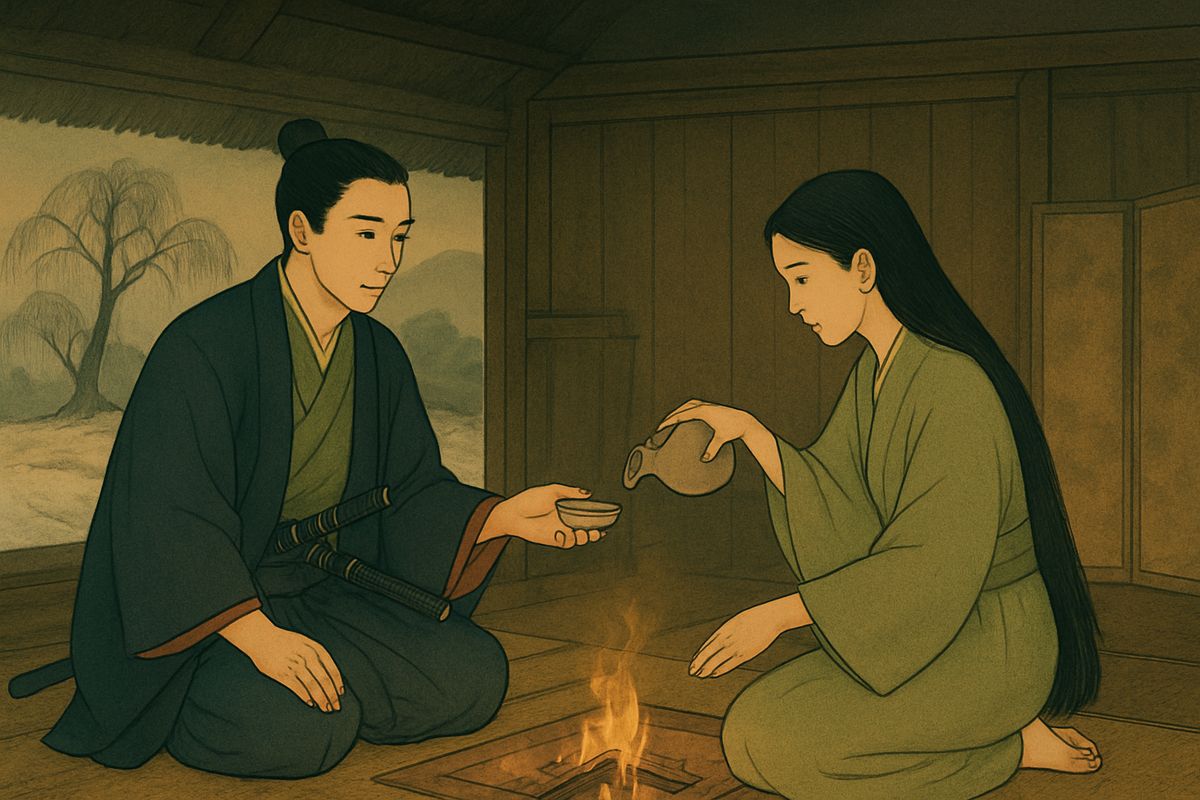
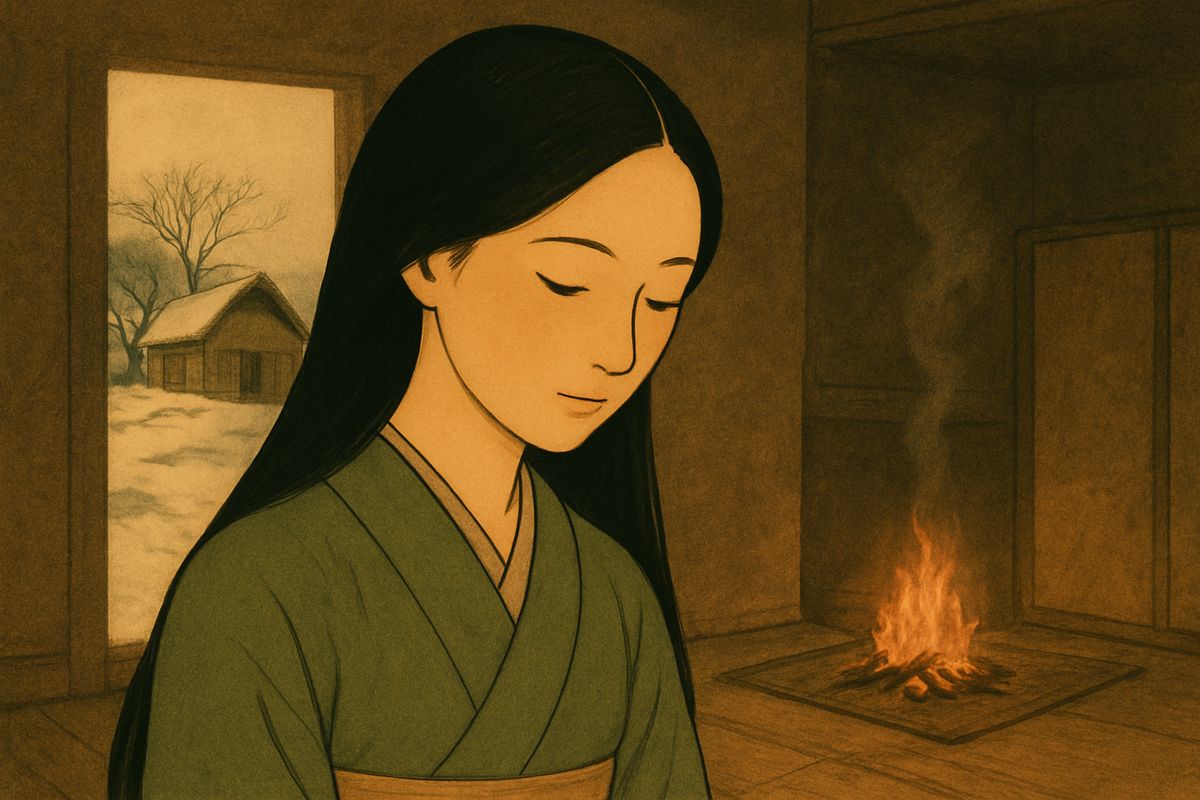
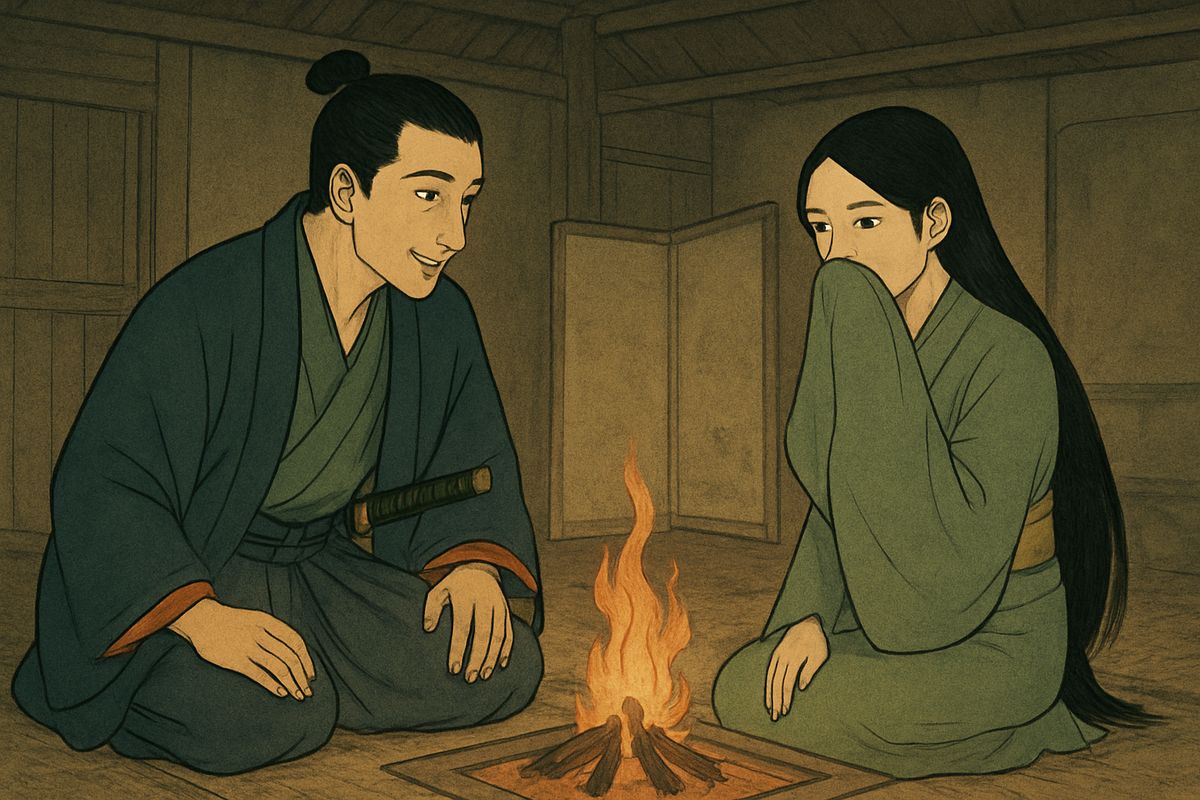
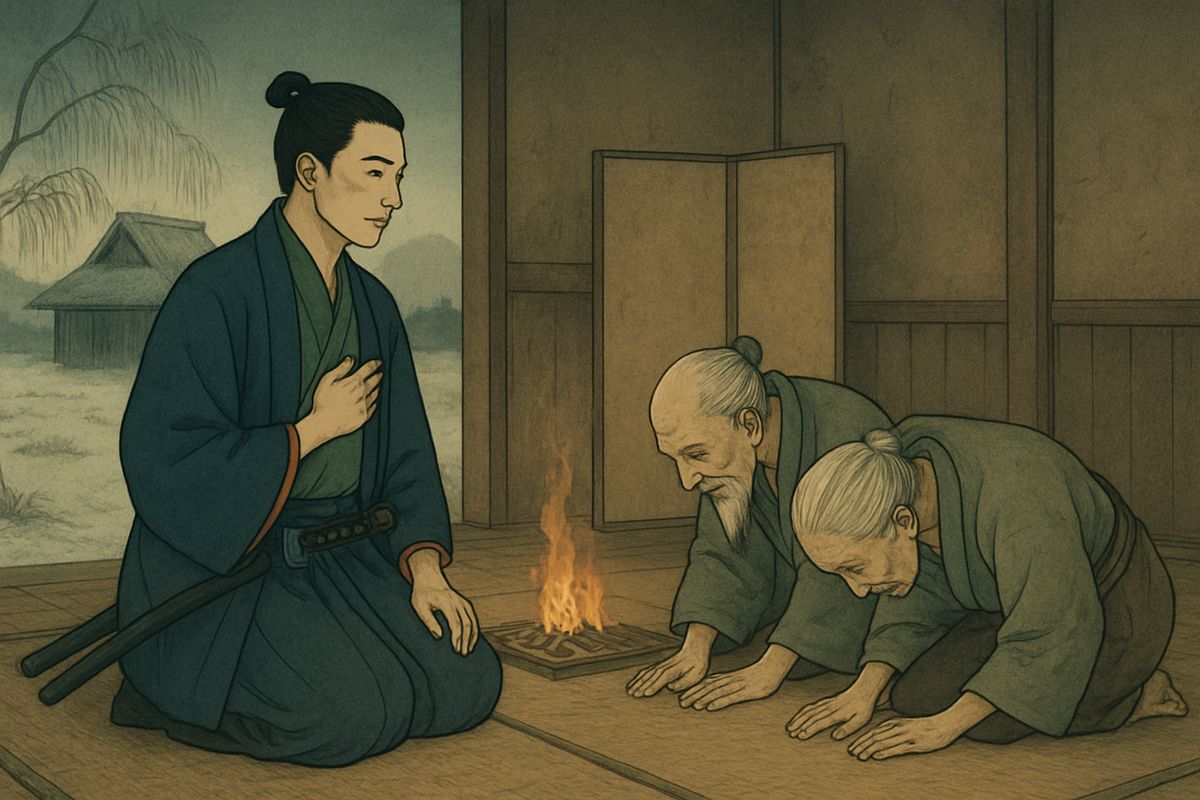
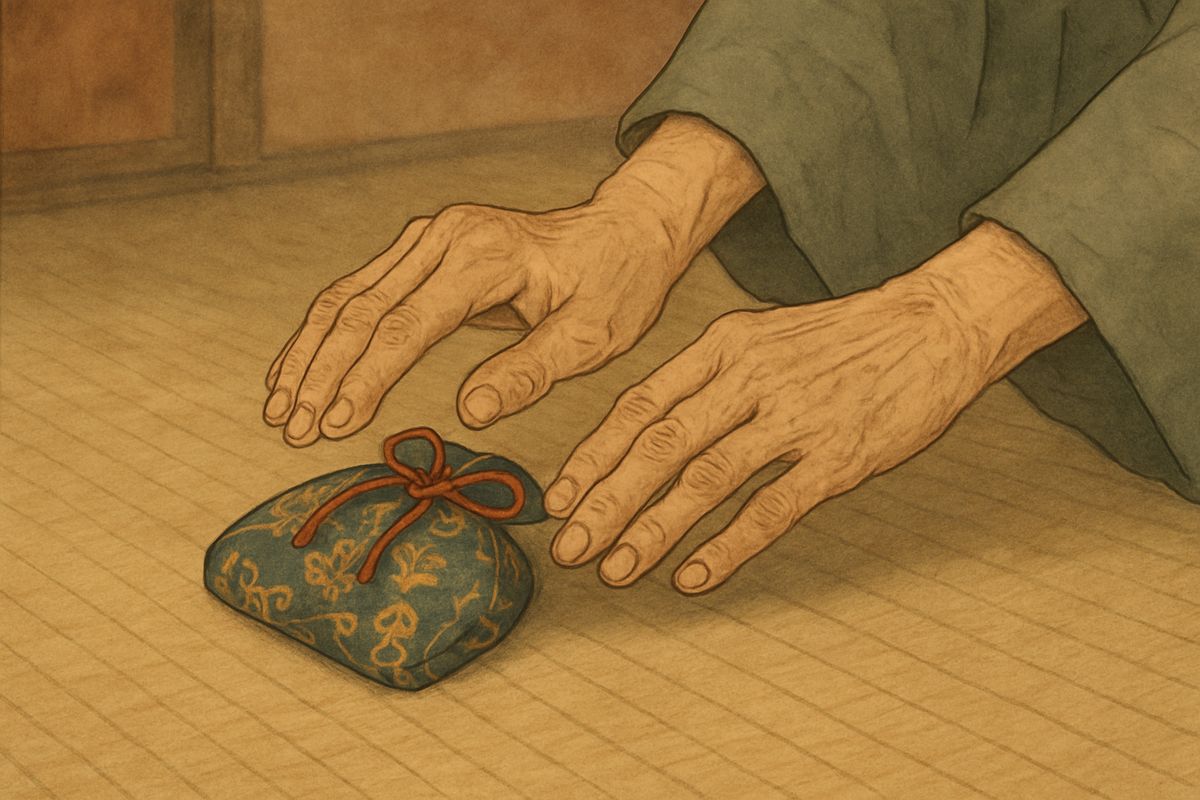
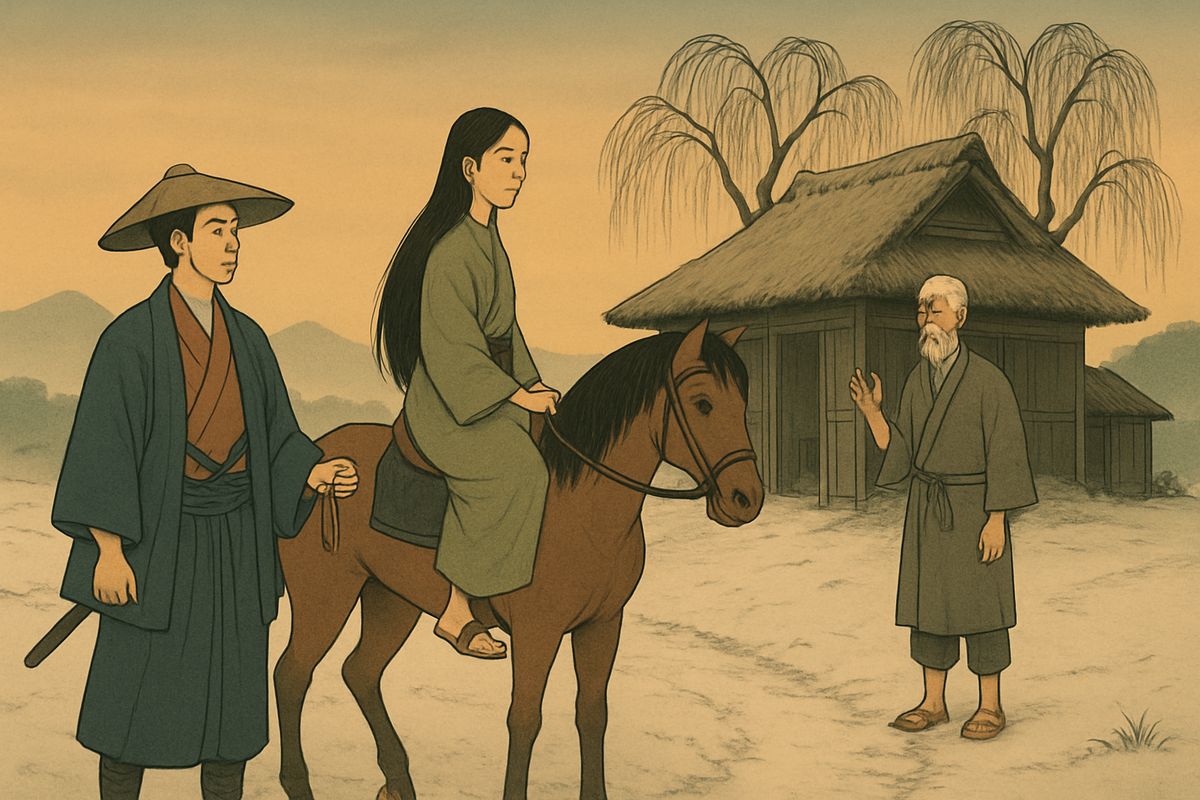
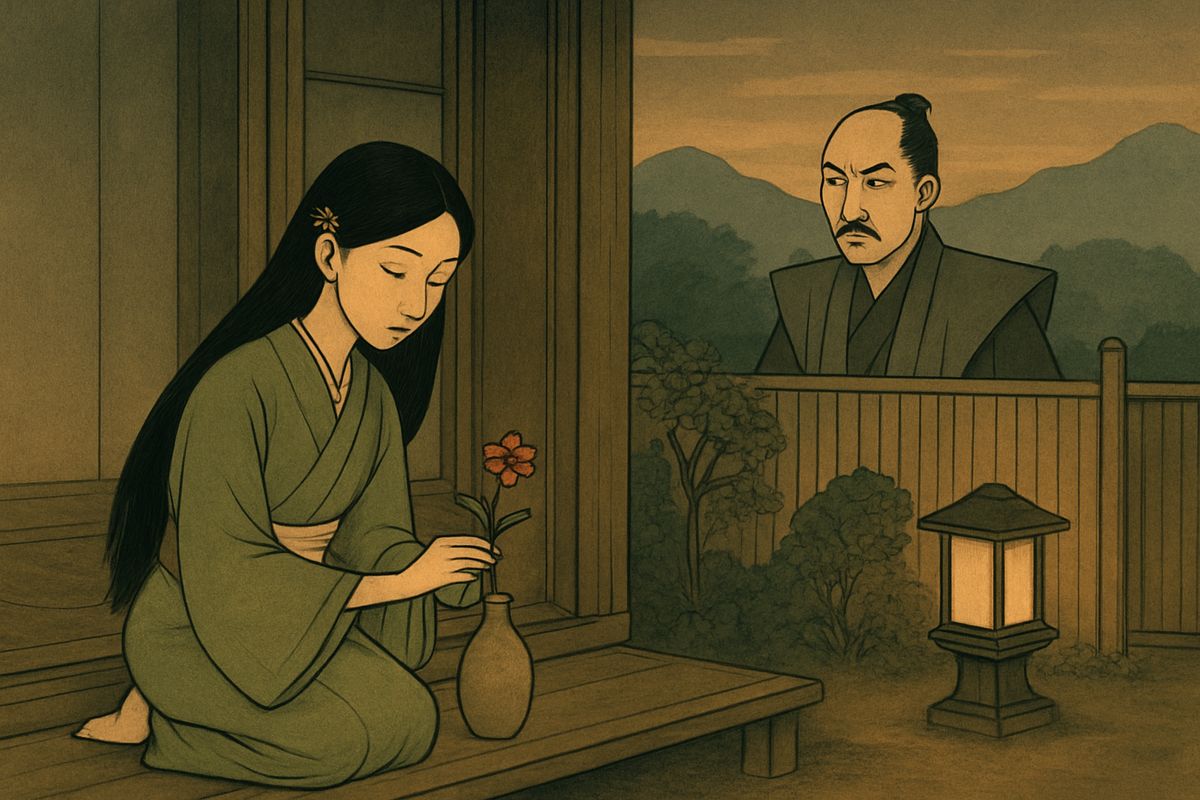
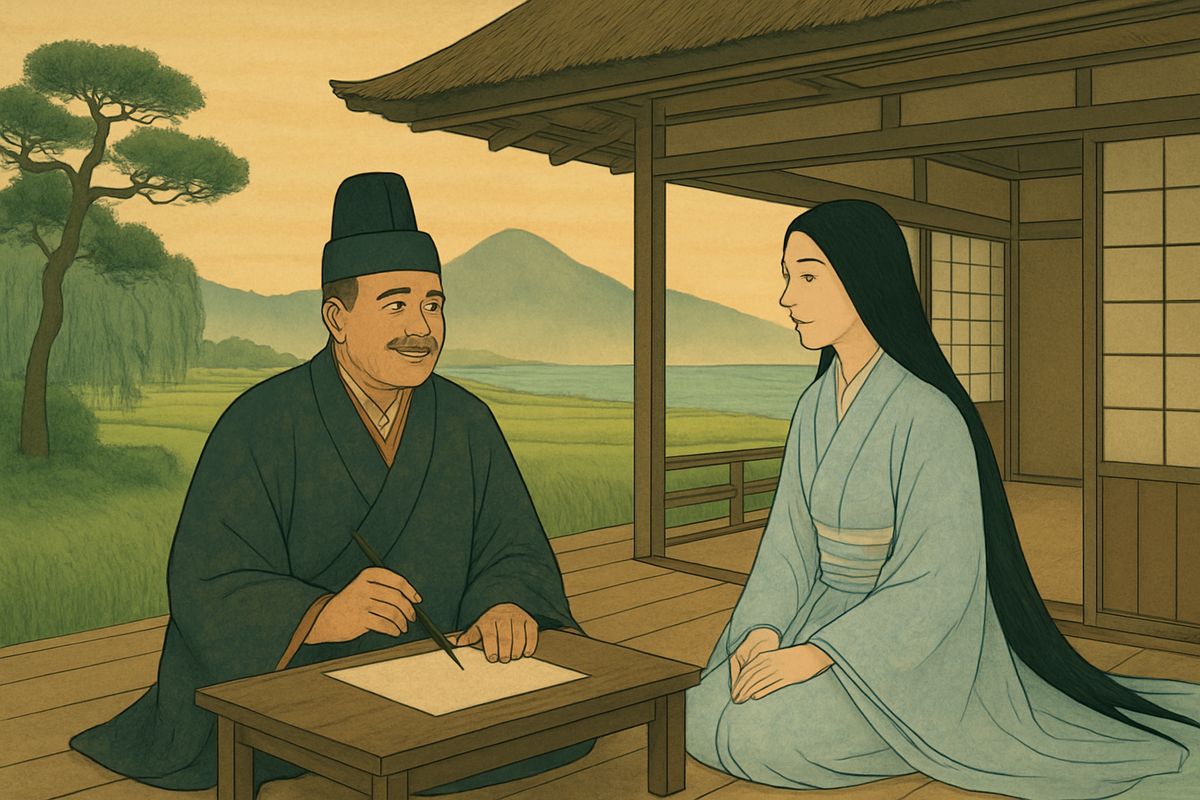
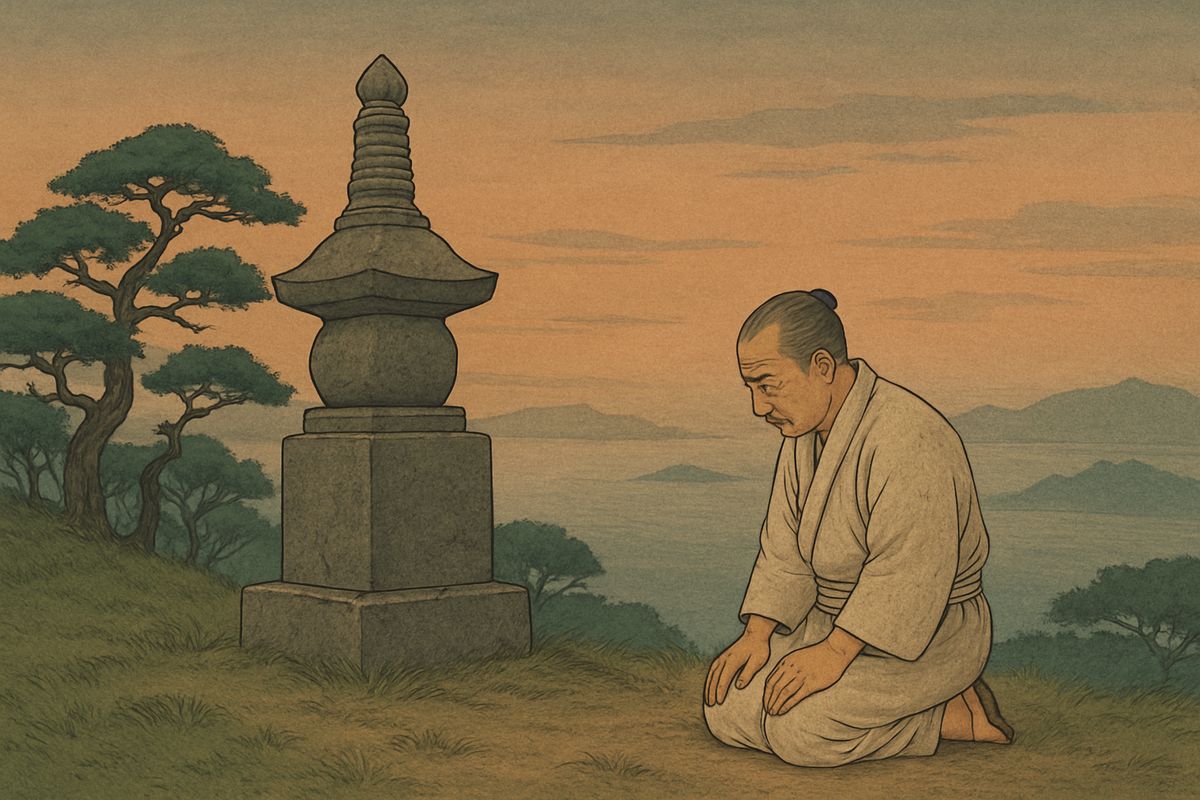
1Long ago, in the days of Bummei, a young samurai named Tomotada served the Lord of Noto. Handsome, clever and kind, he was a good scholar and a brave soldier, and he was liked by all his comrades.2When he was about twenty, Tomotada was sent on a mission to the great Lord Hosokawa in Kyōto. Since his road ran through Echizen, he was given leave to visit his widowed mother on the way.3It was the coldest time of the year. On the second day a fierce snowstorm struck the lonely mountains. The wind cut like a blade, and his tired horse could barely go on.4Just then Tomotada saw a thatched cottage on the top of a nearby hill, where willow trees were growing. With great effort he urged his horse up toward it.5An old woman opened the storm-doors and cried out in pity. “Ah, how pitiful! A young gentleman travelling alone in such weather! Deign, young master, to enter.”6Inside, an old man and a girl sat warming themselves by a fire of bamboo splints. Tomotada was amazed: though her clothes were ragged and her long hair was tangled, the girl was extremely beautiful.7“Honoured sir,” said the old man, “the next village is far, and the road is very bad. Although this hovel is unworthy of you, it would be safer to stay here tonight.” Tomotada gladly agreed.8The girl came from behind the screen to serve the wine, now in a clean homespun robe, her hair neatly combed. “Our daughter Aoyagi was raised in the mountains,” the old folk apologised. “Pardon her ignorance.”9Tomotada could not take his eyes from her, though his gaze made her blush. She spoke and moved like a lady of rank, and her speech was as sweet as her face.10Tomotada spoke a poem that hid a question: was the flower he had found sharing his feeling? Without hesitation Aoyagi answered in verse: if she hid the dawn with her sleeve, perhaps her lord would stay.11Bewitched, Tomotada at once asked the old people for their daughter's hand, telling them his name and rank. They bowed down in grateful astonishment and humbly gave her to him.12By morning the storm had passed. Tomotada set a purse of gold before his host, but the old man gently pushed it back. “Kind master, gold would be of no use to us. Here we buy nothing.”13So Tomotada lifted Aoyagi onto his horse and bade the old folk farewell. “We are sure you will be kind to our girl,” said the father, “and we have no fears for her sake.”14In Kyōto, Tomotada kept Aoyagi hidden, for a samurai could not marry without his lord's consent. But one day a retainer of Lord Hosokawa caught sight of her and reported it to his young master.15The young lord, who was fond of pretty faces, ordered that the girl be brought to his palace. She was taken away at once, without ceremony, while Tomotada could do nothing.16Tomotada sorrowed beyond words. Though sending a love letter into the palace was an unpardonable offence, he dared the risk and wrote her a Chinese poem of only twenty-eight characters, full of his longing.17The next evening Tomotada was summoned before Lord Hosokawa. “Now he will order my death,” he thought. “But I do not care to live without Aoyagi.” He slipped his swords into his girdle and went.18In the presence-room the lord sat on his dais among samurai in ceremonial robes, all as silent as statues. The hush felt heavy and sinister, like the stillness before a storm.19Suddenly Hosokawa stepped down, took the youth by the arm, and began to recite his poem. Looking up, Tomotada saw kindly tears in the prince's eyes.20“Because you love each other so much, I authorise your marriage,” said Hosokawa. The screens slid open, and there waited Aoyagi in bridal dress. The wedding was joyous and splendid.21For five happy years they lived together. Then one morning, while talking of household matters, Aoyagi gave a great cry of pain and turned very white and still.22“I am not a human being,” she whispered. “The soul of a tree is my soul; the sap of the willow is my life. Someone is cutting down my tree. Quickly, repeat the prayer for me!”23Hiding her face behind her sleeve, she seemed to sink down, down, level with the floor. Tomotada sprang to hold her, but there was nothing to hold. Only her empty robes and hair ornaments lay on the matting.24Tomotada shaved his head and became a wandering priest. He travelled through every province, praying at holy places for the soul of Aoyagi.25At last he reached the lonely hill in Echizen. The cottage had vanished. Nothing marked the spot but the stumps of three willows, two old and one young, cut down long before.26Beside the stumps he raised a memorial tomb inscribed with holy texts, and there he prayed many times for the spirits of Aoyagi and her gentle parents.
The Dream of Akinosuké
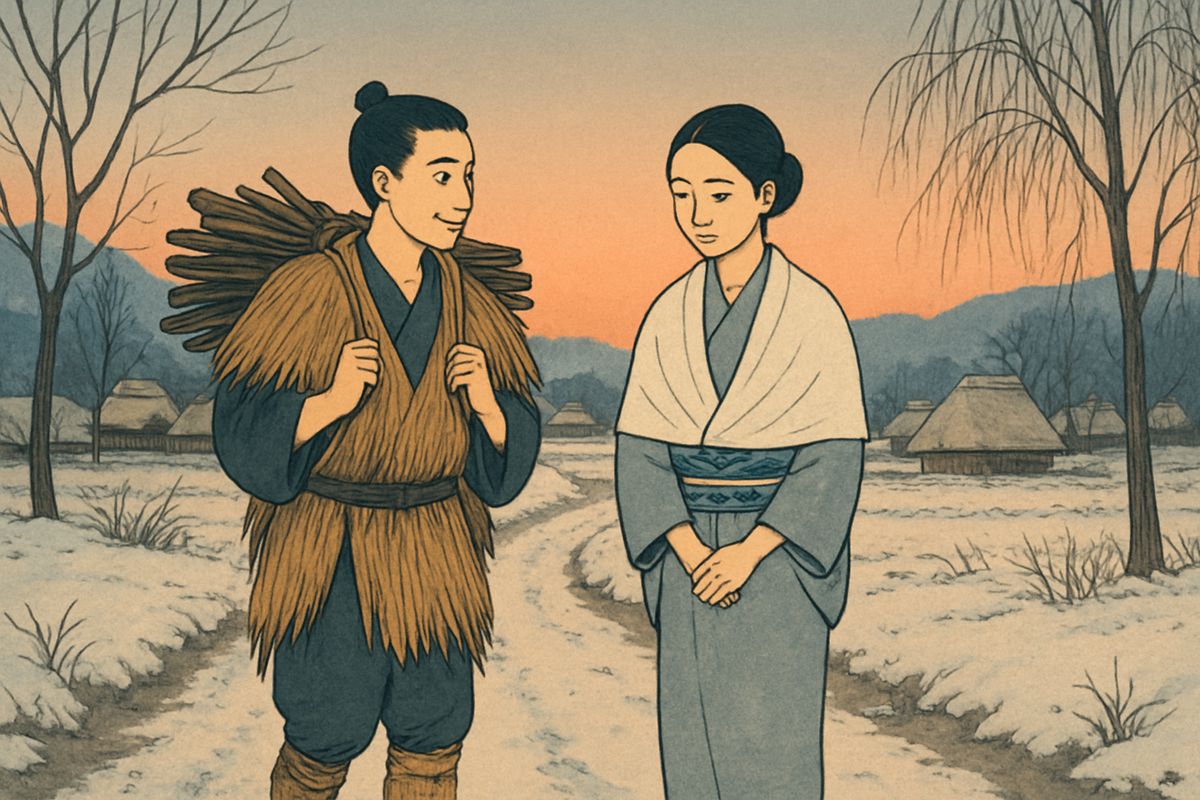
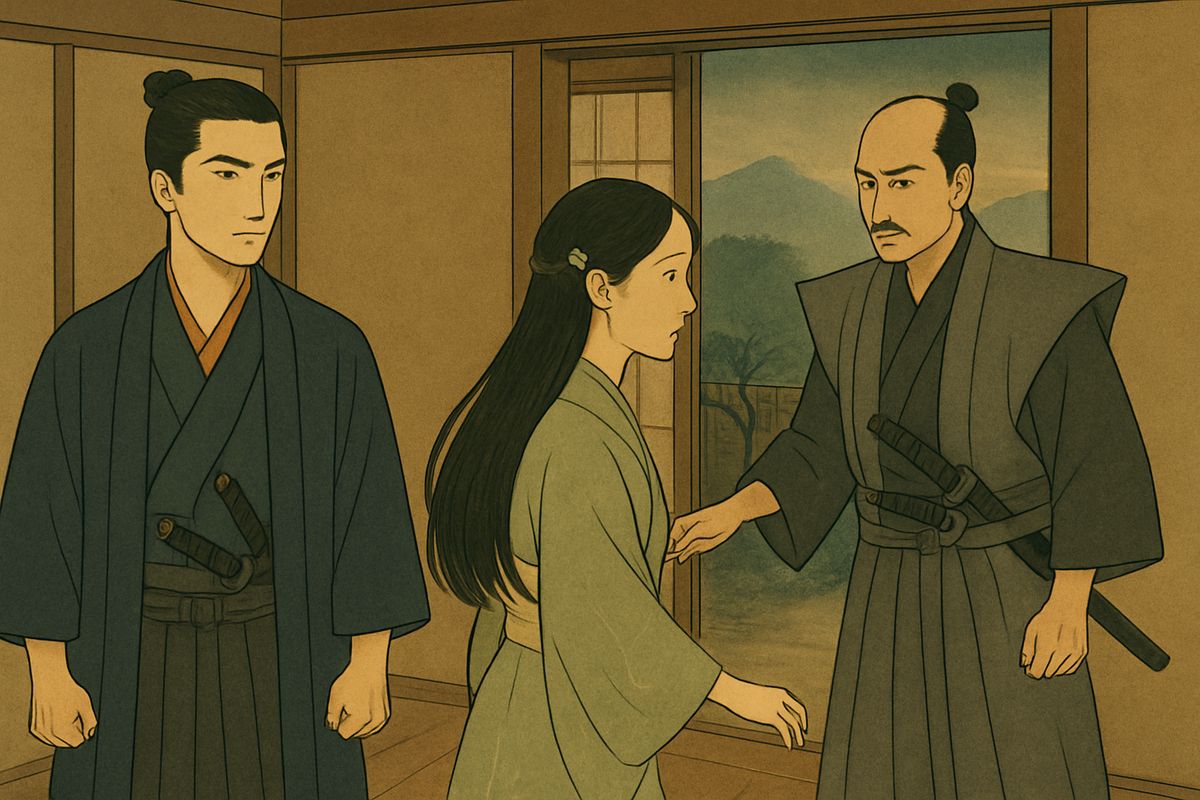
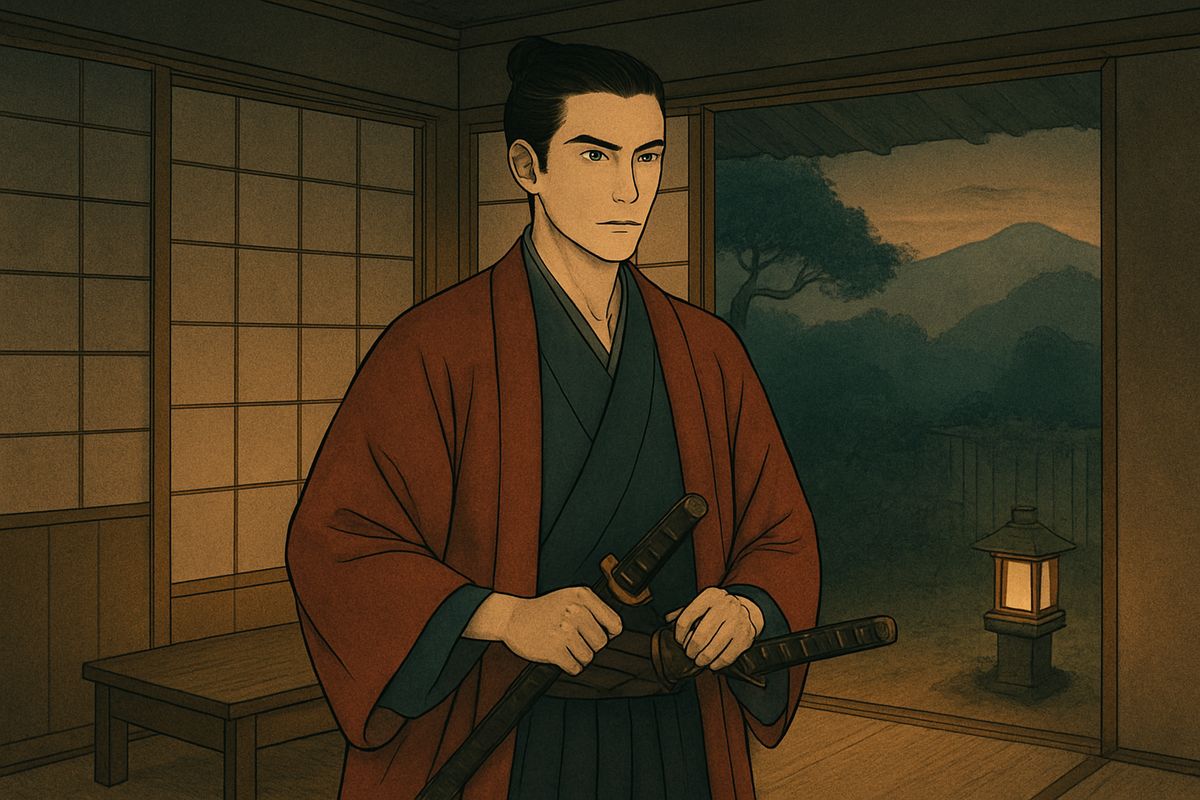
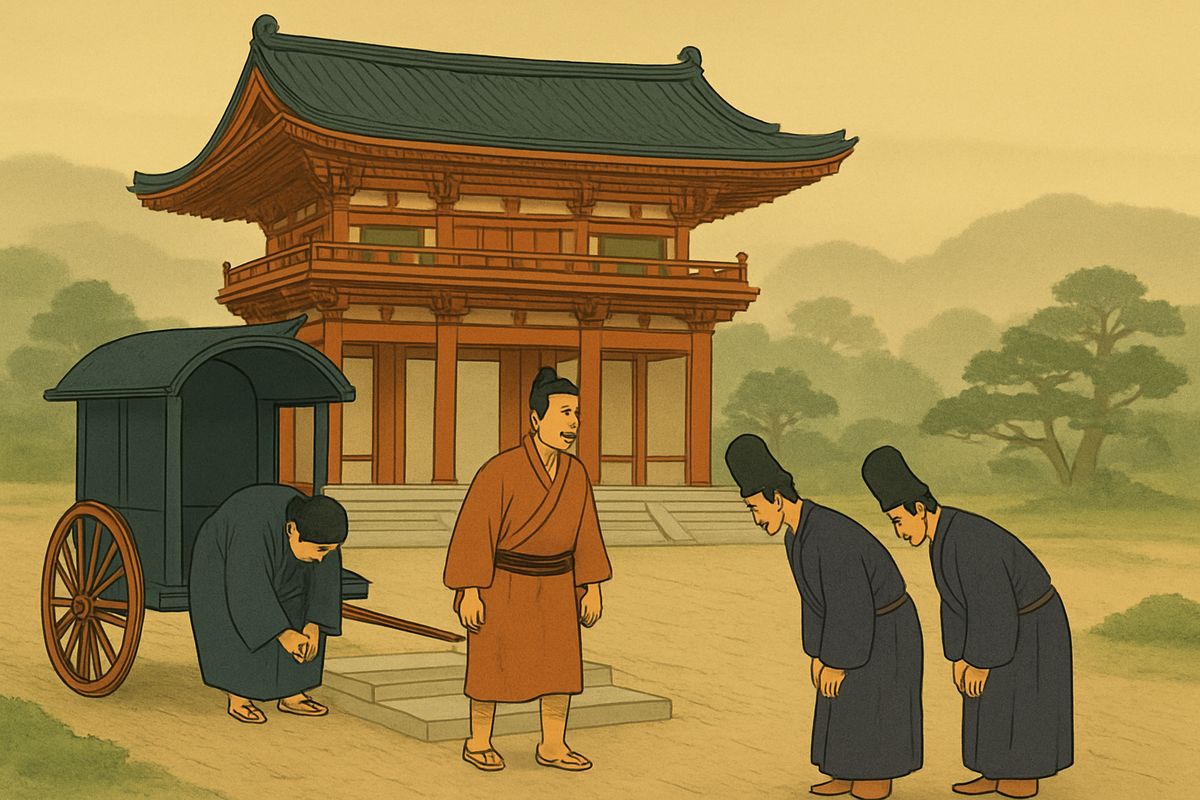
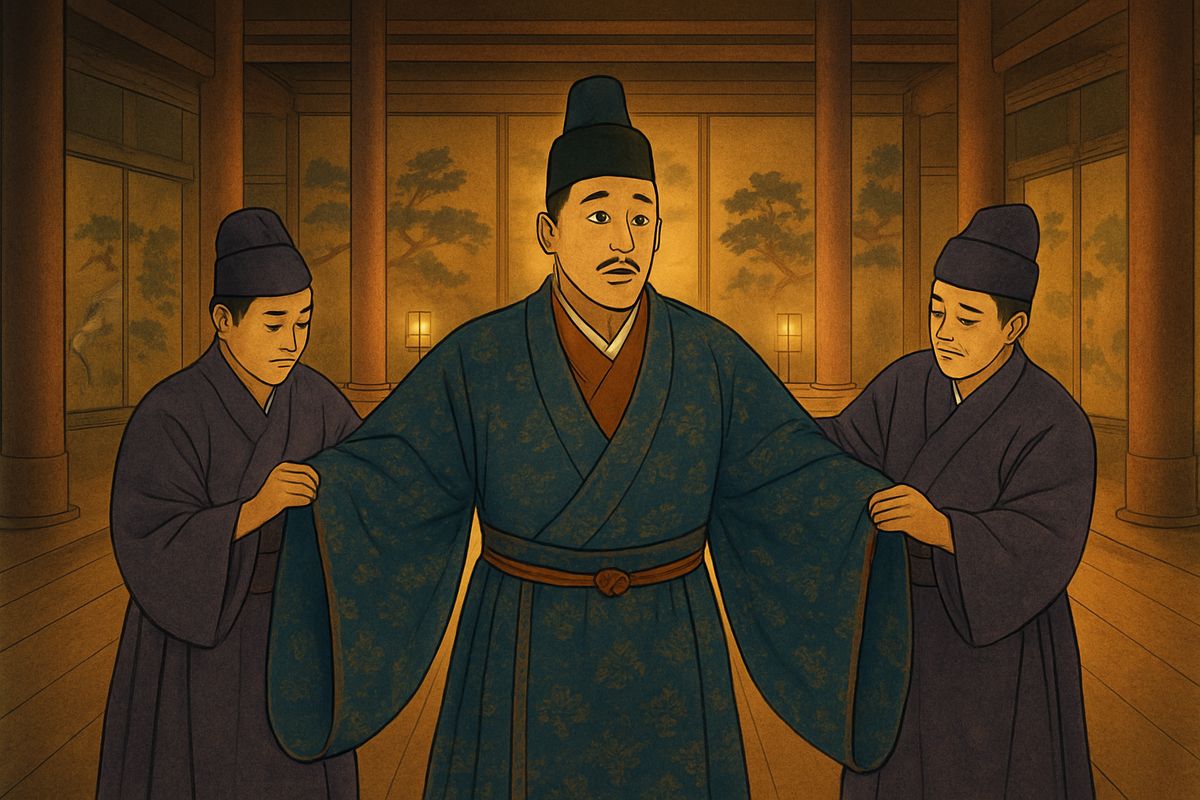
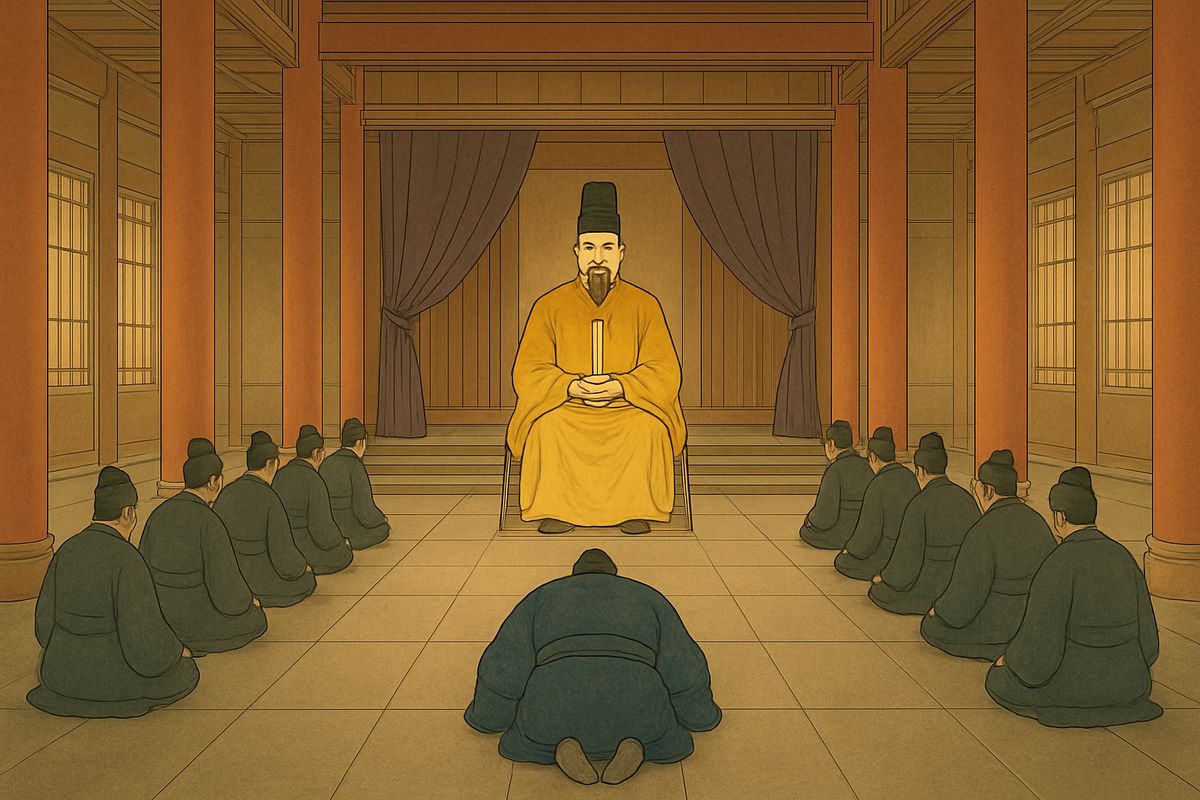
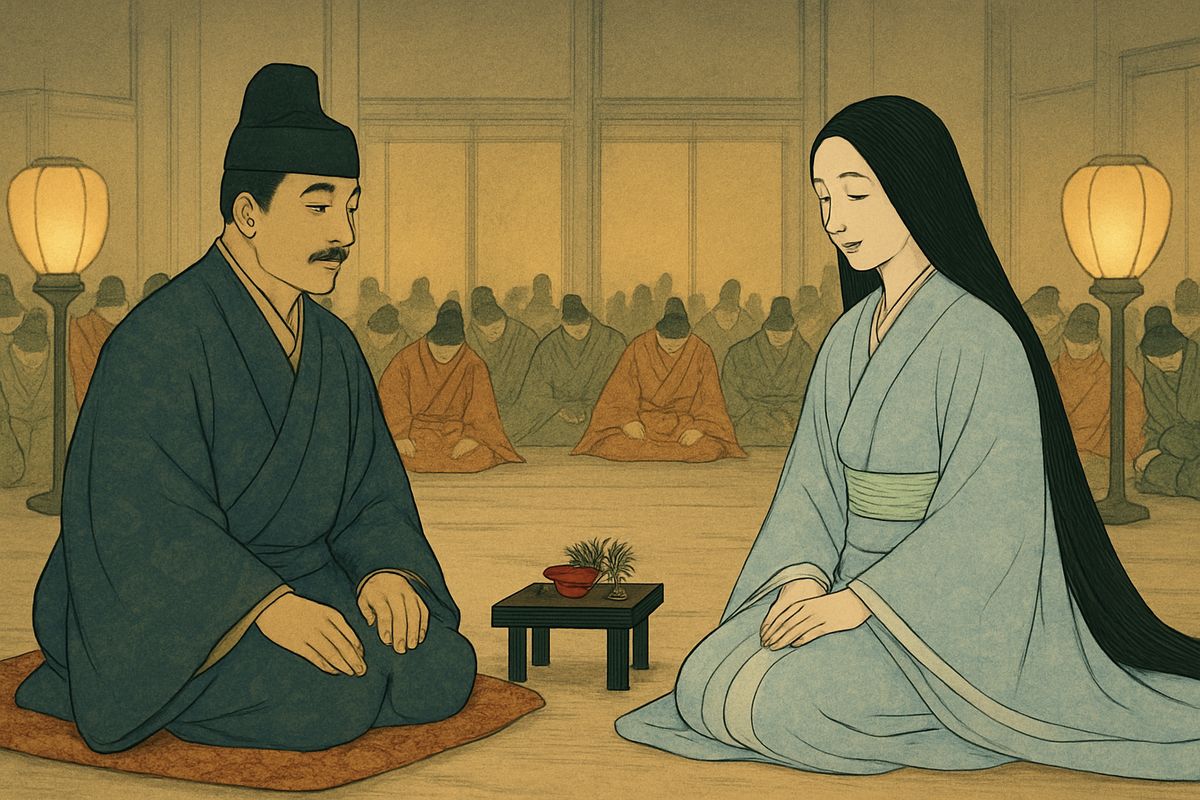
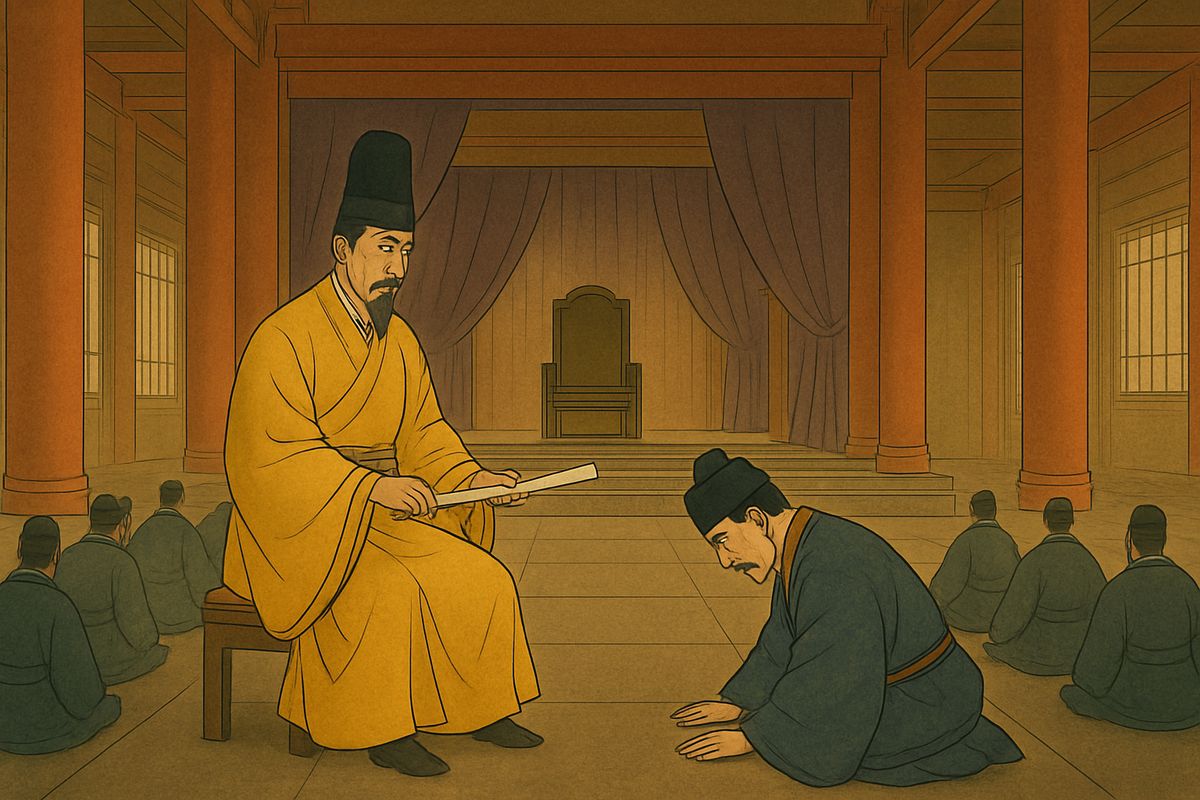
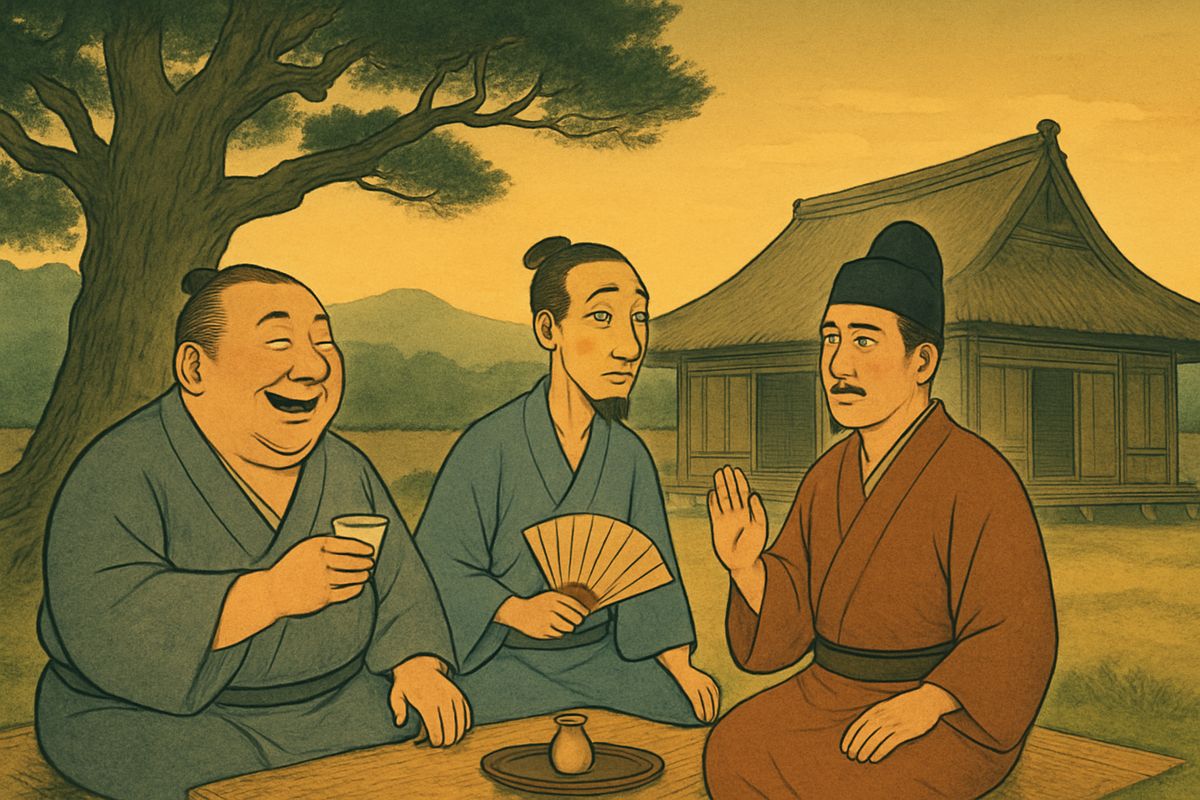
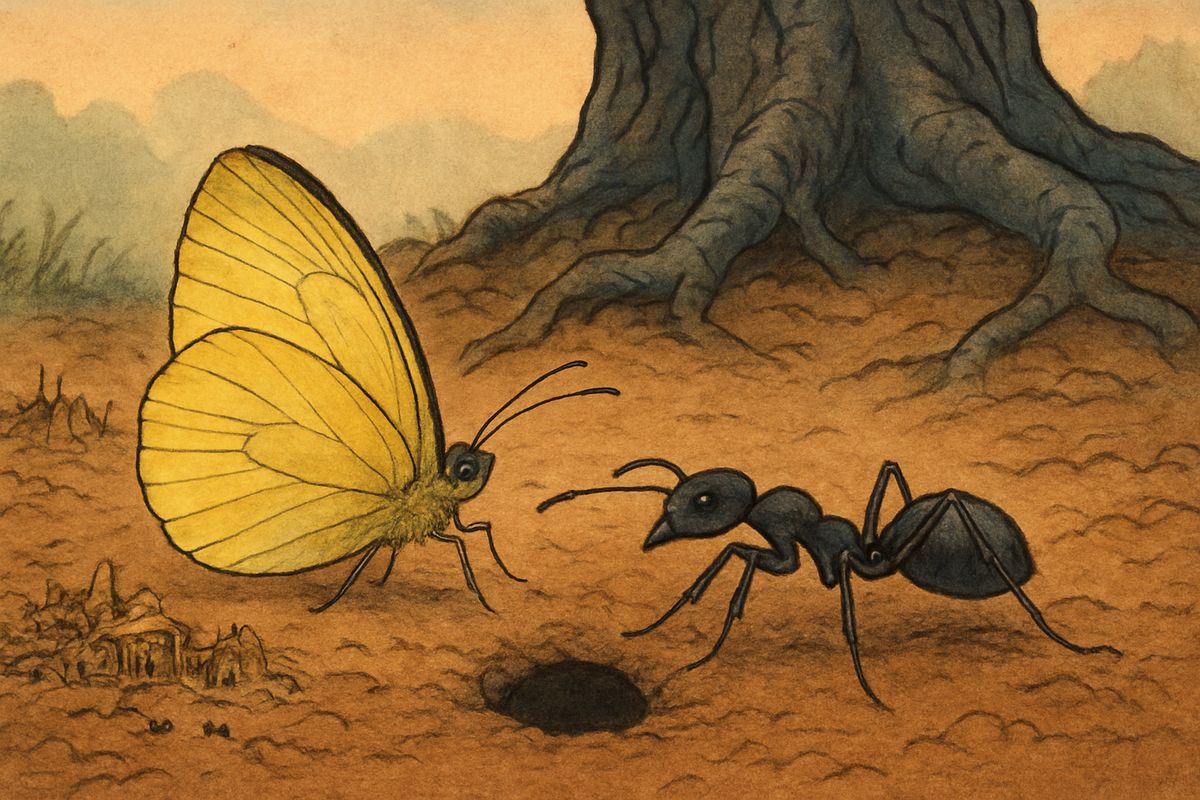
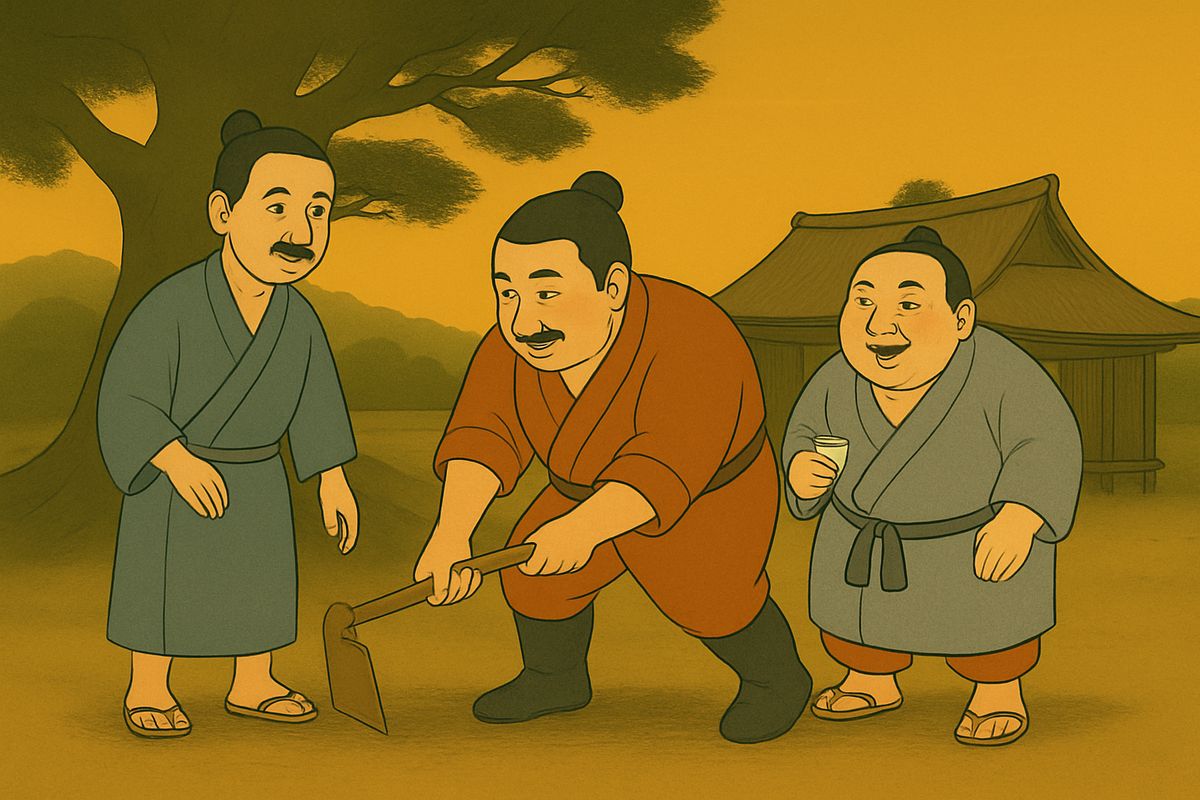
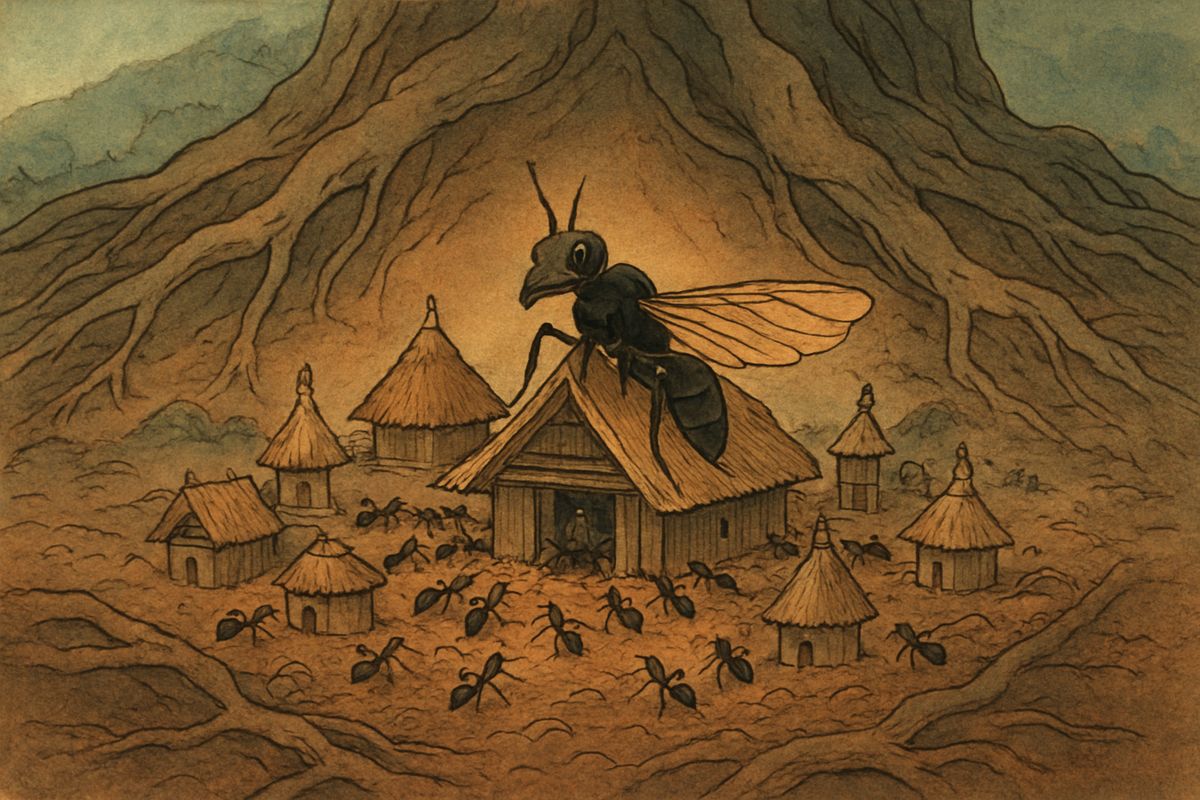
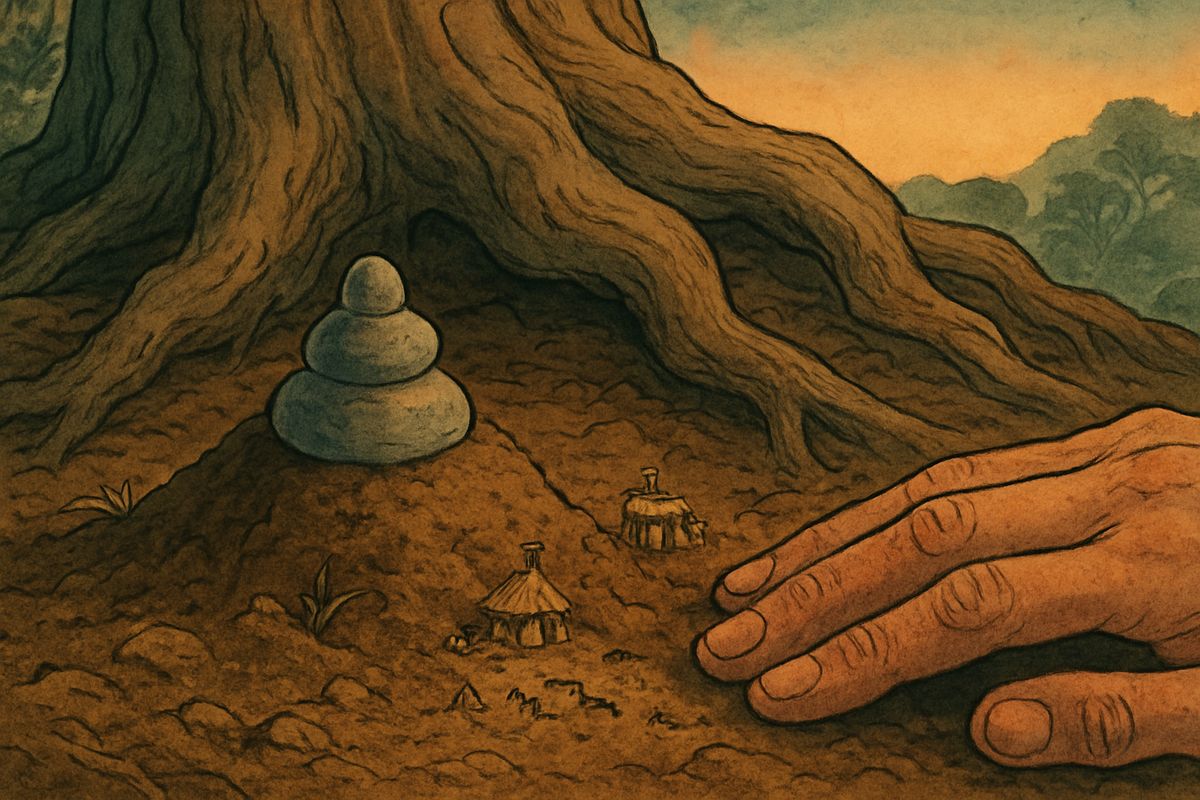
1In Yamato Province lived a gōshi named Miyata Akinosuké. One hot afternoon he sat drinking wine with two friends beneath the great cedar in his garden, until he grew so drowsy that he begged their pardon and lay down for a nap.2He dreamed that a grand procession, like the train of a great lord, came down the hill toward his house. Richly dressed young men drew a great lacquered carriage hung with bright blue silk.3A man of rank stepped forward and bowed profoundly. "Honored Sir, my master the King of Tokoyo desires your presence at the palace. Be pleased to enter this carriage."4Too astonished to answer, Akinosuké felt his will melt away. He climbed into the carriage, the kérai beside him, and the drawers turned the great vehicle southward.5Soon the carriage stopped before a huge Chinese-style gateway he had never seen. Two noble men in purple robes and high caps came out, bowed, and helped him down.6In a splendid hall the attendants told him the King wished him to marry the Princess that very day. From a chest of gold lacquer they dressed him in robes fit for a princely bridegroom.7He was led before the King of Tokoyo, who sat robed in yellow silk upon a high dais among rows of motionless lords. Akinosuké bowed to the floor three times, and the King greeted him graciously.8To joyful music, court ladies led him to his bride. She seemed a maiden of heaven, her robes as lovely as a summer sky, and they were married amid great rejoicing.9Some days later the King summoned him again. "We appoint you Governor of the island of Raishū. Rule its people with kindness and wisdom."10Akinosuké and his bride sailed to Raishū on a ship of state, carried by favoring winds. The good people of the island gathered on the beach to welcome them.11With wise counselors he framed good laws, and the land was so healthy and fertile, its people so good, that no law was ever broken. For twenty-three years no shadow of sorrow touched his life.12But in the twenty-fourth year his wife, mother of their seven children, fell sick and died. She was buried on the beautiful hill of Hanryōkō beneath a splendid monument, and Akinosuké grieved so deeply he no longer cared to live.13When mourning was over, a royal messenger came from Tokoyo. "The King will now send you back to your own people. Your seven children shall be fitly cared for; do not be troubled."14He sailed away on the ship sent for him, out into the blue sea under the blue sky. The island of Raishū turned blue, then grey, and then vanished forever...15...and Akinosuké suddenly awoke under the cedar in his own garden! His two friends were still drinking and chatting. "How strange!" he cried, staring at them in bewilderment.16He told them of his twenty-three years in Tokoyo, though he had slept only a few minutes. His friends had seen a yellow butterfly flutter over his face, then a big ant drag it into a hole by the tree, until it flew out again and vanished.17"Perhaps it was Akinosuké's soul," said one friend. "The ants might explain it," said the other; "there is a big ant's nest under that cedar." "Let us look!" cried Akinosuké, and fetched a spade.18Beneath the tree lay a vast ant colony, with tiny buildings of straw and clay like little towns. In the largest, small ants swarmed around one very big ant with yellowish wings. "Why, there is the King of my dream, and the palace of Tokoyo!"19Southwest of it, left of a big root, he found Raishū. There, at last, he discovered a tiny mound topped with a water-worn pebble shaped like a Buddhist monument. Beneath it, in the clay, lay a dead female ant: the grave of his princess.
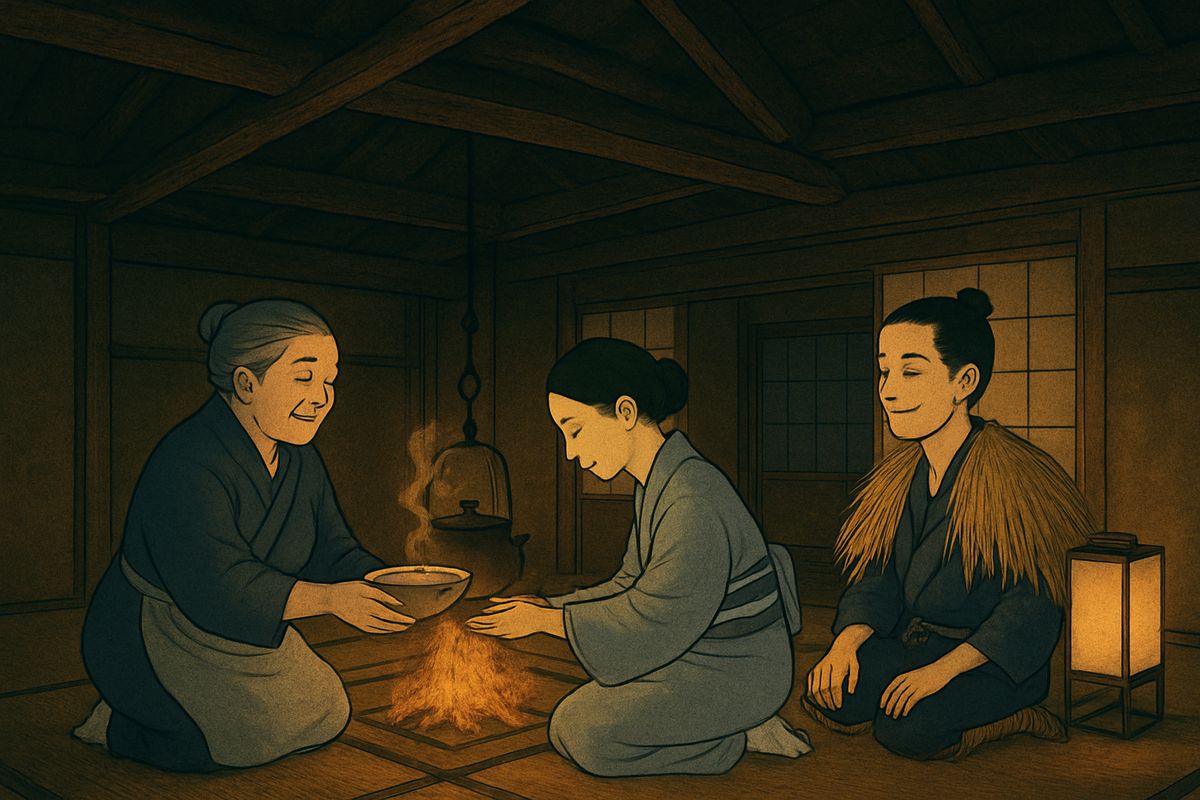
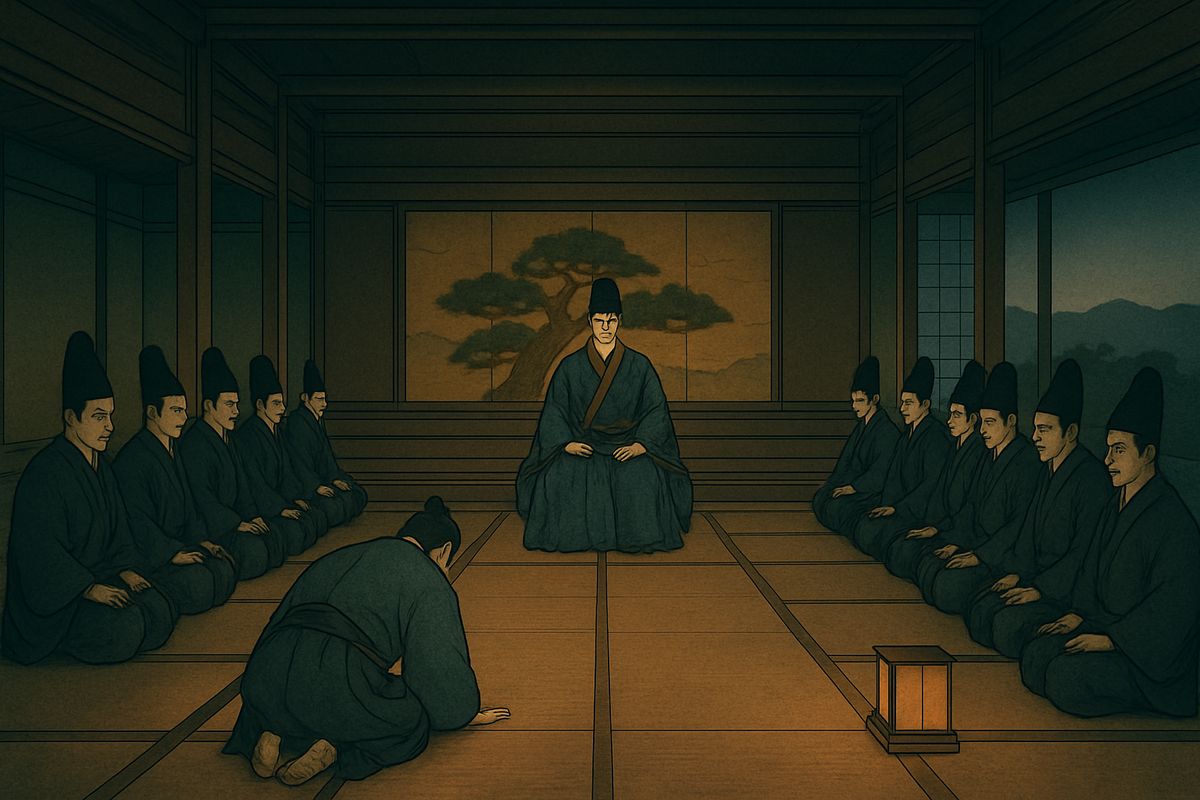
Adapted from Kwaidan: Stories and Studies of Strange Things by Lafcadio Hearn, public domain. Pictures are AI illustrations drawn for this edition.
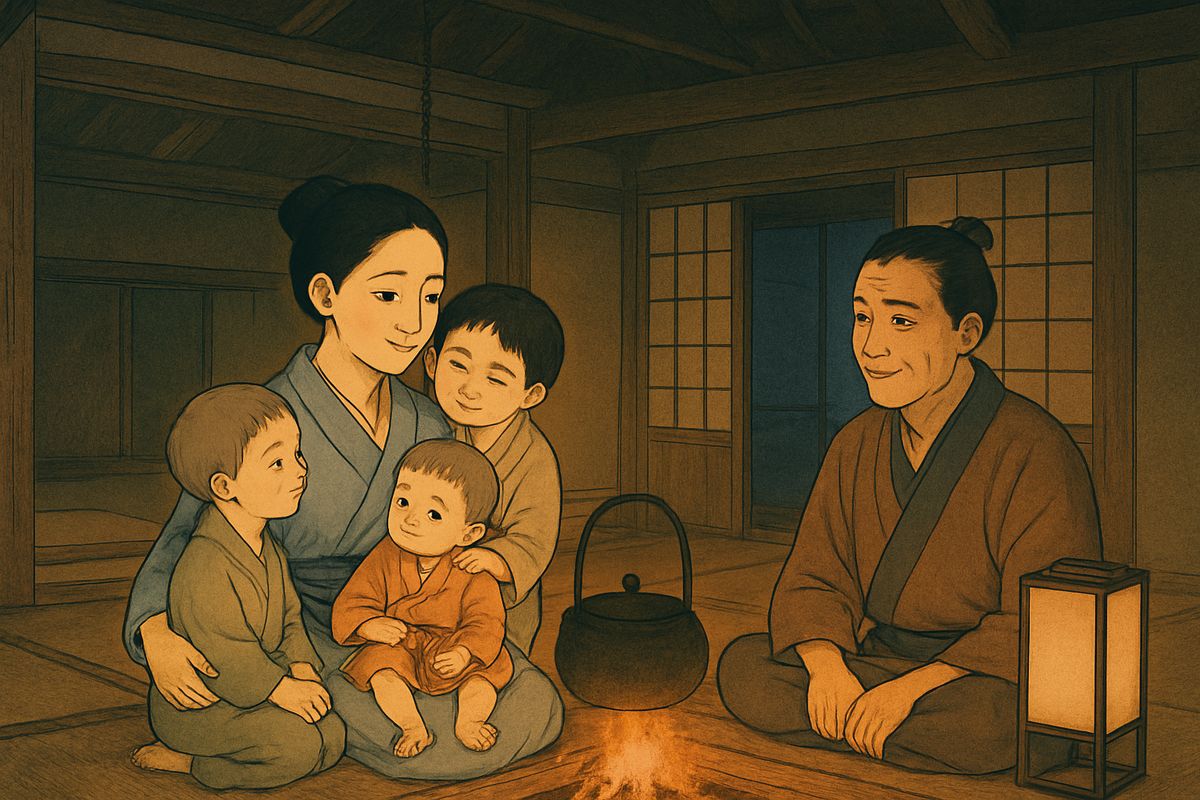
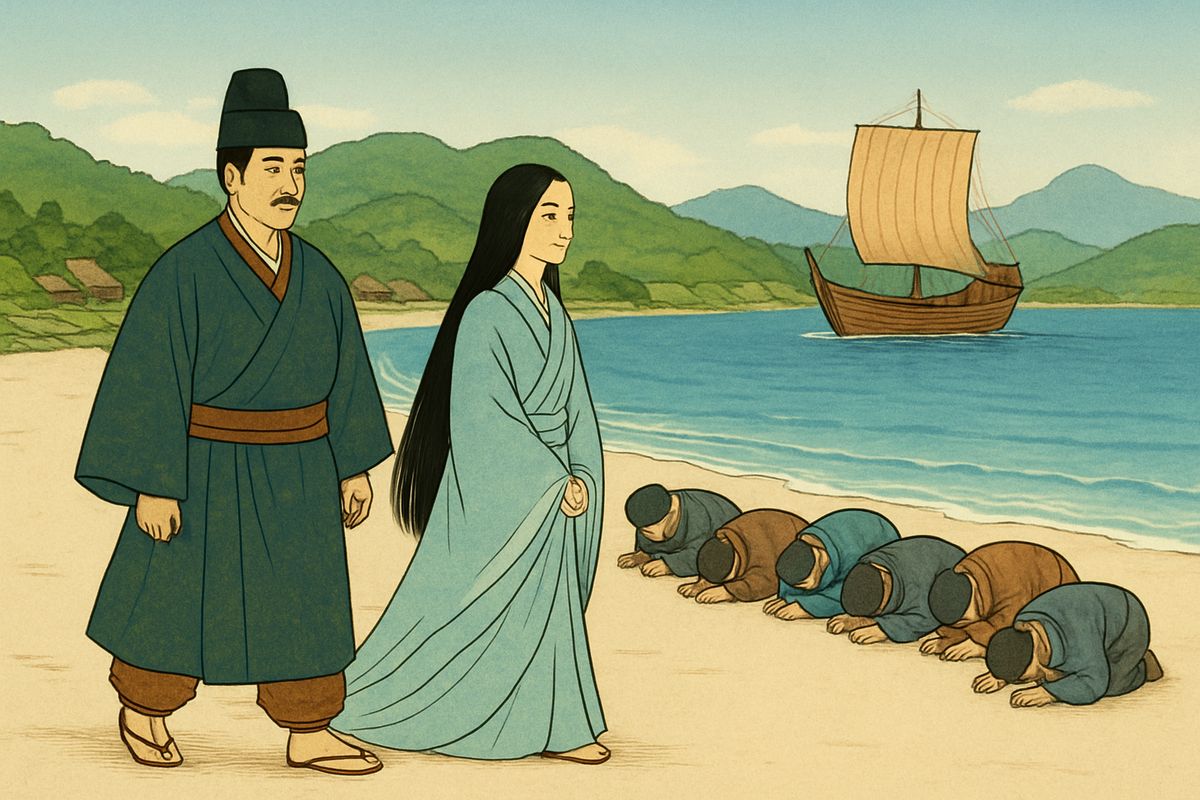
Add Stories to your Home Screen: tap
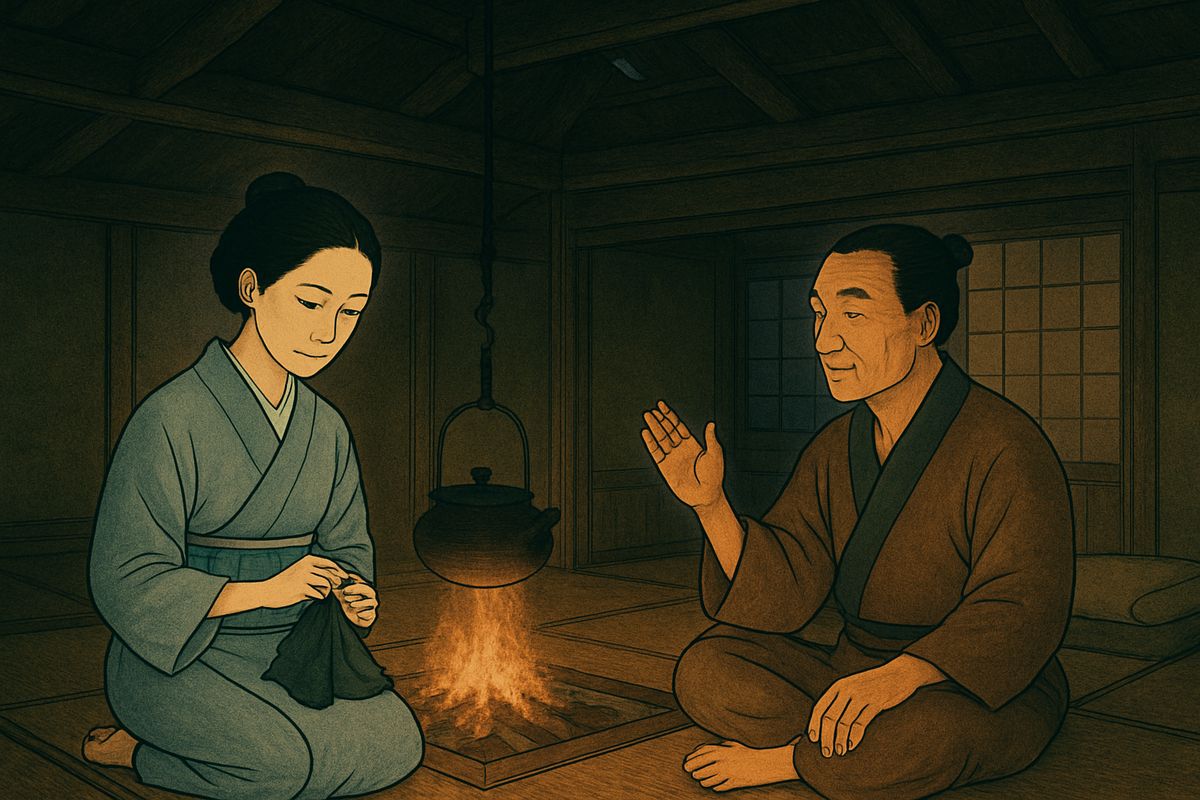
then Add to Home Screen.