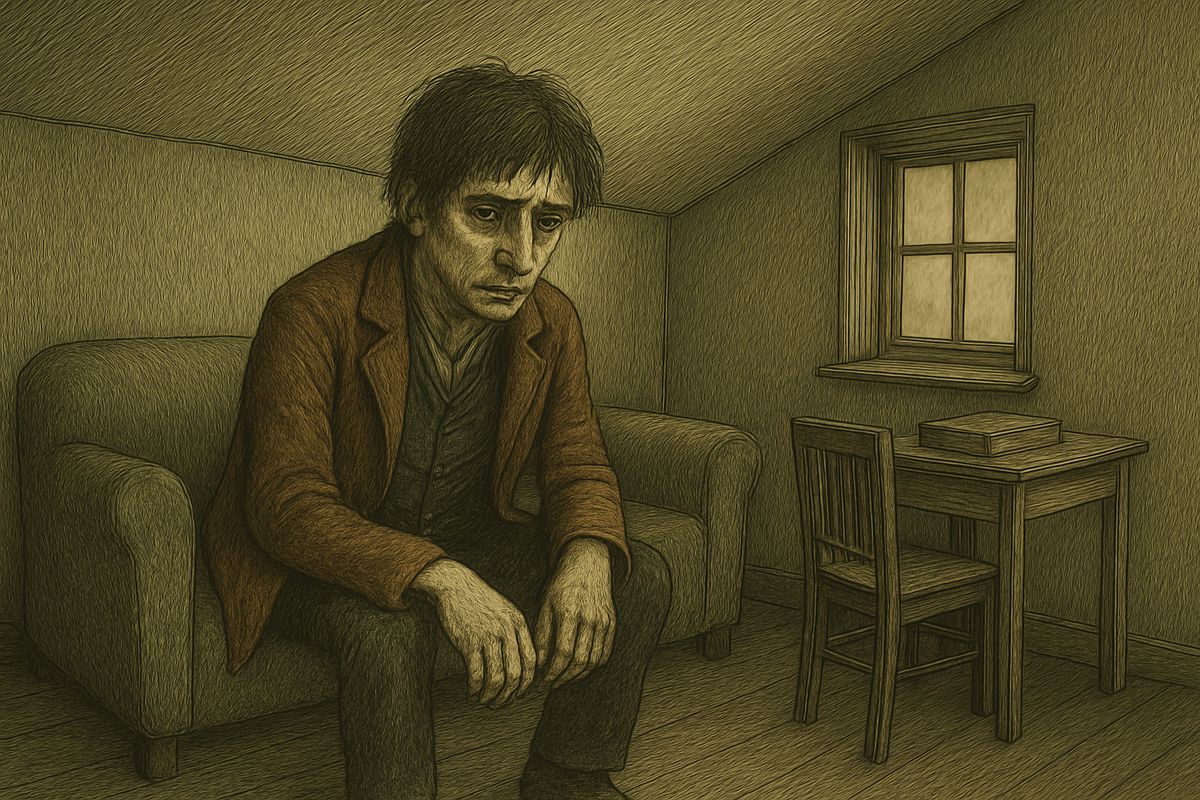
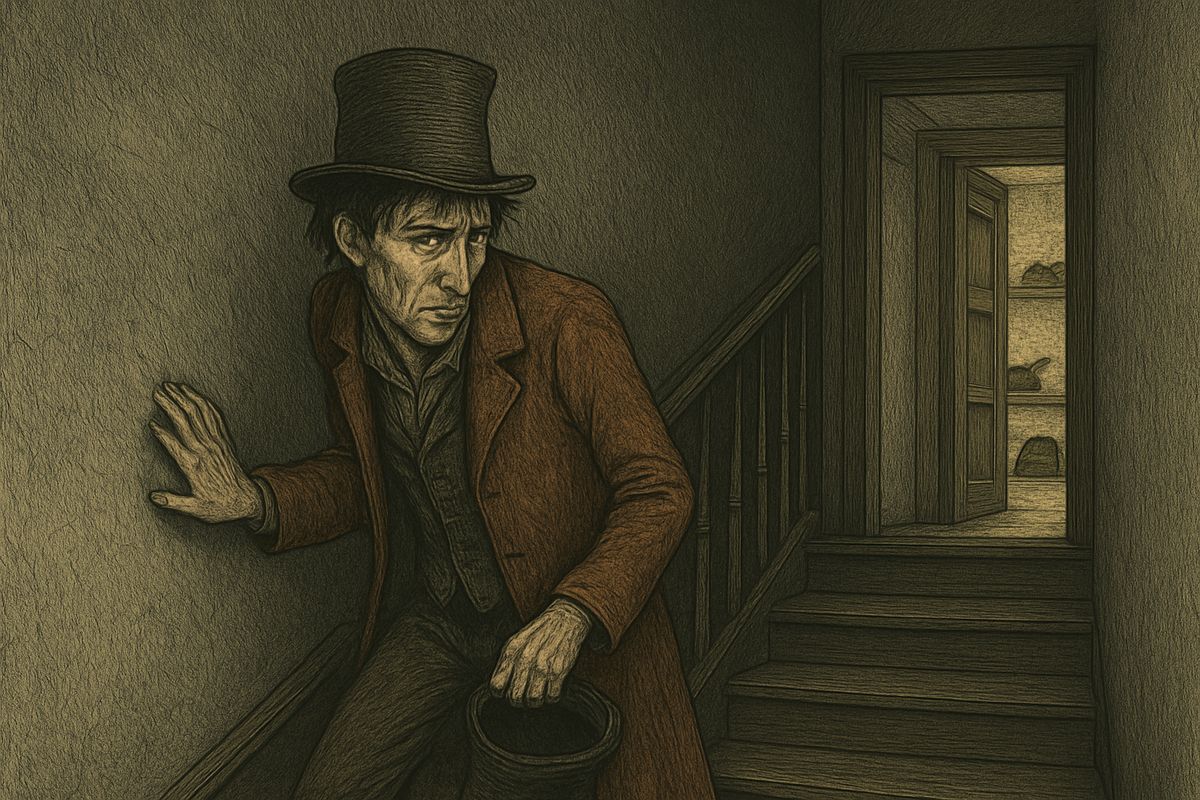
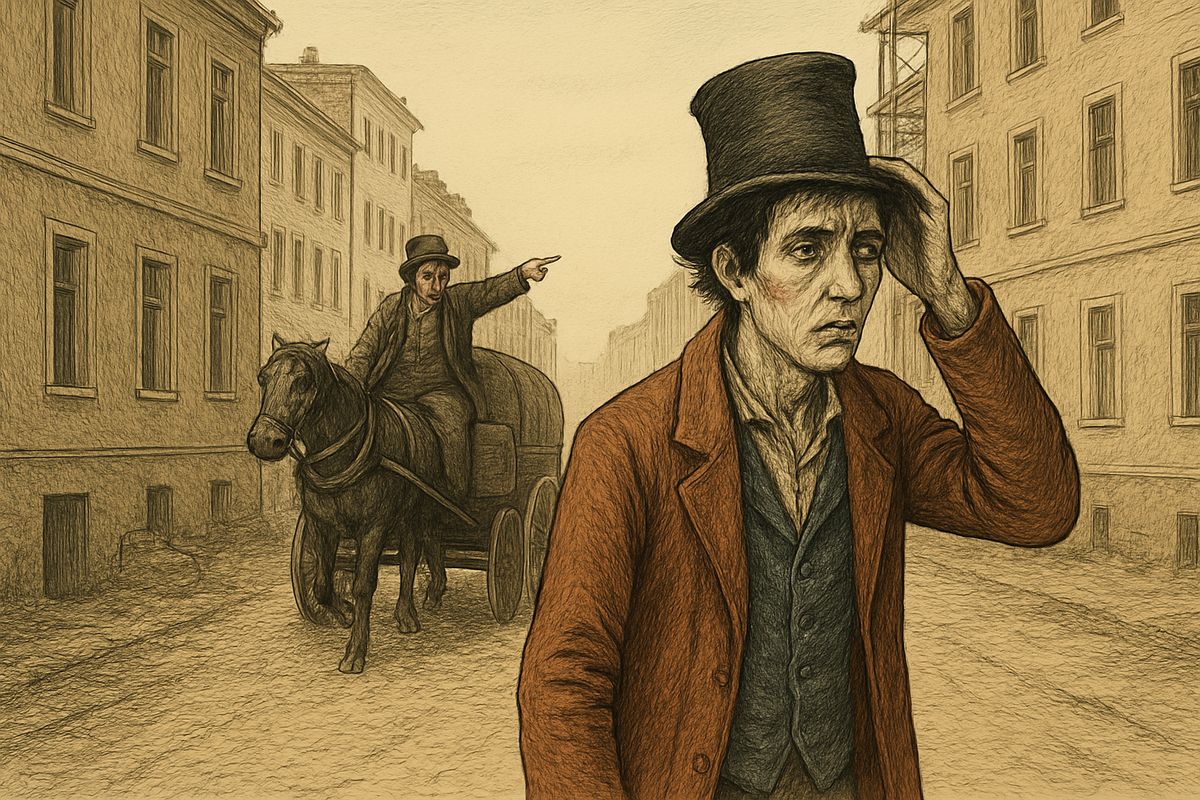
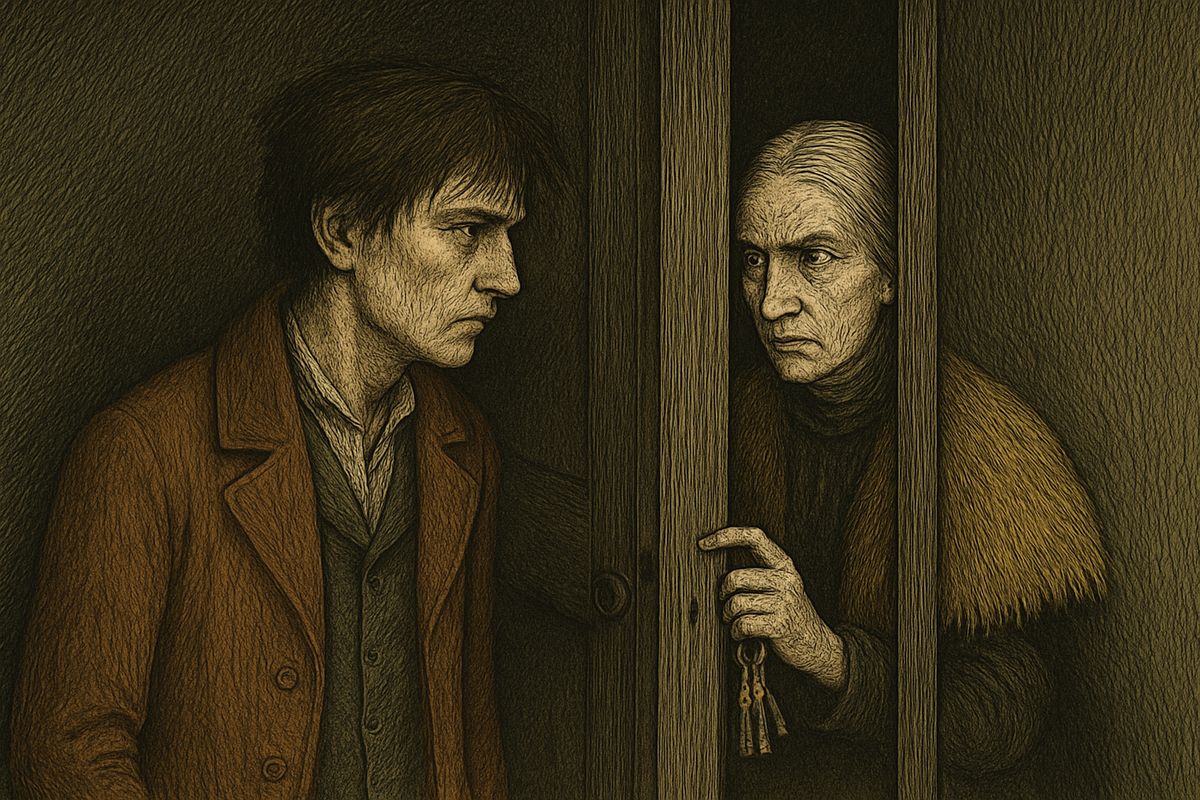
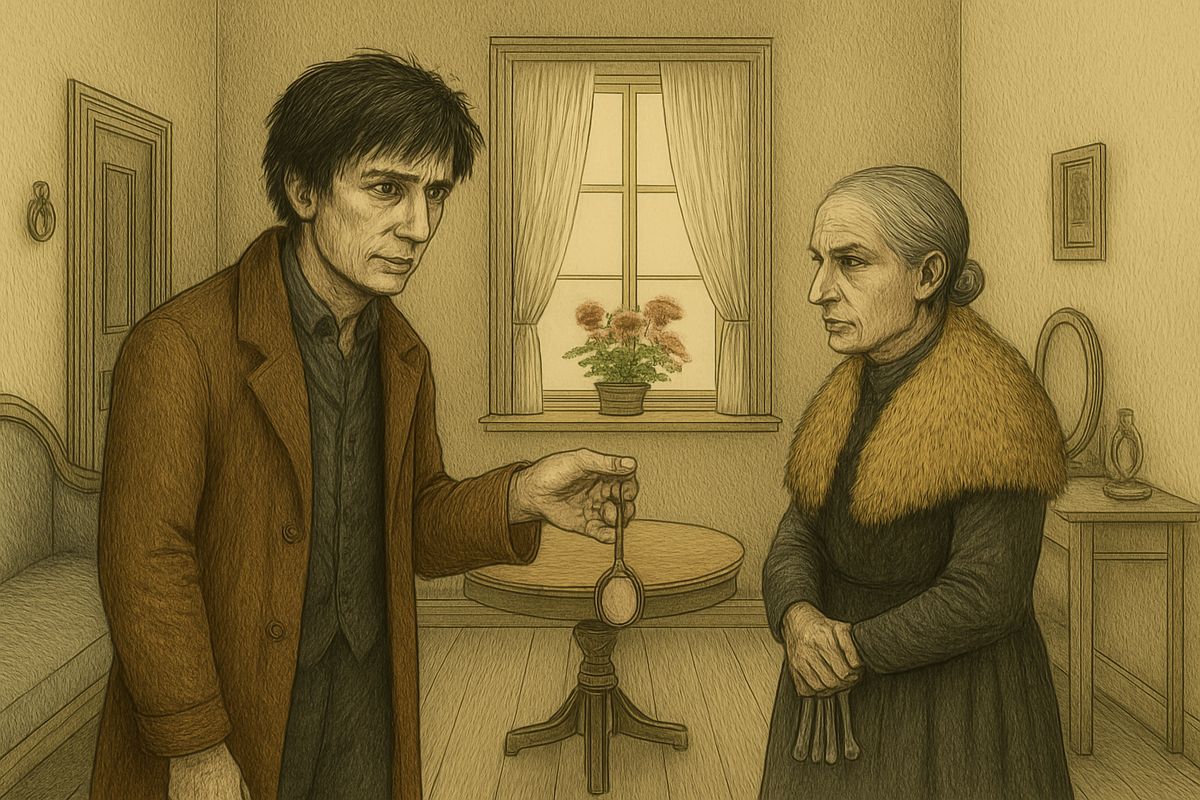
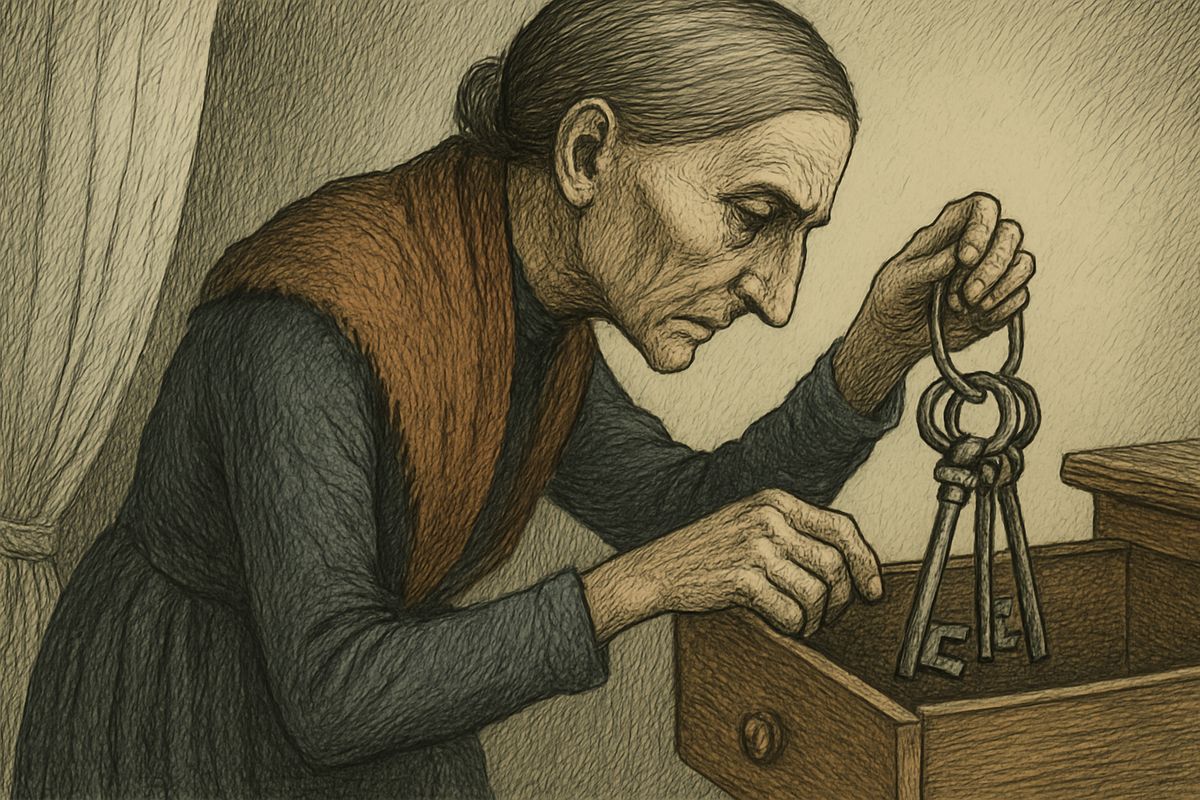
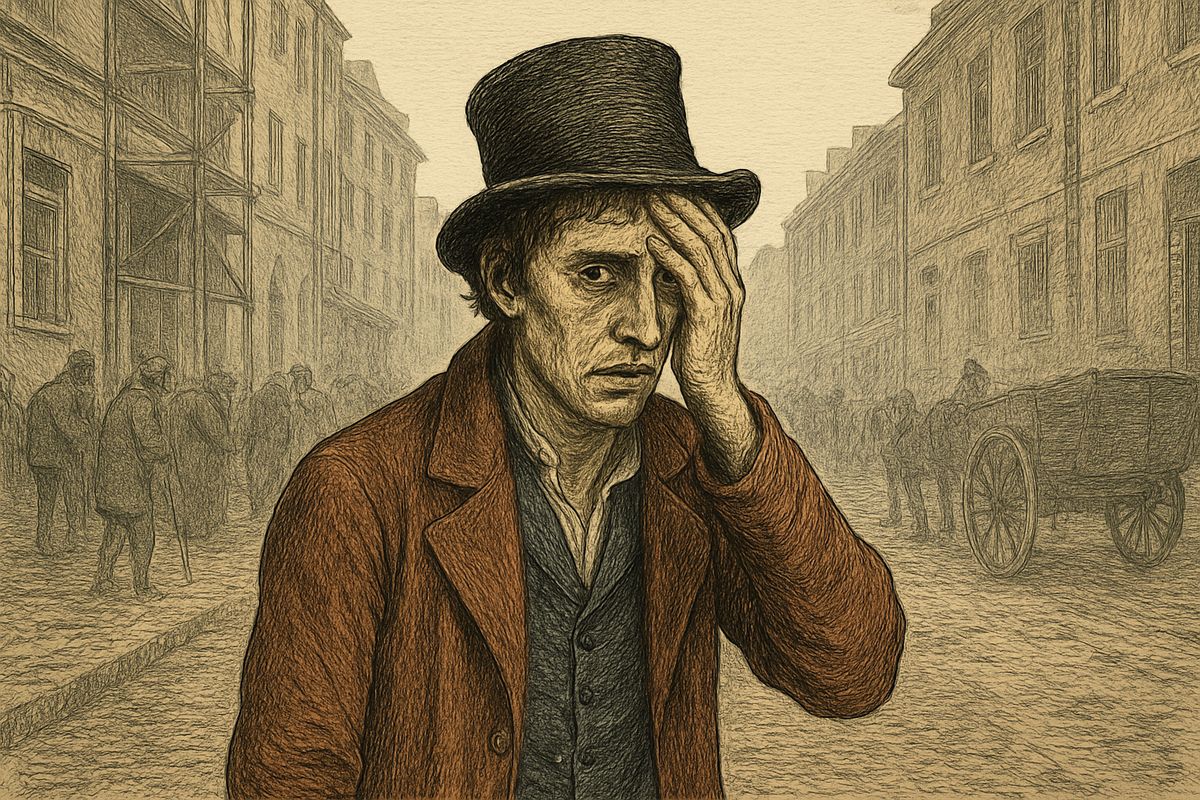
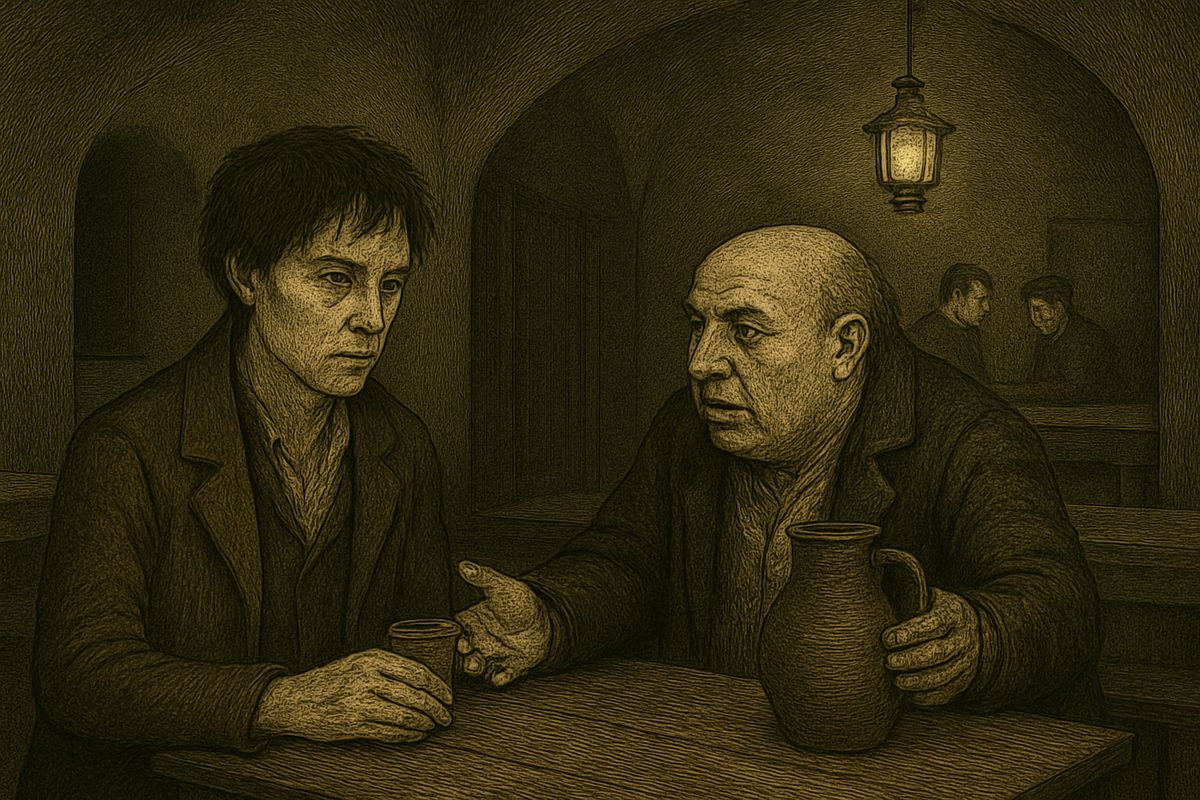
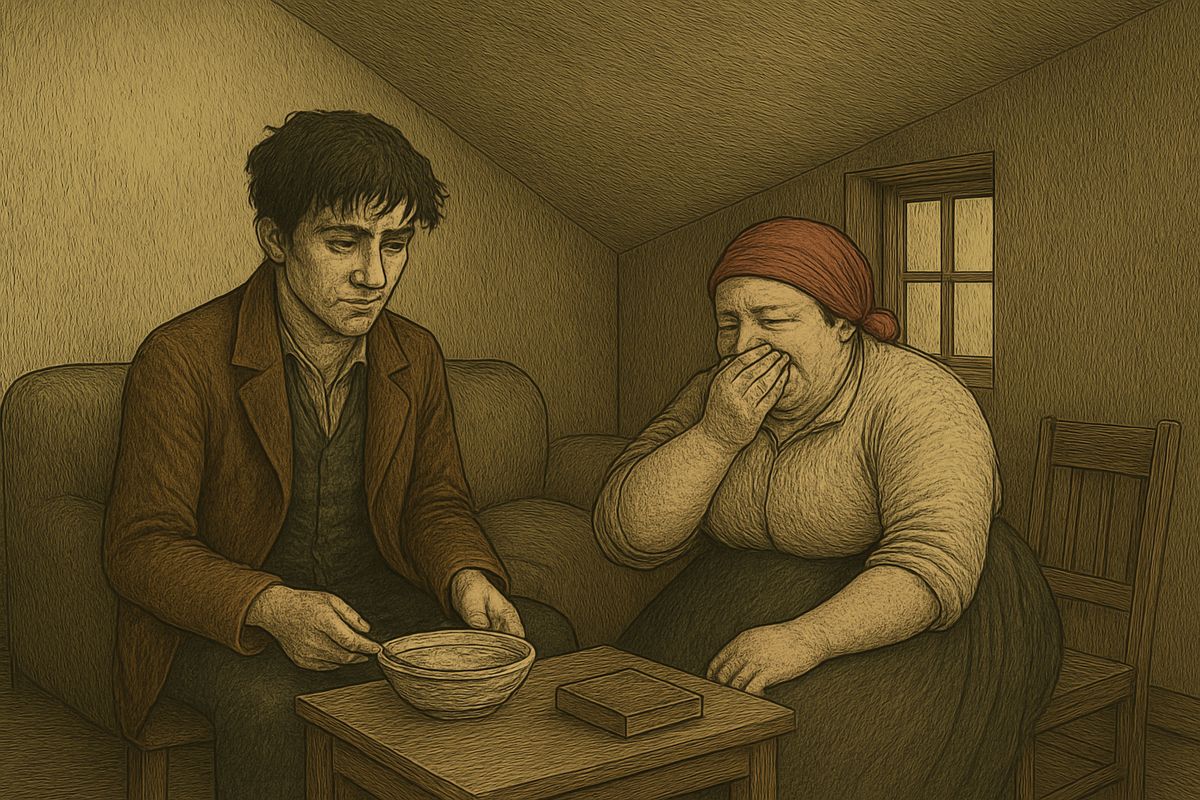
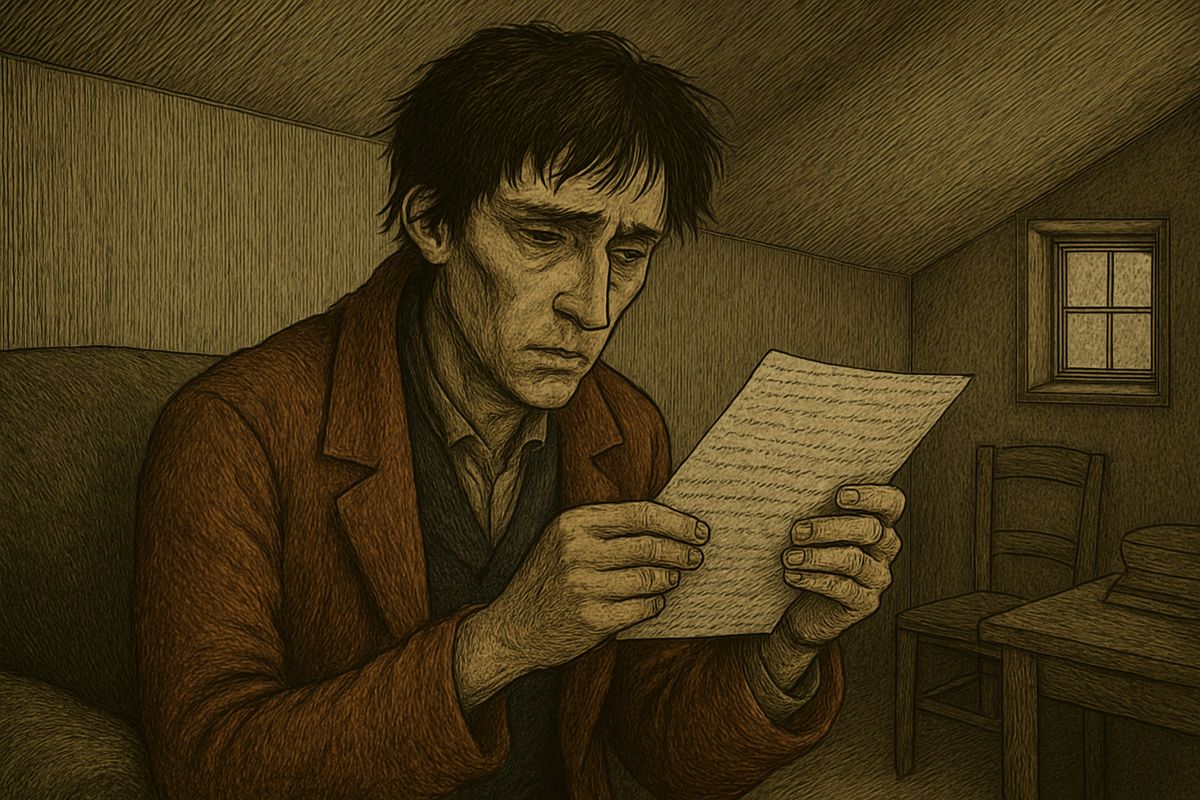
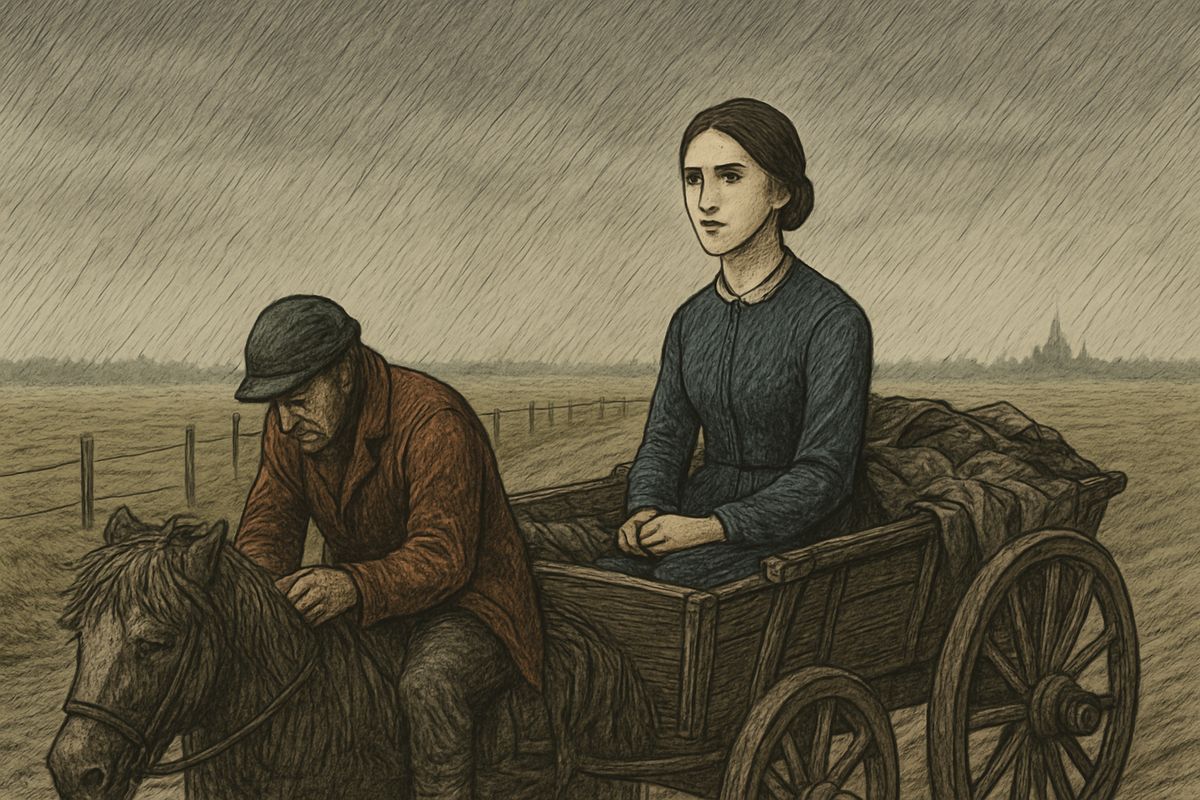
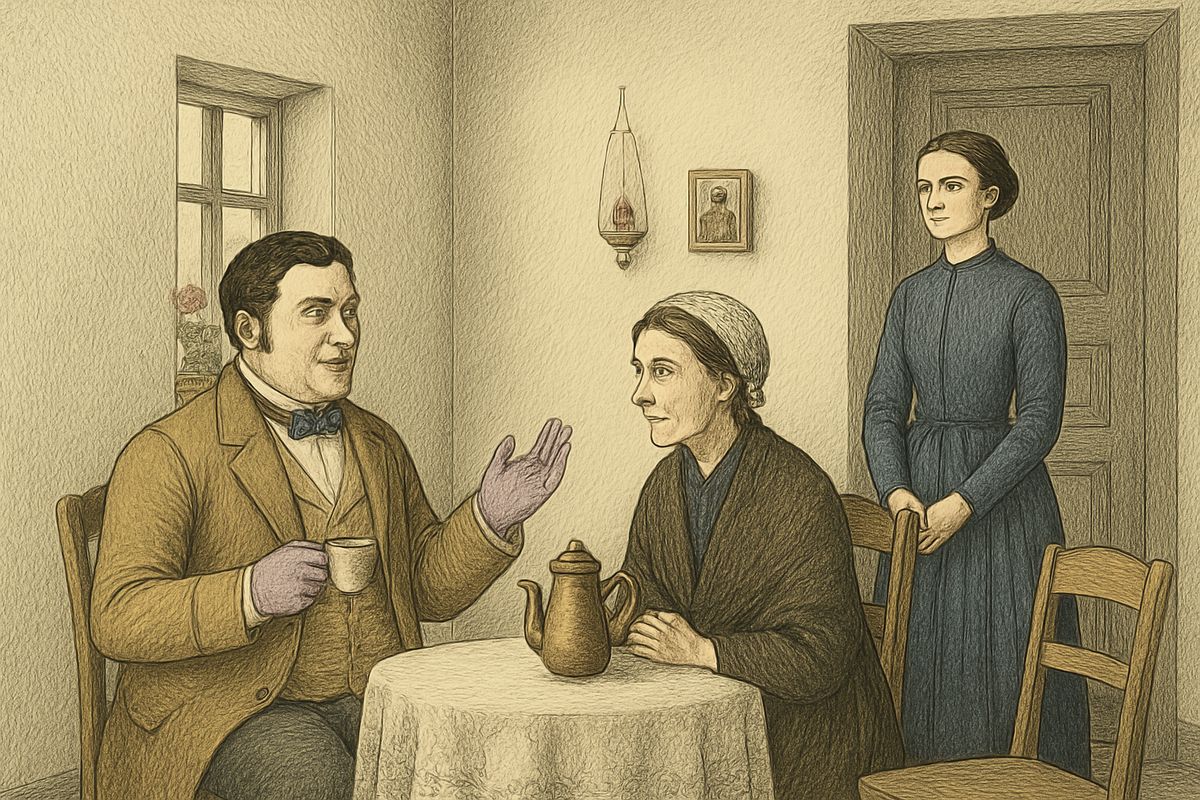
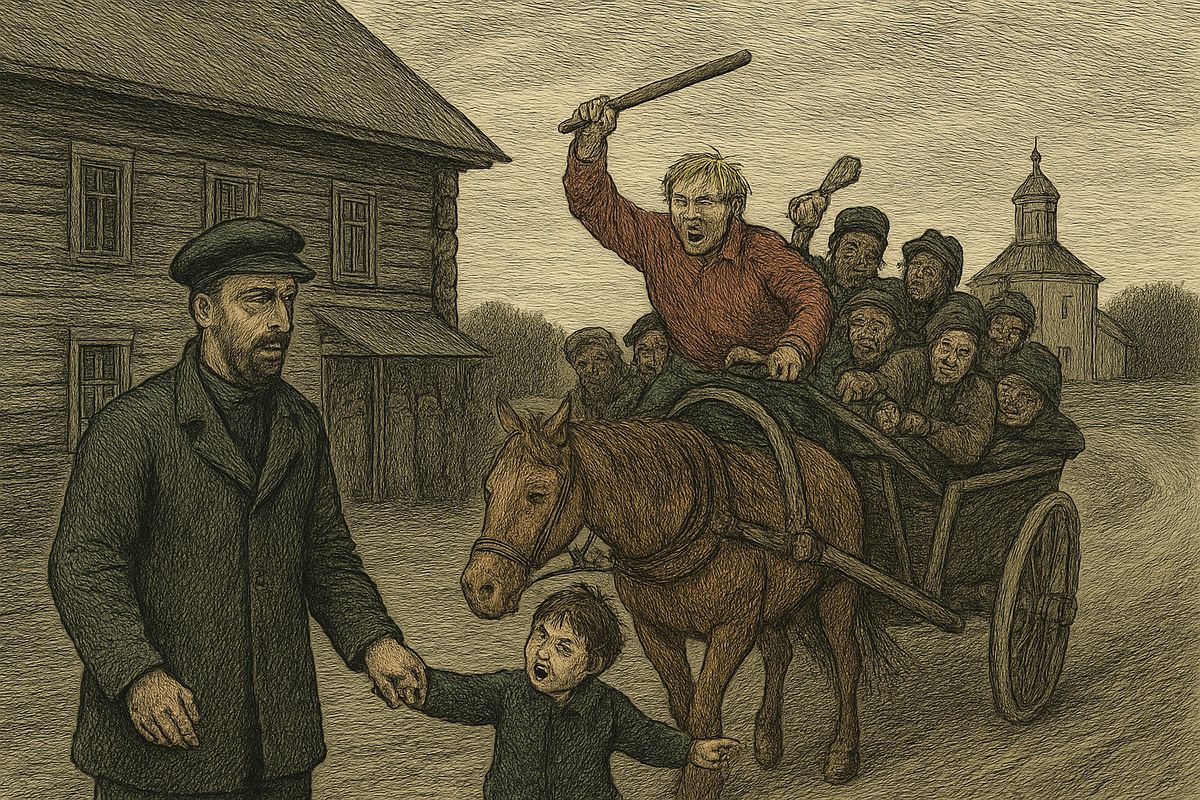
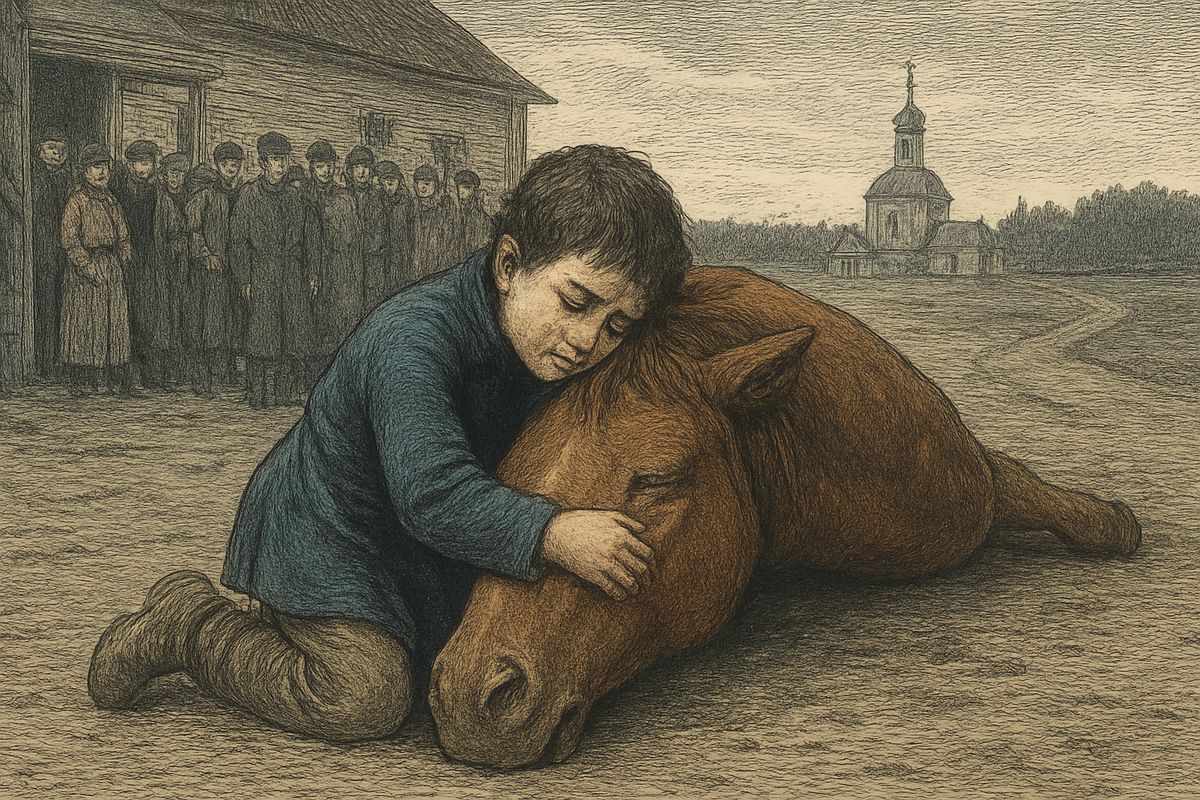
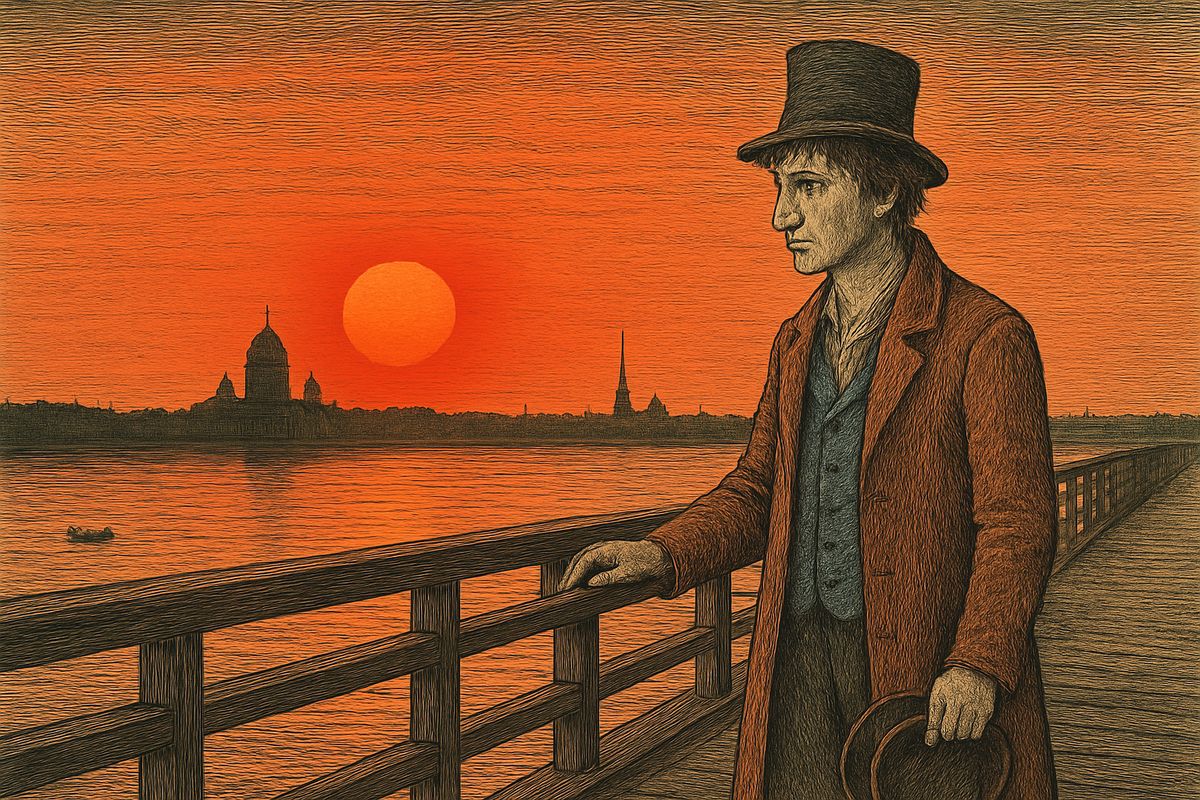
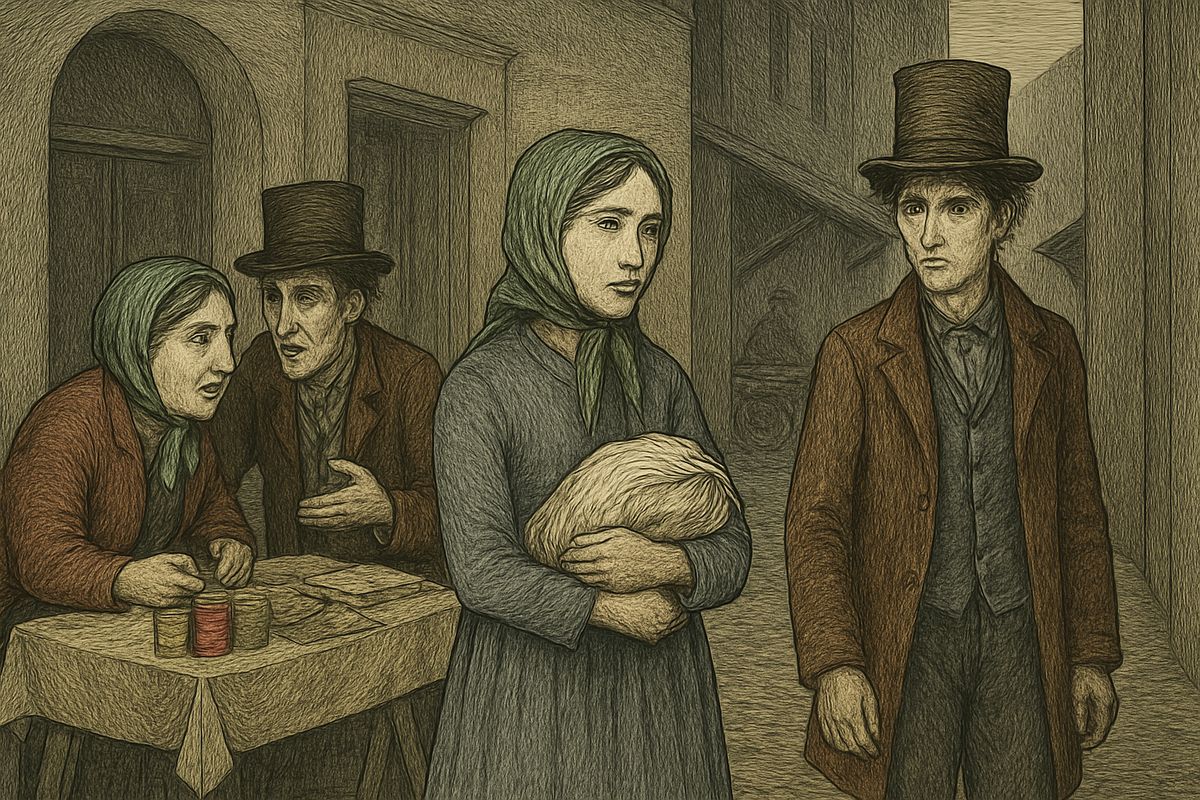
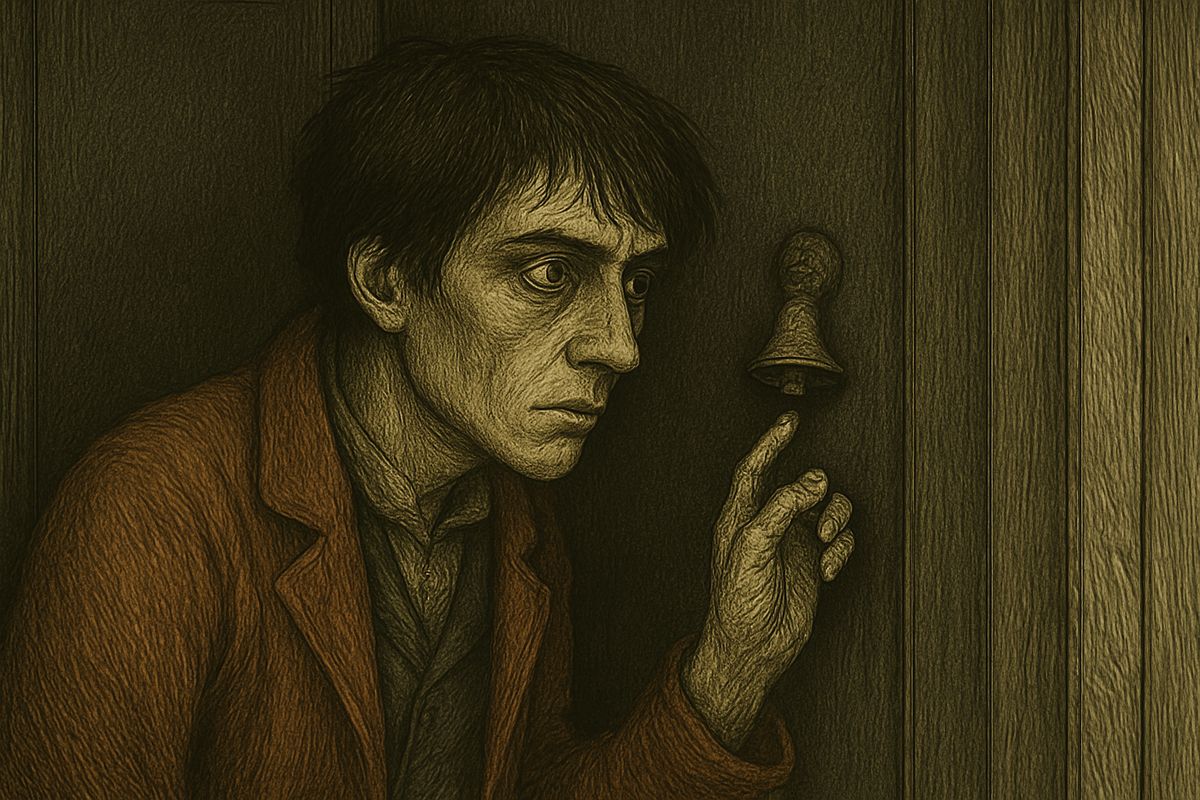
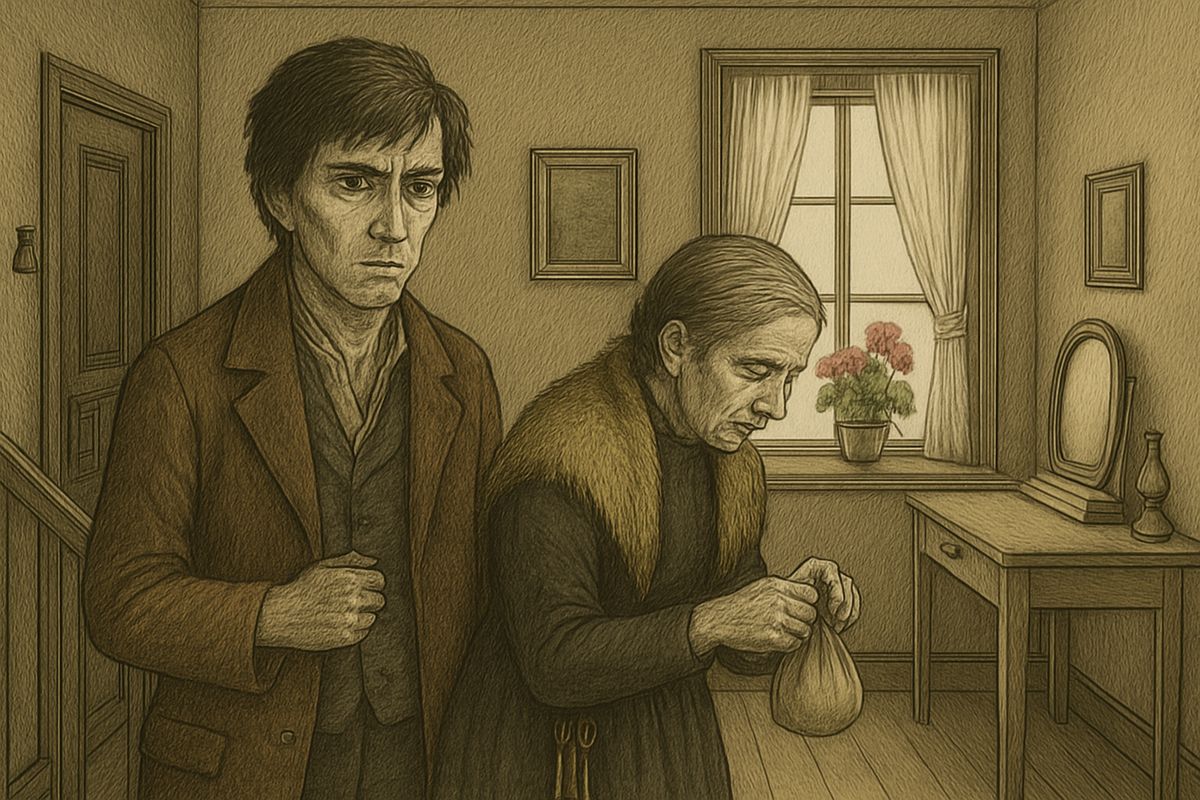
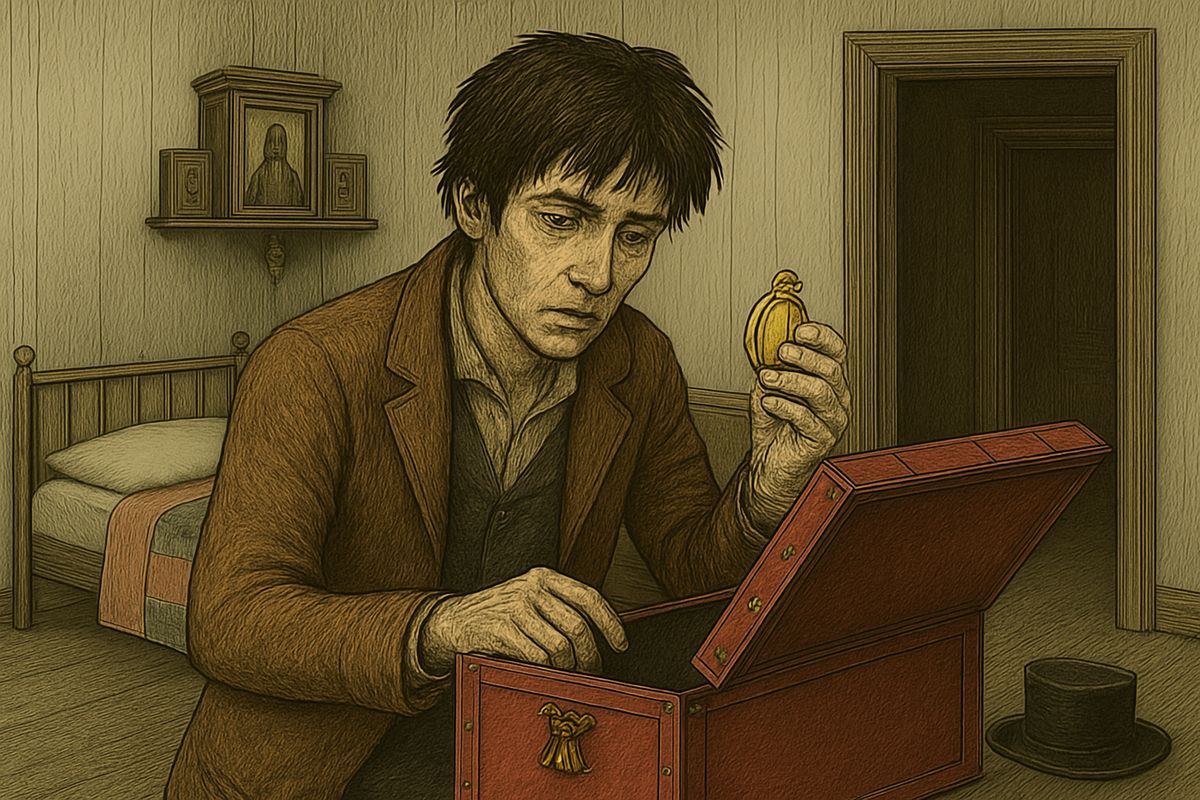
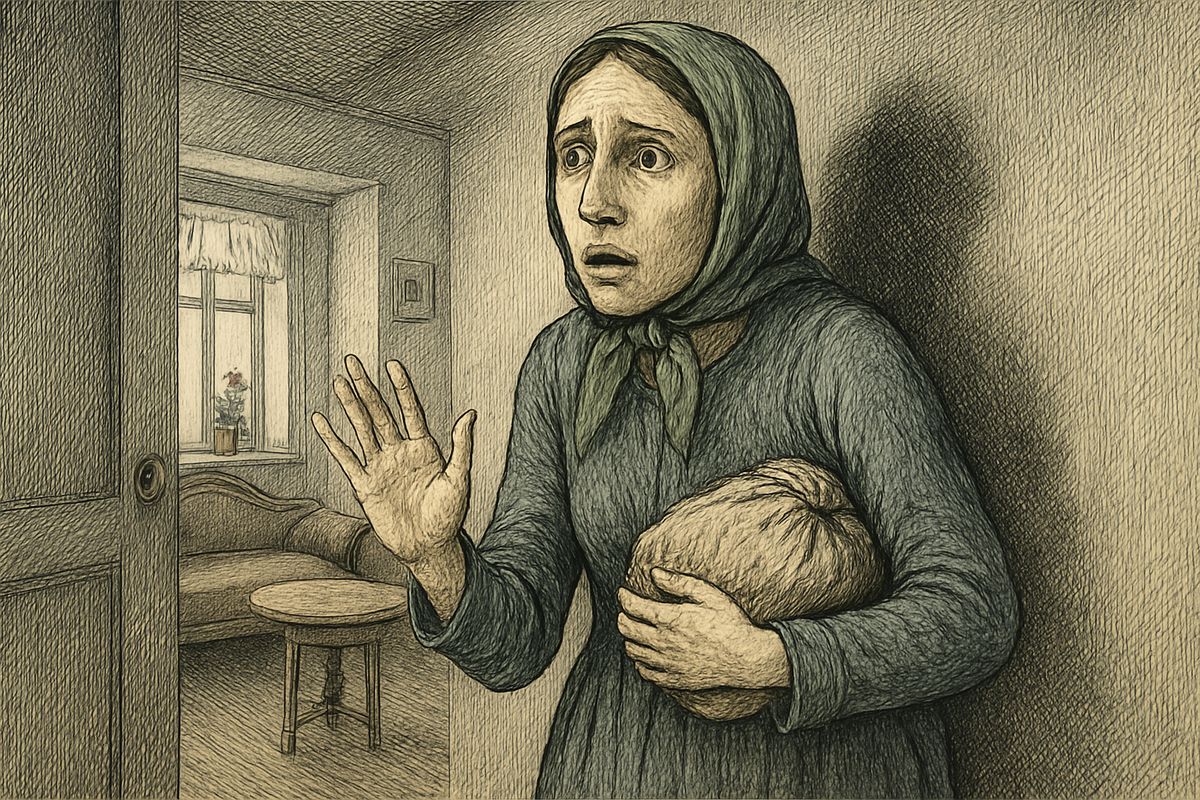
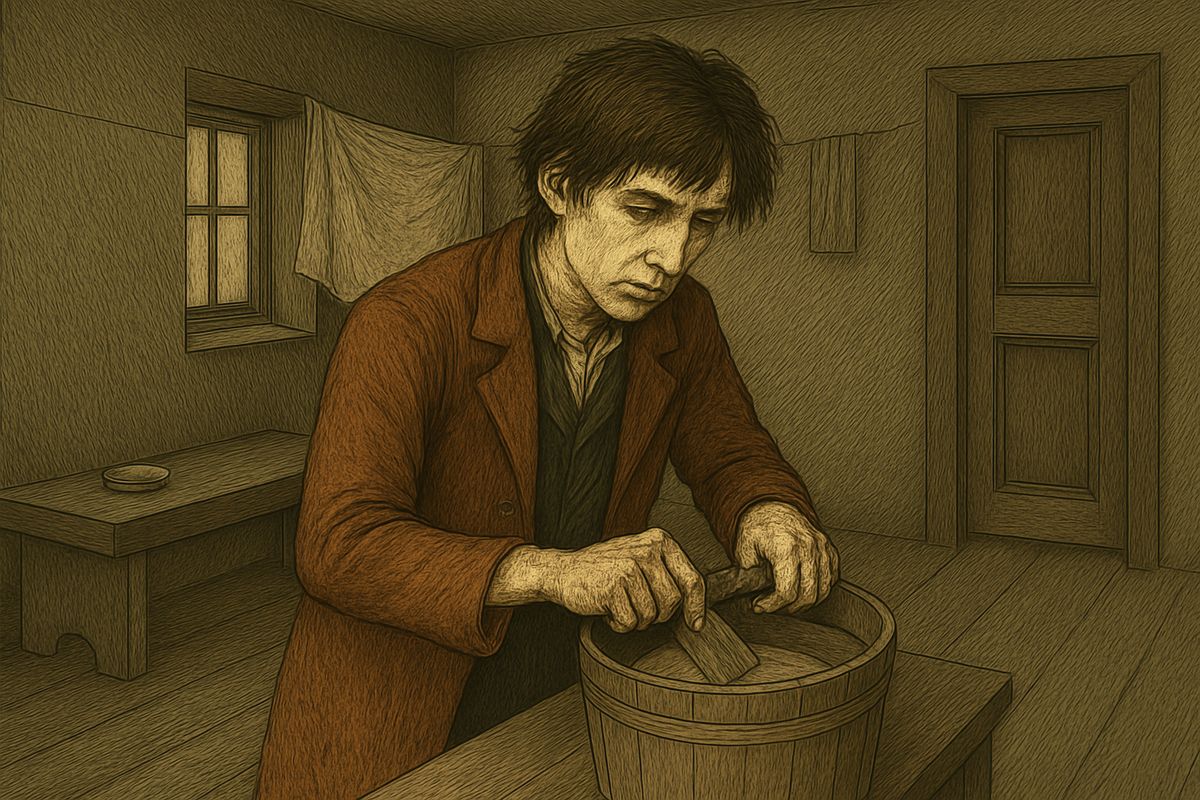
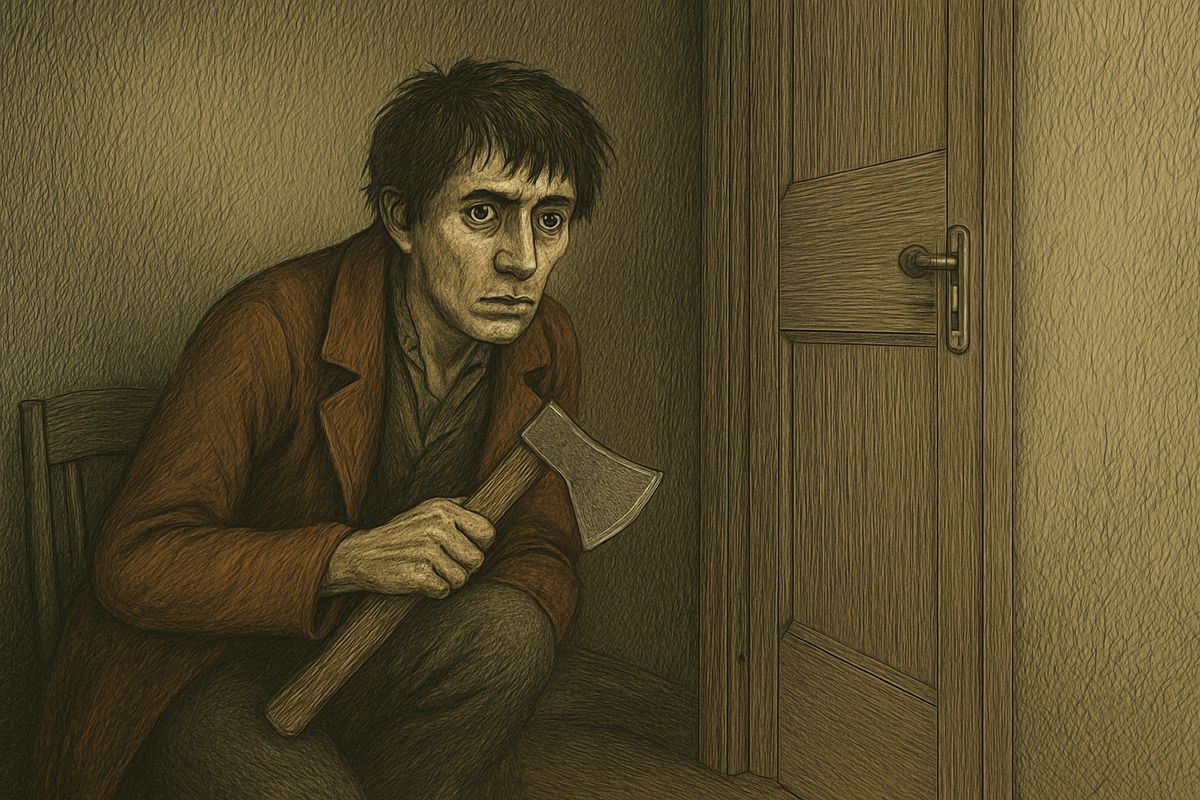
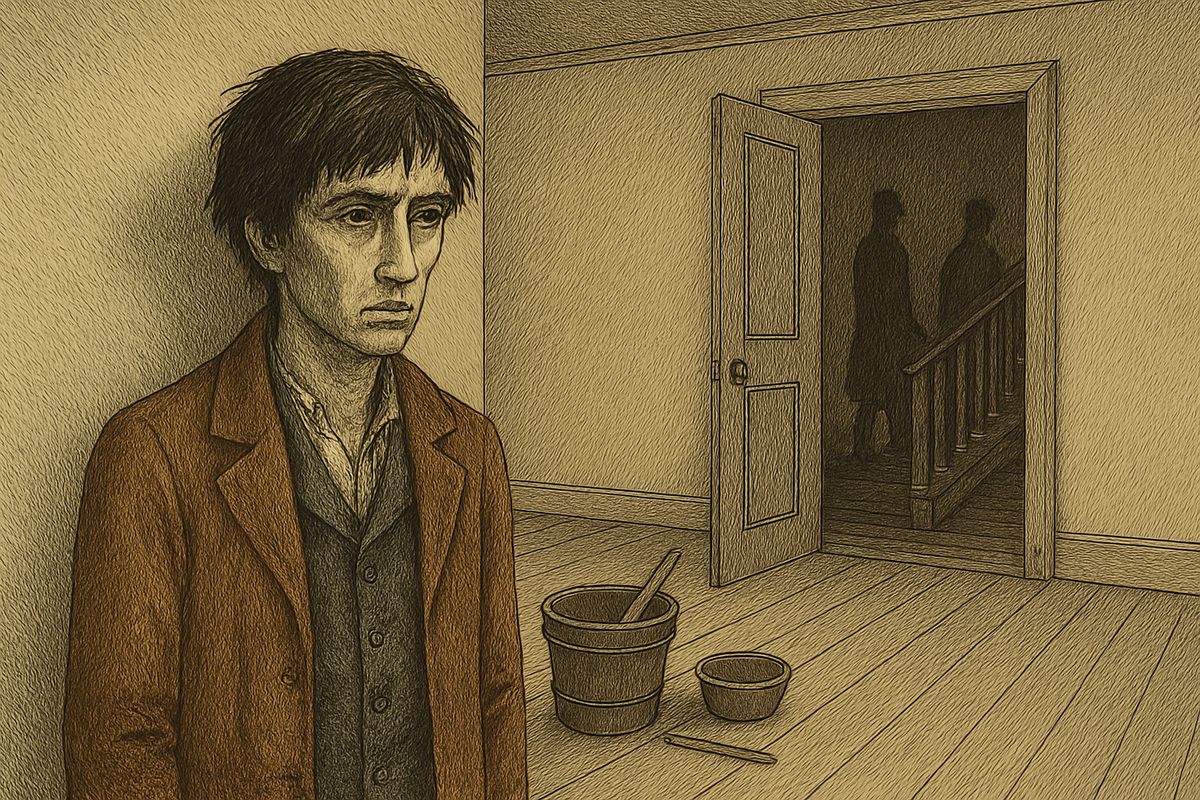
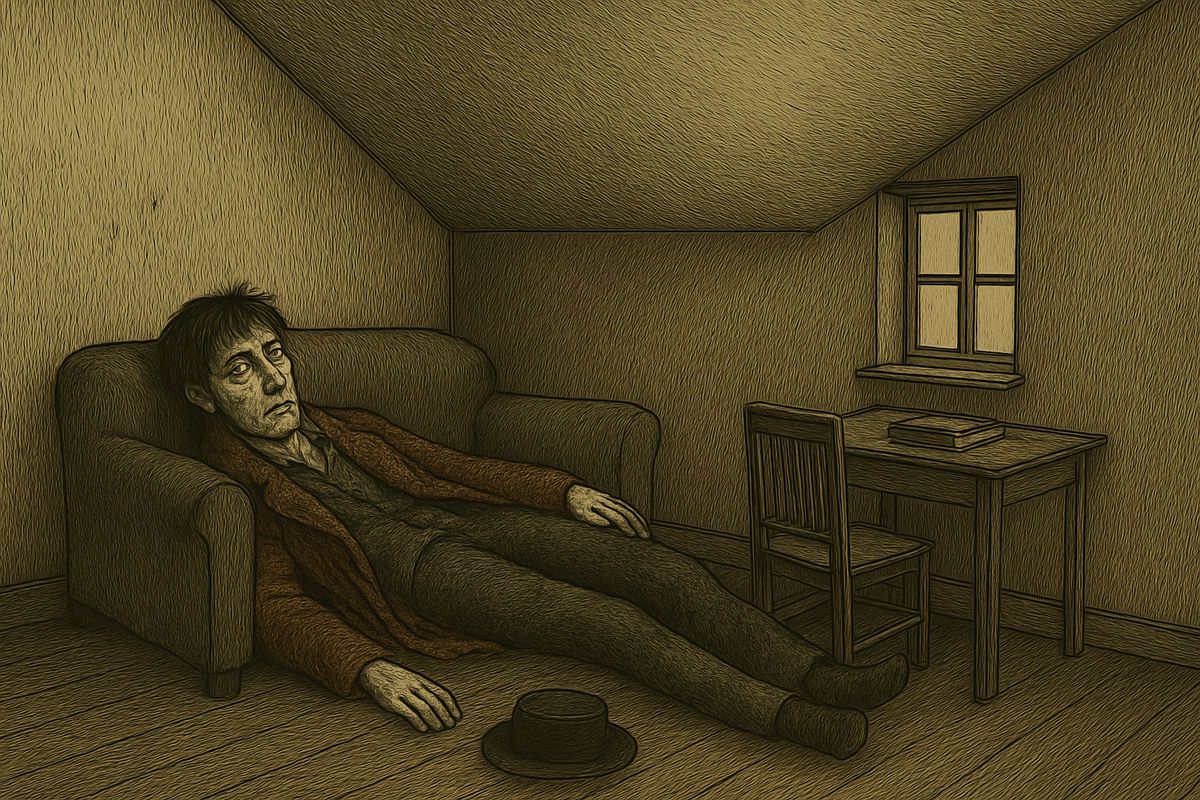
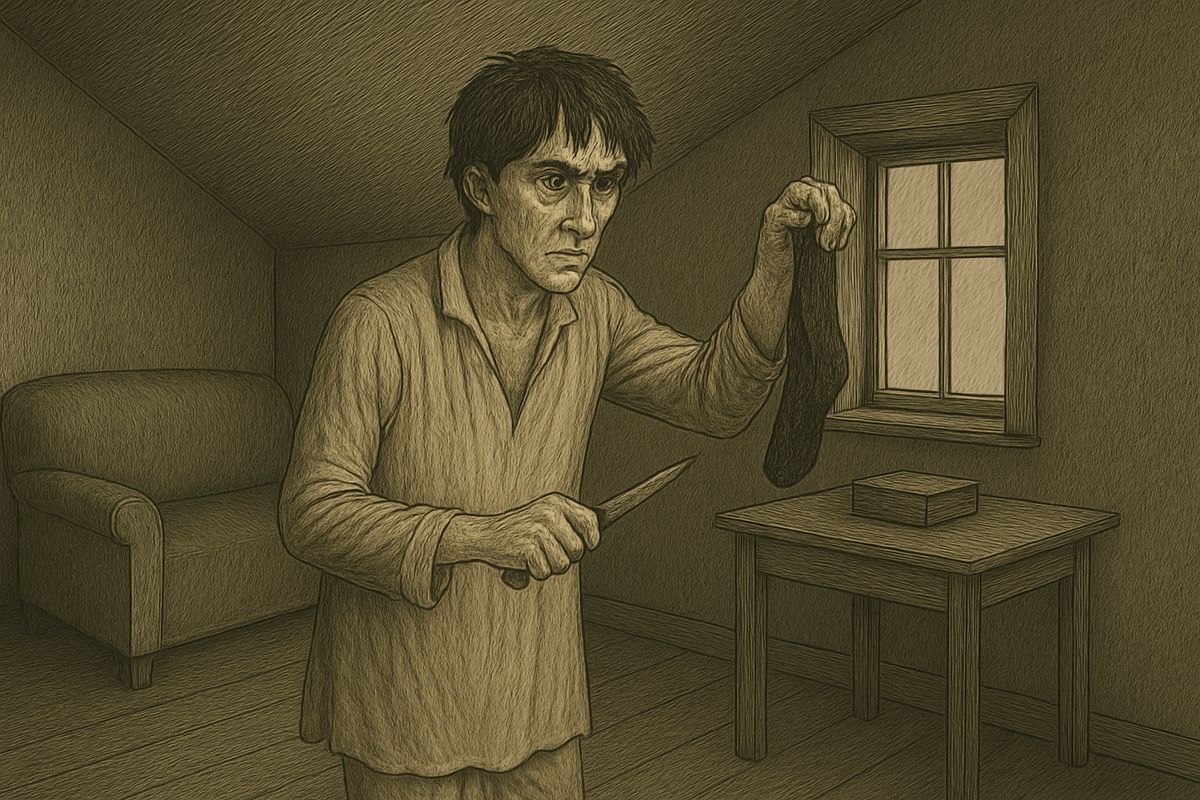
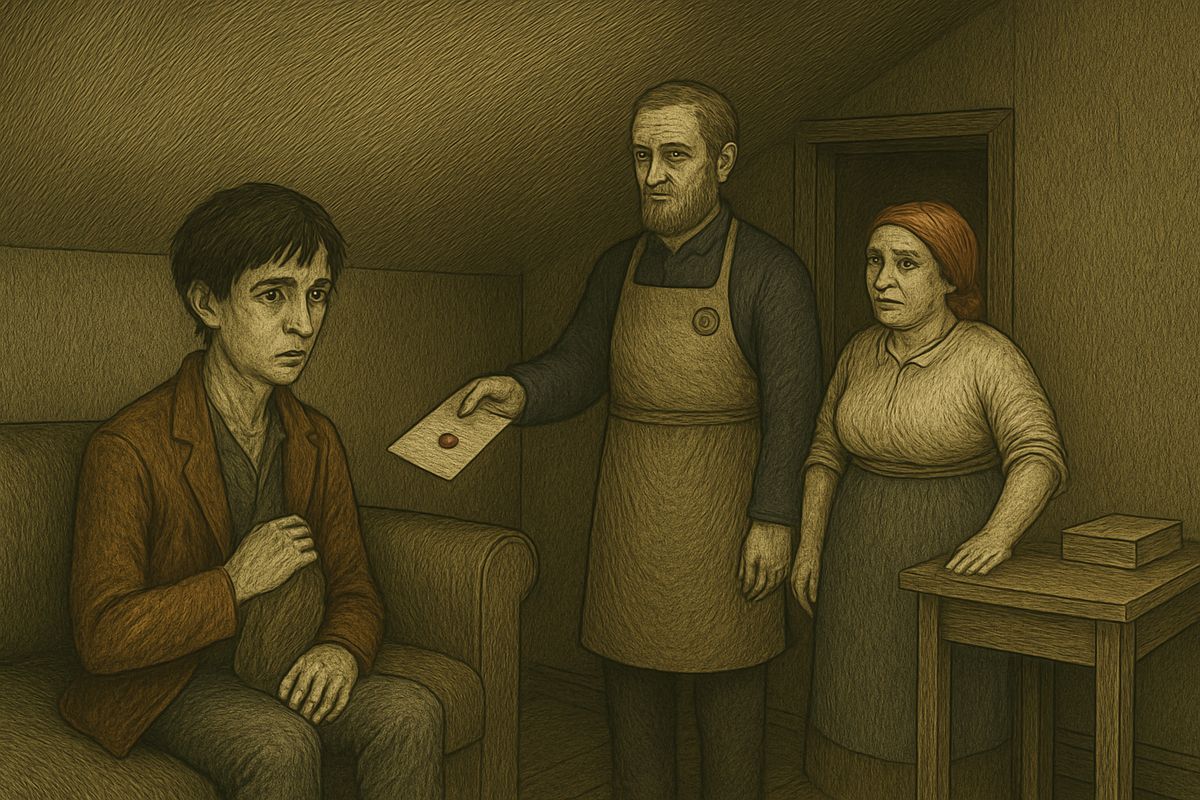
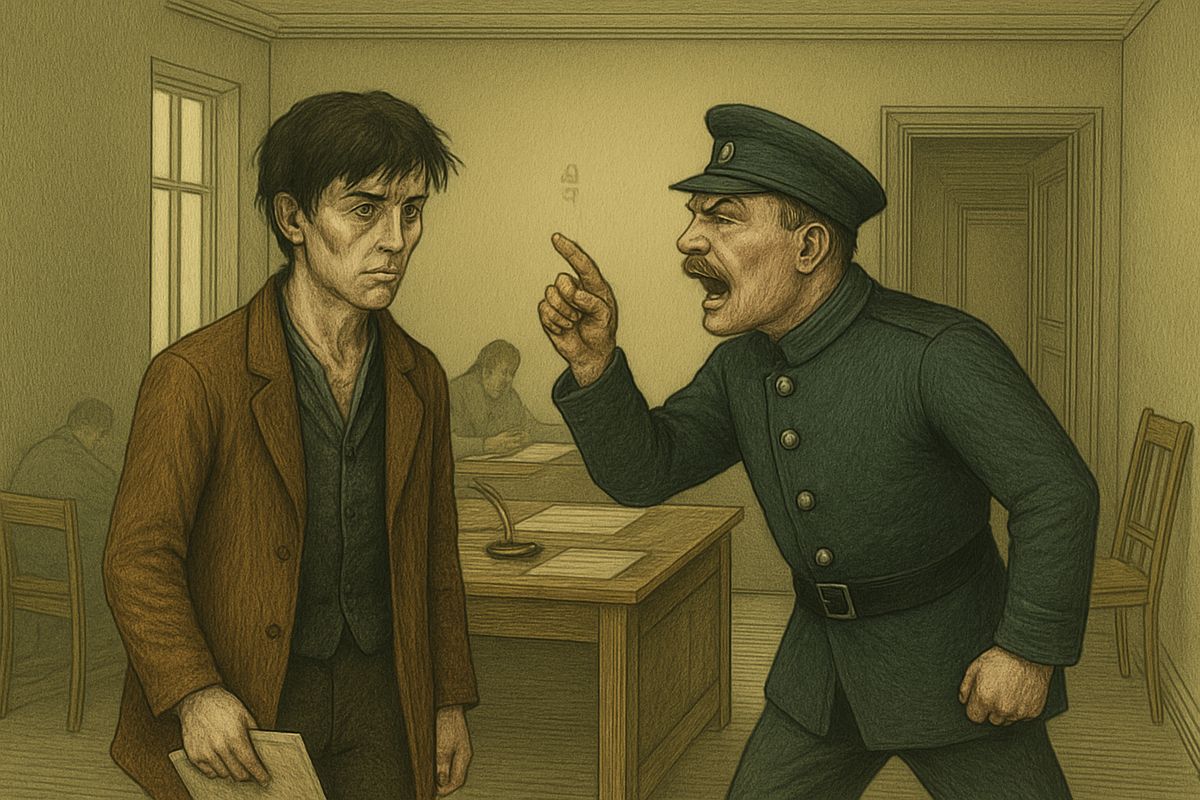
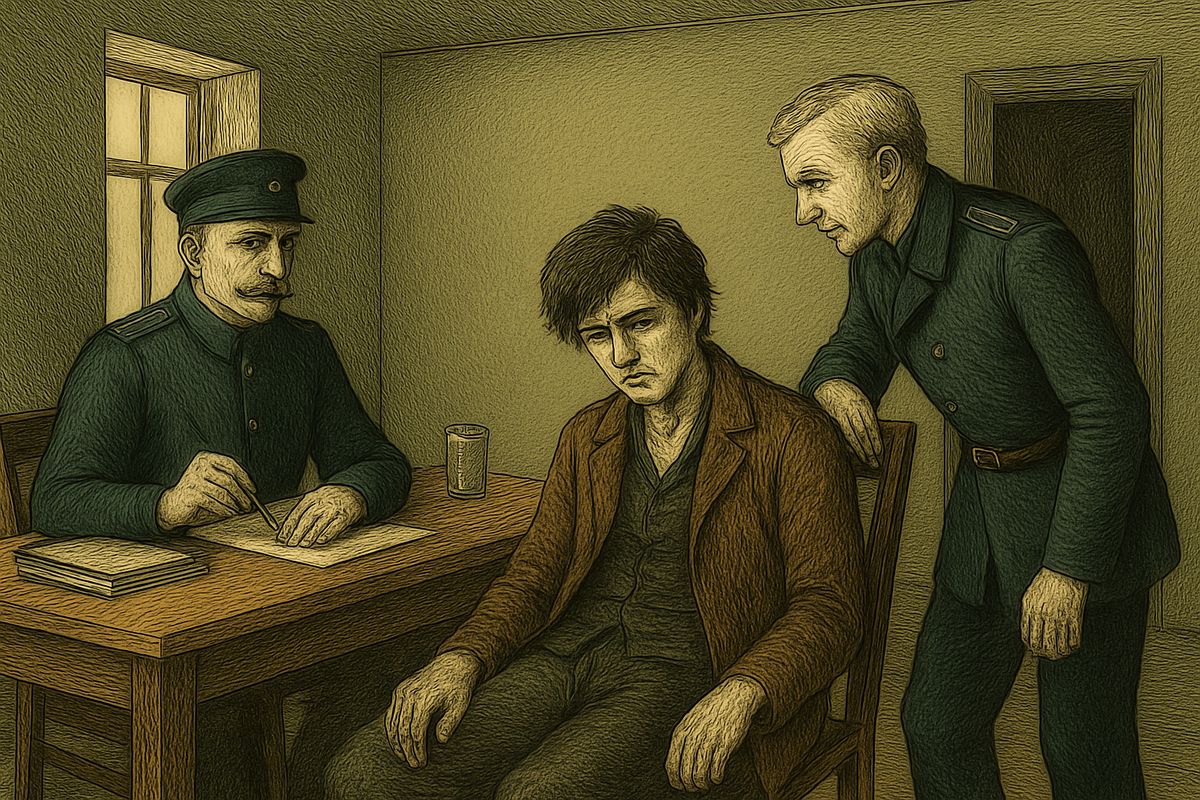
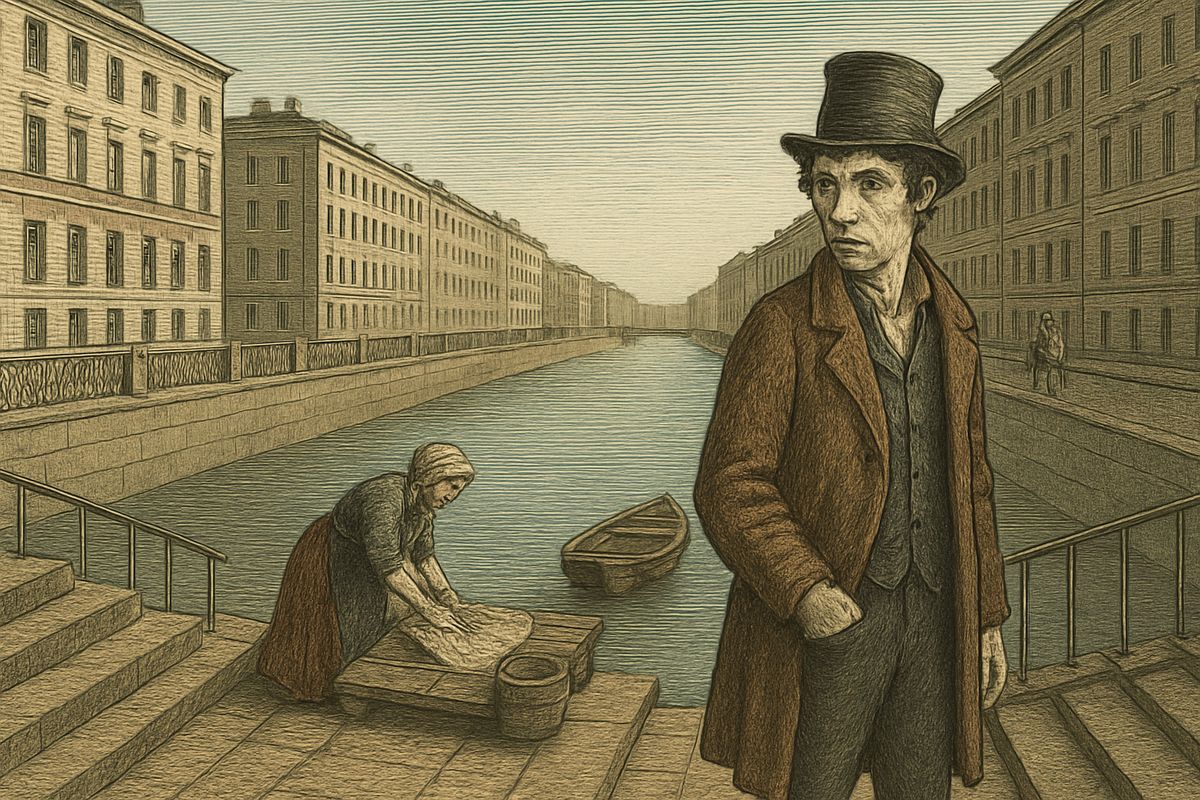
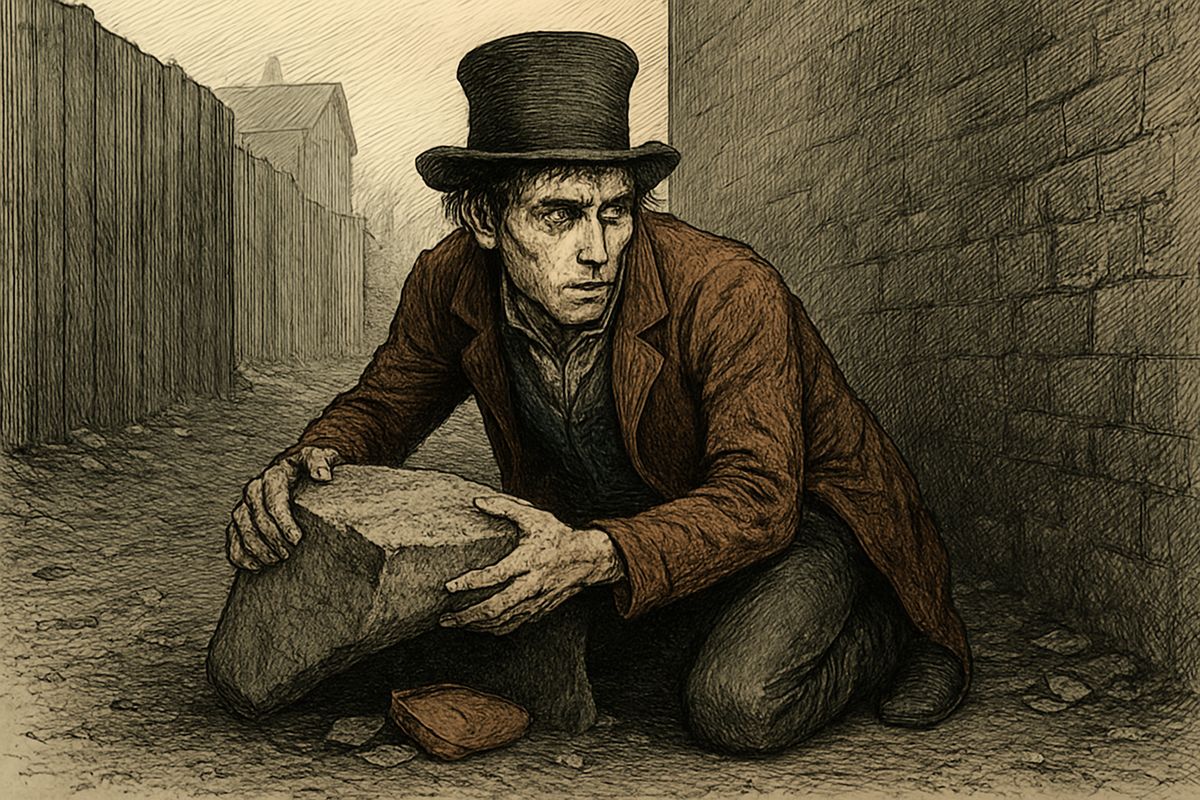
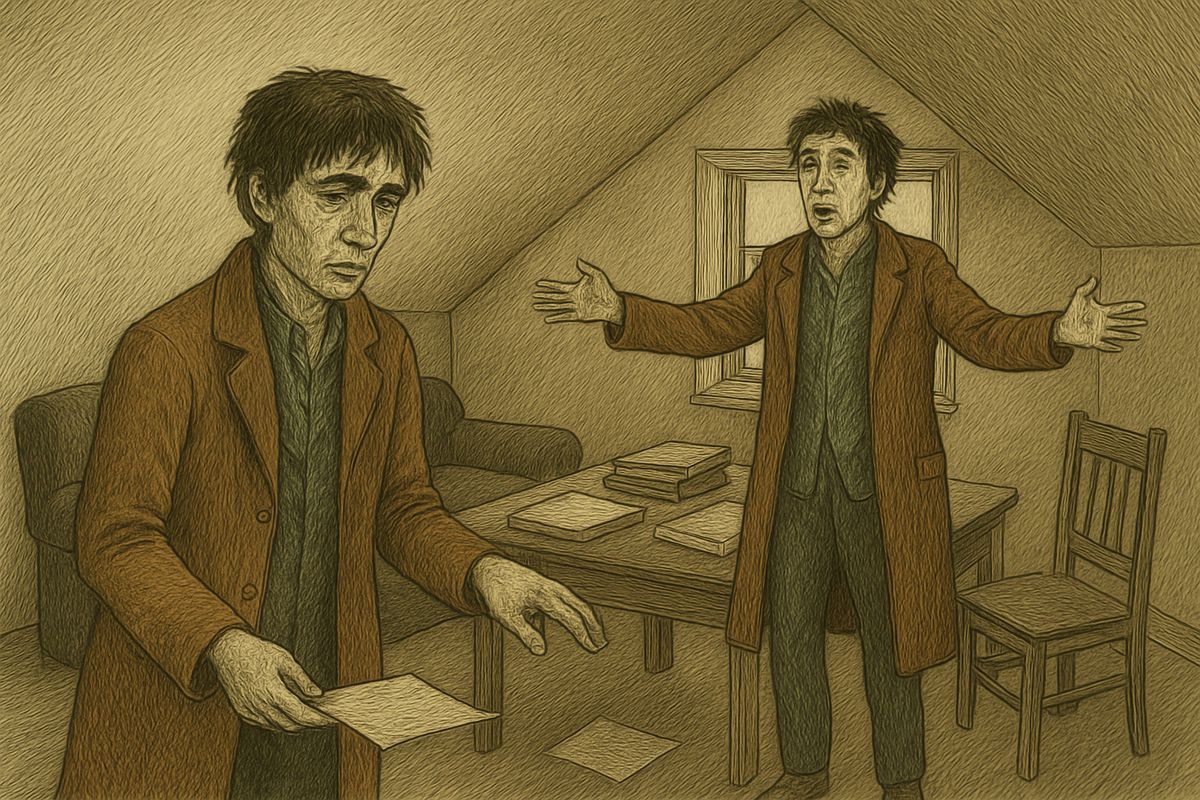
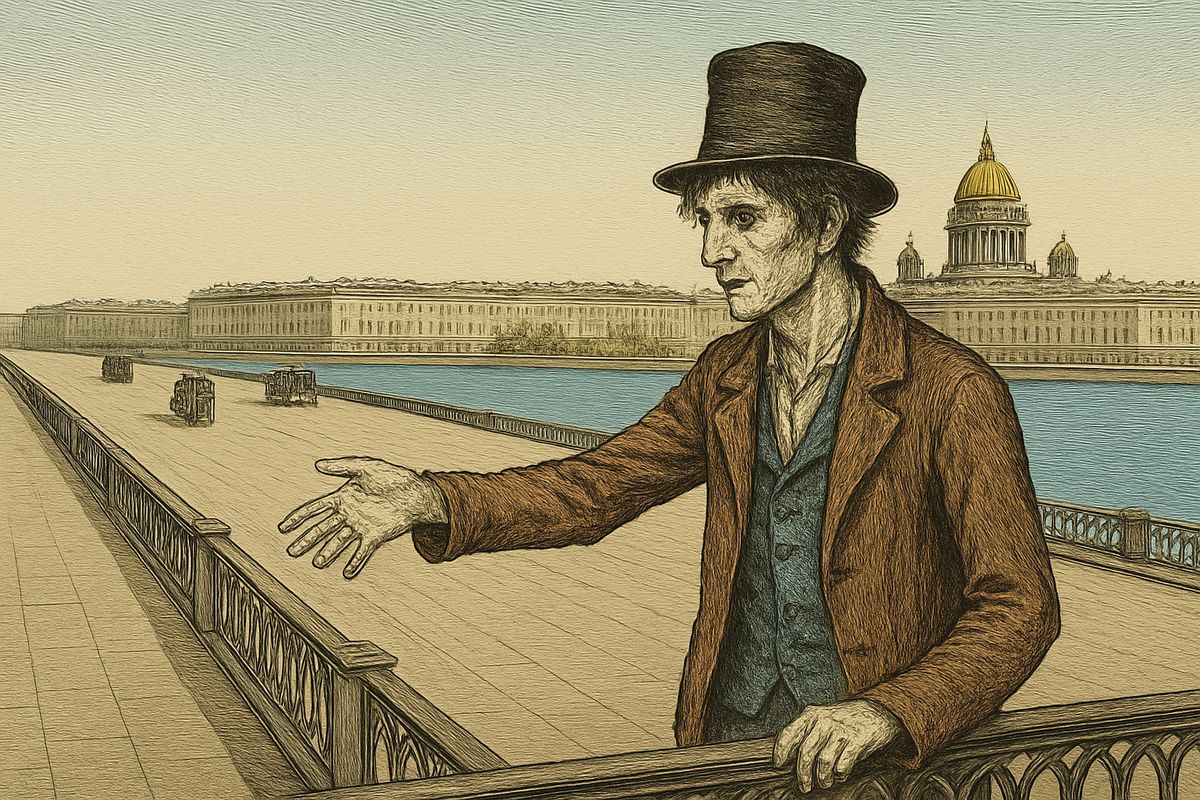
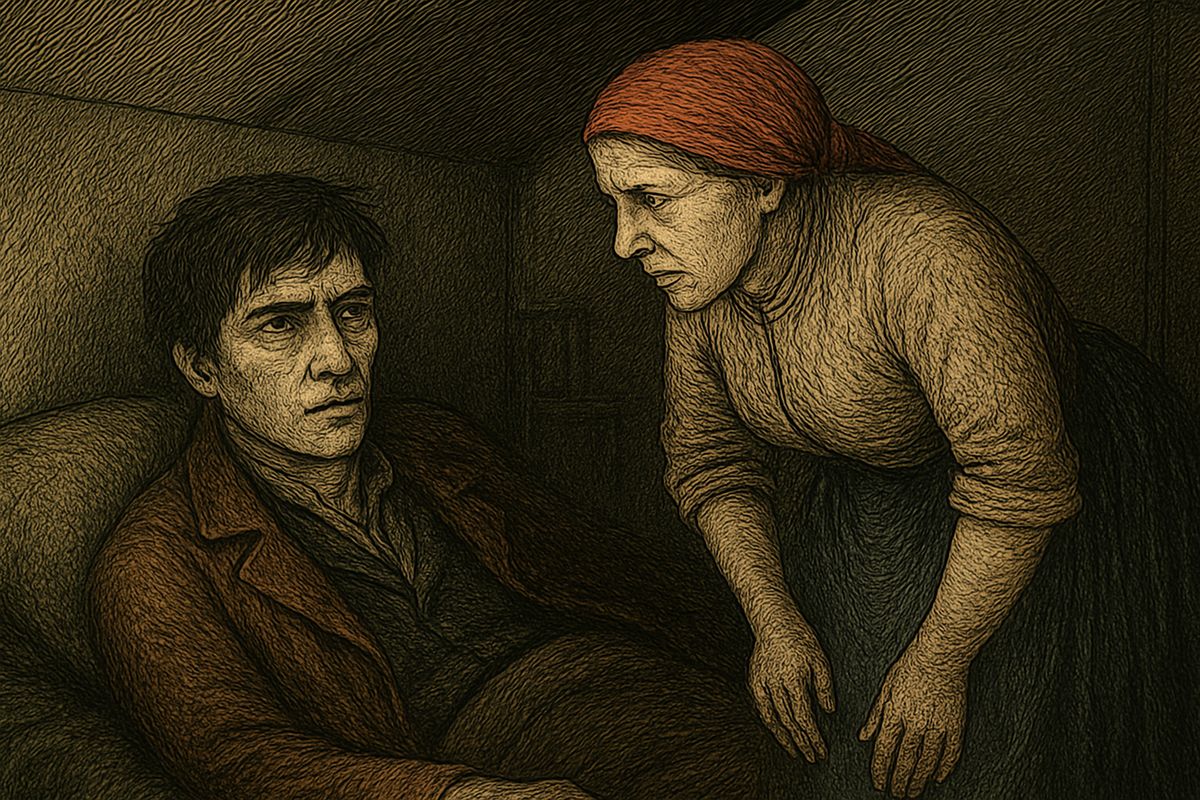
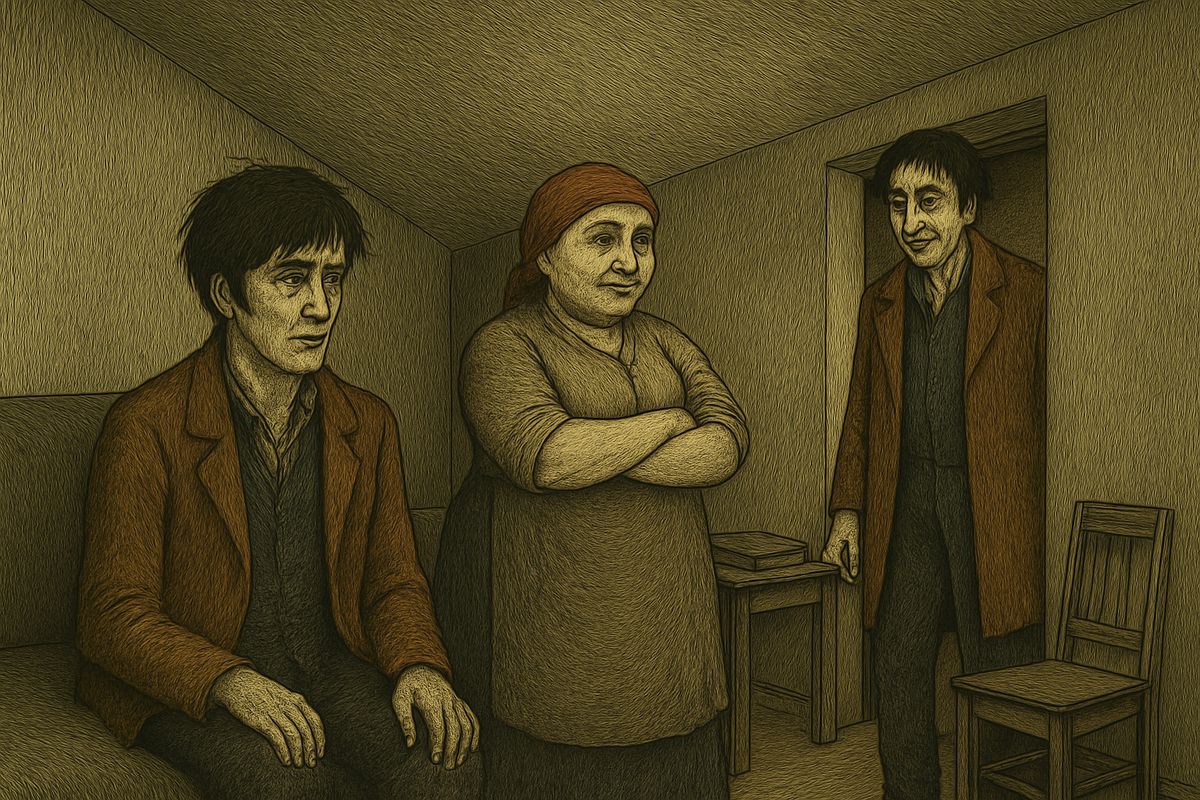
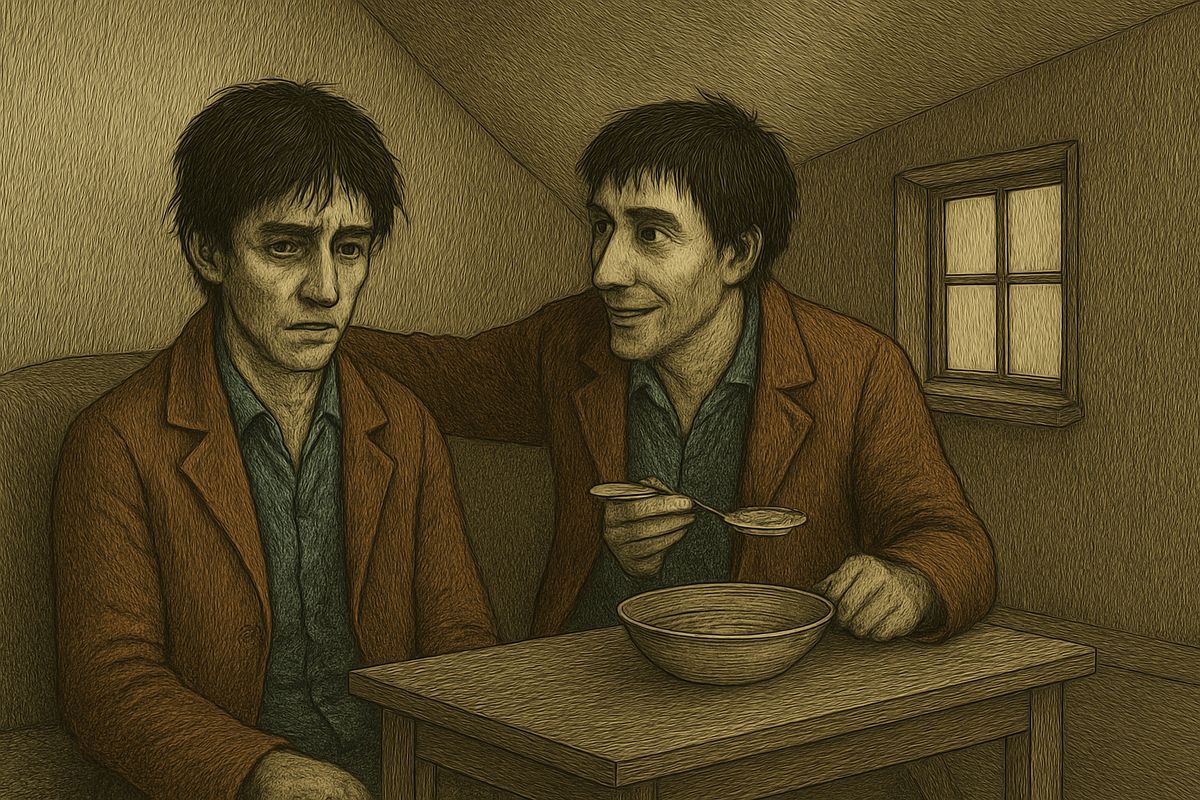
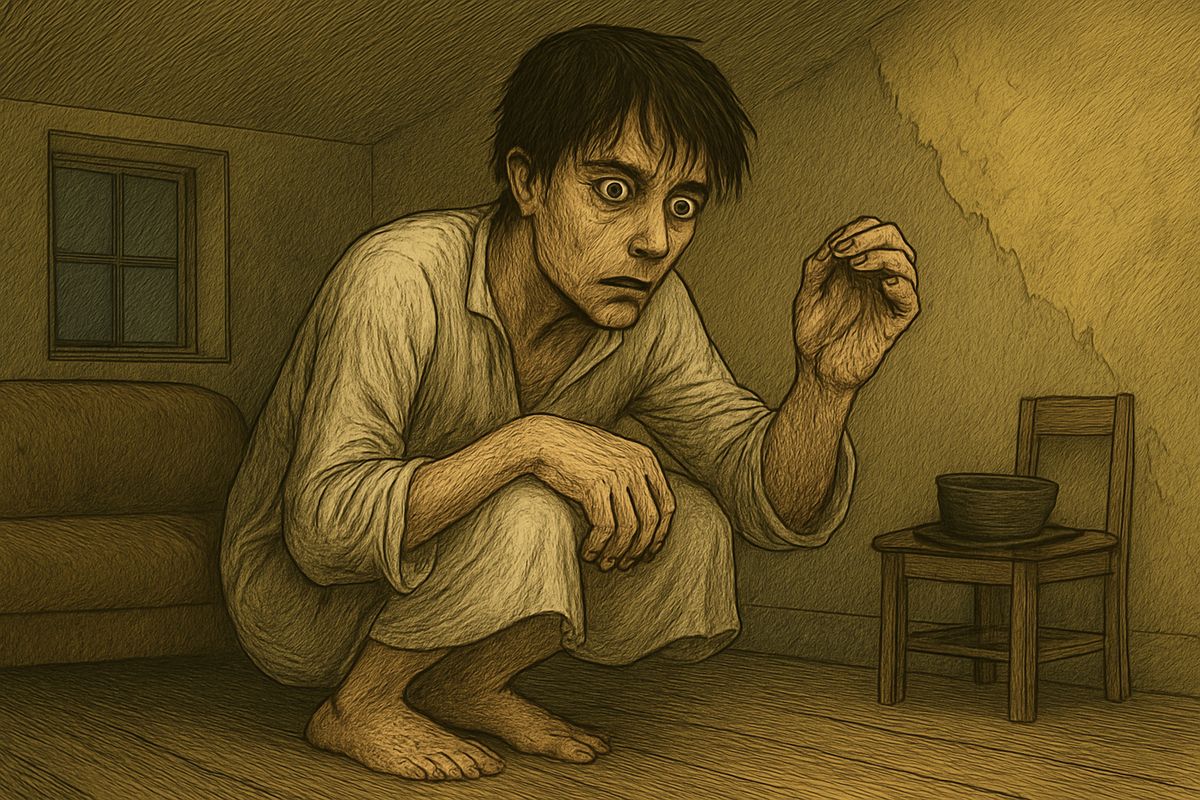
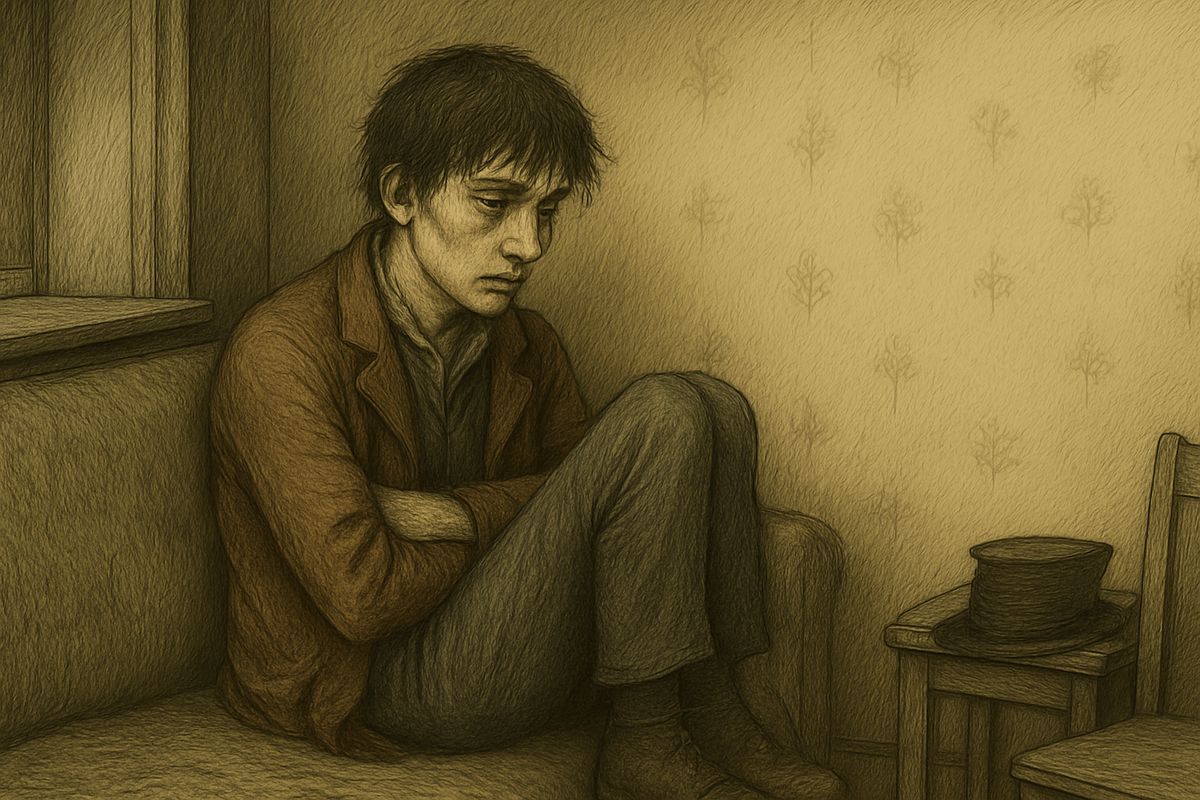
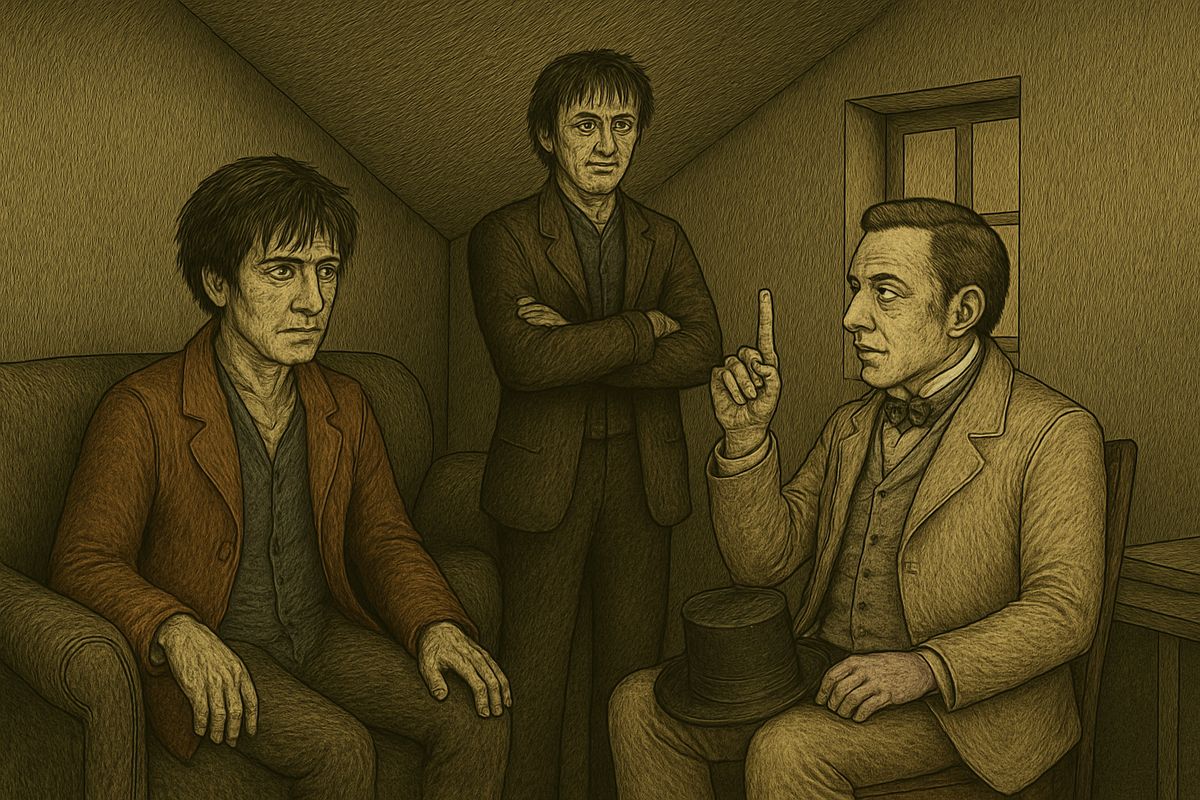
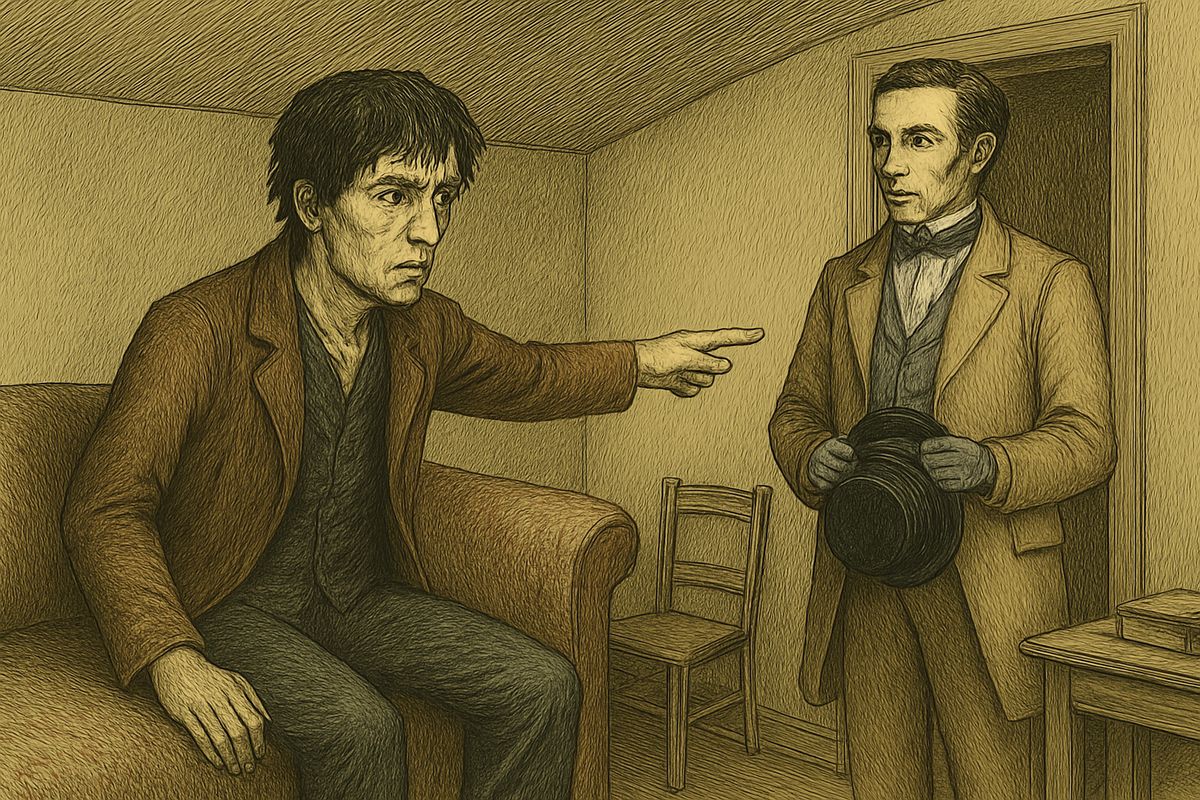
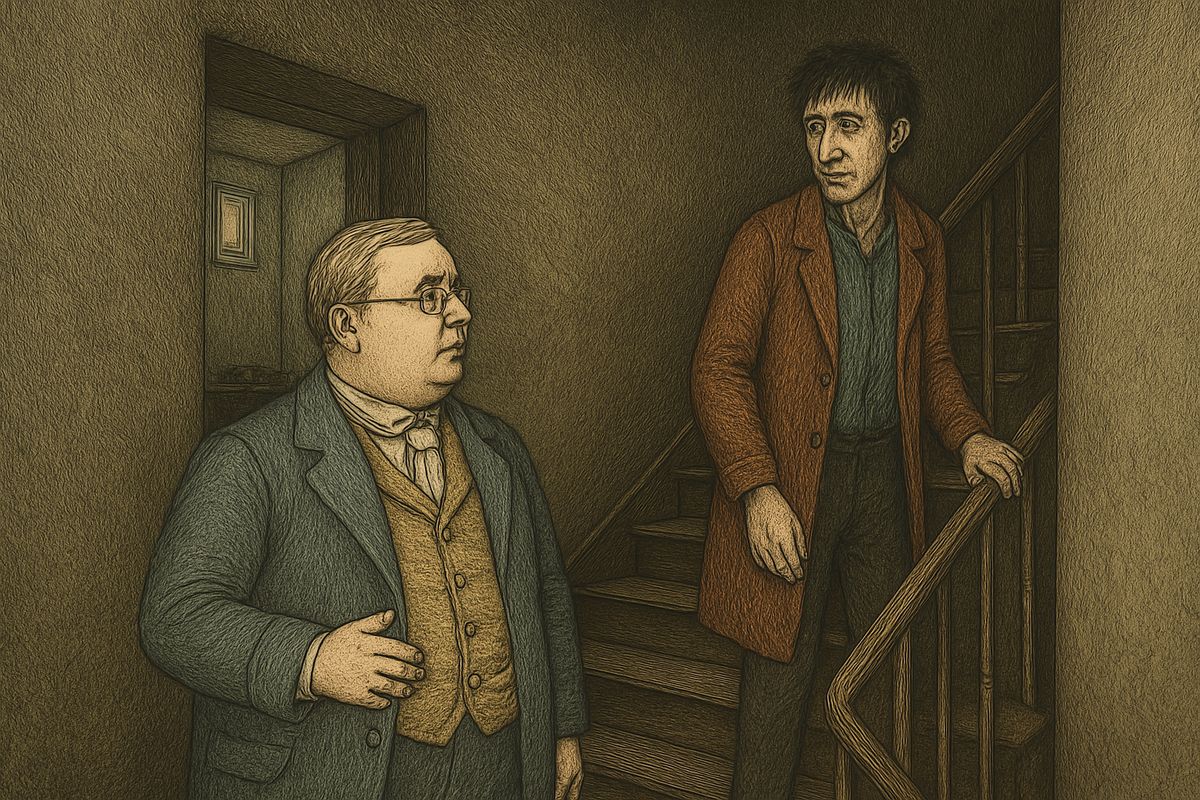
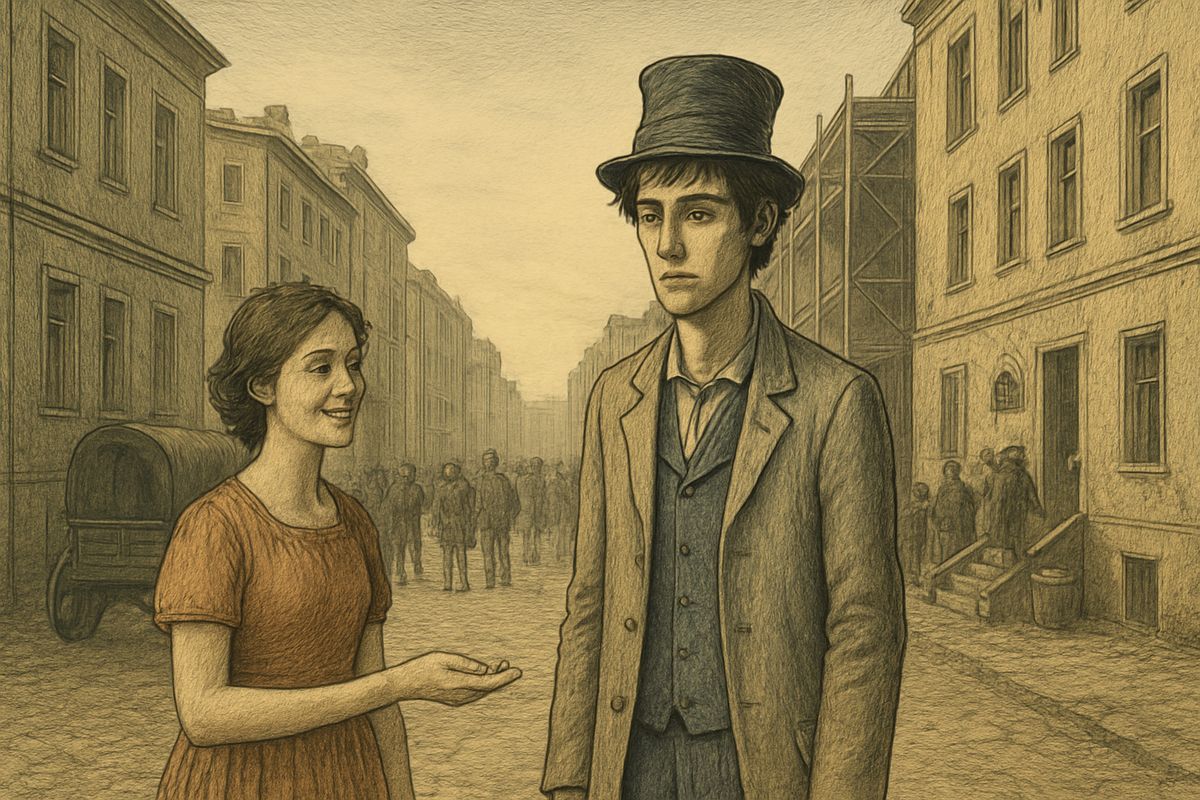
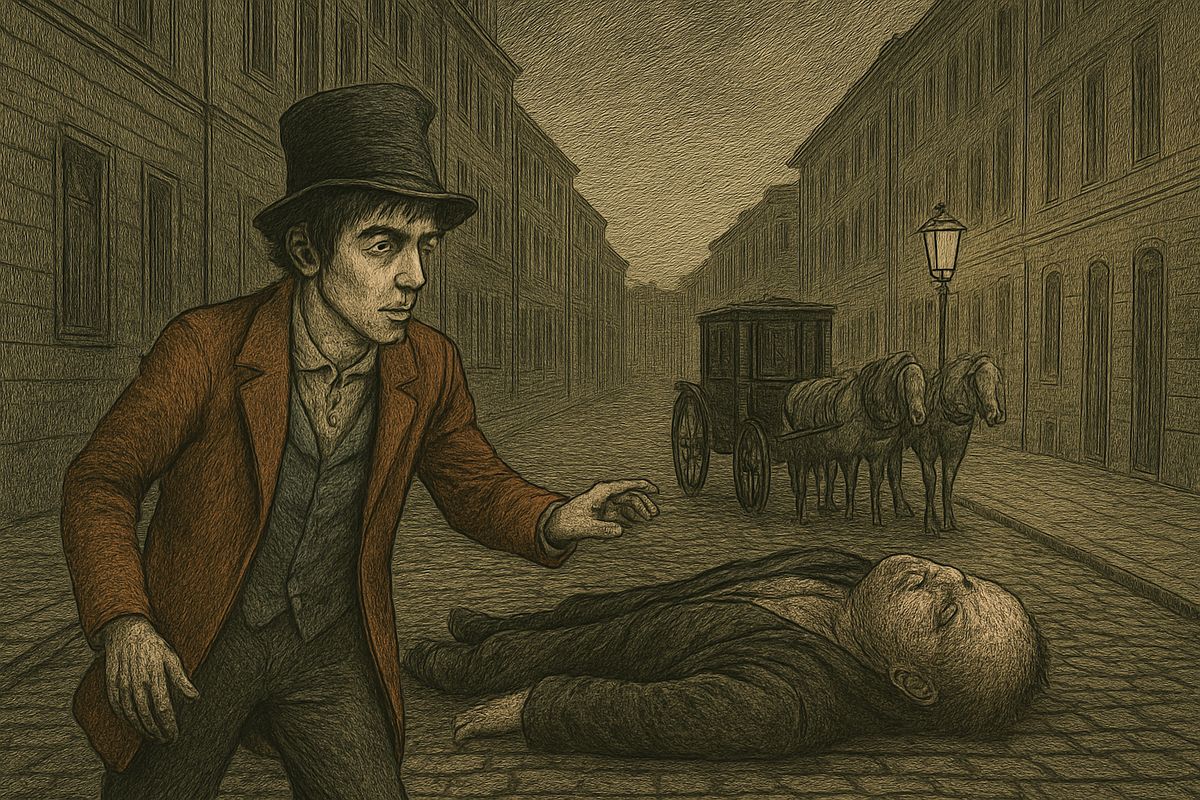
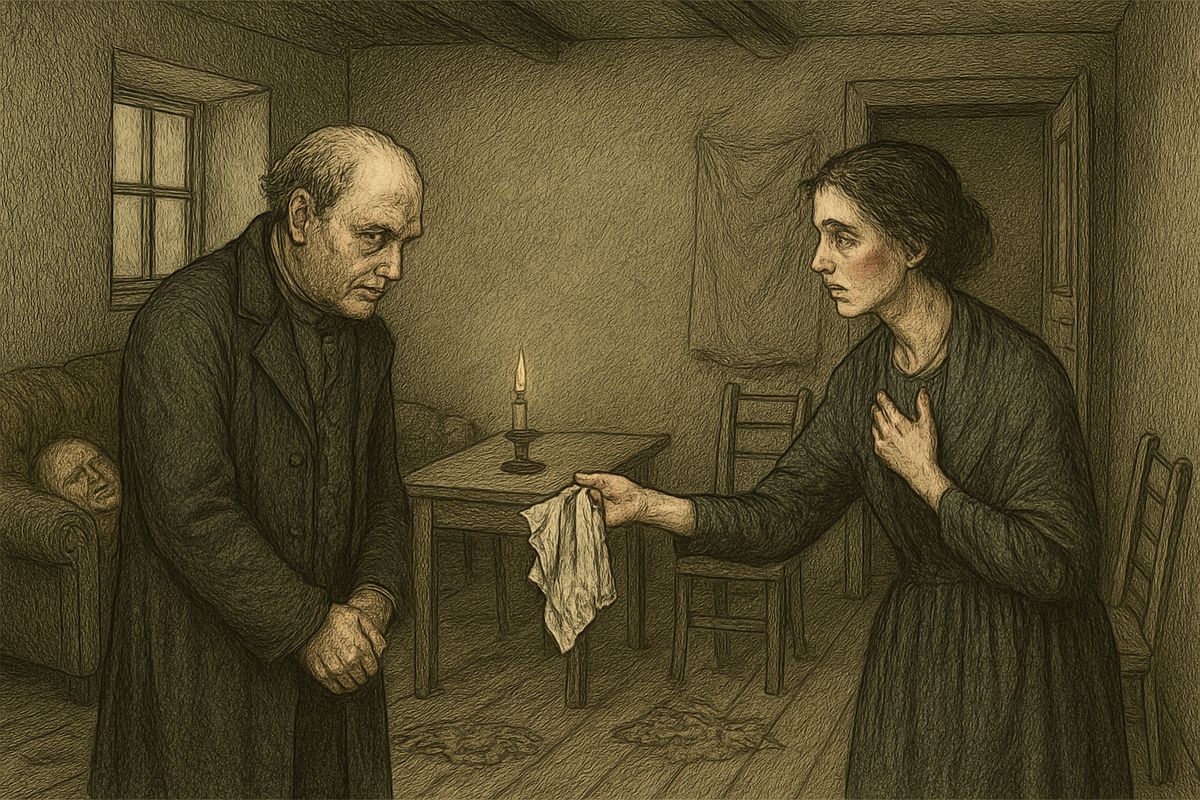
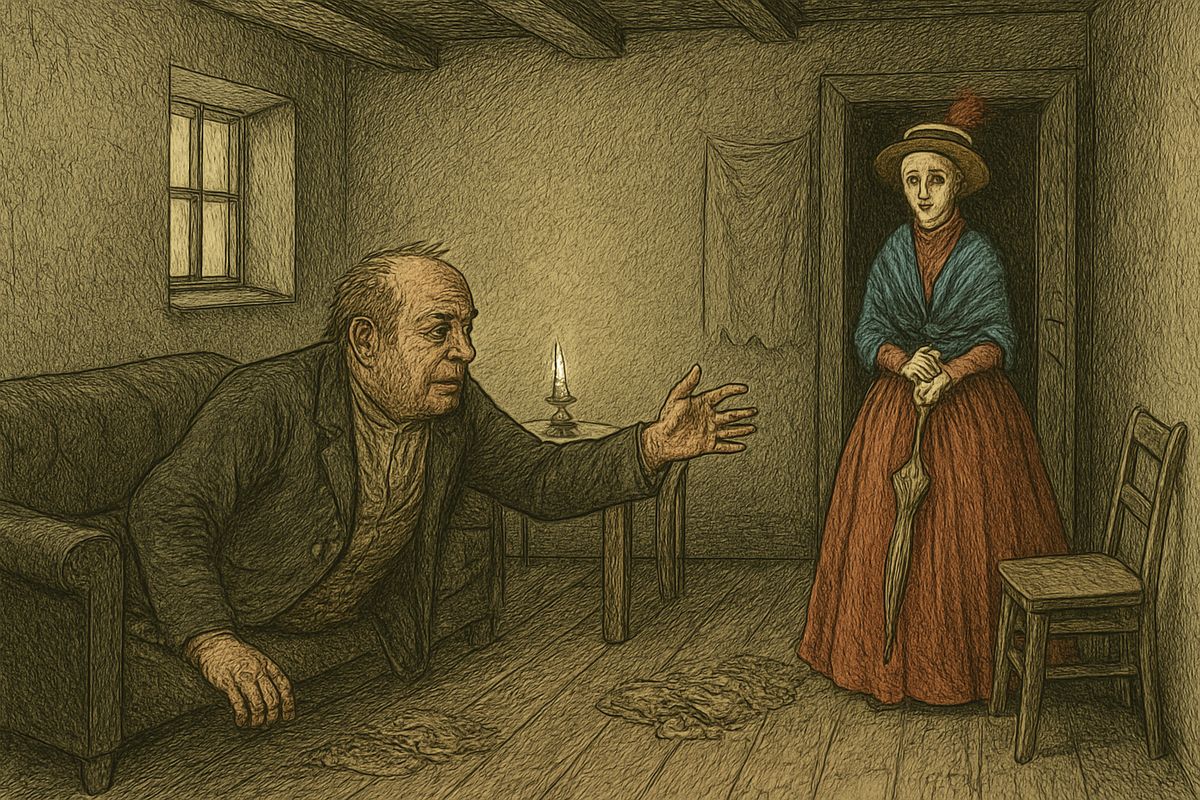
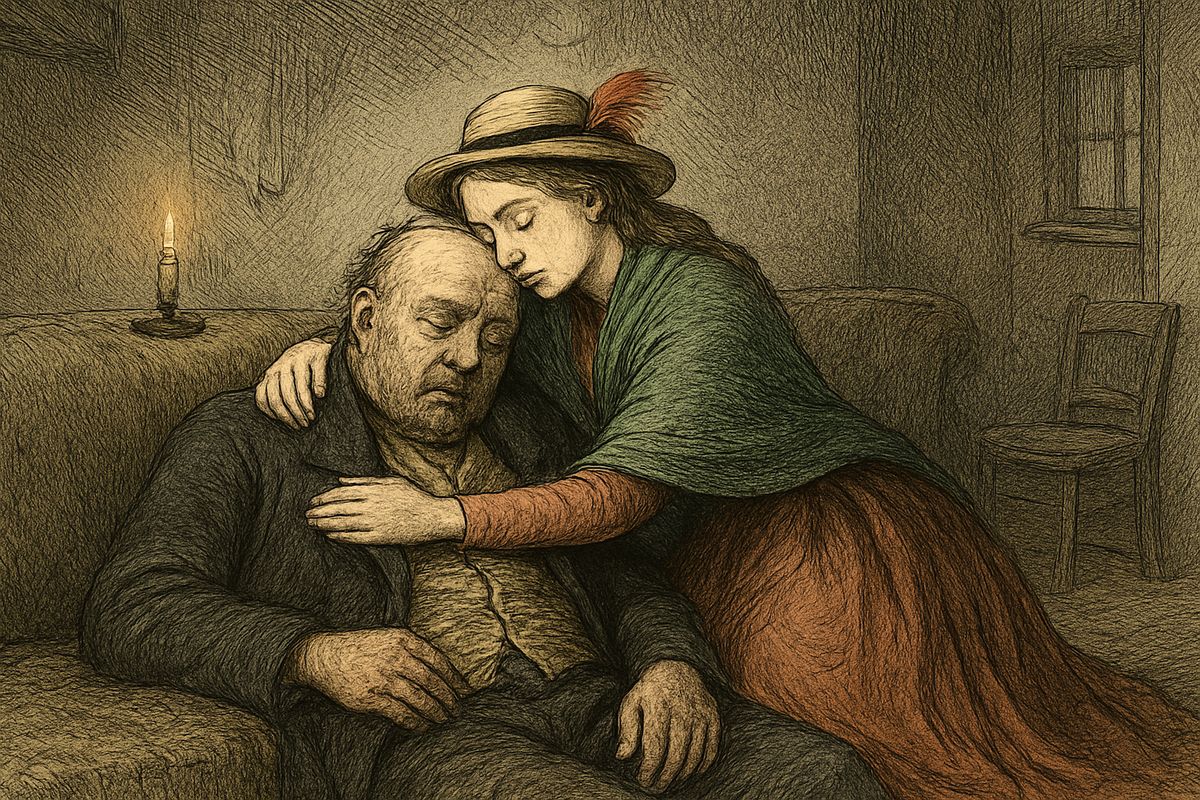
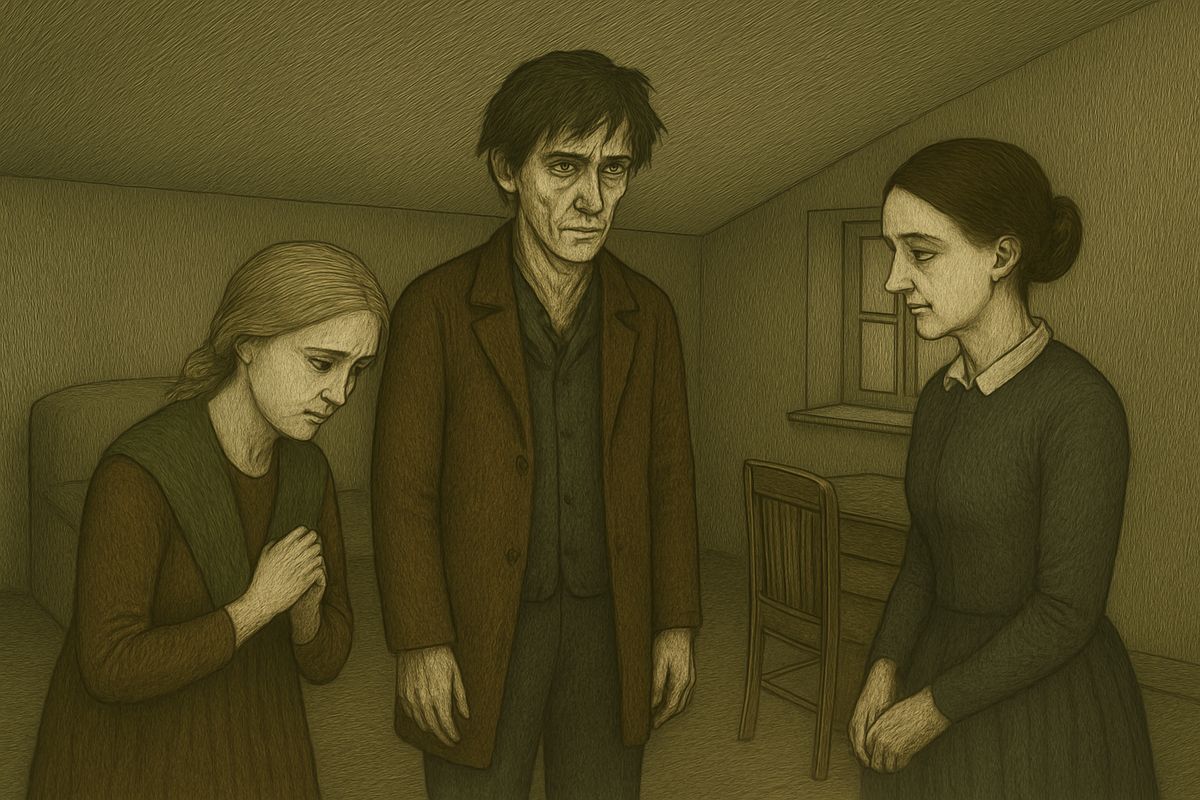
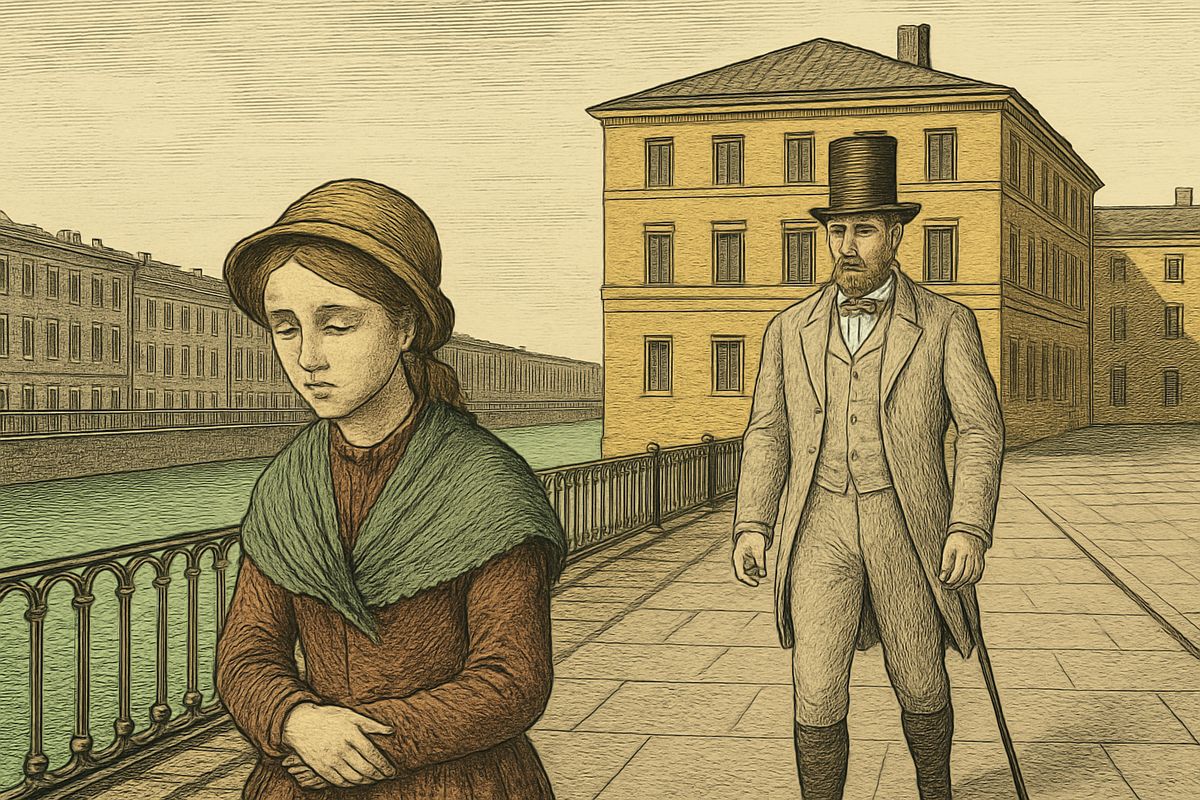
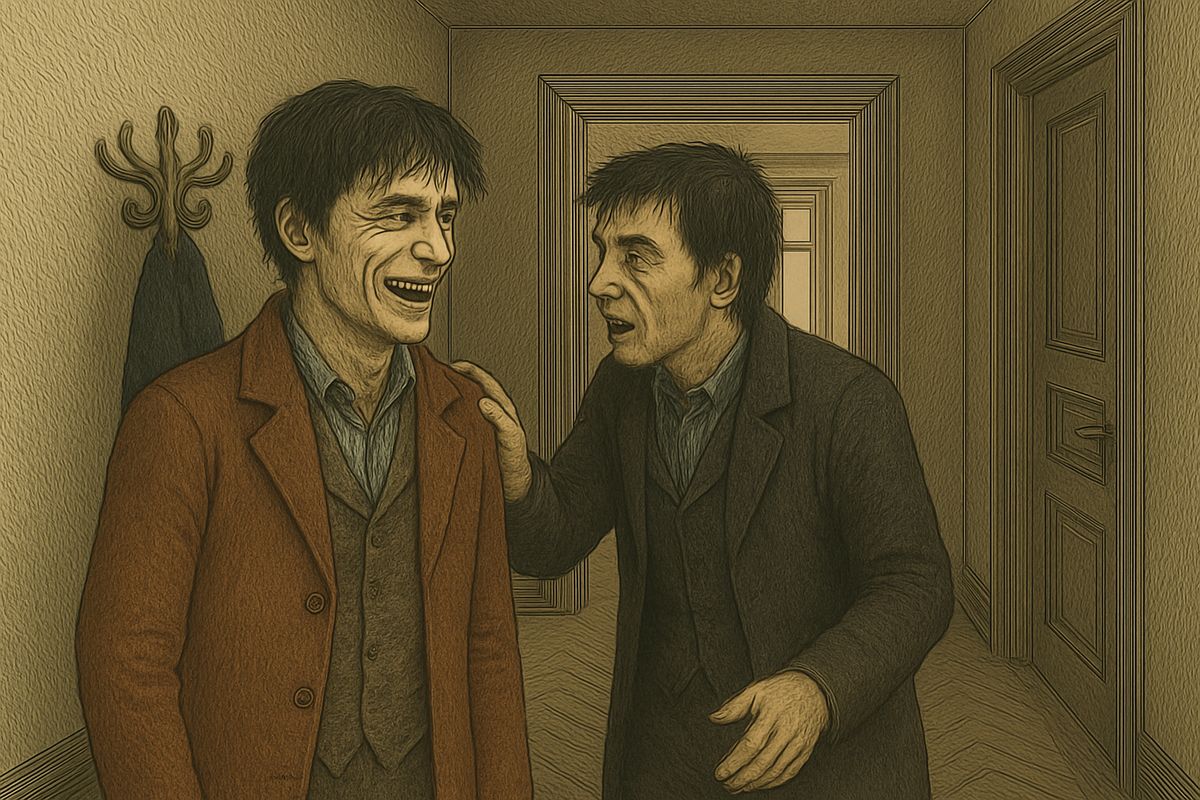
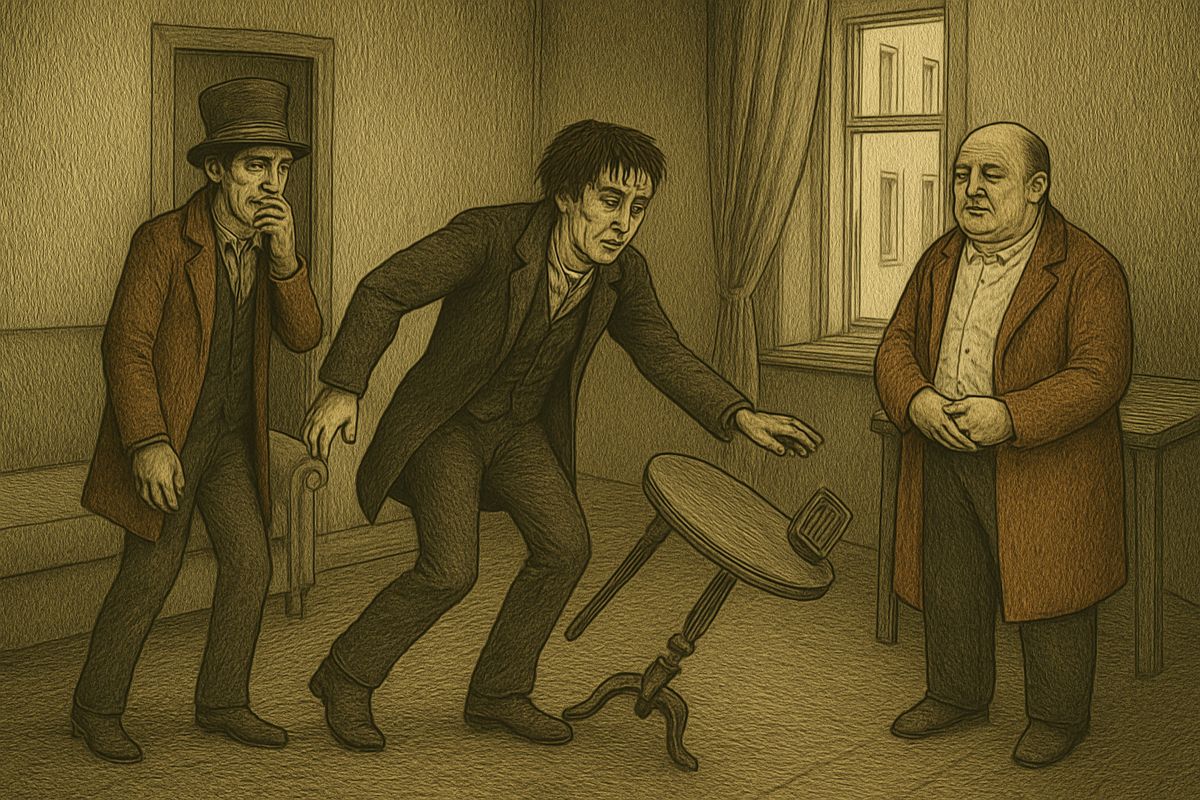
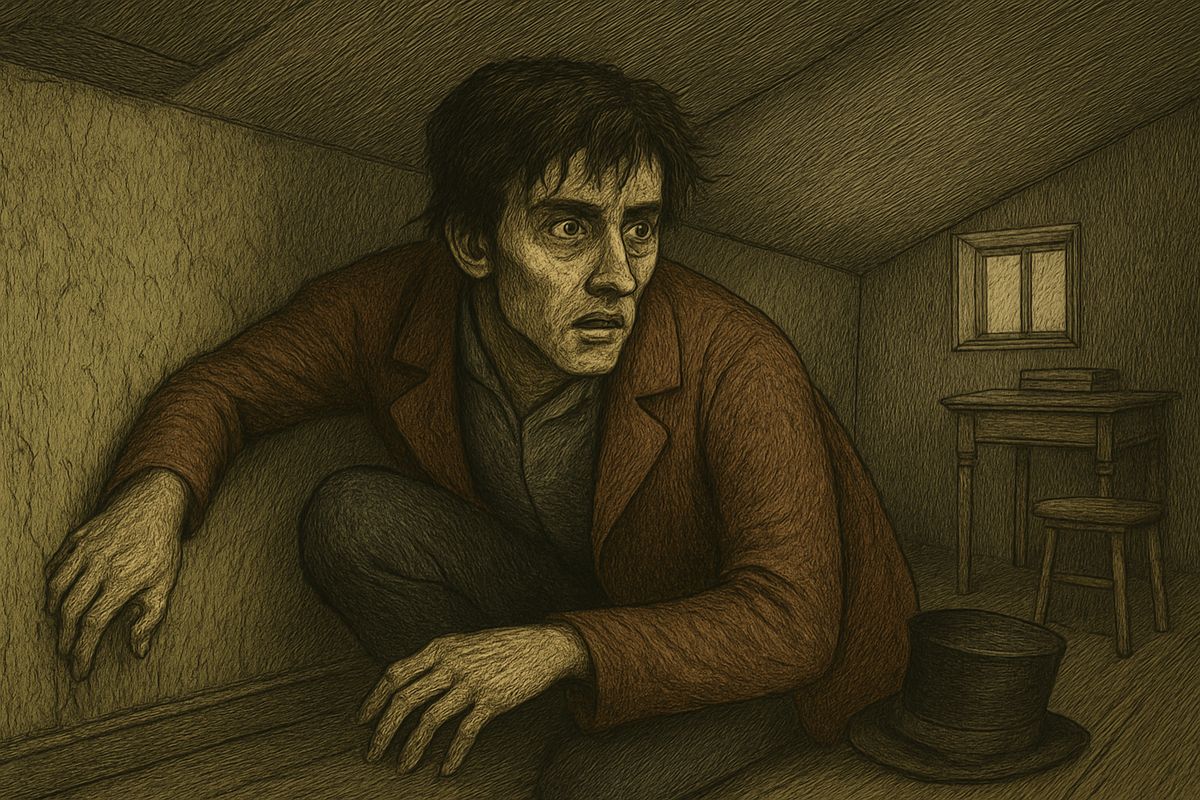
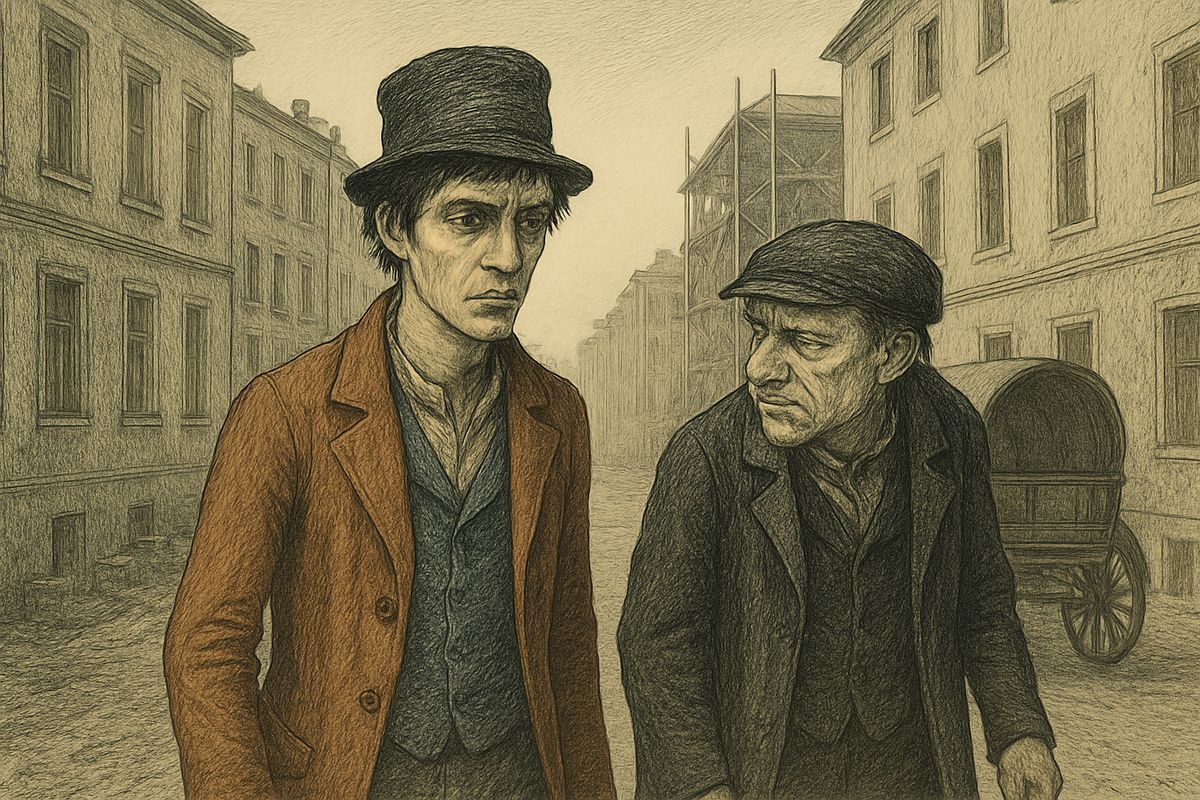
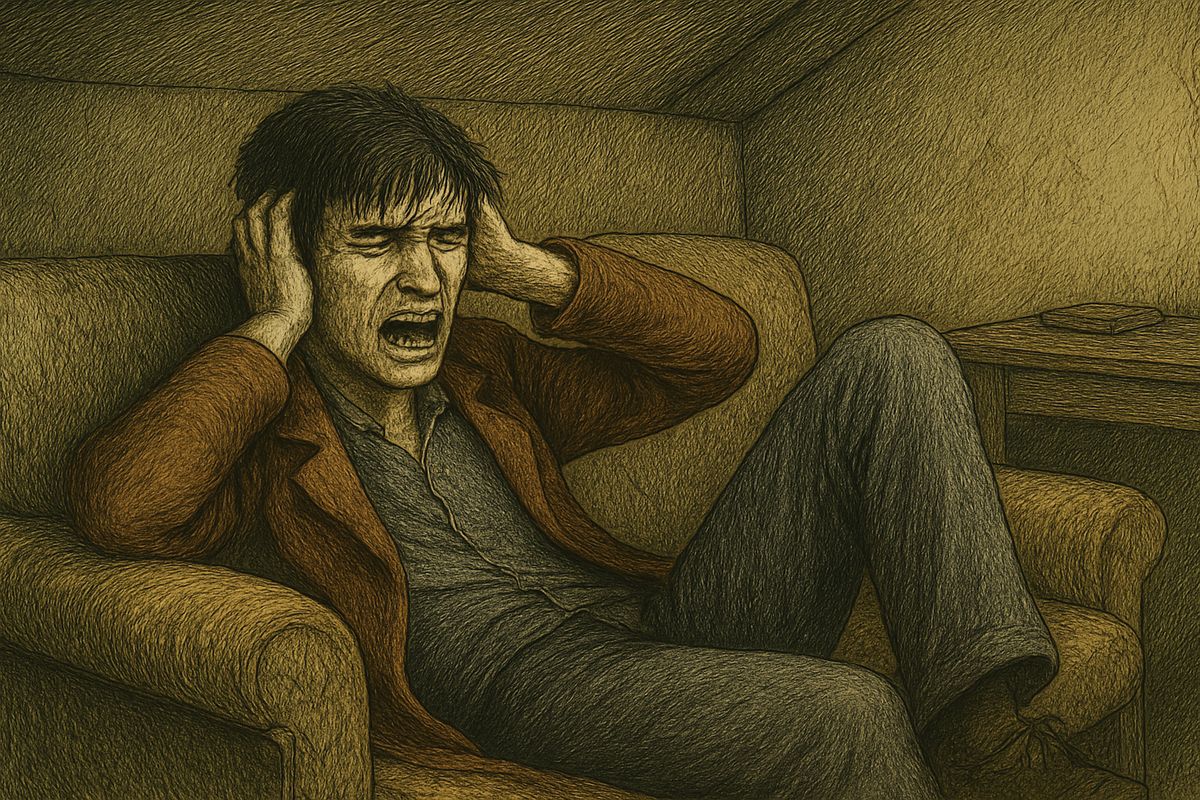
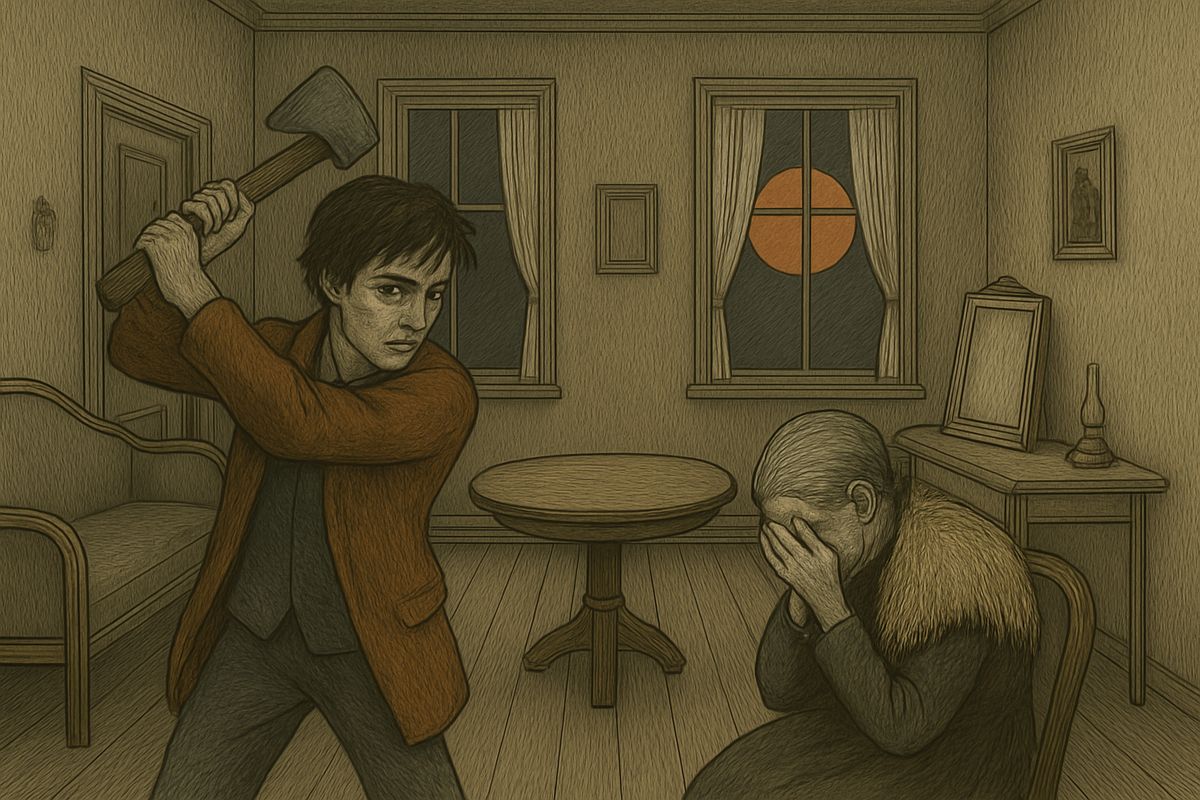
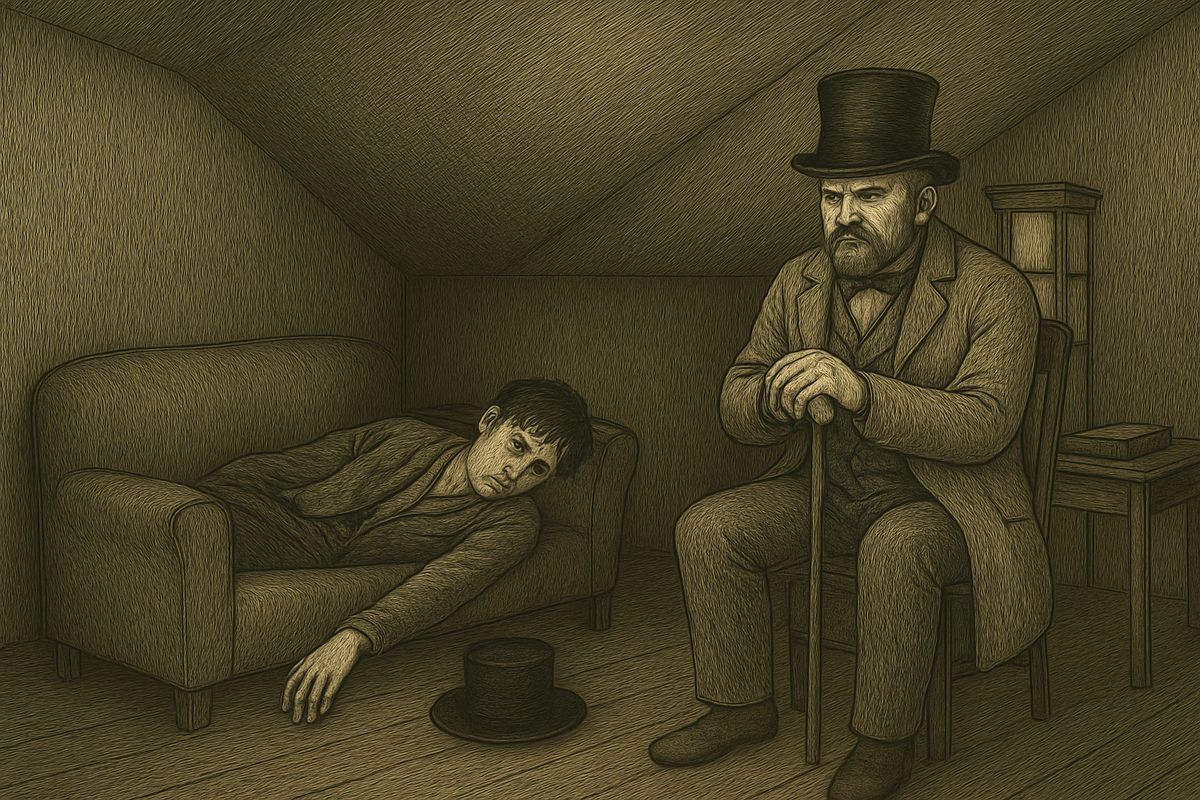
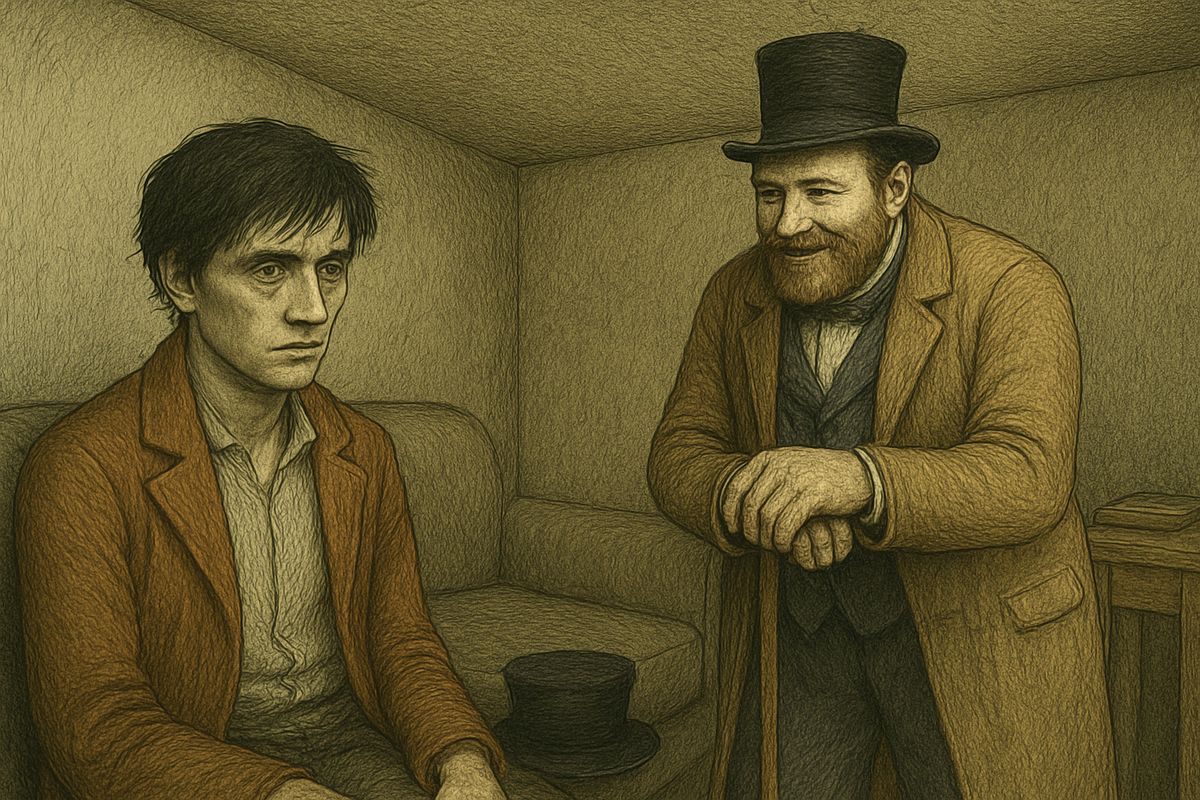
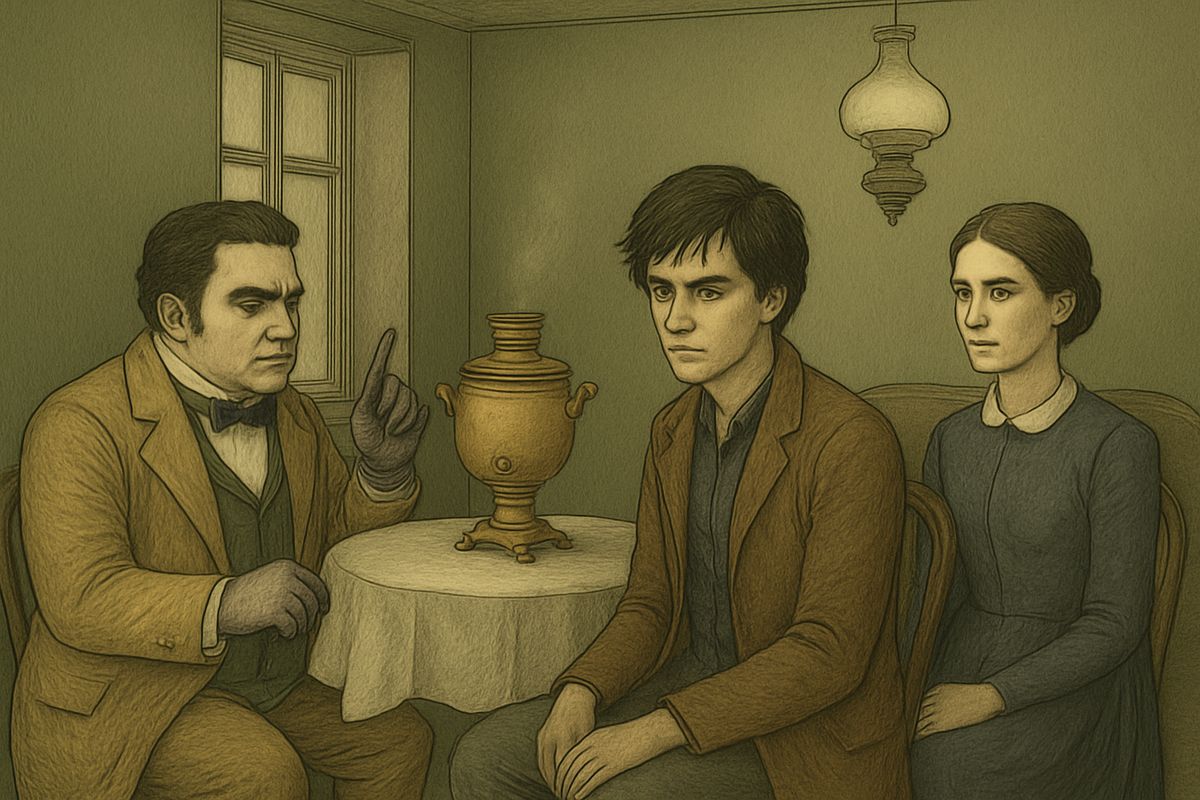
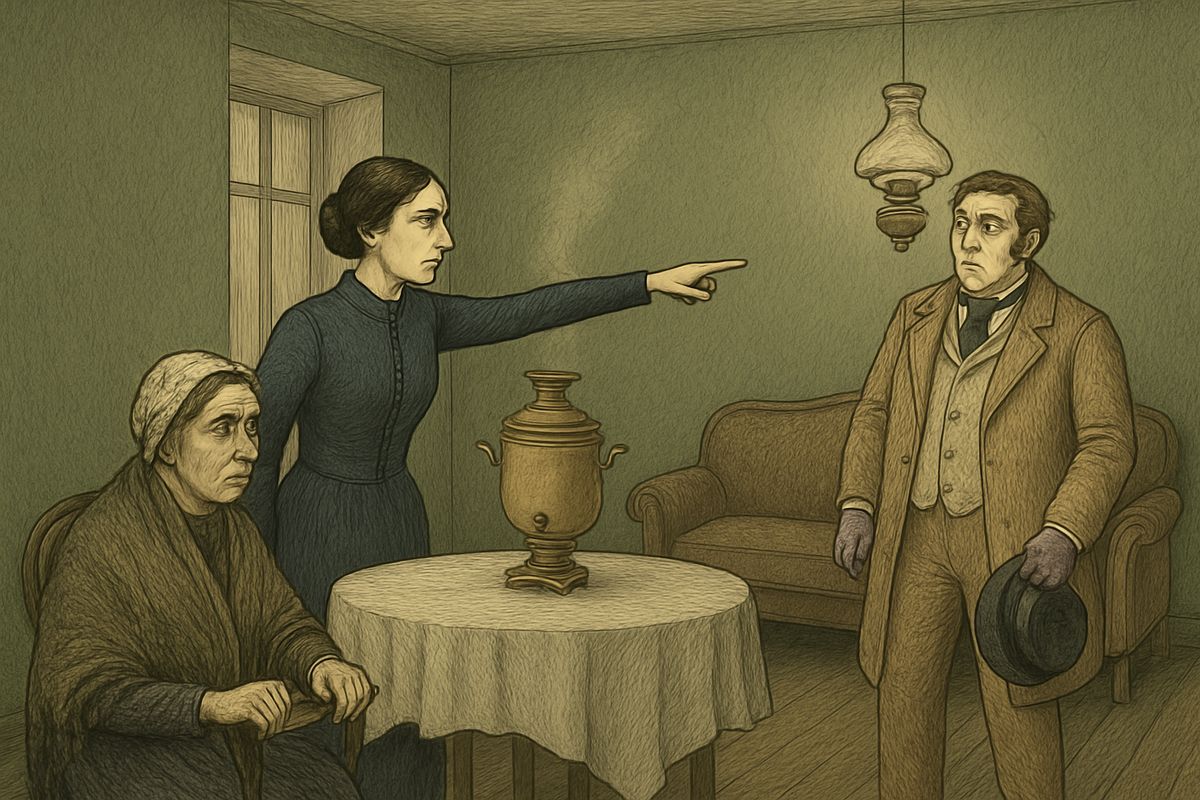
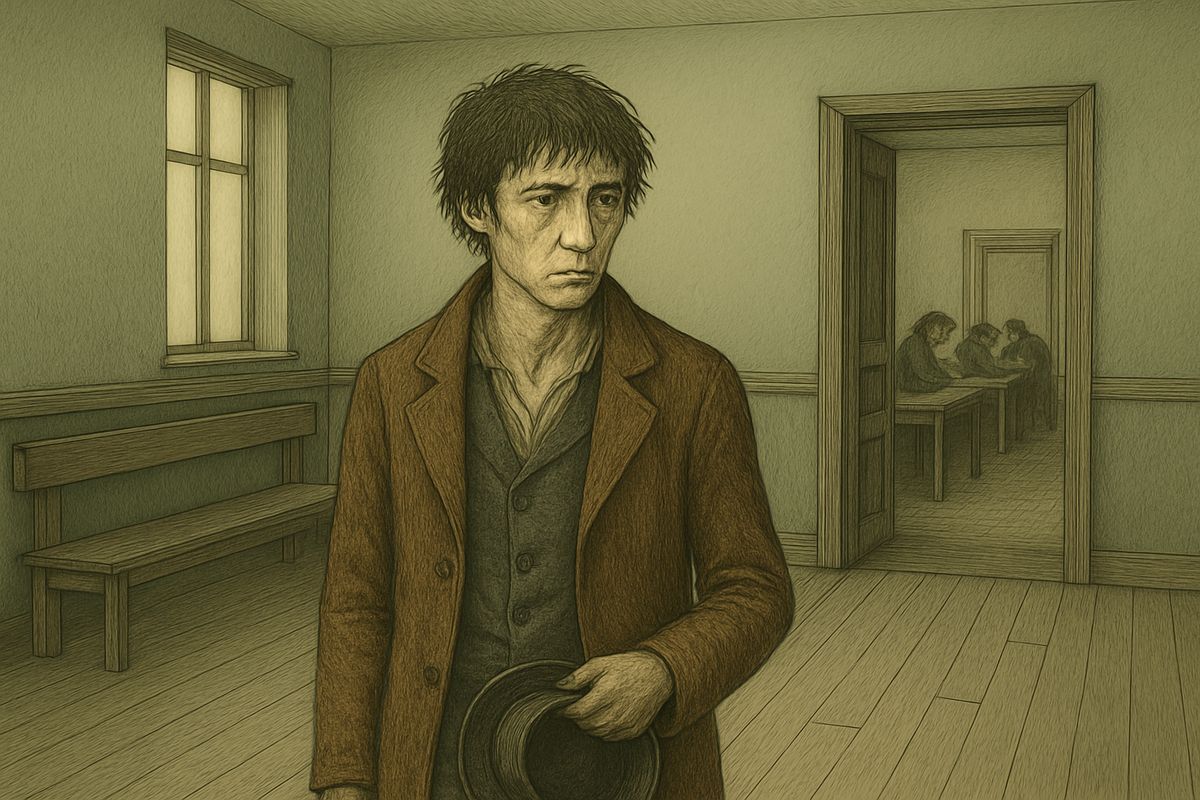
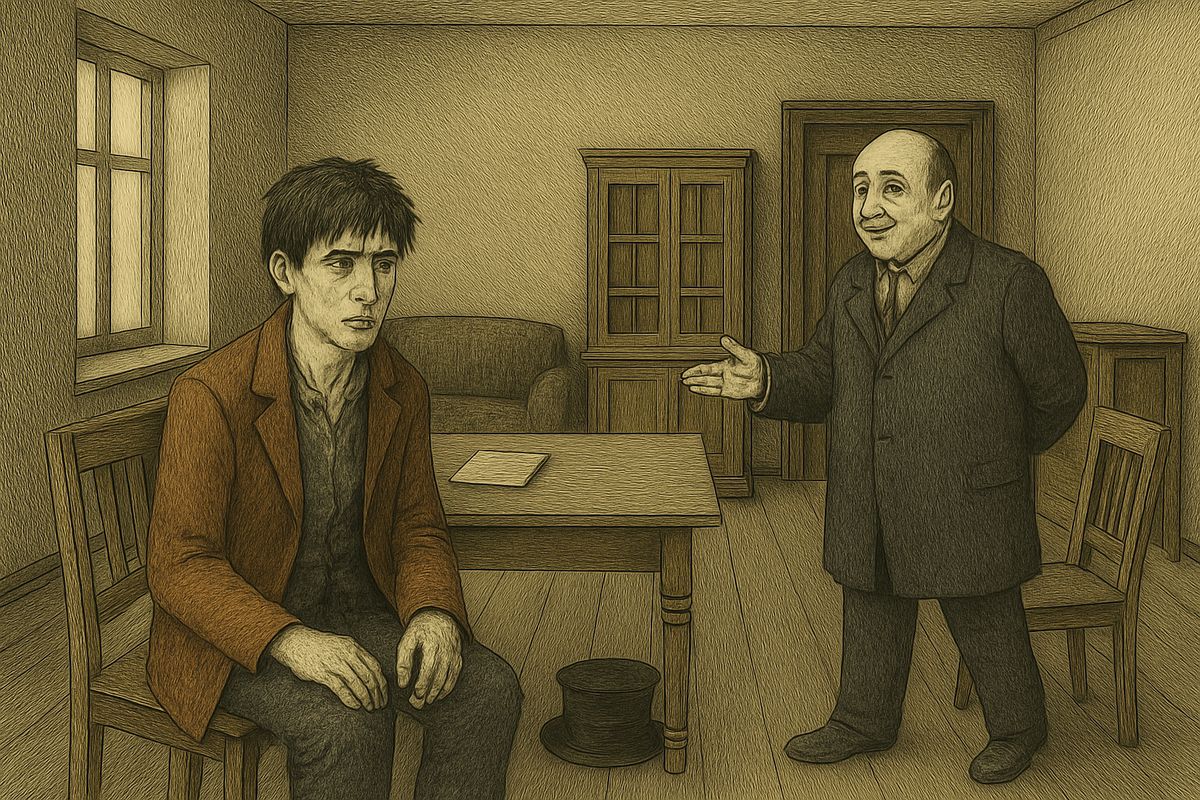
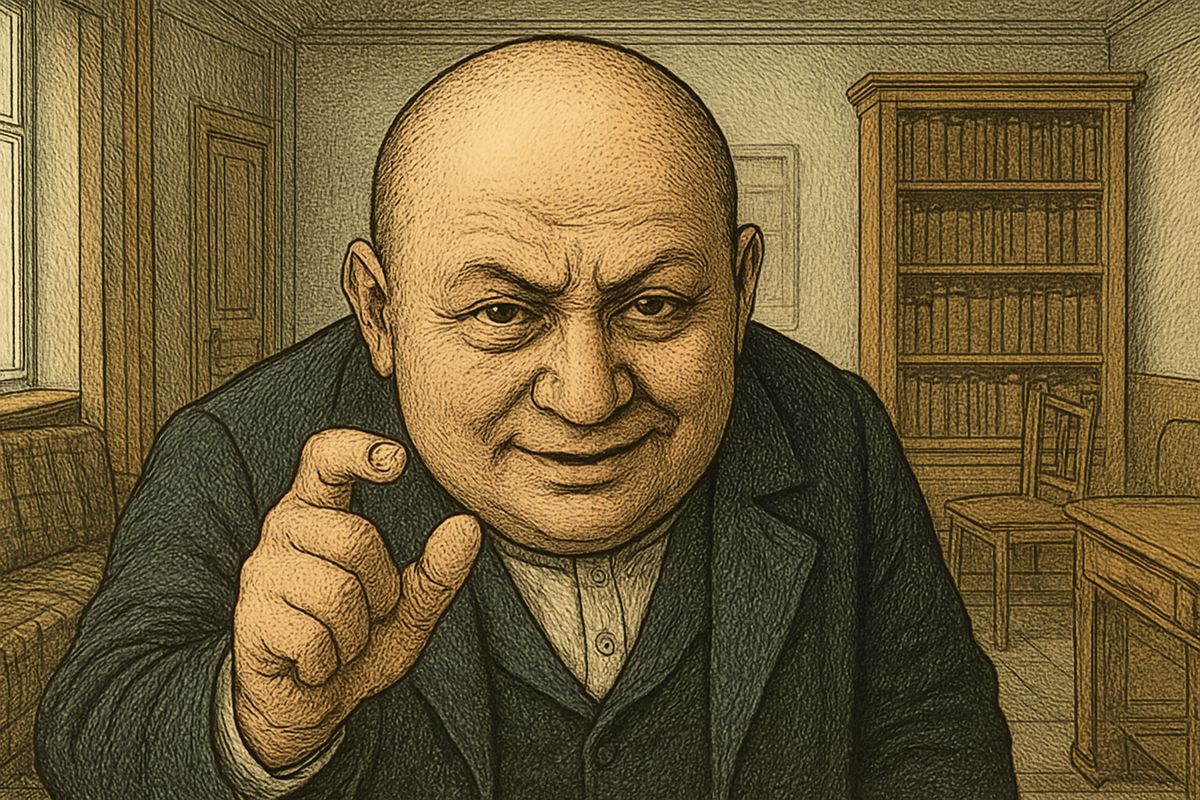
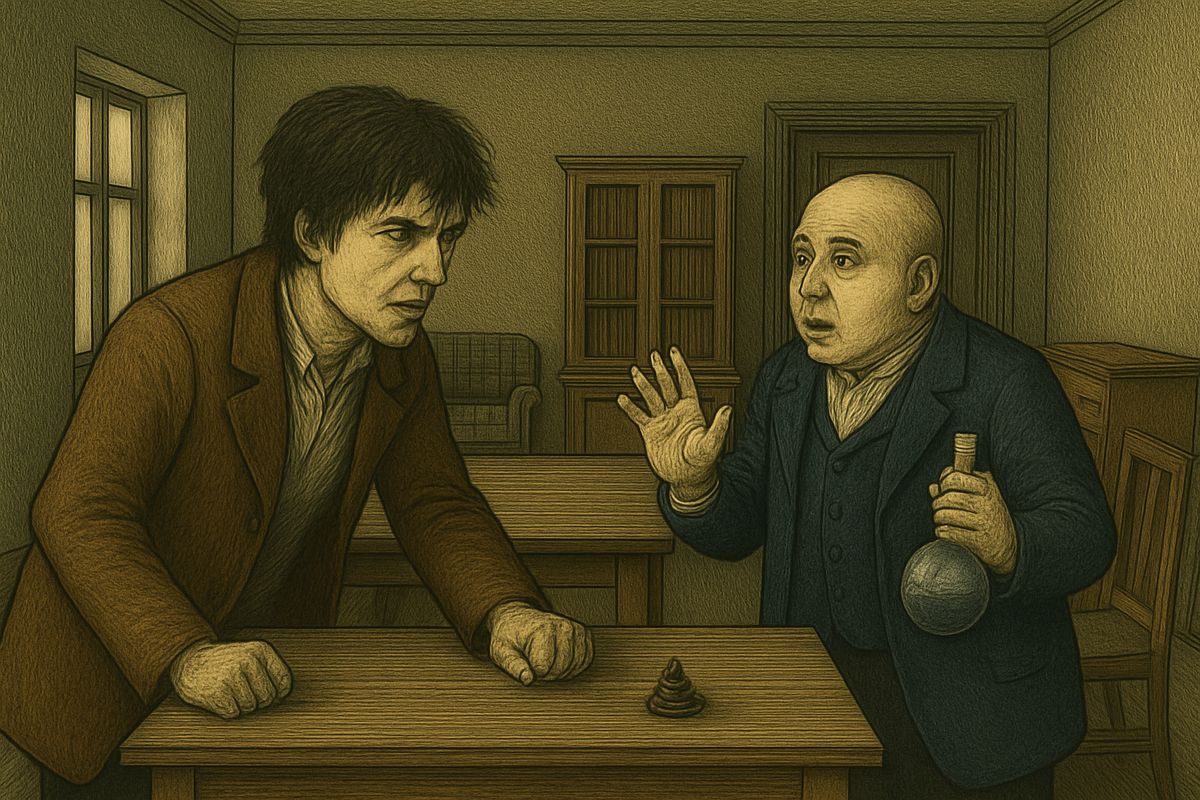
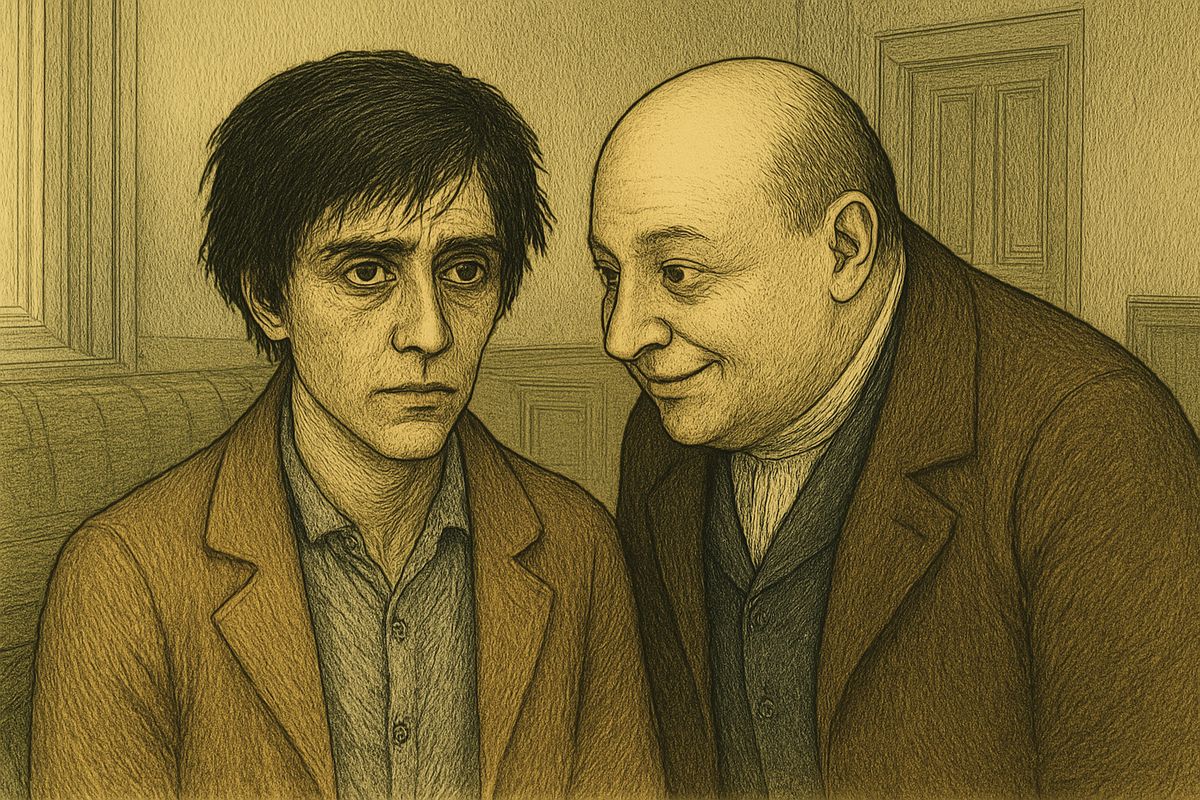
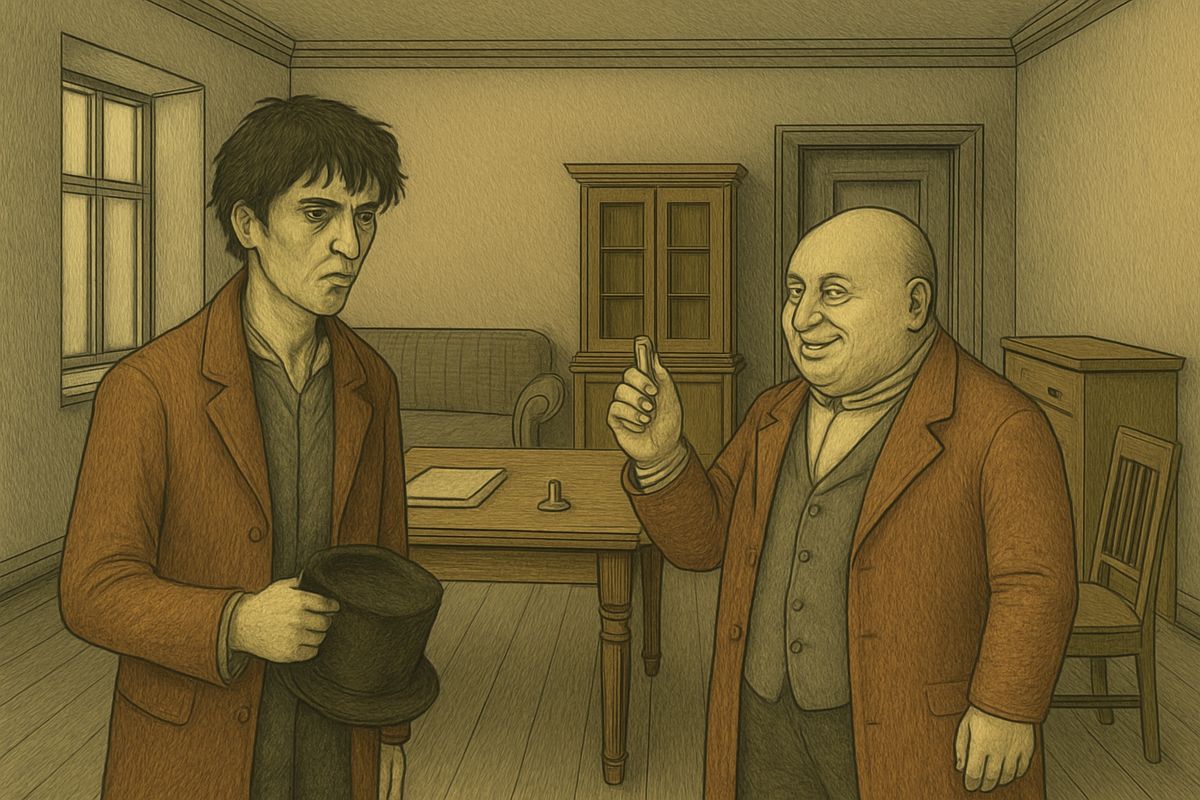
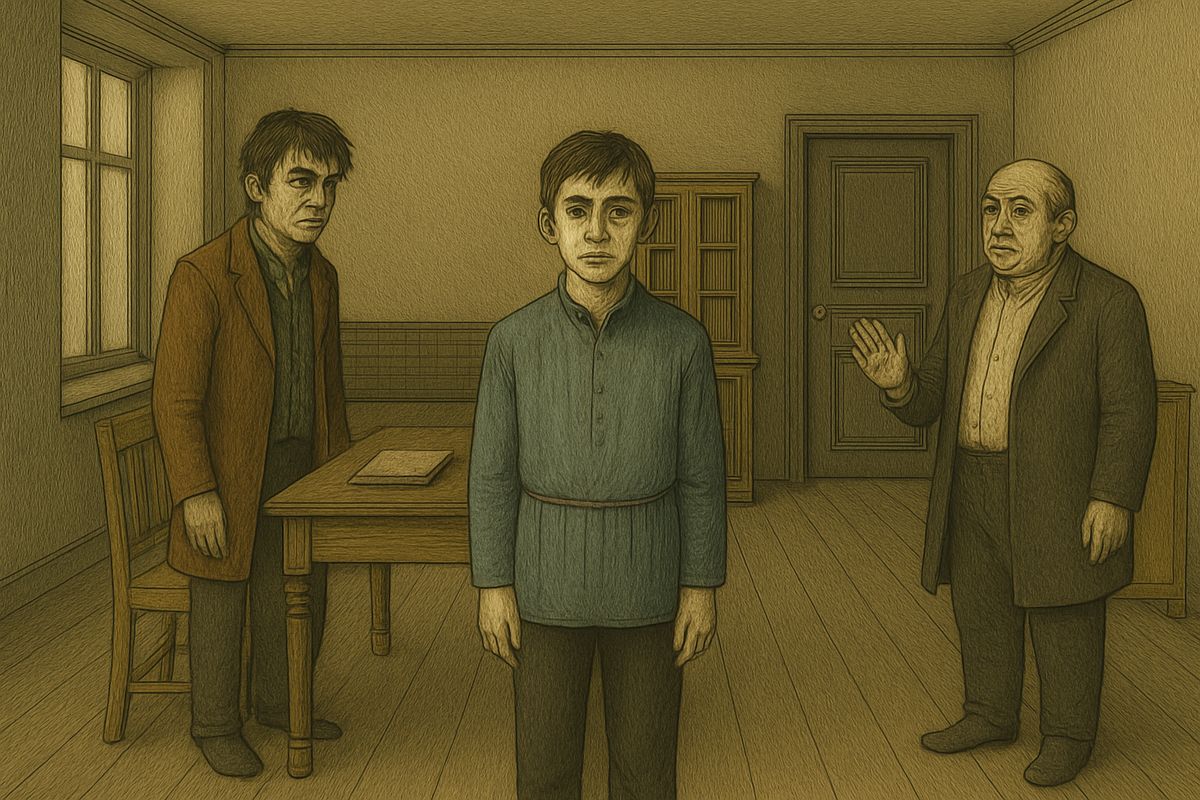
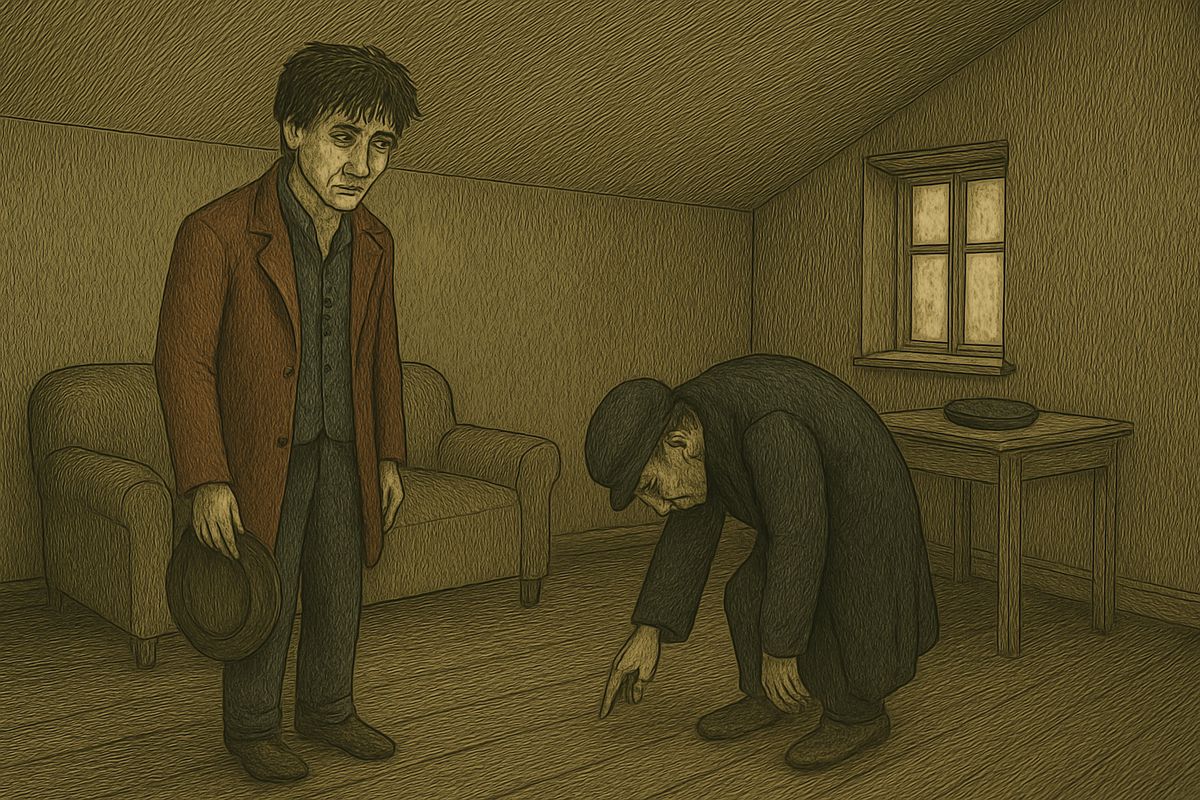
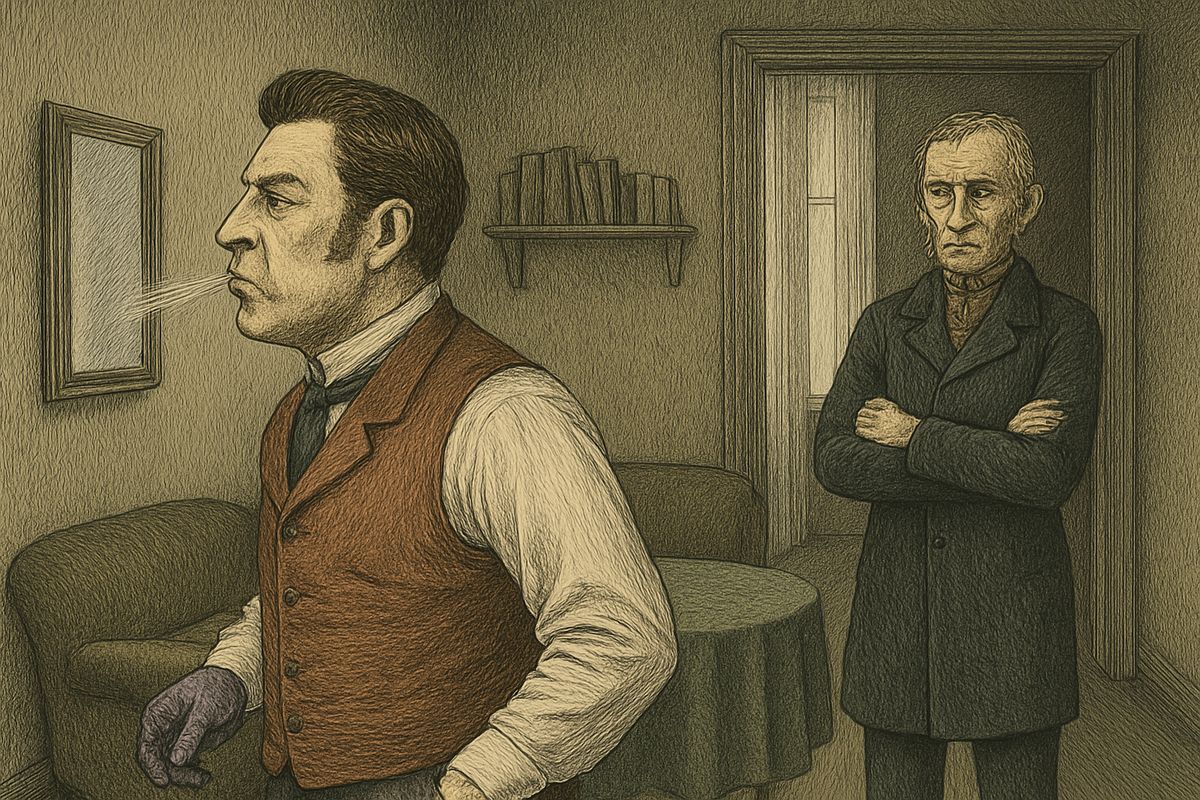
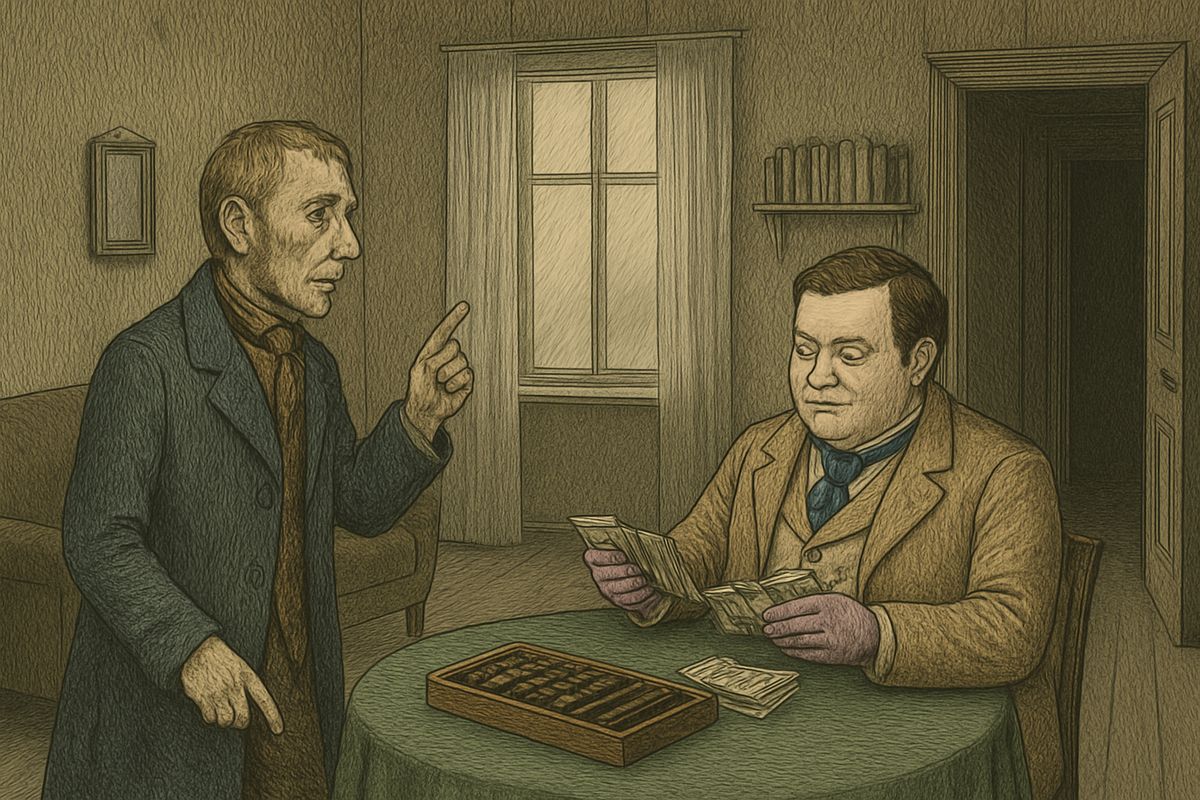
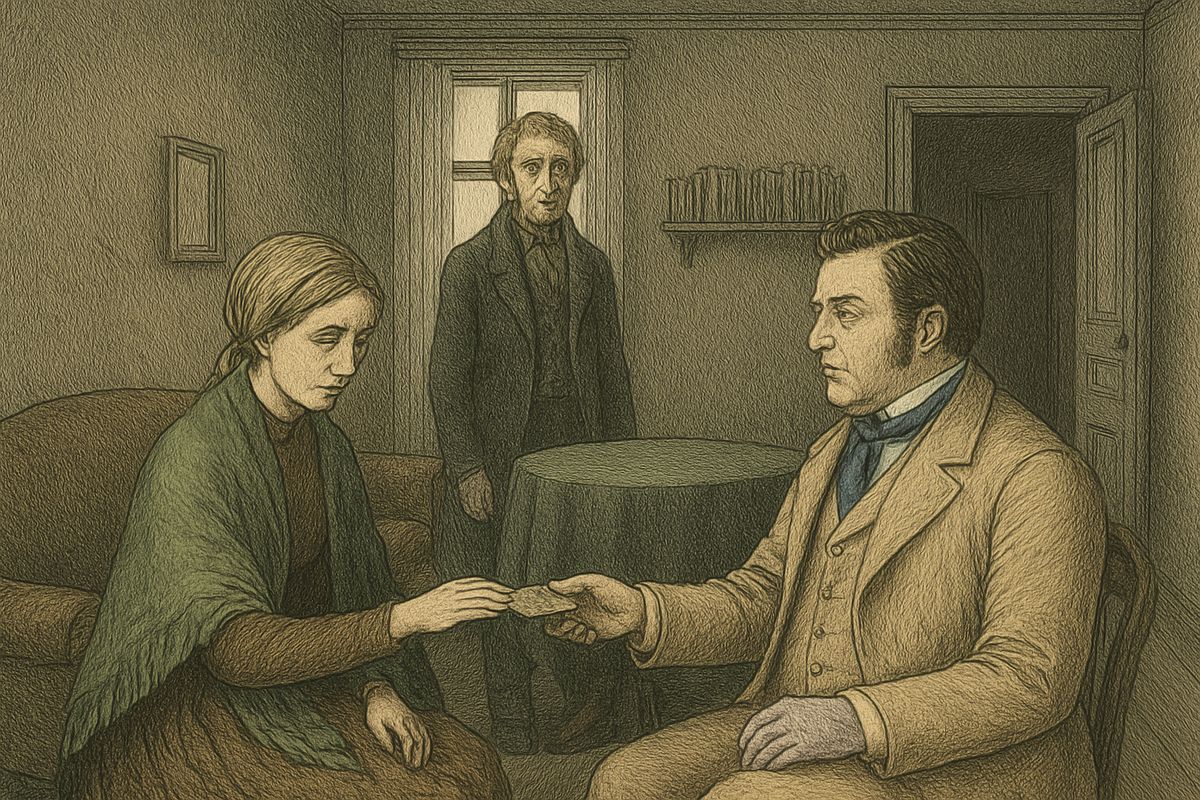
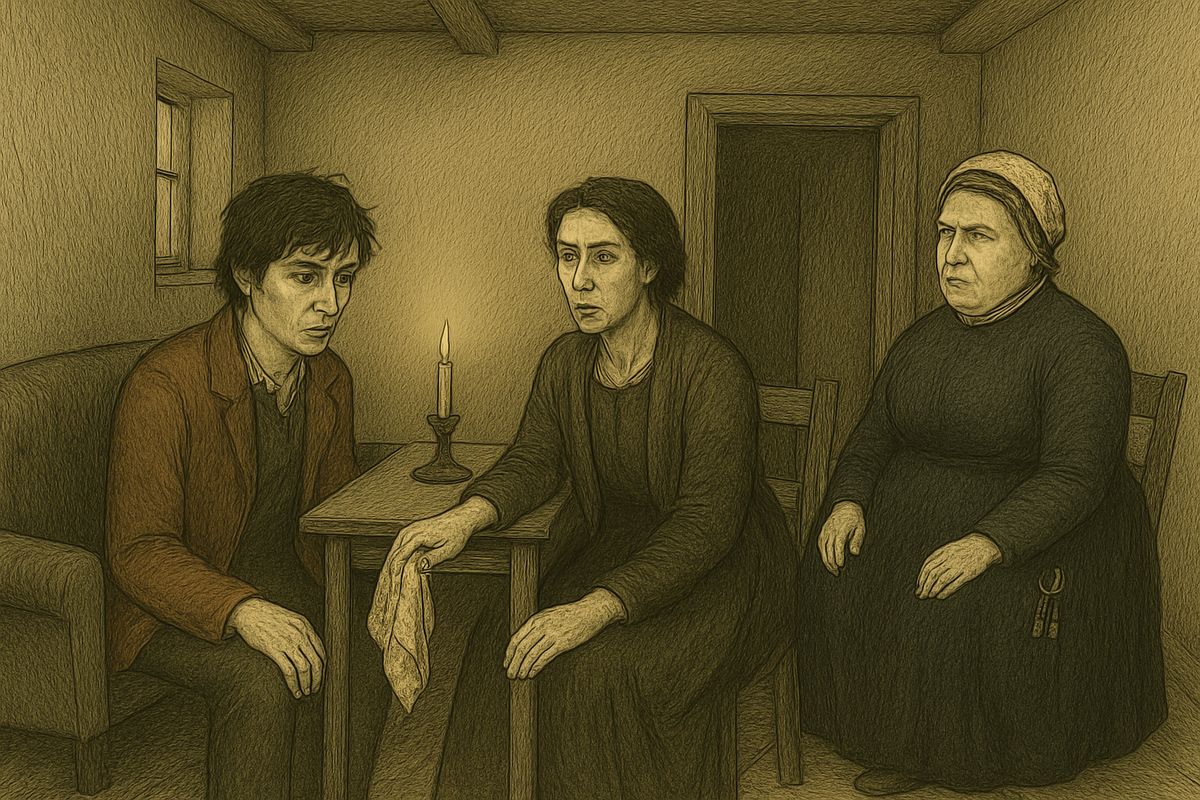
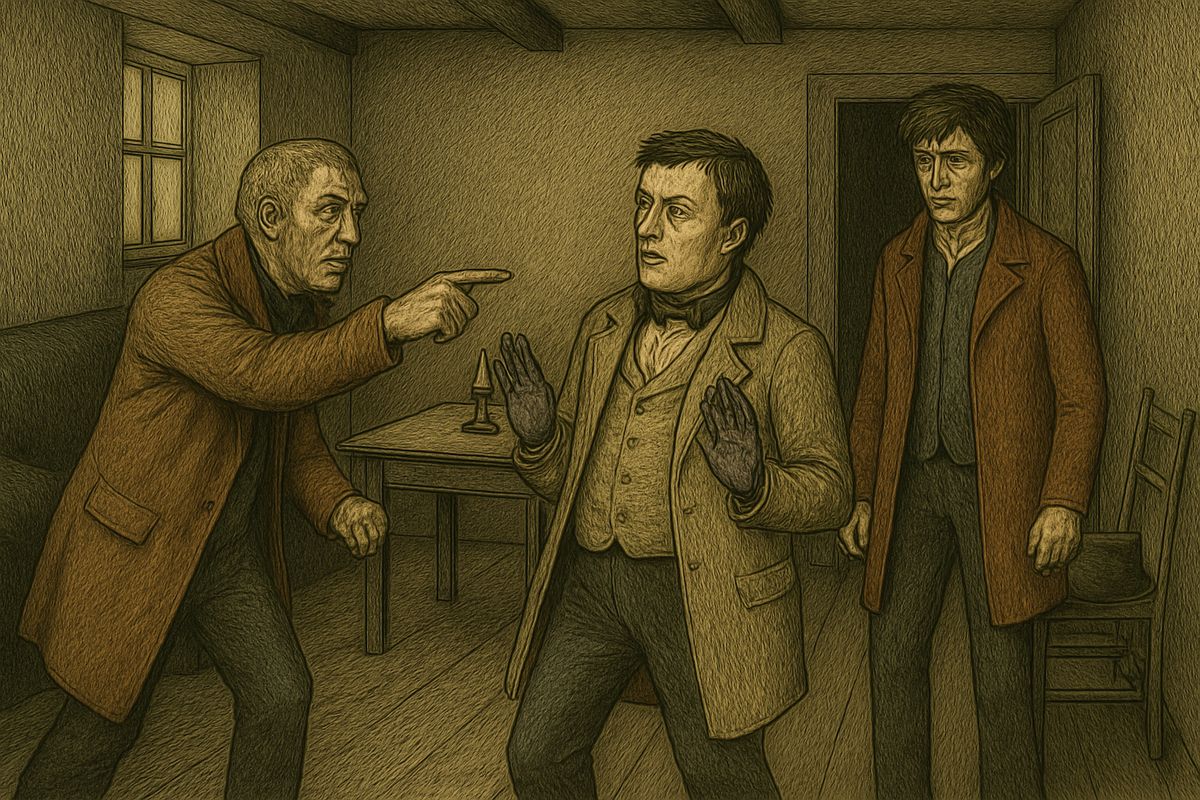
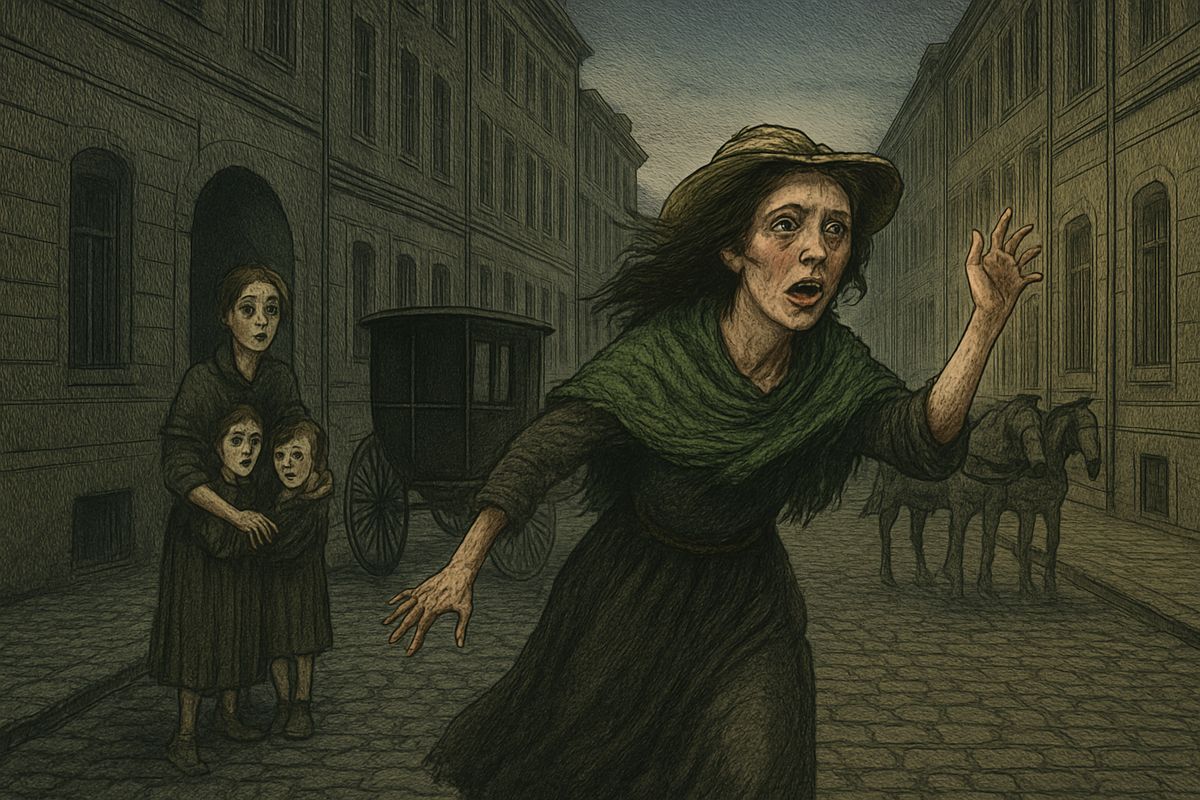
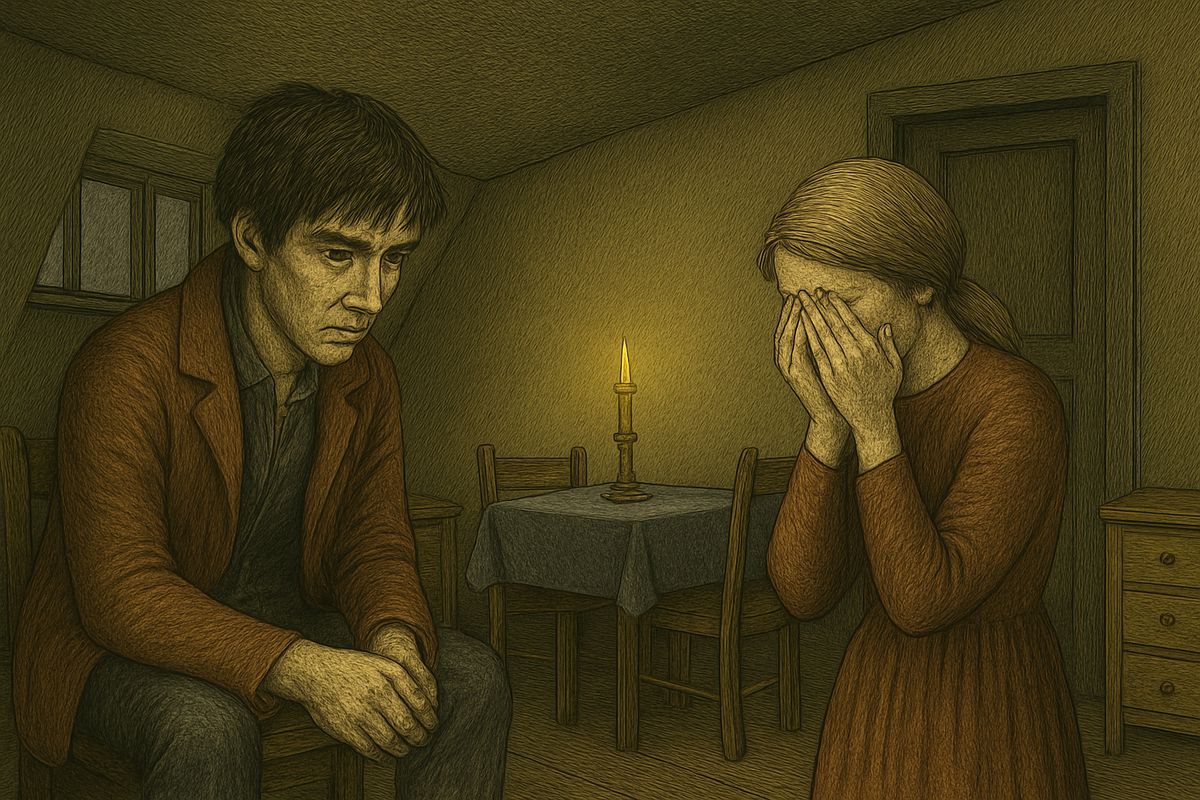
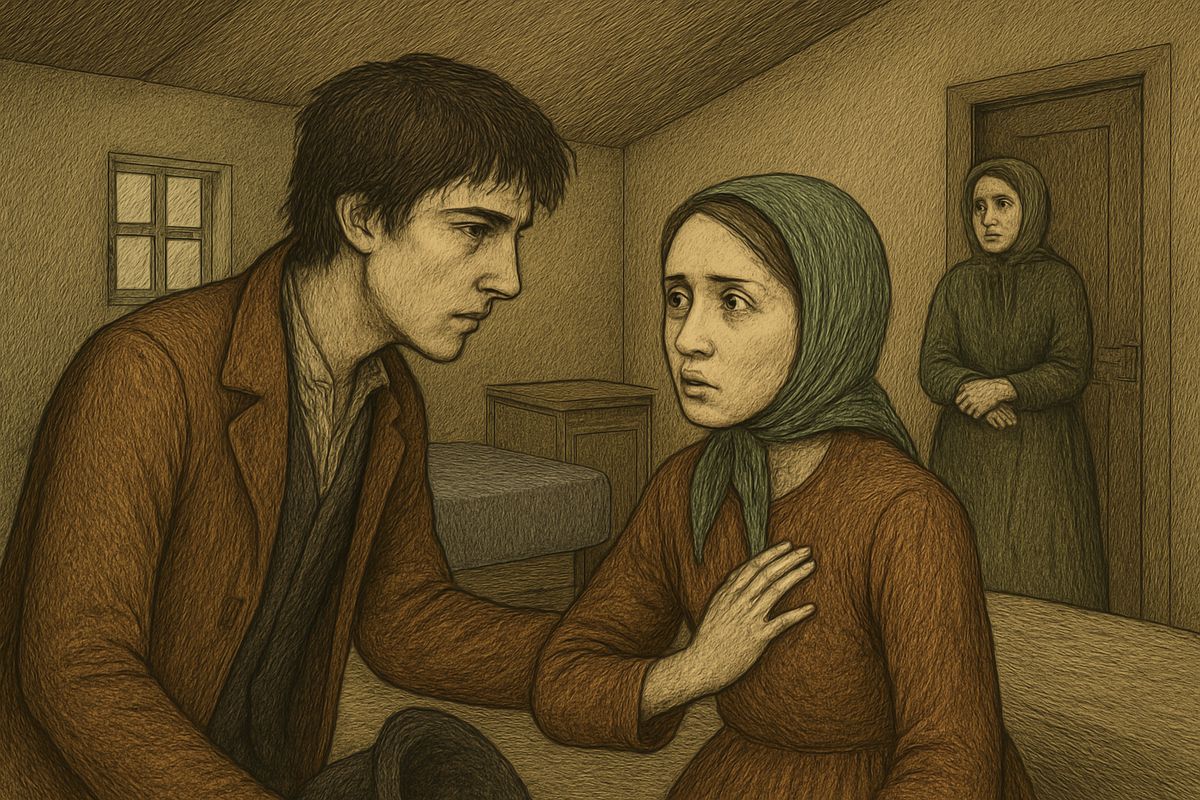
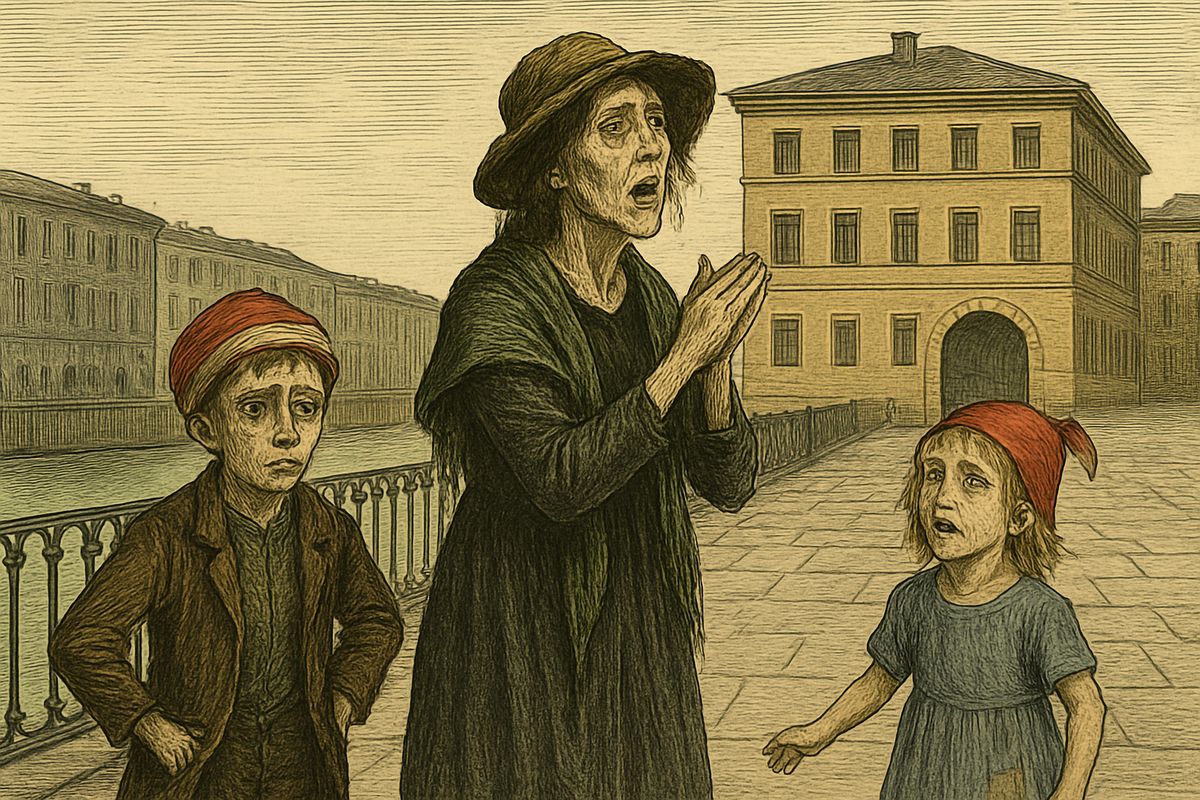
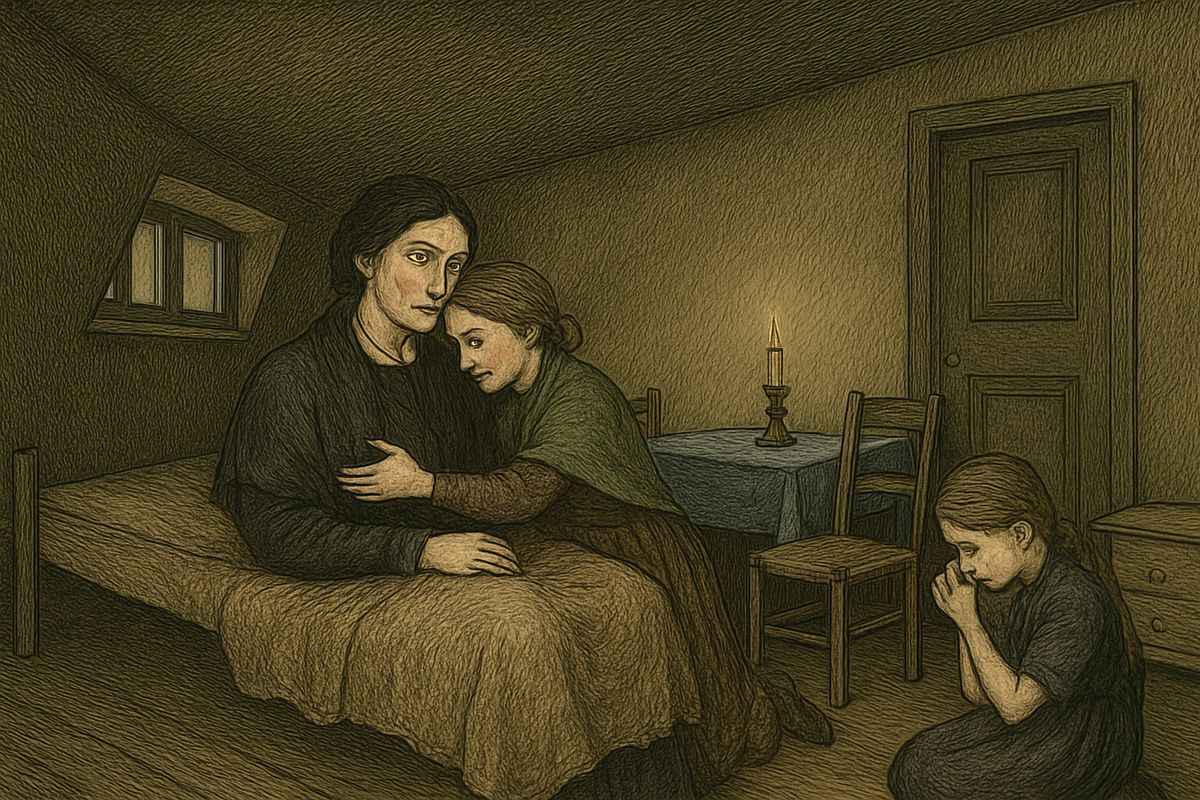
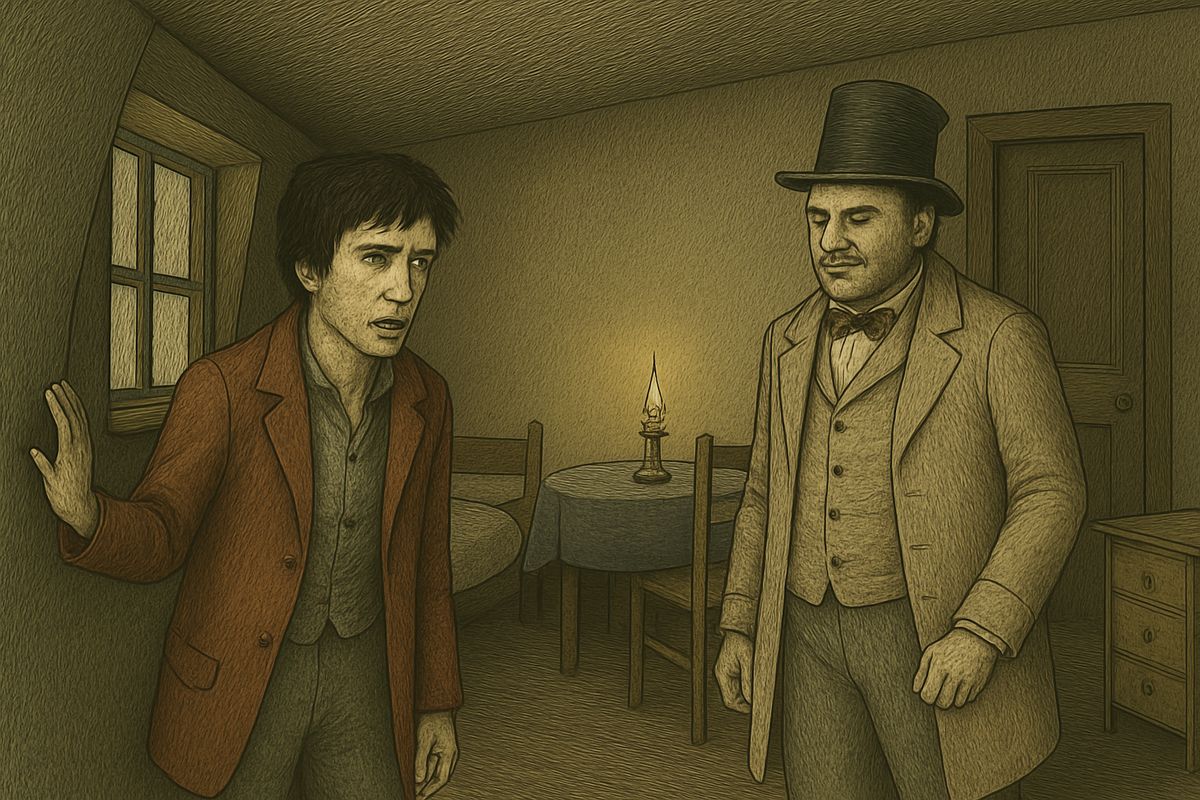
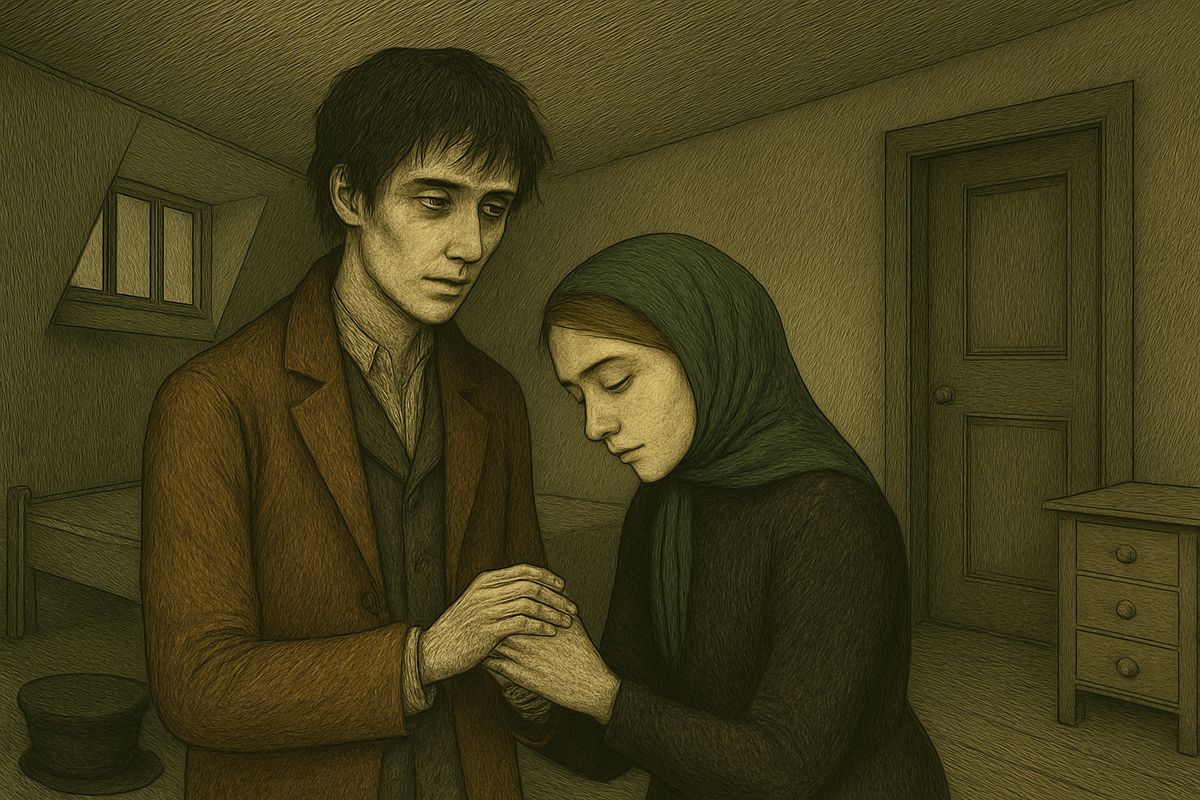
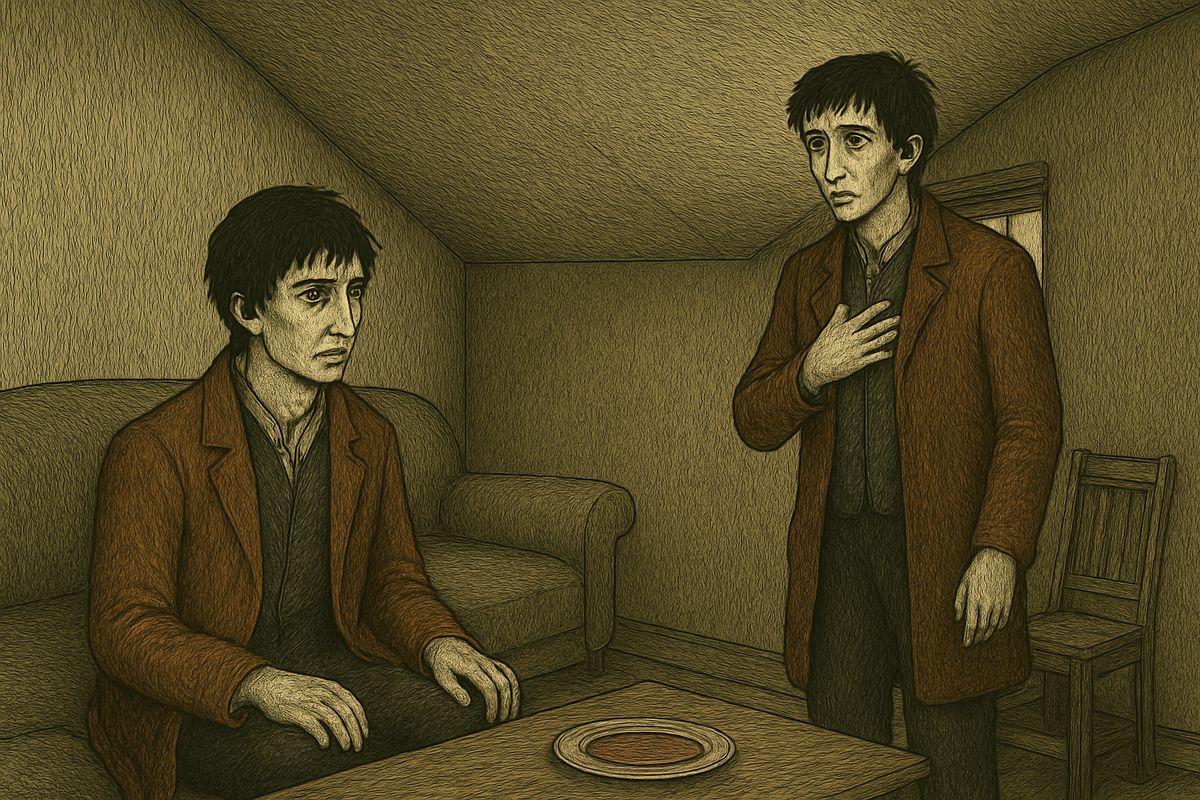
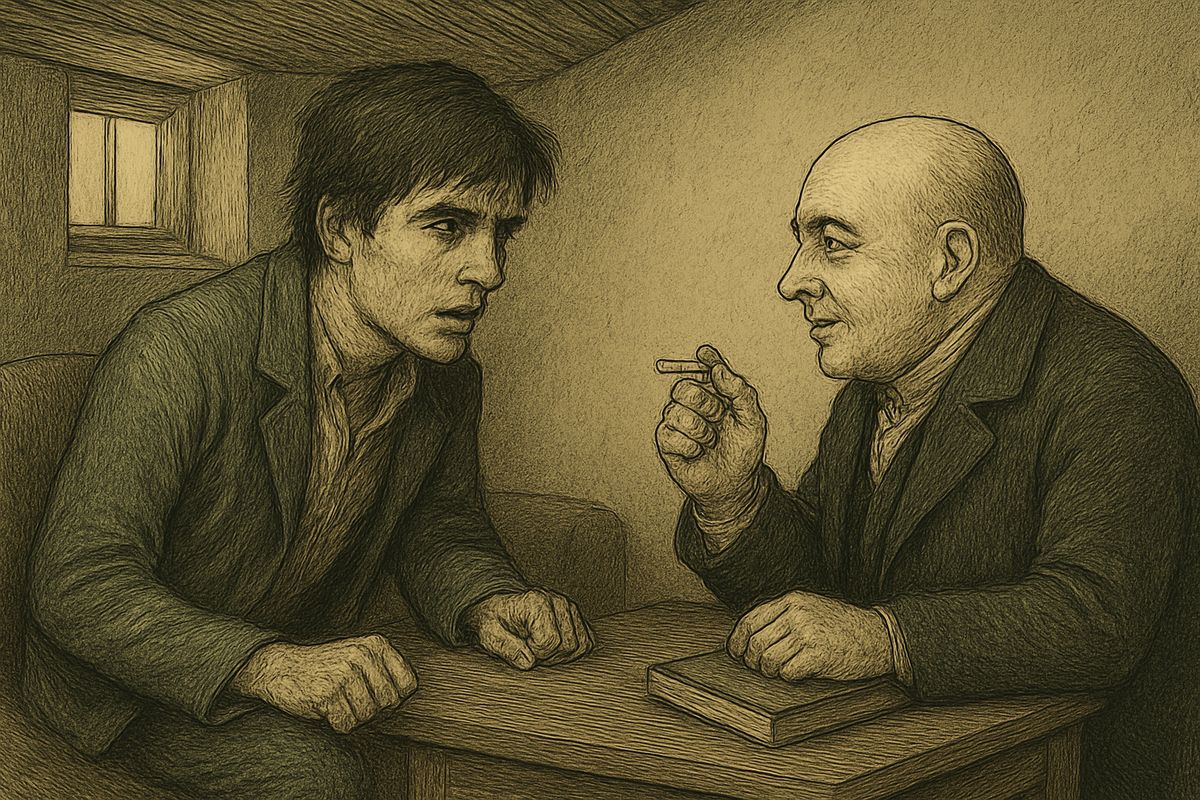
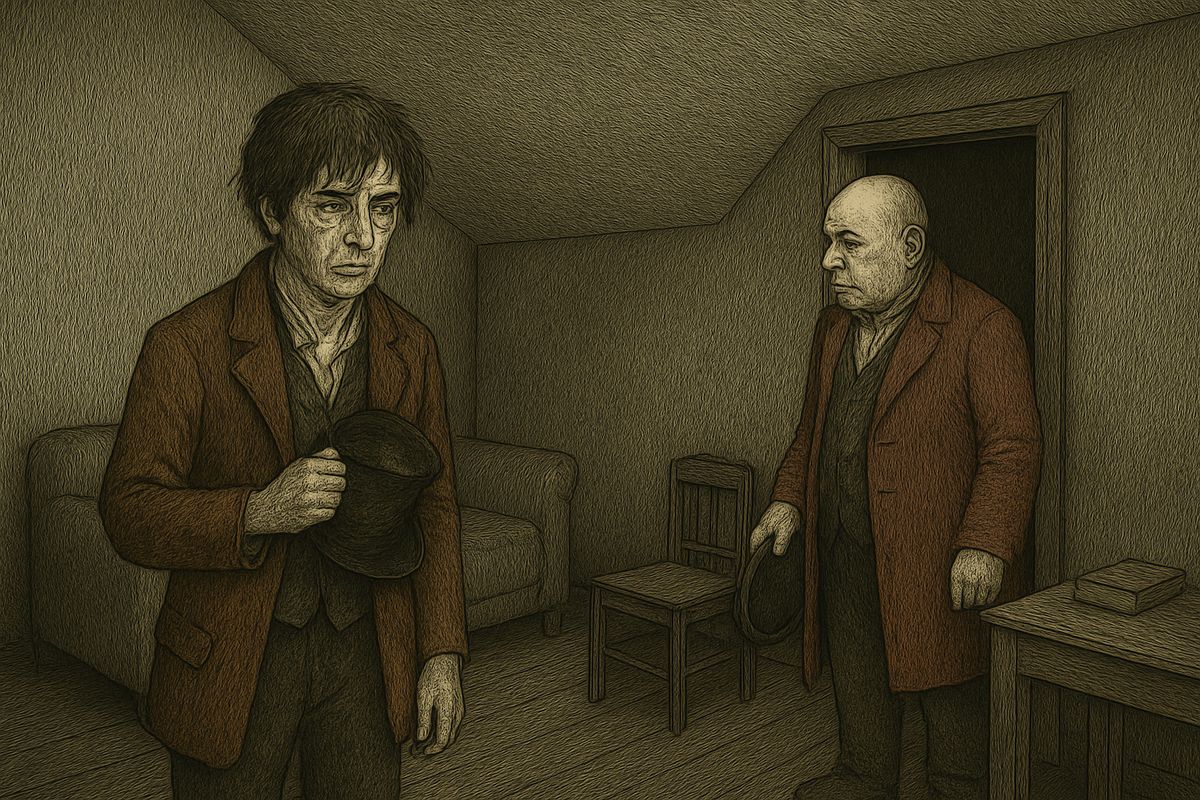
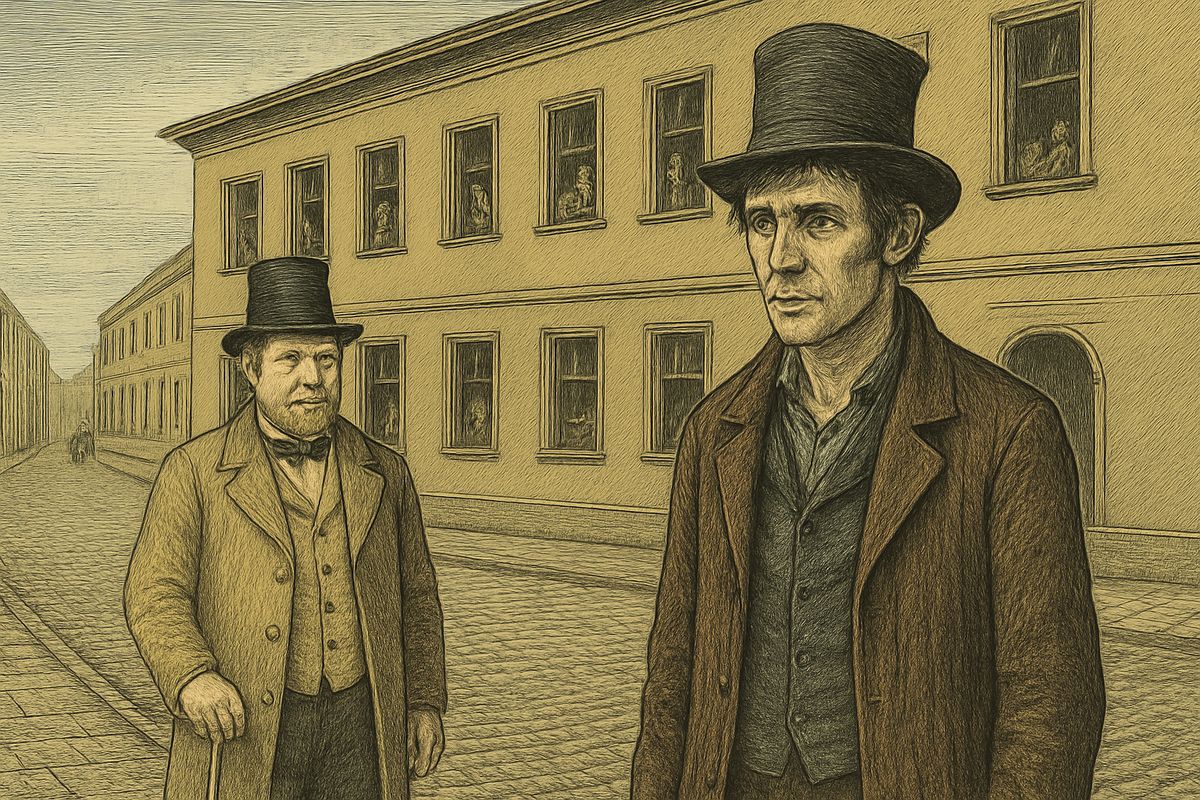
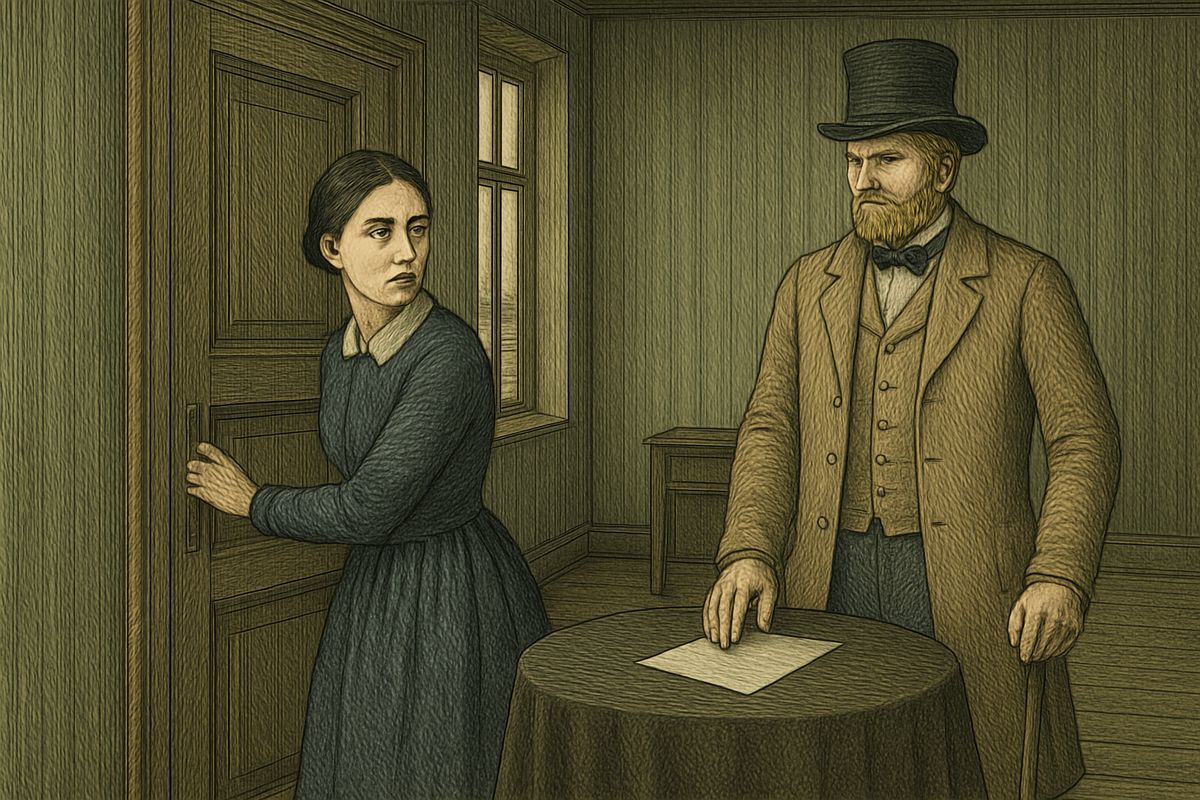
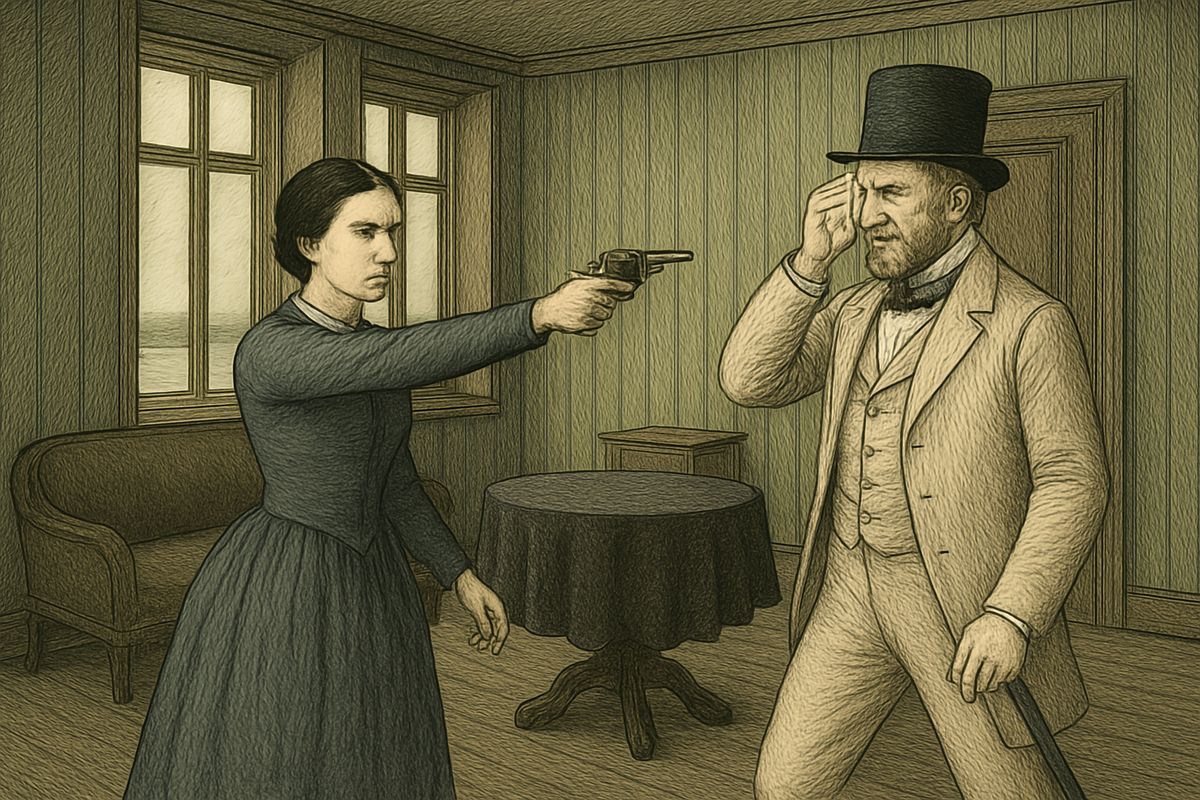
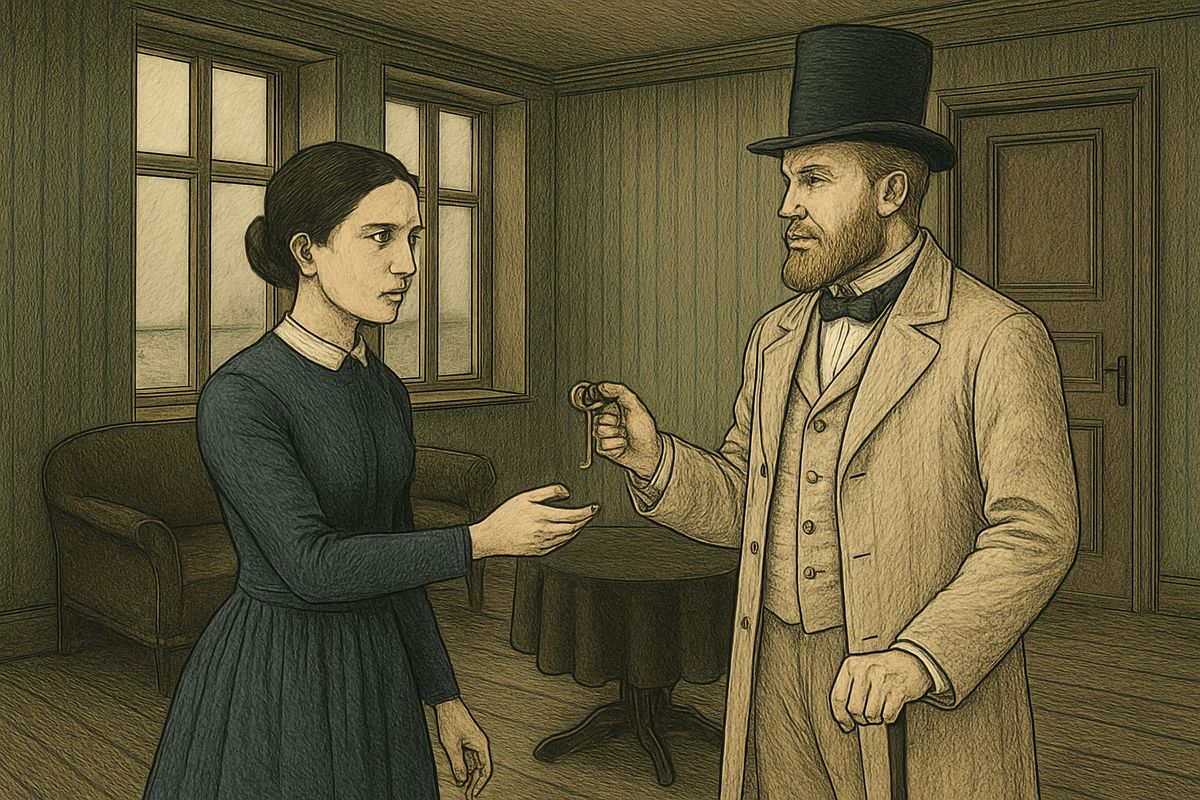
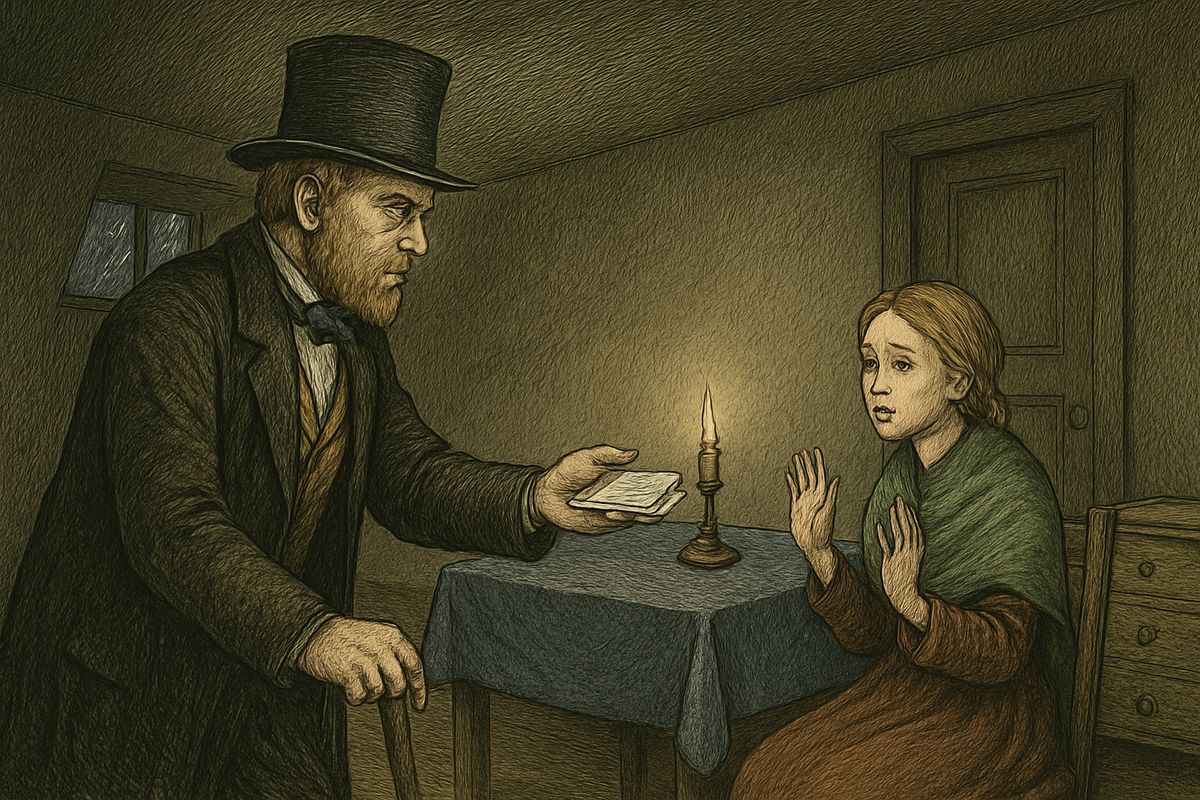
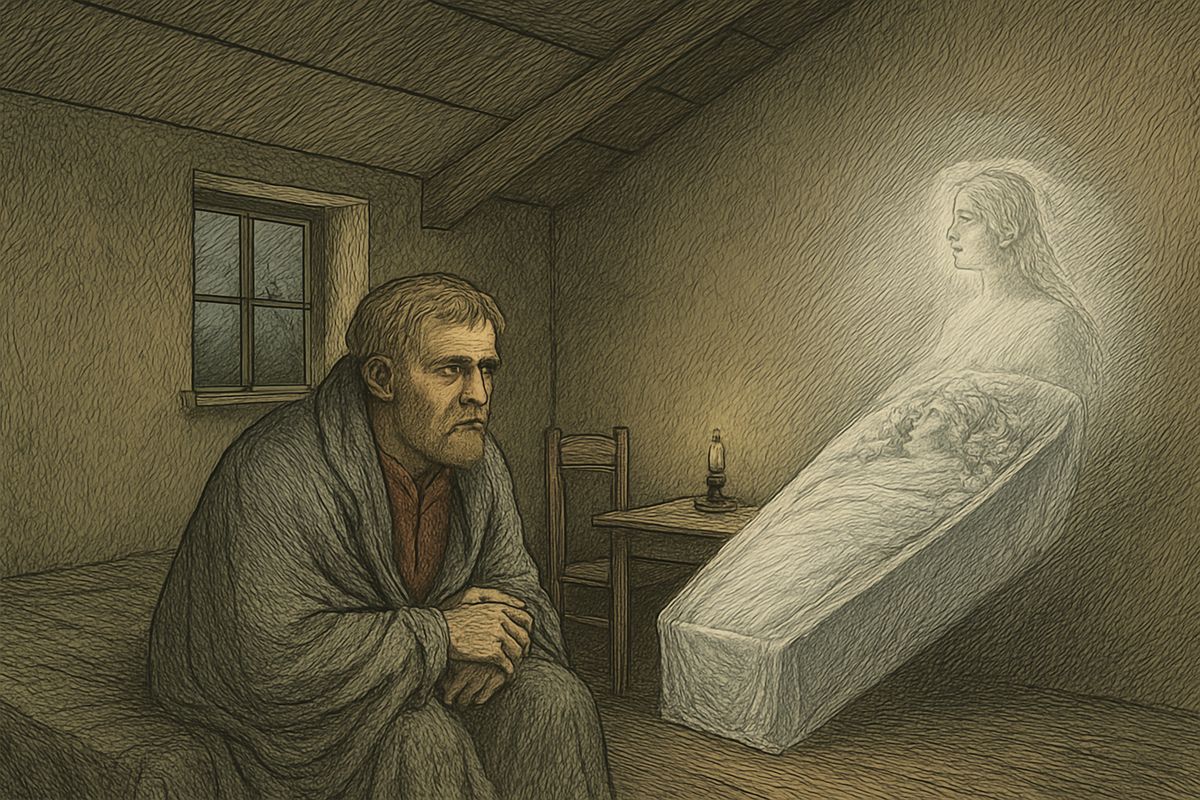
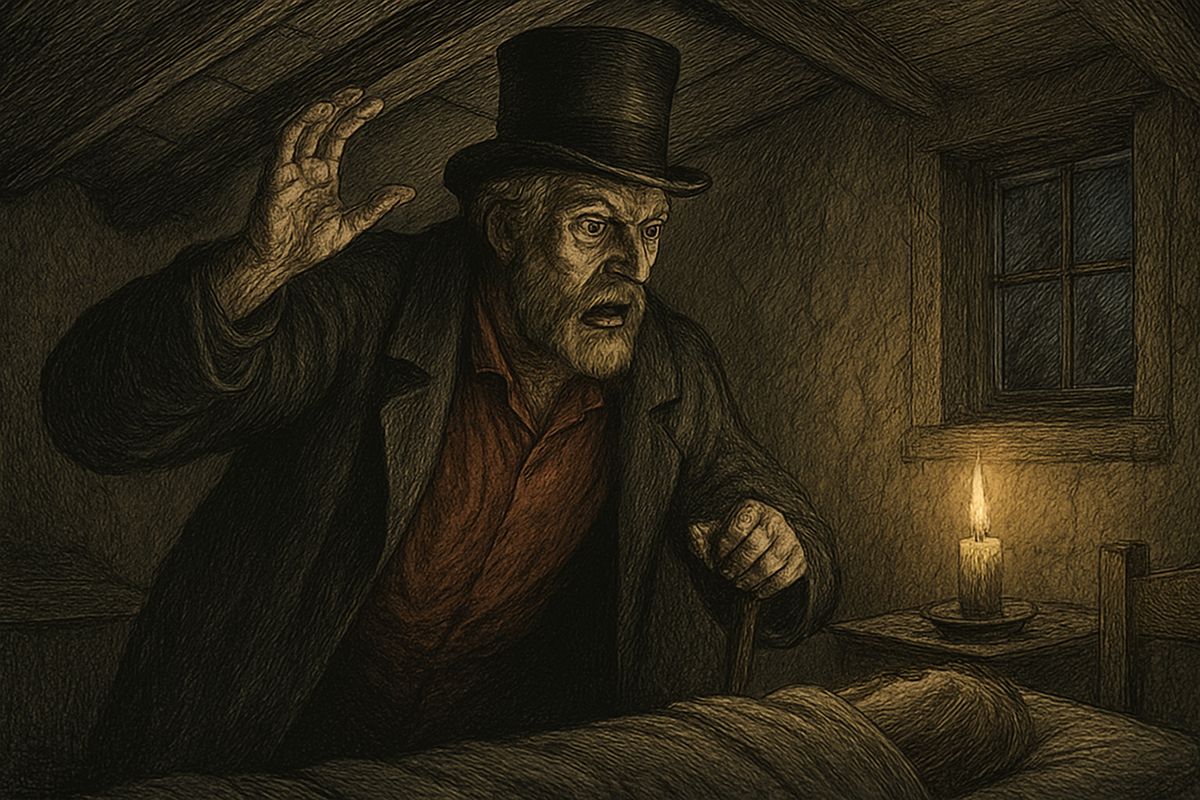
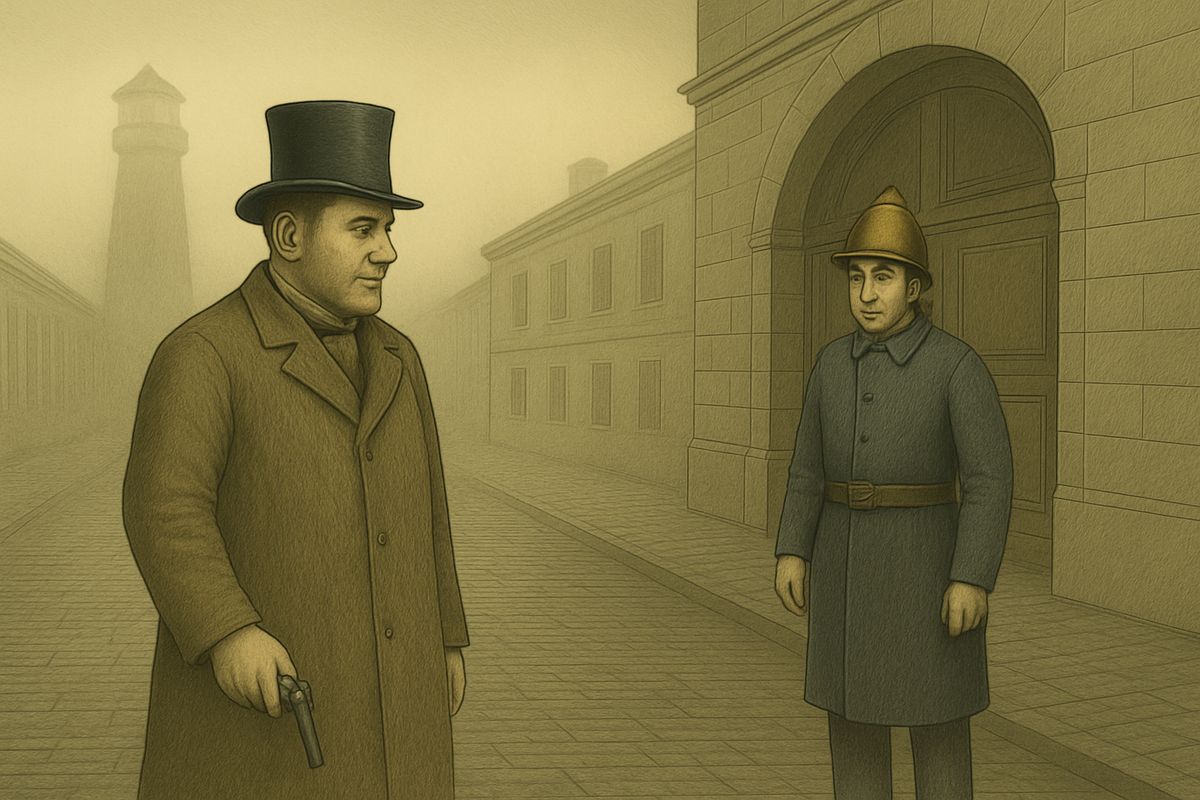
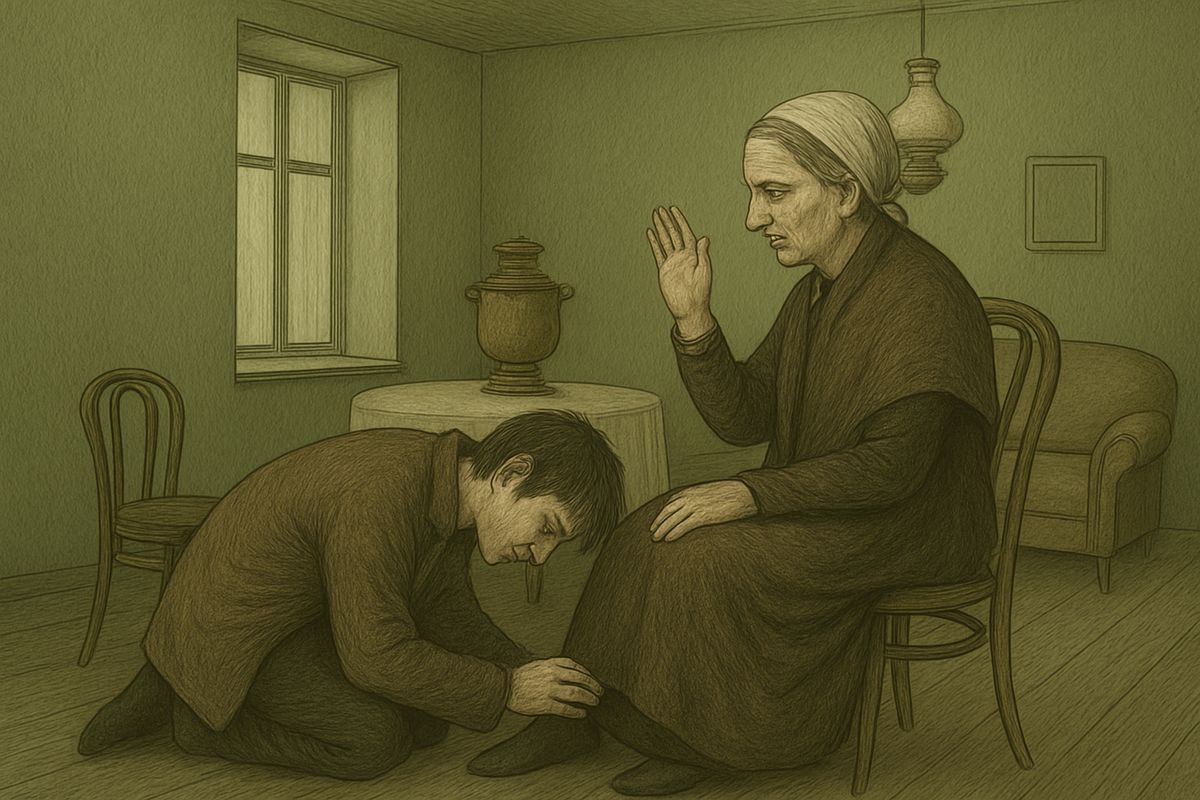
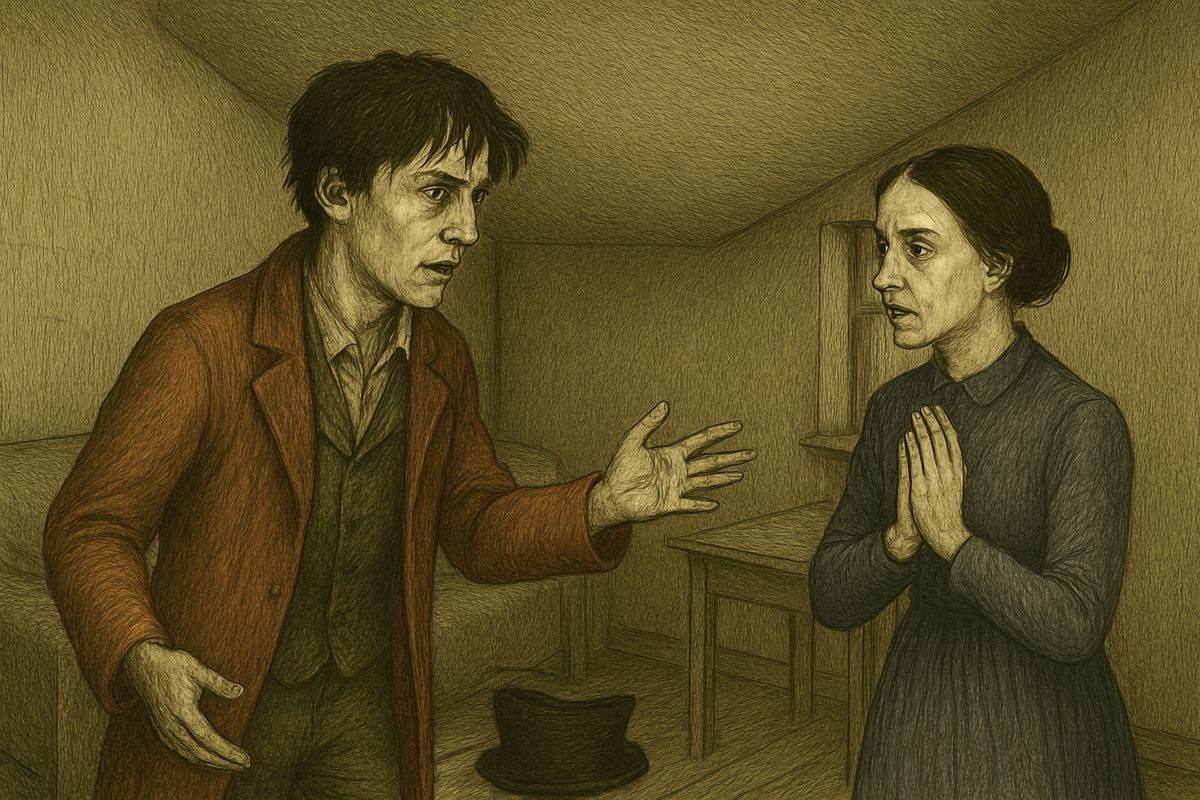
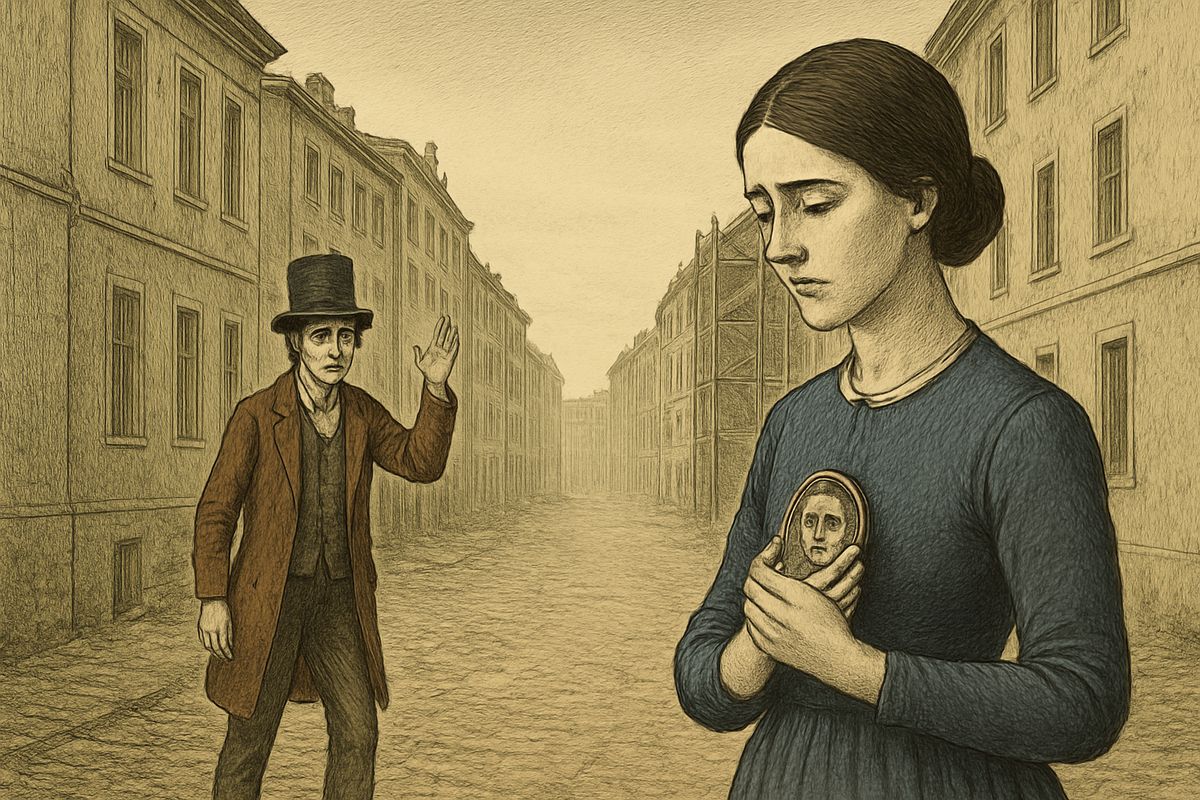
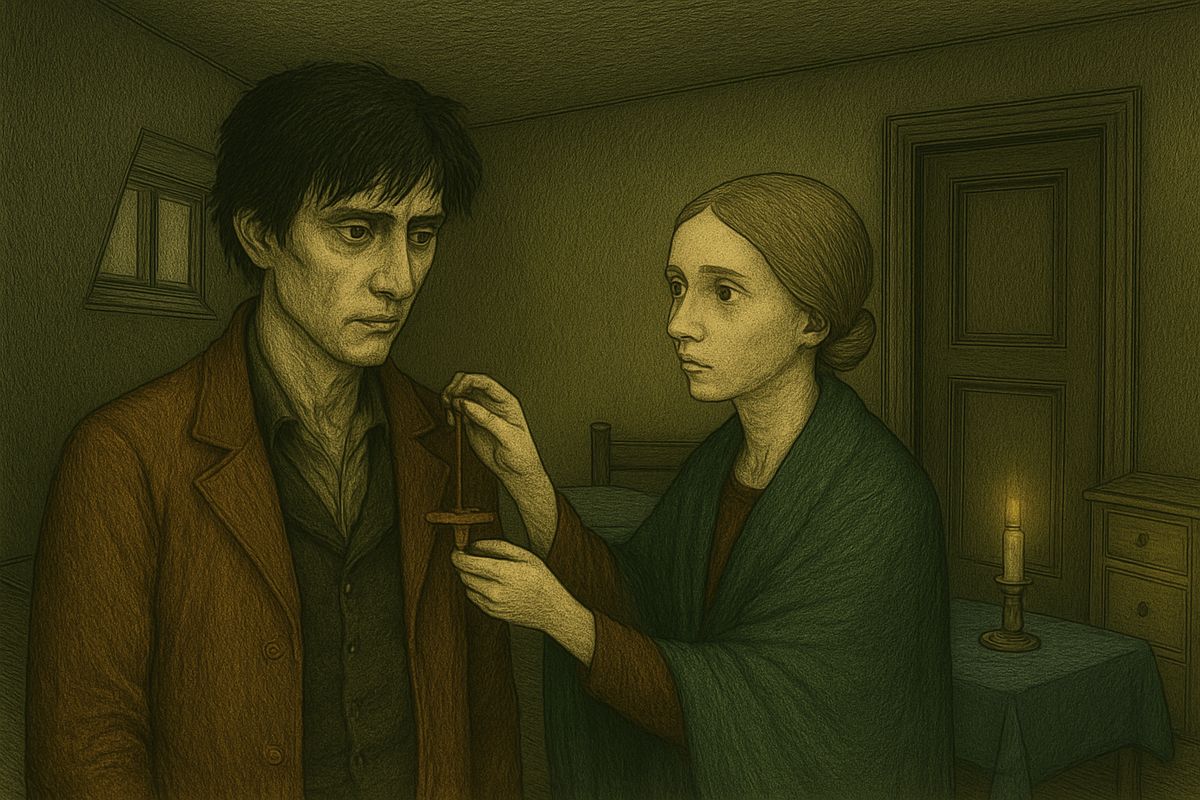
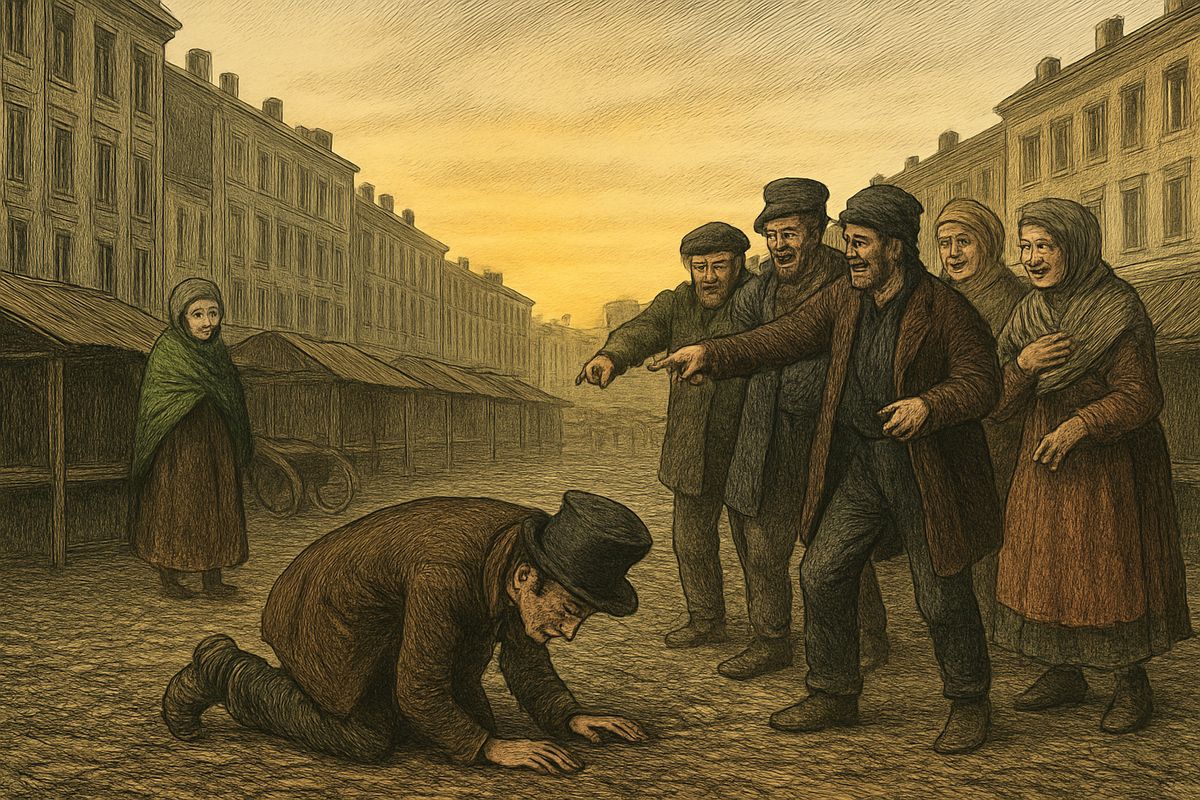
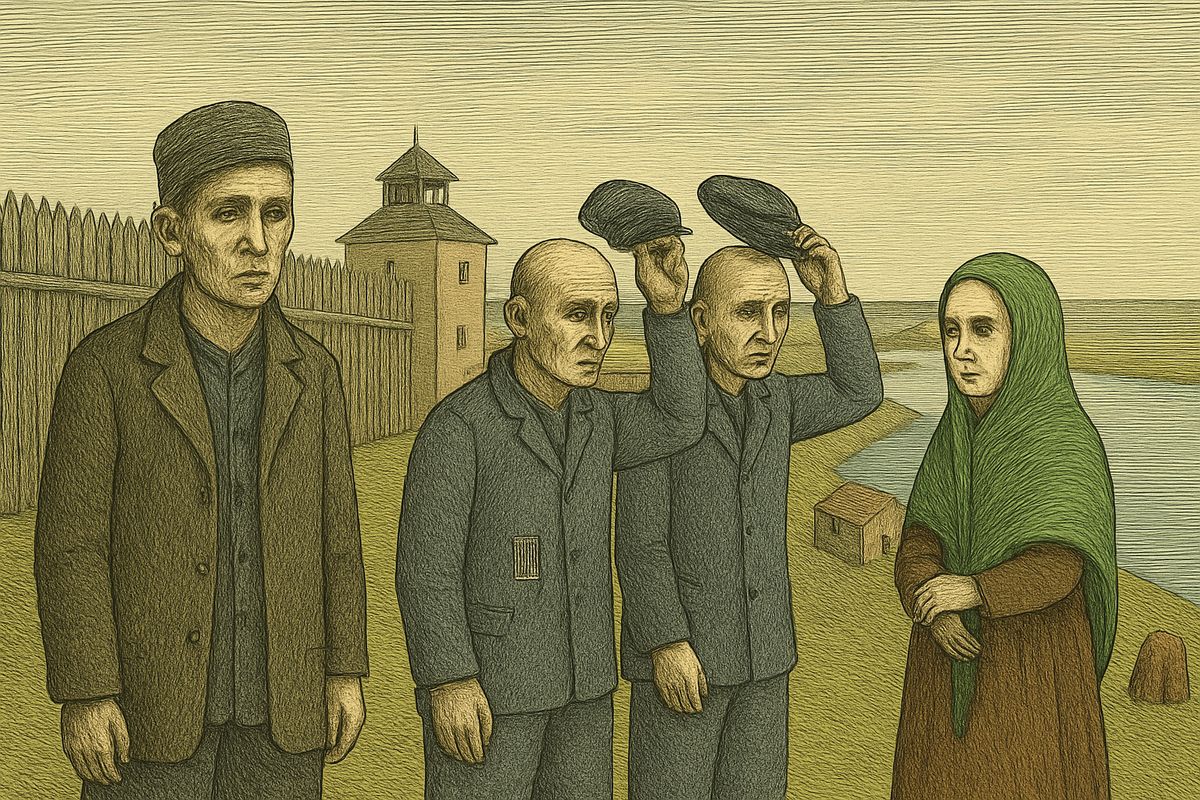
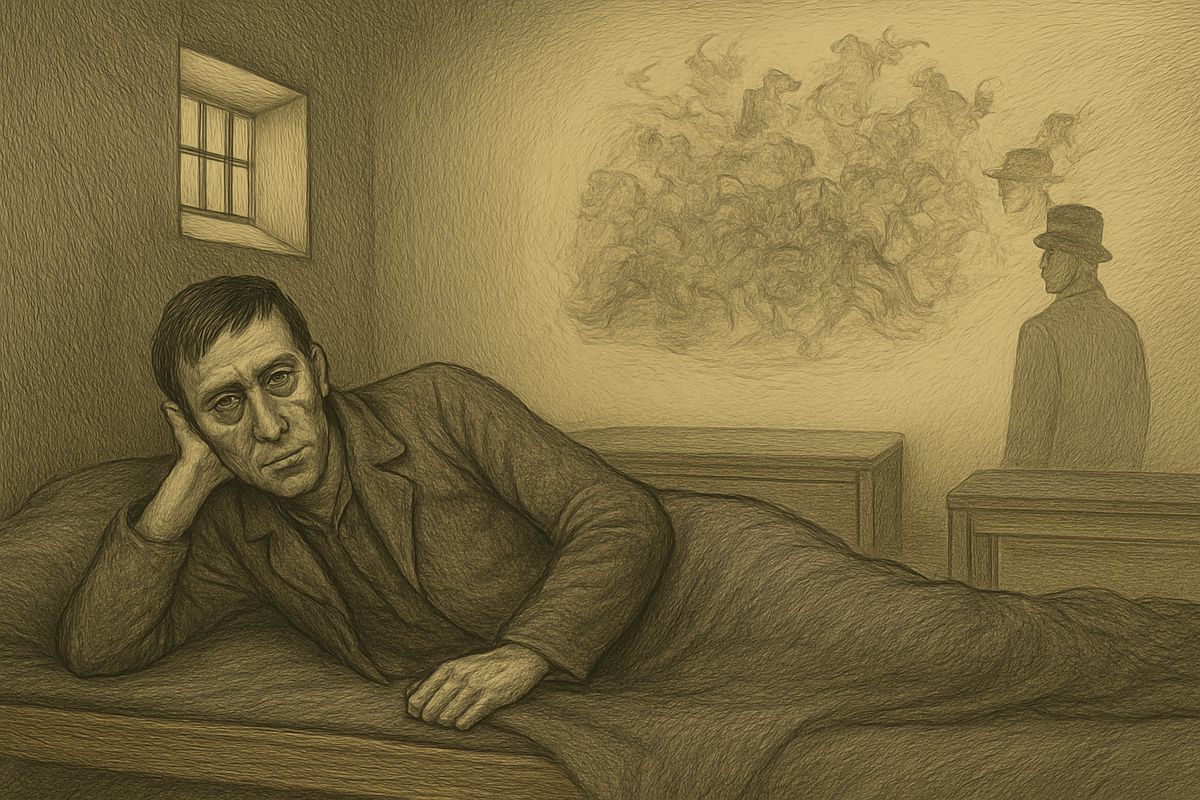
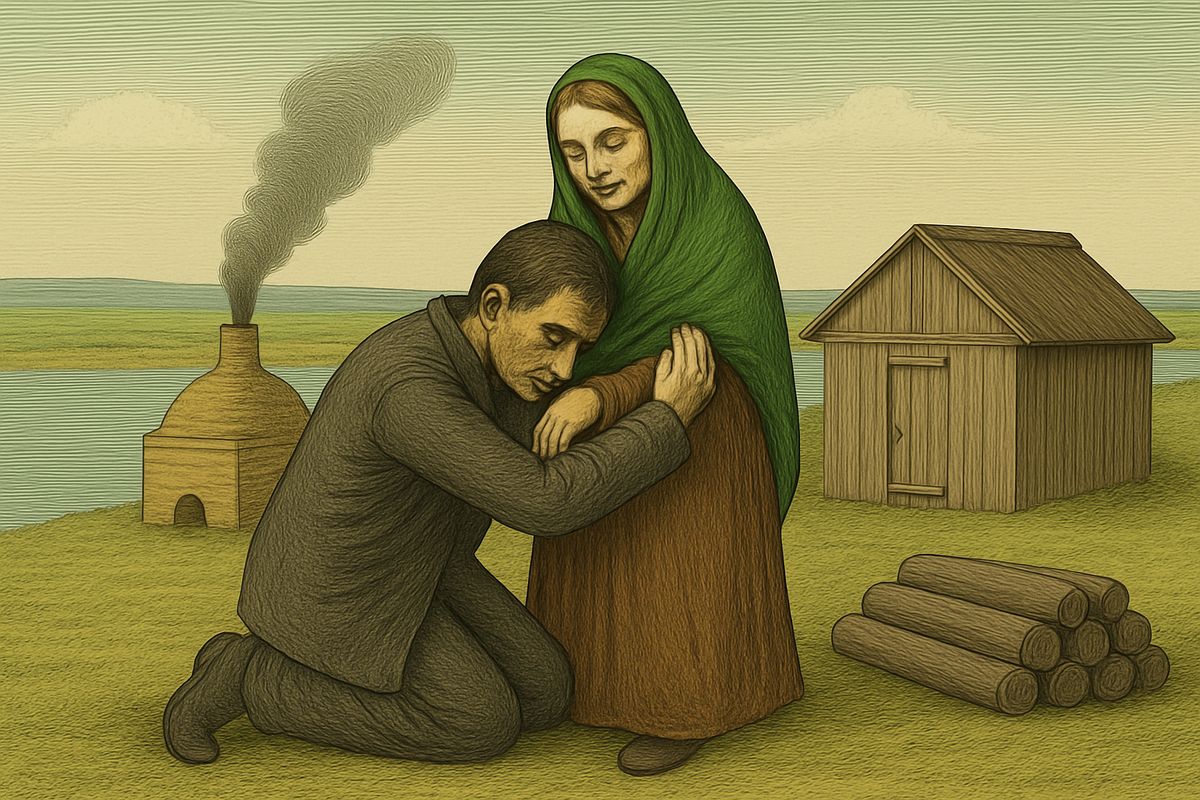
1On an exceptionally hot evening early in July, a young man named Raskolnikov rose from the sofa in his coffin-like garret. For a month he had lain there, feeding a thought he hardly dared to name.2He owed his landlady far more than he could pay, and her kitchen door on the floor below always stood open. So, as he did every time, he crept down the stairs like a cat and slipped out unseen, scowling with a sick, frightened shame.3The streets stank of dust, plaster and pot-houses. When a drunk on a passing waggon jeered at his hat, Raskolnikov went cold: people would remember a hat like that. He knew exactly how far he was going: seven hundred and thirty steps. Tonight was only a 'rehearsal'.4At the huge house by the canal he climbed the dark back stairs to the fourth floor and rang the tinny bell. The door opened a tiny crack, and the old pawnbroker Alyona Ivanovna eyed him from the darkness with open distrust.5In her spotless little room, lit gold by the setting sun, he held out his father's silver watch. 'A rouble and a half, and interest in advance, if you like!' she said. He was ready to walk out, but he had come for something else as well.6She went behind the curtain to unlock a drawer. He noted everything: the keys on a steel ring in her right pocket, one big notched key surely for a strongbox. Then, far too casually, he asked whether she was always home alone.7Outside, he stumbled along like a drunk. 'Oh God, how loathsome it all is!' What filthy things his heart was capable of! Giddy with thirst and two days' hunger, he entered a basement tavern for the first time in his life.8Over his beer a bloated, ragged clerk with hay in his hair came and sat beside him: Marmeladov, titular counsellor. 'Poverty is not a vice, but beggary is.' He had lost his post through drink, and the tavern boys sniggered as he told the student about it.9His family went hungry, so his gentle daughter Sonia went out at six and came back at nine. She laid thirty roubles on the table without a word, covered her face with the green shawl and lay shuddering. Now she lived by the yellow ticket, and 'I lay drunk.'10Marmeladov confessed his quart had been bought with Sonia's last thirty copecks. God would forgive Sonia, he cried, and call the drunkards too, 'because not one of them believed himself worthy.' After a moment's silence, the room roared with laughter again.11Raskolnikov helped him home to Kozel's house. In the filthy passage-room, the feverish Katerina Ivanovna searched him, found not a farthing, and dragged him across the floor by the hair while the children screamed. 'This is a con-so-la-tion to me, honoured sir!' he called out.12On his way out he slipped his tavern coppers onto the windowsill, then regretted it on the stairs: they had Sonia, after all. 'Man grows used to everything, the scoundrel!' Then, darker: what if man were not a scoundrel at all?13He woke late. Nastasya, the cook, brought him yesterday's cabbage soup and chattered that the landlady meant to go to the police. Why lie there like a sack? 'I am thinking,' he said gravely. Then she remembered a letter had come for him.14The letter was from his mother. He sent Nastasya away, kissed the small sloping handwriting of the woman who had taught him to read, and at last opened two thick sheets covered in tiny writing. Almost from the first line his face was wet with tears.15His mother wrote that Dounia had been governess at the Svidrigailovs'. Mr. Svidrigailov pursued her shamefully; his wife, Marfa Petrovna, blamed the girl, sent her home in a peasant cart through pouring rain, and slandered her until proof of her innocence emerged.16Now all was changed. Pyotr Petrovitch Luzhin, a well-to-do lawyer of forty-five, had proposed at once, remarking that a wife should see her husband as her benefactor. Dounia had prayed all night and accepted. They would soon come to Petersburg.17He rushed into the streets, muttering. He saw it all: Dounia was selling herself for his sake, as Sonia Marmeladov sold herself for bread. 'I won't have your sacrifice, Dounia!' Yet what could he do, living on their pension?18On the deserted K—— Boulevard he followed a drunken girl of about fifteen who sank onto a bench, while a plump dandy lingered, waiting to carry her off. 'Hey, you Svidrigailov! What do you want here?' The dandy raised his cane; a policeman intervened.19He gave the kindly policeman twenty copecks for a cab. But the girl woke and staggered off, the dandy and constable trailing after. Suddenly something stung him. 'Let him amuse himself. What is it to you?' he shouted, laughing, like a madman.20Alone on the bench he brooded: a certain 'percentage' must go to the devil every year—what if Dounia were one? He would visit his friend Razumihin, he thought calmly, the day after It. Then he understood, and leapt up in horror.21Out on the islands he drank a glass of vodka and fell asleep in the bushes. He dreamed he was seven, walking with his father past a tavern, where drunken Mikolka was flogging a thin old mare harnessed to a huge cart. 'It's my property!'22Mikolka took a crowbar and beat the mare to death while the crowd laughed. The boy pushed through screaming, kissed her bleeding dead head, then flew at Mikolka with his little fists before his father carried him away.23He woke drenched in sweat. Could he take an axe and split her skull? No, he could never do it. On the bridge over the Neva he felt free at last. 'Lord, show me my path; I renounce that accursed... dream of mine.'24Yet for no reason he passed through the Hay Market, where he overheard Lizaveta, the pawnbroker's timid sister, promise to come round tomorrow at seven. At seven, then, Alyona Ivanovna would be alone. He went home like a man condemned.25Six weeks before, Raskolnikov had heard a student in a tavern tell an officer about the same pawnbroker: kill her, take her money, do a hundred good deeds. 'One death, and a hundred lives in exchange—it's simple arithmetic!' It was his own thought.26The hour had come. He sewed a noose into his coat for the axe and fetched his fake pledge. But Nastasya was in the kitchen; the plan to take her axe collapsed. Then something shone under the porter's bench. 'When reason fails, the devil helps!'27He walked sedately, so as to draw no eyes, his mind drifting to fountains and gardens. A shop clock said ten past seven. At the old woman's house, as though by design, a huge waggon of hay was rolling in under the gateway, and behind it he slipped inside unseen.28The stairs were empty and every door shut, except one on the second floor, standing open, where painters were at work. They never looked up. "It would be better if they weren't here, but it's two storeys below," he told himself, and climbed on.29At the fourth floor, heart pounding, he rang. No answer. He rang again, and with his ear to the door heard a skirt rustle: she was listening on the other side. He rang a third time, unhurried, and the latch clicked.30She looked at him with suspicion, but his sharp words reassured her and she took the pledge. "How he has wrapped it up!" Fumbling with the knot, she turned to the window for light, her back to him. Under his coat his numb hand closed on the axe.31Then it was done. With her keys he fumbled at the drawers, then remembered the big notched key and pulled a trunk from under the bed. He stuffed a few gold trinkets into his pockets. In the next room, a small hand lay still.32Hearing a step and a low cry, he ran out with the axe. Lizaveta stood there with a bundle, white as a sheet. She backed away without a sound, mouth twitching like a frightened child's, one empty hand raised to keep him off.33Her bundle lay where it had fallen. Dazed, he washed his hands and the axe in a bucket in the kitchen and rubbed the handle with soap. Then, in the entry, a horror stopped him cold: the outer door had stood six inches open the whole time.34Heavy steps climbed the stairs. He slipped back and fastened the hook just as Koch began ringing and wrenching at the door. A young student joined him and noticed the hook: someone must be inside. "It's evident, e-vi-dent there's something wrong here!" They ran down for the porter.35When both men had gone down, he unhooked the door and followed. Voices came up to meet him; there was nowhere to go. Then he saw the painters' flat, empty and wide open. He slipped inside as the men passed, then fled.36Soaked with sweat, he took a long way home. The porter was out again, and he slid the axe back under the bench. Then he climbed to his garret and fell onto the sofa, lost in a blank oblivion.37Waking before dawn in a fever, Raskolnikov remembered everything. Three times he searched his clothes, cutting away blood-clotted threads and a stained pocket lining. He had stuffed the loot behind the wallpaper, then shuddered: 'Is that the way to hide things?'38He fell asleep clutching the rags and woke past ten to Nastasya and the porter pounding on the door. Sure all was discovered, he unlatched it. The porter handed him a summons to the police office; Nastasya only giggled at his rags.39At the stifling police office it proved only his landlady's IOU for a hundred and fifteen roubles, and joy flooded him. When assistant superintendent Ilya Petrovitch bellowed at him for being late, he shouted back: 'You're smoking a cigarette as well as shouting!'40He signed a pledge to pay and was half-minded to confess to Nikodim Fomitch. Then, hearing the officers discuss the pawnbroker's murder, he fainted. Revived, he answered Ilya Petrovitch's questions curtly, then fled home in terror: 'A search—there will be a search at once!'41Finding his room untouched, he filled his pockets with the eight trinkets and the purse and made for the Ekaterininsky Canal. But washerwomen crowded the rafts, boats were moored everywhere, and everyone seemed to stare. And what if the little boxes floated?42Heading for the Neva, he slipped into a deserted courtyard, heaved over a great stone and emptied his pockets into the hollow beneath. Crossing the square he laughed with relief—then stopped short. He had never even looked inside the purse he had killed for.43Loathing every face he passed, he found himself at Razumihin's garret. His old friend saw he was ill and offered translation work and three roubles. Raskolnikov took them in silence, walked out, then climbed back and left them. 'I am by myself... alone.'44On the Nikolaevsky Bridge a coachman lashed him with his whip, and passers-by laughed. A woman, taking him for a beggar, gave him twenty copecks. He gazed at the glittering cathedral, then flung the coin into the Neva, cut off from everyone.45At dusk he woke to hideous screams: Ilya Petrovitch seemed to be beating the landlady on the stairs. Frozen with terror, he waited. Then Nastasya brought soup. "Nobody has been beating the landlady. That's the blood crying in your ears."46After days of fever, when faces came and went and mocked him, Raskolnikov woke fully at ten one morning. Nastasya stood by the sofa, and tall Razumihin ducked in at the low door. "What a cabin it is! So you are conscious, brother?"47Razumihin signed for the thirty-five roubles his mother had sent, then fed him soup by the spoonful, blowing on each one. He boasted that he had tracked Rodya down and quite won over Pashenka, the landlady. Raskolnikov swallowed and said little, slyly hiding his strength so he could listen.48He learned that Zametov, the head clerk from the police office, had been in the room while he raved about ear-rings, chains and his sock. Alone, he jumped up, checked the hole behind the wallpaper and snatched up the grimy sock.49That evening Razumihin untied a parcel of second-hand clothes bought with the mother's money and cheerfully fitted a new cap onto his friend's head, while Raskolnikov waved him away in disgust. Just then the door opened and in came Zossimov, the young doctor, fat, lazy and well dressed.50The talk turned to the pawnbroker's murder. "Lizaveta was murdered, too," Nastasya put in. "She mended a shirt for you." Raskolnikov turned to the wall and counted the petals of a white flower on the paper, his limbs numb as if cut off.51Razumihin explained that the painter Nikolay had been arrested: he had turned up with the old woman's gold ear-rings, and claimed he had found the box in the empty flat, behind the door. "Behind the door?" cried Raskolnikov in terror.52Suddenly a stranger stopped in the doorway: Pyotr Petrovitch Luzhin, Dounia's fiancé, in brand-new clothes from the tailor's. He looked round the squalid little cabin, the unshaven Razumihin and the unwashed invalid with open distaste. "So you are the fiancé? I know, and that's enough!" Raskolnikov snapped.53Luzhin lectured them on economic truth: love yourself first, and the common good will follow. Razumihin cut him short. Raskolnikov burst out that by that theory people might be killed, and asked if Luzhin wanted a penniless bride forever in his debt.54"If ever again you dare to mention a single word about my mother, I shall send you flying downstairs!" Raskolnikov cried, raising himself on the pillow with glittering eyes. Luzhin turned pale, flushed crimson, and squeezed out of the room with deep offence written in every line of his back.55"Let me alone, all of you!" Raskolnikov shrieked, and Zossimov led Razumihin out. On the stairs the doctor said Rodya had some fixed idea: only the murder interested him. Razumihin agreed; talk of the murder had made him faint at the police office.56Suddenly calm, in the new clothes Razumihin had bought, Raskolnikov slipped out, resolved to end it all. In the Hay Market he tipped a street singer and gave fifteen copecks to Duclida, thinking: better to live on a narrow ledge than die at once.57At the Palais de Cristal he searched old newspapers for the murder. Zametov, flushed with champagne, sat down beside him. Raskolnikov mocked him, then leaned closer: "And what if it was I who murdered the old woman and Lizaveta?"58Zametov stammered that he believed it less than ever. Raskolnikov left in wild rapture, shook off Razumihin, and stood on a canal bridge. A wasted woman threw herself into the water and was pulled out; he felt only disgust. "Water... it's not good enough."59He set off for the police office, but his feet led him to the old woman's house. Workmen were papering the bare flat. Raskolnikov rang the bell again and again, relishing its cracked note, then asked the workmen, "Is there no blood?"60Downstairs he gave the porters his full name and dared them to take him to the police. "He's a rogue!" cried a peasant woman. The huge porter flung him into the street, and Raskolnikov walked off in silence.61At the crossroads, still deciding whether to confess, he found a crowd round a carriage. A drunkard had been run over, and Raskolnikov knew him. "It's Marmeladov! Make haste for a doctor, I will pay!" He had him carried home to Kozel's house.62The doctor found Marmeladov's chest crushed: he would die within minutes. A priest came with the sacrament, but Katerina Ivanovna would not be consoled. "He drank everything away!" Then a terrible cough seized her, and her handkerchief came away stained with blood.63Polenka had run for Sonia, and she came, timid and out of breath, in the gaudy streetwalker's finery she had no time to change. Her dying father saw her in the doorway, raised himself on his elbow and knew her at last, crushed in her humiliation. "Sonia! Daughter! Forgive!"64Reaching for her, he fell from the sofa face down. They lifted him back, and Sonia ran to him with a faint cry, embraced him and stayed without moving. He died in her arms.65"How am I to bury him?" cried Katerina Ivanovna. Raskolnikov told her that her husband had spoken of her with reverence, gave her all his money, some twenty roubles, and promised to come again. On the stairs he admitted he was covered with blood.66Polenka ran after him: Sonia had sent her to ask his name. When he asked if she would love him too, she hugged him and wept. "My name is Rodion. Pray sometimes for me too." He left like a condemned man pardoned.67"Life is real! My life has not died with that old woman!" he told himself. Razumihin walked him home, drunkenly blurting out the police's suspicions. In the garret his mother and sister had waited for hours; they embraced him, and he fainted.68Barely able to lift his head from the sofa, Raskolnikov ordered his sister to break her engagement at the first chance the next day. "It's me or Luzhin!" he said. Then he turned his face to the wall, while his mother wept and Dounia stood pale with hurt pride.69Razumihin, drunk on wine and on the sight of Dounia, marched the two women home, lecturing all the way, and fell on his knees to kiss their hands. Within the hour he came back with Zossimov and good news.70Next morning Raskolnikov met his family washed and polite, but every word felt like a duty. When he told his mother, "We shall have time to speak freely of everything," a chill went through him: he could never speak freely again.71When he insisted she choose between him and Luzhin, Dounia flared up: she was marrying for her own sake and would ruin nobody but herself. "I am not committing a murder!" At that word her brother turned deathly white.72Dounia showed him Luzhin's letter forbidding him to come to tonight's meeting. He calmly exposed its lie that he had given the funeral money to a girl of notorious behaviour. Dounia decided that he and Razumihin must both be there at eight.73Just then Sonia came timidly in to invite him, for Katerina Ivanovna, to the funeral and the meal afterwards. He made her sit beside his mother and sister. As the ladies left, Dounia gave her a grave, courteous bow.74Sonia hurried home in a daze, not noticing the well-dressed gentleman of about fifty who had overheard her ask the way to Raskolnikov's. He followed her along the canal and up her stairs. At Kapernaumov's door he laughed, "We are neighbours," since he was lodging next door.75Claiming he wanted to reclaim his pledges from the old woman, Raskolnikov got Razumihin to take him to the examining magistrate, Porfiry Petrovitch. On the way he teased his friend mercilessly about Dounia. "Not a word here or I'll brain you!" Razumihin hissed.76Raskolnikov walked into Porfiry's rooms shaking with deliberate laughter. Razumihin, red as a peony, sent a little tea table crashing. "But why break chairs, gentlemen? It's a loss to the Crown," their stout host quipped.77Porfiry was short and stout, in a dressing-gown, with watery eyes under almost white, blinking eyelashes. When Raskolnikov asked whether he could claim his pawned watch on 'an ordinary sheet of paper', Porfiry screwed up his eyes and seemed to wink. 'He knows,' flashed through Raskolnikov's mind.78After a quick quarrel over the socialists' view that crime comes only from 'environment', Porfiry brought up Raskolnikov's article 'On Crime'. Raskolnikov calmly explained it: extraordinary men such as Napoleon had an inner right, for the sake of their idea, to step over a corpse or wade through blood.79Porfiry asked whether Raskolnikov believed literally in Lazarus' rising from the dead; he did. Then Porfiry pressed: what if some youth fancied himself a future Napoleon and needed money? From the corner Zametov blurted, "Perhaps one of these future Napoleons did for Alyona Ivanovna?"80At the door Porfiry set a trap: had Raskolnikov seen the painters? They had only been there on the day of the murder. Raskolnikov said he remembered no painters. Razumihin protested, and Porfiry slapped his forehead: "I have muddled it!"81Just outside Bakaleyev's, Raskolnikov was seized by a sudden fear that some chain or scrap of wrapping had been left behind. He ran home soaked with sweat, fastened the latch, and felt in every crack of the hole under the wallpaper. There was nothing.82In the gateway the porter pointed him out to a stooping man in a long coat, who walked off. Raskolnikov caught up and asked what he wanted. "Murderer!" the man said quietly, and walked on with a smile of triumphant hatred.83Chilled and trembling, he lay on his sofa while thoughts whirled through his head. A true Napoleon would never creep under an old woman's bed. 'I didn't kill a human being, but a principle!' Then, laughing like a madman: 'I am an aesthetic louse and nothing more.'84He dreamed he followed the man in the long coat into the pawnbroker's moonlit flat. There sat the old woman, bent double. He struck her again and again, but she only shook with silent laughter, while whispering grew louder in the bedroom.85He woke with a scream stuck in his throat. A stranger stood in the doorway, then sat silently by the sofa. When Raskolnikov finally sat up, the visitor spoke: "I knew you were only pretending. Arkady Ivanovitch Svidrigaïlov, allow me to introduce myself."86Svidrigaïlov said his dead wife Marfa's ghost had visited him three times, and mused that eternity might be a grimy bath-house full of spiders. He offered Dounia ten thousand roubles to break with Luzhin. Raskolnikov refused, and Svidrigaïlov left, hinting at a mysterious journey.87At eight Luzhin arrived at Bakaleyev's with an air of injured dignity. He hinted darkly at Svidrigaïlov's past, then attacked Raskolnikov for giving money to a family of worthless people. 'You are not worth the little finger of that girl,' Raskolnikov answered.88Dounia had told Luzhin she must choose between him and her brother, and he was offended. When he sneered at their sudden legacy, she rose, white with anger: 'Pyotr Petrovitch, go away.' He blustered about his expenses, and Pulcheria Alexandrovna flared up.89When Luzhin threw Dounia's lost reputation in her face, Razumihin jumped up to smash his head. Raskolnikov held him back: 'Kindly leave the room.' Luzhin went out pale and shaking, full of hatred, blaming Raskolnikov alone for everything.90With Luzhin gone, they were soon laughing. Razumihin eagerly set out his plan for a publishing business with his uncle's money and part of Dounia's three thousand, and her eyes shone. Then Raskolnikov rose, cap in hand: 'Forget me altogether, it's better.'91Razumihin ran after him, and Raskolnikov stopped in the passage. 'Leave me, but don't leave them.' They looked at each other in silence until something awful passed between them. Razumihin turned pale. From that evening he was a son and brother to the ladies.92At eleven Raskolnikov climbed to Sonia's room at the tailor Kapernaumov's and questioned her without pity. What would become of the children when Katerina Ivanovna died? Would Polenka go the same way? 'Perhaps there is no God at all,' he said. Sonia sobbed bitterly.93He paced the room in silence. Then he suddenly dropped to the floor and kissed her foot, and Sonia drew back as if he were mad. 'I bowed down to all the suffering of humanity,' he said wildly.94He found the New Testament Lizaveta had brought her and made her read him the raising of Lazarus. Her voice rang like a bell as she trembled with hope that he too would believe. The murderer and the harlot read the eternal book together.95'I have abandoned my family. We are both accursed, let us go our way together!' he told her. Sonia understood only that he was terribly unhappy. At the door he promised that if he came to-morrow, he would tell her who killed Lizaveta.96Sonia spent the night in fever. On the other side of the locked door, in the empty room, Svidrigaïlov had stood listening the whole time. When Raskolnikov left, he tiptoed out and fetched a chair, so that to-morrow he could listen in comfort.97Next morning at eleven Raskolnikov went to Porfiry Petrovitch and was left waiting ten minutes, unguarded. If the man from underground had seen anything, he reasoned, they would never let him stand like this. Trembling with hatred, he vowed to stay cold and silent.98Porfiry held out both hands, then drew them back, and rolled about the room chattering of trifles. 'The work of investigation is, so to speak, a free art, he-he-he!' Raskolnikov sat clutching his cap, sure the babble hid a game.99Why arrest a suspect too soon, Porfiry mused, when a man left free and frightened would lose his head? 'He will keep circling round me like a butterfly round a candle, and then—flop! He'll fly straight into my mouth.' Raskolnikov sat pale and motionless.100When Porfiry asked if the room was too stuffy, Raskolnikov laughed hysterically, then sprang up trembling. 'If you have a right to arrest me, then arrest me!' He struck the table, and Porfiry, all alarm, pressed water on him.101Then, in friendly tones, Porfiry let slip that he knew how Raskolnikov had gone to the murdered woman's flat at night, rung the bell and asked about the blood. All delirium, he said soothingly. 'I knew what I was doing!' Raskolnikov cried.102'Arrest me, search me, but don't play with me!' Raskolnikov hissed, seizing his cap. At the door Porfiry caught his arm, chuckling, and promised him a little surprise locked behind the door. He drew out a key, and Raskolnikov heard noises beyond.103Instead the door burst open and the young painter Nikolay strode in and fell to his knees, confessing to murdering both women with an axe. 'It's not his own tale he is telling,' Porfiry muttered, and hurried Raskolnikov out, promising they would meet again.104At home, the man from underground appeared and bowed to the ground. A leather-worker from the pawnbroker's house, he had informed Porfiry and sat behind the locked door. So Porfiry had only psychology, no facts. 'Now we'll make a fight for it,' Raskolnikov resolved.105The morning after Dounia dismissed him, Luzhin woke with wounded vanity gnawing at his heart. Studying his face in the looking-glass, he was briefly sure of a better bride, then spat vigorously. His young host Lebeziatnikov smiled sarcastically, and Luzhin marked it against him.106Luzhin sat counting banknotes while Lebeziatnikov lectured on communes and free marriage. Luzhin sniggered, then abruptly asked him to fetch the dead man's daughter, Sonia, and to stay as witness. 'There's no knowing what you might imagine.'107Luzhin spoke loftily to the bewildered Sonia of a subscription for Katerina Ivanovna, then pressed ten roubles on her as his own gift. She flushed and fled. Lebeziatnikov praised his humanity warmly, but Luzhin hardly heard, rubbing his hands with excitement.108Katerina Ivanovna had spent nearly ten of Raskolnikov's roubles on a proud funeral feast, but only the shabbiest lodgers came. With Raskolnikov beside her, she mocked the landlady between coughing fits, then silently showed him the blood in her handkerchief.109Cheering up, Katerina Ivanovna described the boarding-school for gentlemen's daughters she would open in her native town, with Sonia to help her in everything. Someone at the end of the table guffawed; she kissed Sonia twice and suddenly burst into tears.110Amalia Ivanovna, the landlady, ignored all evening, offered advice and was cut short. Insults flew, and Amalia leapt up to impersonate her 'Vater aus Berlin' while the lodgers roared. Katerina rose, pale and trembling, ready to tear off the landlady's cap.111At the height of the uproar Luzhin appeared in the doorway. Ignoring Katerina's pleas, he announced before everyone that after Sonia's visit a hundred-rouble note had vanished from his table. 'I know nothing about it,' Sonia whispered, offering back his ten roubles.112'Search her!' shrieked Katerina Ivanovna, flinging the ten roubles in Luzhin's face. She turned out Sonia's pockets herself to prove them empty, but a folded paper flew out and fell at his feet: a hundred-rouble note.113'I saw you put it there!' cried Lebeziatnikov from the doorway; he had watched Luzhin slip the note into Sonia's pocket. Raskolnikov then explained the motive: shaming Sonia would disgrace him before his family and win Dounia back. The guests turned on Luzhin, who blustered out.114Sonia ran home sobbing, and the landlady threw the whole family out on the day of the funeral. Leaving Polenka with the little ones, Katerina Ivanovna ran wailing into the street. 'We will see whether there is justice on earth!'115Still flushed from his victory over Luzhin, Raskolnikov went to Sonia's room and tormented her with a riddle. 'Should Luzhin live and do wicked things, or Katerina Ivanovna die?' Sonia wept that no one had made her a judge.116He couldn't bring himself to say it. "Take a good look," he whispered. Suddenly he saw Lizaveta's face in Sonia's, the same childish terror Lizaveta had shown as she backed from the axe. Sonia put out her left hand against his chest and slowly shrank away. Then she understood.117She fell to her knees, then threw her arms around his neck, crying that no one in the world was so unhappy as he. For the first time in a long while, tears came to his eyes. 'I'll follow you to Siberia!' she swore.118"Why?" she begged. His reasons kept changing: plunder, his mother, Napoleon, a career, pure daring. "I've only killed a louse." "A human being, a louse!" At last the truth came out: "I wanted to find out whether I was a louse like everybody else or a man."119Sonia sprang up with shining eyes. “Go at once, stand at the cross-roads, kiss the earth which you have defiled, and say aloud, ‘I am a murderer!’” He refused. He would make one more fight of it.120She offered him her cypress-wood cross; she would wear Lizaveta's copper one. “Together we will bear our cross!” He reached out, then drew back: not now, better later. Just then Lebeziatnikov knocked: Katerina Ivanovna had gone mad.121After a brief visit from Dounia, who pledged her love, Raskolnikov found Katerina Ivanovna on the canal bank. She had dressed the children as street singers and was clapping and coughing while Polenka sang "Cinq sous" and a jeering crowd gathered. Sonia begged her to come home.122When a policeman approached, the children fled. Katerina chased them, fell, and coughed blood. Carried into Sonia's room, she raved of generals and girlhood songs. “Enough! It's over! Farewell, poor thing!” She died in Sonia's arms.123Svidrigaïlov offered to pay for the funeral, the orphans and Sonia's rescue, then quoted Raskolnikov back to him: “She wasn't ‘a louse,’ was she, like some old pawnbroker woman?” Raskolnikov went cold. Svidrigaïlov lodged next door and had heard everything.124A fog fell over him in the days that followed. He wandered taverns and empty roads, twice waking at dawn under bushes, and stood through Svidrigaïlov's requiems. Afterwards Sonia silently took his hands and rested her head on his shoulder, without the least disgust.125Waking clear-headed, Raskolnikov got a visit from Razumihin, who had come to swear at him. Raskolnikov quietly put his mother and sister in Razumihin's care: "I know how you love her." Stunned, Razumihin said at the door that Nikolay the painter had confessed, and that Porfiry had explained it all.126Heading out, Raskolnikov met Porfiry, who had crept up like a cat. Almost fatherly, Porfiry laid it all out: the rumours, the search, the stone, Nikolay's false confession. Then, almost in a whisper: “Why, you, Rodion Romanovitch! You are the murderer.”127Porfiry urged him to give himself up, allowing a day or two. “Be the sun and all will see you.” He was sure Raskolnikov would not run. And if he chose to end things himself, would he please leave a note mentioning the stone?128Afraid Svidrigaïlov would use his secret against Dounia, Raskolnikov went looking for him. Near the Hay Market he spotted him at a tavern window, about to slip away. Each saw the other, and Svidrigaïlov burst out laughing: “Well, well, come in if you want me!”129Svidrigaïlov paid off Katia, the street girl singing for him, and sent her away. Raskolnikov refused a drink and came to the point: if Svidrigaïlov still had designs on his sister, “I will kill you before you get me locked up.”130Growing tipsy, Svidrigaïlov told how Marfa Petrovna had bought him out of debtors' prison and bound him by a strange marriage contract, and how Dounia had tried to save him until his eyes frightened her. Catching himself, he flung the champagne bottle out the window.131He boasted of his betrothal, at fifty, to a girl not yet sixteen, and of a poor girl he had taken up at a low dance-hall. Raskolnikov leapt up. “Enough of your vile, nasty anecdotes!” Svidrigaïlov only laughed, and paid.132Raskolnikov watched Svidrigaïlov drive off toward the Islands and turned away in disgust. But Svidrigaïlov dismissed the cab and doubled back. At the bridge Raskolnikov stood staring at the water, never noticing Dounia, who slipped past him at Svidrigaïlov's signal.133In his lodgings Svidrigaïlov showed her the chair where he had listened at Sonia's door, and said it plainly: “He is a murderer.” Dounia cried that it was a lie and ran for the door, but it was now locked.134“I have lost the key,” he said. When he pressed her to buy her brother's safety with herself, Dounia drew Marfa Petrovna's revolver. The first bullet grazed his temple; the second misfired. With him two paces away, waiting, she flung the revolver down.135He put his arm round her; she trembled and begged to be let go. “Then you don't love me? Never?” Never, she answered. After a terrible moment he laid the key on the table behind him, and she snatched it and fled.136Svidrigaïlov drifted through low haunts all evening. Then, soaked by a thunderstorm, he brought Sonia the receipts for the orphans and three thousand roubles for herself, for Siberia. Near midnight he left fifteen thousand with his young fiancée's parents and walked back into the rain.137He took a tiny, filthy room in the Adrianople hotel and lay feverish. He dreamed of a house full of flowers, and in the middle a coffin: a girl of fourteen who had drowned herself because of an insult. He knew that girl.138In a second dream he found a lost five-year-old shivering in the corridor and tucked her into his bed. Then her flushed face turned sly and knowing, a harlot's grin on a child's face. He raised his hand in horror, and woke.139In a thick milky mist he walked to a big house with a watchtower, where a little sentry stood at the gate. “I am going to foreign parts, brother. To America.” Then Svidrigaïlov put the revolver to his temple and fired.140At seven that evening Raskolnikov came to his mother, muddy and haggard. Proud of his printed article, she chattered on until he begged her always to love him. He kissed her feet, and she blessed him with the cross. Was he going far? “Very far.”141Dounia was waiting, and one look told him she knew. He admitted he had nearly drowned himself but was too proud. When she spoke of atoning for his crime, he flared up: “Crime? What crime?” Killing a vile old pawnbroker was only a clumsy failure.142He kissed a little ivory portrait of his dead fiancée, the landlady's daughter, and gave it to Dounia. They went out together. At the corner he waved her away impatiently and was gone, and a moment later was ashamed of it.143Dounia had spent all day with Sonia, both dreading he would kill himself. At dusk he came: “I have come for your cross, Sonia.” She hung the cypress-wood cross round his neck and made to follow him, but he shouted at her to stay.144In the Hay Market he remembered Sonia's words, knelt and kissed the filthy earth with joy. The crowd jeered that he was drunk, and “I am a murderer” died on his lips. Then he saw Sonia. She had followed him.145At the police office Ilya Petrovitch, the Explosive Lieutenant, was fresh from dinner and chattered on about literature, Nihilists and 'midwives'. Then he turned to the day's suicides. 'What was the name of that gentleman who shot himself?' 'Svidrigaïlov,' came a drowsy voice. Raskolnikov went cold and muttered his excuses.146He staggered down the stairs and out into the yard, and there by the entrance stood Sonia, pale and horror-stricken, her hands clasped in despair. His lips twisted into an ugly, meaningless smile. For a minute he stood before her. Then he turned and went back up the stairs.147He pushed away the water they brought him. White-lipped, he spoke softly and brokenly, but clearly: 'It was I killed the old pawnbroker woman and her sister Lizaveta with an axe and robbed them.' Ilya Petrovitch's mouth fell open, and people came running from every side. Raskolnikov said it again.148At his trial he confessed everything, even making his guilt look worse, and got eight years' penal servitude. Dounia married Razumihin two months later. His mother, told he was away on business, died of brain fever, raving of more than they knew she knew.149In Siberia the fortress prison stood on a broad, lonely river. Sonia followed him, sewing for her living and writing the convicts' letters; they called her little mother. Him they hated: “You shouldn't hack about with an axe; that's not a gentleman's work.”150It was not prison but his wounded pride that broke him, and he fell ill. In the convict hospital he dreamed of a plague from Asia that drove men mad, each sure he alone had the truth, until whole cities tore one another apart.151One bright spring morning by the river, Sonia, still pale from illness, sat quietly beside him. Suddenly he was at her feet, weeping, arms round her knees, and she understood. Seven years still lay ahead. That night her New Testament lay under his pillow.
Adapted from Crime and Punishment by Fyodor Dostoyevsky, public domain. Pictures are AI illustrations drawn for this edition.
Add Stories to your Home Screen: tap
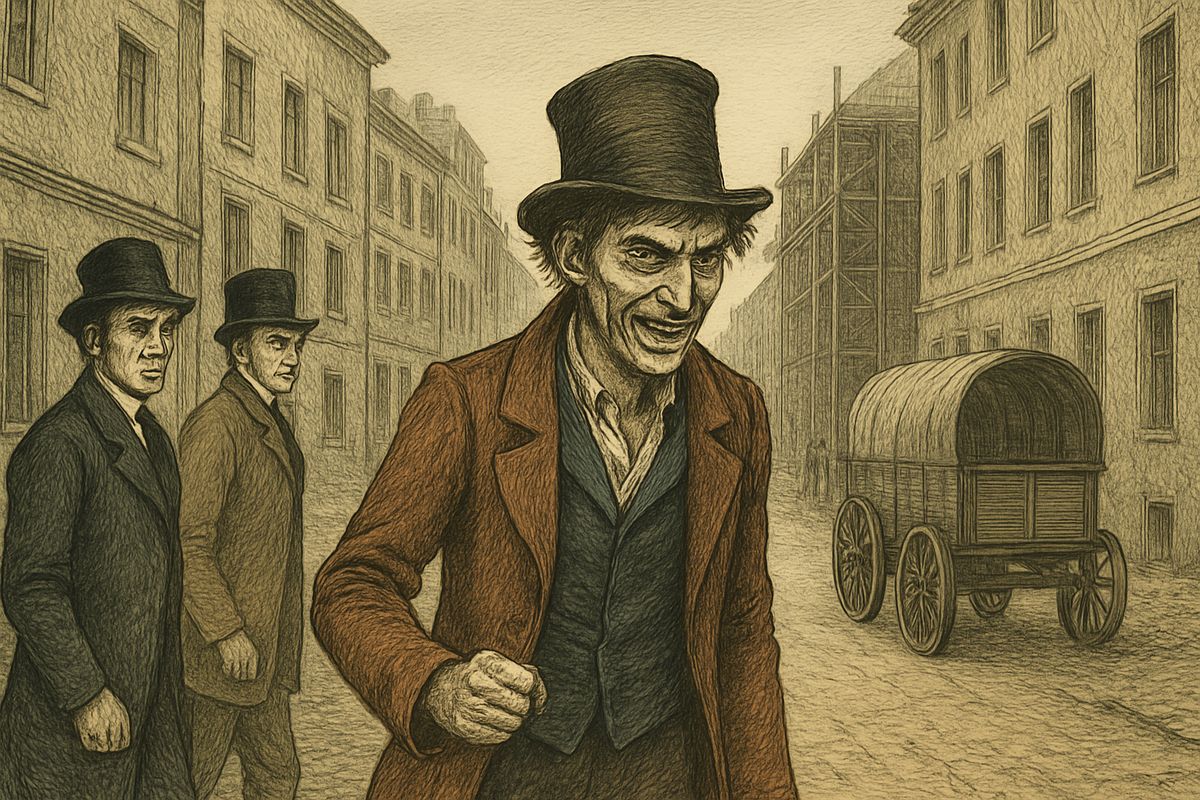
then Add to Home Screen.