A picture-story retelling, after Jules Verne, translated by George M. Towle (1872)
A light-hearted adventure with some peril: a widow saved from a funeral pyre, a storm at sea, an opium den, a train attack and a brief kidnapping. Each is shown by the moment before or after, without injury or gore. The Indian, Chinese, Japanese, Mormon and Native American characters are drawn with dignity, not as caricatures.
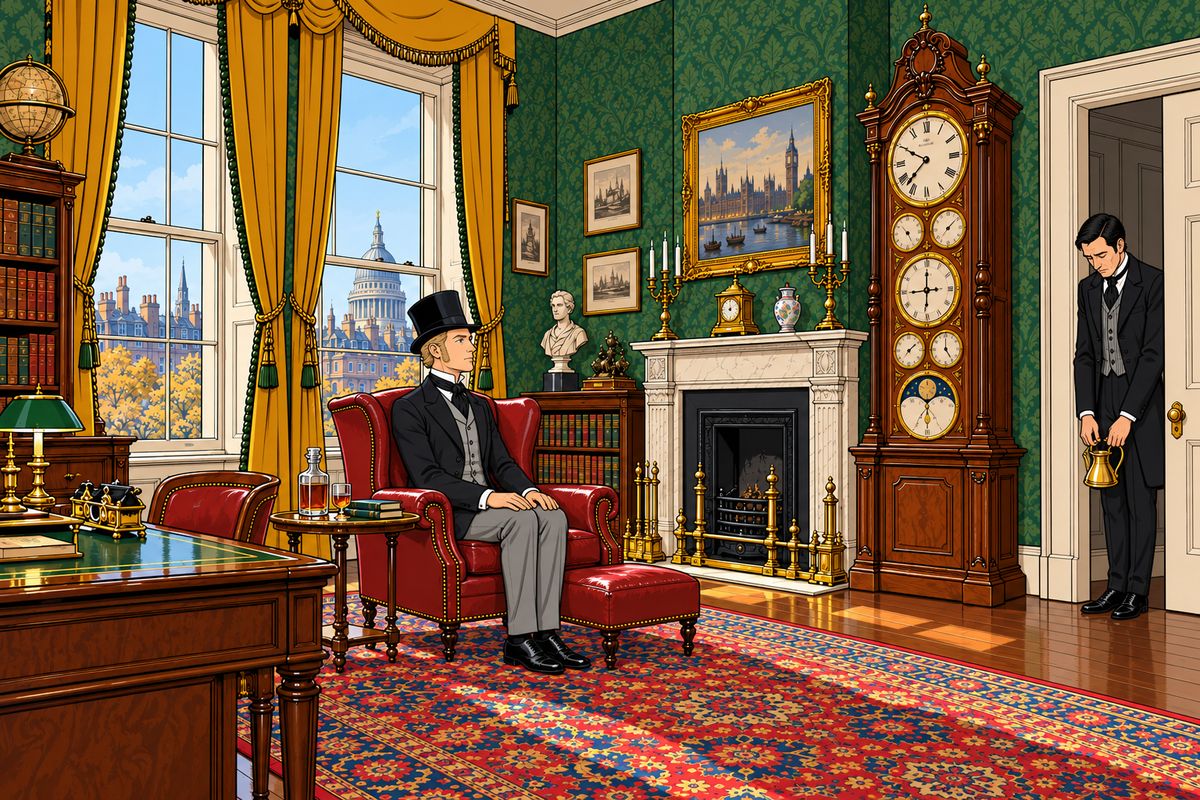
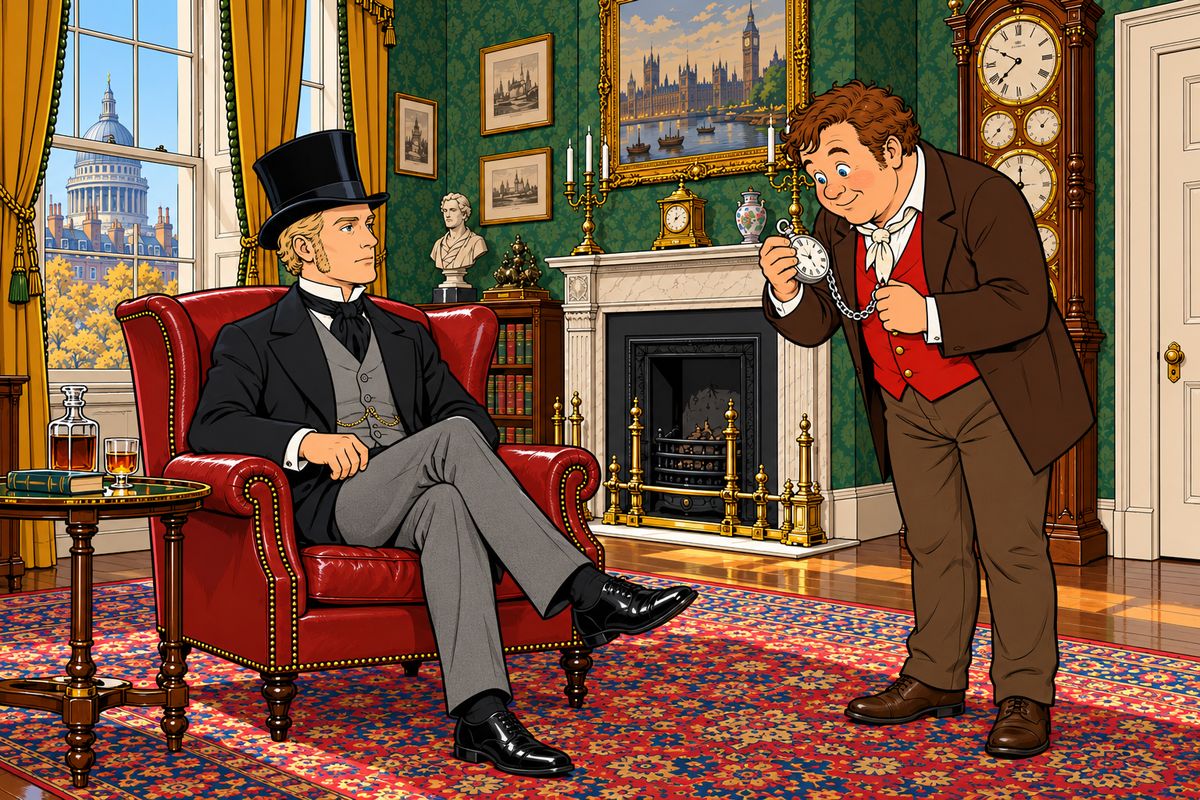
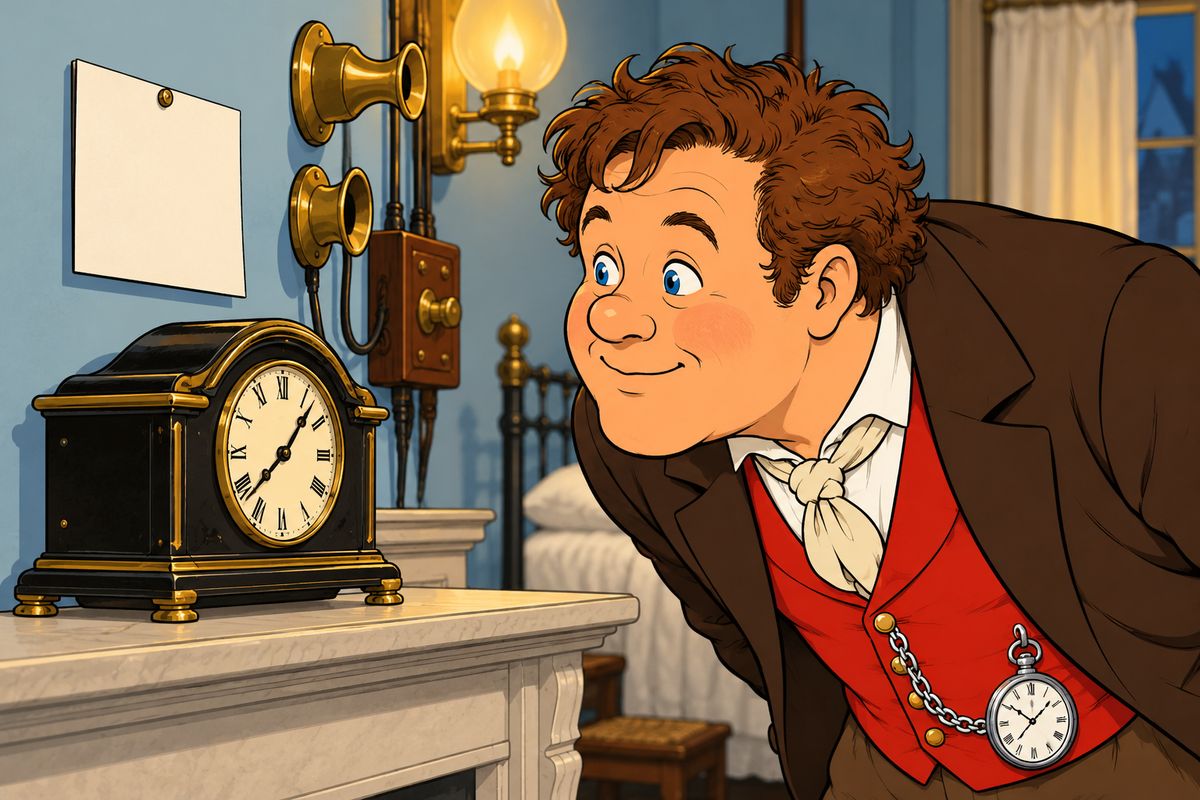
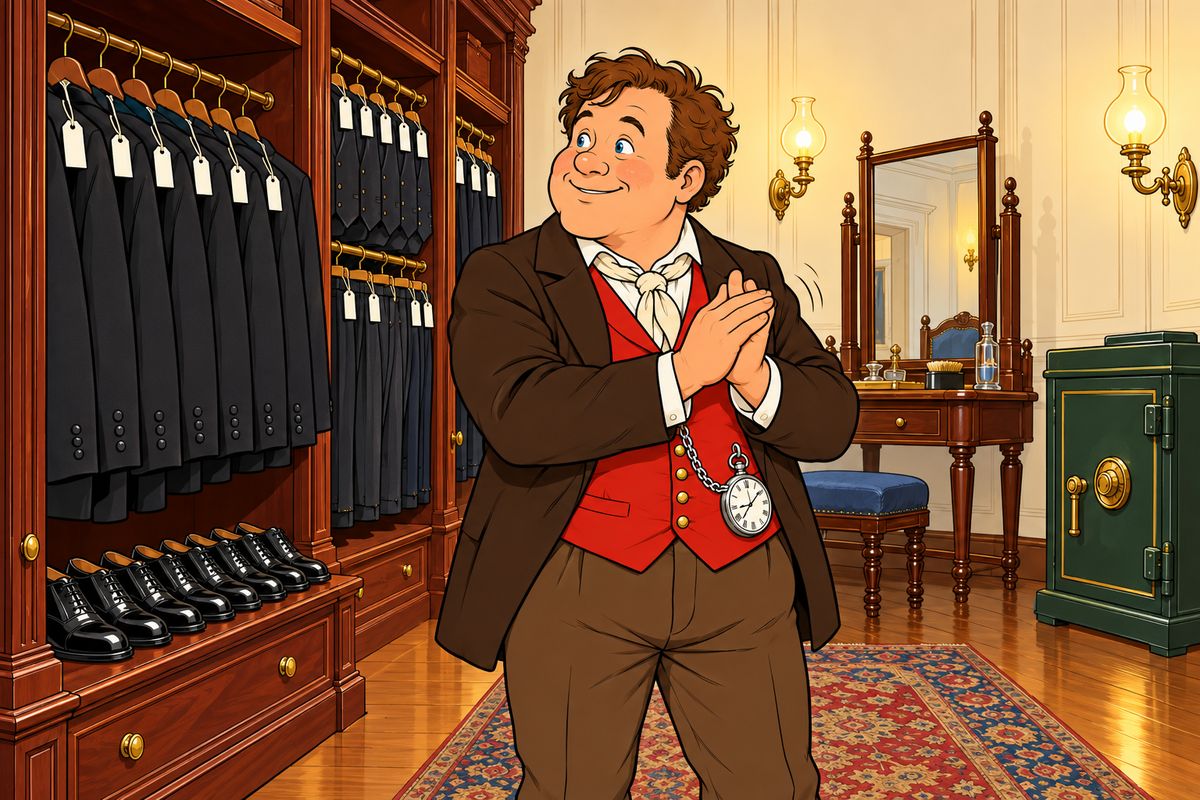
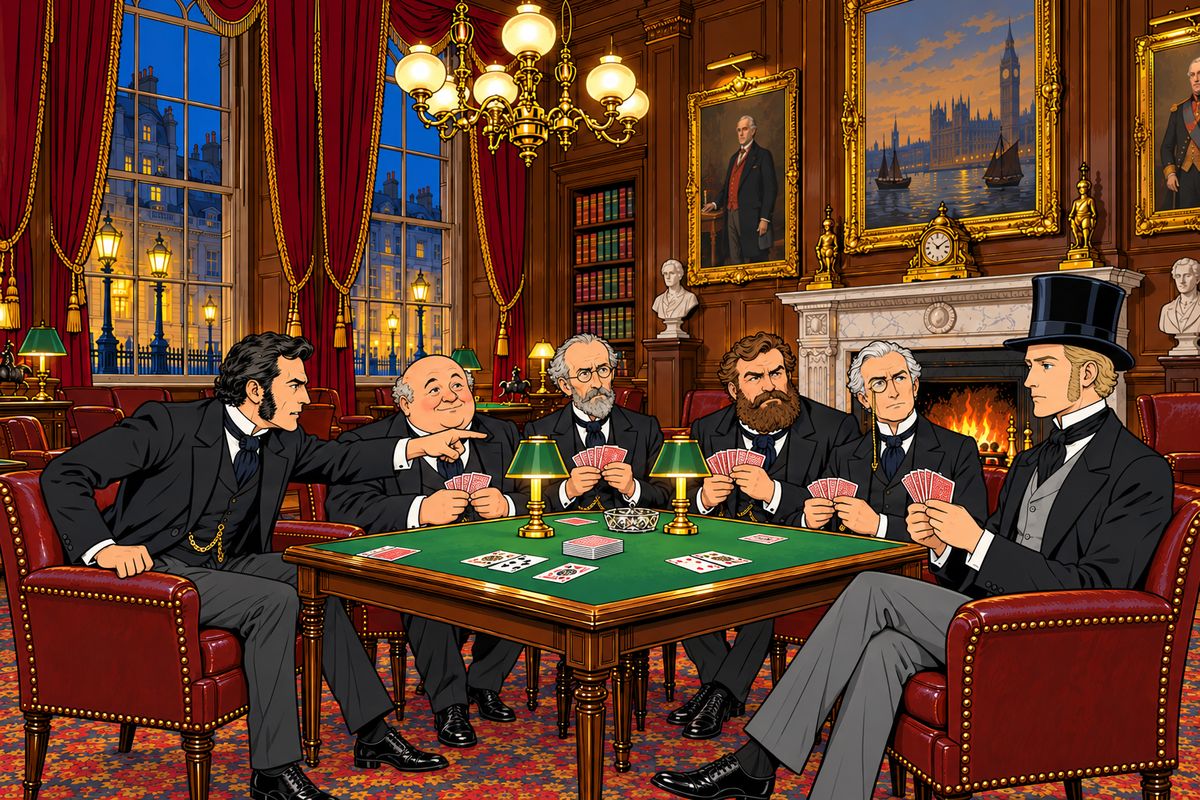
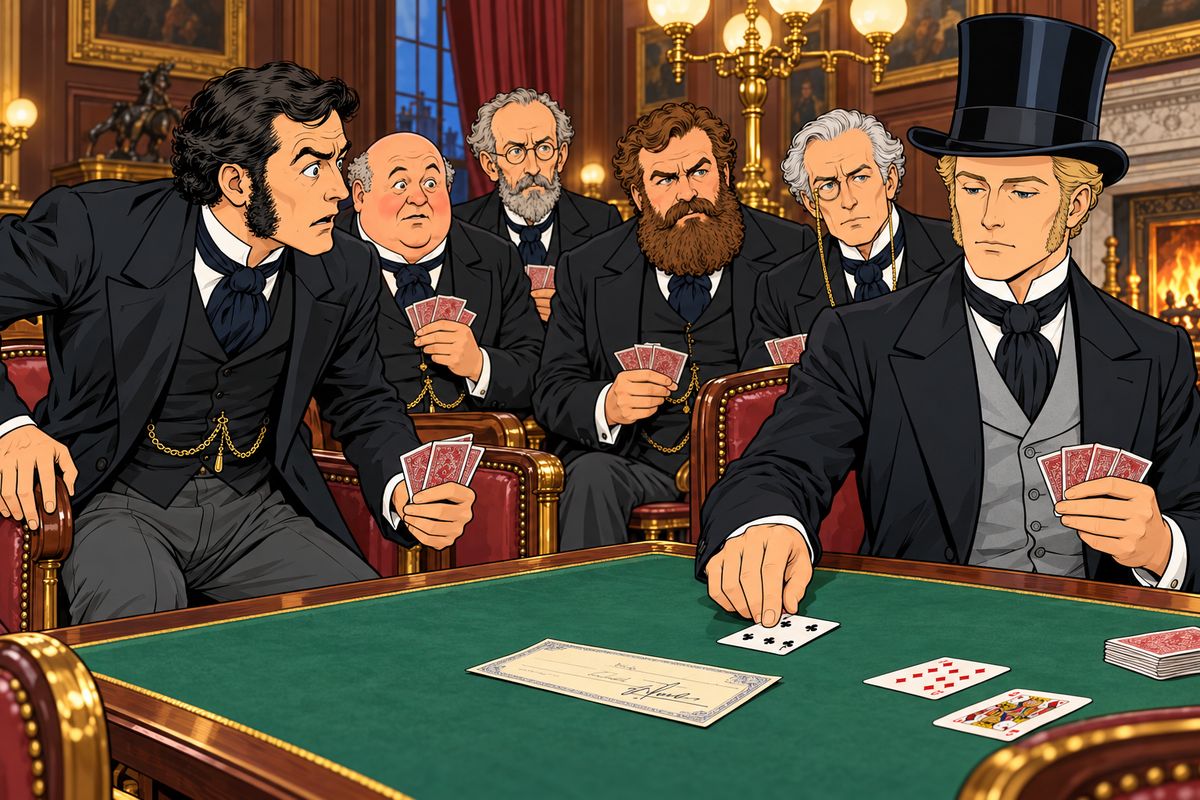
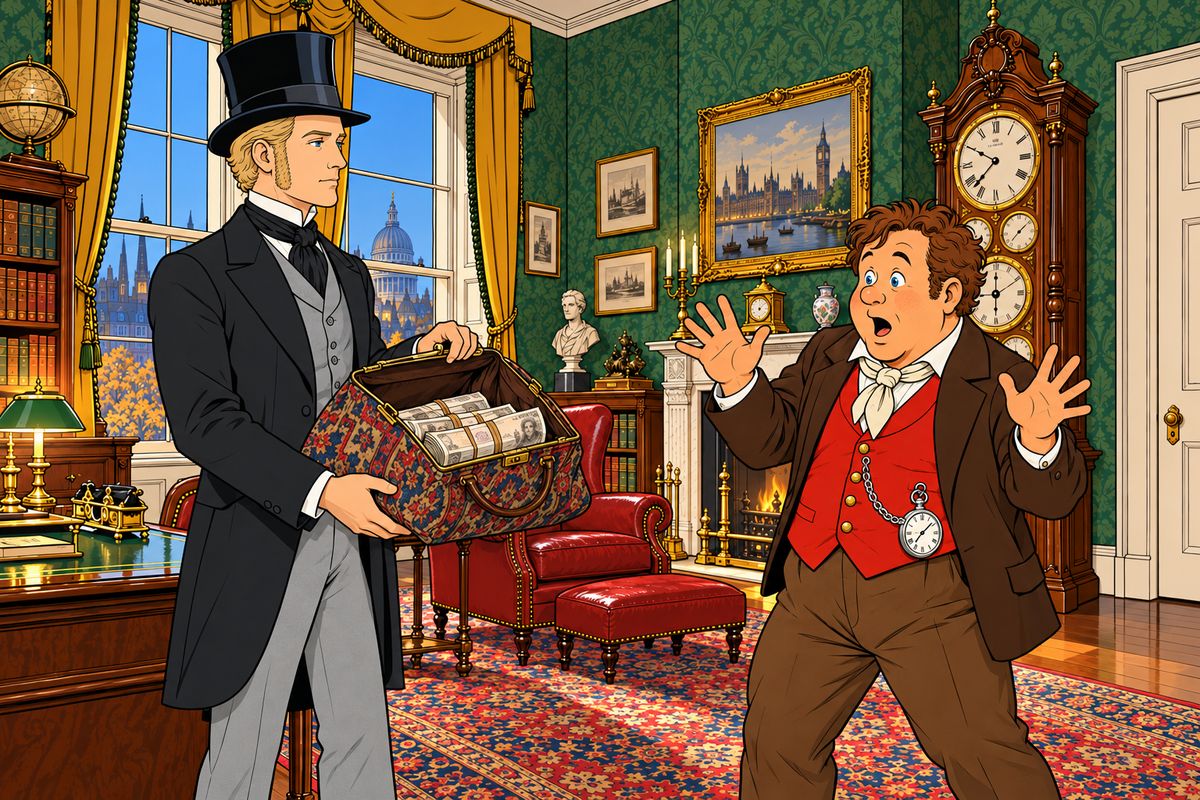
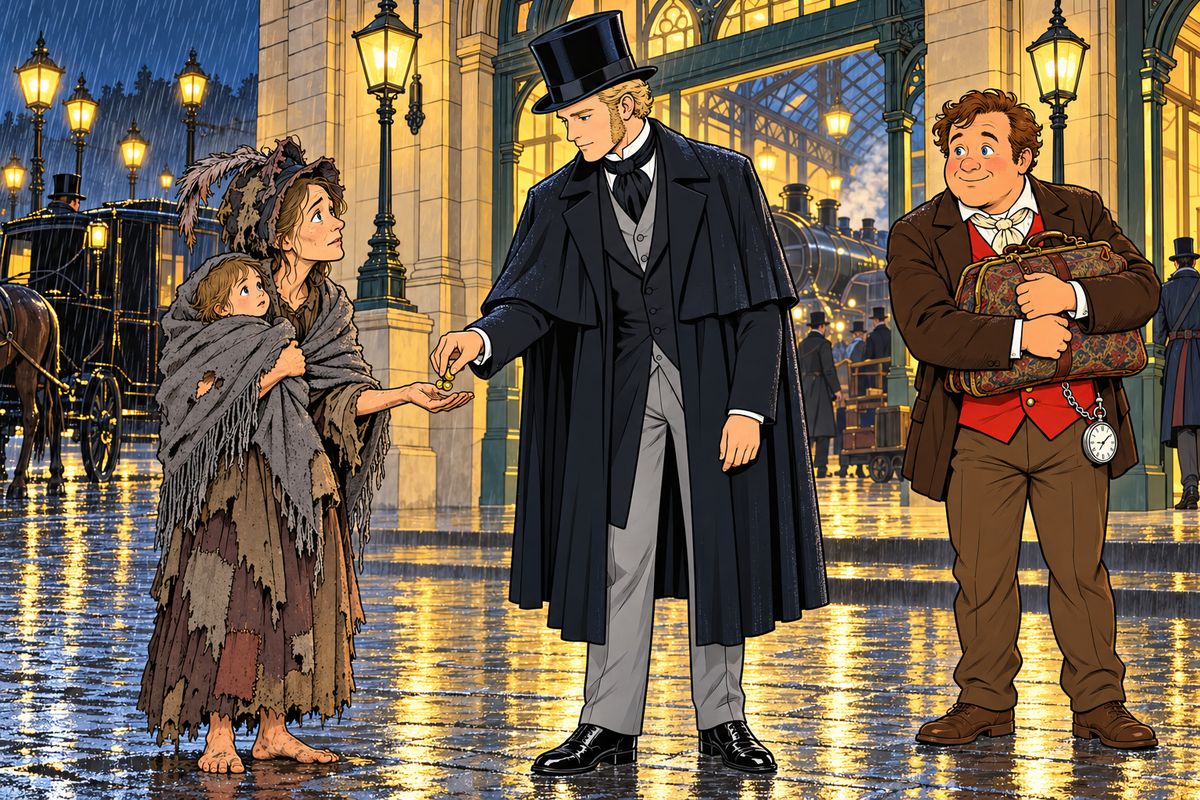
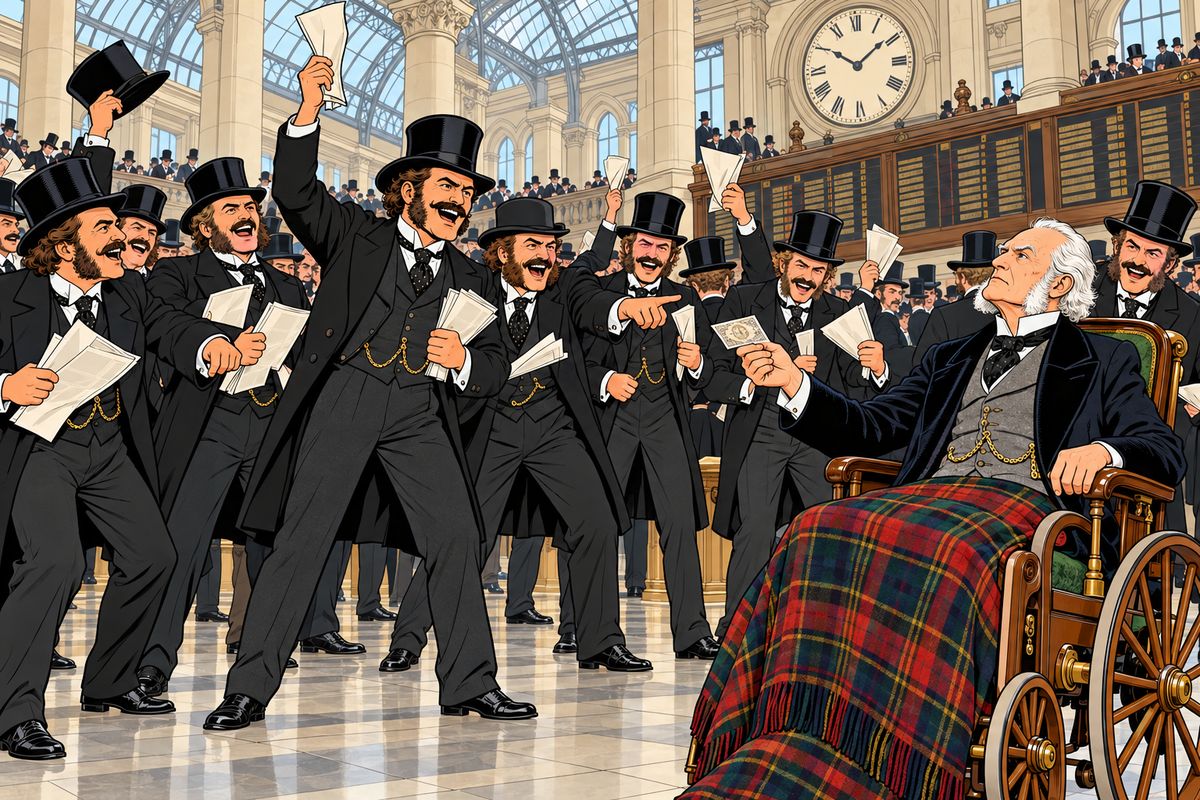
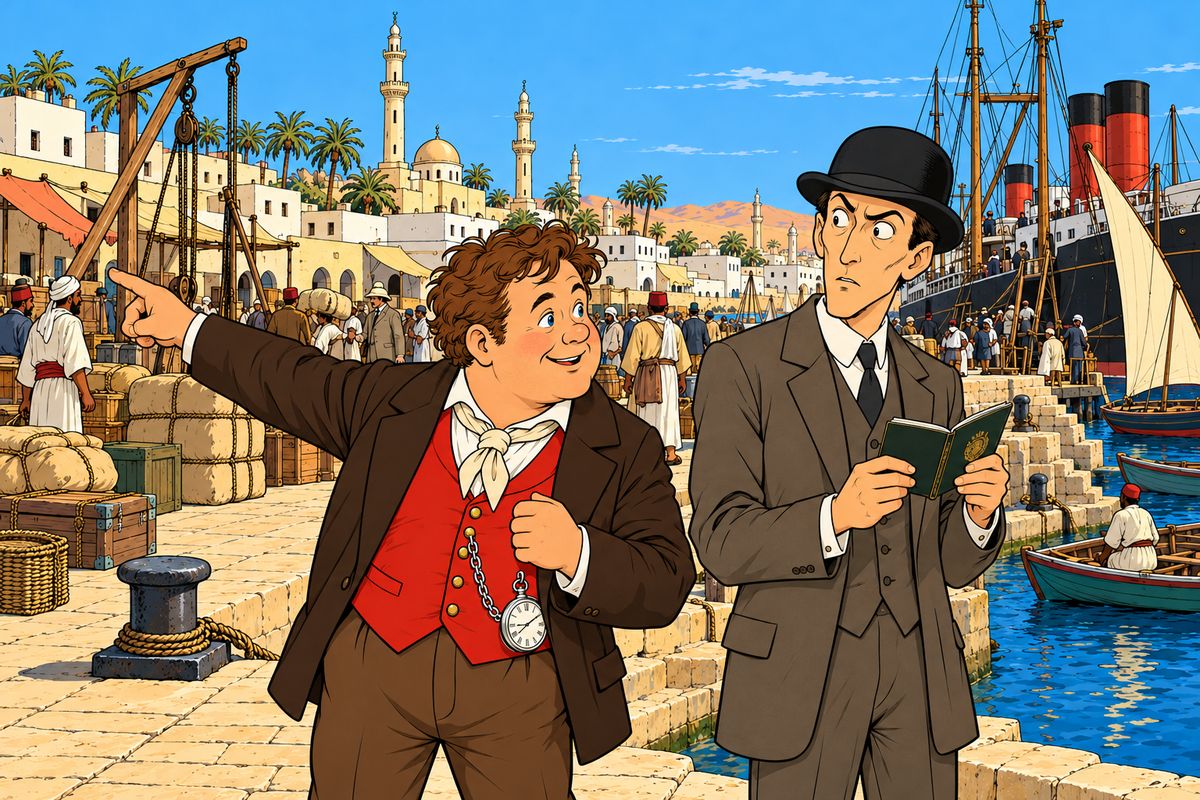
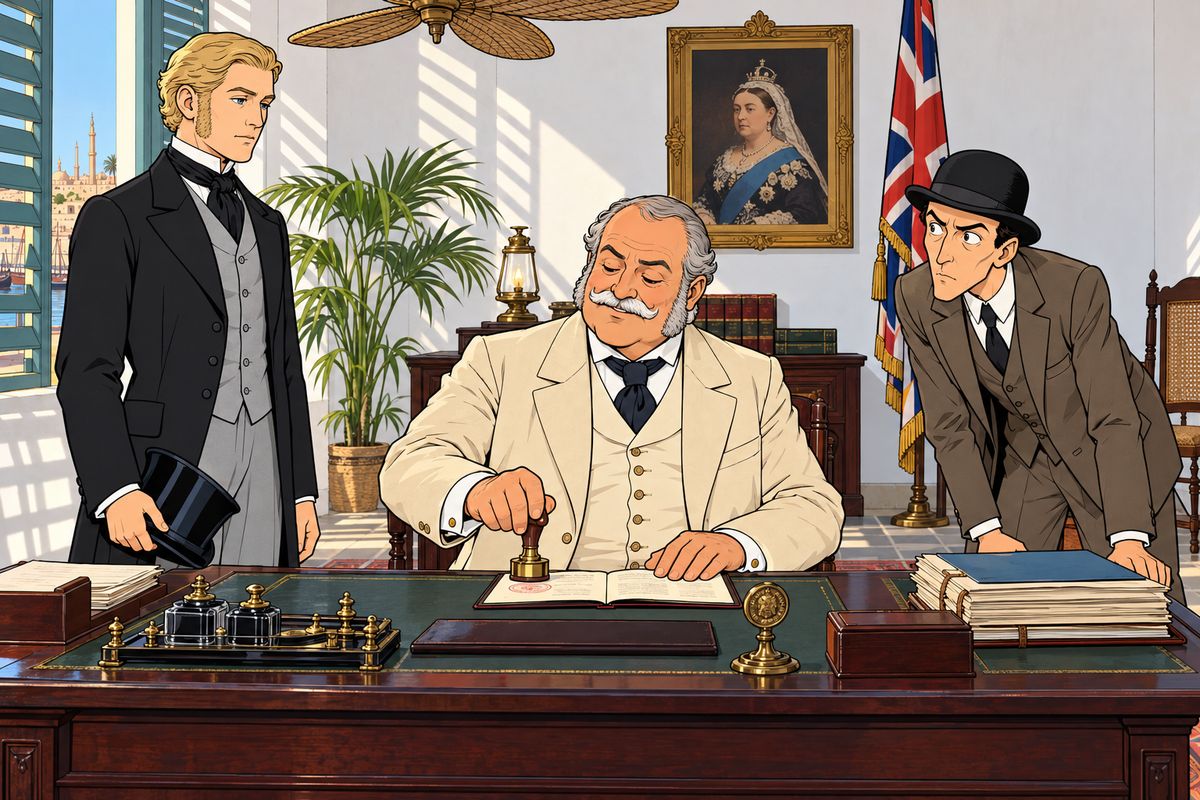
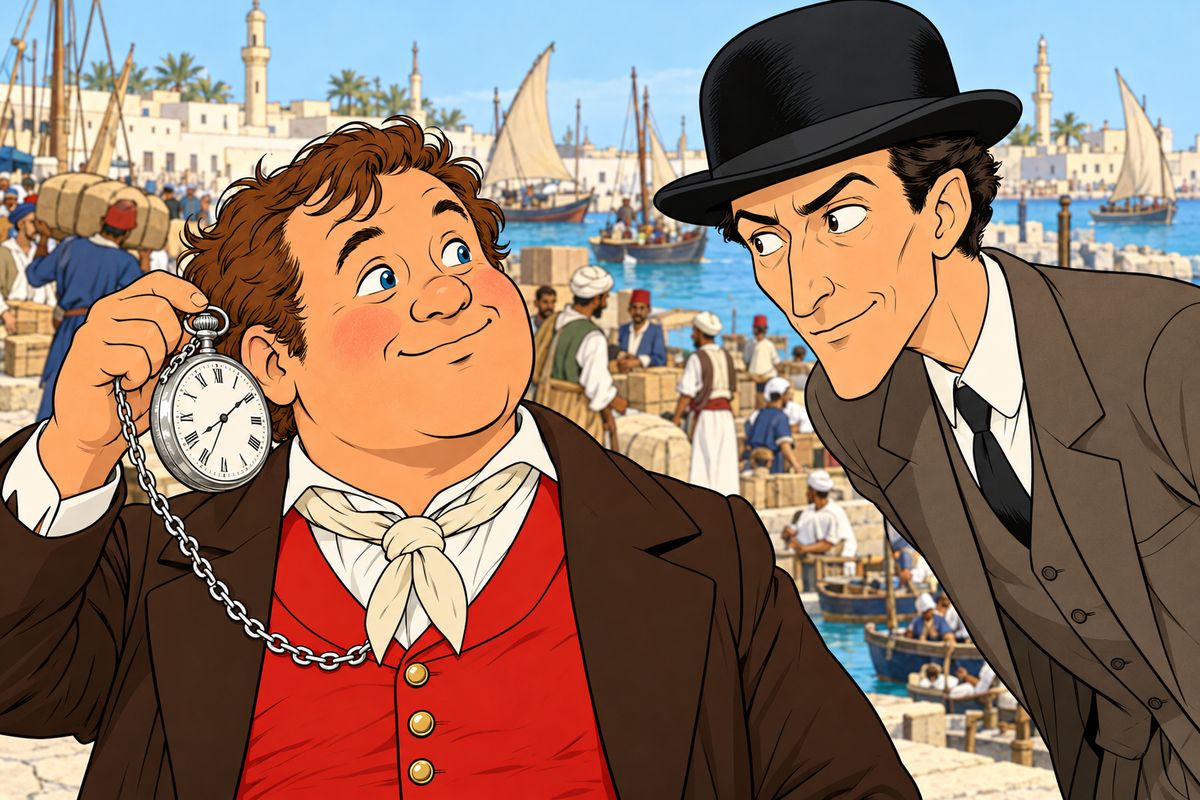
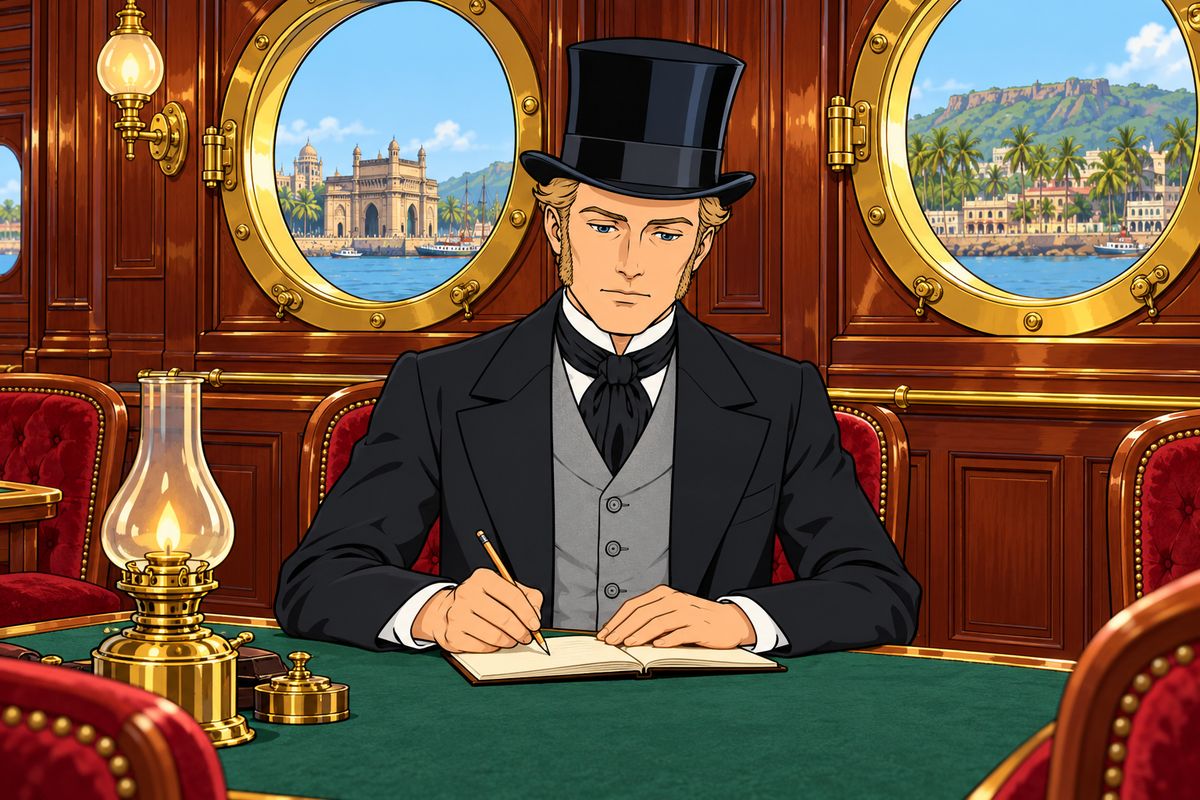
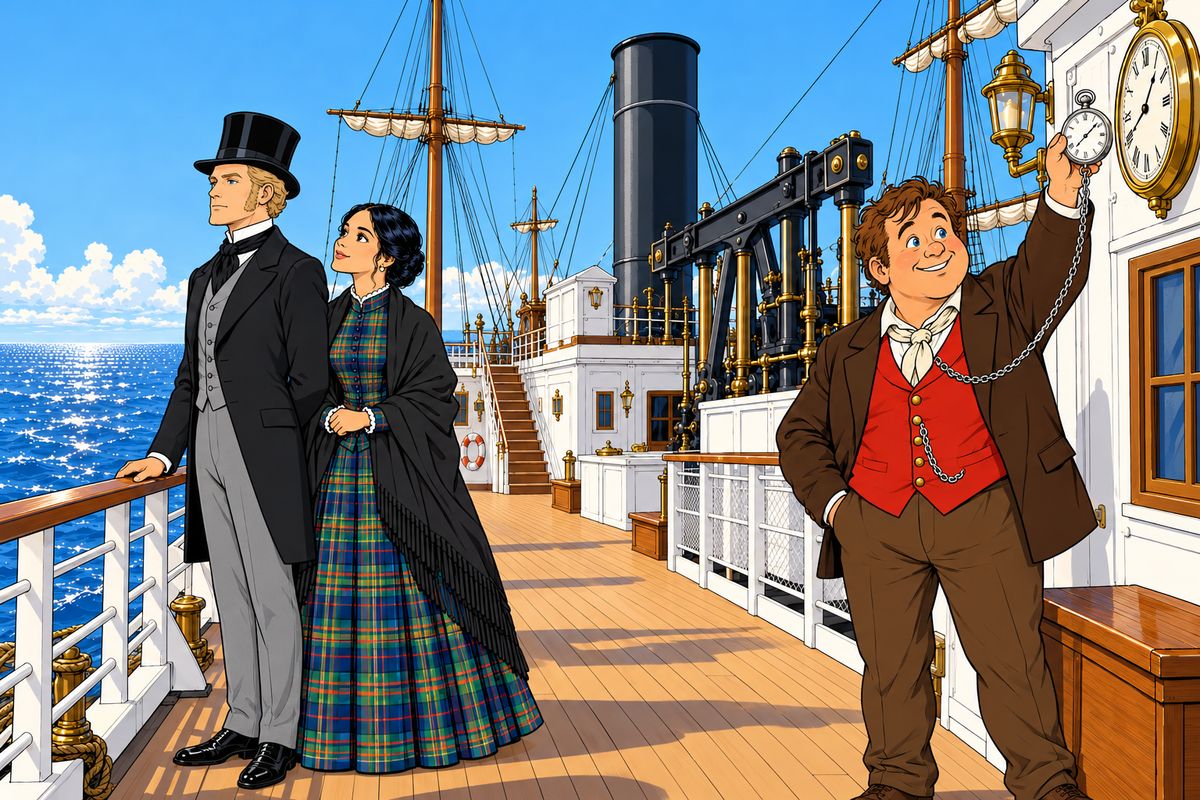
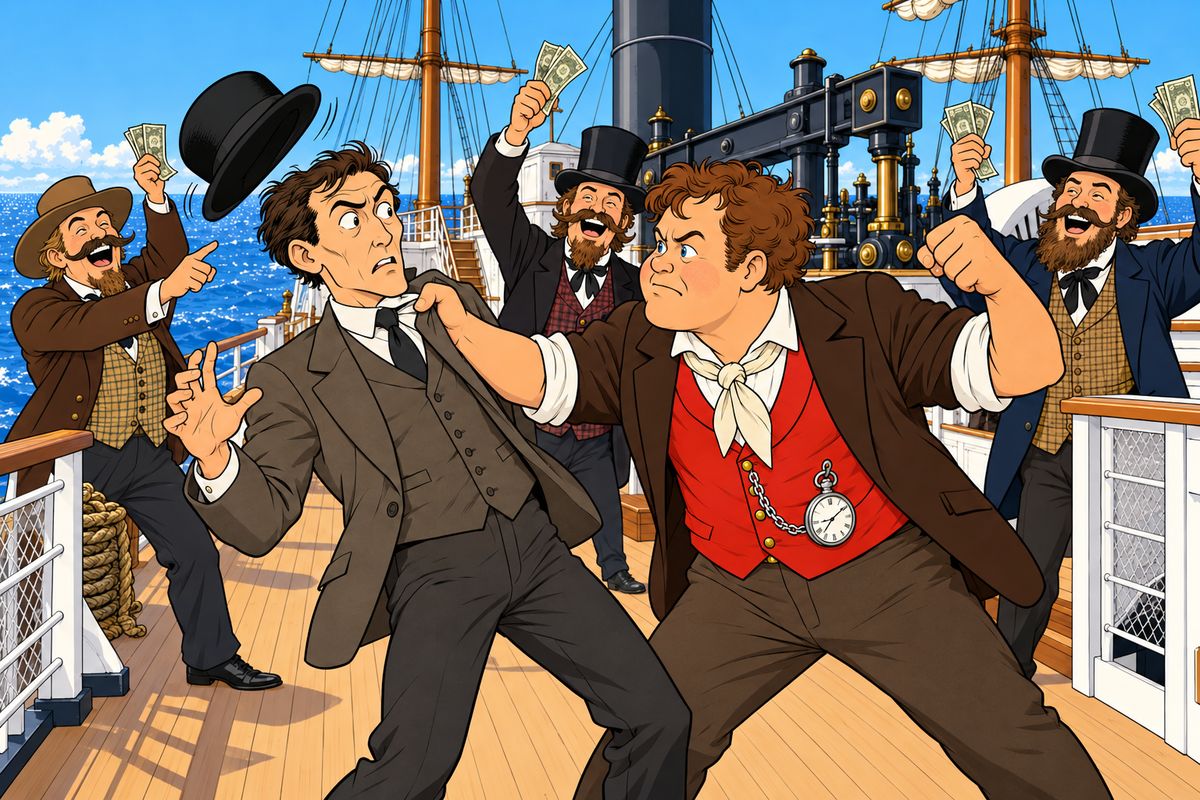
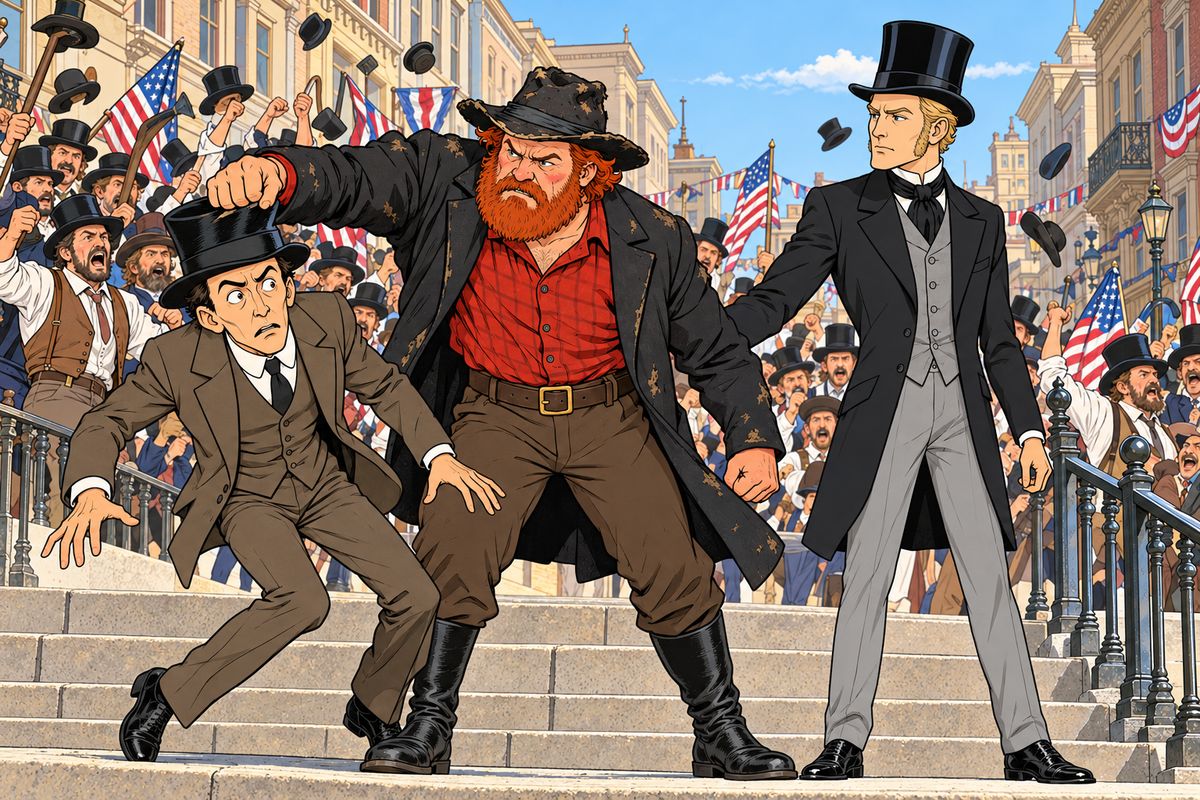
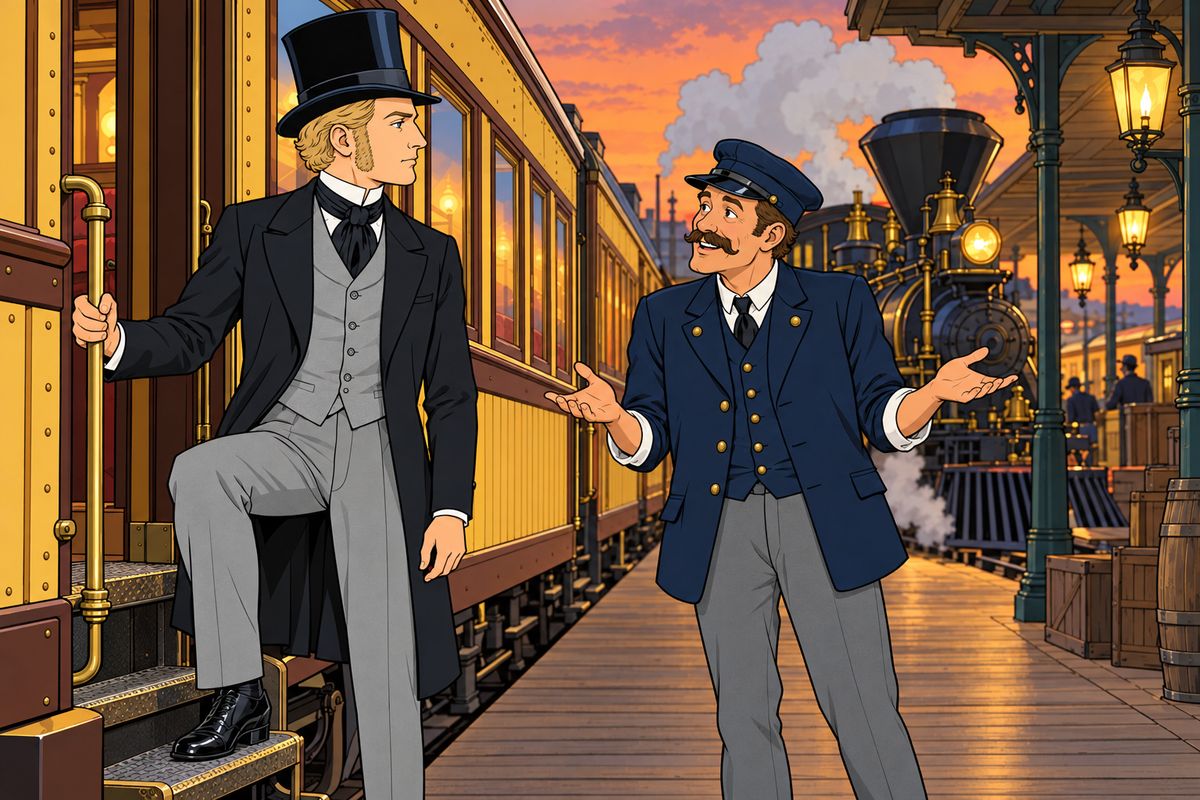
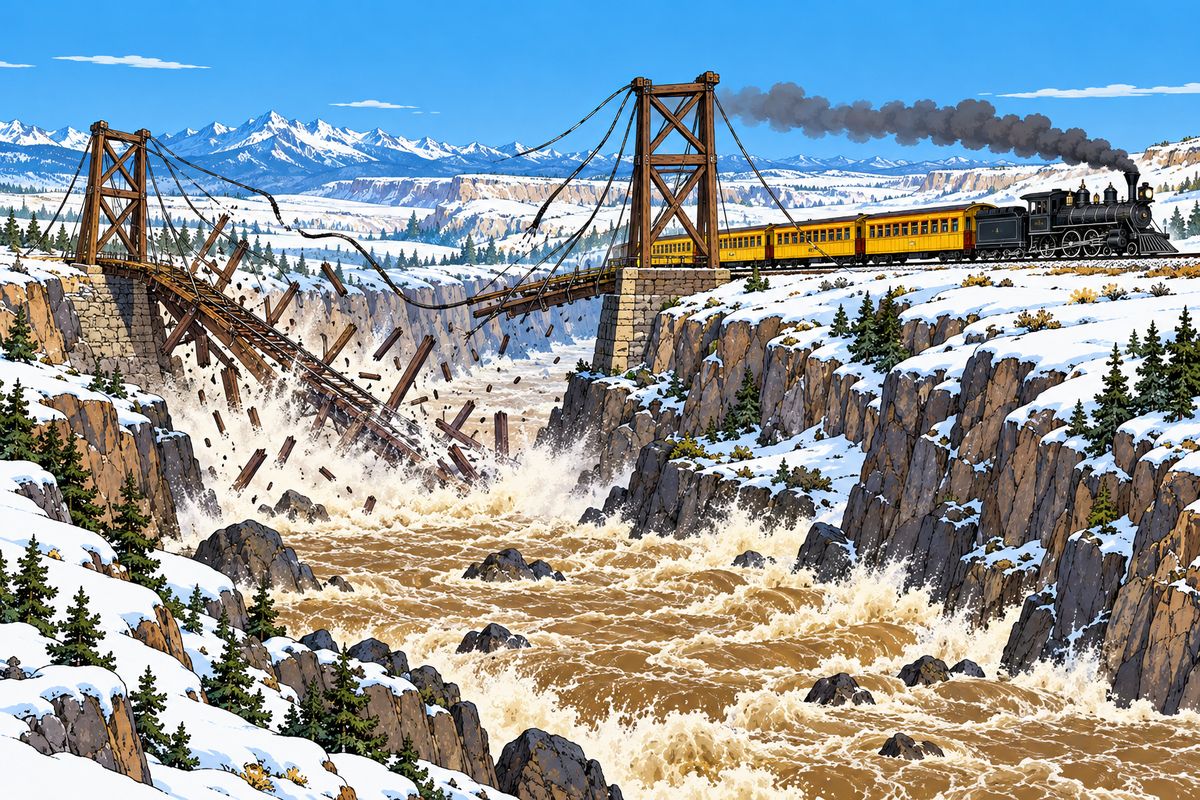
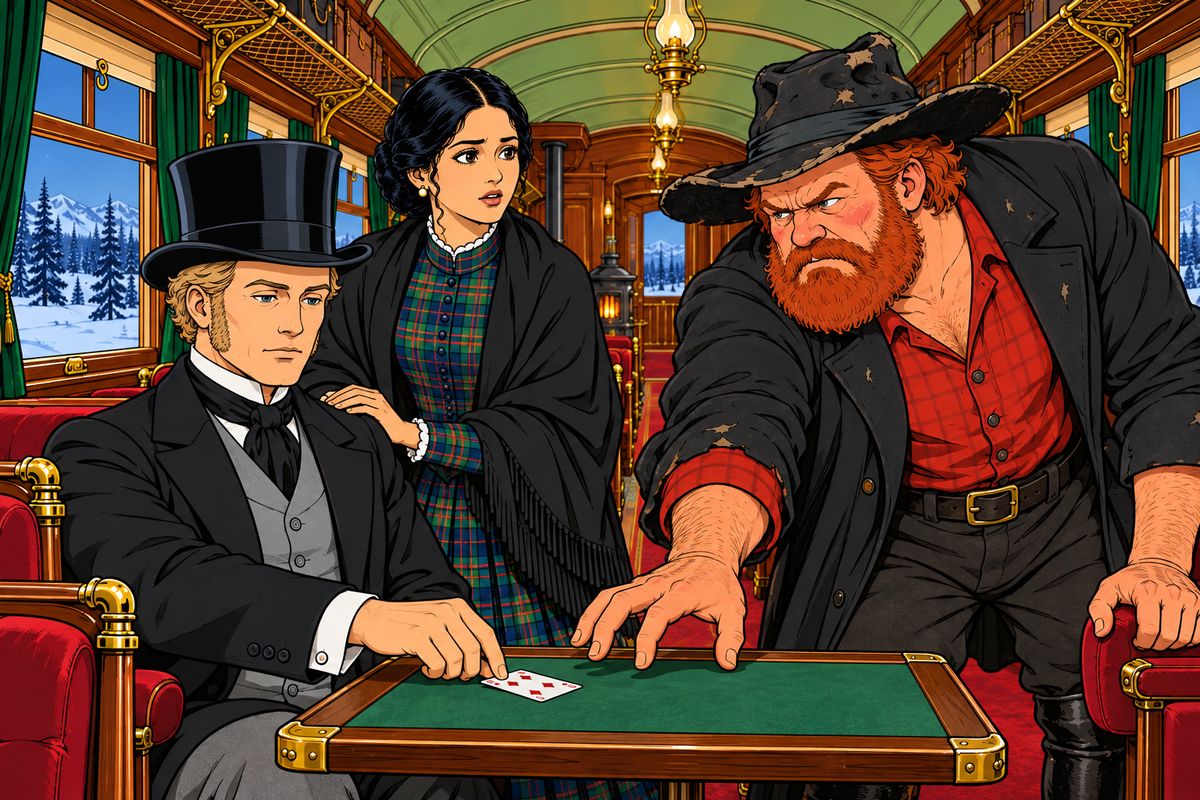
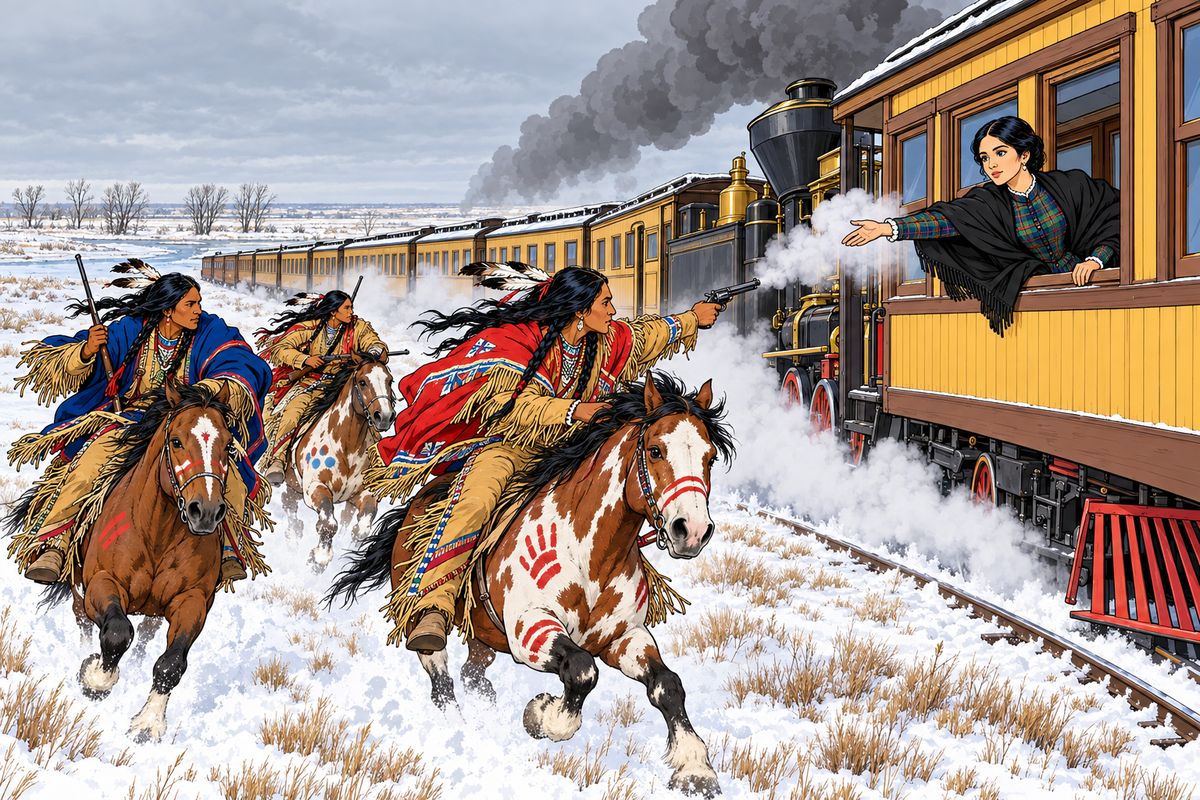
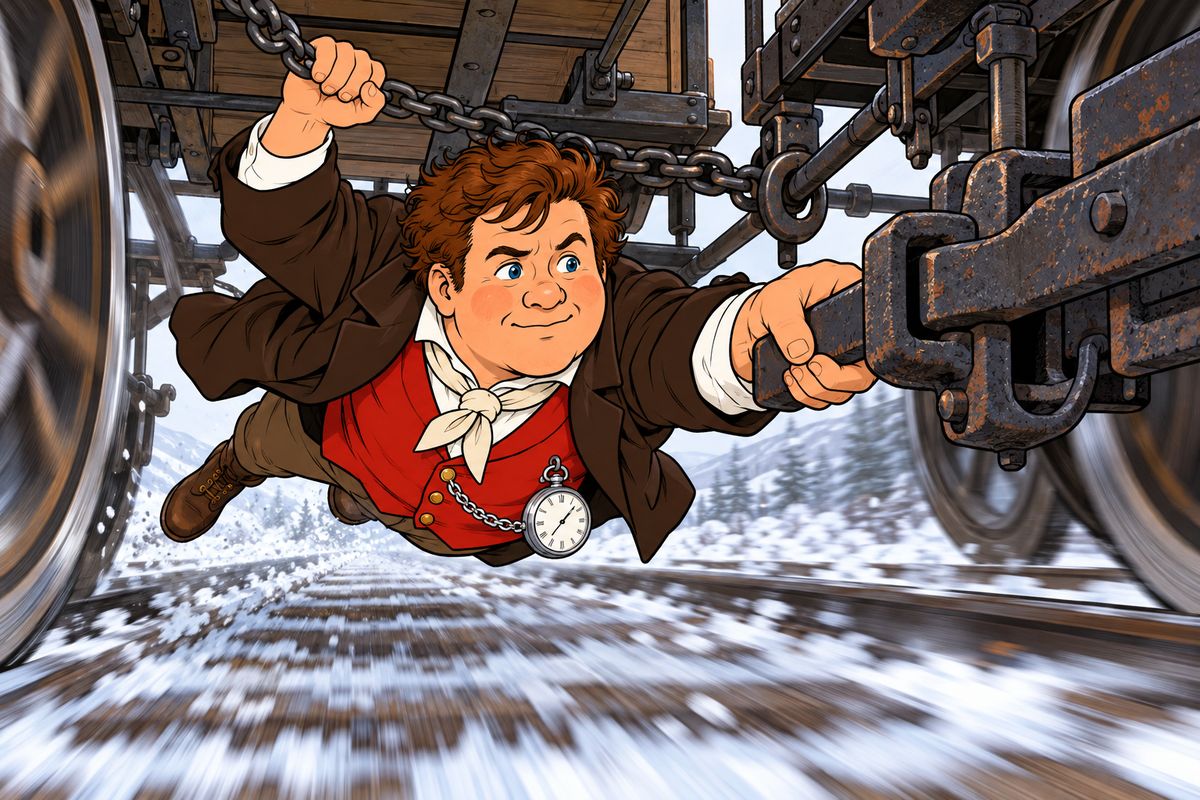
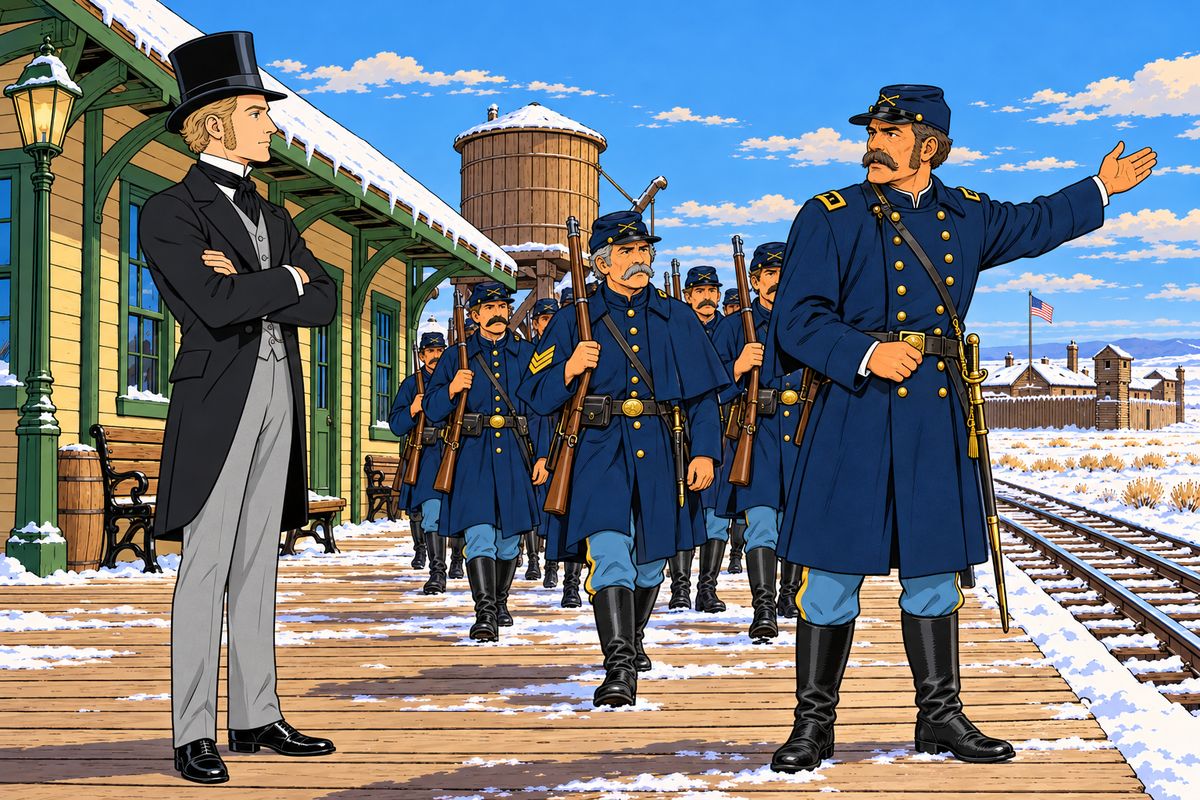
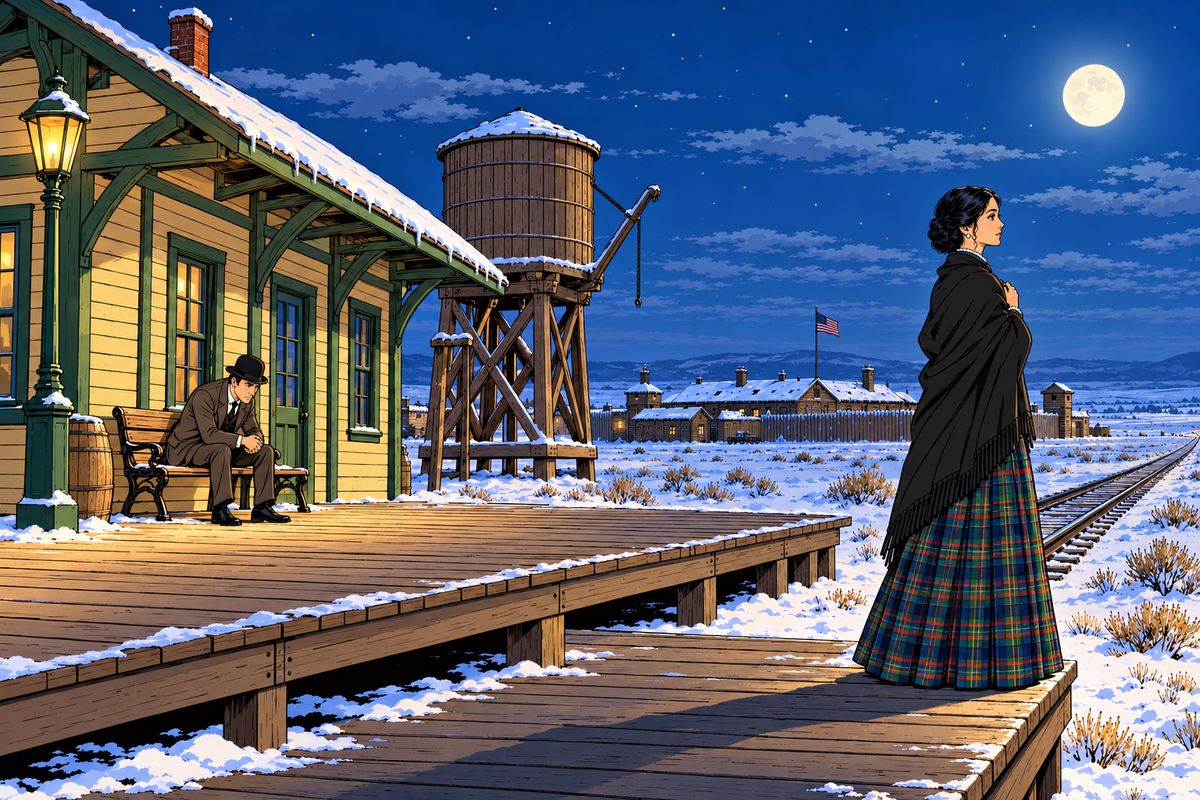
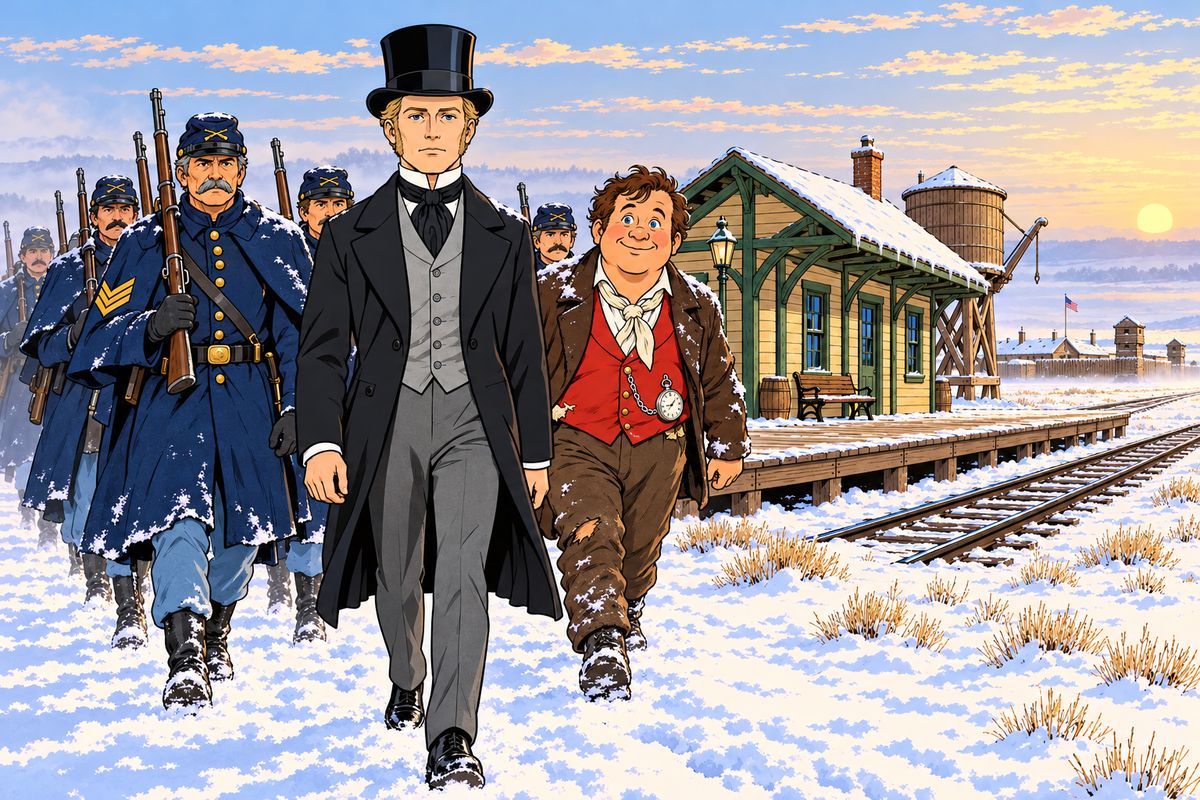
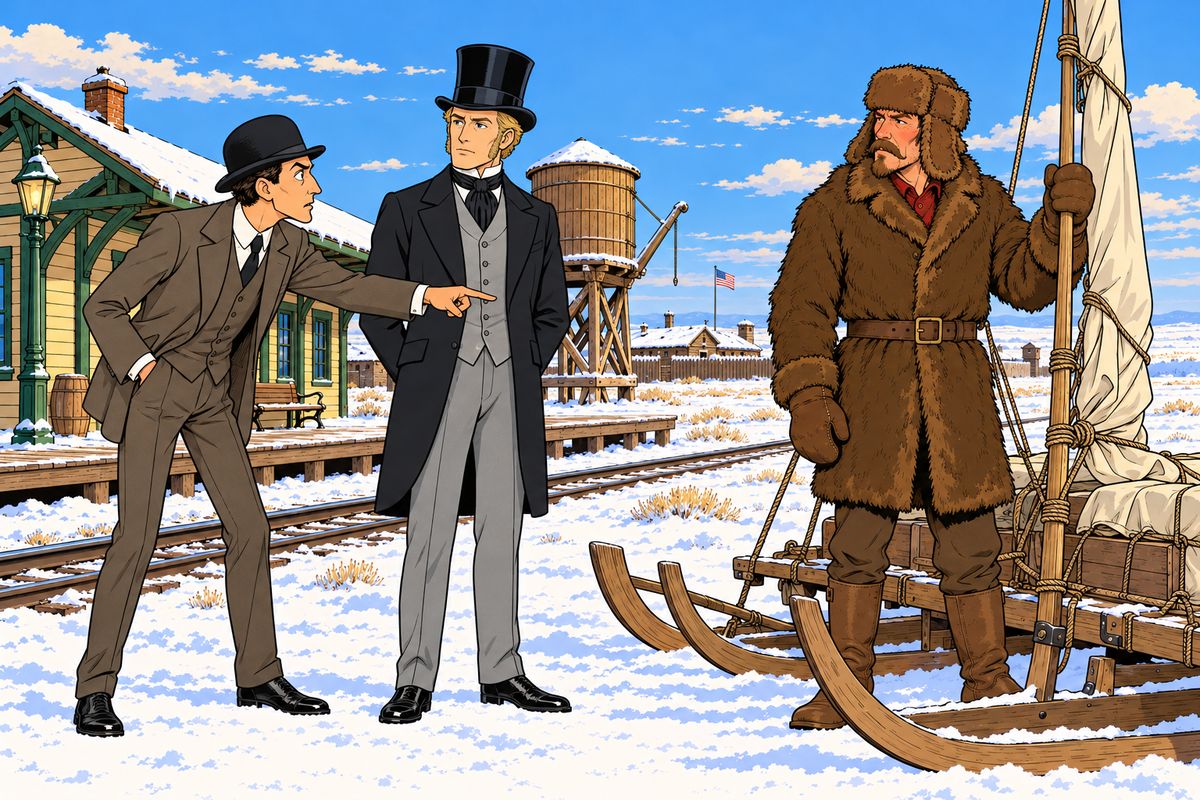
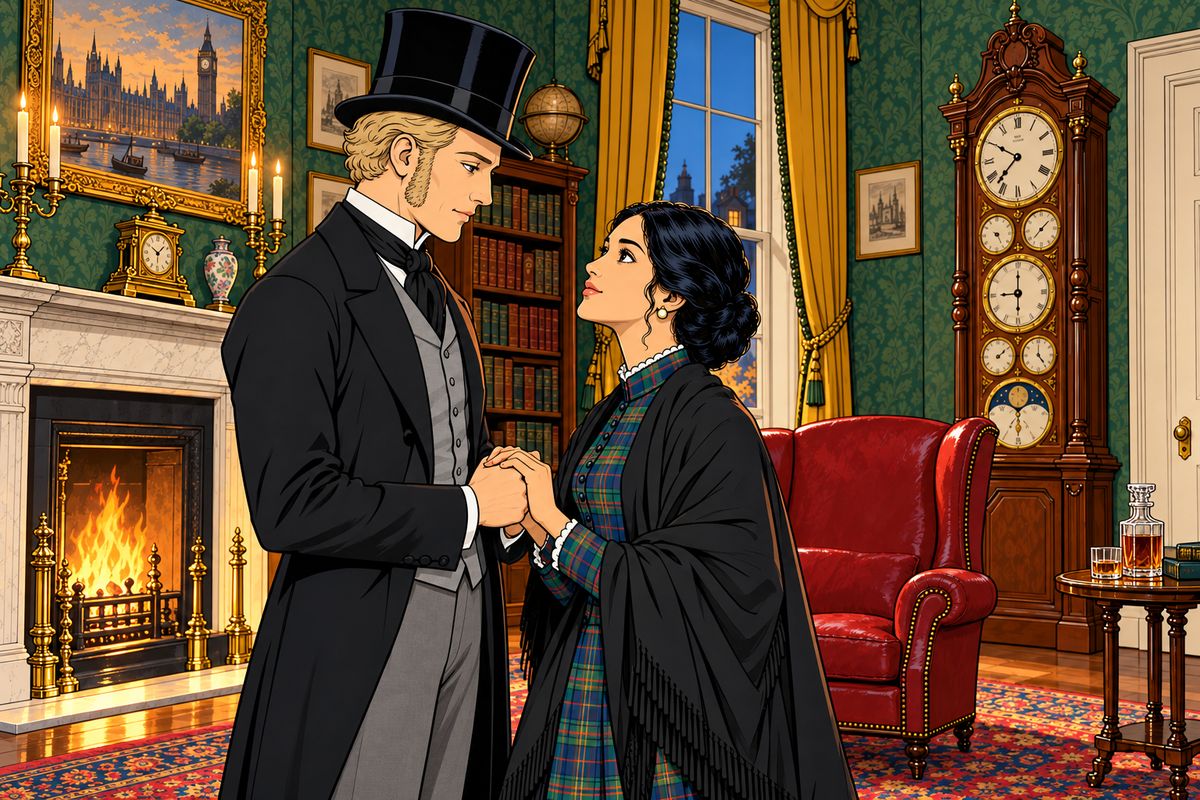
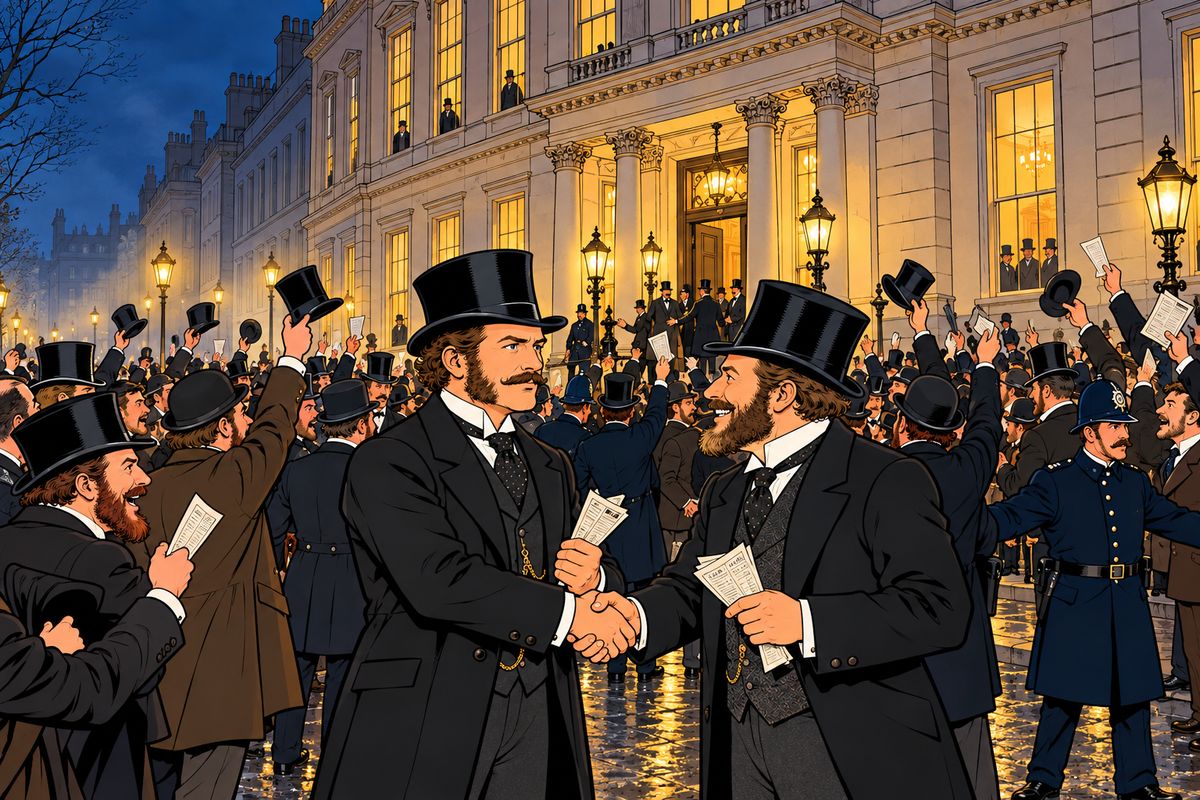
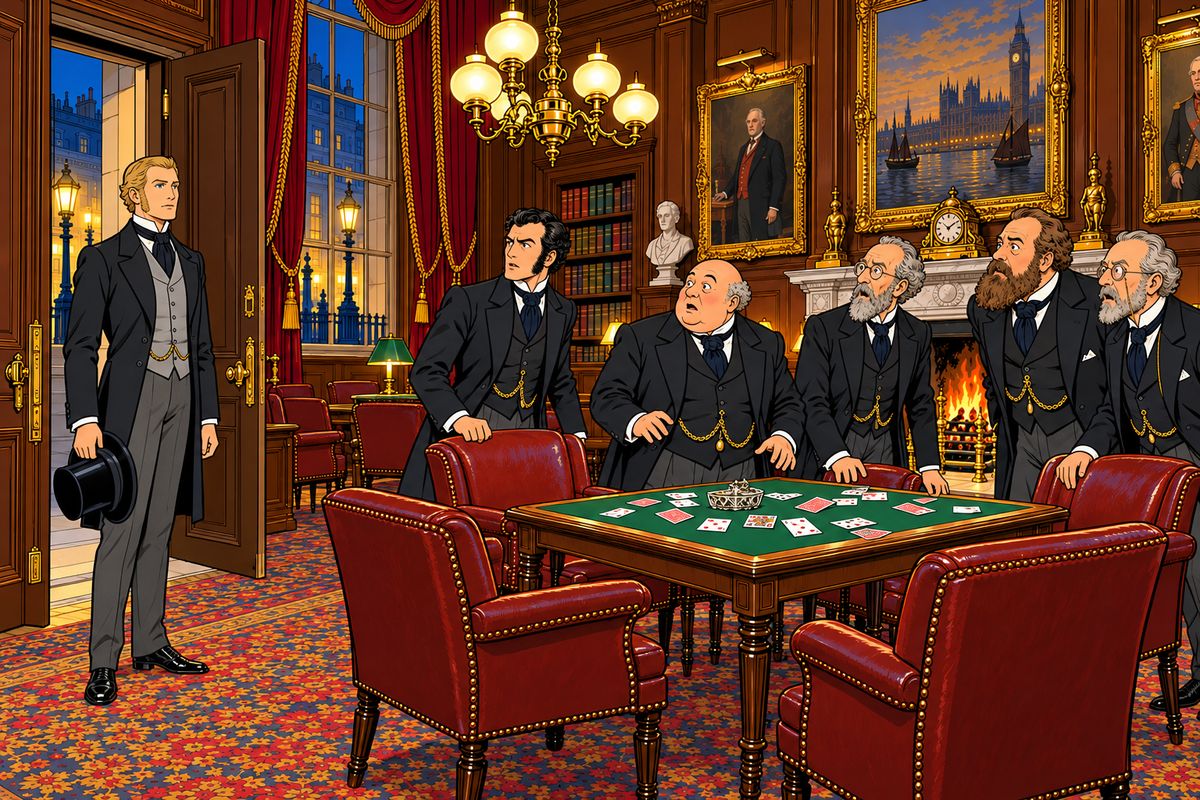
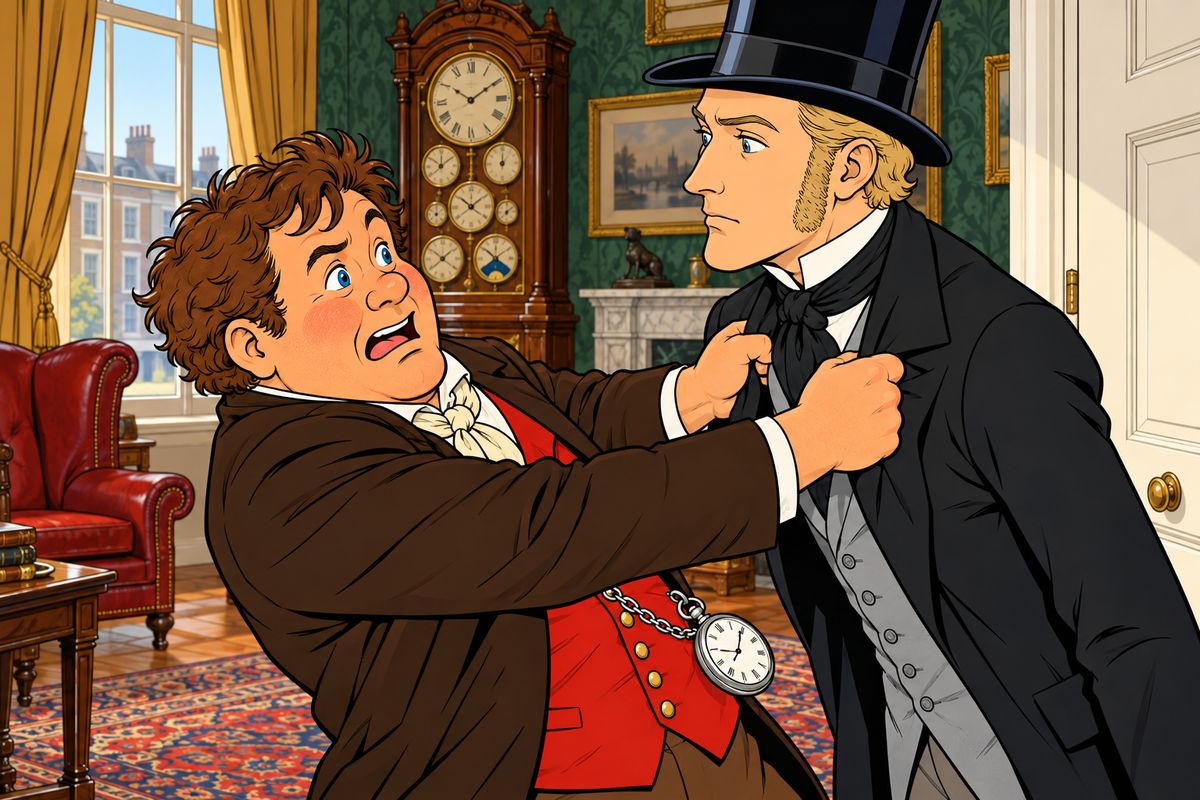
1In London, on 2 October 1872, Mr. Phileas Fogg of No. 7 Saville Row sat bolt upright before his great clock. Rich, silent and a member of the Reform Club, he lived by the minute. That very morning he had dismissed his servant James Forster, whose shaving water was eighty-four degrees instead of eighty-six.2The new man was Jean Passepartout, a cheerful Frenchman who had been a singer, a circus rider and a Paris fireman. When asked the time, he drew out his enormous silver watch: twenty-two past eleven. "You are four minutes too slow," said Mr. Fogg. "From this moment, twenty-nine minutes after eleven, you are in my service."3Fogg put on his hat and left without another word. Alone, Passepartout, who had quit young Lord Longferry and nine other restless masters in search of a quiet life, explored the house from cellar to garret. In his own room, the clock on the mantel ticked the same second as the one in his master's bedroom, and a card beside it listed every duty to the minute.4Every coat, waistcoat and pair of trousers bore a number for its season, and the shoes did too; there were no books and no weapons, only perfect order. Passepartout rubbed his hands and beamed. "This is just what I wanted! A real machine; well, I don't mind serving a machine."5Exactly 575 steps of his right foot and 576 of his left brought Mr. Fogg from Saville Row to the Reform Club in Pall Mall. That evening, at the whist table, his friends talked of nothing but the £55,000 stolen from the Bank of England. 'The world is big enough' for a thief to hide in, said Stuart. 'It was once,' said Phileas Fogg quietly.6When Stuart said a man needed three months to go round the world, Fogg replied, 'In eighty days.' He staked £20,000, half his fortune, that he would be back in this very room by a quarter to nine on Saturday, 21 December. His astonished friends accepted. Then he took up his cards again: 'Diamonds are trumps: be so good as to play, gentlemen.'7At twenty-five past seven, hours before his usual time, Fogg came home and told a dumbfounded Passepartout, 'We start for Dover and Calais in ten minutes.' They were going round the world. By eight a single carpet-bag was packed, and Fogg, a red Bradshaw's railway guide under his arm, slipped in a fat roll of banknotes: twenty thousand pounds.8Outside Charing Cross station a barefoot beggar-woman with a child begged for alms, and Fogg gave her the twenty guineas he had just won at whist. At a quarter to nine the train pulled out into the rain. Near Sydenham Passepartout cried out that he had forgotten to turn off the gas in his room. 'Very well, young man,' said Fogg. 'It will burn at your expense.'9All London argued about the wager. Newspapers called Fogg mad, and 'Phileas Fogg' bonds sank on 'Change until only old Lord Albemarle, bound to his chair, still bet five thousand on him: 'If the thing is feasible, the first to do it ought to be an Englishman.' Then a telegram reached Scotland Yard from Suez: 'I've found the bank robber, Phileas Fogg. FIX, Detective.'10At Suez on 9 October, Detective Fix paced the quay, waiting for the steamer Mongolia and the bank robber. 'Great robbers always look like honest folks,' he had boasted to the consul. When the ship anchored, a Frenchman asked him the way to the consulate and showed him his master's passport. Fix nearly jumped: the description matched the robber's exactly.11Fix hurried to the consul, begging him to refuse the visa, but soon Passepartout returned with his master. Phileas Fogg calmly held out his passport, though Suez demanded no visa. 'I wish to prove, by your visa, that I came by Suez,' he said. The consul signed and stamped it while Fix stared at the stranger from a corner.12Fix then fell into step with the chatty servant and offered to guide him to a shop. Passepartout's great-grandfather's watch still kept London time, two hours behind. 'Then the sun will be wrong!' he declared. Soon he had told Fix everything: the hasty departure, the bundles of new banknotes, the eighty-day wager. Fix wired London for a warrant and boarded the Mongolia.13Through the Red Sea storms Fogg played whist and never went on deck, while Fix, who said he was a shipping-company agent, won Passepartout's trust over glasses of ale. On 20 October the Mongolia reached Bombay, due on the 22nd. Fogg calmly wrote 'two days ahead' in his notebook, in the column for gains.14At Bombay, Mr. Fogg sent Passepartout off on errands and went to dine at the station. The landlord proudly served 'jungle rabbit.' Fogg tasted it and fixed him with a clear, cold eye. "Cats were formerly considered sacred in India," he remarked. "That was a good time—perhaps for the travellers as well!"15Passepartout bought shirts and shoes, then gaped at a Parsee festival until he had wandered far off. On his way back he spotted the splendid pagoda on Malabar Hill and strolled in, still wearing his shoes. Suddenly he was knocked flat on the sacred floor, and three furious priests fell on him and tore his shoes off.16Passepartout fought free and ran. At five to eight he burst into the station, hatless, shoeless and without his parcel. "I hope this will not happen again," said Fogg coldly, and boarded the train. Fix watched from the shadows and changed his mind about following. "No, I'll stay," he muttered. "An offence has been committed on Indian soil. I've got my man."17The train rushed east through the night. Sharing the carriage was Sir Francis Cromarty, Fogg's whist partner from the Mongolia. Mountains, jungles and plantations rolled past the windows. Fogg barely looked out, but Passepartout, proud of the pearl-trimmed slippers he had bought at Burhampoor, now believed in the wager and fretted at every stop.18At Kholby the train stopped in a forest glade. "Monsieur, no more railway!" cried Passepartout. The conductor shrugged: fifty miles to Allahabad had never been built, whatever the papers said. Sir Francis was furious, but Fogg was not troubled. "I have two days, which I have already gained, to sacrifice," he said. They would still reach Calcutta in time.19There were no carriages left, but Passepartout found an elephant. Its owner refused every offer to hire it, so Fogg calmly bid to buy it outright and went up to two thousand pounds, while Passepartout turned white. Kiouni was theirs. Fogg and Sir Francis took the howdahs, Passepartout sat astride between them, and with a young Parsee guide on the elephant's neck they set off into the forest.20To save twenty miles, the Parsee guide drove Kiouni straight through the forests of the Vindhia Mountains. Mr. Fogg and Sir Francis were badly jolted in their howdahs. Passepartout bounced along the elephant's back like a clown on a springboard, laughing all the while and slipping lumps of sugar into Kiouni's trunk, which never slowed his steady trot.21By eight that evening they had crossed the main ridge and camped in a ruined bungalow. Panthers growled and monkeys chattered in the darkness outside. Sir Francis slept heavily like a tired old soldier, and Passepartout tossed in uneasy dreams of bouncing, but Mr. Fogg slumbered as peacefully as if he were at home in Saville Row.22The next afternoon, hidden in a thicket, they watched a strange procession pass by torchlight. There were chanting priests, a cart carrying a statue of the goddess Kali, and guards bearing the dead rajah of Bundelcund. Among them a young woman covered in jewels stumbled at every step. 'A suttee,' whispered Sir Francis. At dawn she was to be burned with her dead husband.23The guide explained that the young widow had been drugged with hemp and opium. Mr. Fogg turned to Sir Francis. 'I have yet twelve hours to spare. Suppose we save this woman.' The guide, a Parsee like her, agreed at once. He told them she was Aouda, the educated daughter of a Bombay merchant, who had been forced to marry the old rajah.24That night, guards with drawn sabres watched the doors of the pagoda of Pillaji. At half past twelve the party crept round to its blank rear wall. Passepartout and the guide began prising out bricks with their pocket-knives. Then a cry rang out inside, and soon guards came to stand watch at the back too. Their chance seemed lost.25At dawn the drugged Aouda was laid beside her husband on the oil-soaked pyre, and a torch was thrust into it. Suddenly a cry of terror rose. The dead rajah stood up in the smoke, lifted his wife in his arms and stepped down! Priests, soldiers and fakirs fell flat on their faces. It was Passepartout, in the rajah's robes.26Moments later all four were fleeing on Kiouni, with Aouda still senseless in a howdah. A bullet whizzed clean through Mr. Fogg's hat as the trick was discovered, but they soon outran the soldiers. Sir Francis warned that Aouda would never be safe in India, so Fogg later offered to take her to a relative in Hong Kong.27At Allahabad, Fogg paid the guide his fee, then gave him Kiouni as well: 'I have paid for your service, but not for your devotion.' The train then carried them past Benares, where Sir Francis said goodbye, and down the Ganges valley. They reached Calcutta on 25 October, exactly on schedule, with the two days they had gained now used up.28At Calcutta station a policeman stepped up: "Mr. Phileas Fogg? Be so good as to follow me." Fogg showed no surprise, for the law is sacred to an Englishman, and he, Aouda and Passepartout were driven to a barred room to wait for the judge, though their steamer for Hong Kong sailed at noon.29At half-past eight fat Judge Obadiah bustled in, clapped a wig on his head and cried, "Heh! This is not my wig!" It belonged to his clerk, Mr. Oysterpuff. Once the wigs were swapped, three priests filed in, and Oysterpuff read out a charge of sacrilege against Fogg and his servant.30But the charge was about the Bombay pagoda, and when Oysterpuff set a pair of shoes on his desk, Passepartout blurted "My shoes!" and gave himself away. Prison and fines followed, yet Fogg, without lifting an eyebrow, laid £2,000 bail on the desk and walked free, while Fix, who had set the trap, stamped his feet on the quay as the Rangoon prepared to sail.31Fix slipped aboard unseen. As the Rangoon steamed for Singapore, Fogg treated Aouda with stiff, clockwork courtesy, and Fix 'bumped into' Passepartout with a great show of surprise. Meeting him everywhere, Passepartout decided he must be a spy for the Reform Club: "Ah, gentlemen of the Reform, this shall cost you dear!"32A gale struck the Rangoon on the 3rd of November, and she crawled on through towering waves. Passepartout raged at the weather and shook the barometer, which refused to rise, while Fix secretly rejoiced. Phileas Fogg simply watched the sea with perfect calm, as if the storm were part of his programme.33They reached Hong Kong a day late, yet luck held: the Carnatic for Yokohama had been held back to repair a boiler. Then Fogg learned that Aouda's rich cousin had moved to Europe. "What ought I to do, Mr. Fogg?" she asked. "It is very simple," he replied. "Go on to Europe."34On the quay Passepartout found Fix pacing in a gloom: his arrest warrant still had not come, and Hong Kong was the last British soil on Fogg's route. Together they booked berths, and the clerk told them the repaired Carnatic would sail that very evening, not next morning. Passepartout hurried off to tell his master, but Fix caught his arm.35In a smoky tavern Fix showed his police commission and named Fogg as the Bank robber, offering a share of the reward to keep him in Hong Kong. "I will never betray him—not for all the gold in the world," Passepartout swore. So Fix slipped him an opium pipe, and soon the faithful servant slumped asleep on the table.36Next morning Fogg and Aouda reached the quay to find the Carnatic had sailed and Passepartout gone. Undaunted, Fogg hired John Bunsby's swift little pilot-boat Tankadere, No. 43, to race eight hundred miles to Shanghai for the San Francisco steamer. Then, with perfect politeness, he offered the astonished Fix a place aboard. "Thanks, sir; I was about to ask the favour."37The Tankadere raced north from Hong Kong until a typhoon struck, and the little pilot-boat flew before towering waves under a single storm-jib. When John Bunsby asked which port to run for, Fogg answered calmly, 'The only port is Shanghai.' All through the terrible night he shielded Aouda from the breaking seas.38By the next evening the storm had passed, but they were still three miles from Shanghai when a long black funnel appeared: the American steamer, leaving for Yokohama on time. 'Signal her!' said Fogg quietly. Bunsby ran the flag up at half-mast, the sign of distress, and the little brass cannon boomed across the water.39Meanwhile, Passepartout had staggered out of the opium house and onto the Carnatic just as she sailed. He woke far out at sea and found no Mr. Fogg on the passenger list: thanks to his own silence and Fix's trick, his master had missed the boat. On 13 November he landed at Yokohama without a penny.40After a hungry day and night wandering past temples, rice fields and the fishermen's torches, he traded his clothes for a worn Japanese coat, a lopsided turban and a few silver coins. A placard led him to a troupe bound for America. 'If I can't take you as a servant, I can as a clown,' said the Honourable William Batulcar.41That afternoon Passepartout, in painted wings and a six-foot bamboo nose, lay at the base of the Long Noses' human pyramid while tier after tier of acrobats balanced on the noses above him. Then, in the right-hand gallery, he saw a tall, calm gentleman beside a young lady. Somehow, Mr. Fogg had reached Yokohama after all.42Passepartout leapt up, the pyramid toppled like a house of cards, and he scrambled into the gallery to fall at his master's feet, crying, 'Ah, my master! my master!' Fogg calmly paid the furious Batulcar for the damage, and by half-past six all three were aboard the American steamer, with Passepartout still wearing his wings and nose.43The Tankadere's distress flag had brought the Yokohama steamer to her rescue, and in Yokohama Fogg had found Passepartout again. Now the paddle-steamer General Grant rolled gently across a calm Pacific. Aouda grew quietly fonder of her silent protector, and on 23 November Passepartout crowed with joy: his London watch at last agreed with the ship's clocks!44But Fix was aboard too. Passepartout rushed at him on the forward deck and gave him a fine thrashing while Americans laughed and bet. Then Fix calmly explained: Fogg was heading home, so now he would help him reach England. "Friends? No," said Passepartout. "But allies, perhaps."45On 3 December, right on schedule, they reached San Francisco. Strolling up Montgomery Street, Fogg, Aouda and Fix were caught in a roaring election riot. As Fogg shielded Aouda, a red-bearded giant swung at him, but Fix leapt in and took the blow, which crushed his silk hat flat. "We will meet again!" bellowed Colonel Stamp Proctor.46After new clothes, Fogg calmly told Fix he would return to America one day to find Colonel Proctor. At the station he asked a porter what the great disturbance had been about. "An election, sir," the porter replied, "of a justice of the peace." Fogg stepped aboard, and the train sped east.47Phileas Fogg's train left Oakland at six one evening. He had seven days to cross America and catch the Liverpool steamer leaving New York on 11 December. Snow began to fall, and at eight a steward turned the car into a dormitory of curtained berths. Passepartout sat stiffly beside Fix and refused to say a word to him.48The next day, beyond Reno, ten or twelve thousand buffalo blocked the line, and for three full hours the herd streamed across the rails. 'What a country!' fumed Passepartout from the platform. He wished he could fire his revolvers at them. Inside, Fogg sat perfectly still and waited for the buffalo to finish crossing.49In Utah, Elder William Hitch gave a long, angry lecture on Mormon history, and one by one his listeners left until only Passepartout remained. When the Elder asked him to settle under the Mormon flag, he answered 'No!' and walked out. After a short visit to Salt Lake City, a breathless Mormon jumped aboard at Ogden. He groaned that he had run away from one wife, and that was enough.50At Green River station Aouda saw Colonel Stamp Proctor, the man who had insulted Fogg in San Francisco, walking on the platform. Fogg must not meet him. Fix quickly suggested a game of whist, and soon Fogg was happily playing cards in the car and had no reason to leave it. 'Now we've got him,' thought Passepartout. 'He won't budge.'51At Medicine Bow a signalman warned that the suspension bridge was about to collapse. Engineer Forster wanted to rush the train across at top speed, and Colonel Proctor and the cheering passengers agreed. Nobody listened to Passepartout's sensible idea of crossing on foot and letting the train follow empty. The train reversed, then charged across at a hundred miles an hour. Just behind it, the bridge crashed into the rapids.52Near the Platte River, Colonel Proctor leaned over Fogg's whist game and sneered, "You don't understand anything about whist." A duel was fixed for Plum Creek, but the conductor would not stop there, so he cheerfully offered the empty rear car of the moving train instead, the passengers kindly stepping out.53Before a single duelling shot was fired, a band of Sioux leapt onto the moving train. A chief who seized the engine opened the throttle instead of closing it, and the train raced wildly across the plain, while Aouda bravely fired back from a broken window.54Fort Kearney and its soldiers lay only two miles ahead. "I will go!" cried Passepartout, and the old acrobat slipped beneath the cars, crept along the chains to the front of the train and worked the coupling loose. The engine shot away alone, and the cars rolled to a stop just short of the station.55The soldiers drove off the Sioux, but Passepartout and two other passengers were gone. "I will find him, living or dead," Fogg told Aouda, though the delay would cost him his wager. When the captain refused to risk his men, Fogg said he would go alone, and the shamed captain called for thirty volunteers.56Fogg asked Fix to stay with Aouda, and the detective, torn between duty and admiration, agreed. That afternoon the runaway engine came back, and the train left without them. All through the bitter night, Aouda kept watch at the edge of the frozen plain while Fix sat silent on a bench.57At dawn, gunshots rang out, and Fogg marched back at the head of the soldiers with Passepartout and the two other captives, all safe. "The train! The train!" cried Passepartout. "Gone," replied Fix. The next would not come until evening, and Fogg was now twenty hours behind.58Phileas Fogg was twenty hours behind, and Passepartout blamed himself. Then Fix stepped up. “Seriously, sir, are you in great haste?” An American named Mudge owned a sledge rigged with sails that could race across the frozen snow to Omaha. Fogg looked the strange craft over and made a bargain on the spot.59At eight o'clock the great sails filled, and the sledge flew east over the hard snow at forty miles an hour, crossing the frozen Platte. Hungry prairie-wolves ran howling after them, but the sledge soon left the pack far behind. Around one o'clock Mudge pointed to a cluster of snowy roofs. “We have got there!”60A train was waiting at Omaha. They crossed Iowa, reached Chicago on the 10th and raced nine hundred miles on to New York. At a quarter past eleven on the night of 11 December they hurried onto the Cunard pier, but the China, bound for Liverpool, had sailed forty-five minutes before.61After a short night at the St. Nicholas Hotel, Fogg found the steamer Henrietta off the Battery on the 12th. Gruff Captain Andrew Speedy refused to take him to Liverpool, rent her or sell her. “I am setting out for Bordeaux, and shall go to Bordeaux.” So Fogg paid two thousand dollars a head for Bordeaux.62Thirty hours out, Fogg had won over the crew, locked Speedy in his cabin and turned the ship for Liverpool. After a Newfoundland gale the coal ran out on the 18th, so Fogg bought the Henrietta for sixty thousand dollars. Her cabins, masts and deck went into the furnaces until only a bare hulk reached Queenstown on the 20th.63At twenty minutes to twelve on 21 December, the eightieth day, the Henrietta's passengers stepped ashore at Liverpool, with London only six hours away. Then Fix laid a hand on Fogg's shoulder and drew out his warrant. "In the Queen's name, I arrest you!" Policemen held Passepartout back, and Fogg was locked up in the Custom House.64Inside, Fogg sat calmly on a wooden bench. He set his watch on the table and wrote in his journal, "80th day, 11.40 a.m." Outside under the portico, Aouda wept, and Passepartout blamed himself for never warning his master about Fix. When the clock struck one, Fogg saw his watch was two hours fast. An express could still have made it.65At 2:33 the door flew open, and a breathless Fix stammered that the real thief had been caught three days ago. Fogg was free! He walked up to the detective and, with the only quick movement of his life, knocked him down. "Well hit!" cried Passepartout. Within minutes the three were racing to the station.66The express had already gone, so Fogg hired a special train and offered the driver a fine reward. There were delays on the line, and the clocks of London were striking ten to nine when he stepped out, five minutes late. The wager was lost. Back in Saville Row, Passepartout at last turned off the gas that had burned for eighty days.67Passepartout begged his master to curse him, but Fogg only said, "I blame no one." That evening, by the fire, Fogg offered Aouda what little he had left. Instead she took his hand and asked him to marry her. For once his calm broke: "I love you!" Passepartout, beaming, ran off to fetch the Reverend Samuel Wilson for the wedding on Monday.68Meanwhile, London had never stopped watching the wager. The real bank robber, James Strand, had been caught on 17 December, clearing Fogg's name and reviving the betting fever. By Saturday evening a huge crowd filled Pall Mall, arguing and pressing towards the Reform Club as the clock approached a quarter to nine.69Inside, Fogg's five opponents tried to hide their nerves over a game of whist, their eyes on the clock. "He has lost a hundred times over!" Andrew Stuart declared. At the fifty-fifth second before a quarter to nine a roar rose in the street; at the fifty-seventh the door flew open, and Phileas Fogg calmly said, "Here I am, gentlemen!"70How had it happened? Earlier that evening, sent to the Reverend Samuel Wilson to arrange the wedding, Passepartout learned it was still Saturday, not Sunday. Hatless, he ran home, seized his master by the collar and gasped, "We arrived twenty-four hours early, but only ten minutes are left!" Fogg leapt into a cab, promised the driver a hundred pounds, and raced to the club.71Travelling always east, towards the sun, Fogg's days had each been four minutes shorter for every degree of longitude he crossed. Four minutes times 360 degrees made exactly one whole day. He had seen eighty sunrises while London saw only seventy-nine. He won his £20,000, but had spent nearly £19,000, and he shared the thousand left over between Passepartout and Fix.72Two days later Fogg married Aouda, and Passepartout, glowing with pride, gave the bride away. When he grumbled that they could have gone round in seventy-eight days, Fogg replied, "Without India we would never have met Aouda." He had travelled by every means imaginable, but what Phileas Fogg truly won was happiness.
Adapted from Around the World in Eighty Days by Jules Verne, public domain. Pictures are AI illustrations drawn for this edition.
Add Stories to your Home Screen: tap
then Add to Home Screen.